>One day the young man’s manager called her in a panic. The manager had asked him if he would like to complete a task that needed doing, and the young man simply said, “No.”
>Later, when asked why, the young man said he’d been working on another project on a deadline and didn’t think he should take on extra work. Scheiner explained to the manager that he needed to be more specific and directly tell the employee that he wanted him to set aside what he was currently working on and start on the new task.
I gotta say, I'm surprised that this needed to be explained to the manager. If someone asks a worker whether they want to do something and the worker say "no", the manager's instinct is to panic and escalate before trying to clarify anything?
I guess it's a good example for the article - it's easy to empathize with the person whose manager got confused, and easy to understand how dealing with those kinds of situations on a daily basis ends in the workers quitting or getting fired.
Everyone feels uncomfortable when a conversation goes off-script, but we as a society expect the 'abnormal' people to be the ones who bear the consequences of that discomfort whenever it arises. It doesn't seem fair, especially since the 'abnormal' people are expected to bear their discomfort in silence, but that's life for you.
> Everyone feels uncomfortable when a conversation goes off-script, but we as a society expect the 'abnormal' people to be the ones who bear the consequences of that discomfort whenever it arises.
There's a little more going on in the example, I think.
It's a common social technique among adults with authority to frame requests as a question-- "Could you please....?" or "Would you like to....?". This is gentler and shows a degree of deference and courtesy from the person with authority to the other person.
A blunt "no" effectively comes across as a rejection of that olive branch-- I think that's where the initial internal panic comes from. If you don't understand the employee's autism-- even after working out the problem in this case is a prioritization issue-- it creates a bit of an ongoing question about the employee and their willingness to be a cooperative member of the team.
As a manager, "could you please..." and "would you like to..." seem like quite different questions to me. The former fits in with your description; it's a direct request wrapped in deferential language. The second, though, seems to be soliciting the employee's thoughts on a task rather than immediately enlisting them in doing it.
Agreed, And I've been asked the latter in a variety of contexts. In many cases it was more of a door that the manager was opening, and I've had full discussions with them about not wanting to take my career or skill focus that direction. Boundaries in a working relationship are as important as in any other relationship. If you don't set them many people will not think further about using you up completely. And then you can say goodbye to getting vacation when you want/need it.
If they're just using it to passively assert something and come across as the "good guy" rather than directing that they need me to do something for X reason, I've always considered that to be on them. I like being spoken to like an adult. Sure I don't need full context depending on my role, but if you need something done and I'm the only available or most reasonable resource then just tell me what you need.
I agree. Even "would you" is instructive. Even then I often ask for more context so that I can understand priority a little better. Eg, "Sure—what's going on?"
Thinking about my own communication patterns, I wouldn't give my own boss a direct "no" to a question like that. I'd most likely give a brief explanation of what my focus and priorities are at the moment, and if I'm sufficiently plugged into the context of the task I might make a suggestion about who else could do it now. Basically, I'd look at it from this perspective: this is something my boss probably has reason to believe needs to be done, and he/she is clearly trying to figure out how to make that happen, so I'd try to help them solve that problem, even if I didn't personally do the task.
Yes, this is exactly what I'm saying. A brusque "no" can feel personal, especially if one feels that one has made a gentle request when one doesn't have to. People who understand social cues know what kind of answer is expected and "meet in the middle". A "no" can appear to be anything between an unemphatic response to a request to assistance to outright defiance.
Making a gentle ask spends emotional energy and it makes it a little harder inside to tolerate a blunt refusal well.
This extends to interactions with school aged children: it's often far better to state your expectations and "leave" instead of doing anything at all like an ask. Asking opens the window for defiance and makes it harder to cope with the defiance should it happen.
But-- it can be difficult to tell apart "he acts with apparent disregard for you because he doesn't give a shit about his work/you" and "he acts with apparent disregard because he has autism and requires different management practices." And the former cases do need to get eventually detected.
Our social expectations and instincts are a key tool that we ordinarily use to tease these situations apart, but one that might partially fail us when dealing with an employee with autism.
Information and additional context frees us, then-- it provides us the context we need to be compassionate. It also suggests strategies on how to deal with e.g. the low-social employee appearing uncooperative to their peers.
But-- it can be difficult to tell apart "he acts with apparent disregard for you because he doesn't give a shit about his work/you" and "he acts with apparent disregard because he has autism and requires different management practices."
This is a valid point, it absolutely can be -but the mere existence of that dichotomy doesn't preclude the necessity of digging through the ambiguity of motive and intent by stopping to first clarify, communicate and consider before letting social "instinct"-as you've put it-dictate the course of interaction.
Yup. I don't think it's likely, BTW, that anyone gets fired for a single unexplained "no".
But the unexplained "no" opens a social question, and it's the kind of interaction that if it's repeated without finding the true root cause will impair a working relationship. And "the person I'm talking to has autism and takes everything I say completely literally", outside of tech circles where autism is over-represented, is a pretty rare root cause.
Sorry, what I mean to say is that it is my belief that-- in the tech/engineering community, there are employees on the autism spectrum at a far higher rate than the overall employed population.
In turn, this leads to better understanding of how to work with and manage people on the spectrum in the tech community than the population at large.
Ahh okay, glad I asked- and I think there may be something to that, the question then becomes: if employees on the autism spectrum are over-represented in tech, and this creates opportunities to learn how to work with such individuals and create workplaces, work styles and management styles that help them succeed with their peers, how do we create orthodoxies and systems of work that can be applied to the rest of the workforce?
I don't have the answer, but it's an interesting question to probe.
Thanks for the meaty conversation, I have my own little one on the spectrum so always thankful to have discussions like this one.
To me, "would you like to" is different than "would you". I would like to get paid to spend 24/7 on vacation, not do another work task, but if you're asking me if I would do something you need done, that's different.
Sure-- the answer for most work tasks would be "no".
Let me tell you, though, from experience: when my wife asks "would you like to [go to some event that I clearly wouldn't really like to go to]" --- a blunt "no" is not a good answer to that question, even if it's literally true. ;)
Sometimes a manager actually wants to find someone with the right combination of skill and enthusiasm to do something. I would definitely take “would you like to?” as part of that process, with a “no” answer being completely reasonable and expected.
No, a romantic relationship isn't completely different.
It's about communication styles. British corporate culture is particularly understated, and the US has understated moments. Other countries don't just tolerate blunt straightforwardness, they expect it.
The same applies in relationships. Some couples are direct, others are indirect, some couples haven't worked this out and are still trying to communicate with conflicting styles - which always leads to complications and understandings.
I know for a fact that people from Europe struggle with British understatement, because it's come up in a number of of independent conversations. It takes them a long time to work out what's being said because they take statements at face value, and that's completely wrong for the social context.
Those are not a joke at all. This is actually how many people communicate, both personally and at work.
Of course there are other social frames. Class and context are big determinants, so generally the smaller the status/power difference and the higher the class, the more likely you are to experience understatement.
The lower the class, the larger the status difference, and the closer you get to high-stakes outcomes over power and money, the more likely the communication will involve swearing, shouting, and possibly verbal abuse - feigned and genuine.
But to work in the UK - and some US corporates - you have to be able to recognise the Understatement Frame and know how it operates, otherwise you'll be permanently confused about what people are saying.
Reminds me of that one story during the Korean war when a British unit was being completely overrun by an entire division; which when asked for a status report, the general in charge of it said that things were just "a bit sticky." Apparently this caused enough of a miscommunication between American forces that it led to them having to hold out longer before finally being evacuated
As a Brit, I'd say roughly half of those examples are accurate (and things I'd likely say). However, after a point some of them are things that give others license to misinterpret. If you're wanting to call someone insane, I find it's better to state it plainly with solid reasons rather than let them carry on oblivious.
Uh, that list is most definitely tongue in cheek. The only one that really holds is “not bad”, which is an idiom that does translate into some other European languages (“pas mal”).
I am fine with ‘communication style’. I understand social hierarchy, corporate culture. What I disagree with is comparing any workplace communications with romantic, family or love relationships. If you find this effective way to understand how to act at work then either your significant other is your better half, or your manager is taking advantage of you.
Workplace communication should always communicate expectations, whether the language is direct or overcoded with social customs, takes 30 seconds to understand or 30 minutes in a meeting.
Would you really say just a blunt "no", or would you provide some context as to why?
The manager has made a request for a task that needs completing in a gentle, nuanced way, and expects a gentle, nuanced response back. Even "Ehh. That's not the kind of thing I really enjoy doing".
Sure, I’d explain. But I have a vague sense of social skills.
We can fault this employee for not knowing how to communicate, and that’s fair. But it’s a much bigger fault with the manager for not knowing how to deal with it. After all, of the two people involved in this exchange, one of them has “deal with other people” as their entire job description, while the other one has “deal with your manager” as one job requirement among many.
Is it so hard to ask “why not?” if a simple “no” isn’t enough?
It's not hard, and I think anyone reasonable would ask "why not?"
But someone who does not understand the employee's autism might leave satisfied with why the employee would not like to complete the task, but assume that the initial blunt "no" was deliberate disrespect or disregard for the manager's request... and after a series of interactions like this, come to an erroneous conclusion that the employee desired to be uncooperative or doesn't care about showing any regard for our feelings.
Understanding why helps us be empathetic and "not take it personally."
Eh? Maybe I'm slightly autistic myself, but I would definitely answer "no" to that question (but in a kind tone). I would consider "Do you want to do X?" a pretty rude kind of question, because it is not only requesting you do something, but also making you deal with the cognitive dissonance of saying you want to do something that you don't.
It could also later come back to bite you with the person claiming "But you said you wanted to do that", even though you were just doing it because they were asking.
> but assume that the initial blunt "no" was deliberate disrespect or disregard for the manager's request... and after a series of interactions like this, come to an erroneous conclusion that the employee desired to be uncooperative or doesn't care about showing any regard for our feelings.
I'm probably on the spectrum the way I read that is it's the managers feelings that are the root of the problem. The manager learns to manage his/her feelings and the problem is resolved.
Everything related to people is so much easier when you avoid taking anything personally. It’s almost never meant that way. When it is, you’re still better off not taking it that way. Someone was rude to you? So what? Just keep going.
(Obviously, this doesn’t apply to things like targeted harassment. I’m talking about normal work discussions with troublesome replies.)
Obviously, this is hard to actually do. But it’s good to try, and management should definitely do this, especially with their subordinates.
> Would you really say just a blunt "no", or would you provide some context as to why?
This reminds me of some party of math students. One math student (clearly not on the spectrum!) X asked another math student Y: "Do you know whether Z will come?". Y answered: "Yes, he will come, but later.", to which X answered: "I didn't want to know whether Z will come, but only whether you have the knowledge whether he will come. If I wanted to know from you whether Z will come, I would have asked you 'Will Z also come?' and in the worst case gotten the answer from you that you don't know. But this is not the question that I asked. So, you should immediatelly have concluded that I am not interested whether Z will come, but only in whether you have the knowledge about that.".
I could tell lots of such stories about such ultra-precise questions and expecting precise answers among math students.
The core issue is that some people become completely flustered when confronted with guile. This happens in both business and personal, intimate situations.
Guile is not always malicious. It's a normal part of some activities like negotiation.
So in instead of "Would you like to" more like "I have a situation that you'd be perfect to handle if you can pull yourself away from what you're doing for a few hours".
Professor (who has already landed a position at another school and is negotiating a faculty position for his wife): “You’re going to have to work much harder than you have at any point up until now”
Me (tired of the hot and cold and turning to face him): Ok, we’re going to be taking this one week at a time here, alright?
Third professor in the room of Russian origin who is a co-advisor: ???
Well, yeah. But if someone answers honestly when the question was not honest, then the only mistake they made was assuming their job has a stronger work culture than it does.
My bosses have bluntly told me to bluntly refuse more forceful requests for my time than that than because I was stretching myself too thin. If someone asked if I desired work I would interpret as an inquiry if I wanted to shift my job focus.
I get it - I have a hard time assigning work without beating around the bush too - but I’m working on my communication skills so that I dont cultivate a group of yesman and can get meaningful feedback.
Same. "I don't _want_ to, but I'd love to join you anyway" is my way. My wife and I both answer with some variation of this now and the extra info is helpful. Sometimes the rest of the conversation goes something like:
"Fair enough, let's go for a couple hours and if you're still not into it we can make our way out."
OR
"Oh, alright, I didn't really want to either, so let's just [send a gift | invite them for dinner next week | whatever]".
As for chores - well, they have to get done, but the protest can still be made and noted so it's not a surprise when something is done half-assed.
My wife used to assign important tasks in the form of a question until I told her if it’s a question don’t be surprised if I say no. However if you really want it done just say so and I’ll gladly do it no questions asked. And the whole “can you please” is just another form of coercion in my view - we’ve gotten so polite as a society no one dares damage their own or another’s fragile world when interacting with one another.
> It's a common social technique among adults with authority to frame requests as a question-- "Could you please....?" or "Would you like to....?". This is gentler and shows a degree of deference and courtesy from the person with authority to the other person.
Does it really? While the first version is clearly a request, I would interpret the second case not as deference or courtesy but as an attempt to emphasize the power one holds over the other person. "Rather than just telling you what I want you to do, I'm just going to hint at what I want and expect you to lie about your own preferences to keep me happy." If you intend to show deference and courtesy, don't ask whether someone would like to do something unless you're genuinely interested in an honest answer.
For those on the receiving side, I would suggest not answering the question at all. Consider it rhetorical. Instead, just say you will do it and ask where it fits in the current list of priorities, or else explain why you can't reasonably take on that task.
Women managers are particularly encouraged to phrase their orders in soft terms like "Could you please...?" because otherwise we may be see as harsh, demanding, and the unforgivable "acting like a man". Some of us struggle with this. A lot.
I think, generally, everyone should try to use that phrasing, because it opens the door to discussion in a way that a command doesn't.
Telling someone "Do X by Friday" or even the slightly softer "I need X by Friday" doesn't open the door to reasonable objections. "Would you like to" implies that discussion is expected but unilateral refusal is probably not.
Of course, if someone systematically shows that their reaction to being softly asked is not reasonable, one should stop softly asking them.
> I think, generally, everyone should try to use that phrasing, because it opens the door to discussion in a way that a command doesn't.
I think the opposite. Nothing personal, but I've used the deferential style for years and the ambiguity and false deference can cloud things.
Person X may not want to do task Y. They might be more interested in their current task. They might not think it's their responsibility. If you don't want to discuss it, don't leave the door open to discussion.
"Person X: drop everything and work on task Y. Thanks."
I generally want the employee to have the option to discuss it. But I also want them to use this option responsibly and to provide appropriate context in their discussion. If they repeatedly don't, a different style of communication is needed with them.
As a manager I typically open the conversation with hey hows it going, followed by taking genuine interest in the response. Then I will say hey we have a request from so and so to do x by y, how do you see it from your angle? They will usually say something like “I think I could fit it in if I drop the following.” And then we have a deal and we make a plan to check back. What do you guys think? Is that just the same as “can you please?”
> "Would you like to" implies that discussion is expected but unilateral refusal is probably not.
I disagree. "Could you please" implies that. "Would you like to" is in fact a solicitation for the other parties preference, and opens the door for refusal. Politeness is important, but if the request is too passive then it can change the meaning.
Ah, no. Took me a couple of decades to learn to parse that, but, in fact, nope, it's not a solicitation for a preference, it's a direct command. Or, at least, it's been that every time someone has used that phrase at me.
I honestly don't hear requests phrased to me that way very often (I can't even think of a concrete instance).
Obviously, there are ways beyond the mere statement that can indicate whether it really was an open question or just a softly worded request (body language, tone, general context). I am by no means blind to such things.
However, it's important to distinguish when a particular usage of language is just wrong, regardless of its popularity. There are far to many ways of putting a request politely without blurring the intent or coming off as passive-aggressive.
I would be inclined to reply with the suggestion that they might begin to consider whether they might perhaps benefit from some assertiveness training.
I expect my reports to tell me if I'm being unreasonable. But then I've worked to build trust with them such that they know I'm not going to fly off the handle if I give them a directive and they push back. In fact I tell them. "Hey, if something I'm saying seems crazy to you please tell me. I know what the project needs but I don't always know what you know about what I'm asking you to do."
If someone blows up at me for being direct, I'm going to PIP them and move them off my team and out the door.
"Could you please" is pretty universally considered basic politeness. I wouldn't consider it to be especially soft. "Do it now" is really an escalation to be used only if someone is somehow not understanding that they're being given a direct order.
But then I'm British and apparently we're odd like that :)
As for being seen to be acting like a man - seen that way by who, unforgiveable according to who, and do they actually matter?
I can't say I've heard someone complaining their female manager was acting like a man, or saying they wish their manager would be more feminine. I hear people quite often wishing their managers would be more decisive though.
When I was a senior manager in a Fortune 100 company in the South, I was taken aside by one of my peers, who advised me that I should "speak more deferentially" to my male peers and staff BECAUSE I was a woman. It just would not be acceptable for me to act like any man's equal.
When I was a software engineer in SF, my Indian manager took me into a conference room with his American manager, and told me that I should always, always frame any request to any team member as a plea for them to do a favor for me. No matter what I was asking, no matter who they were, whether in person or email or on Slack.
You ask do these people actually matter? Yes, they were my peers and bosses.
Fair enough then. The first one is very clear cut.
For the latter, men can get told that too. Some management theories almost elevate the worker above the manager and a belief that clearly asking people to do things is "aggressive" can apply regardless of gender.
I sure hope not. I’ve had a lot of managers who are women in my career and I prefer them to men because they are more direct. Could you please and it’s derivatives have almost always exclusively been a male trait unless the person was British/Irish (sorry to over generalize).
And that's intersectionalism. I think the missing piece of this article is that every relationship is going to be unique. Where in the case relevant a woman manager can go 'oh yea, autism' and adjust their behavior with that employee (because as this article tries to describe, the autistic employee probably doesn't even understand the difference in behavior unless they spend time focusing on it, and even then they probably won't care).
But my point is that we should accept diversity, and the intersectional interactions that will come from it.
> It's a common social technique among adults with authority to frame requests as a question
Is that somehow locale specific? I've never had people ask me to do something like that until I had interactions with US-based folks.
Personally I find it very odd to phrase it like that and it basically achieves the complete opposite of that intent (so I've to actively ignore it and read it as the actual assignment that it was meant as).
The US has a lot of weird norms in the corporate office culture.
It's a result of a protracted period of tucking more and more of the emotion of an interaction into the background context to avoid offense, conflict, or resentment. A lot of this is early Corporate Culture engineering.
A good beginners example is the phrase, "per my last email." That's the one you'll see most, but variants such as "per the last meeting" and "per our previous conversation" are included.
This phrase seems innocuous enough, but it's an expression of deep frustration with a tinge of insult at it's target. It's essentially saying, "You haven't been paying attention or you're an idiot. Either way, you are wasting my time."
Imperative requests framed as optional questions is kinda a part of that. A constant stream of imperatives from your manager begins to feel like you're being "ordered around" and you're not "appreciated." So a manager will often ask you giving you the appearance of choice even though you both know you do not because the context of their authority makes it so.
For a very long time, this worked. It was definitely manipulative, if not borderline brainwashing. Baby Boomer's misguided advice to younger generations about loyalty to employers is a result of this.
For Gen X and on, it's mostly an empty husk of norms that are either meaningless or just the accepted way to insult someone without losing your job. "You're an idiot" will cost you your job but "Per my last email" carries the same message and doesn't cost you your job. Asking me politely to do a task is just how you assign tasks now, no one thinks it means you actually respect or care the assignee.
I can definitely see how this layer would cause issues with people on the spectrum. It causes enough problems for neurotypicals.
See, I view these as valuable cues as to what's immediately expected.
"Tom, finish that report by Friday" is a command. Commands are useful. Only the most critical objections can be tolerated.
"Tom, I need that report by Friday" is a statement of a requirement and has a minimal opening for a discussion about how to meet your need.
"Tom, can you please get me that report by Friday?" opens the door to more discussion. If Tom has a big problem with getting you the report by Friday, you can talk about it.
"Tom, would you like to write this Friday's report?" --- now we're open to discussion of Tom's preferences, but he's still expected to give them in a respectful fashion with expected context and reasons.
From how I've been reading these interactions the last one isn't actually all that up to discussion. That's exactly what's been annoying me about it. If it were, then yes, exactly like you described it would be a sensible next level after the "please do X". And for most people I'd indeed (correctly) understand it that way, just not, as the parent described, from some particular backgrounds.
Oh, but actually, maybe that's the case, I'll pay more attention to the reaction if someone "doesn't like" to.
If my manager said "would you like to x" I would assume he is trying to figure out who on the team to give x to, and wants to take our preferences into account. He may end up asking me to do it anyway, but at the time of the question it was not decided.
I drop "Per our discussion" PURELY to put things on the record for auditing/CYA reasons. You say "it's an expression of deep frustration with a tinge of insult at it's target."
No It's business not personal. It's literally just saying that I informed you about whatever issue. I do this to inform my team that you've already been informed about an issue and you don't need to be bothered again, to trace back to where something went wrong if an incident occurs, and to protect myself by proving that I did my job.
Sure you can use "per our discussion" maliciously but it's not always like this.
Let’s face it someone who has deep frustration pretty much only cares about cya so in a way these two cases are in fact highly correlated. You might also want to question why you need a cya if you don’t harbor or anticipate “deep frustration.” :)
I don’t read “per my last email” as “you’re an idiot”. If people didn’t misread emails it wouldn’t be a common phrase. And if it’s a common occurrence in an area of highly skilled employment with generally highly educated workers... I don’t see how doing it could conceivably make one an idiot.
Yes, it's extremely locale specific. When dealing with different cultural contexts, it's easy to make both sides vaguely uncomfortable and confused.
We all have a set of social tools that are used towards specific ends, and we have specific responses imagined. When the responses are far outside our expectation, we get viscerally uncomfortable and have to work to adapt-- and usually do so imperfectly.
Ever see the stereotypical interaction-- where person A from a culture where you stand closer to talk talks to person B, who expects a longer distance? It's relatively common to see person A occasionally take a step towards person B, and person B occasionally step backwards and over a 15 minute conversation they back down the hall--- I'm sure both people are subtly uncomfortable and probably don't even consciously understand why.
People on the spectrum aren't generally hard to manage, but they are often managed a little differently. I've had several people to "practice upon" and get better at this. (Someone in a non-tech sector probably will not have this experience). It also helps that I have non-clinically significant introversion and pseudo-ASD tendencies myself and so I'm more predisposed to understand.
I think having a manager/industry that understands ASD and having a job that lends itself well to ASD (things that can be more reasonably self-directed and independent and are not deep in peer or customer interaction) are important things that can help with success.
People in general are hard to "manage". Expectations that every one can be treated the same and the breathtaking unawareness within tech of the arbitrariness of social norms and customs generally only exacerbates all of these difficulties. What we need, even more than understanding of ASD, is awareness and empathy in general.
Just remember what the article said - if you’ve met one, you’ve met... one. Everyone is different and what bothers me is the assumption of autism the instant someone does something unintentionally awkward. “Oh he’s on the spectrum...” I hear that so often as a dismissive that I wonder how actually thoughtful and caring that person really is... if we can’t have even the slightest bit of empathy towards fellow humans I wonder how these people would treat someone who actually does have autism.
Not sure it’s a locale-specific thing because I live in Romania and I do it almost all the time. I don’t tell my gf “close the door, please”, but instead I tell her “can you please close the door?” (she talks the same way to me). Doing so seems more civilized, for lack of a better word, asking for things directly looks blunt and at times can even be seen as lack of respect.
I’m USian and I usually make an effort to be more formal and put more personal distance between managers and I. Some have remarked on it. I feel like it’s more straightforward and productive to do this. My manager has authority over me in a workplace setting in things that relate to work. Politeness and respect is great and probably requisite for long employment but we don’t need to pretend we are friends and you asked me for a favor. However I also have very clear boundaries about where management does and does not have authority and generally socialize less with management less than many of my peers have. I’m not sure whether this is weird or not.
It's not "gentler". It's only perceived as such. An iron fist covered in velvet.
When someone asks me a question like that, I deflect with humor by saying "I don't want to, but I'm going to because that's what I get paid to do".
I know stuff has to get done. They know it has to get done. There's no point in wasting time dancing around our feelings on the issue. Tell me what you need done and I'll get that done.
I think people have confused respect and deference with obsequiousness. There's nothing disrespectful with "Bob, do X by Friday." as long as the tone is civil. It's just an assignment of a task from the people who are charged with assigning tasks.
"Bob, do X by Friday" works-- it implies a task is assigned with no expectation of discussion. This is sometimes necessary with children-- though even this is often improved by softening it a little-- "Bobby, I expect your homework to be done by the time I'm home."
"Bob, could you please do X by Friday?" is better, IMO. We'll assume Bob is a valued subordinate. It opens the door for him to say "But, ...." and provide input in a way that "Bob, do X by Friday" doesn't. There's an implicit contract, though-- an answer of just "No!" is not really expected.
"Bob, would you like to do X?" is yet softer. Input is expected! Refusal is explicitly contemplated and even considered reasonably likely. But again, an answer of just "No!" is not really socially acceptable.
In A, Bob would have to be comfortable also sharing relevant information. True.
B does invite some discussion. Bob could raise concerns that he has other deadlines or doesn't feel confident in meeting the deadline.
C is the exact thing I'm talking about. It's infantile to a degree. Refusal isn't actually contemplated or considered. It's presenting a false choice to Bob. It's supposed to make Bob feel obligated to say yes because the request is so "nice".
It's a perversion of the social contract. And that's where people with Autism fall into a trap. By not being bound by the social contract, they toss away all of the baggage and answer the question on its face. It wasn't a question.
Why is "No" not socially acceptable? It's the answer to the question. Even now, you have to add that exclamation point to make it seem more forceful. Because you don't have an actual reason as to why a simple refusal isn't acceptable.
Don't ask questions you don't really want the answer to. Don't disguise your intentions in a way to make it seem you're doing something you're not.
> C is the exact thing I'm talking about. It's infantile to a degree. Refusal isn't actually contemplated or considered. It's presenting a false choice to Bob. It's supposed to make Bob feel obligated to say yes because the request is so "nice".
That's not what I mean by C.
If I use the form in C, it's usually because I feel that I am providing the opportunity for interesting or growth work to Bob.
"Well, that's not really the area I'd like to work in" is a fine answer and we'd discuss a little more, and then I'd go hand the fun stuff to someone who wants it.
"No" would, well, rub me the wrong way a little bit. Here I'm offering something that I thought you'd prefer to other things, and you just tell me "no"? Come on, you owe me a little bit more consideration in return for me having considered you.
You're projecting a lot more onto the hypothetical just to make it seem like something it's not.
What if it's not fun stuff?
What if it's not really a request?
This is a transaction. Step out of your feelings for a bit. Be a little more empathetic towards them. Don't take a simple answer so personally. Because when you get down to it, you're taking offense that Bob didn't genuflect enough to your taste.
You've taken the presented scenario and added things to try and bolster a point.
Even now, you're trying to talk out of the side of your mouth to make it seem as if every "request" by you is actually an opportunity in disguise for the person you are assigning tasks to.
Look man, sometimes, tasks just need to be done. And that's fine. You aren't fooling anyone by saying you're "giving them an opportunity to explore disposal management techniques in an office environment".
Next week I'm going to start coaching a FIRST Lego League team, with a whole bunch of fourth, fifth, and sixth graders.
The team structure I have in mind needs a couple of project managers-- one for their robot project and one for their community project.
I have on my agenda to ask a couple kids if they'd like to be in these roles. I hope they say yes because I think they'd be good at it and it's an opportunity for growth. There are other decent candidates if they say no.
This is the exact verbiage on my notes for the meeting "Would you like ...". It also includes cautioning them that they probably will get to do less of certain kinds of fun things (the robot game) but will be in a position of importance and responsibility and growth.
Acceptable answers are "yes!" or "I'd really rather _____, because ______." "No" is OK since they're kids, but not really a great answer to an option offered.
Feels exactly the same to me. I'm coaching this robotics team like I'd manage a product group.
I'll try to approach this more sensitively to make it clear that the task is optional but that respectful conversation about it is expected. [And I'm still thinking about how to do this... a serious preface about exactly what I expect in the interchange is its own pressure/distortion] I don't think anyone has felt compelled so far in my usage of it, but I'd like to eliminate the possibility.
> Even now, you're trying to talk out of the side of your mouth to make it seem as if every "request" by you is actually an opportunity in disguise for the person you are assigning tasks to.
I'm saying the verbiage matters and conveys different things. There are times I just flat-out tell people to do things (rare). There are times I ask if someone would please do something (most). And there are times when I ask if someone would like to do something (rare). In all cases I'm trying to keep someone's total workload sane.
Not only is this the way I use it, it appears to be the way other people use it, too... While obviously nothing is universal and I can't speak for everyone, the way I use it seems to be common.
From other responses on this subthread:
> If my manager said "would you like to x" I would assume he is trying to figure out who on the team to give x to, and wants to take our preferences into account.
or
> Is “would you like to?” really a firm request? I would definitely interpret that as a genuine question meant to gauge my desire.
or
> I'm a manager. If I made that request, I have left the door open for a refusal BUT I would expect an explanation ("No, I can't do X because of Y...").
or
> In the US specifically, though, I’d take this as a genuine question. Any manager who didn’t get that is going to either learn to change their ways or will be perpetually frustrated.
When I get something that I think would be fun/interesting/an opportunity for growth, I'm genuinely excited to be able to provide more interesting work and to be able to see subordinates grow. Usually these things are stuff that I hope to include as positive anecdotes in performance reviews.
People can say "no", but I'd really appreciate an answer that conveys why they wouldn't like to so I can better understand.
On the other hand: if someone begs off these tasks a lot, I'm not likely to keep offering them. And it will be difficult to promote someone who doesn't take these kinds of growth opportunities.
> Look man, sometimes, tasks just need to be done. And that's fine. You aren't fooling anyone by saying you're "giving them an opportunity to explore disposal management techniques in an office environment".
Again, I'd just nicely ask someone to do something in this case, not ask whether they'd like to.
In any case, you're leaping to hostility fairly quickly. The accusation of "talking out of the side of [my] mouth" is unnecessary-- I'm telling you genuinely as I see it and as I try to do.
Indeed, reading the people who say that they understand it as a firm command makes me want to use this verbiage less-- though I don't quite know how to start the kinds of conversations I want to have about these optional tasks without it.
> It's not "gentler". It's only perceived as such. An iron fist covered in velvet.
Exactly so, and exactly why this isn't "wasting time dancing around our feelings".
We might think it's illogical and pointless. But humans aren't Vulkans, and these social interactions have evolved this way in our cultures because of that need for mutual consideration and respect.
People do have feelings. People don't like being bossed around like slaves; they resent it. Social niceties like these smooth over the power imbalance between those giving and taking orders. By phrasing orders as a request, rather than as a demand, it shows some consideration and respect for the person receiving them. Now, you are correct that these are still orders to be followed, but the perception of them being orders is reduced. The people on both sides can be entirely aware that they are orders, but even then it makes it easier for both.
No one is talking about "being bossed around like slaves". Don't descend into hyperbole just to score points.
Saying something simply and directly is not "boss[ing someone] around like [a] slave".
And if your only problem with being told what to do is the manner in which you're told, your priorities are kind of out of whack.
My employer pays me to do what I do and to not do anything else. If at any point I felt like they were taking advantage of me or not respecting me enough, I'd go somewhere else.
Yes, people have feelings. And I feel patronized when someone couches their demands in the language of an optional request. I feel as if it insults my intelligence. I'm an adult, I can perfectly handle the situation that in some circumstances I will be the subordinate. My ego isn't so fragile that I need to pretend that every situation there's equal power.
It doesn’t matter. There are “norms” for every company and country. Just like someone would go into a new company and be expected to learn the business rules for the company/industry, the same applies to learning cultural norms for the company/industry/country.
There are very few companies that you could hope to get ahead in if you don’t build the relationships and understand the cultural expectations of the company.
You can no more go into a company and expect to get ahead without understanding the culture than you could go into a company in the medical industry and not learn about HIPAA.
I understand this practice but I find it ridiculous. I call it "Office Space-ese." "Yeah, if you could just get those TPS reports out, that would be great." Why can't you just ask me to write the damn TPS reports? Drives me nuts. I'm probably on the spectrum somewhere.
Different people have different expectations for that sort of thing. Sometimes a request isn't and the requester is expecting a certain bend-over-backwards mentality to make the lightest of requests. Other people are blunt and direct to a fault, the exact opposite of that, erm, "spectrum." In either case a manager needs to understand and accept differences between people, because that's kind of their job in most cases. Of course, I'm an introverted programmer, so my empathy tends to lie with the dude that has aspbergers.
> It's a common social technique among adults with authority to frame requests as a question-- "Could you please....?" or "Would you like to....?". This is gentler and shows a degree of deference and courtesy from the person with authority to the other person.
If the only answer to the question is agreement then the deference is false. Phrasing orders as questions really only makes authoritarian managers feel better about themselves; nobody under 40 thinks this is an actual question.
Yeah, most people would say it with a laugh and then explain or say something like "I don't think I'll have enough time for that along with xyz other projects."
Of course, the employee didn't understand that, and just answered the question at face value. It wasn't an issue of what he said but how.
I think this highlights the other half of the "asperger's problem." A lot of people have bad managers. Someone with normal social function might simply have the soft skills necessary to mitigate their poor management. This does make them a more successful employee in a sense.
It's odd how people on the spectrum supposedly struggle to pick up on unspoken rules to fit in & empathize, meanwhile people not on the spectrum show just as much inability to recognize these context free logical processes in order to empathize with people on the spectrum
Put someone not on a spectrum in a society of people on the spectrum, & you'd be labelling the person not on the spectrum as having a mental disorder. Who the hell asks questions they don't want the answers to?
It's not odd if you interpret the social issues in autism spectrum as partially a difficulty in learning unspoken social rituals taught from a young age. In this case, a human that is well-socialized having difficulty expressing empathy for a human with social difficulties makes total sense- the well-socialized human has not been taught how to be empathetic to another human that does not follow social rituals.
It is my understanding that part of autism advocacy is to establish new social rituals among the neurotypical populace that allows the neurotypical human to learn empathy and acceptance for autistic behavior in the way a neurotypical human generally learns- social cues and hierarchy and peer enforcement.
In some instances, how does one distinguish between social rituals vs managers taking advantage of employees - e.g. in a toxic office culture where every employee overworks vs it's a good office that really has an emergency vs maybe one manager who "nudges" emplyees to overwork to look good.
Unfortunately there are a near infinite number of factors involved with the learning of social rituals and each human only has developed the skill of social ritual compliance to specific extends. There is, as far as I am aware, no universally accurate evaluation algorithm I can provide you in this case.
My son is on the spectrum and I've observed that he doesn't have less empathy but he in fact has an overabundance of empathy to the point that it causes him to withdraw and he has learned to ignore his empathy because society is not accepting of how he engages with them. His empathy is not the problem, it is his ability to communicate with others that do not share his sensibilities.
If you define "empathy" as "care very much about the feelings of others", then, yes, my experience is that people on the spectrum have no shortage of empathy. My daughter is a very warm-hearted person who intensely wants the people around her to feel good.
But if you define it as "able to easily and correctly read the feelings of others", then, no, it really is a challenge for people on the spectrum.
It's not that they don't want to hear the music, it's just that their radio doesn't tune into it very well.
Just a FYI, I agree with your post and your parent, and I don't find them at odds; your post is complementary, and a nice addendum. Both of you describe an symptom of autism. It is important different symptoms of autism get described, and that the general public gets to understand these instead of tunneling on a few symptoms. No autistic person has the very same symptoms as severe in the very same way as the other.
This is sort of a funny observation, but also sort of a wrong one.
It's not just that people on and off the spectrum have two different but equally effective communication styles and we have arbitrarily chosen one as "normal".
All humans, across all cultures, communicate rich sets of information at multiple levels using word choice, prosody, timing, tone, and body language. There is text and subtext and subsubtext. While different cultures have communicate different things, it's universally true that human interaction is high bandwidth. There is a lot of data coming off a person.
People on the autism spectrum struggle to both process the data they receive and to effectively broadcast that data on multiple levels without putting an intense, draining amount of energy into it. It's not just a stylistic difference, it's a more fundamental difference in quantity of information.
People with poor social skills have lower social status than those with better social skills (management). If you are high status you can basically ignore rules at your will and it is accepted by the society.
This is blunt but largely true. If you have better charisma and social skills people will naturally like you more than otherwise. That's how you end up in management where social skills often outweigh technical ability (which can be delegated).
It’s not only about management. There are basically three levers of power in any organization - relationship, expert, and role. In that order of importance. A manager that doesn’t know how to build relationships is much less effective than an individual contributor who has built both the right relationships and is well respected.
It's a double-edged sword. One of the goals of putting someone with better social skills in the management position is that they should be using that to get information they need. You can have the greatest socialite in existence as a manager and still fail because they were not able to correctly identify what is most important to pay attention to at the time. There needs to be a balance.
Think about people arguing about politics while drunk, for example, and you will see that often a lot of absolutism and hypocrisy will come out just to win that single argument. Well, put in a context where you may feel that it has to be "someone's fault" (e.g a failed project or late task), the ego/hypocrisy/pride (you name it) will take over empathy.
I think it has nothing to do with employee/manager or inside/outside spectrum, although those will probably exagerate the phenomenon, but it's just social dynamics in a stressful environment. I'm sure the manager is happy to have his high performing "techie" when things go right and the techie is happy to have his manager happy.
>Put someone not on a spectrum in a society of people on the spectrum, & you'd be labelling the person not on the spectrum as having a mental disorder.
You could still argue that non-spectrum people are more "naturally" normal. Competition among societies has selected for groups where non-spectrum individuals are more numerous, possibly because this ratio leads to less conflict and more cooperation.
I wonder if groups are selected for a prevalence of 2 to 4 individuals per thousand [1] because these types of individuals have been responsible for technological progress in some way.
It's an interesting thought experiment, but it's hard to say whether a low prevalence was specifically selected for, or just not harmful enough to a population to select against.
Though in either case, I agree that society today is probably better for having some autistic people around.
There are a lot of problems with group selection as a hypothesis.
Human groups don't reproduce in pairs and undergo selection, but individual humans do. It's hard to find any examples of genetic material of a group being lost when that group was outcompeted by another group.
>Human groups don't reproduce in pairs and undergo selection, but individual humans do.
Under a sufficiently low population density, genes among splintered groups will diverge. Groups with genes that promote expansion and/or adaptation will eventually out-compete groups that don't. Does this process not occur?
>It's hard to find any examples of genetic material of a group being lost when that group was outcompeted by another group.
Isn't the extinction of other human species an example of this?
> Under a sufficiently low population density, genes among splintered groups will diverge.
Yes, and this occurs.
> Groups with genes that promote expansion and/or adaptation will eventually out-compete groups that don't.
For some definition of "eventually". Selection over genes competes to determine outcomes with "selection" over culture and with chance.
> Isn't the extinction of other human species an example of this?
Yes. And that's a disputed hypothesis.
Granting that hypothesis, how many such gene-selection events occur per ten thousand years? Not many.
How much of observed gene distribution is best explained by selection pressure from these rare events rather than by individual selection operating continuously? Very little if any.
> meanwhile people not on the spectrum show just as much inability to recognize these context free logical processes in order to empathize with people on the spectrum
But that's not the meat of the difficulty. It's not "context-dependent logical processes" vs. "context-free logical processes." That's be trivial to address.
It's "context-dependent, often (mostly?) irrational responses to complex social dynamics", vs. "context free, often (mostly?) irrational responses to complex social dynamics which may get erroneously re-interpreted as logical processes."
So your switcheroo isn't just a twilight zone world for the person who isn't on the spectrum. It's a vastly different type of problem of coping with the stress of complex social dynamics for the entire population, plus a higher risk of depression for the one person who would seem to have an uncanny ability to notice, predict, and thread complex social dynamics (probably similar to the way people with Hyperthymesia go through life).
I want the answer to the question. "Would you like to coordinate the next software deployment?" is a genuine question but it also shows deference and ... deference is expected in return. A flat "no" defies social expectations; a "no" with deference and reasonable context is probably fine.
Many people ask questions they don't want the answers to. The question "How are you?" is a specific type of social interaction where there is an expected answer and that isn't to actually explain how you are. There are a lot of unspoken rules (such as saying yes when a person in authority asks/tells you to do something). A person with functioning social skills recognizes that a different approach is needed if they actually need to say no to their manager. Or that they need to seek guidance to see if they should be placing that higher on their priorities.
> The question "How are you?" is a specific type of social interaction where there is an expected answer and that isn't to actually explain how you are.
Then why ask it??? To fake empathy, perhaps? If a person doesn't want to hear my answer to a question, I suggest they just don't ask the question. Saves everyone a lot of time, and avoids plenty of confusion.
Otherwise I'm just going to continue answering questions in a logical, honest and forthcoming manner, perhaps appearing (to some) as lacking "functioning social skills".
It's funny, because that question "How are you?" is never really phrased that way when I talk to friends and family, because I already know what's going on in their life, so I ask specific questions like "How's that promotion at work going?" or "Are you feeling better since that last sickness?". Same goes when they ask me about something.
The only people who ask me that question in that specific way are strangers, mostly during solicitation calls or any other calls where they have to read from a script.
As per your suggestion, next time I get a marketing call, I might just start delving into the details of my life for 10 minutes, explaining exactly just "how I am" :P
I've found that making a bit of small talk about exactly how I am is a great filter for people who have actual empathy vs people who view other people's lives as distractions from their own.
The social ritual exists to create and maintain a connection or relationship. We greet each other for the same reasons that other primates greet each other. We don't grunt or bark like dogs but instead now we say some words so we don't have to grunt. The words are not there to carry meaning.
Speech is not merely a rational exchange of information. If you try to understand every speech act in terms of the information content being exchanged through the surface meaning of the words, you're going to be confused by a lot more than just greetings.
"How are you?" is an idiom. Just like "what's up" isn't a question about what is currently in the sky. It's unfortunate, and I wish it didn't exist, but it does. It functions as a politeness marker, and in some settings (i.e. nerdy programmers) politeness markers are seen as unnecessary and pointless, but in others they are seen as necessary.
As to why it exists, the answer is the same for just about every other linguistic feature: nobody really knows.
In all seriousness though, nothing drives me more nuts than asking questions you don't actually want the answer to, or are just asking to fill the silence. It's gotten to the point I ask people if they are really interested in the answer, or are they just looking for small talk,
Generally, I'm happy to talk with people, but I am not a big "small talker", because I'm generally a "communicate to problem solve, otherwise do" type of person. Building a relationship with someone requires over time I consciously build and try to track conversational contexts to facilitate faster, more efficient communication.
The process of doing that requires a significant investment of time not just to speaking, but to listening, building and working through conjectures, and familiarizing myself with how they approach problems, and determining how differently they do so from me
All this information rides along in my head all the time. The friendships and working relationships you build through such a process are unmatched. However, it takes significant effort, and it can lead to some awkwardness when you start actually noticing where the rougher edges are on who you're talking to.
I'm not one to leave a rough edge unsmoothed, but committing to help someone smooth out a part of their character in a way you can actually productively help is also a non-trivial task.
Some level of all of what I've described goes on in every encounter.
This makes people who ask questions they're not really looking for a true and substantive answer to incredibly annoying. It paints the picture of a person using me as a means to soothe their own discomfort with doing whatever they need to do. It's...trying on the patience.
It is not an idiom. Idiom conveys a meaning even if not literal. "How are you" plays a social role, but doesn't have any meaning. There is a linguistic construct called "phatic expression" and it seems much more accurate.
It should be noted that asking "How are you?" while not expecting an actual answer is largely limited to English speaking countries. Someone from outside the Anglosphere would see this ritual as being ridiculous, which to be fair, it is.
Indeed, I moved to Finland. If you ask a Finnish person "How are you?" they will answer, and would expect you to do so too. If you don't care you don't ask.
And misunderstandings like this can be awkward, but sometimes they also lead to very good discussions.
When someone says "How are you?", I simply have it difficult to just say "very well thank you", if I'm just anticipating a root canal treatment, or whatever.
We Finns can indeed appear a bit autistic; it's not meant to be rude, but may feel like it.
It's not universal, but it extends far beyond the Anglosphere.
If one is in France and says "Ça va, Michel?" -- odds are one expects a little more diversity in the answer than "How are you?" expects in the US... but really, one still expects "Oui, ça va." or "Ça va bien" and not really "Ça va mal" or "Ça va pas."
I think I'd go even further than that - most people are bad managers and those who are good managers usually have had a fair amount of coaching and mentoring by other good managers.
Edit: I should add training to that, while I wouldn't claim to be a good manager I did have some 1-on-1 training that did make me a less bad manager (being videoed in meetings and my interactions with people analysed).
I also think people underestimate the amount of knowledge and experience it takes to become a good manager (or any other talent for that matter). In discussions I often hear people claim that they could take on a leadership role and succeed simply because they are good in social settings and "have a way with others". I've seen a few of these people try and fail because they didn't think about the other components of management such as conflict resolution, delegation, etc.
I've only taken on trivial leadership roles, so my default assumption is that I am not a good manager. For most other skills I can practice and gain proficiency on my own, but with management, trial and error comes at the cost of others' time. I assume there is some training you can take to give you basic skills, but I think real experience has to be gained through a gradual expansion of responsibilities, which requires mentorship and an environment that supports that kind of process.
i would add that managers are coaches, not players, in that their work output is generally not meant to produce product (in the larger sense of work product, not just the company's offering) but rather make the producers themselves better.
so one easy way to be (viewed as) a bad manager is to forget that your focus should be people, not product. it is absolutely your job as a manager to ask about and know the motivations and constraints of those you manage, including probing no's like that.
My 1st manager was a tool, was pretty degrading with language toward me, etc. I realize
now it was partially my fault, and also the guy just coded all day and wasnt necessarily
all that bad of a guy, he just was horrible at communication and managing someone coming
out of school with minimal real world dev experience.
Sure, but how many managers are actually trained to do what they do? There's this strange expectation that everyone somehow knows how to be a good manager, when in truth, most of us know (some of) what a manager is supposed to DO, but have only what we've personally experienced to guide us on HOW to do it. And what we've seen is only a sliver of the process - we've likely only seen the managing of others in public, and the managing of ourselves in private.
Ee can, at best, know from experience how to manage someone that is just like ourselves, and have an idea of what to say in public to people not like ourselves, but not what to say to them in private. And that's the best case, assuming we've had good managers (and thus have good examples to draw from). More likely, we've seen tolerable managers, plus plenty of bad ones.
To your point, how do we even recognize good management when we've seen it? How do we know what to emulate and what to avoid? We're the parents that say "well my parents beat me and I turned out just fine, so....".
Management is a skill (or collection of skills) It's not a skillset that most jobs actually train, nor is it one that they do a good job of recognizing. Most of the jobs people have growing up (and beyond) reward managers that push for short-term gains over such things like "morale" or "communication" - these are the managers that are "successful" for the vast majority of experience. Just look at how many places have techies shift into management as a career development path, but don't do anything to train them or say that people are managed any differently than code.
There are plenty of reasons for people to be biased against the person (their manager) that tells them what they don't want to hear (such as "take on this extra work" or "your time off request is denied" or "don't implement your idea"), there's also plenty of reasons to expect that most managers legitimately ARE poor managers.
There's also a cultural problem with US having this superficial politeness that is expected in communication, where orders are given in the form of "would you please", but are still expected to be followed without a word. I'm not autistic (well AFAIK), so if a manager asks me if I'd take a task and I'm super busy, I'd probably (try to) refuse it too, but I'd do it in a polite, beat around the bush manner, and manager would recognize the situation, and (again super politely) try to push back and we'd come to some agreement. No one would freak out. Problem with Asperger is that they're not very good in this back and forth social dance. In other countries, say in Eastern/South Europe culture of communication is different and manager would simply tell that guy to do the task, with no "would you please", no smiling, just a simple "do that". Not because of being rude, but because there's simply less social rituals in the communication. My (anecdotal) impression is that this "less-polite" environment, while it freaks out many Americans ("people are so direct and rude here!"), is much more friendlier to people with Asperger. I've worked with a few and they were doing just fine, super intelligent, super focused, great fit for IT companies. You just can't expect them to read your mind.
Another way to view it is that employees with very poor social function create management overhead, both in their interaction with management and their interactions with others in the workplace.
Poor management will deal worse with increased overhead, but no matter what it has a cost. Not to mention just the emotional labor involved with your "Would you like to X?" being met with a hard "No."
Knowing the employee has autism and being taught some simple mitigation strategies (here, it appears "tell" not "ask" is a large part) has the prospect of partially mitigating a lot of these issues for everyone.
edit: edited the phrase in question based on what was actually said.
I think you're tripping on the details of what I said -- and I'll edit-- rather than the actual point.
The point is, these kinds of soft asks -- "Would you?" "Could you?" "Would you like to ...?" -- are understood as firm requests based on the structure of the working relationship between neurotypical people. If an autistic person takes them literally it seeds problems, especially since the request is made in a deferential way-- a rejection of a request in this firm seems more personal and uncooperative by virtue of the context of the manager having made it in a deferential fashion.
I’m not tripping on details, this is a crucial aspect working with neurodiverse people.
One of my common challenges is the opposite: I ask a question intended literally and people “read into” what I ask and make assumptions about what i’m “getting at”. Then I need to follow up with “No, no, really, I am curious about (same question again)”. sometimes I need to ask 3-4 times.
Conversations with people who are “on the spectrum” can be a lot more productive
> One of my common challenges is the opposite: I ask a question intended literally and people “read into” what I ask and make assumptions about what i’m “getting at”.
If you keep this idea in mind while reading ~political conversations on forums, you will see that this behavior is extremely common. In many cases, both sides of a disagreement seem to be fighting with a strawman version of their conversational counterpart. To me, this is a widespread mental illness in Western societies, and I think it's possible that it may be getting worse, and (based on my experiences) might even be spreading into more traditionally fact-based discussions (the workplace, etc).
When I'm asked for advice or how to do something, very often the literal answer is "wrong." It's always useful to try and consider why someone would ask a question and try to keep that context in mind in answering, but one should not overreact and completely disregard the original question.
As originally phrased, though, I've gotten the blunt no to "could you please ...?" because the person felt they couldn't. So while I tripped up on using the exact text in the article, it aligns with my personal experience.
It's the manager that creates the overhead. You can't unload work for ten men on an employee who has the strength of only three and on top of that expect that person to manage his manager properly.
You're missing the point. Sometimes managing a "problem" employee becomes a majority of a manager's work because of both increased oversight needed for that employee's work and because of troublesome interpersonal interactions created by that employee.
In turn the useful things that the manager can do-- a good manager provides useful support to his subordinates and buffering of harmful organizational requests-- are reduced significantly.
This makes the "problem" employee more expensive than his peers.
ADA only requires reasonable accommodation; it does not require that you sacrifice the majority of another employee's effort to salvage a difficult one. It also requires the disability be disclosed in order to be accommodated. If the manager knows the employee has autism, what it is, and some reasonable adjustments to his management technique based on that, everyone is more likely to be successful.
Is “would you like to?” really a firm request? I would definitely interpret that as a genuine question meant to gauge my desire. “Would you?” and “could you?” are, of course, different.
It really depends on the person making the request. I've absolutely worked with people for whom asking if you'd like to do something effectively meant they expected you to do it. This depends a lot on societal context too. Imagine in a deferential society like Japan, if your boss asks if you'd like to do something, the answer is yes. You don't say no to your boss. Plenty of people with those kinds of expectations are managers in American tech companies too.
This stuff is definitely highly dependent on the local culture. In the US specifically, though, I’d take this as a genuine question. Any manager who didn’t get that is going to either learn to change their ways or will be perpetually frustrated.
Regardless of whether it is a firm request or not, a proper response to that shouldn't just be a flat "no". It should be along the lines of "no, because X and Y I am working on right now seems to be a higher priority, do you agree?"
Saying flat "no" just wastes everyone's time, because the next few sentences would just be wasted on the manager trying to coax those reasons for "no" out of the engineer. It has nothing to do with politeness or social rituals or anything of that nature.
I view it just as wasteful as people messaging me on work Slack with "Hey" and waiting for the person to respond before the OP will post the reason for trying to reach out to you. [0]
It can be a moderately firm request depending upon tone.
The thing is, it's not really the "no" per se but the fact that the manager has asked in a gentle way and internally expects a gentle response with context.
"I'd really prefer not to-- isn't XX supposed to handle that?"
"I can't, because I just have too many other tasks"
Internally, there's a bit of a "hot stove" reaction to "I asked gently and he just bluntly refused!"
IMO: Used properly it's a true ask, but what's expected isn't a blunt "no".
That is, if someone with authority meets their subordinate halfway, making a softer request in the form of a question, ... the other person is expected to in turn meet the manager halfway and not offer a firm rejection of the softer request.
Yes, but there are people who take many times as much management oversight than others. Since a manager tends to be an expensive employee, an employee that takes a disproportionate share of a manager's time is disproportionally expensive compared to his peers.
Why are you assuming that having poor social skills creates added work for management? I am on the spectrum, have trouble with social skills, and I certainly don't take "a disproportionate share of a manager's time" as an engineer. In fact, I regularly out perform the rest of my team and get great performance reviews. While everyone else is wasting time socializing I get my work done, and when I do need to communicate with management, customers, peers I suck it up and get it done even if it's uncomfortable/challenging. My manager spends far more time managing the "neurotypicals" than myself
I've had a lot of employees in the past, and a fair number who were likely somewhere on the spectrum. Most did great, sometimes with small adjustments to how I interacted with them.
I've also had nightmare employees that have been ineffective because of excessive literalism and that have had troublesome interactions with their peers.
(I've also had socially adept employees that have engaged in problematic behavior and expected to get away with it because of charisma. You can "go off the rails" in any direction. But if your peers become scared to ask you for things because they can't figure out how to communicate effectively with you and your answers sound rude, it's a problem).
I understand, some people on the spectrum or suffering from other disorders can certainly be very difficult to deal with and I can see how this would provide a challenge to management. I just dislike generalizations about people with poor social skills, as that can mean a huge amount of different things, and just because someone struggles socially doesn't necessarily mean communicating with them would be challenging/uncomfortable or they would require micro-management due to being a problem employee
The manager is already being paid to manage people and, as you point out, usually at a higher rate. In my opinion this is simply part of the job.
There are some development tasks that take up more of my time then others but they are no less important. Not all tasks cost the same amount of time or money, such is life.
Sometimes a development task can prove to cost so much that continuing to do it is not worthwhile.
Similarly, I've had a team member make the rest of the team considerably less happy and take up most of my time on oversight and trying to fix these problems. There reaches a point, where if it cannot be improved, that you terminate the employee's employment.
I look at these cases as personal failures, BTW: always wondering if there was a better way to handle them that could have resulted in the employee being productive, the rest of the team being happy, and me being able to complete other important tasks. But at some point you have to make a decision to move on.
In the case of this post, however, my understanding was that the discussion revolved around the employee that had a full workload and refused additional work in a way that was, perhaps, too blunt for their supervisor. In this case, while the employee may be more work for their manager, they do not sound like so much work that they need to be replaced.
> In the case of this post, however, my understanding was that the discussion revolved around the employee that had a full workload and refused additional work in a way that was, perhaps, too blunt for their supervisor. In this case, while the employee may be more work for their manager, they do not sound like so much work that they need to be replaced.
Yes, but we rely upon our social reading of people to understand what is really happening in the work environment.
If Bob tells you "no" to what seems like a reasonable request-- you now have a puzzle to figure out: why not? is Bob just blunt? Is Bob defiant?
Repeat this interaction, and you can come to the wrong conclusion (Bob is uncooperative) or a somewhat wrong one (Bob is blunt and doesn't care about upholding the social contract), instead of the correct one (Bob has autism and is just answering me extremely literally without elaboration).
Understanding of autism helps us understand Bob, and be empathetic and compassionate. It also helps us give the right answer when Mary comes up and says "I tried to get something I needed from Bob, [who just literally answered the question and ignored the important subtext and was brusque in his response] and he just refused so I ended up having to recreate the whole thing myself" --- while if we don't understand that and our own personal emotional memory is of Bob tending to "refuse" our requests it becomes a lot more serious.
It feels like you are splitting hairs. I've worked with people on the spectrum and I'm a software developer; I've had the bare minimum of managerial training and interacting with people is not one of my core strength areas. Still, I put in some minimal effort and we worked together and it was fine.
If you are trying to say that this minimal amount of effort these managers would need to spend to work with people on the spectrum is just too much work for us to expect, specifically someone like the person in this example who refused more tasks when asked because their schedule was full, then yeah, I guess we disagree. I have personally witnessed a painful amount of bending-over-backward on the part of management for so-called "heavy hitter" developers who, in my opinion, were far more work to get along with and far less an asset to the company. If managers can find time in their busy (and expensive) schedule to pander to these kind of high-cost employees then they can spend a little effort on people who happen to fall on the spectrum.
After all, the "heavy hitter" who chooses to be hard to get a long with because of their legendary awesomeness is making a choice. Many people on the spectrum are doing their best to fit in and deserve a little more effort from their supervisors and management. After all, that is the job for which managers have signed up.
>The manager is already being paid to manage people and, as you point out, usually at a higher rate. In my opinion this is simply part of the job.
Just like an engineer is paid to write code and review code of their teammates. However, a teammate that pushes unreadable mess for reviews and requires tons of code review comments and iterations to get it to anything even resembling something functional is a drag and overhead for the rest of the engineers.
A good manager is one who can maintain a decent relationship and get results with the team composed of mere humans. Pretty much all of whom are imperfect in 100 different ways. Some of those ways match the theme of this article and thread, but it doesn't matter. A manager who can only function if everyone in their team is completely typical in every way, should be replaced by someone more qualified and capable.
> Everyone feels uncomfortable when a conversation goes off-script, but we as a society expect the 'abnormal' people to be the ones who bear the consequences of that discomfort whenever it arises. It doesn't seem fair, especially since the 'abnormal' people are expected to bear their discomfort in silence, but that's life for you.
Reminds me of something I say a lot.
There are some people that will point to geeky developers (as an example stereotype) and say they have poor social skills while believing they have good social skills.
When in truth it's always easy to get along with people you have things in common with. Good social skills is getting along with people you don't have a lot in common with. Meaning: If you find yourself struggling to get along with those geeky developers, you don't have great social skills either.
It doesn’t matter what should happen. Your manager controls your ability to get promoted, raises, etc. If your desire is to get ahead by whatever definition of “getting ahead” appeals to you, you have to learn how to communicate on your manager's level.
Not only is it important to manage up, you also need to learn how to communicate with your peers to get things done.
I completely take responsibility for my 8 year career stagnation from my late 20s to mid 30s because I completely ignored trying to improve my social skills. I’m still slower on the uptake at 45, but I improved well enough to get to where I want to be.
I also realize that it’s going to take a lot of improvements and learning how to talk the talk and learning how to maneuver in large bureaucratic organizations to get to the next step - consulting (not staff augmentation). I’ve only worked in one large company for three out of 20+ years and hated every minute of it.
Yes, your manager should ask follow-up questions, your manager shouldn't escalate, your manager etc, etc.
However, you can't control how your manager acts. You can only control how you act and react. Sure, it's "fair" for your manager to do those things but that's not in your control. Saying the situation is unfair isn't going to get you promoted or even ensure your continuing employment. As an employee, you need to take this on for yourself because you can't count on anyone else to do it for you. If you're not good at it, get good at it. Find someone at the company who is, and watch what they do, get in their orbit, and learn. Otherwise the only person who is going to hear about how unfair the situation was, is the HRBP doing your exit interview.
tl;dr: What is in your control is to learn how to work with your manager, to ensure your manager moves on to a different project or company, or to move on to a different manager or company yourself. To succeed you must control your local environment -- and eventually your broader environment. Be proactive and own your career development ASAP.
You can choose your manager and try to be under someone who acts as you expect though.
I’m all for the old saying “change your environment or change your environment”, but that doesn’t work either.
If your manager happen to get to his position because of his technical skills more than his interpersonal skills and relates to you, more than likely he won’t be as effective at managing up and will be outmaneuvered by his peers when it comes to getting his people resources, promotions, raises, recognition, etc
I’ve only once had a manager who was both solid technically and solid politically. When I cared about learning and a mentor, having a manager who was strong technically and not politically was great. But, you have to realize that you probably won’t get the raises or promotions. Use the opportunity to do Resume Driven Development and move on to a company to make more money.
If you have a manager who is strong politically but not technically, the goal is to get him to trust you, make him look good and make it in his best interest to help you achieve your goals whether technical or financial to keep you.
Is it a Machiavellian mindset? Yes and I’m okay with that. I’ve been at this way too long to be idealistic.
I see the role of a manager to guide and help people, someone with just good technical skills should be an architect , an expert or technical lead. I know a lot or organizations don’t make that distinction, but I also made a conscious choices to avoid these companies.
Then anyone managing a team with objectives should understand pretty fast that to reach them and get credits among their peers each person on the team needs to know the metrics, how they work, and what they should do to make them happen.
That’s great if like you each member puts itself in the manager’s shoes, but I personally think anyone who doesn’t understand they should be transparent with their team on their needs shouldn’t be manager in the first place.
That’s still an issue. The person you report to every day - whether it be on a true organizational level or a dotted line report has influence on your raises, promotions, etc but doesn’t have the political skill to communicate your accomplishments or value to the organization and your work gets filtered before it gets to the person who has some say over the purse strings.
It’s a careful political balancing act to both be respectful of your direct manager/team lead and be noticed by your manager’s manager, but it is often necessary.
The more senior you get the more your performance is going to be impacted by things outside your control -- or the corollary, that the more senior you are the more things are within your control. Luck still matters, though in time, I think you get better at identifying what constitutes a good situation and getting yourself into it; the same goes for getting out of a bad one.
I'd say one aspect of having good social skills is getting along with people you have nothing in common with, but the bulk of what it means to have good social skills is still just having good social skills. Being able to communicate, being able to listen, being able to put your thoughts into words that convey your meaning to other people with minimal misunderstanding while remaining concise. Being socially self-aware and having some minimal ability to read the people that you're interacting with, regardless of whether or not those people like the same TV shows or video games or whatever.
Personally, I think it's easier to get along with people I have a lot in common with, but that's the extent of it. It's a teensy bit easier because at least we have things to make small talk about. Us having stuff in common doesn't have anything to do with how we approach problems or how rational we are or how we work together in a group though. It doesn't have anything to do with our respective social and emotional hangups, which are bound to be different despite us having the same tastes in some form of entertainment. It doesn't have anything to do with how well I can articulate the problem I'm having to that other person, or how well that person can draw meaning from what I told them, come up with a solution, communicate it back to me, and then iterate with me on that solution during a conversation.
I think that for a lot of people in the tech world, especially those still in their teens and 20s, the biggest social impediment that they perceive in themselves is that they have no idea how to interact with someone who's not like them. They think that if they can somehow overcome that, that they'll be golden, because they assume that they do great with the people who are like them. But that's rarely the case IME. It's just less obvious to them that they do just as poorly dealing with their own peer group, because things get papered over with fun small talk that they misinterpret as succeeding at socializing and communicating.
I'm glad the conversation of social skills is finally coming to the fore -- software as with any other human endeavour is a social exercise and to pretend social skills are somehow less valuable or necessary than technical skills is fallacious, you can't really have one without the other
It's totally possible to get along with people that you would describe as 'having poor social skills'. It sounds like you're conflating "getting along with" with "thinking highly of their social skills".
I don't think so. You're implying that people who say "they have poor social skills" are in fact giving away their own poor social skills. I am saying that is not true.
> Meaning: If you find yourself struggling to get along with those geeky developers, you don't have great social skills either.
Identifying their poor social skills does not give away their own. Being unable to get along with them does.
Essentially I read this as "if you have good social skills, you can diagnose what's going wrong in the current setting and if the other person is unlikely to change their actions, you can adjust your social interactions to fix the communication issue".
In this case, that means not freaking out when a subordinate says no and calmly asking "Why not?", which would then lead to this information and an opportunity to explain that X is more important, and everyone moves on happily with their day. The manager's failure to go through that highlights the issues in their own social skills.
Moreso that OP was noting that people can believe they have good social skills, whilst belittling others for their apparent lack of, whilst not catching on to the irony of the whole shebang.
Just last week I received an email from a manager saying "Never do (this), especially with US customers."
Three days after that email I ran into (this) situation and emailed him asking what I am to do. He said frustratingly that I should do (this) since it wasn't a US customer.
I emailed him both his quotes, the ones that said never do (this) and the one that said, of course, you should do (this). I pointed out that was confusing. He said it was my fault for being confused and to email him when I am.
Middle management is often desperately trying to justify their job by creating purposeful confusion. I swear he's trying to trip me up looking for reasons to put marks on my record.
> Middle management is often desperately trying to justify their job by creating purposeful confusion. I swear he's trying to trip me up looking for reasons to put marks on my record.
Or he, like most of us, is primarily self-interested and is mostly concerned with not looking like a self-contradictory idiot (and keeping marks off his own record).
Never ascribe to malice for people you don't know and for things it is easy to explain with incompetence.
If someone is your manager for some time and you can reasonably expect competence, that is different thing.
If someone is self interested and his actions say so, this is malice, not just incompetence.
I'll be honest. I could be that guy giving seemingly contradictory advice. The first one is a general rule. To be applied in most cases. The second one is an advice in a specific situation. The situation might dictate going against the general rule. In that case I can even relate to him asking you to contact him in any case you might want to not apply the general rule. It makes sense for him to keep tabs on the exceptions. If the number of exceptions grows large even (this) might change.
If I read you correctly, I can relate to your side as well. Don't stipulate general rules if their not general. But that would mainly mean the prescription of what to do when (this) becomes not a simple rule, but a handbook. I fear the workplace with handbooks for (this) and (that).
It's a matter of leadership style and personality as well. I like clear rules. I over-generalise for speed. I like team members who give me hell for anything they don't agree with, up and until the moment we decide what to do. After that I want buy-in. Quite some people don't work that way and it's up to me to notice that and relate differently.
My final tip for keeping sane in an office environment is to never attribute to malice etc. Most environments aren't toxic so don't expect toxicity when you've not yet encountered it. If most people would act that way, the world would be a better place. Act strategically only after someone has proven to act with bad intent AND you've taken the time to try and talk the situation over and have not resolved it.
If you feel that he's trying to put marks on your record, and you can't discuss it with him, I'd look for a new boss or a new job. Just because you're paranoid, doesn't mean he's not out to get you.
Lots of other people are just making this up as they go along too. Trying to figure things out in the face of uncertainty and ambiguity. When you get confusing instructions from above, try to help. Not help by demanding they clarify, rather acknowledge they are trying to describe how to make a complex and subtle trade-off that isn’t easily quantified with hard rules. Offer to be their apprentice, to learn from them how to make the same trade-off decision they would make.
> Middle management is often desperately trying to justify their job by creating purposeful confusion. I swear he's trying to trip me up looking for reasons to put marks on my record.
Could be, esp. now you've called him out on something and he didn't own up to it.
My advice is to do this kind of thing in person. It's emotional - you calling someone out, and the other person accepting the mistake or not - and should be conveyed face to face. Email is a terrible medium for emotion.
Middle management is often desperately trying to justify their job by creating purposeful confusion. I swear he's trying to trip me up looking for reasons to put marks on my record.
No conspiracy needed. Many people simply do not think about things in sufficient depth to achieve even basic levels of rationality or consistency. They literally just say whatever springs to mind, all the time, acting on something close to instinct. These people end up being wrong about things continuously, but it doesn't matter because the people around them are the same and often don't even notice.
People like that react very badly to anyone pointing out that they've made an unambiguous mistake. They aren't used to it and tend to get upset, they may claim it's offensive, get territorial, or try to turn the blame around as you saw there.
A very modern defence is to claim that the person who pointed out the mistake is "on the spectrum" i.e. has severe social skills deficiencies. No actual evidence of medical problems is required.
We can see this in the article text itself.
People with Asperger’s syndrome, the term still commonly used for one of the most well-known forms of autism spectrum disorder, bring serious advantages to the financial markets: extreme focus, a facility with numbers, a willingness to consider unpopular opinions, a strong sense of logic, and an intense belief in fairness and justice.
This is a key paragraph because all the qualities cited here are usually understood to be desirable and strongly linked with success. Although this person is describing market traders, you could simply replace "the financial markets" with "tech firms" and it'd still be consistent.
It took me quite a few years to really understand this, but huge numbers of people in the workplace (especially outside the tech industry) cannot focus, are afraid of numbers, conflate having an unpopular opinion with being wrong, aren't interested in / don't value logic and don't care at all about fairness or justice in the sense meant here i.e. treating people consistently.
And what happens?
But, like other autistic employees, they often feel alienated from their managers, colleagues, and clients. Sometimes they simply get fired.
Well yeah. That's not a mental disorder. That's how anyone focused, logical and consistent feels when surrounded by people who aren't!
The tech world tends to attract a lot of accusations of people being weird/anti-social etc (first time I heard of it in relation to finance). But as the years go by I become more and more convinced it's not really a problem with people in tech. It's really the expected outcome of combining extreme demand for very concrete skills (so the rare people who are genuinely weird behaviour are worth tolerating) with programming machines that require correctness, to the extent that everyone routinely peer reviews each other's work. Go look at how many industries have equivalents to rigorous code review culture, and you'll see it's not many. Even in science it's anonymous strangers reviewing your paper, not your own reports.
> Just last week I received an email from a manager saying "Never do (this), especially with US customers."
> Three days after that email I ran into (this) situation and emailed him asking what I am to do. He said frustratingly that I should do (this) since it wasn't a US customer.
> I emailed him both his quotes, the ones that said never do (this) and the one that said, of course, you should do (this). I pointed out that was confusing. He said it was my fault for being confused and to email him when I am.
> Middle management is often desperately trying to justify their job by creating purposeful confusion. I swear he's trying to trip me up looking for reasons to put marks on my record.
That’s a great idea. Actively create a hostile environment with this person for no clear benefit. I mean, yeah, you’ll like like an asshole and in no way will this likely help you, but they’ll look wrong, so totally worth it.
The fact that the response was outright hostile requires escalation either to HR or to this person's manager.
> He said it was my fault for being confused and to email him when I am.
That is definitely something I'd want on HR's radar if my manager said that to me. If you've ever worked in a large organization, this is how things tend to play out.
HR isn’t there to help you out. They’re there to protect the company. This scenario is not one that HR is likely to get involved in and it’s more likely to put you on HR’s radar as a “troublemaker” than anything.
If you want to discuss it with the manager’s manager, CC on an email is the wrong way. Talk to them privately. They may or may not be sympathetic but this is more likely to work than an obvious attempt to shame your manager in front of their boss.
Once upon a time I learned the most useful phrase: "Sure, which of these projects would you like me to deprioritize?"
You're still saying no, but you're also saying yes. It gives your manager the opportunity to make the tradeoff. Sometimes they realize their ask really isn't that important and put it on your list for later. And sometimes they decide the new thing is indeed more important than what you're doing, which is a big win. You should always work on the most important thing you can be working on.
Your manager's job is to prioritize your work. Let them.
This can be a real problem in situations where you simultaneously work on two or more projects that have different managers. If they aren't part of an obvious command chain then it can be hard to find someone who can make the prioritisation call. Resulting in extreme pressure on you if they refuse to back down. It is even more challenging if the two managers don't get on / actively work to frustrate the other. It seems very common in matrix-managed organisations where multiple command chains are the norm.
Absolutely - I have worked for a TON of terrible bosses.
As far as I am concerned, they are the majority.
I got this advice on how to handle prioritization early in my career and it made a lot of sense to me, so I tried it with every boss I had.
For maybe the first 10 years of working never had a boss who answered this question with anything but "figure it out yourself" or "that's your problem" or "both."
How many bosses did you have in your first 10 years of working? That sounds awful and I’m sorry you went through that.
I used to work at a very large company, and perhaps because of that, when I couldn’t get something done on time, asking for help was something I felt empowered to do.
Now that I’m a co-founder of a much smaller company, we don’t have as many people to help if someone gets overworked... but that means we’re much more careful about asking for too much over a given amount of time. Software development comes with all kinds of unknown unknowns when you first begin on a change, so we generally plan for that.
Having a small team - and strongly wanting everyone to have a 40 hour week, not a 60 hour week - has helped me understand how essential prioritization is to our success.
At least 19? I worked a few jobs, then had two different mini-stints for about 4 years each, moving through the ranks.
I appreciate your empathy, and I'd agree - one of the things I learned and used over and over again is that if you want good work out of people you need some sort of alignment of outcomes - if they trust you to treat them right and have reasonable expectations and goals, then you can build a really excellent team.
Definitely white collar, but not all tech companies.
Real estate, call centers, then operations/support for tech companies moving into data management and DBA work.
I guess in retrospect the call center stuff was somewhat blue collar, but its really knowledge and process work instead of making things or buildings things.
> Everyone feels uncomfortable when a conversation goes off-script, but we as a society expect the 'abnormal' people to be the ones who bear the consequences of that discomfort whenever it arises.
This is talked about as the "double empathy" problem.
“...right from the start, from the time someone came up with the word ‘autism’, the condition has been judged from the outside, by its appearances, and not from the inside according to how it is experienced.”
(Donna Williams, 1996, p.14).
I skimmed through it and this part seems like the gist:
> Simply put, the theory of the double empathy problem suggests that when people with very different experiences of the world interact with one another, they will struggle to empathise with each other. This is likely to be exacerbated through differences in language use and comprehension. I first started to publish theoretical accounts of this issue in the early 2010s, yet similar ideas can be found in the work of Luke Beardon regarding ‘cross-neurological theory of mind’ and in that of the philosopher Ian Hacking.
I imagine this doesn't need to be just about autism. I imagine this is useful when living abroad, for example.
Different experiences leading to an inability to communicate/empathize is universal, I think:
> 326. “I can’t know what is going on in him” is, above all, a picture. It is the convincing expression of a conviction. It does not give the reasons for the conviction. They are not obvious.
> 327. If a lion could talk, we wouldn’t be able to understand it."
I wprked for an architecture firm in seattle in 1994.
It was owned and ran by two brothers, the Yuans. I was making $9 per hour.
One would come to me and task me with something.
Then later, the other would come tell me to stop doing what i was doing and do his task.
Then the prior would come see me not doing his task and yell at me for not doing his task.
Then the other would do the same!
Super shitty managers.
I designed the entire (at the time) fred Hutchinson cancer research center by myself, while dealing with the above dynamic for $9 fucking dollars an hour.
There's this beautiful scene in the movie 'Margin Call' that I liked about engineering and building things. https://www.youtube.com/watch?v=TNX7u_8KL7g
Yes, I have also been in shitty situations working with idiots. But the saving grace is, at the end of it all, you have built something that hopefully helps people. In your case, you clearly did and you should be proud of that.
I see too many managers are quick to interpret "refusing" for what is often a miscommunication, and after being caught off guard they don't know what to do.
I imagine you need to train them, just like you have to train any other skill. Yet in most companies it seems to come down to, “Fred seems like he’d be a good manager, let’s promote him.”
I'm glad I work somewhere where the humour of "do I want to and can I are two different questions" goes unchallenged. I've found that that sentence alone helps clear up the confusion and helps higher ups (with a bit of jest) think about the prioritisation.
Bartleby suffers from clinical depression. The author notes as much in their conclusion, where they explain that Bartleby's soul was crushed slowly and steadily by lonesome work in the dead-letter room of the post office.
Bartleby never refuses to do work in such a plain way. He explains himself. "I would prefer not to," he says, and indeed he means it. He's not sure what he would prefer to do other than sigh in malaise and look out the window, but routine paperwork is certainly not it. Remember that Bartleby's job would today be done by a Xerox!
> I gotta say, I'm surprised that this needed to be explained to the manager. If someone asks a worker whether they want to do something and the worker say "no", the manager's instinct is to panic and escalate before trying to clarify anything?
It's possible those attempts were left out of the story for narrative reasons - it is, like you said, a good example for the article. But let's pretend they weren't and that is how it actually went down: The manager is human and will not navigate every given situation optimally. Hopefully organizations will become increasingly aware of this over time and continuously improve the methodology for selecting and training future managers.
Being on the spectrum myself that is a level of not thinking social things through that I hope I am well above and beyond of. Socializing a chore for me even though I am a philantropist, but if there is a conflict of information I am not shy about pointing it out immediately, or, at worst. in a follow-up email. That individual was just not thinking it through that information can be incomplete, and it helps kinda quickly dumping some mildly conflicting information from several stack frames deep, even if it can be awkward briefly. If this was not a singular occurrence I can understand why he was fired: He was not up for the job or not taking it seriously enough.
My first day at a big4 consulting firm I was given the best advice I've ever received. "You need to get comfortable saying no to requests that aren't important". It's so easy to drown in consulting by trying to please everyone. Sometimes you just need to say "no, I can't do that now I'm too busy.".
Life is indeed not fair. If a person has to interact with two equally good people, but one needed accomidation, they would prefer the company of the other. Some get some value out of accomidating others but even then you end up in a relationship with an inequal power dynamic.
You either minimise the burdens you create for others and maximize your strengths or you live a lonely unemployed life dependant on others. Just solving even one communication issue can earn you goodwill with every single person you interact with.
If a person's job is to assign tasks to the workers and that person don't keep track of the current assigned tasks the worker has and keep assigning tasks without priority, a person is incompetent. If a person don't have the information of the assigned tasks of the workers. the entire work place is incompetent. Either way, just quit is the best course of action since allowing the existence of incompetent manager or lack of tracking in the work place is usually cannot be changed easily. Unless there exists a huge reward for fixing the root issue, a hired worker should just switch the employee.
This is very simplistic. Managers often expect employees to be able to prioritize a bit; many managers consider it to be an important trait. Moreover, many managers say things like, "Do you wanna do the TPS reports now?" while they mean, "It is time to do the TPS reports now." It is a colloquial way of speaking that non-Aspie/non-autistic folks generally pick up on. That is the point of the article. There is no reason to posit incompetence.
From the article: "People with Asperger’s syndrome, the term still commonly used for one of the most well-known forms of autism spectrum disorder, bring serious advantages to the financial markets: extreme focus, a facility with numbers, a willingness to consider unpopular opinions, a strong sense of logic, and an intense belief in fairness and justice. But, like other autistic employees, they often feel alienated from their managers, colleagues, and clients. Sometimes they simply get fired."
I wonder if these people were always fired, or has something in the business changed that made immoderate instances of these traits a liability? Tech has changed in the last decade, to where I don't think someone "on the spectrum," could survive very long in a west coast company without being preyed upon by people who trade on other attributes.
Using Pfeffer's triad of "Performance, Credentials, Relationships," businesses seem to evolve to where success becomes weighted to the latter two instead of purely on performance. Arbitrage, startups, and other asymmetric, high risk plays could seem to benefit from high performing people on the spectrum, where people in later stage businesses that have more linear growth or stability benefit from the latter two.
To me, the trouble with the most functional edge of the "spectum," view as presented is it seems to both normalize groupthink and some of the more shameful characteristics of political operators, and pathologizes clear reasoning and principle.
I get that expecting others to be accountable to my or any other general ethical rules is to choose suffering, but the tendency to pseudo-medicalize people as "on the spectrum," who lose politically feels ominous.
I’ve struggled with social interactions my whole life. Even now, at 45, they never feel natural or comfortable, and I dread them - but I figured long ago that if I’m smart enough to solve differential equations, program in assembler and speak Japanese, I’m also smart enough to figure out social interactions. So I just watch what other people do, and then do that. It always feels forced and artificial, but either nobody notices or they humor me.
You're going up against people who have considerable brain processing power (not even CPU power, more like GPU power -- 99% of it below the threshold of consciousness) hardwired from birth to decipher social cues and generate appropriate responses, and are far more practiced at such than you. This isn't something you can just "get the hang of". You will always be n00b-tier amongst neurotypicals, who are playing quite a different game. They can integrate facial microexpressions, micro-gestures, subtle changes in body posture and tone of voice of a room full of people and synchronize their own behavior and voice to shape the group dynamic while you're still figuring out whether a particular person's laugh was one of scorn or approval. That's why it feels forced and fake -- you're involving active processing from your CPU in a loop that for most is damn near reflexive. And yes -- they notice, but it probably doesn't pass their "geez, look at that weirdo" threshold, so you're good. And an original thought or two will endear you to them.
The good news is you have considerable brain circuitry freed up to apply to things that interest you -- like assembly programming and learning Japanese. Suitably trained, this circuitry can be quite powerful. And you can even spot patterns in people's social behavior that others may miss. Because allistics are hardwired for sociality, their consciousness itself is shaped by social cues to a much greater extent. Increased resistance to the effects of things like advertising is damn near a superpower in its own right in today's world.
That said, being Japanese would be extraordinarily difficult for the likes of you. If you thought Western society was tough, wait till you try participating in a society where social harmony and group consensus are the bedrock of the entire friggin' nation. I do not envy Japanese people on the spectrum even a wee tiny bit.
I'm gonna just drop in and disagree here a bit. Hope that's okay :)
It's definitely possible for people with Aspergers to learn how to read and deal with verbal and nonverbal clues as well (or nearly as well) as folks without it. I know that it's possible because I've done so myself, so I figure, it's probably possible for at least a few others.
It's not a quick process. I spent a year working with a speech therapist to identify body language and voice inflection (a heavy focus on the difference between open and closed body language). I'd say I was pretty proficient about 2 years later or so. Once you can identify and particularly look for the body language, I find it's not too hard to figure out what people are thinking. You have a bit of trial and error of course but it hasn't been bad.
I think part of the trick is that 'focusing on social cues' has to become part of one's savantry. Most people who have Aspergers have at least one subject they are very interested in, a focus of sorts. If some of that interested focus is shifted into finding out how to best act when around people (that is, it becomes an interest), it's usually just a matter of helping them recognize the initial patterns, and they can take it from there.
Just my two cents though. I'm glad I'm able to socialize... it helped me graduate college, go on a two year religious mission where we talked to people every day, and now, getting married and prepped to have a family. It hasn't been easy, but it's been very wonderful, and I feel kinda lucky.
Anyways, to each their own, and best of luck in your life travels.
I beg to disagree. About Japanese society and cooping strategies, that is.
I let myself to generalize a bit and say that most of the people on the spectrum feels well in more or less rigid, closed set of social rules. The more logical the better. In reality, a lot of awkwardness comes from the fact that daily human to human behavioral protocol is very open. Anything may happen and it feels overwhelming just to think about all the possibilities a conversation may leads to.
Japanese society is normalized to the point that the citizens may feel upset just by the fact that they are in certain situation and there is no how-to around. People are following social rules everywhere. Japanese society is strictly formalized and everyone is expected to behave properly in given situation. You go to restaurant and you don't have to wonder how much should you tip to the waiter. You don't tip. Simple as that - that's the rule. They've made a lot practical improvements to make the daily struggle as easy as possible. They are always avoiding conflict. When someone step on someone's shoe in metro they say "sorry" (both of them!) and go on. There is no ambiguity in your daily life.
More of it. Being socially awkward is perfectly acceptable or at least tolerated. I am talking about bigger cities, of course. You can walk the streets of Shibuya in a diving suit and no one would say a word. You can refrain from talking to people, too.
They are, almost naively, honest and even Tokyo - 38M people, 13M in the city - is so safe, that you can leave your bag to reserve a table in the crowded fast food and go to the counter to make an order. No one will take it. No one will abuse you and you don't have a reason to feel vulnerable.
If there's a rule, so it is. People are obeying the law and keeping to the rules. This is extremely safe environment for people on the spectrum.
One thing that is usually omitted in any analysis is the weather. Seems non important. But if we consider that ASD is commonly accompanied by depression and/or anxiety I'm willing to weight a weather as a factor. The thing is that winter is almost non existent in Tokyo and to the south. But, what is more important, there is sunny all year long. All year long you have something in the air that will brighten up your day. Just imagine that - plum trees are blooming in February. November and full sun so you can wear t-shirt and hoodie? Go ahead, at least in Tokyo. Much easier to keep in good shape then, say, in London when most days are gloomy.
Of course no country's perfect. What I've said above is the norm, but there are always some exceptions. Big cities are loud and bright. Sensory issues may be problematic. Some rules are less logical that it seems. Japanese language is not direct and sometimes people are expected to notice when should they react.
I do agree that Japan is not country for everyone but as long as ASD goes I'd rather say it is better suited for people on the spectrum that we may suspect. Especially for foreigners as we are naturally allowed to make mistakes.
Yes, Japanese society is bound by rules. But the rules are many, complex, and often obscure, and ordinary Japanese are expected to infer many of them. What's worse, one of the biggest overarching rules is "it is better to preserve social harmony and/or not risk embarrassment than to engage in honest discussion". Which means compared to Westerners, Japanese people rarely talk about their true feelings. Which means the feelings of everyone around you, the very basis of your social status which itself determines which book of rules you apply, must also be inferred.
This makes ordinary life a considerable struggle for socially deficient people. The much greater difficulty finding your social bearings in Japanese society and successfully putting on an appropriate performance may itself explain why otaku and hikikomori are such a huge phenomenon in Japan. In fact the 80s, when fans met at cons and such, they would always address each other in the most formal terms possible -- with the polite pronoun "otaku" -- to avoid offense, because it was difficult to see where the dividing lines were to stop being so formal. But this behavior was still considered weird and idiosyncratic enough among mainstream Japanese to give them the distinct name of "otaku".
>What's worse, one of the biggest overarching rules is "it is better to preserve social harmony and/or not risk embarrassment than to engage in honest discussion". Which means compared to Westerners, Japanese people rarely talk about their true feelings.
Which is where the Japanese concept of honne and tatemae come from:
I agree with this completely. I self-diagnosed Aspergers, approached my doctor and was subsequently diagnosed with ADHD (there is a huge overlap).
Growing up, I just could not figure out how people "worked". My parents thought I was lonely all the time; however, my inner world was (and still is), so rich that it's difficult to express to people. Thus, I made it a conscious effort to study people as I would any of my other subjects. Now, unless I tell people -- they would have no idea. Everything I do in social interactions, in order to fit in, is a learned behavior that I didn't pick up until my university years.
I'm in my 30s now and still learning. We joke about it, but my girlfriend regularly tells me that I have "no emotions." Truth is, I just react differently than what's expected. Even this very day, she asked me a question about love, and I sat there and thought for a few seconds and tried to give her a logical answer. Of course, I was playfully scolded for not answering right away, but this is par the course for how I see the world.
It's difficult to know when people just want a canned response, or when they want an actual answer.
Just curious - do you (or anyone else reading) ever feel resentful that you're the one who's expected to act in a way that makes no sense to you, instead of the other way around? I'm not sure if I'm on the same spectrum as you, but I'm definitely peculiar in some ways (OCD at least). After enough years of doing what makes sense to me and not fitting in as a result, I can't help but feel resentful at times at the idea that I'm the one with the problem.
I do get annoyed at this, buy only sometimes and it passes fast...
Similar to others commenting here I think i have learned social skills and human behavior in the same way i have learned programming etc. and as a result i can articulate and logically process peoples behaviors better than many (most?) people.
I score high in empathy / feeling metrics in tests at work and I am one of the first people that people come to with personal problems relating to dealing with people (all kinds of problems really), but from my perspective its all through careful analysis of whats going on around me since a very early age, nothing intuitive about it. Mostly it involves very carefully thinking things though from the starting point of : whatever that person is doing must appear logical to them. (and i really really mean MUST - I have never met an illogical person)
In any case.. the reason I mostly don't get annoyed is because: If you are feeling this way then that means you have more awareness of what is going on than the other person, and if you are in a position of considering how to act (not just reacting) then that means you are in a position of strength with the power to improve the situation. So then it becomes like when i am helping someone move furniture or whatever and i happen to be twice their size.. i may end up expending more energy, putting in more effort, but i really would not have it any other way.
Resentful -- never. I just see it as a skill to learn. It's a game, and there are rules. If anything, I choose to see it as an advantage, in that I am able to step outside of the intended response and attempt to determine what the situation actually is. So, though my replies may be slow, such thinking allows me some insight into how people operate.
Examples:
Is this a powerplay? Ok, this is new. But I've read about how to respond.
Is this affection? If so, why and what's the appropriate expected response?
Is this banter? Ok, I have been in this scenario before. I know what to say to keep the laughs going.
But I will not paint it as all a learning experience. I am an intensely visual thinker, so sometimes I just can't find the words I wish to say, and I end up simply silent -- due to being lost in thought. Those situations can be a bit frustrating. I see what I want to say, but I can't find the words or energy to say it.
Edit: An interesting result of this is that people often confide in me quite readily. I assume it's because I've become so adept at listening in order to understand what a person is really trying to say.
> Just curious - do you (or anyone else reading) ever feel resentful that you're the one who's expected to act in a way that makes no sense to you, instead of the other way around?
When I was younger, I was mostly frustrated, with resentment on rare occasions. An interaction I had:
Me: writing a script to write a daily schedule of tasks for my job
Boss: "You have better things to be doing."
Me (confused): "Like what?"
Boss (presumably annoyed): "The documentation needs to be updated."
Me: Updates hundreds of pages of documentation
Me: goes back to writing script
Boss (from behind me): "I thought I told you not to work on that script."
Me: ???
I was very confused, because, no, he hadn't told me that; and I was a little annoyed when I found out that was what he wanted. I thought, "Why didn't he just say that?"
I found out later he thought it was a security risk for me to be writing the script[0] and he was generally incompetent (considered that way by both his peers and his subordinates). But looking back, I think combined with his body language, tone, and other social cues, he was telling me not to work on the script; I just didn't get it.
[0] - You got me. I had root access to literally everything and was the one running and managing the backups for the entire org. If I wanted to be nefarious you wouldn't catch me writing a script on a work PC under my non-superuser login.
Absolutely, part of my journey is to start asking for other people to come halfway. I bend over backwards to try to think about other people and be considerate and thoughtful because it doesn't come automatically, but it seems like a lot of neurotypical folks are unwilling or unable to do the same in reverse.
Frankly I've been a lot happier since I stopped being quite so unobtrusive and easy to get along with.
> Everything I do in social interactions, in order to fit in, is a learned behavior that I didn't pick up until my university years.
You might be improperly socialized or have Aspergers, or you might be a sociopath (I don't mean this in a derogatory way, some people are just not capable of emotion, often due to past trauma), or you might have anxiety, or it might be ADHD.
My advice would be to try more drugs to try and get a better perspective of why you feel the things that you feel. If it's ADHD, Ritalin or Adderall will cause a positive change. If it's anxiety, Xanax/Klonopin/Ativan/Valium might help. If it's an empathy thing, there aren't many legal pharmaceuticals for that, but you could try weed or MDMA or a traditional psychedelic. IMO the relatively low risk of trying a few chemicals a few times is well worth the gain in perspective, so you have a better sense of what you're trying to change and what levers can be pulled.
I've come to believe the interactions mostly feel genuine to others (and the intent, need, and desire for positive communication and interaction truly is genuine), and sure there are slip ups but that's typical for most people... I worry much less about that performance as I age. What I struggle with now is the implications to others who I have more intimate relationships with. Having such a cerebral social presence and experience, even if you are very kind in intention and action, causes people close to you to feel as though perhaps it isn't genuine or done with any feeling. It makes you seem less emotionally invested, less attached, etc. At least that's been my experience.
I haven't found a way to break through that and have lost relationships over it. But you probably are smart enough to socialize just fine – I think the harder thing to crack is how far that can extend into your closer relationships.
Seriously, some of the less intrusive locations on the spectrum just strike me as being particularly vocal about logical inconsistencies to one's own detriment.
You think? It seems to me that there are a lot of people (more than the other way around) who go out of their way to seek out social interactions: they go out and have lunch with somebody else just to talk to them, or they chat with a coworker by the coffee machine instead of getting back to their desk as fast as they can, or they strike up a conversation with the barista at Starbucks instead of just trying to say their order without screwing it up… these don’t seem like people who are just faking it to the best of their ability. Or maybe they’re just practicing more studiously than I am?
I don't think it's more. I'd happily argue 80% of people keep to themselves 80% of the time, but those 20% gaps are highly visible in contrast.
But to the point: What's the socialite's internal monologue while being all chatty? What's the overlap between what they think is happening (e.g. what the script is, what the norms are) and what third parties would see?
I see social people who obviously feel connected to the group, but how much of that is just eating up their own internal version of what they see happening while ignoring the smell of any mentally suppressed interactions?
It's just like any other skill, you just practise it. There was a time when I couldn't integrate some problems, and then there was a time where I could integrate e^ax times sin (bx) automatically without even thinking about the process. I just practised by observing and now everyone thinks I'm good at interaction.
I agree with you, and I get the impression that the spectrum phenomena in business is a reflection of the tyranny and dysfunction of what is deemed to be normal and how to behave. Decades of leaning out organizations has created an expectation of workers working multiple jobs, and I think that process purged many people who either by personality or diagnosis are in the "spectrum" bucket.
People are a suited to detailed technical work shouldn't be evaluated like salesmen. Yet the traditional interview process that is described in the article is just that. IMO, the idealized "normal" corporate employee who is panting like a dog to do a trick and shit out a powerpoint is more problematic.
> Arbitrage, startups, and other asymmetric, high risk plays could seem to benefit from high performing people on the spectrum
One person who I've met who is on the spectrum isn't very smart, but is able to talk in a way that some people think he's smart. (IE, this person believed that someone invented a free energy machine.) He can only work in situations where he has intense coaching, so he stays on task.
In another situation, when I was working for a startup interviewing candidates; we had a candidate come in who was probably on the spectrum. I don't remember if he was a capable programmer; but what I remember was that he was extremely hard to work with through the interview. I suspected that he'd need 60-120 minutes of someone's undivided attention a day just to keep on task. Furthermore, based on how he acted in the interview, I suspected that all collaborative design work would be high friction. Everyone who interviewed him said no. If we were a larger corporation we could figure out how to give him the attention and coaching he needed.
And fired under exactly the kind of circumstances you'd expect someone on the spectrum to accidentally wander into without understanding the gravity of.
> White males in this environment seem to be expected to constantly atone for their existence by telegraphing their exclusive concern for every demographic group but their own, like a neutered puppy-dog or some Justin Trudeau man-child. [0]
His statement makes it clear he knew what he was getting into. This phrase is indicative of an asshole, not of being "on the spectrum."
Having read the whole thing I don't see what makes him an asshole.
He feels he got fired due to allegations of things he didn't do, because he is (a) white and (b) a man and (c) not apologising for that. And of course, now his enemies are getting him fired from as many jobs as they can.
This is why I just ignore claims of people being on the spectrum. It comes across as just an insult deployed against people for ideological reasons. The guy stood up to student "protests" that were disrupting the university, a problem that seems endemic these days, and of course got fired because university administrators seem to be as extremist as the student population. The guy got angry and wrote a public explanation. Given the history of such firings in academia I'm sure he's correct.
Nothing about that is indicative of a developmental or mental disorder, which is - let us recall - what Asperger's and autism are. After all, by this standard Martin Luther King and many others who made sacrifices for their beliefs would have been considered deeply autistic.
If you can't see what makes him an asshole, then you probably agree with his opinions about all the groups he's insulting. There are a lot of them in there.
For the avoidance of doubt I have no idea who the protesters were, what colour they are and don't really care.
I agree with him that students shouldn't be occupying university buildings and disrupting the business of the university unopposed by administrators. That's clearly nonsense even though it's now common. I agree with him the most likely explanation for this absurd behaviour is administrators being afraid of accusations of racism, as that seems to be a common thread in all these incidents, and students knowing they can get away with anything if they are seen as an "oppressed minority". Whether they are actually oppressed or not is a separate issue.
The rest of his post is a general commentary on modern identity politics. He draws analogies between modern western white men and Jews in Germany/Russia. He observes that one of the justifications used to oppress Jews was their (huge) over-representation in various lucrative/powerful fields like finance, and that this led to accusations of a (non-existent) global "Jewish conspiracy" that was keeping out non-Jews. In the eyes of the anti-semites this justified a range of oppressive measures like keeping Jews out of jobs and, of course, much worse. Sergey Brin's father was a victim of this in the Soviet Union and that's one reason why his family fled to America.
The parallels between these sort of anti-semitic beliefs and modern identity politics are very clear. Frankly they should be drawn more often. We see the modern left arguing that it's OK to deny white men from jobs, educational opportunities and even to bias the justice system against them because they are over-represented in lucrative/powerful jobs like finance, politics and tech. This is justified by reference to a non-existent conspiracy of the "patriarchy", or sometimes just an assumption that if white men dominate a field it must be because of discrimination, thus "positive discrimination" against them is morally OK.
We know where this kind of thinking leads. Povey is a remarkably brave man to point this out to delusional students and administrators who apparently can't or won't learn from the mistakes of history.
It's a numbers game. Neurotypicals outnumber people on the spectrum, so their values become the norm.
I really think ASD people are a minority because they struggle with socializing, which mating is a very important kind of. This pattern has been set in stone for so long people think it's some sort of truth about how society works. But as others have pointed out, poor social skills can simply be incongruent social skills.
Those you term "political operators" could also be classified as neuro-atypical with cluster B personality disorders. By and large they do run things so maybe their "superpower" exceeds that of the scrupulous "aspie".
I think things are changing though, very slowly. There's a big universe outside of human societies. Everything is not a social convention. There is an objective reality, and over the very long run I think truth-telling is the best strategy because lies and ignorance are always exposed.
I believe those who are scrupulous and honest will have their day in the end.
>I wonder if these people were always fired, or has something in the business changed that made immoderate instances of these traits a liability.
Economic cycle. As long as the main product of a typical west coast company remains the feeling of the future potential it sells to the investors, feelers are mostly an asset and thinkers are a mainly liability.
> Tech has changed in the last decade, to where I don't think someone "on the spectrum," could survive very long in a west coast company without being preyed upon by people who trade on other attributes
> Using Pfeffer's triad of "Performance, Credentials, Relationships," businesses seem to evolve to where success becomes weighted to the latter two instead of purely on performance. Arbitrage, startups, and other asymmetric, high risk plays could seem to benefit from high performing people on the spectrum, where people in later stage businesses that have more linear growth or stability benefit from the latter two.
> it seems to both normalize groupthink and some of the more shameful characteristics of political operators, and pathologizes clear reasoning and principle.
This lines up so closely with my interpretation of reality I am quite amazed.
The part that I can't figure out is how it seems like normal people can so effortlessly adapt to these scenarios, for example, take your typical elephant in the room situation where management is lying about something, I don't see how people can so easily differentiate between statements that should be interpreted truthfully and those that shouldn't, and when I ask people about this, they seem to not even know what I'm talking about. Is it as simple as being very good at paying attention to what people do, not what they say?
>> I wonder if these people were always fired, or has something in the business changed that made immoderate instances of these traits a liability?
This is pretty much spot on. People want the upside of someone who is on the spectrum disorder but suddenly can't handle the downside of it. A person is more than their upside.
> Tech has changed in the last decade, to where I don't think someone "on the spectrum," could survive very long in a west coast company without being preyed upon by people who trade on other attributes.
What do you mean by "being preyed upon by people who trade on other attributes"? In my opinion their employment would be mostly limited by them unknowingly saying the kind of things that get you reported to HR and made to do some mandatory sensitivity training. East coast tech doesn't seem to care so much about that kind of thing (yet).
This relates to a lot of the ideas in “Why Nations Fail”.
Strategies that are value or performance focused tend to lose out as power centralizes. If running a business is treated as a right and subject to little interference, the key thing to do is run a good business; if running a business is gated by bribes and arbitrary rulings from various officials, the key thing to do is manage those relationships.
I'm glad the article takes time to explain the negatives as well. My SO works with kids on the spectrum. For every kid that has their city's entire transit system memorized, there are another 10 who will be unable to function for the rest of the day if their classmates do not exit the classroom for recess in the expected order.
The 'financial-math-numbers-wizard' is absolutely the very rare exception. For the vast majority it is an extreme struggle, for both the child and their family.
> The 'financial-math-numbers-wizard' is absolutely the very rare exception
One of the points in the article is exactly the opposite of this observation...that ASD is far more common than most people believe it to be. The difference is that the vast majority of those with autism can pass and silently struggle with the negatives of their condition. Your SO deals with those who can't pass and have the more pronounced form of the condition. There's a selection bias by the simple fact that they end up in her class that creates that 10::1 you describe even though the 1 will be much more common in the overall population.
I can see that pushing the savant angle of the condition can be counterproductive, especially to those whose form of ASD often prevents them from being functional. But so is the "it's rare" narrative that leads people who can pass to struggle with not understanding themselves. As the article points out, nearly 2% of people have some form of ASD. For that to be the case, the vast majority of them have to appear mostly normal from the outside.
> vast majority of those with autism can pass and silently struggle with the negatives of their condition
This is not true. The article says only 16% can hold a fulltime job. Most of those are jobs requiring the absolute minimal skillsets.
> As the article points out, nearly 2% of people have some form of ASD. For that to be the case, the vast majority of them have to appear mostly normal from the outside.
It may sadden you to know the staggering amount of adults with ASD that have essentially been removed from society. They do not appear normal, and as a consequence they do not appear in society at all.
> The article says only 16% can hold a fulltime job
That’s 16% of those diagnosed with ASD. For one, the vast majority of the current workforce came of age before the DSM reclassified autism as a spectrum disorder. So many of those with milder symptoms who sought out therapy as kids could easily go undiagnosed. I know this personally as someone diagnosed as an adult who grew up as a child of a psychologist and was sent to multiple therapists. I’m perfectly capable of maintaining a career and wouldn’t have even thought to seek out a diagnosis as an adult had I not had a conversation with my mom about the reclassification.
Having worked in tech, I can tell you there’s a huge group of undiagnosed ASD workers like me who are quite able to hold down a job and excel but still exhibit milder symptoms of the disorder.
>The 'financial-math-numbers-wizard' is absolutely the very rare exception. For the vast majority it is an extreme struggle, for both the child and their family.
I am a walking stereotype of this article. I do quantitative finance as a hobby, and yes, I've made a killing doing it, but for my day to day work I've have a history doing Data Science work and Software Engineering. On the side I'm infactuated with meta-learning, meta-cognition, metaphysics, psychology, and AI. When it comes to autistic training, I sometimes help people like myself, but thankfully, most people figure everything out on their own so no help is needed.
I'm apart of a community of thousands of people who are on the spectrum in in Silicon Valley alone, and far more across the country. Less than 0.1% of us are diagnosed as autistic, primarily because there is no benefit in being diagnosed.
We teach ourselves tricks like how to correctly look at others, how to pay attention to body language, how small talk works, and so on and so forth like professionalism. Because of this, when one is highly intelligent and autistic, no one can tell they're autistic, except other like minded individuals.
The small fraction that are diagnosed are that way because paying attention to body language and facial expressions is not enough to look and act normal. I've worked with people who punch themselves while thinking, for example, but are brilliant otherwise.
Psychological disorders are diagnosed by their disadvantages. If being highly intelligent and being able to self program, despite initially struggling at being well rounded and not being able to take social cues early on, is autism, then there is no reason to diagnose that kind of autism, because beyond initial disadvantages there are little to no disadvantages in later life.
These kinds of autistic people are not recognizable, even to trained professionals, unless there is a good reason for them to be recognized, so there is going to be a bias towards what you can see, not what is actually there.
FYI: This is an article about people who exist on the autism spectrum, as described by someone who is a parent of a daughter with autism and moves to investigate how autism functions in the workplace- mostly focused on finance. The writer themselves does not appear to have autism and is mostly interested in describing the phenomenon from first-hand accounts mixed with known public figures and pop culture depictions.
I would generally suggest the Autistic Self Advocacy Network (ASAN)'s resources page since I don't know specifically what you're looking for.
As a side note, and I assume you already know this but I'd like for it to be stated often enough such that it is widepsreadly known: Depending on the age of your daughter, I understand it is significantly important that she be diagnosed officially or ruled out of autism as early as reasonable. If she has autism, an official diagnosis is one of the only ways to recieve appropriate educational/occupational support as she goes through public/private schooling and higher education which would greatly improve chances of being able to comply with societal standards for productive membership.
If you aren’t already aware of this, take a look at askjan.org for future planning and reach out to local chapters of the national Autism organizations and also to local disability resource agencies, if you are in the United States.
There are a bunch of books if you search for "Asperger's" and "Girl". I read "Asperger's and Girls: World-Renowned Experts Join Those with Asperger's Syndrome to Resolve Issues That Girls and Women Face Every Day!" Nothing in there really blew my mind, but it was definitely worth my time.
At uni I spent two years as the president of the computer science student society. I can assure you 80% of the members could be diagnosed with autism spectrum disorders, going from mild to serious. Coordinating and leading in such an environment requires a different approach. Any manager running a small to medium software business/startup/scale up that does not feel comfortable dealing with aspys will not be a good match.
The article mentions how a very small fraction of adults have jobs, and who are diagnosed with being on the autism spectrum. I wonder how accurate that number is, or how far on the spectrum the individuals in that study are. It seems like a lot of great tech minds have some form of autism.
Hmmm... I was just obsessed over solving a futures algorithm. (In which I haven't been paid for.) Became anxiousness when I was away from the computer. Slept only 5 hours until it was solved. I wouldn't have had to stress so hard, if a good project brief from the client, but regardless. I was more interested in the solving the problem, than the economic benefits. I write stock/options in the evening for fun.
I'm moderately introverted. But don't do poorly in social situations / or awkward. However dealing with clients, has really prevented me from starting my own firm.
I wouldn't say that I have Asperger's, but I might have mild tendencies? Labels really don't matter as it is more important to know one's strengths and weakness. That's the key I take away from the article.
But I can relate to some of this.
I work with other programmers who might think they have Asperger, but in actuality I think they are just probably dochce bags. :)
> However dealing with clients, has really prevented me from starting my own firm.
Some people have a natural talent for that, but for most of us this is a difficult skill that has to be learned. I doubt this is related to any disorder.
I've been dealing with clients as a freelancer and when I owned a small web dev shop. I don't think I'm particularly good at it, but at least I feel a lot more confident than when I was in my 20s.
I think the most challenging aspect is being able to know how and when to move between different "buckets" of communication styles and adapt your language. For example, it's common for clients to not tell you when they aren't understanding something and you have to react to that.
It becomes easier as you get to know a client and he gets to know you better over time, but those first meetings are always difficult, at least for me.
I've never been formerly diagnosed, but I'm pretty certain I'm on it somewhere. A decade or so ago, one person, who was a coworker of my wife's, and whom I had met and conversed with - without any prompting or explanation from my wife - gave her a copy of "Mozart and the Whale" to give to me.
I have yet to watch it.
But I've always had certain obsessions: one is things moving in circles - windmills, gears, whatever - all fascinate me; interestingly, even abstract things likes loops and recursion, such as in programming, are easy for me to understand and utilize. Mazes are another thing (which is almost opposite of a loop). Fractals, too.
Recently I sat for a couple of hours coding a bookmarklet to remove extraneous portions of instructables so they could be saved to a PDF or otherwise, without including all the "cruft". It just kinda "sucked me in" after I was trying to clean up one I had just browsed to; at the end, I had to sit for a bit to figure out "now what did I just make this thing for - ah, yes - this tab over here".
My mother (RIP), who was of a different generation (I can't explain it easily - number one, I was adopted, rather late by my parents, who were in the 40s at the time - but technically they fell into an "in-between" generation somewhere between "the greatest generation" and "baby boomers" - much like how GenX is today - of which I am a part), always described me as looking, or being, "sour". It wasn't until my adult years that she likely meant I had a particular RBF, maybe a blank or poor affect that resulted in my countenance being "non-agreeable".
Even today, my wife will sometimes ask me if I am mad at her, because I look or seem angry - when I'm not. It's just the way I look. I have this look of seriousness or something. My current employer/boss has noted the same thing about me; he has often said that he doesn't know how I will react or respond to certain things, and that sometimes I'm surprising in that regard.
Something you may have noticed here - or elsewhere if you've seen my other postings - is my manner of writing, and likely speaking; a coworker of mine once told me that I speak like how Lisp is written (what he meant was that I typically talk parenthetically, nesting explanations and anecdotes within each other down a chain, but that everything was related, and I would eventually "pop things off the stack" and come back up the chain to the original discussion).
All of this underscores why I've never been good in social situations, among other things, but my wife has been very helpful and understanding in that regard (yet, she still has problems with my countenance at times).
As far as your experience with other programmers - well, I admit that at times I can be "that guy"; arrogance and other mal-traits do surface at times. That said, I'm also the first to apologize when I know I am or have been in the wrong. I also make sure not to let whatever led to that situation happen again. Most of the time, though (except when hubris, arrogance, or stupidity attacks me), I have learned that the best way to avoid issues is to not say anything at all - I am often known as "the quiet one" because of that (I then will often play the a-hole and remind them of what neighbors always say about serial killers and mass murderers)...
Autism is called a disorder, but I think that that's a pretty negative term for it. People with autism may be a minority, and that makes the condition abnormal, but in itself autism isn't a bad thing; it's how they relate to the world that make autism "bad." Instead autism is merely different.
I think we can treat autism like any other subject. For example, some children start reading earlier than others, and other than extreme cases we don't say that they have a reading disorder. We simply recognize that some people have more difficulty than others learning to read. Can we do the same with social skills? Simply have a dedicated class with structured learning, and recognize that not everyone learns social cues at the same rate?
I'm worried that the (fairly) recent change to the DSM to lump the various forms of autism under the terminology of "autism spectrum disorder" will ultimately lead to more confusion by people as to what autism can be about.
Which is why in the article it was mentioned that many who are "high functioning individuals with autism" hang on to the term "Asperger's" (despite some trolls re-renderings of it) - as it was and is a label that, perhaps incorrectly, has been applied to that particular subset of autism spectrum disorders.
At the same time, we don't want to say that those in that sub-group only have issues with social skills and cues; the issues that such people face are much broader than just that particular area.
Also, we don't want the term "autism" applied only to those who are in that set either.
That is perhaps what the terminology change was about - the idea that by inserting the word "spectrum" into the diagnosis, and removing the individual terms, that people would see it more as a continuum diagnosis, much like Asperger saw it. However, people will likely tend to focus on the first word "Autism" and come to a different conclusion - maybe. Which is again why, I suspect, people have hung on to the "Asperger's" label for their particular subset.
Maybe there's not a good answer or solution for the definition(s)...
We're also refining our understanding of autism as well.
When we refer to the "autism spectrum", most people think of it like two points on a scale. From 0 to 100. You are 30% autistic. Or you're 75% autistic.
That is not the case.
It's why we say "If you've met one person with autism, you've met one person with autism".
Autism more refers to a certain group of developmental delays and processing issues. Being "on the spectrum" means you exhibit one or more of these traits. You can be a high-functioning person with autism who has sensory processing issues. But you can be completely verbal, pick up on social cues, etc.
Or you can miss social cues, have no problem with sensory processing.
Or you can miss cues and have sensory issues.
Autism is complicated. And we're just now really digging into it and discovering what it means.
I'd say it's a bad thing. There may be a handful of areas where it's actually a positive for me (certain programming activities), but those are more than balanced out by the activities it makes hard (maintaining friendships) or outright impossible (maintaining romantic relationships) for me.
I've learned to fake it pretty well in most situations. I like to think that it never even occurs to most of my coworkers that I might be on the spectrum. That said, I am absolutely unambiguously faking it. There is a very thin veneer of learned social behavior, and I'm very careful to not put myself in situations where that veneer is likely to be pierced because when it happens I have absolutely no idea what to do.
Your behaviors sound very similar to my one. Sounds like you developed very good masking skills. After a QEEG brain scan, was diagnosed with PTSD and ASD. Starting to make sense of how and why brain works the way it does.
Your comment is kind of self-contradictory in a way. Or at least, contains its own answer within itself.
You admit that we call extreme cases of slowed reading development a reading disorder.
People with autism do represent extreme cases.
I understand the logic behind not wanting to call it a disorder due to the negative connotation the word carries. And I appreciate the sympathy. But recognition of the condition is far more valuable. Even if a less-desired word has to be used, I'm just glad it's being recognized.
If they’re a minority it can’t be a particularly extreme one. (Or maybe it’s just because most of the people I spend time around are technically inclined and for some reason that attracts people who are on the spectrum.)
I don’t think I’m autistic but personally I know I would have benefited from a course on social cues.
> People with Asperger’s syndrome... bring serious advantages to the financial markets: ... a strong sense of logic, and an intense belief in fairness and justice.
If that were true they would never accept work in the finance sector. Or would resign in disgust soon after being hired.
Even if it were true I’m confused about how it’s an advantage. Maybe it leads them to seek out financial foul-play more enthusiastically and thus more often profit when they find it and short it?
We had someone go completely mental at a manager on Slack the other day with the whole team on the same channel. Respect to the manager he simply kept say the equivalent of “I understand where your coming from and it wasn’t my intention to upset you” even though the guy kept saying terrible things about the manager. I will aim to be that calm if aggressively accused in future, especially as you end up coming out of it looking better and feeling more relaxed that the alternative.
Sometimes when you know you are not wrong, and the other party is acting childish and emotional, sitting back and letting them go while remaining calm is the best strategy. There is a line between being calm, and being calm and egging the other party on. If you are calm and assert your points, without inflaming the other party, there is no reason to raise your voice or use other methods to make your point seem right. Facts are facts and usually speak for themselves.
The manager could have also said along with the "I understand where you are coming from and it wasn't my intention to upset you. [Would you like to have a 1 on 1 or a private conversation about this?]"
"Never argue with a fool; onlookers may not be able to tell the difference." Of course, depending on the circumstances, "fool" can be harsh but the sentiment is there, regardless.
The second it starts going off the rails it needs to be switched over to a private conversation, ideally face-to-face but by videoconference otherwise if someone is remote.
That's bad form on both people's part to have that kind of argument in a public forum.
Yep, but that can backfire as well if the angry person thinks you're trying to control them. Sometimes it's just best to let them vent, and if it gets nasty, document it and deal with the consequences later.
> The second it starts going off the rails it needs to be switched over to a private conversation
Can be just as bad, theres an exec where I work who has taken a disliking to me and I'd much rather when he goes off on one it takes place in Google docs comments where other people can see it and see what he's like than in a private Slack convo where only I see it.
I was saying to de-escalate in private, not escalate in private. This exec you're dealing with sounds terrible, and depending on how often you have to deal with him, might be worth finding a new job over.
Yup, I would just ask him outright how you can improve your working relationship. Being direct with people like that often might not work in the moment but saying things like “I don’t think we understand where each other are coming from” could get him thinking. It’s unlikely to work however so look to the job market while things are good.
> We had someone go completely mental at a manager on Slack the other day with the whole team on the same channel.
This is what happens in a tight labor market where someone can do whatever they want w/o any consequences. In a normal labor situation and when the money stops there would be the typical way this would (and should) be handled.
Maybe what people aren't recognizing is that acceptance of behavior like this not only encourages it with the same individual (who very well may be able to control themselves but is hiding behind a label) but also with others who see that it is acceptable to do so.
Please enlighten me. I want to be educated. According to me our mind is very fluid. We can teach it to behave a certain way. I do not believe that someone is awkward socially or cannot get caught in mania etc just because they are the way they are. All of this is learned behavior according to me. Why is it that most of these people are in the US? It seems to me because the environment makes people act this way. I do not think that this is because of genetics. If we mediate then we can look at the mind as an observer and change most if not all of our behavior. When someone gets a diagnosis for say ADHD. Then they exhibit those symptoms even more because they reinforce that behavior.
put these people in a situation that the only way to survive is to socialize, i am pretty sure they will be very charming because we are capable of doing a lot if our survival is at stake.
Here i am not talking about people with mental illness. Those i understand. Please help me understand this
An overly simplistic 101 of autism is: It is one who struggles with or does not pay attention to another's body language. Most notably, autistic people rarely pay attention to another's eyes and facial expressions.
This one aspect then ripples out into most autistic symptoms, but not all autistic symptoms. For example, one might be wired in an unusual way where they're overloaded all the time and can't pay attention to small body language cues because of it, showing even if they go out of their way to pay attention to body language their autism is still there. Some are unfortunately even worse than that.
When kids avoid eye contact and social interaction their brain develops in a certain way. Different parts of the brain are more liquid than others. Most high functioning autistic people can be taught, even later in life, how and when to pay attention to another's face. This, with some exercise and learning some social skills, will make them seem normal to everyone else. However, some parts do not get rewired. They will still be different in certain ways, like noticing patterns often in detailed ways beyond the average person. However, these semi-permanent side effects can vary from person to person.
All in all, you're not wrong, but are a bit overly simplistic. The brain does physically change to our environment, but not everyone is willing to learn and grow in certain ways, and even then some aspects of the brain change very slowly over years, or so slow it might as well be static.
And as someone who has mastered many different kinds of meditation and qualifies as arhat (You did say, "Please enlighten me." :P) if you're looking to gain full self programming of the brain, including ending dukkha, it's very much worth pursuing mastering the subject, if not for fun, because it benefits yourself and the rest of the world. ^_^
What you're claiming is that every mind, absent of mental illness, can behave exactly the same way given the same set of conditions. To start with, I'd like to see any proof that you have saying this is true. As far as I know, we don't know the brain well enough to say that is true, but also as far as I know we know enough about the brain to say that is likely not true. If you know otherwise, feel free to link some sources.
The second thing I see wrong here is that you say "I'm not talking about mental illness" but you're talking about ADHD which is a mental illness [1] as is austism [2].
Brains are fluid, yes. Up to a certain point. At a certain age, brain plasticity slows down and changing behaviors becomes harder. This is why kids can learn so fast, but adults have a harder time. Other behaviors are subject to environment yes, but are still difficult to change. If I talked to a stranger and was then mugged by that stranger, I am going to be less likely to talk to strangers in the future. There is a whole field of science dedicated to overcoming these kinds of learned behaviors, and it is very difficult and time consuming. It is very difficult to unlearn behaviors we have already learned.
But ultimately, "if our survival is at stake" isn't the situation most people find themselves in. If I am socially awkward, I'm not likely to die because of it. I might be uncomfortable, but survival is not at stake. 100 years ago we would tie the dominant hand of left-handed people behind their back and force them to write with their right hand. Did it work? Sure. Was it necessary for survival? Not a bit. Did it cause more problems than it solved? You bet it did.
I am just proposing a different point of view and i am not claiming what i am saying is right. I am here to learn and what you say makes sense. Your point about adults learn slow is it because that't what the popular opinion is and that is the reason they tell themselves, "oh, i am a grown up so i am going to learn slowly"?
According to science and medicine, our mind is a combination of plastic learned behavior and innate physiologically determined capabilities, strengths, and preferences.
how has science determined that? consciousness is subjective so they are depending on what people have said to them. The mind of scientist and the person they are observing are at play here.
There's a lot that can be done purely mechanistically, if you're super concerned about consciousness interfering with accuracy.
For example, in the extreme, fMRIs show different activation patterns for people with different developmental disabilities. It's extremely clear and not at all subjective.
Related to this is one of my favorite articles: https://www.theatlantic.com/magazine/archive/2003/03/caring-.... A year ago, my wife and I ran into a friend of hers who seemed hard to get to know better. On a hunch, I pulled up this article, and she scrolled through it and was like "yup, yup, yup, yup". She hadn't been able to articulate that for herself.
My understanding is that most people with ASD are in fact not "natural" introverts, perversely enough. That is to say, were it not for their poor social skills, they would be extroverts.
Rings true for me, I've worked hard to socialize and try to talk to a stranger everyday for at least 30 minutes. It's painless now, and I'm loving where I've come along my journey. It's been hard, but really well worth it.
It all started with me working in a call center 7 years ago...
> Statistics I uncovered were deeply disturbing — fewer than 16 percent of adults diagnosed with autism spectrum disorder were employed full-time, for example.
Autism has changed its definition though. Adults with autism are often diagnosed under the old criteria and are extreme, often barely verbal. Now that Asperger's (and a couple of other milder types) are rolled into autism (stuff that older people didn't bother diagnosing - functional people didn't need diagnoses back before every kid with a diagnosed got funded) you'd expect better outcomes because it's not just the extreme non-functional ones getting diagnosed.
Love the way people seem to believe they have to walk on eggshells when someone is 'on the spectrum'. I wonder what is done if a person on the spectrum is accused of some form of sexual assault or reasonably offensive language. Do they get a pass because of that behavior?


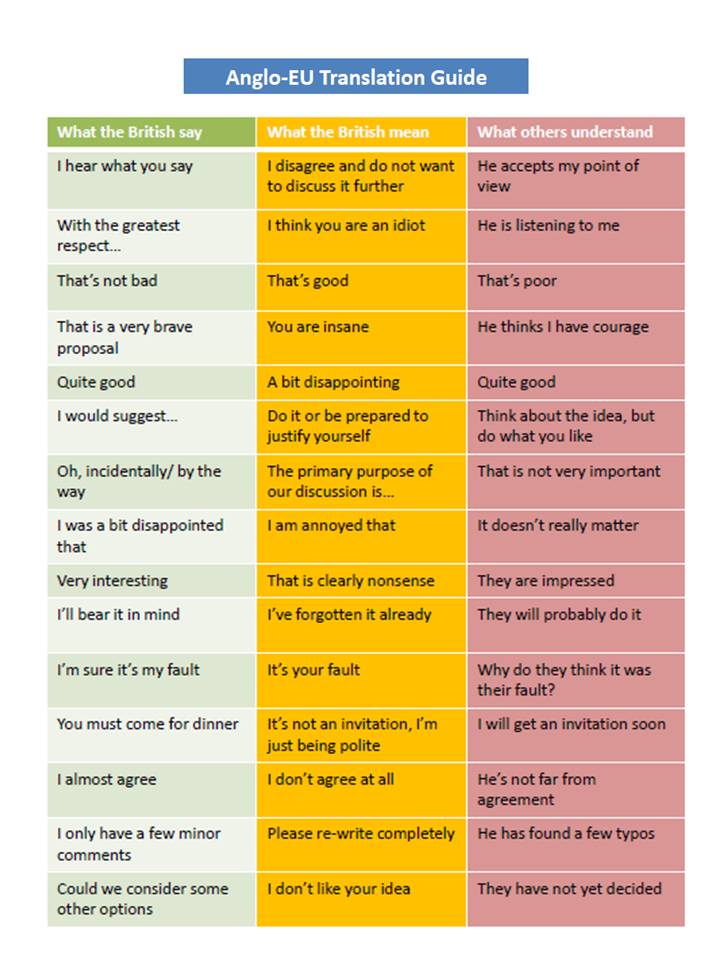
>Later, when asked why, the young man said he’d been working on another project on a deadline and didn’t think he should take on extra work. Scheiner explained to the manager that he needed to be more specific and directly tell the employee that he wanted him to set aside what he was currently working on and start on the new task.
I gotta say, I'm surprised that this needed to be explained to the manager. If someone asks a worker whether they want to do something and the worker say "no", the manager's instinct is to panic and escalate before trying to clarify anything?
I guess it's a good example for the article - it's easy to empathize with the person whose manager got confused, and easy to understand how dealing with those kinds of situations on a daily basis ends in the workers quitting or getting fired.
Everyone feels uncomfortable when a conversation goes off-script, but we as a society expect the 'abnormal' people to be the ones who bear the consequences of that discomfort whenever it arises. It doesn't seem fair, especially since the 'abnormal' people are expected to bear their discomfort in silence, but that's life for you.