My friend's dad built one for him, for DOS/windows though. Must have been around -89 when we were 12.
I think Scream Tracker had the schematic bundled with it as an ASCII drawing. We were taught how to solder in primary school, but I remember the schematics being way too advanced for us. Looking at it now it's just a simple resistor ladder tree
I think it was roughly the same as Covox, someone had written a sound blaster emulator for it, and it worked pretty well on games, scream tracker/fast tracker and demoscene demos - for the price of a parallel port connector and a few resistors, pretty cool.
I adapted 12-bit ADC and DAC to a PC parallel port of an 8088 PC running MS-DOS for my thesis project, and programmed it in Turbo Pascal. Already by that point MS-DOS was obsolete, but I decided that finishing grad school (in 1993) was more important than learning a new platform. Lack of the ability to run multiple processes in parallel was solved by running multiple PC's.
At some point in the 90s a re-make of Zork (with graphics and sound) came out for PC (I think this was DOS era). However, most PCs didn't have sound cards, and it would be a hard sell to require customers to buy one (I think they were upwards of $100 back then?) on top of the cost of the game, so there was an option to purchase a parallel port sound adapter (basically a DAC) for about $20 (these are 90s prices) from the game company. We got one, but never could get it working, neither could some relatives.
Yeah, sound cards were always that bit too expensive and incompatible with each other. In the end I got my first SoundBlaster because it was also an interface card for a CD drive and they were doing good bundles: https://en.wikipedia.org/wiki/Sound_Blaster_16#CD-ROM_Suppor...
I got this Sound Blaster 16 as christmas present when I was a kid. I always remember it came in a very big blue package with the CD drive and some CDs with a lot of sharewhare applications.
My father told me very exited "I went to a friend's house and he was playing Prince of Persia, you can listen the footsteps "ton ton ton"."
My personal revelation was Wolfenstein 3D. I remember playing it on my Dad's work PC with the PC speaker. I copied it to a friend's PC (using MSBACKUP if I recall correctly) and when we fired it up it sounded glorious. I remember my parents coming to pick me up from my friend's house and we just had to give my Dad a demo.
"Coincidentally" enough shortly afterwards we had a SB16 of our very own. ;)
Yep, Wolfenstein was pretty revolutionary. I was in college at the time. A friend and I finished all three packs over a weekend, alternating as controller and navigator.
For me, the first game I played that really used sound to it's best effect was Doom (I think, or it could have been Quake - it was a long time ago alright :-) ).
There was one particular demon that you would hear half whispering in the distance. As soon as you heard that sound you knew that one of those demons was lurking around somewhere but you didn't know where, so you would start lookng frantically round, waiting for it to burst screaming out of the shadows and attack you.
To this day I have never played another game that evoked such a sense of tension and dread as that sinister whispering.
I just remembered now. My PC at the time had an IBM Blue Lightning processor, and (I guess) IBM chipset motherboard. The PC wasn't IBM-branded, but had a sticker on it that said it was manufactured by IBM in Scotland.
Anyway, the SB 16 worked fine in Windows 3.1 and in Linux (Slackware, with kernel 1.1.59), but it didn't work properly in DOS for some reason.
I looked online and found that others with the same chipset had the same problem, and no one had found a solution.
So the only way to play Doom with sound on that computer, was to run the Linux version.
Never did that but i know what it's like to shell out for a sound card. I had painted myself into a corner with an actual PS/2 with work discounts for OS/2 dev. I could dual boot to DOS but games suck without sound. After years of looking finally found a microchannel soundblaster compatible card by Piper Research (or something like that). Paid whatever was asked. Worked as advertized. Money did by happiness in this case.
> With appropriate software, the VCA could respond to voice commands, function as a voice-controlled keyboard, record and play back digital audio, synthesize speech from text, detect and produce dialing signals, and function as a 1,200 baud modem. All that in 1985.
This is very similar to the Novation Apple-CAT II which was available by 1981 or so:
Superior Software’s SPEECH! for the BBC Micro: software speech synthesis on a machine with relatively anaemic sound hardware. It was so cool back in the 1980s :-)
Around 1975/76 Byte magazine had a couple of very good articles about building a speech synthesizer for S-100 bus computers.
Since it was still the very early days of personal computing, it was very ELI5, so still very useful.
It's amazing how little data is needed to generate useable speech. If I ever get some free time, I want to see if I can use their schematic to make it work on RS-232.
The GUS Max came out in 1994, the SoundBlaster 2.0 came out in 1991 and was a significantly more limited card than the GUS (no wave table synthesis, no 16-bit audio or stereo)
In 1994 the state-of-the-art SoundBlaster would have been the AWE32 and it was $399. You must be misremembering :)
Sound cards did not drop to anywhere near $20 until the very late 90's or early 00's and those $20 cards were bottom barrel stuff that would have been less advanced in many ways than the GUS Max even then.
Yeah! I still have my Gravis Ultrasound in a box somewhere.. The red PCB was so cool (16-year-old me thought) and I also remember having to modify my case to make it fit.
That card was so good for demoscene stuff..
I was also proud that it was Canadian-made (it sat alongside my Matrox video card)
Relevant: I've recently build a DOS based retro gaming PC using an old Epia 5000 mini-itx motherboard. The reason I picked this board (other than I already had one) is that it has onboard support for Ad-Lib and Soundblaster audio, meaning most DOS era games playback audio without any modification.
These boards still pop-up from time to time on ebay, and are way cheaper than a modern ad-lib clone card.
Correct. Plus the required drivers in config.sys, and using a SD card as the C: drive, all in a slimeline, silent mini-itx case. I've added a text gui (think Curses) to easily select games and apps. It's not done yet, but I'll probably knock up a webpage all about it at some point.
Did anyone here ever have the speech synthesizer card for the Texas Instruments TI-99/4A computer? I remember playing a game called Parsec on that computer and if you had the speech synth plugged into the expansion port of the TI the game would speak at times.
There were lots of speech synthesizer cards for 8 bit machines. What they had in common was the SP0256 chip (https://en.wikipedia.org/wiki/General_Instrument_SP0256) which could synthesize speech by chaining together a series of phonemes. Or you could use the phonemes to create "pew-pew"-type special effects for games as I did ...
I didn't have the 99/4A, but my neighbor did, and had the speech synthesizer. I remember Parsec quite well.
I had a C-64, and had both the Covox Voice Master (...ter ...ter ...ter), and Commodore's Magic Voice.
Interesting that the Commodore box had to go into the cartridge port and the monitor port just for voice output, but the Covox could do both in and out from the joystick port.
I remember being blown away by a DAC on a Commodore Pet. Unfortunately I don't think there are any videos. It wasn't common to own a video camera in 1980
I'm not actually sure that's the correct software. All I remember is it sounding like real instruments back when I was used to simple beeps from the built in sound
A big maybe. While 20MHz TMS32010 DSP in 1985 was around 386DX 33MHz horsepower wise, if you ignore things like single cycle 16x16 multiply(10-20 faster than 386), it might still be too slow. For comparison ~3x faster DSP56001 in Atari Falcon needs 16MHz CPU assist to decode MP3.
Comparing to a general purpose CPU, I remember from the olden days that a 486 DX4/100 was just BARELY able to decode stereo MP3's if you used a well optimized MS-DOS playback program. In a multitasking environment like Windows -- forget about it!
the ps/2 models 25 and 30 were sold in large numbers to educational institutions, so my guess is that it was paired with some sort of weird education-related recording and playback software.


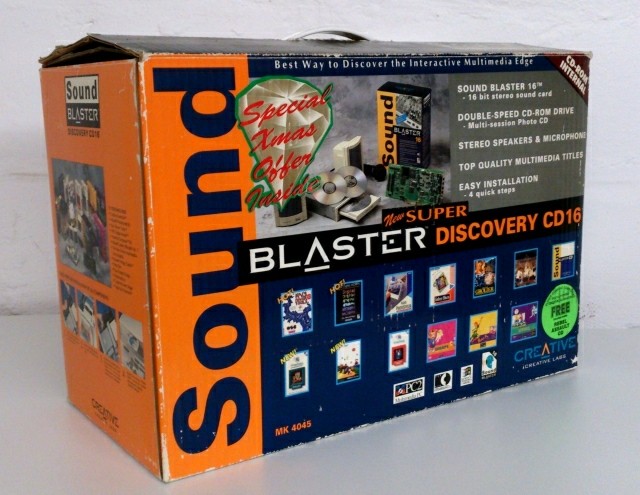
I never did, but was tempted. In the end I just splurged the 80 GBP for a SoundBlaster 16.
It's amazing what people can do with great software and just a little hardware. (See bottom of page: http://linux-audio.com/Sound-HOWTO-3.html)