This seems to be a common failure mode in Australia. Grocery prices follow the same pattern—food is extraordinarily expensive, which you assume might have to do with the country's remoteness until you notice that local foods are just as overpriced. Mangoes grow by the side of the road in Queensland, but sell for $3.50 at the supermarket.
The root problem is duopoly (in the case of grocery stores) or monopoly (Telstra).
Australia is shockingly expensive the first time you visit there. Normal economics just don't seem to be at play.
It took me a long time to put my thumb on what Australia is like and it wasn't until I watched the show "Fringe" and saw the alternate universe (with the Airships and the Twin Towers) that it finally struck me, it's like an alternate universe America. Everything is just like the U.S., except for some weird little details. Big cars, lots of open land, cowboy analogs (drovers), purpose built capital designed by a foreigner, densely packed East Coast, East Coast vs. West Coast rivalry. And then suddenly it's not: driving on the left, everything is overpriced, egg yolks are a different color, etc.
I remember seeing real estate listing for some really remote housing in some dying gold town somewhere. Like 2 bedroom bungalows with no property. And they're priced at what you'd expect to find in a nearby suburb of Sydney (except the housing in the suburbs around Sydney is ludicrously expensive). While anywhere else in the world people would basically be paying you to take the title so they could get the hell out of there.
The local markets in Australia are just weird.
note I live in one of the most expensive housing markets in the U.S. so I'm used to seeing high prices. But even single bedroom apartments in Sydney suburbs rent out at prices you can get entire houses for in similar geographic regions around my area. You'd think the exact opposite would be true. In almost any other part of the world with plentiful land and low population, you end up with cheap housing, while in Australia that doesn't seem to be true at all.
Australia is generally ridiculously expensive, that is true, but there is usually a reason (not necessarily a good one) why "local markets in Australia are just weird."
> I remember seeing real estate listing for some really remote housing in some dying gold town somewhere.
Without further details, I can't say whether your assessment of "dying" is correct or not, but it is true that towns that have mining operations experience explosive growth (and contractions) in housing prices. Local governments in general don't want to allow a lot more house building, because in 5, 10 or 20 years time when the mine closes down, having all those empty houses causes a ghost town effect where the town really will die (the towns almost always existed before the mines, and they want them to exist after the mine leaves too). That means people pay north of $1 million dollars for a fibro shack. Mining companies will hire the local showgrounds long term, so that they can build a tent city for their workers (who use the showground toilet and shower facilities etc). Local house prices will fluctuate by hundreds of thousands of dollars in days, based upon financial news from the mining companies about whether they are liking to build/expand/close the local mining operation.
Yes, it's weird.
As for Sydney specifically, it is actually very space constrained. With the ocean on one side, and the Blue Mountains on the other side, there actually isn't a lot of room for expansion.
You are correct that in general there is a lot of undeveloped coast line though (inland is basically inhospitable). It's just not where the jobs are.
> Without further details, I can't say whether your assessment of "dying" is correct or not, but it is true that towns that have mining operations experience explosive growth (and contractions) in housing prices.
I honestly don't know. I was with a couple of locals and remember seeing the advertisement and remarking at how expensive the housing was. This was 7+ years ago but I remember they said something about it being a dead mining town turned into a prospector town. Folks looking to hit it big finding an unknown vein somewhere.
I've worked with more Aussies and we've had lots of discussions about the particularly weird housing market there, with of course lots of segues into the weird Bay Area housing market by way of comparison.
As for Sydney specifically, it is actually very space constrained. With the ocean on one side, and the Blue Mountains on the other side, there actually isn't a lot of room for expansion.
Melbourne has vast swathes of open land in all directions, and housing prices are nearly the same.
I asked the question to a friend, and he replied that I just don't get it: the people who already have houses aren't interested in reducing the value of them. Almost all federal politicians have multiple properties. Why would they legislate to do that? So we have negative gearing that will never get solved, lots of foreign purchasing driving up prices, and no-one willing to pull the pin out of the electoral grenade and start dealing with our housing bubble.
While Melbourne doesn't have any shortage of land to build out into it is getting very far away from the inner city.
As long as you are happy to drive everywhere and can find a suburban job or are prepared to make long commutes there is plenty of relatively cheap housing to be had.
I remember seeing real estate listing for some really remote housing in some dying gold town somewhere. Like 2 bedroom bungalows with no property. And they're priced at what you'd expect to find in a nearby suburb of Sydney (except the housing in the suburbs around Sydney is ludicrously expensive). While anywhere else in the world people would basically be paying you to take the title so they could get the hell out of there.
That's unlikely (the dying gold town bit). I suspect what you saw was a house in an iron ore town. There's never enough housing in those towns, and the miners are very well paid.
When the Australian dollar was down on the US, ~50-60c, the prices didn't seem so out-of-whack. Now that it has risen to 90-100c, it seems crazy. The prices have stayed around the same, rather than dropped as you might expect. The exception is real estate, which grew at 30-40% some years in the noughties, an industry so distorted that if it doesn't grow by 10%/year now, analysts run around claiming the end of the world.
Australia is more expense then the USA when it comes to everything. Rent, grocery, internet, etc. Australian consumers also have on average less buying power then American citizens. [1]
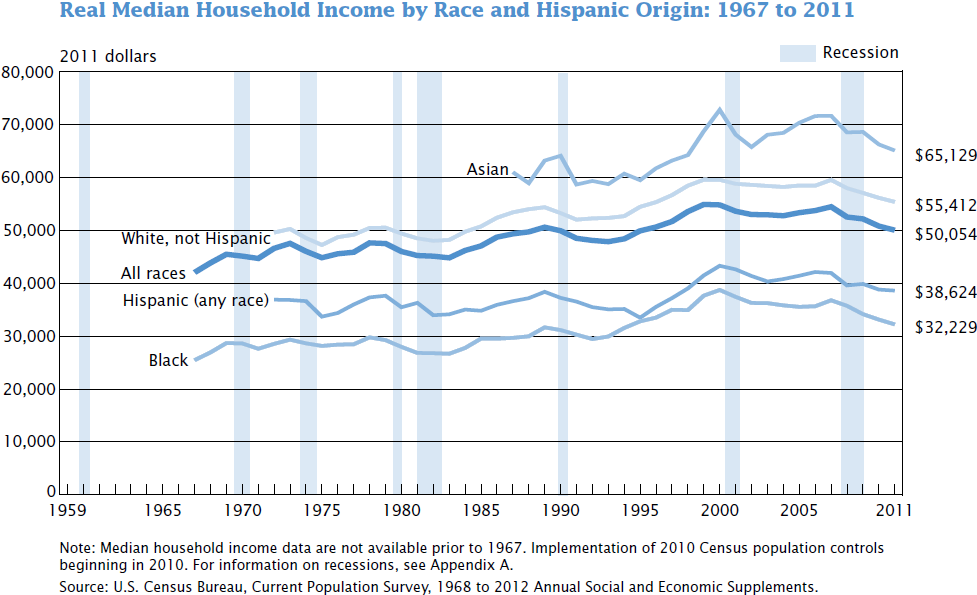
The medium household income for both countries is nearly identical. $30,932 (USA) vs $30,077 (AUS) ~2.76% [2]
So income is ~3% higher in America, but rent is ~46% more expensive in Australia (Groceries are 32.5%). I would say its based on factors other then average income.
I looked at the wiki entry but something isn't right about that. I don't understand where they're getting the $30k figure.
The median household income in the US is over $53,000 - not $30,932. I think it's much higher in Australia as well (for example they list nominal median at $47k on the wiki).
The Wikipedia table is apparently median household equivalent adult income. This is the somewhat obscure way the OECD accounts for varying household sizes amongst compared nations:
Australian figures and American figures aren't comparable. Australia is one of the most urbanised populations in the world; in the USA cost-of-living figures are dragged down because an enormous bulk of the population is scattered across cheap locations.
Others have noted that on average, the answer is no, but without calculating the stats, I would expect the lower wage earners to be better off in Australia (especially when costs for healthcare and other services are near zero).
A few years ago, Australians were the wealthiest people in the World (they slipped to number 2 last year). This is private assets, nothing to do with income, government income and expenditure etc. What does this show? Not much really, just pointing out that statistics is hard, and if you don't like what something shows, then change the metric until you find the news you want. In other words, take everything that people are saying (including me) with a grain of salt.


The root problem is duopoly (in the case of grocery stores) or monopoly (Telstra).