Classifying some spending as "mandatory" is a ruse to make people ignore the potential for any savings there.
The largest component of "mandatory" spending is health spending (e.g. Medicare), and it certainly isn't the case that Medicare is fully optimized. For example, is it overpaying for anything? Paying for things that are ineffective or unnecessary? Would it be better to means test certain benefits so that the government isn't making big social assistance payouts to recipients with a net worth over a million dollars? Is there any Medicare fraud?
The next largest and almost as big is social security, so what happens if we means test that program, or even just get rid of the reverse means testing in the existing program which makes larger payouts to people who made more money?
These things would all reduce "mandatory" spending, potentially by a significant amount, and there is nothing preventing that from happening except for the false insistence that it can't be done.
The problem with means-testing benefits is that it often will cost more to means-test than to just accept nonzero fraud rates past a very minimal point, and there is a significant amount of friction introduced when you add more friction to people who do not have time or energy to spare.
e.g. if I ask you to submit receipts for literally everything that you bought in the last week, in order to give you a $20 stipend weekly, you will probably not bother, even if you could use the $20, and it will probably cost more than $20 to pay me for the time processing that.
I'm not saying there's no waste, but I am saying that the optimal amount of waste to reward is nonzero.
Half the country is willing to get punched in the face as long as they know their opponents are getting kicked in the nuts. It’s all about hurting the other team more.
Right, which is why broadly-available old-age insurance programs like Medicare and Social Security work. Everyone pays in their own money, to which they are entitled. So there’s not really any reason to spend that extra $10.
It’s also why “Medicare For All” runs into opposition. It’s hard to make the case that a healthy 22-year-old is entitled to a lifetime of free health care before paying a dime into the system.
So then lets say a healthy 22-year-old graduates from college at the top of their class. Life's looking up for them. They've already got a job lined up that starts in two weeks and they're excited and energetic about entering the workforce and living on their own as adult.
Then suddenly, some random guy in a mustang doing 150 in a 30 jumps the curb and runs over our optimistic 22-year-old, and continues speeding into the distance. A random onlooker witnesses the event and calls an ambulance, who rushes them to the hospital. Thanks to the hard work ICU doctors and surgeons spanning days, our 22-year-old miraculously lives, but is in bad shape. They're never gonna walk again, and they're gonna need weeks of physical therapy just to retrain the fine motor skills required to write and type.
All of this, for a variety of factors is gonna cost hundreds of thousands of dollars. On top of the massive hospital bill they're about to be saddled with.
I take it that our now not-so-healthy 22-year-old should just go fuck themselves then? They've never paid a dime into the system so why should they be entitled to health care?
>I take it that our now not-so-healthy 22-year-old should just go fuck themselves then? They've never paid a dime into the system so why should they be entitled to health care?
No, no one is entitled to the labor of others, not in this scenario where they are 3rd party to the damages. That doesn't even remotely make sense no matter how bad of a sob story you attach to it.
This isn't actually a sob story, and I'm not saying he's entitled to labor of others. What I am asking is how your proposed system handles a case such as this.
And while it may be an edge case, these are large, broad systems that directly impact the lives of millions of living, breathing people. Such systems must be robust and well-examined.
And I'd also like to ask what a society would look like, that invests so heavily in the education of it's young generation, and relies on them to bring innovations and new ideas to the table, only to cut them down the moment they need any sort of assistance. It certainly seems to me like a huge waste of resources.
What if healthcare was just an investment in our society? Our young 22-year-old gets healthcare covered not because he's entitled to it but because society is invested in his well-being in order to continue existing and improve itself. Because the ROI of the young being kept healthy and able to work and pay into the system is greater than the cost of the ICU doctors and surgeons and wheelchairs and physical therapy.
The voluntary way of capturing future ROI with present investment is loans (or if you don't care about ROI, donation). Now I'm not saying that is necessarily the only option but it's the one you're gunning for based upon your economic argument.
Based on your criteria it's the most textbook case for an individual loan imaginable, your argument is the 22 y/o needs a loan for some healthcare, that he can more than pay it back, and that both parties will benefit. In the absence of charity, some kind of trade, family or friend assistance, then in any rational market (US market is regulated to hell so no guarantee it works there unless you free that market) it's a no brainer and as sure as an apple will fall from a tree, someone would be happy to make that trade although the kinetics and packaging might be up for debate.
I don't see how you can possibly presuppose a requirement for public assistance, in that scenario, in order for the health care to happen. Public assistance is only economically necessary to complete the health care if there is negative ROI and all donation or voluntary options are exhausted.
>No, no one is entitled to the labor of others, not in this scenario where they are 3rd party to the damages. That doesn't even remotely make sense no matter how bad of a sob story you attach to it.
Absolutely! We should just Brian Kilmeade[0] those folks too, since they're just a burden on society, right?
It's interesting to me you jumped right past charity, loans, work-trade, or any other variety of options and instead went straight to your preferred method of doing things -- either violence (tax man with guns) and if not that you question if they should be executed.
I'm just advocating putting the violent methods aside.
If no one is entitled to the labor of others, why would we engage in charity?
Work-trade when it's someone's health is slavery, so we're going to go ahead and pull that off the table.
Loans are, more or less, how we've gotten into the awful state we are currently in in the US with unpayable medical debt.
I propose an alternate approach: medical care is a civil service that you can voluntarily provide, like fire prevention or undrafted military service. If you do, you are paid the rate the society agrees to for the work. We all pay for it with taxes. If we want more of it, we raise taxes and incentives. This removes several perverse market effects and sets up a minimum standard of care divorced from individual circumstance to level out the effect of bad luck a bit.
This is, more or less, a model that many countries are currently enjoying.
>If no one is entitled to the labor of others, why would we engage in charity?
Because some people want to help others beyond what they're forced to do. There is a long history of charitable health services in the US and worldwide, you might rightly ascertain they can't possibly provide all of medical care, nonetheless it's non-zero enough to dispel the notion it can't be provided in the absence of an entitlement.
> medical care is a civil service that you can voluntarily provide,
Civil services are funded by people working to pay their taxes. Work-trade when it's someone health is slavery, so work-trade when it's to not have to go in a tiny cage dragged away by an IRS agent has to be slavery too, especially when you consider the health implications of that.
Therefore the public / civil service options are tossed out by your own criteria.
Loans, again, if those aren't allowed you can toss out any government option because that's a huge part of how the government is funding itself.
Using your own criteria only charity or cash payments would be allowed. Not sure I agree with that one, but that's what you're leaving us with.
I think if you're arguing "taxes are slavery" you are coming from a vantage point that is far too libertarian to have a constructive conversation. We can probably just short-circuit that by saying "The only way people in the US get jailed for taxes is by committing fraud; we correctly left debtor's prison in the past" and be done with that, yes?
Taxes aren't slavery; they're how we operate modern, functional, post-feudal societies (and whether they are actually "paying for" services or are "redistributing supply and demand more equitably by curtailing the spending power of the ones who have too much so that the ones who have too little can have access to resources at all" is an implementation detail for macroeconomists and operators of fiat currencies).
You do raise the interesting question of funding it by buying bonds though. I don't see an issue with that; the argument against loans is a practical one, not a theoretical one ("the private debt incurred upon patients is, in essence, an involuntary one-sided loan granted to them, and we've seen that lead to massively unfair outcomes"). Voluntarily loaning the government money seems to work great and is miles distant from involuntarily-accrued (or accrued under duress; "sure, that procedure is optional because you always have the option to die") medical debt.
>"The only way people in the US get jailed for taxes is by committing fraud; we correctly left debtor's prison in the past" and be done with that, yes?
False. You can be jailed for "tax evasion" which could be as simple as simply saying "yes I owe taxes, no I won't bother calculating and I have put all my money in bitcoins and I'll never give them to you." That needn't be fraud -- everything about that could be 100% accurate and true with no intend to defraud yet still criminal. (btw we still have debtor's prison -- you can be jailed for not paying child support debts and the absurd argument often used you're jailed for violating the court order to pay the debt rather than owing the debt is little more than a legal parlor trick).
>Taxes aren't slavery
They are by your definition, where I need to trade work to pay for them to improve my health (get thrown into a prison, a den of disease and mental health problems). Of course, we could get into a semantic debate about slavery, but it's clear you've already defined slavery not to be literal chattel slavery, i.e. as black people in chains working the cotton fields, rather you appear to be referring to being forced to work under threat of violence which in this case you take the violence to be a threat to your health.
>You do raise the interesting question of funding it by buying bonds though. I don't see an issue with that; the argument against loans is a practical one, not a theoretical one ("the private debt incurred upon patients is, in essence, an involuntary one-sided loan granted to them, and we've seen that lead to massively unfair outcomes"). Voluntarily loaning the government money seems to work great and is miles distant from involuntarily-accrued (or accrued under duress; "sure, that procedure is optional because you always have the option to die") medical debt.
I also find this to be one of the most interesting solutions. Hypothetically if a 22 year old were to have some illness, it's totally conceivable that a bunch of lenders could bid for a race to the bottom so the 22 year old could get a loan low enough that it would easily be both a net positive for him and for the people who helped loan the money that saves him. Of course, if charity or some other option is available instead, all the better.
In any case, the biggest enemy for both of us is overregulation of the health system. Once medical licensing is eliminating and medical regulations eliminated, fights over how to pay become much lower stakes.
Not even remotely related. Yes, if you fail to bother to calculate your taxes you can be liable. If you do calculate them and you can't pay them, the government works out a payment plan. These trains of thought more or less died with Thoreau arguing why he shouldn't pay taxes (while living on borrowed property owned by his rich neighbor).
> Once medical licensing is eliminating and medical regulations eliminated
Independent issue to paying for medicine. If I understand correctly, your thought is that we have artificial scarcity on medical care because we don't license doctors we could. Those regulations are paid for in blood (or in this case, snake-oil); agree to disagree that lowering the constraints wouldn't just return us to the bad practices that required the constraints in the first place.
> If I understand correctly, your thought is that we have artificial scarcity on medical care because we don't license doctors we could. Those regulations are paid for in blood (or in this case, snake-oil); agree to disagree that lowering the constraints wouldn't just return us to the bad practices that required the constraints in the first place.
The "agree to disagree" isn't necessary because it isn't relevant.
People can argue that quacks used to show up to rip people off and then skip town before people caught on that snake oil is snake oil, but they couldn't really do that anymore because now we have the internet which allows your past victims to notify your future victims even if they live in a different city.
But that argument is boring. It doesn't matter if it's true or not, because the laws that really make medicine expensive aren't the ones that require you to register as a doctor so they can more easily investigate quacks. They're the ones that e.g. the AMA has lobbied for to limit the supply of doctors. And we could get rid of those regardless of whether we also get rid of the other ones.
The train of thought didn't die with Thoreau. It lived on in the minds of those such as Murray Rothbard, and to the extent as it applies to universal healthcare, also known fringe character (and nobel economist) Milton Friedman. Of course Locke himself (a major inspiration for the US constitution, which very narrowly constrains what the federal government can spend money on), I suppose too old as he's the oldest of all of them, only justified taxes so far as they allowed the government to enforce negative rights, that is rights for one person not to molest another rather than positive rights like an entitlement to get something from another such as care.
>your thought is that we have artificial scarcity on medical care because we don't license doctors we could
Really all the above. Probably even more so due to stuff like the intertwining of the insurance and pharmaceutical and medical industries with regulatory apparatus creating all the worst regulatory capture incentives to rent-seek patients with the free market destroyed.
Of course not. At scale you basically need to remove the government from the situation, they're the one regulating health care into a gigantic blimp. Once health care is completely deregulated and the costs drop you won't need to spending anything close to "all [future] money."
Now if you offered me a deal, I could substitute all my taxes, or even everyone's taxes, for charity, yes I would take that in a heartbeat. In all likelihood I think I would probably donate about 10% of my income to charity if there were no taxes, but the government is so terribly ineffectual it might actually beat the 20-30% I pay now.
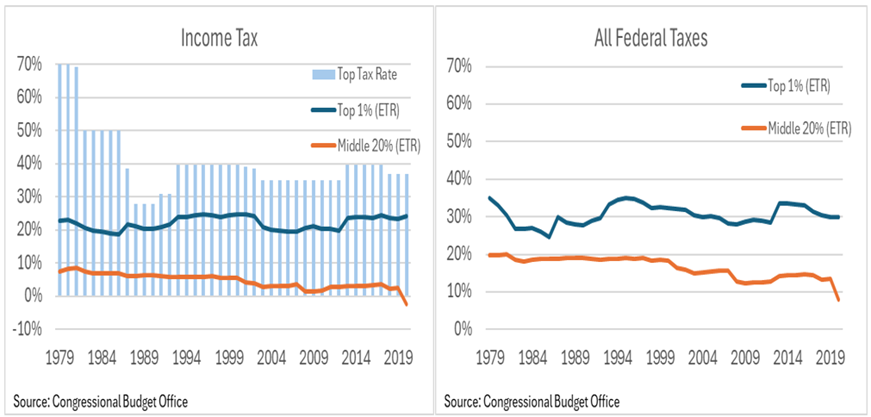
Look like the effective tax rate has went up rather than down since I started working in 2010, most of which I was closer to the top 1% than the middle 20%. []
There is no savings I can identify there, nor in my tax records, which have only increased in % as I've made more money. And all well above the 10% of the income I would pledge to donate to charity if taxes are eliminated. But yes I have donated to charity on occasion (sometimes formally, sometimes directly in cash to people that needed it), despite the fact I keep getting taxed harder every year and despite the fact the government robs me of ~20-30% of my income under its own bloated forcible charity scheme.
Or are you just spouting ridiculous tropes? Charity? Work-Trade? Loans? Paid by whom in that scenario?
I'd expect you're more in line with Kilmeade than McCain. Why don't you just admit it? It's all out in the open now, no need to hide any more. You'll be broadly lauded for your economic smarts!
Your thesis is that people so broadly support additional tax money going to fix the 22 year old that it could be legitimate law, but somehow so few support it that charity or other alternatives (if the very people that support it weren't forced by law) would be a ridiculous trope?
No. My thesis is that we can reduce total healthcare spending by having a single-payer system that covers everyone.
It's not additional tax money, it's money that doesn't need to go to corporate jets and huge pay packages for the C-Suite and large dividends for the shareholders of insurance companies, healthcare providers, pharmaceutical companies and medical equipment manufacturers.
And the tens to hundreds of billions we save on that can pay for that 22 year old.
But we can't have that, now can we? Better to Brian Kilmeade 'em, eh?
> corporate jets and huge pay packages for the C-Suite and large dividends for the shareholders of insurance companies
And armies and armies of middle-folk who are adjudicating from afar whether a given medical procedure is justified or not.
The way the US practices paying for medicine is, counter-intuitively, very expensive because we pay a lot of people to find reasons to justify not paying for it. If we took their salaries and put them into actual service provision, and cut down the vast web of categories and sub-categories to salami-slice the nickels and dimes, we'd spend far less on employment of arbiters and on paperwork and we'd have more money to pay for more services (and no a priori reason to believe the system would oversaturate).
But you just said it's a ridiculous trope that people would want to charitably donate to the healthcare of others. How would you get the majority to support a single payer system when electing to help others is such a ridiculous trope that you flippantly dismiss it?
> But you just said it's a ridiculous trope that people would want to charitably donate to the healthcare of others. How would you get the majority to support a single payer system when electing to help others is such a ridiculous trope that you flippantly dismiss it?
A lot of people have a broken sense of fairness where they're only willing to help someone else if everyone else is required to do it too. It's one of the things causing the world to burn.
Some of this is even learned behavior. A lot of the dumbest econ 101 classes teach people that giving to charity is irrational. (It's not irrational. It's something you do because you want to do it, like eating cake or buying a fast car. Once your basic needs are met, the purpose of having money is to use it for the things you want to use it for. It's not irrational to want to do something good instead of something insalubrious.)
>But you just said it's a ridiculous trope that people would want to charitably donate to the healthcare of others. How would you get the majority to support a single payer system when electing to help others is such a ridiculous trope that you flippantly dismiss it?
Are you really that ignorant of the issue, or are you just being deliberately obtuse?
We as a society already pay way more than we would with a rational single-payer system. That's not hyperbole either.
What's more, not having employers and employees pay insurance premiums would more than offset any additional taxes.
But you knew that already, because we've known this to be the case for most, if not all, of your life.
I'm done explaining the facts of life to you. Perhaps you should ask your dad.
That's just status quo bias. Countries with fully socialized healthcare systems make the same "everyone pays taxes and then everyone gets it" argument for including the healthy 22-year-olds and you can make the same "this person doesn't deserve public money" argument for not providing government benefits to people who have their own wealth.
Moreover, it doesn't have anything to do with whether you could modify those programs to cost less money if your primary goal was to lower spending.
> It’s hard to make the case that a healthy 22-year-old is entitled to a lifetime of free health
The economic future potential of a healthy 22-year-old is way higher than an aged 68-year-old. I don't think it's very hard at all to make the case we should be spending money on keeping the 22-year-old healthy, in fact I think it's very easy to tilt so far into claiming it's so that you'd be justifiably accused of cruelty ("what if everyone over 70 were tossed into the Soylent Green vats," etc.)
It's very easy to make that case: healthcare should be a human right, and our society should provide it to every person to the extent that it can.
We can just decide to make things public services. No one ever says "wait a minute, kids shouldn't be get to use roads for free before paying a dime into the system." It sounds ridiculous! But for some reason, people buy that logic when it comes to healthcare and college.
We are not by ourselves though. Sure compared to 1000AD we might be being a little... precious. But hopefully we can enjoy the fact we invented all this technology to make our lives better and dream for bigger rights than is possible in a dog eat dog barbaric world.
No right to be free from what? If you are by yourself, who is there to enslave you? It doesn't matter how how rights are endowed; the entire concept is meaningless except with regard to other humans.
Both of those rights govern exactly what I said: your interactions with other people. But anyway, no one is proposing anyone be forced to do someone's bidding.
You and Bob are on a desert island, and Bob is trying to kill you. You have a right to be free of someone trying to kill you. Bob is trying to kill you. How are you going to make him stop?
I think you've identified the symptom but misidentified the cause.
The majority in the US (as of 2022, according to Gallup) believe healthcare should be universally provided.
The majority also believe it should not be a government responsibility.
Broadly speaking, the US position is "Our current system sucks and we should be providing people healthcare detached from presence or absence of individual insurance... But also the government cannot be trusted to successfully execute on complex national projects."
It's quite true that means testing has an efficiency cost. One of the best ways to improve the efficiency of social security would be to convert it into a UBI.
But that's a very different question than whether it would lower the budget, and we're talking about programs that are paying out a lot more than $20. If doing means testing means you can stop paying $1000+/month to someone who is already a millionaire, that's still a savings even if it adds $20 in overhead. Meanwhile we're already paying the cost of doing the means testing, because we do it in reverse, and removing that would increase efficiency and lower spending.
Moreover, other taxes require keeping track of that stuff regardless. You already have to track the value of your assets for the purposes of capital gains tax and property tax. Doing that calculation to begin with isn't free, but the incremental cost of copying that line from the other tax forms onto the Medicare form would cost far less than it does to pay benefits to people who don't need the money. And it also has an efficiency benefit whenever it isn't a cash payment, since insurance is a moral hazard -- if the government is paying for something then you take it even if you value it at a third of what it costs, whereas if you're paying your own money you don't buy things that cost more than they're worth, so having less insurance coverage for people who could afford to pay out of pocket increases efficiency.
> means you can stop paying $1000+/month to someone who is already a millionaire, that's still a savings even if it adds $20 in overhead.
Only if these hypothetical millionaires you are stopping make up more than 1/50 of the people you are means-testing. You are not only paying for those who fail the means-test, but for all those who are passing it.
> Only if these hypothetical millionaires you are stopping make up more than 1/50 of the people you are means-testing.
Then why don't we use the non-hypothetical numbers? More than 10% of retirees are millionaires and the $1000+ in payments is actually $2000+ on average and even more for the people who made enough money to be millionaires.
One reason those programs are not means tested is because it means that everyone can depend on them. Once they are means-tested to only apply to poor/middle class people, they will begin to be aggressively cut like the other means-tested programs.
Also worth noting net worth "over a million dollars" is not extravagant for a Medicare-age person who did not have a pension, for example. This is basically a median home and $600k in savings. Not poor, but also not likely to be able to pay anything close to rack rate for health insurance for an older person.
I’d also add that there’s a powerful benefit to having something like Medicare as a right of citizenship: it builds social cohesion and avoids the stigma which is often attached to social programs. Some landlords go to great lengths to avoid section 8 tenants, for example, and that has a substantial negative cost to society.
> I’d also add that there’s a powerful benefit to having something like Medicare as a right of citizenship
While not attached to citizenship, there already is something built in. New immigrants to the US often have to have a financial sponsor (I did, on my K-1 fiance visa). That sponsor has to agree (and demonstrate ability) that in the event that the new immigrant claims public benefits in the first ten years of their residence in the US (Medicare, Social Security, etc.) that the government is entitled to recoup those benefit costs from the sponsor.
The Medicare budget is approximately $1400/month for each person over 65. A completely plausible means testing approach isn't "if you have a million dollars you have to go pay a billion dollars for healthcare" but rather that if you have that much money you have to pay the $1400 to get Medicare. Someone with $600,000 and earning 5% APY would be getting more than that in interest, not including appreciation or imputed rent on the $400,000 house, and would stop having to pay the full rate if their net worth fell below the threshold anyway.
This is a political non-starter as it opens the possibility that younger people could also just buy into Medicare instead of paying more for private insurance, something which has been declared strictly off-limits. (Although it would help offset costs to have a lower-risk pool of insureds come into the program, in addition to the other societal benefits.)
> earning 5% APY would be getting more than that in interest
Remember that we are largely talking about retirees. That $1400 + their Social Security is how they pay living expenses. If they have to pay it for healthcare, they have to find another way to pay living expenses.
> imputed rent on the $400,000 house
They live in the house, which lowers their monthly expenses to a level where they can pay them using Social Security and the interest from their savings.
Larger point here is that the suggestion to means test for seniors represents a clawback, a violation of promises made decades ago, around which people planned their elderly (perhaps non-working) years. And we're talking about doing so before we ask the rich to pay (as Warren Buffet says) the same tax rates as their secretaries, and before we trim the military budget back to the levels requested by the military.
> This is a political non-starter as it opens the possibility that younger people could also just buy into Medicare instead of paying more for private insurance, something which has been declared strictly off-limits.
Whether something would have a particular policy outcome and whether you have the votes to pass it are two different things. Moreover, you could obviously require wealthy retirees to pay for Medicare without allowing younger people to do it. Stranger things have happened.
> Remember that we are largely talking about retirees. That $1400 + their Social Security is how they pay living expenses. If they have to pay it for healthcare, they have to find another way to pay living expenses.
They do have another way to pay living expenses. They have $600,000+ plus a house, and as soon a they only had $599,999 plus a house they would no longer have to pay the full rate for Medicare.
> Larger point here is that the suggestion to means test for seniors represents a clawback, a violation of promises made decades ago, around which people planned their elderly (perhaps non-working) years.
You can just as easily make the contrary argument. These programs were never funded -- social security started out making payments to people who never paid in and there isn't anywhere near enough in the "trust fund" to make existing payouts. The people paying the taxes to make up the shortfall were too young to be eligible to vote or not even born when those promises were made, so by what right does an older generation have to bind them to a promise it made to itself and then never actually funded?
> And we're talking about doing so before we ask the rich to pay (as Warren Buffet says) the same tax rates as their secretaries, and before we trim the military budget back to the levels requested by the military.
How about we do this and trim the military budget back to the levels requested by the military so that we can lower the taxes on the secretary to the same rates paid by Warren Buffet?
> and there isn't anywhere near enough in the "trust fund" to make existing payouts
They were funded. But administration after administration constantly "borrows" from it, and then (in one party's case) points to the shortfall as proof of a "failure".
No, they weren't. There was never a point in the history of social security where you could continue making the payments to existing retirees on the basis of the saved up money they paid in themselves so that a future generation could decide that they would prefer to both not pay into and not receive social security.
There have been years when working people paid more into the program than retirees withdrew, i.e. when less than all of the money paid by the current generation went immediately to the previous generation, but that money was never even close to enough to fund the promised future payouts.
Moreover, Congress "borrows" the money in the sense that the Social Security Administration holds it as government bonds rather than cash, but then the Social Security Administration gets the interest on the bonds.
The problem is, that was never even close to enough money either way, because the program was configured from the outset to transfer most of the money from current working people to current retirees instead of investing it at interest in order to make the future payments to the people paying into it. This could have been slightly better if the "trust fund" was invested in stocks rather than government bonds because they pay more interest, but it still wouldn't have been near enough. And if even that was the case then the government in those past years couldn't have spent as much money because it would have lost that huge sink for government debt, in which case all the people currently collecting social security would have had to have paid higher taxes for the level of government services they received.
Meanwhile using the money from existing workers for existing retirees not only doesn't actually fund the program, it only even fails to implode as long as you a) never intend to wind the program down and b) the ratio of working people to retirees never decreases. But the ratio of working people to retirees did decrease, because people started having fewer kids and living longer, so now the unfunded "trust fund" isn't just insufficient to make the payments to the people who are currently paying in, it's soon not even going to be able to make the payments to the people who are currently retired, because it's now shrinking rather than growing as a result of more people collecting for each one paying in.
>And we're talking about doing so before we ask the rich to pay (as Warren Buffet says) the same tax rates as their secretaries, and before we trim the military budget back to the levels requested by the military.
Yes, there are issues with Social Security and Medicare. Not least of which is that, at least for the next thirty years or so (at least until the baby boomers are mostly all dead -- not because I wish them ill, but because later generations are smaller, constraining the pool of contributors to SS/Medicare).
A simple fix (that would give us ~50 years to figure out how to do this better) would be to remove the income cap on SS/Medicare contributions. Currently, that's $176,100[0]. Doing so would keep SS/Medicare solvent long enough to figure out how to structure the safety net appropriately, without jeopardizing the health/well being of those who paid in expecting it to work for them too.
That is not actually a simple fix. You're proposing a 15.3% tax increase -- on top of all existing taxes -- on everyone who makes more than that amount of money. They're obviously going to lobby against that or otherwise take measures to thwart it using tax avoidance strategies etc., making it both less effective than anticipated and no easier to pass than actually reforming the programs.
On top of that, tax incidence is more complicated than "well the people paying it have higher incomes". Federal revenue has been a stable percentage of GDP since WWII, whereas that's an enormous increase in government collections exceeding all historical precedent, and the money had previously been going somewhere else, and the somewhere else (investment markets) would notice it going away. In other words, a tax hike that big would crash the stock market and the housing market etc.
There is no simple fix for this. People voted for a government willing to write them a check it couldn't cash and your only real choices are "don't give that much to wealthy retirees" or "take it from the economy at the expense of the kids".
>That is not actually a simple fix. You're proposing a 15.3% tax increase -- on top of all existing taxes -- on everyone who makes more than that amount of money
No. Not even close. It's not increasing anyone's taxes. It's just making them fairer. Most folks have to pay those taxes on all their income. Why should it be any different for the folks with the highest incomes?
What's more, I can say from experience that not paying SS/Medicare taxes over the arbitrary limit makes exactly zero material difference in my quality of life.
Whereas keeping SS/Medicare solvent while we figure out a better way will have a significant positive impact on my life and the lives of millions of others.
Don't be disingenuous. If there isn't anyone paying more than they are now then there isn't any additional government revenue.
> Most folks have to pay those taxes on all their income. Why should it be any different for the folks with the highest incomes?
The way social security works is that you pay in proportion to your income and then you receive social security payments in proportion to what you paid. There is a cap on both of these. You're proposing to only remove the cap on one of them. That's the same "fairness" argument for not solving the problem by making social security payments according to need or in fixed amounts, so if you're not concerned about that fairness equation then you already have a way of solving the problem without raising taxes.
> What's more, I can say from experience that not paying SS/Medicare taxes over the arbitrary limit makes exactly zero material difference in my quality of life.
This is what I mean by tax incidence. It's not your life which is affected. You're just putting the extra money in your IRA or whatever. But at scale that has consequences for other people. What do you expect happens if you take literally trillions of dollars out of capital markets?
>What do you expect happens if you take literally trillions of dollars out of capital markets?
What a ridiculous trope.
Where do you think those fairer taxes will go? They don't just disappear from existence as you imply. Rather they get plowed right back into the economy. Into the hands of Social Security recipients (so people like your grandmother may not have to go without eating or eat cat food to survive) who will spend most of it almost immediately, and for medical/healthcare products and services.
In that scenario, will such moneys be a net positive for you personally? Probably, as millions of folks won't be starving in the streets and dying of preventable causes because their only means of sustaining themselves has been co-opted so you can have your "number go up."
More economic activity from fairly collecting existing taxes (that's what buying groceries and shoes and prescriptions is) will increase the velocity of money and grow the economy faster than the hoarding you're advocating. And "number go up" will continue.
Don't care about anyone else but you? Enjoy seeing people suffer and die for your marginal benefit? If so, come out and say it. It's at least a defensible, if evil and selfish, argument -- unlike the ridiculous one you made.
How much will the optimization and means testing cost? Will it end up starting an entire division of workers to review and verify? There is no free lunch. This is like optimizing by shaving single digit milliseconds in uploading artifacts for your build time, but 10 minutes is spent somewhere else.
1) You start off saying the mandatory spending is a ruse.
2) You provide no evidence for it.
3) You ask some pretty basic (still good) questions that each department already undergoes.
4) You conclude the spending must not be mandatory after all, just by the mere existence of your questions. Almost assuming the worst case answer to each question you raised.
Do you understand this is Seagull budget planning? I am no government defender, but I am consistently flabbergasted by people who think government fraud detection started and ended with DOGE. Do you guys seriously write "Are we paying for unnecessary things" as though it's an insightful question nobody in government has looked into before? Even after we have confirmed DOGE did fuck all and likely made this whole process even worse?
> Do you guys seriously write "Are we paying for unnecessary things" as though it's an insightful question nobody in government has looked into before?
It isn't a novel question, which is how we know so conclusively that the answer is "yes, the government is paying for many unnecessary things". The people receiving the money keep lobbying to prevent it from being eliminated, so the primary thing preventing it from being eliminated is government authority to actually change things. Whether or not that's what DOGE did, it's the thing a government efficiency operation could and ought to do.
> The largest component of "mandatory" spending is health spending (e.g. Medicare), and it certainly isn't the case that Medicare is fully optimized. For example, is it overpaying for anything?
Yeah, it's over paying for private equity vultures who overcharge to extra maximum profit from healthcare. But that's reform that sorely needs to happen by the government reigning in those private companies not to the government. By trying to "drown [the government] in the bathtub" like Norquist advocated, project 2025 asshats are damaging our country.
Some things are mandatory only if you love your neighbor.
> But that's reform that sorely needs to happen by the government reigning in those private companies not to the government.
So the government passes regulations that cause private equity asshats to jack up prices, e.g. by making it infeasible to start new companies to compete with them, and then the government overpays to buy things from them, but this is somehow not the government's doing?
Bad regulations passed at the behest of private asshats are still bad regulations and the solution is still to repeal them.
> Some things are mandatory only if you love your neighbor.
And some things aren't mandatory at all, like having the government overpay for stuff which is nevertheless classified as "mandatory" spending.
How are you supposed to get an accountable government agency? Is the VA or the DMV or the DEA actually accountable right now, and if so then why are they so bad?
Accountability comes from the ability to reject something objectionable, i.e. it comes from having other alternatives that subject the provider to competitive pressure. That's not what you get from a government agency, nor is it what you get from a consolidated market where the incumbents have captured the government. It is what you get from a competitive market, which is the thing we currently lack.
Apparently you don't know the difference between a non-profit with public reporting requirements (what I was talking about) and a government agency (what you misunderstood). I will leave it up to you to learn the difference.
Regardless, it was nice talking. Have a great week!


The largest component of "mandatory" spending is health spending (e.g. Medicare), and it certainly isn't the case that Medicare is fully optimized. For example, is it overpaying for anything? Paying for things that are ineffective or unnecessary? Would it be better to means test certain benefits so that the government isn't making big social assistance payouts to recipients with a net worth over a million dollars? Is there any Medicare fraud?
The next largest and almost as big is social security, so what happens if we means test that program, or even just get rid of the reverse means testing in the existing program which makes larger payouts to people who made more money?
These things would all reduce "mandatory" spending, potentially by a significant amount, and there is nothing preventing that from happening except for the false insistence that it can't be done.