> What other institutions (or democratic tools) should have acted to halt the extremist anti-democratic movement lead by Bolsonaro?
I am not familiar with Bolsonaro's movement, but censoring people under the guise of protecting democracy doesn't seem very democratic to me? At the very least, you have to admit here that there is a slippery slope where a good intentioned government or justice system could progressively get further away from these good intentions, and start using its power merely for the preservation of it?
It seems to me that censoring ideas that seem dangerous is far more dangerous than trying to correct them, and that a very high level of free speech is one of the most powerful antidotes against this slippery slope.
It seems that way to me too, but we have examples of high-censorship, high-freedom societies like Germany, and high-censorship, low-freedom societies like Singapore, and both report high levels of happiness.
In my estimation, a country can have high censorship but also high ability for people to change the government (that’s what I call “freedom” here). So, in that sense, Germany is high-freedom because it can elect people to change the laws which enable censorship.
I guess “high censorship” is subjective, but you can’t protest without a police permit, media organizations are licensed by the government, certain foreign media have been effectively banned when when they made statements the government didn’t like, you can’t put on a play without script approval by the government, all movies are presented by the government, and libel laws have been used to bankrupt political opponents, forcing them out of government.
> Singapore is not a high censorship/low freedom society
Singapore constrains freedom quite substantially.
Singapore’s parliamentary political system has been dominated by the ruling People’s Action Party (PAP) and the family of current prime minister Lee Hsien Loong since 1959. The electoral and legal framework that the PAP has constructed allows for some political pluralism, but it constrains the growth of opposition parties and limits freedoms of expression, assembly, and association.
Deeper Analysis of Political Rights and Civil Liberties:
this literally a perfect example. your idea of NK is based mostly on reporting that is biased, propaganda, etc. and here you are mocking people who doubt any of that. lol. im not saying NK is secretly good but i think you would discover a lot of things that you didnt know. especially regarding how things got the way they are.
actually, no I wouldn't, because when a Westerner goes to NK, he or she is strictly controlled as to what they can see. In particular, no citizen will talk unguardedly to you because of their intense fear of the police.
If you think that's not true, why don't you tell us about your trip there (you did take one, didn't you?)
what a fool you are. take for example the markets. the markets in NK are a thriving fixture of everyday life. they are also completely illegal. people cross the border into china frequently. there is a huge underground in NK but people who only consume american propaganda only learn about the NK police. there is more to the picture.
You still haven't told us whether you've been there or not.
As for the Western picture of it: it comes largely from NK citizens who've escaped. Call it "propaganda" if you like, but if it were false then there would be a net inflow of people who are as hip to reality as you think you are. Is there?
South Koreans would be trying to move IN if you were correct; after all, they're closer than anyone and they speak the language.
There are lots of authors and journalists who either go there, or interview people who escaped. I think we learn a lot more from them than we would by taking a heavily curated tour of pre-screened sites.
i read that book a couple years ago. the broad strokes tend to be accurate but obviously people understand north korea as much as they understand italy based on Italian tropes.
> there is a slippery slope where a good intentioned government or justice system could progressively get further away from these good intentions, and start using its power merely for the preservation of it?
That wasn't what happened.
It's not like we had a left leaning judge favouring a left leaning party, it's Moraes, a conservative technician fight an extreme right antidemocratic movement.
The question that needs to be answer is how far democracy is willing to go outside of democratic bounds to preserve itself. Because to expect a democratic government never to act undemocratically is to expect it to be replaced by a fascists regimen given time.
> The question that needs to be answer is how far democracy is willing to go outside of democratic bounds to preserve itself.
To answer this question you first have to define what democracy is.
A decent definition is probably something like, a system of government in which policy is decided by having a public debate in which anyone can participate and then, after everyone has had a chance to say their piece, policy is chosen through voting.
From this you immediately run into potential problems. For example, suppose the majority is quite fond of the current leadership and wants to put them in power forever and stop holding elections. Is that democratic? It's the policy people are voting for. And yet, it would be the end of democracy, so the answer has to be no.
From this we discern that in order to have a democracy, there have to be certain things the government is never allowed to do, even if they're what the majority wants. You can't cancel elections, censor the opposition, throw people in jail without due process, etc. These types of things are inherently undemocratic, regardless of what the majority wants, because if the government does them you no longer have a democracy.
It should go without saying that the government can never do these things to "save democracy" because they are the very things that destroy it.
It's not clear what kind of distinction you're trying to draw or why it would be relevant. Some kind of representative democracy where policy is chosen by something more involved than a majority popular vote would still have to be just as forbidden from engaging in tyrannical activities that influence the public discourse or the mechanisms the populace uses to express their preferences.
Sure it is, no one is arguing against that. The process includes a constant check against the Constitution and its core values and whenever a conflict is found the law or act is just nullified.
See the Italian constitutional court as an example
The heart of the argument for the person advocating democracy here is centered on the idea that democracy, by its nature, must protect certain fundamental principles, even if those principles are threatened by a majority or by actions claimed to be in defense of democracy itself.
They emphasize (in good faith I might add) that certain actions, such as censoring the opposition, canceling elections, or jailing people without due process, are inherently undemocratic and would destroy democracy if allowed, regardless of the intentions behind them. The argument is that democracy must adhere to its own rules and principles, even in the face of threats, because violating those principles in the name of protecting democracy ultimately leads to its destruction.
You can’t “protect Democracy” by violating its core tenants.
I feel like your arguments are more whataboutism than substantive.
There are no core tenants of democracy other than majority rule. The actions you listed (with the exception of canceling elections) do not actually destroy the ability for the majority to rule. In fact, one common tactic of democratic states is to employ referendums for laws that infringe on the rights of a minority, thus shifting the moral blame onto the population when convenient.
No. If the majority wants to murder or deport all immigrants and seize their assets because “fuck ‘em”, there’s no way a Democracy can just shrug and call it “vox populi, vox dei”.
It might lose but it will have to put up a fight, legal or physical.
What is this “it” that might “lose”? A country is a homeland for a people. Democracy is an abstraction. “It” cannot fight or “lose” against the people of the nation. The people exist. Democracy is simply rule by a majority of those people.
> There are no core tenants of democracy other than majority rule.
Let's suppose you're right. We have a "democracy" that holds elections and whichever candidate gets the most votes wins, but there is no freedom of speech. Whoever is in office controls all the media, all private communications are monitored and lèse-majesté is a crime. Everything is a crime, in fact, and the law relies entirely on selective enforcement. By election day, opposition candidates with any chance of winning are always blood relatives of the incumbent. Deranged candidates with no chance of winning are ignored but independent candidates who start to gain any support are immediately executed for treason. Every year there is an election in which the people can choose between the incumbent, the incumbent's favored offspring (if any) and a selection of paste-eating loons who think Hitler is still alive, campaign on raising energy costs to help Hitler accelerate human extinction and never get any votes.
That isn't a democracy, it's the fig leaf dictatorships wear when they want to lie about being a democracy.
If half the registered voters want to elect Adolf Hitler, is it acceptable for a democratic government to agree to ignore them? The Nazi party is banned in Germany. Is that good or bad?
I agree such a government is not acting democratically. However, it's better than the alternative. Don't we do democracy because it's usually good, and not for its own sake? Then if doing something nondemocratic is even better than doing something democratic, we should do the former.
If you set the precedent that the government can ignore the result of an election because the electee is bad, that's the very tool that a tyrannical government will use.
The first thing every dictator and tyrannical government does is stop or subvert the elections. There's still elections in Russia and China and North Korea.
Dictators and tyrannical governments are perfectly able to make their own tools. Hitler didn't need to edit an existing law allowing the government to kill Nazis, to target Jews and gypsies. He didn't need an existing law giving chancellors unlimited powers. He simply wrote those laws he needed, then used them. If the government prior to his one had a law giving Nazis the death penalty, it could have saved a lot of lives.
> If half the registered voters want to elect Adolf Hitler, is it acceptable for a democratic government to agree to ignore them?
The candidate people voted for would enter office, but elected officials should not have the power to do the things Hitler did.
> The Nazi party is banned in Germany. Is that good or bad?
It's basically meaningless. If you ban the "Nazi party" and then someone comes and says they're a member of the Social Nationalists party which is totally different even though it shares a lot of the same policies, now you have to decide which policies are banned. And we're back to politicians are never allowed to censor their opponents etc.
That's not remotely similar to any of the established definitions.
Those tends to be based on variants of democracy being "institutions that enable a peaceful transfer of power". This usually includes the so called democratic freedoms, overseeing journalists, and a non-politicized judicial system.
Every practicing democracy however includes some exceptions for law and intelligence services, as that is required to uphold the system in times of uprisings and uncertainty. Advocating genocide or revolting against the democratic institutions is not considered within the bounds of democracy anywhere.
You don't offer an established definition, but you do list some things the government must not do, e.g. overseeing journalists, politicizing the judicial system. Those things could easily fall within GP's definition.
> Those tends to be based on variants of democracy being "institutions that enable a peaceful transfer of power". This usually includes the so called democratic freedoms, overseeing journalists, and a non-politicized judicial system.
You can pretty clearly have a democracy without a peaceful transfer of power. Suppose the state of California had entered open revolt after the 2016 election and the rebellion had to be put down by the military. You could hardly have called that a peaceful transfer of power even if the end result was that people voted and the winner took office. And the reverse can also be true; some aging dictator undemocratically chooses a successor who comes into power without bloodshed.
Also, it is not the role of governments to oversee journalists, it is the role of journalists to oversee governments.
> Every practicing democracy however includes some exceptions for law and intelligence services, as that is required to uphold the system in times of uprisings and uncertainty.
These things are not inherent requirements, they are the implements of tyranny. Notice that the US constitution doesn't have these exceptions written into it, they were read into it by authoritarians and cowards in times of weakness.
The day you find out if you have principles or just empty words is the day when following them is hard.
> Advocating genocide or revolting against the democratic institutions is not considered within the bounds of democracy anywhere.
You can advocate whatever you want, you're just never allowed to actually do it.
Think about it. A system of checks and balances that can stop them from doing it even after they're already in power is the only thing that matters. If you have that, they can say whatever they want. If you don't have that, censorship doesn't help, because they can gain power under false pretenses (politicians lie) and your system isn't configured to stop them once they do. Indeed, a censorship apparatus would even make it worse, because now they're the ones deciding what gets censored.
Censorship is always the tool of the villain because lies and bad ideas can be openly refuted but the only solution to a ban on the truth is to defeat the ban.
You want a democratic government to have "undemocratic" guardrails, because otherwise you are ok with mob rule. Democracy without rules is pure and simple majority rule. You do not want this. Unless of course you are ok with slavery, going back hangings, etc. If that's the case, I rest my case.
You want democracy to be prevented from acting out on its passions by a balance of powers.
IN the brazil case, the state powers, and the brazilian voters are not preventing 1 judge from acting out his passion "to protect democracy". Ergo, this is the problem. The mob is granting him this power, when in fact it should be voters, via congress or even the office of the president which brings this loose cannon of a judge back within the powers given by the constitution of brazil.
In this case, brazil is behaving like a raw democracy. It is true majority rule. Laws apply as the majority sees fit.
The idea that another judge or an independent judicial body should intervene if a judge is overstepping is consistent with how a system of checks and balances should function in a Democracy and I think you are largely correct.
However, whether the judiciary in Brazil is actually overstepping or properly fulfilling its role is a matter of interpretation and context.
The broader and very much core question is whether the actions taken by the judiciary, such as censoring social media or jailing individuals without trial, are justified under the circumstances or if they themselves undermine democratic principles. This is the same basic issue I made my other comment about in your series of replies.
This is a nuanced issue that can be debated from different perspectives and much more of a subjective question, and it’s important to separate the issues.
Thanks for explaining the distinction. In Italy we’ve had the same kind of polemic for 20 years from Berlusconi’s Right, claiming — whether preposterously or not is itself debatable, and fanned by Berlusconi’s media — that the Judiciary was corrupt, captured by the “CUmmunishti”, and the haters.
> The question that needs to be answer is how far democracy is willing to go outside of democratic bounds to preserve itself.
I would say it should not do that essentially ever? If so, what kinds of undemocractic behavior would be allowed and what isn't? You probably have a certain kind of behavior in mind that you want to allow when you pose this question. If so, why not legislate that behavior using the democratic process?
It seems to me that the argument that protecting democracy by undemocratic means is okay, is essentially the same argument that a benevolent dictator is superior to democracy. Both arguments give special power to a certain group or individual that others do not have, which can be used to go outside the system if things don't work out. First order this argument is plausible. But second order effects (there is no such thing as categorically benevolent, and characters change, especially when in power) will always ruin it.
Democracy is messy. And when the world changes, there are challenges that democracy has to overcome. We're in the middle of a few of those changes right now. But the mess in by design. I believe that if we give up on a very high democratic standard things will turn out for the worse. My one addition here would be that in my view democracy is necessary but not suffient to get to a prosperous society. It needs to go hand in hand with a common value system where there's fellowship between citizens and genuine respect for individual right and the law. If not, there's a risk that the majority will only cater to itself.
You cannot protect a democracy against anti-democratic forces through purely democratic means. Riots and political violence are an expression of speech and arresting the perpetrators takes away their democratic freedoms. Should an ideal democracy do nothing during such events?
> You cannot protect a democracy against anti-democratic forces through purely democratic means. Riots and political violence are an expression of speech and arresting the perpetrators takes away their democratic freedoms. Should an ideal democracy do nothing during such events?
In a democracy, policy has the ability to arrest perpetrators by force if they break the law. The key thing is that the law the perpetrators are breaking was approved democratically, and that there is due process by an independent judiciary. Democracy does not mean that there never is any violence.
In that case you get to the opposite problem. It is entirely possible to democratically legislate democracy away as long as your group holds power for long enough with a super-majority.
Yes, democracy is subject to a 51% attack, like blockchain stuff. Better than a 1% or 10% attack though. Some countries like the US have a constitution that can only be changed by a majority >> 50%, offering additional but still not full protection. This is why I mentioned it’s also desirable to have a common value system among the citizenry. In the end, a country has to be more than just laws and voting, and at some point people have to actually get along and make it work together.
Definitely agree there, a democracy cannot function without the majority making concessions to the minority. Concessions like not changing the law to keep themselves in power forever.
Why is it considered an "attack" if the majority wants or supports it? Sounds like it would be working as intended if the majority vote to do or change something.
This is why constitutions exist, and courts to prevent breaches of those constitutions. This is why judges are often appointed, especially top ones, so that a change in government does not mean all checks and bounds are immediately gone. This is also why many countries have multiple legislative houses, so that one election cannot give unlimited power to one legislative house.
Thus it takes longer to slide into an undemocratic state, and checks and bounds are slower to change than a simple election. In essence, laws passed in such democracies becomes the will of the people over decades, not one election.
If a democracy has a will to move towards undemocratic rule, and it takes decades to get there, then really the people have failed themselves.
I live in The Netherlands, we have do not have a constitutional court and we still have a monarchy. A proposal to amend the constitution requires a simple majority in both houses of Parliament after which you have to call a general election. The general election is the only opportunity for someone outside of Parliament to stop it.
After the general election the amendment has to be voted on by both houses of Parliament again and win by a super-majority. Thus it is technically possible to disband Parliament and return all power back to the King within a year without the courts having any power to stop it.
So in case Parliament suddenly decides we should go back to an absolute monarchy, then we're only one general election away from completely dismantling democracy.
The term speech is very broadly defined in law. A purely physical act can be speech in a certain context. It does not have to literally involve an exchange of words.
Many protests may turn into riots, that does not suddenly mean that the people involved in the violence are no longer expressing an opinion.
The term speech is very broadly defined because there are a lot of ways to convey meaning. Some of them then become ambiguous and you have to resolve those ambiguities and that gets messy. But only the messy cases are messy. Riots characteristically aren't a messy case, they're violence in the same way that publishing a newspaper article is speech.
Moreover, if you mess up the messy cases then you should try to do better but society will probably survive, whereas if you censor in the cases that are pure speech or don't punish the actions that are pure violence, you're the baddies.
Riots are characteristically very much a messy case, because not everyone joins a protest with the same intentions. Some will join a protest intending a purely peaceful display of dissent, while others seek violent confrontation.
On top of that repressive regimes will routinely declare otherwise peaceful protests a riot at the first sign of violence. Sometimes there are even saboteurs within the protest that try and lure out violent incidents in an attempt to get the protest to be declared a riot.
Finding the right balance between allowing demonstrations and keeping the peace and order is one of the most challenging aspects of democracy.
> Riots are characteristically very much a messy case, because not everyone joins a protest with the same intentions. Some will join a protest intending a purely peaceful display of dissent, while others seek violent confrontation.
The people intending a purely peaceful display of dissent don't smash or set fire to anything, even if the people standing next to them do. Now, the court may have some trouble here with evidence because you then have to distinguish these people from one another, but that has become much less of a problem in modern days when everybody has a cellphone camera and police can be issued bodycams.
Either way this is a question of fact rather than a question of law.
> On top of that repressive regimes will routinely declare otherwise peaceful protests a riot at the first sign of violence.
Declaring something a riot shouldn't mean anything. If a specific person is breaking windows and looting they're breaking the law. If they're just standing there holding signs they're not.
It shouldn't be too much to ask to have the cops arrest the criminals and not the bystanders.
> It shouldn't be too much to ask to have the cops arrest the criminals and not the bystanders.
Have you ever met a cop before? The only disincentive to arresting more people is a bit of paperwork, and the whole court system is stacked against the arrested unless they can afford non-court-appointed lawyers to pave their way. Guilt-by-association doesn't magically disappear from the psyche when handing someone power and a gun, rather it gets easier to apply indiscriminately because it's very hard for people to oppose the one with authority over their freedom and state-sanctioned license to be violent.
> The only disincentive to arresting more people is a bit of paperwork
This is indeed a problem in which the police are, essentially, breaking the law. The question is, how do we fix it?
The intuitive answer would be to impose penalties on cops who arrest people without cause. Which sounds great, until you consider the incentive it gives them to commit perjury and falsify evidence in order to avoid the penalty. So what else you got?
One possibility is to have better cops. Right now we need a lot of cops who are willing to get into shootouts with gangs and wrestle amped up meth cooks to the ground, which attracts a certain type of person to the profession, and not really the ones we might want. If we were to end the War on Drugs and thereby put all the drug dealers out of business because they can't compete with Walmart's pharmacy, the people you attract to a profession that is no longer so steeped in violence might be of a different kind.
What makes you feel that? The post you responded to makes complete sense and reflects countless instances of police brutality directed towards individual peaceful protestors.
Ironically (but unsurprisingly), this example of wanton and indiscriminate police brutality was the police response to protests against wanton and indiscriminate police brutality.
> this example of wanton and indiscriminate police brutality was the police response to protests against wanton and indiscriminate police brutality.
Actually probably not. Judging from them holding their hands up, their protest are probably motivated by the "hands up, don't shoot" hoax, based on a false claim that Michael Brown had his hands up when he was shot by the policeman. In reality, Michael Brown was not a victim of the indiscriminate police brutality, but rather repeatedly attacked a police officer and tried to relieve him of his weapon (no doubt out of mere peaceful curiosity). The whole "hands up" narrative has been invented later and distributed by the media, and had no basis in fact. One may notice here that while police brutality is indeed an existing and reprehensible thing, a lot of cases of "indiscriminate police brutality" touted by the press, after proper examination, turn out not to be so.
A protest is not a riot.
A protest may turn into a riot.
A protester, by staying in a protest that turns into a riot, may also turn into a rioter.
Usually, a protester would understand that there's law breaking and leave the scene. Staying put, he'd become a rioter.
If you are standing around watching a friend engage in a streetfight, and someone ends up dead, now you are at a murder scene, and if you stick around doing nothing, don't be surprised if you are arrested as a suspect
> A protester, by staying in a protest that turns into a riot, may also turn into a rioter.
Only if that individual protestor personally commits acts of violence. Obviously they are not a rioter simply by being near other rioters. That's an illegal concept known as collective guilt or collective punishment.
> Usually, a protester would understand that there's law breaking and leave the scene. Staying put, he'd become a rioter.
That would mean the government can outlaw protests by simply committing a single act of violence during one (or falsely claiming there was violence), declaring it a riot, and calling all the protestors, rioters. Obviously illegal.
> If you are standing around watching a friend engage in a streetfight, and someone ends up dead, now you are at a murder scene, and if you stick around doing nothing, don't be surprised if you are arrested as a suspect
Few would be surprised by police doing illegal things. That doesn't mean the illegal things are legal.
In the same vein, if you record police brutality in the United States, don't be surprised if you are threatened or targeted by police. If you insult a police officer to their face in the United States, don't be surprised if you get assaulted, arrested, or shot and killed. Does that make such police behavior legal or righteous?
> That would mean the government can outlaw protests by simply committing a single act of violence during one (or falsely claiming there was violence), declaring it a riot, and calling all the protestors, rioters. Obviously illegal.
That could happen, but in pretty much all known riots that is not what happened. Instead, massive groups of determined violent people have committed many acts of violence, arson, destruction and assault, leading to millions upon millions of dollars of damages and hurting a lot of people. Of course, each rioter would claim there were just present there and its some other people who did that, but it is almost universally a blatant lie. People come to this kind of events with certain intentions, and these intentions are not "mostly peaceful" - they are politically motivated violence. Their claims are just lies aimed at avoiding responsibility. It may be successful in strictly legal sense - that's why terrorist organizations like antifa insist on wearing similar clothing and masking up - to make attributing the violence to a specific person harder - but let's not be fooled by it. All people in that group have the common violent aims, regardless of whether it's possible to legally prove which part of violence were committed by which particular person.
> That doesn't mean the illegal things are legal.
That doesn't only apply to the police. It also applies to the rioters. If you are a participant of the event aimed at political violence as part of the group that explicitly declares political violence as its tactics, then don't whine about "collective guilt".
Your post seems full of assumptions and unsubstantiated claims, so many that they can't all be responded to.
Suffice it to say, if there are eyewitnesses or video evidence of a given individual committing an act of violence, then they might have. If there are not, then they are assumed to have not done so, and are not rioters, as I said above.
This goes even if someone such as yourself claims that everyone came there with violent intentions (a blatant lie).
This goes even in instances where law enforcement initiated violence against someone and claimed there was a riot, which is a common occurrence.
> All people in that group have the common violent aim
Another spurious claim. No matter how much you make it, it doesn't make it true, and it doesn't make the illegal claims of "collective guilt" true or moral.
> don't whine about "collective guilt
Please be respectful on this forum. Pointing out that the concept of "collective guilt" is illegal, fullstop, is not "whining". Not liking what someone says here is not an excuse for attacking them.
> If there are not, then they are assumed to have not done so, and are not rioters, as I said above.
That's bullshit. You are trying to purposely confuse the rules of criminal court (which are necessarily very strict about standards of proof) and common sense understanding of events. If a group of people clad in black with baseball bats, improvised shields and other implements sets buildings and cars on fire, attacks people and breaks windows, it is obvious they are violent rioters, even if when they remove their masks, I can't point to a video evidence of a specific individual breaking a specific window. One of them broke it, and even if I don't know which one exactly, I know they all participated in a riot and thus are violent rioters. Yes, their tactics makes it harder to prosecute them for their violence - that's why they are using it, they are not stupid - but that doesn't change the facts about their violence as readily observed.
> This goes even if someone such as yourself claims that everyone came there with violent intentions (a blatant lie).
There's enough easily discoverable social networking resources that advertise, coordinate and support various "direct actions" and other violent activities. They do not hide their intents, their purposes and their methods. While they prefer to operate in shadows - and violently attack journalists who try to report on them - they are not exactly a secret to anyone who is willing to look. You claiming it is a "blatant lie" just emphasizes how far you are willing to go to not look at what lies in plain sight.
> No matter how much you make it, it doesn't make it true, and it doesn't make the illegal claims of "collective guilt" true or moral.
You behave like just saying words "collective guilt" somehow makes any claim you attach to it correct. This is bullshit. First of all, "collective guilt" is very much legal - there's RICO statute which is pretty much embodiment of this concept, and there are multiple laws which criminalize affiliation or even cooperation with a terrorist organization, even if the person does not commit any terrorist acts by themselves. You could argue it is immoral, for whatever warped definition of moral you use, but certainly claiming it is illegal is just ignorant. Of course, legally speaking, a person can be convicted for participating in a criminal enterprise.
But, of course, the case I am discussing is even simpler. While one can argue that somebody who is merely driving a terrorist around may or may not be guilty in the acts of terror, the rioters I am discussing voluntarily come to the pre-announced place where violent acts are about to happen, voluntarily dress in the same way as those who perform those violent acts, voluntarily stay around while these acts are happening, voluntarily act in concert and cooperation with those who perform the violence, and do it repeatedly, for many instances. Claiming that they are random innocent bystanders does not pass the sniff test.
> Please be respectful on this forum.
I am not sure how you decided that you are the person who defines what "this forum" is and what is allowed here, but I don't think you earned this right by anything. Especially when boldly proclaiming complete hogwash at the same time. Even if what you said were true, you still wouldn't earn the condescending tone you adopt, but certainly it sounds even less earned when what you proclaim is easily seen to be completely false.
Riot is not "peaceful display of dissent", despite the efforts of the "mostly peaceful" press to muddle the waters. There's a peaceful protest and there's a violent riot, and they are very different, by the presence of violence. Intentions don't matter, actual events do.
I find this very odd, that people think there's such a clear distinction. I never called a riot a "peaceful display of dissent", but even a peaceful protest has small incidents of violence. If you declare a protest a riot at the first sign of a violent protestor, then it's impossible to hold a peaceful protest.
There's no point in splitting hairs, I'm not talking about somebody walking on the red light or spitting on the pavement once during the protest. We witnessed plenty "mostly peaceful" protests that resulted in billions of damage and people dying, and literally everybody who paid any attention at all for the last 10 years knows what I am talking about. Pretending like it's impossible to see whether there's a massive violent riot or a "first sign" is extremely disingenuous - everybody can see it, because in real violent riots it's massive and widespread. It's just some people prefer to pretend it's impossible to see for ideological reasons to provide plausible deniability because people happening to be violent are ideologically aligned with them. It's very possible to hold a peaceful protest - don't set a courthouse (or even better, any house or anything at all) on fire, don't smash store windows, don't break windshields of the cars, don't burn the cars, don't loot stores, don't beat up people, don't hit them with bike locks, skateboards, or any other implements, don't bear-spray them, obviously don't beat up the police, and so on, and so forth. It's the advice that everybody should know by the time they join elementary school. It's not some kind of quantum theory level complexity. Everybody knows it.
> It's not like we had a left leaning judge favouring a left leaning party
Why does this matter?
> The question that needs to be answer is how far democracy is willing to go outside of democratic bounds to preserve itself.
Democracy is not an being. When you act democratically, that's democracy. When you act undemocratically, that's against democracy. Acting democratically is when the justification for your rule comes from the desires of the people ruled. When you believe it's fine to silence (or officially harass, imprison or kill) people whose desires don't conform with yours, you are actively working against democracy.
The biggest scam of the centrist blob is convincing some (comfortable, middle-class) people that they're insiders who own democracy, so all of their anti-democratic behavior becomes democratic by definition.
I don’t know if a well-designed democratic government needs to act undemocratically ever.
For example, in the US, the Supreme Court is able to expand its powers, but it can always be overridden by the legislative branch by design. The executive branch doesn’t even have to follow the Supreme Court’s rulings. And the legislative and executive can be replaced by citizens.
By design, the US Constitution basically has an infinite loop of checks and balances - there is always another institution that can override one institution without breaking any rules.
That said, the buck does stop, but it stops at the people. The problem is that people do need to be well-informed and vigilant to for the this scheme to work out, but to be honest, that is not a problem specifically with democracy — it’s just a general societal problem.
There have been recent Supreme Court rulings that many would say are disagreeable, but we’re not doing anything about it because a lot of citizens either support it or just don’t care. But if citizens did, we could easily undo those decisions using the rules set out by the Constitution. So the problem really lies more with the people than the system.
Now I’m not familiar with the Brazilian political system — who checks the Supreme Court there? I just know the US Constitution had a LOT of people working on it and they covered a lot of bases.
> I just know the US Constitution had a LOT of people working on it and they covered a lot of bases.
A lot of this is more fragile than you want it to be though.
For example, the US Constitution was set out to have a weak federal government and have the state governments handle all the things that didn't specifically need to be federal, and one of the biggest checks and balances for this was that federal legislation had to pass the Senate and federal Senators were elected by the state legislatures. The Senate was the states' representation in the federal government, that's what it was for. Then the 17th amendment took it away, which was immediately followed by a persistent massive expansion of federal power, because the thing that was meant to act as a check on it got deleted.
Sometimes the checks and balances need more checks and balances.
In theory, the Senate can check the Supreme Court by impeaching the judges, the problem is that the Supreme Court checks all the senators and congressmen, by being the only one who can prosecute them.
9 out of 11 Supreme Court judges were indicated by the Labor Party (Lula and Dilma) in the last 20 years, some closely related to Lula. They can do anything they want, without worrying about elections. The president of Brazil doesn't matter anymore, at least for the next couple of presidential elections.
* if a senator commits a crime it can rest assured that the process will moth in a drawer until prescription as long as the senator doesn't go against the supreme court or its ministers personal interests.
* the supreme court (STF) also controls the electoral tribunal (TSE).
If it's outside democratic bounds, what is being preserved is not a democracy anymore. Why preserve it then? So it serves autocrats better? "We must become fascists so other fascists don't take over" is not a very convincing principle.
It makes no sense to destroy democracy in the name of defending it. To accept contrary opinions or beliefs at the same is doublethink, a symptom of political alienation. Beware that you might be the fascist. Given time Jesus will return our the Sun will die taking us along with it. Eventuality isn't an argument.
In this case it sounds like Moraes threatened to arrest Brazilian X employees if the company didn’t comply with its requests.
That is wildly outside democratic norms IMO. Not just the arrest of individual employers, but the threat of which coming directly from a sitting Supreme Court Justice.
I think the point when people start saying "you have to do the reverse of X to preserve X" is the right time for them to look in the mirror and check not wearing clown getup
> It's not like we had a left leaning judge favouring a left leaning party, it's Moraes, a conservative technician fight an extreme right antidemocratic movement.
... Uhuh.
These are supreme court judges who openly and publicly showboat about being the ones personally responsible for defeating Bolsonaro. They literally said things like "mission given, mission accomplished" after the election was over. I saw news where one of them said he was proud to be partidarian. They've also said that Lula being elected was due to decisions of the supreme court.
And you would have us believe they did not favor Lula in any way whatsoever.
Censoring isn't the same as investigating the use of bots and fake news to spread rumors and lies for polítics gain and literal profit. The right tries to confuse people by mixing their crimes with free speech.
Investigating with the intent to suppress information you find objectionable is literally the definition of censorship. The reuters article makes it clear they intended to follow through legality be damned.
The justice just demanded information about the people behind a few accounts. That's more than fair of a justice system to ask and if a network thinks they are above a country's law they should definitely leave. The printscreens of the orders are nothing burgers.
> Censoring isn't the same as investigating the use of bots and fake news to spread rumors and lies for polítics gain and literal profit.
I don't understand this post. Censoring is when a government official issues orders to publishers requiring them not so publish things. Whatever else you're talking about here you're simply using as a rationalization for censorship.
You have to know that you're being dishonest when the subject is a judge ordering publishers to unpublish and silence people, and you immediately equivocate between that and "investigating," then accuse "the right" of trying to confuse "their crimes" and "free speech." You're literally doing that right now. You are somehow explaining away literal and explicit censorship orders (that no one is claiming don't exist) as "investigation" of "their crimes."
Someone making a profit publishing links that are fake but get lots of clicks or youtube lives isn't using their freedom of speech, they are criminals committing crimes for profit.
You're correct that censoring this wouldn't be considered censorship colloquially, but academically and in legal circles it absolutely is censorship.
In everyday language, when we say "censorship", we only mean the bad kind of censorship. On Hacker News and other places that discuss these topics more in-depth, many use the term more academically, leading to a neverending stream of confusion in the replies every time without fail.
Similar story for the term "democracy", which has a large number of meanings depending on who you're talking to. In this tree there's again people arguing about which specific examples are considered democratic without having even agreed on a common definition of the term.
When you lie about something serious like saying that the judge in question was locked in jail or that the ex-president Bolsonaro approved a military intervention[0] while millions of people are pissed because their candidate lost an election, that's not just lying. The people telling the lies know it is not true but push it anyway. It is beyond that those people respond criminally for that.
This is why I like the United States. The first rule is freedom of speech. I hate Trump and I hate the right, I think Trump should be jailed for at least a decade for his attempts to destroy American democracy (fake elector scheme, inaction on Jan 6, pressuring of legislators during Jan 6), but I'd be out there protesting with everyone else if Trump could be jailed simply for spreading falsehoods in general.
I think freedom of speech is kind of a bullshit concept at a philosophical level - I've become very blackpilled in that department - but at a legalistic level it's beyond the pale to me that someone could be imprisoned just for words barring very special circumstances.
The government should not be throwing people in prison for allegedly "spreading lies for personal or political gain" unless it already clearly falls under an existing crime (like fraud - getting someone to give you money under explicit false pretenses) or tort (like defamation - knowingly telling damaging falsehoods about someone else to harm them). Incitement to likely, imminent lawless action is also already covered.
The US is a very odd choice to pick for free speech rights. It has had a terrible track record regarding free speech, especially throughout most of the 20th century.
Try advocating for communism from the 20s-80s or for the rights of black people in the 50s/60s/into-70s.
Or say the wrong criticism in the early 2000s after 9/11. At best you get surveillance, at worst you’re dealing with FISA.
We have not had any changes to the constitution to further protect speech, either.
None of those things landed people in jail. The US, from a law standpoint, has had the strongest free speech protections of almost any country in history.
The US has certainly had its problems, like widespread racism and the red scare, sure, but this is all relative to how other countries respond to speech with legal action.
Every single one of those things landed people in jail. Many people also got sent to prison under the Espionage Act just for publicly opposing conscription during the wars of the 20th century.
And don't even get me started on Snowden and Assange exposing the tremendous (war + civilian) crimes of the US government and being silenced and persecuted for it.
> The US, from a law standpoint, has had the strongest free speech protections of almost any country in history.
You must be joking. Venezuela is 7th in the free speech index of that ranking.
Furthermore, you have 4 EU countries in the ranking, all higher vs USA. Those 4 EU countries are subject to ECHR, which has ruled freedom of speech does not apply :
- to protect the religious feelings of others [1]
- to restrict content that was tasteless [2]
- to say outrageous things [3]
Yet, all 3 examples above are constitutionally protected in USA. This sort of thing makes it very difficult to take the rest of your commentary at face value.
“Free speech” is so ambiguously defined in the US that it’s effectively meaningless.
The US has had over two centuries of ambiguously defined “free speech” rights at many different levels, any of which could be taken away depending on what state you’re in, what federal circuit you’re in, or if you’re lucky, the Supreme Court or Congress.
So why do you consider yourself free when you do not know what defines free speech?
Quite frankly, anyone tuned into history beyond the basics ought to recall that even the initial leaders of the country did not believe in free speech — Thomas Jefferson had quite illiberal views on what a free press entailed.
For a modern example, providing abortion assistance is not free speech in the state of Texas.
> The government should not be throwing people in prison for allegedly "spreading lies for personal or political gain"
Many people don't know that the Soviet constitution guaranteed freedom of speech[1] (Article 125[1]), provided it was "in conformity with the interests of the working people, and in order to strengthen the socialist system"
Same goes for other socialist governments: the People's Republic of China (Article 35[2]), the Democratic People's Republic of Korea (Article 67[3]), the German Democratic Republic (aka East Germany, Article 9[4]), and so on.
Of course, the reality was and is lengthy imprisonment for "free speech" against the government or ruling class.
"Free speech, except for [exceptions that are nearly infinite in scope]" is a key feature of socialist governments, as is justifying the imprisonment of dissidents and undesirables as "fighting anti-democratic forces" and "preventing the spread of misinformation".
Moreover, socialist governments are very clear that they are democracies; it's often in the name (Democratic People's Republic of Korea), and also frequently appears in speeches, official documents, etc.
Their commitment to "democracy" isn't just words-on-paper, either! Voting is usually either mandatory or "strongly encouraged", although you can only vote for a Party-approved candidate, and the outcome of elections is basically pre-determined.
In the paradox of intolerance, Popper was writing about violence, not anti-establishment speech.
Known for his critical rationalism and vehement opposition to authoritarianism, Popper would probably be spinning in his grave if he knew that his essay is cited as a token every time someone is persecuted for posting the wrong kind of tweet.
It must be tricky since I don't think you understood Popper at all.
Popper was completely in favor of free speech, and a completely open society, with no censorship except in the cases of actual violence:
"he is known for his vigorous defence of liberal democracy and the principles of social criticism that he believed made a flourishing open society possible" [1]
There’s also a slippery slope where good intentions of protecting “free speech” at all costs enable an anti-democratic authoritarian takeover or worse.
Not to say I know which this is, or a better way to balance things, but free speech absolutism over all other considerations is not always the right answer to protect free speech and democracy.


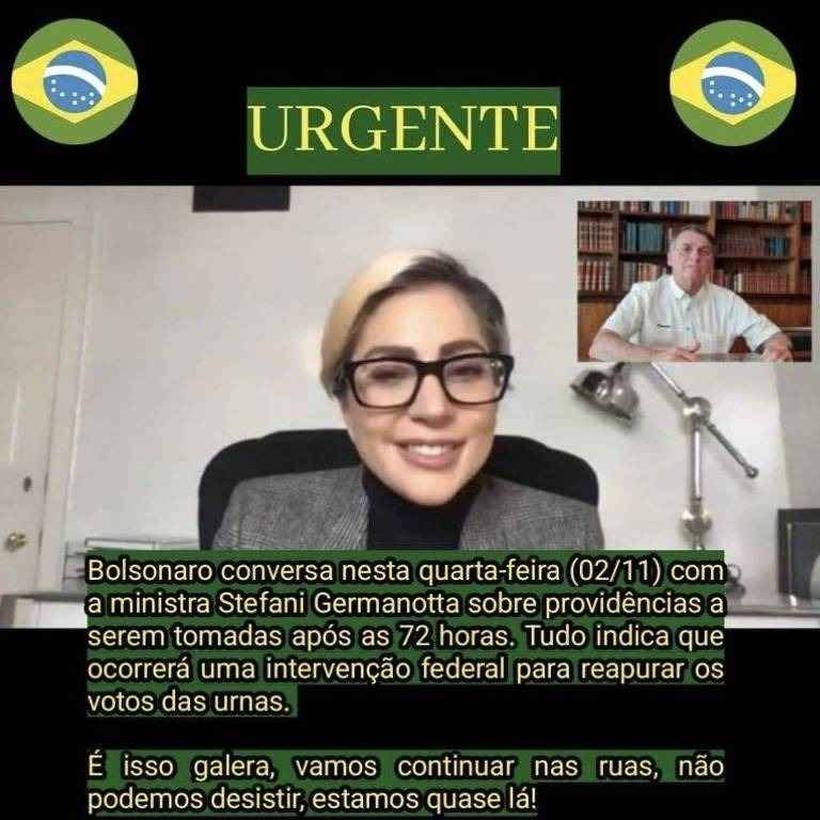
I am not familiar with Bolsonaro's movement, but censoring people under the guise of protecting democracy doesn't seem very democratic to me? At the very least, you have to admit here that there is a slippery slope where a good intentioned government or justice system could progressively get further away from these good intentions, and start using its power merely for the preservation of it?
It seems to me that censoring ideas that seem dangerous is far more dangerous than trying to correct them, and that a very high level of free speech is one of the most powerful antidotes against this slippery slope.