I'm blessed to remember fondly of my childhood where my grandmother, mom and aunties made kimchi altogether as a family, put them in large pots, men dug holes in the ground and put them in. Then, we took some out for tasting in a middle of cold snowy winter. The memory alone makes me salivate today.
I find this topic of fermented foods in different cultures pretty interesting. Surely they enabled people to survive a rough winter with food shortages. From an evolutionary perspective, it could be said that those peoples who didn't learn to produce fermented foods might've perished from starvation. It is an art that shouldn't be lost.
I really don't see the correlation with food shortages. Cabbage isn't nutritious at all. You'd need to eat 8 to 10 heads of cabbage to get 2000 Calories
As my sibling comment points out, it's full of micronutrients, which can be hard to come by when there isn't much growing. Having access to a decent source of electrolytes and vitamins really blunts the impact of having unreliable or inadequate food for a prolonged period.
It's not the cabbage per-se, it's what you cook it with. Like mushrooms, they have very few calories raw, but are cooked with some form of fat and that's what delivers the calories.
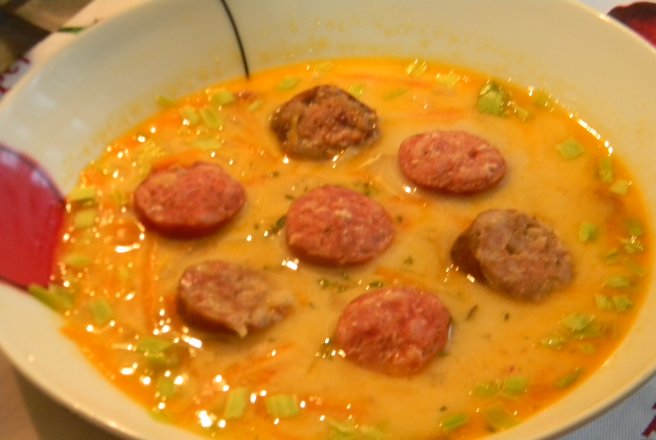
In Romania, pickled cabbage is a staple in the winter, cannot be that dissimilar to kimchi although I haven't tasted it. Particularly I like pickled cabbage juice straight from the barrel, some two months after they are prepared for fermentation. That's right around Christmas and it's the best thing to have after a hangover. There's also "drunkard's soup": cabbage juice soup, fatty and sour: https://www.bucataras.ro/uploads/modules/news/41634/656x440_...
Coming back to calories from cabbage, there's cabbage soup where cabbage is really, just for the flavor, like tea leaves in a tea you don't have to put a ton of them. That's one of the things I learned making my own soup, in the first one I put like a whole cabbage and turned out some yucky stew.
And there's sauteed cabbage, which I usually make in the fat left from frying sausages. And it's eaten with the very sausages, plus milk sour cream and bread. So a ton of calories, the cabbage is just ... I dunno, "the delivery agent" :)
But indeed it's not related to food shortages coze you don't have bread and cream and sausages when that happens. It's more like one of the several staples, coze although tasty, you can't eat potatoes all day, gotta vary.
Apparently protein as well? I remember reading that cabbage is the highest yield protein per acre. It's just wrapped in a whole bunch of greens you have to munch through first.
The use of Kimchi as a method of cultural outreach and cultural expression is really interesting (and ofc kimchi is delicious). My favorite detail is that South Korea funded development of a version of Kimchi that was appropriate for space[1].
P.s. another very Korean detail in that story is that Yi So-yeon, the first Korean astronaut, later left the program to pursue an MBA.
I was in South Korea for about 3 months earlier this year and went in absolutely loving kimchi. But what surprised me was how much a meal is determined by the type of kimchi that’s available.
For example, fresh kimchi is best with boiled pork belly, while a more sour kimchi is better for stew. And then there’s this “peak” kimchi for eating by itself — it’s tremendous when it’s homemade.
Can’t wait to go back to SK and, if you haven’t had it, I highly recommend finding some kimchi & pork belly. It’s an unbeatable combo.
For anyone who passes through Seoul, the Kimchi Museum (https://www.kimchikan.com/en/) is pretty fun. It's small, but very inviting and informational in terms of the diversity of methods and ingredients, the cultural impacts and the science. They do classes as well, and it's all quite kid friendly.
The slow transition of Boyle Heights from a Jewish neighborhood to a Mexican / Central American neighborhood means that pastrami is Mexican street food par excellence. You can get a pastrami burrito and it's as heart-stoppingly delicious as it sounds.
Similarly, the 23rd St. Cafe serves great Indian / Mexican fusion.
I have tried 4 times now, and I'm pretty sure it's because the only recipes I find are from Korean-american migrants, meaning that they'll use kosher salt, which we in Europe don't have. The salt/water ratio will be off, which will prevent fermentation (and lead to oversalted kimchi).
If anyone here is a Korean and knows of a somewhat traditional kimchi recipe using metric units and table salt, I'd be stoked if you would post it in a comment.
Kosher salt and table salt of similar chemical composition (i.e. not the 60% potassium "low sodium" stuff) should be interchangeable if measured by weight?
I've read somewhere that the iodine can negatively affect the fermentation process, so that it's better to use iodine free sea salt. Cant remember the source, though.
Use about half the amount of table salt to kosher salt for a salt and rinse step. Then shoot for 2% by weight. Generally I avoid salting ferments by volume. I saw a recipe in the sibling comments.
Also, be sure your salt doesn't have any additives. Some "table" salts have anti-clumping ingredients added. These will prevent the ferment. I ferment a lot and use sea salt (Meeressalz) without any troubles. Good luck!
Not sure if you're unaware or don't care, but sea salt contains microplastics. You can get untreated alpine salt (Alpensalz) pretty cheap (presuming you live in or around Germany)
On the surface. Not necessarily in the caverns, where it is 'mined'.
OTOH thinking about the large trucks, tractors, and other machinery operating down there, there is probably contamination too, just by abrasion from the rubber tires, or beltways.
I have used maangchi’s method as well as fermented a couple dozen other sorts of things over the years. It would be hard to argue that fermentation is prevented. In my experience it is a very active ferment.
Weigh your cut vegetables, then add 2-4% salt by weight. Thoroughly mix it in a glass bowl by hands and let it weep out water. Let it sit in a jar with weights to keep the vegetables below the brine water level. After a few days (depending on heat and the desired softness and fermentation) drain the excess brine and add chopped garlic, green onions, ginger and chili powder (I usually leave a bit of brine to wet the chili powder). And seafood if you're interested. Pack this into jars and let it sit in a cool place for awhile (I use the fridge if I have space, otherwise a root cellar, or in the ground works).
But yeah, 3% (non-iodized) salt by weight. You can top off the brine with filtered water if your vegetables don't weep enough, but this hasn't been a problem for me.
I've always been able to get away with 2.5% by weight - inclusive of any water of course. The two things to make sure of - which you seem to know but for others reading this - are no iodized salt and no chlorinated water.
I've made kimchi a couple of times. As others suggest, the main issue with a lot of American recipes is that they use volumetric units (cups, spoons, and what not) to weigh out ingredients. The main difference between kosher salt and normal salt is density. And probably no two salts have exactly the same density. Meaning that these recipes are super imprecise.
So, the good news is that precision doesn't really matter for a lot of these recipes. But if you want to be precise, use proper weight units and get some proper tools to weigh things out. 2.5% is a good target (by weight) for a brine. I use precise weights when making bread. When making kimchi I don't weigh out anything.
Here's what I tend to do too make kimch:
1) get cabbage and use lots of salt to draw out the moisture. More is better. The goal is to draw out water. You cannot use too much salt at this stage. Use cups, buckets, whatever makes you happy. It does not matter.
2) after 40 minutes or so, wash the cabbage; most of the salt will go down the drain at this point. This is why the amount of salt doesn't matter. The remaining cabbage will taste slightly salty but not overly. That's because some of the salt will have made it into the cabbage through osmosis. Nature will get the ratio right for you.
3) prepare a paste with sugar, some salt or fish sauce (season to taste basically), some starch to thicken, mix in the chili flakes and your other ingredients. Use Korean chili flakes if you can get them but you can fall back to other chili flakes. You want mild heat, don't go too crazy here.
4) mix everything together and put it in a jar. There should be enough juice coming out of the cabbage to cover the ingredients. But if not, add some water. Obviously use water without chlorine. Or put differently; use water that tastes nice when you drink it. Don't put stuff that doesn't taste nice in your kimchi.
5) Let it ferment. You should see fermentation happen within a day. Activity will taper off after a few days. There is no right or wrong here. Some like it fresh, some like it funky. Ferment longer for more funkiness. I usually go for about a week.
I loosely follow Maanchi's recipes. But I've watched a few other ones on Kimchi. Brad Leone is highly entertaining and he ferments all sorts of stuff. The main thing you can learn from him is that fermentation is easy and that there really is no right or wrong here.
It's a natural process and all you are doing is letting nature do it's thing. It's pretty hard to mess it up actually. The main thing to understand is the optimal salt to water ratio in a brine (and a lot of other food) is about 2-3% by weight. But you can be off by 50% and it won't really matter much. Anything too high and you kill the yeast and the bacteria and they'll be less active. Anything too low and they'll be less active. You can just go by taste here. If it tastes too salty, it probably is.
Kosher salt is a US thing. But of course kosher food is a Jewish thing and Jews of course emigrated pretty much everywhere. Though probably not a lot of them ended up in Korea. All it means for salt to be kosher is to have no additives. So, get some salt without additives and weigh it out and you'll be fine. I've used with and without and honestly it doesn't make a huge difference. Use what you have.
For authenticity, use Korean ingredients and get all the good stuff. But bear in mind that this is food that was made for centuries by people without any modern tools. It's not that hard.
You are exactly correct on the use of salt, but that paste suggestion is pretty awful. Instead, blend half a yellow onion and a bunch of scallions, garlic, and ginger together. A bit of fish sauce and soy sauce for salt is good. You don't need any sugar in it. Typical ratio is:
- 2 napa cabbage
- half of a yellow onion
- 4-6 green onion/scallions
- a couple table spoons of ground garlic or garlic paste
I got that from Maanchi actually. The main thing with the sugar and starch is probably just speeding up the fermentation. But this sounds pretty delicious too. I left out a lot of the other things I usually mix in though.
I think the main thing here is technique. The rest is picking nice ingredients and flavouring.
tl;dr You can use table salt if you wish, but you need to use less. This article might help [1] as might this one [5]
Not Korea, but my wife is native born. Her family recipe is a little different than the ones I've seen online, but the result is still kimchi. There's also literally hundreds of different kinds of kimchi, so there's definitely flexibility built into the concept.
It's not really Kosher salt that Koreans use, but very coarse sea salt. It's usually sold in stores in Korea (or Asian food stores elsewhere) either in big bags by the kg [2][3], or often in a big bin near the produce in a grocery and you just scoop up as much as you need into a container and pay by the kg.
The problem you are having is not the ingredients in the salt, it's the coarseness of it. With sea salt, or kosher salt, the grains are very large and so you get less salt per unit volume. I'm 100% certain you can track down some kind of large grained coarse salt as it's used in all kinds of cooking settings, often as a late-in-recipe seasoning on breads and meats. It's likely to either be coarse grained sea salt, unground salt, or even a coarse grained mined salt like Himalayan pink salt. I believe there's a well known French coarse grained grey sea salt called Moulin & Cuisson or Le Guerandais or something that would be a good substitute.
Most major European cities have a large enough Asian population these days that there is probably an Asian grocery where you can also check also. (I'm only aware of this because when we travel in Europe my wife almost always seeks out a few things so we can cook at home instead of going out to save some money).
You might also be curious to know that the world's largest commercial Kimchi maker has a factory in Europe (Poland). [4]
I’m a first time kimchi maker, used the a Baechu ( napa cabbage ) Kimchi recipe from “Fiery Ferments” ISBN-13 978-1612127286
Came out really good despite not having some of the ingredients because I’m disorganized (left out carrots, ginger, scallions). My Taiwanese neighbor suggested adding apple to sweeten it up a bit, cut the sour, and less Korean pepper flakes.. but I like mine spicy.
Working on a second batch now.
The book has a couple other kimchi recipes in addition to dozens of other fiery ferments.
seconding Maangchi's site for all things korean food. As a Sydney-sider with an ability to sample tonnes of top-shelf Korean cooking from local restaurants - maangchi will get you cooking most Korean staples just as you get them from the restaurants :)
I've been using tiny dried shrimp (bought from a Vietnamese grocery) and a little extra fish sauce as a sort-of substitute and I've been very happy with the final product.
Palace BBQ in Crossroads Bellevue has okay KBBQ, but their kimchi is one of the better ones you can get here (and thats comparing to the places in Fed. Way)
It's fascinating to learn about the large diversity of ingredients that go into kimchi (of all types) – from seafood (shellfish, fish) to fruit (pears, jujubes, etc...) and spices...
One of my first questions: how will climate-change affect the composition of "complex kimchi"? Will the changes be profound (at least to Korean tongues), as with coffee?
Strong recommend for kimchi beginners. I've always loved ALL kimchis, but my partner only came around to cabbage kimchi in the last couple years. Long before that - once I made some daikon kimchi, she loved it and got hooked.
I mention this because daikon kimchi while sacrificing the tenderness, delicacy, and complexity of flavor of a good cabbage kimchi is really, really, REALLY forgiving. So if you want to learn the fundamentals that's a good place to start.
Also - it may seem like an extravagance, but get a fermentation crock with a water seal and weights. They pay for themselves in ease, time, and better product with far less chance of spoilage in just a few batches... and literally a couple batches if you account for the retail price of kimchi vs. the cost of the ingredients for homemade.
Yes. I think the first one I tried was a very simple kind. I think in retrospect, it probably wasn't bad, it just wasn't the kind that you would typically eat by itself.
Later, I tried some really good ones that I could eat on their own but in any case, the value proposition of Kimchi became clear to me after I tried it with a rice/meat dish like Beef Bulgogi. The slight sweetness of Bulgogi works amazingly well with the bitterness of Kimchi. There's a flavor to trigger every tastebud.
Also, I've come to appreciate dishes where every bite is slightly different and the flavor evolves as you progress through the dish from start to finish. Kimchi is the perfect condiment in that respect because it is often used as a topping, hence it hits you at the beginning. It awakens your tastebuds and prepares you for a full gastronomic journey... In a single dish.
Also, I like that Kimchi doesn't just awaken your tastebuds... It goes one step further than the humble pickle. The complex flavor profile of Kimchi challenges you to seek out complexity in other parts of your dish.
It should taste sour, salty, spicy, and a tinge sweet. I've had good and bad kimchi, the difference can be substantial. The best has far and away been what I made myself.
I'm non Korean, but I've made Napa cabbage kimchi a couple of times following instructions from the internet0]. The seafood is optional. I used fish sauce, but that's it. It came out fantastic, and I encourage you to try it! Her video that accompanies the recipe is worth watching too.
I've made vegetarian kimchi dozens of times and you can get away without it. Plenty of purists have every right to tear me apart here. But as a vegetarian, between 1. giving up one's principles, 2. having no kimchi or 3, staying true to one's principles and still having kimchi that's 85% as good, I'll take the latter, thank you very much.
If you're not veg you can use prepared seafoods - cured versions, sauces, etc to get most of the way there. As a vegetarian I use soybean paste to sub in for the umami flavor and some of the salt / fermentable sugars I'm otherwise missing.
The only seafood you really have to use (and if you are making vegan then even that is not needed but the taste will suffer) is those special anchovies which are frozen and salted so I'm not worried (making kimchi myself from time to time). The only really important thing is that the result has enough salt in it, but recipes make sure to drive this point home.
>They have more than 200 years of combined kimchi experience, but ask any one of South Korea’s most esteemed kimchi makers the secret to a good one and you will get a different answer.
As a middle aged Asian-American, it's somewhat amusing and frustrating to see how Korean and other Asian foods were reviled and mocked when I was a kid to now being revered.