I use PWAs extensively and Firefox decided they won't bother to implement them, so that's going to be a no from me.
Rather than wanting the web platform to be first class, they really want it to languish as a second-class citizen. Really sad, seeing as they also fired devs, and invested in "AI" instead.
They just seem like another way to attempt to shift users from the 'proper web' into a place where blocking ads is more difficult.
Personally, I wish we could purge the vast majority of 'apps' from the world, they shouldn't be apps in the first place, most have no need to run native code, they should be links to websites, sites that can work on more-or-less any device in any browser.
I used to be the maintainer for Nativefier (which made web apps into native apps via Electron). It was very popular because many people don’t want certain sites to be one of X tabs in one app, especially when those sites act like they’re own apps. So we gave users the ability to treat these web “apps” like any other apps.
We actually shut down the project because a good PWA implementation does this better than we ever could. PWAs can have extensions like ad blockers (very difficult to impossible in Electron). PWAs get automatic browser updates (very difficult with Electron).
PWAs are great, and FF’s implementation of them is not.
> They just seem like another way to attempt to shift users from the 'proper web' into a place where blocking ads is more difficult.
Extensions still run in PWAs on Chromium-based browsers, so I'm not sure that's the intent behind implementing them.
> Personally, I wish we could purge the vast majority of 'apps' from the world
Out of curiosity, where do you draw the distinction between an app and a website? PWAs are largely just websites with an OS shortcut, and in some cases more integration via platform APIs. I'm sure you're familiar with the term "web app", which perfectly highlights how muddied the line is with modern tooling.
I use Elk Mastodon client - being able to install it as a PWA is great - I get a nice icon on my mobile screen same as any other app, and it runs full screen without an address bar. I can switch between it and other apps, I don't see the downside really
On Windows the Twitter, Instagram, TikTok apps are PWAs. I like to use them because I can pin them to the start menu, have them start on a separate window by default and remember the window position.
Having apps that works as well as native ones, while using the same codebase and open technologies, and that is naturally as decentralized, safe and accessible as the web.
Also not needing to be politically correct, approved by Google and Apple or share large percent of revenue and marketing data with them.
It could be happening if Firefox took it more seriously and Apple didn't prevent it from happening.
Getting a full screen view without having to go through the insane hassle of Ionic and the Play store every time you make a one line change? Really useful for various offline control web apps, though I admit it's a rounding error use case that most browsers are more hostile to every year with arbitrary restrictions around HTTP connections (did you know Safari's ATS policy now blocks fetch over unsecure connections, lmao). Web games come to mind as well I guess?
I'm still baffled that mobile browsers don't have the desktop equivalent of F11. Or a console for that matter, the ADB is good and all but it's not always an option.
> Firefox and Safari do not support installing PWAs on any desktop operating systems... Chrome and Edge support installing PWAs on Linux, Windows, macOS, and Chromebooks. [1]
Any idea what Mozilla's motivation is here? (Apple's at least is easy to understand, even if you disagree.)
> Firefox and Safari do not support installing PWAs on any desktop operating systems... Chrome and Edge support installing PWAs on Linux, Windows, macOS, and Chromebooks.
Curious, can you give some examples of PWAs you use, and why? I've rarely seen any benefit of actually installing a PWA vs just bookmarking the site.
On mobile, I could see privacy reasons for wanting to use a PWA vs a native app, but every time I've seen a site that supports a PWA, they also support a native app and the PWA is usually a sad substitute in comparison.
Photopea, it's a web based photo editor that is really really great. If you install it as a PWA, it works offline. Similarly, excalidraw, monkeytype, google calendar all work offline if you install it as a PWA.
Apart from that, I have youtube music, slack, discord, whatsapp web just for convenience of having it in alt+tab rather than cycle through a thousand tabs (admittedly, this usecase is nullified by tab search)
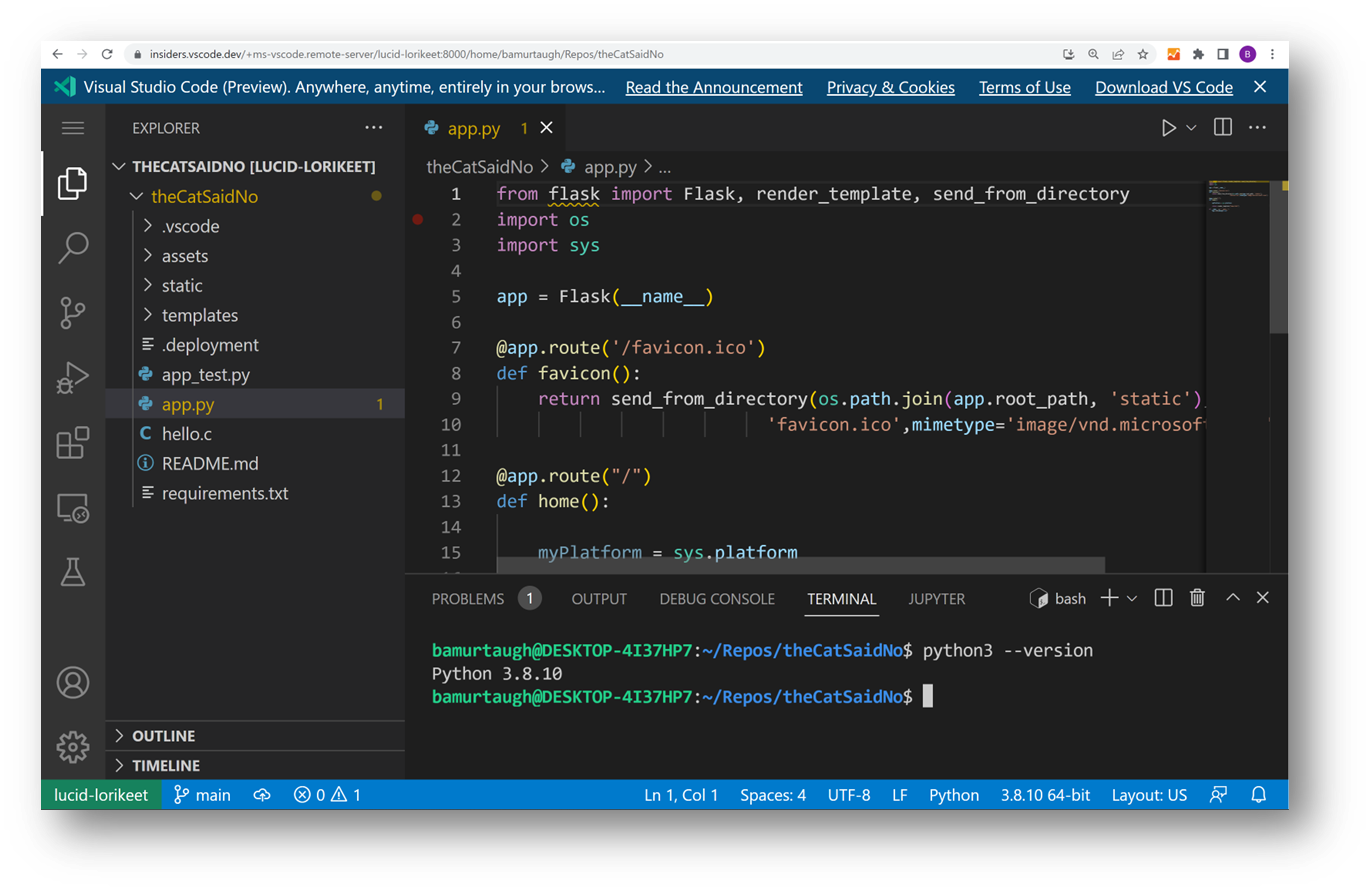
Any online IDE is a much nicer experience as an installed PWA compared to as a browser tab. VS code server for instance, since you don't get a the address bar at top like https://code.visualstudio.com/assets/docs/remote/vscode-serv... (without having to go Full screen on browser), and you get a standalone icon in task bar, and standalone window so you can Alt-Tab between it and other apps like web browser of choice quickly.
I use PWAs for YouTube Music, Slack, and Readwise Reader.
Sometimes there is a standalone app available, like with Slack, but often the PWA has the same features and doesn't duplicate the entire Web Platform stack (Electron), which saves some battery.
Along those lines, does macOS 14's Safari's support for "Add to Dock" count as installing a PWA? I have a couple frequently used websites in my dock, acting more or less like regular Mac apps (or at least like Electron apps). What would a "proper" PWA add to that?
(Not a leading question. I'm genuinely asking people who like and use PWAs: is there something cool I'm missing out on?)
You're correct. I'm actually not sure what installing a PWA does that visiting the website in your browser doesn't, but it's essentially opening the website in a headless browser. So very much like electron except instead of having to bundle the browser in the executable it uses your machine's browser.
I personally hate PWAs even the ones I use on mobile (with firefox). Not being able to open a link in a second tab for example. I much rather just open the web app in a normal browser. PWAs just seem to reduce functionality over a normal web page.
I like to see Firefox the browser as something that will have a life independent of Mozilla the (crappily managed) corporation. When they finally go down in flames, the open source community will continue to work on it in some fashion. It started as a skunkworks project, and I expect it will continue to have a life after Mozilla.
That, or something else will fill the void (maybe something built off Servo, I dunno), but that seems less likely.
I have tried to switch out of curiosity, but the lack of PWA support in addition to missing features like WebUSB really limits how useful the browser is to me.
we really need a wealthy tech founder type (especially one who made their millions or billions on the web) to start a new foundation that will actually care about Firefox rather than see it as a liability. Mozilla has completely lost my trust and support
I didn't follow this PWA stuff very closely, but from what I understand, Mozilla didn't want to implement the PWA protocol proposed by Google because it contained things that weren't compatible with the open web view focused on the benefit of the users which Firefox has. I'm happy there is a browser that takes this stance.


Rather than wanting the web platform to be first class, they really want it to languish as a second-class citizen. Really sad, seeing as they also fired devs, and invested in "AI" instead.