Way back in the 1960's Isaac Asimov wrote an essay called "Forget It," in which he goes over some of the things children used to be routinely taught in school that are no longer part of the curriculum. Such as the full range of arithmetic using Roman numerals. Such as dry weights, including 2 pints to a quart, 2 quarts to a...pottle? 2 pottles to a gallon, 2 gallons to a peck, 4 pecks to a bushel, 2 bushels to a strike, 2 strikes to a coom, 2 cooms to a quarter, 5 quarters to a wey, and 2 weys to a last.
Asimov makes the case that rather than teaching old information, we should be forgetting more obsolete facts to make room for more modern and efficient material. We're never going back to a world where cursive is in widespread use. Nor will we need to. By the time the last generation of cursive readers has died out, people will likely have available a "Google Lens" type augmented-reality translation on the fly of great-great-grandma Edith's old love letters.
>Asimov makes the case that rather than teaching old information, we should be forgetting more obsolete facts to make room for more modern and efficient material.
In high school (gawd, 30 years ago now), we had to memorize the opening of Canterbury Tales in Old English. I can still recite the first few lines. Why? What was the point of forcing students to do that? It's taking up precious space in the very limited memory banks. Instead, I can't remember if the arguments for the explode function has the string then the separator or the separator and then the string.
> In high school (gawd, 30 years ago now), we had to memorize the opening of Canterbury Tales in Old English. I can still recite the first few lines. Why? What was the point of forcing students to do that? It's taking up precious space in the very limited memory banks.
Some schooling focuses way too much on rote, memorization, etc. But........
IMO, we often get the main point of education wrong. It's not so much direct transfer of useful skills or a body of information-- though these are still important. Instead, I think the ability to be disciplined, systemic, and learning how to learn things and accept challenge should be the main goals.
On a limited basis, practicing the skill of memorizing poetry and reciting it to a class can be a useful exercise. Now you know you can do that, how to do it, and about how long it's going to take. You were also forced to engage with that particular content in a deeper way than a casual, unmotivated reading by a high school student would have resulted in: the overall cadence and structure is cemented in your head as much as the very words.
Education used to be very memorization and recitation heavy. Leaving a little bit in seems useful, even though it was the kind of thing I hated most as a kid.
I agree. I hated the podunk backwoods country town I grew up in, but after 30 years, I have to admit that my schooling was not so bad after all. Actually, it seems to be an outlier in how well it actually prepared me compared to other people's opinion of their schooling.
The thing that I appreciate most about the teachers and the curriculums taught was that they taught me (I would say us refering to all students, but don't want to presume) was how to learn. I should say, the math/science classes did this. The history/literature classes were all rote memorization BS. I did not like those classes an did not do well in them. However, the other classes where I learned how to learn allowed me to become what has been labeled "a self-learner". I can read subject material a few times, experiment, and then "know" it well enough to function. Practice and continued use makes for much better retention than rote memorization. I used to ask teachers for anything that was still unclear, now it essentially is replaced with SO searches.
I noticed an interesting effect in college that other graduates I talked with noticed, too.
One learns how to learn. New material is learned faster and more accurately. One also learns what parts to focus on, and what parts can be dismissed, which helps learn more efficiently.
A thousand times this! School is obsolete by construction if we only learn specific skills, which might not stay relevant for long. Learning how to learn is the truly useful thing that a good school should provide.
I am baffled by all the comments about how children should learn <specific skill someone think is important>. How useful would have been an education where arithmetics would have been focused on how to use slide rules? And yet, that was a practical, critical professional skill for quite some time.
Learning to use a slide rule gives one an intuitive feel for logarithms that is hard to get any other way. Slide rules are still faster than calculators for approximate calculations.
It also gives one an appreciation for calculators. It's like learning to use hand tools before machine tools. Hand tools impart a feel for the material being cut that pays off when using machine tools.
I was taught to use a slide rule in 5 minutes. It's just one moving part, and you read the numbers off the scale.
Yes, I'd teach kids to use a slide rule. It's not necessary for them to become expert at it, just get comfortable with it.
Why learn exponents? People will never learn compound interest without getting comfortable with exponents. Not learning compound interest will forever financially cripple them. Hell yes, it's worth while.
My accounting class was taught by a former used car salesman. He'd tell me stories about how poor people made very bad choices in financing, and when he'd explain how compound interest worked, they'd assume he was trying to cheat them.
For me personally, knowing math and trig, etc., has provided me a lifetime of payback. Very, very worth it, in dollars and cents.
I'm not saying that math and trig are not valuable.... I'm merely questioning whether a slide rule has the best payoff of those few minutes vs. say, watching Powers of Ten by C & R Eames.
I don't think you cultivate the kind of intuitive understanding of exponents and logarithms you're describing with a few minutes of casual practice with a slide rule.
It worked for me. I never spent much of any time with a slide rule, but played with it enough to see that yes, adding logarithms to multiply worked like magic. (This was in high school.)
My first semester at Caltech had slide rules in the bookstore for $125 (mebbe close to a grand today). By the end of the semester, they were $5, and disappeared by the 2nd. I've never seen a tech revolution hit so hard and so fast.
The trouble with calculators is they impart no feel whatsoever for the math behind it. You get a string of 10 digits that is "The Answer". People get led astray by that all the time, including professionals. It's amazing how these people defend obviously wrong results because the calculator gives "The Answer".
Graphing calculators used to be nice to occasionally use to help build an intuitive sense of the "shape" of a function. Now I often use Desmos for the same thing.
I was a long term sub for 8th grade science a couple years ago. It was fun to use Desmos for linear regression as they collected data points-- to see how each point changed the line of best fit before these students had learned L.R. in any rigorous way themselves. It made students excited to get each next point in our experiment and make predictions about whether they believe the line, etc. (And whether we can safely extrapolate past the data we have...)
In the competitive math series I coach, one of the 3 rounds allows calculator usage. Usually using the calculator is a trap instead of doing something clever, but sometimes the calculator is the best way. I think it's kind of neat that they built it this way, because it requires building the intuition to realize whether you're really facing a problem that is purely calculation.
Yes. Also, though, often you have a body of understanding that can be coerced to just handle the new task.
Over in microeconomics... we draw budget curves, and all the operations on budget curves are a whole lot like operations on production possibility curves, so there's a lot of skill transfer.
We spent 2 class periods on PPCs, and 10 minutes on budget curves. My students better understand how to learn economic concepts, and they have a closely related skill that they can adjust for the new task.
Yes, the crossover effect is quite real. I remember my econ class, where the textbook spend a lot of time deriving derivative calculus. Except they never mentioned the words "derivative" or "calculus", because evidently that triggered math anxiety in econ students. So the book went around the horn doing it the hard way, using different terms like "marginal rate of return".
Me, I had a good chuckle over that. I kept all my college textbooks except the econ one, which went in the trash.
That's one way that I'm hamstrung by the College Board. All of my students know or are taking a calculus course (and those that are, are past the limit definition of the derivative by this point).
I would rather be teaching this material with calculus and not just handwaving and saying "the marginal revenue curve is twice as steep as the demand curve!"
But they're going to pass an examination where it's all done algebraically and visually.
[I DO THINK there's some value in taking these algebraic and visual approaches, but there comes a point in the class where they get rather awkward].
Maybe I wasn't quite clear. The econ book did derive, teach and use calculus, it just obfuscated it using different terminology and symbols, to hide the fact that it was calculus.
I think we're in agreement in that --- the algebra-based microecon class I'm teaching is effectively using and re-creating calculus, too.
I've already told students many times we're going to find the area of shapes on this graph, where I'd actually just subtract the curves and take a definite integral.
And the graphs are a really, really nice visual for the subject matter. Being able to point to consumer surplus, producer surplus, tax revenue, and deadweight loss as regions on the graph means you know how all these curves relate. But then we end up doing all this awkward not-quite-calculus stuff.
I tutored a group of students in business school who were, shall we say, not mathematically prepared perhaps especially in microeconomics.
Maxima and minima were certainly one issue because that required calculus, however simple a form thereof. I'm not sure even the simplest formulaic version ever got through. But we're taking about totally not getting solving simultaneous algebraic equations and one student told me I needed to explain "graphs" so it was all mostly a hopeless project.
Yup-- College Board's preferred approach here is memorization. You get -this- maxima when MC=MR. You get this -other- maxima when MU=0. You get this -other- one when Ed = -1.
Don't even get me started on "this number is always negative, so we'll just pretend it's positive sometimes-- though when you do a related calculation, make sure you preserve the sign!" (elasticity of demand vs. other elasticities).
I actually think less technical takes on things like micro and statistics can do a better job of illuminating principles than getting all wrapped up in the math does. (I think I understood stats better when I took it in business school vs. my very math-heavy engineering version--though it was still rather frequentist-oriented.) But, ideally, you still know enough basic calculus to do the actual calculations.
MBA programs have changed a lot since I did one. But math was definitely the real killer for a lot of first-years. STEM undergrads had it a lot easier.
> I actually think less technical takes on things like micro and statistics can do a better job of illuminating principles than getting all wrapped up in the math does.
I agree, but if they go to my room learning a bunch of rules-of-thumb for maximizing economic functions... and then go down the hall to math class and are learning how to optimize by finding places where the derivative is 0... it's kinda silly.
Yeah, but in this case they weren't going to those math classes. Though you could equally well argue, they also weren't going to be solving those microeconomics problems the instant after they passed (or didn't) that particular course.
I had the same experience, I hated high school...but I have to admit, the school in our lil town of 15K people was pretty dam good. Not a lot of electives, but we got really good grounding in basics: 4 years English, 4 years math (up to basic calculus), 4 years science (including physics, chem and bio). We even had an 'Environmental Studies' science class - and that was back in the 80s.
I also found it gave us a more 'self learner'/ 'figure it out' attitude. Contrasting with a lot of my peers and younger, it seems like 90% of what they ask is just a google away... Also, being able to reason about unknown error messages or system behavior seems to be a challenge for a lot of them.
Hard science, i.e. math and its applications, teach you how to think, reason, etc. Rote memorization stuff builds identity, whether you are aware of it or not. It almost doesn’t matter what you learn, what matters is that everyone around you knows the same stuff.
In between stuff is weird, it’s where people complain about ‘politicizing science’ and ‘being fed up with experts’, etc. It’s where the wavefront of known facts changes too quickly for any kind of mass education to catch up.
>Hard science, i.e. math and its applications, teach you how to think, reason, etc.
Although, especially in high school but to a more limited degree in intro level college courses as well, you still end up memorizing a lot of formulas in a course like physics--one issue being that you probably haven't taken the calculus yet that you need to derive those formulas. Of course, you often end up knowing formulas you use all the time off the top of your head anyway. But you presumably could derive a lot of them if you had to.
:D I've come across it before, but thanks for refreshing my memory of it.
So, for background, I am now a teacher. This year, I'm teaching:
* Middle School: Competitive math (MathCounts), Competitive robotics (FTC), Intro to Circuits (undergraduate EE curriculum slightly simplified and slowed down), Mechatronics Lab (3D design, embedded software, and controls).
* High School: AP Microeconomics (College level economics course), Competitive robotics (FTC), Spacecraft Systems Engineering (hoping to get a launch grant to put a small satellite in orbit).
* Clubs: HS Investment club, HS Space club, upper elementary math and robotics clubs.
I'm all about things being student led and student owned; this is especially true in my team classes (robotics and math). Even the others, I try to attain this to the extent possible.
On the other hand... Look, we've got a few hundred bodies around. We need a bell and to know where students should be. And my students do need to learn to work on things that are not necessarily their first choice of what to do, because for a lot of students this would be Fortnite 24/7. And for a lot of subject, there are pieces of information that are useless on their own until you've built a whole conceptual loop around them.
The piece makes an argument for market forces. Unfortunately, market forces often push things in the "wrong" direction. Parents want their kids to take lots of AP classes because it is helpful to get into college and also saves college tuition. But I feel like the microeconomics course I'm teaching is a lot worse than the one I'd teach on my own... I dare not stray too much from the dictates of the College Board, though, because students need to pass that test. Parents also like "rigor" of students working meekly and quietly because it seems like it's a quality signal (and it often is, but too much of anything is crap!).
What we really need is:
* Rigorous, controlled educational research so that we can know what works and what doesn't in what populations. Spoiler: everyone is just making it all up as they go along or, at best, following new educational trends with very little research support for them
* An educational system that actually respects and implements that research.
* Respect, safety, and adequate resources for teachers. (I do extraordinary things with my classes in large part I teach in a very easy environment-- from class sizes, organizational support, resourcing, and student behavior).
> is a two way street. Teachers routinely blame the parents for any failures in the classroom.
I teach in a great environment, but my public school peers are frequently berated by parents of students that complete no work.
Even in my environment, I am pretty constantly "talked down to" by parents-- there's the implicit assumption they're better than me. I have enough confidence from past successes in industry and life to shrug it off, but I could easily see it becoming demotivating. Someone with my skills can easily find more lucrative and less challenging work.
> > adequate resources
> I never learned more than at Caltech where the material was taught with blackboard and chalk, and the students used pen and paper.
I teach computer engineering with pen and paper.
I mean things like "a living wage", "time to prepare for your classes and go to the bathroom", "not sticking 40 middle school students, including many with severe behavioral problems, in one room", and "not having to buy pencils and other necessities for your students with your own money".
There's also a whole lot of nice-to-haves that make a difference. The $15 set of refillable whiteboard pens that have a very wide nib and make huge dark lines are very useful, but ain't no public school teacher going to get those over worn-out Expo markers. Candy bribes and stickers used judiciously as prizes to fuel classroom competition make a difference. Etc, etc, etc.
Sure, there are rotten parents. No excuse for them. But I'm talking about a general disrespect teachers have for parents. This is manifested in not wanting any input from parents, not wanting to hear from them at PTA meetings, not consulting parents in any way shape or form about the curriculum. Teachers do want parents to volunteer, but only at their direction. No collaboration.
As for pencils and paper, pencils cost a few cents each, and the playgrounds of the schools I attended were littered with pencils. Paper is so cheap people throw away reams of unused paper all the time.
Me, I prefer the more expensive $5 gel pens, but they'll last me a couple months each.
P.S. My dad taught at university for years. He grew up in the Depression, and his thrifty ways followed for the rest of his life. He'd bring home used paper - such as exams printed on one side of the sheet, and blank the other side. His notes and drafts and accounts and tax records were done on the blank side. I have many boxes filled with those papers. When they were inadequate, he'd buy boxes of newsprint, the cheapest paper possible, and write from edge to edge in tiny script. Nobody could get more out of a piece of paper than my dad :-)
> But I'm talking about a general disrespect teachers have for parents. This is manifested in not wanting any input from parents, not wanting to hear from them at PTA meetings, not consulting parents in any way shape or form about the curriculum. Teachers do want parents to volunteer, but only at their direction. No collaboration.
It's easy to blame teachers for this, but in public schools generally greater than 100% of instructional time is already spoken for. Administrators and regulators are heaping requirements upon teachers to cover material. Then, because not enough time is allotted, the only option is to cover it badly and quickly.
Also, because many teachers have inadequate planning and grading time, it gets really tempting to do what you did last year; veteran teachers tend to work >125% of contract hours already.
I'm open to collaboration. Unlike most teachers, I have a lot of flexibility in how I run most of my classes. But AP Microeconomics? Pfft. I don't have the luxury of caring what your suggestions are about how I run that class. I have 34.5 equivalent-block-periods of material to cover in 35.5 equivalent-block-periods, and I'm sure there will be a fire drill or something that I need to reteach that will claim that buffer.
This is just a snippet of the high level plan (lesson plans go into greater detail), showing how I'm forced to think about a class where there's explicit heavy curriculum requirements: https://i.imgur.com/YQk5LBP.png
> As for pencils and paper, pencils cost a few cents each, and the playgrounds of the schools I attended were littered with pencils.
That's nice. You are still trying to shame someone who is making below a living wage to purchase it, and many other things, for other peoples' children.
> I don't have the luxury of caring what your suggestions are about how I run that class
You can't expect respect for that. (BTW, other teachers have told me their reason for not caring about parental input is they were trained professionals and parents were ignorant fools.)
> You are still trying to shame someone who is making below a living wage to purchase it
$4 to supply all your students with pencils. You brought up the pencil thing. Besides, you should move to Seattle where public schoolteachers make 6 figure salaries, have a pension for life, gold plated health insurance, and 2 months off per year.
> > I don't have the luxury of caring what your suggestions are about how I run that class
> You can't expect respect for that.
Rock vs. hard place? If I go off track in one of these classes where curriculum is tightly specified, quantitative indicators nosedive and I get crucified by parents.
> Besides, you should move to Seattle where public schoolteachers make 6 figure salaries, have a pension for life, gold plated health insurance, and 2 months off per year.
I make ~$59k/year for a 104% teaching load in the San Francisco Bay Area.
Teaching my circuits class, I've bought a few hundred dollars in soldering irons and integrated circuits and breadboards for my classroom. The school borrows my old digital storage oscilloscope and other tools. I also end up pitying the robotics teams and buying them lots of stuff.
I got rich in industry so this works OK for me, but...
And yes, if I went and got a master's degree, I could make a bit more in public education, in exchange for a much worse classroom environment and lower level of respect. Still would be nowhere near the pay I could get elsewhere.
You should have said you bought electronic equipment for your students in the first place :-) I can respect that.
I see that pencil trope all the time. In Seattle, they run a school supplies drive every year and pencils figure prominently on the donation list. This is a school system that spends $16,941 per student, and yet begs for $.05 pencils.
"San Francisco Unified School District spends $17,464 per student each year" sez google. I infer your complaint is misdirected at the taxpayers, and should be with mis-spending by the school administrators.
> I see that pencil trope all the time. In Seattle, they run a school supplies drive every year and pencils figure prominently on the donation list. This is a school system that spends $16,941 per student, and yet begs for $.05 pencils.
Read actual teacher accounts of what they spend kitting out their classrooms.
And yes, public school systems spend massive amounts per student, and then still expect charity from everyone: employees, parents, the community, etc, to fund normal operations and provide normal supplies.
Your digs at mandated curriculum, how cheap the supplies are, etc... are really beside the point. They're like yelling at the front-line customer service rep who has no power to affect the things that concern you.
Public school systems are often kafkaesque. Classrooms with 40 students; administration that externalize all problems to the teachers and refuse to address behavior problems; IEPs for 20 of those students mandating "preferential seating" and individualized teaching interventions. Curriculum that is garbage and overspends classroom time. Asking teachers to develop massive amounts of materials themselves. Or alternatively to only use provided material with no enrichment. Sometimes alternating between opposing harsh policy lines every few months.
Yes, there's some moderately high comp'd teaching jobs out there (lol not mine) and some situations which fare better on respect and autonomy (like mine). But if it were such a sweet gig, we'd not have teachers leaving the field in droves and a shortage.
[And the intrinsics of the job itself are wonderful-- teaching successfully feels great. You really have to try hard to screw it up to make teachers miserable, and that's what our society does].
I've heard the pencil trope from you, as well as other teachers, not administrators. When the school spends $16,000 per student, and can't get pencils, it just doesn't add up.
> Asking teachers to develop massive amounts of materials themselves.
Another thing I cannot comprehend. How many 5th grade teachers are there in the US? 10,000? How many lesson plans have to be developed? 10,000? This is absurd. Any other industry would share lesson plans. Teachers also tell me that each summer for their grade, they have to develop the 5th grade lesson plans all over again. I asked why not reuse last year's? One teacher told me she had to customize them for each student. I asked her how she could customize them over the summer when students weren't assigned to classes until school started. She didn't reply.
> You really have to try hard to screw it up to make teachers miserable, and that's what our society does
More like that's what socialism does. The public schools are a service provided by the government, and exhibits all aspects of socialism. Your observation that the public schools are Kafkaesque is right on target. More money will not fix them.
> I've heard the pencil trope from you, as well as other teachers, not administrators. When the school spends $16,000 per student, and can't get pencils, it just doesn't add up.
The school is perfectly capable of getting pencils. The local public school teachers get $150/year for supplies and classroom decorations for ~30 kids. And they get yelled at if their room ends up looking spartan.
> Any other industry would share lesson plans.
Yup! We have things like teachers-pay-teachers where you can make a few bucks sharing lesson plans. We have some districts that give teachers a small amount of funds to use this.
We have other districts forbid teachers using any resources not provided by the district or the teacher themselves. Often "quality concerns" are really code for "we want someone local to blame if there's something in the material we don't like".
> Teachers also tell me that each summer for their grade, they have to develop the 5th grade lesson plans all over again.
The main reason you need to do this is if there's a major schedule change or upstream curriculum requirement change. Though, it's reasonable to plan to throw away 20-25% each year for other reasons.
For my classes, there's a lot of drift. I don't need to teach as much basic material in the robotics programs because I have veteran students and a lot of the knowledge spreads by osmosis. In turn, I need to e.g. figure out how to tell a bunch of 7th and 8th graders who haven't had linear algebra yet about state estimation filters this year.
Also, ... cookie cutter using common curriculum isn't great. My school purchased me the "best" set of economics slides. There's a lot of stuff I can get across clearly in a fraction of the time. There's other stuff that I feel I need to hammer harder, and have to cobble together other materials and my own creations to fill that in. I'm adjusting things for the specific class that I have (e.g. a very math-strong econ class this year), and I'm adjusting things for my specific strengths and weaknesses in lecturing to the class.
Finally, if you just try to duplicate last year's class, it's probable that you won't have the energy of presentation and excitement and effectiveness. You need to have new lessons to look forward to and some degree of discomfort / newness that you're experiencing with the class to be the best possible educator, I think.
> More like that's what socialism does. The public schools are a service provided by the government, and exhibits all aspects of socialism. Your observation that the public schools are Kafkaesque is right on target. More money will not fix them.
Again, you're not arguing with what I'm saying. I've already acknowledged we spend lots of money on schools for the most part. On the other hand, teachers from other countries with public education mostly shake their heads at what public school teachers in the US need to deal with.
The grass is always greener effect, and who knows what really is happening in foreign schools without being there. They may be just telling Americans what they want to be true. A more interesting comparison is with local charter schools.
> We have other districts forbid teachers using any resources not provided by the district or the teacher themselves.
Haha, just use them anyway. It's not like they're going to check. Besides, the teacher can reuse what he used last year, or copy one from a fellow teacher. There ought to be quite a surfeit of materials from other 5th grade teachers in the same district. There ought to be lesson plans coming out of their ears if each teacher was redoing them every year.
Most teachers I had just followed the Teacher's Edition of the textbook. I didn't see any evidence of lesson plans.
Perhaps in high school things change from year to year, but they can't be changing that much, and why would 5th grade math change?
Personally, I rarely reuse lectures I give. This is because the technology changes constantly, my old lectures are available online, and when I get invited to speak and the conference is paying the bill I think it's disrespectful to use old material. Also I just get bored with what I did before :-)
> I infer your complaint is misdirected at the taxpayers, and should be with mis-spending by the school administrators.
I never directed a complaint at the taxpayers-- though it should be directed at the voters. Society expecting/normalizing teachers to pay for supplies out of their own pocket is the problem.
Education keeps getting more and more expensive and lower and lower quality across the board. Especially in universities, but also in K12. Administration and waste gobble up more and more.
It seems like your responses expect teachers to paper over all the systemic problems. Their employer demands they teach excessive amounts of curriculum? Well, they'd better listen to parents, too, even if this is impossible, or else get no respect! School districts don't actually buy supplies or resource classrooms sufficiently? Well, teachers had better fix that!
The teachers cannot fix the public schools, I agree with that. But they shouldn't keep repeating the obvious propaganda like the Great Pencil Shortage :-)
The solution is, and you know this is coming (!), free market schools.
A half-step in that direction are charter schools, which the teachers unions fight tooth and nail.
I've never talked with a public school teacher who had anything positive to say about charter schools.
> The teachers cannot fix the public schools, I agree with that. But they shouldn't keep repeating the obvious propaganda like the Great Pencil Shortage :-)
If teachers are shamed into buying supplies for their room, it's not propaganda.
> A half-step in that direction are charter schools, which the teachers unions fight tooth and nail.
Charter schools are pretty complicated from a policy perspective. We're not talking about the same thing in different states. Some of the for-profit charter schools are much worse than public schools. Other areas have sane regulatory regimes that result in an OK product.
Even there, though, students in charter schools do not do better than students who applied for the school but didn't win "lotteries" to get in. That is, the performance benefit seems to mostly be tied to selection effects relating to parental involvement.
> I've never talked with a public school teacher who had anything positive to say about charter schools.
Welp, I'm not a public school teacher, but there is a decent charter school in town.
The big problem with "free market schools," BTW, is that the state is the educator of last resort. There's a real adverse selection problem if education suppliers can take $X to educate the most desirable students, leaving $X per student for the most difficult to educate students. A huge proportion of public educational expense is special education.
If you don't want to give up on special education, this is difficult to do.
I favor policies like vouchers for ~33% of public educational cost to be used at private institutions. This is enough to make private education more affordable to many more families (especially with institution financial aid), but could possibly increase resources-per-student for the remaining students in public schools.
Out of curiosity, what was the transition from field work to teaching like? I always hated school (the school bits, I liked the socializing) and thought I might like to be a teacher one day for that reason. I have no idea what transitioning would even look like though, it's entirely foreign to me.
It was an accidental process. I was volunteering running after-school robotics teams and my role steadily increased over a number of years.
If you want to do this at a public school, you're going to need to go get a specialized master's degree and teaching credential. Of course, there's some value in what's taught in these programs (pedagogy, classroom management, practical experience, etc). I've studied rather intensely on my own.
Interestingly, none of the college professors I had had any education whatsoever in teaching. Neither did my dad, who was a professor for 20 years. They just knew the material.
Feynman, perhaps the greatest physics teacher ever, had 0 teaching credentials. I attended one of his lectures long ago, a privilege I didn't realize until much later.
This works pretty well in an environment of highly motivated university students. But there are reasons why we expect teachers to be educated on how to teach in general.
I highly respect you, and we seem to talk here a lot. But you have this habit of holding up various edge cases that don't quite directly relate to what we're talking about as "gotchas".
I have 0 teaching credentials, too, and think I'm pretty great. The current systems we have for younger students require teaching credentials, and there's some good reasons to require some education-in-education before letting someone teach kids.
There’s no evidence teaching degrees make people better teachers.
:::
It's easier to pick a good teacher than to train one: Familiar and new results on the correlates of teacher effectiveness
Neither holding a college major in education nor acquiring a master's degree is correlated with elementary and middle school teaching effectiveness, regardless of the university at which the degree was earned. Teachers generally do become more effective with a few years of teaching experience, but we also find evidence that teachers may become less effective with experience, particularly later in their careers. These and other findings with respect to the correlates of teacher effectiveness are obtained from estimations using value-added models that control for student characteristics as well as school and (where appropriate teacher) fixed effects in order to measure teacher effectiveness in reading and math for Florida students in fourth through eighth grades for eight school years, 2001–2002 through 2008–2009.
Research highlights
▶ Majoring in education is not associated with teacher effectiveness. ▶ University attended for college is not associated with teacher effectiveness. ▶ Acquiring a master's degree is not associated with teacher effectiveness. ▶ Teachers become more effective with a few years of teaching experience. ▶ Teachers may become less effective later in their careers.
I've already read this research. The problem is that there's massive selection biases at work.
It doesn't mean taking more people without teaching credentials results in an equal or greater quality of education.
e.g. I am a high school dropout who's doing pretty-damn-well at teaching. I do not think this means we need more high school dropouts teaching, though.
I've learned a whole lot reading the pedagogy literature and reading about the kinds of strategies that credentialed teachers are required to learn during their practicum and student teaching. It's difficult to imagine that these courses of study are not useful.
(The research does probably mean that programs intended to incentivize existing teachers to get graduate degrees are probably flawed, except for some special cases in e.g. secondary math education)
In my voyage through the public school system, I never noticed any particular methodology used to teach.
I agree that specialized techniques help with specific learning disabilities, I've seen it in action. But for ordinary kids (the vast majority), the teacher just walks through the textbook for the class. The smarter kids just read the textbook and learn it themselves, as the teacher is moving too ssllooooooowwllyy.
Frankly, the teachers didn't know what to do with me. Some wanted to be rid of me. Some liked me. I don't recall learning much from any of them.
My history teacher would show Mr Magoo movies. I'm not kidding. My auto shop teacher would show drag racing newsreels. I did like my wood shop teacher. He taught me how to use machine tools and not cut my fingers off (he'd lost his in a table saw). That's paid off dividends for me my whole life since. But I don't think that required special teaching training. I learned how to use metal working machine tools in college from the head machinist, who simply enjoyed showing me how to run them.
> But for ordinary kids (the vast majority), the teacher just walks through the textbook for the class
IMO: This is a terrible way to teach. Even for very highly curriculum-driven classes like the microeconomics class I'm teaching.
My block periods are 1 hour 16 minutes. This is a long, long time to be giving dry lecture or popcorn-reading a textbook.
Bell-ringer activities and exit tickets. Gimkit to break up long lectures and get an instant reading of mastery. Appropriate strategies towards looping and unit construction. Pacing, formative vs. summative assessments.
Just how to effectively create discussions is tricky. Everyone looked a bit zoned out when we're talking about consumer surplus. "EVERY SINGLE ONE OF YOU HAS EXPERIENCED CONSUMER SURPLUS." Huh? "EVERY SINGLE ONE OF YOU HAS EXPERIENCED CONSUMER SURPLUS. Tell me when!" a few seconds of silence... eventually "Uhm.. there was a thing of candy and it had 4 pieces, and said 25 cents on it. I thought it was 25 cents apiece and I brought a dollar to the counter, but I got 75 cents back..." "Boom! That's 75 cents of consumer surplus!" Cue everyone sharing their concept of it and internalizing it when I had been losing the whole class.
I didn't have training. But I did have a year where I didn't have many classes to teach and I had a very masterful teacher on the other side of the wall and I could listen to him and learn some of what he did. And I've read a whole lot about pedagogy and research from the National Training Laboratories about what are best practices.
> My history teacher would show Mr Magoo movies.
lol. I'm about to show a 2 minute clip from a cartoon where a shopkeeper says that it's Christmas Eve and that they're going to "jack the prices to the moon" because the customer has no other choice to illustrate elasticity of supply and demand.
> He taught me how to use machine tools and not cut my fingers off
I teach robotics, and that means teaching the use of machine tools to middle school and high school students that have no common sense. It is stressful. I agree no one trains you for that :D
On the other hand, teaching is an innate human capability, and a big part of what makes us humans. An education degree is an extremely recent phenomenon.
Clearly, some teachers are better at it than others. But if anyone did a study and found that Masters in Ed teachers did a better job than Bachelors in Ed teachers, I'd be genuinely surprised.
> On the other hand, teaching is an innate human capability, and a big part of what makes us humans.
That depends on what you mean by teaching. Explicit formal instruction with at least some attention to abstract principles is basically unknown in non-literate societies. People are generally terrible at it without experience. Observational learning is something people are amazingly good at, and language helps a lot but teaching isn’t even a universal in human societies. Watching and learning with occasional, minimal correction is.
Anyone who wants to learn more should read The Anthropology of Childhood by David F. Lance.
Homeschoolers seem to do rather well with no such training.
Many parents teach their preschoolers the basics of reading before they enter school. Those parents have no special skills. My parents taught me arithmetic as a preschooler. My 8th grade teachers were still trying to teach the kids the multiplication tables.
(Personally, I suspected those kids knew the tables, they had just figured out that they could keep the teachers stuck in a loop by pretending to fail all the tests. This way they would not have to learn any more advanced material like fractions AAAAAIIIIIEEEEEEEE!!!!! This looping business was made abundantly clear to me later, when other students bragged to me how they snookered the teacher into failing to advance.)
> On the other hand, teaching is an innate human capability, and a big part of what makes us humans.
I've spent my whole career "teaching" in that sense. Explaining things, mentoring junior engineers, etc.
There's definitely skill transfer from that, but it's a bit different of a thing to try and take 25 12-year olds of vastly different backgrounds and ability for a year and get most of them to master a given curriculum.
Yes, it's different, and it's a LOT slower, as the teacher goes over it again and again and again and again and zzzzzzzz......
I missed the first 3 months of 4th grade. The teacher told my mom that they had advanced very quickly, and I could never catch up. I would have to be put back in 3rd grade. My mom said nope, Walter is going in 4th grade.
It was as if I wasn't gone a day. 4th grade had not advanced one iota. Not much to show for 30 hours of instruction per week for three months.
College was a bit different. They blew through 2 years of high school physics in a couple of lectures. This was a tremendous shock to me, and frankly terrifying. I learned I could not afford to miss one lecture, or even be late, let alone 3 months of them.
> Yes, it's different, and it's a LOT slower, as the teacher goes over it again and again and again and again and zzzzzzzz......
Three things:
* The normal pace anywhere -- even most colleges that are not CalTech or MIT -- is for chumps. It's slow so that everyone can keep up.
* On the other hand, I don't think your experience is representative of current middle class (and above) schools. Students complete a whole lot of what was previously considered college curriculum before graduating. Many of the students at my school graduate with >1 year of college credit, and this is despite the non-remedial curriculum floor in colleges moving up from decades ago.
* I don't think you can generalize your experience. You are very intelligent. Your experience (and mine) are not representative of overall student performance or problems.
The best and most fun lecture I ever gave was with whiteboard and dry erase pens. The scheduled speaker had not shown up, and the organizer asked if anyone could fill in. I volunteered, and had done no prep and had no slides.
What also made it fun was the interaction with the audience and I'd just go where those interactions led.
I don't do this normally, because everyone expects slides, and the conference organizer provides no mechanism for blackboards.
Also, blackboards are problematic for a larger venue, they work best in a normal sized classroom.
Yes, I too have come to this realization too. I too hated memorising something as I didn't consider it an "intellectual" task. But you are right that it is a necessary part of education to train kids. Indeed, now when I look at some professions as an adult - like the Indian administrative services (civil service bureaucrats), doctors, lawyers etc - I understand why the ability and skill to learn some fact quickly and retain it in memory is highly valued in such professions.
you dont even need to go to administrators. i worked as a cashier in high school amd some items just never scanned. the ability to memorize the upc codes for those items improved my metrics a ton.
when i studied engineering i also memorized commom values to speed up problem solving. I think everyone does it to some degree. Some deliberate practice while you're developing basic skills isn't a bad thing imho.
"What college degrees teach you mostly is how to think."
"We miss the actual point which was learning to memorize."
"Playing chess teaches you how to plan and think."
Well no. These were never mentioned as the goal. If the goal is to learn how to study, how to memorize, how to learn, then present it a so, focus on it.
The goal of memorizing the opening of Canterbury Tales in Old English, definitely wasn't to learn how to memorize. Maybe that was a secondary or tertiary goal. It definitely would never be mentioned as a goal in itself.
It seems like now that we had to invest our time in close to useless things, we try to find reasons why it wasn't so useless. School is extremely inefficient. I studied way, but WAY more things I'll never use, or want to use in my life again than the opposite. Education nowadays is like using a shotgun to kill an insect. One thing that's good in software engineering, as opposed to other engineering fields is that it's maybe more focused and applied. But in Mechanical, I studied so much stuff, and now I use less than 5% of it. And the argument that I hear from my colleagues "Oh but you learned how to do complicated math, how to study hard, and understand difficult concepts" just doesn't stick. It's been shown that this kind of training helps you at that task, and little else.
From a 2016 review by Simons et al:
“We find extensive evidence that brain-training interventions improve performance on the trained tasks, less evidence that such interventions improve performance on closely related tasks, and little evidence that training enhances performance on distantly related tasks or that training improves everyday cognitive performance.”
I teach, among other things, robotics classes. I'm rather explicit that students will learn things about kinematics and mechanical construction, programming, etc. But that these are also the easy parts. The class is really about organization, project management, dispute resolution, and time management. It's about being systematic and making small changes and figuring out where to pitch in to improve the team's progress.
And yah, there's a lot of time spent studying and memorizing rules in a rulebook. Because it helps our performance in our season... and because learning and juggling lots of requirements is stuff students will likely have to do later.
Most of these students will never use inverse kinematics again. It's the "hook" that interests them right now and gets them to practice the other things. They definitely will not use the FIRST rulebook again. But I feel like the students are learning a lot of the things that helped me solve real world engineering problems and complete large projects successfully.
> From a 2016 review by Simons et al:
Why do you link a review about the effects of brain-training on adults? It's very well documented that practice in memorization improves performance at memorization tasks (both similar and unrelated) in children and young adults. This is some of the earliest rigorous ed-psych material we have that is also some of the most durable and well-reproduced.. e.g. this paper from 1932. https://www.jstor.org/stable/1416195
It's a bit silly of an argument here. Do you understand just how much humans develop ability to e.g. memorize musical passages and texts by memorization practice?
I don't think it should be a primary thing we "train" in youth, but it's probably not great to neglect it completely, either.
Here, memorizing poetry is all about building an efficient encoding for its structure. Learning the poetry's structure is a primary aim. Getting good at memorizing small passages of text to be able to recite them is a secondary goal (and a useful one).
> I think the ability to be disciplined, systemic, and learning how to learn things and accept challenge should be the main goals.
I was taught obedience and how to follow instructions in school (and didn't learn it very well). Being discliplined, systemic, learning new things, and challenging myself are what I was always getting in shit for.
I would argue that doing that kind of dive into foundational texts in the English literary cannon is more useful than you might expect. Things like the Canterbury Tales were often recited live by someone standing on a table, as you may remember from that lesson. The exercise of memorizing and orally reciting the couplets gives you a totally different intuitive understanding of the material. This also gives you a window through which you can better understand later works, like Shakespeare. Modern literature is also full of allusions and references to these foundational texts, so a passing familiarity gives you access to a deeper reading of newer works.
Prior to Chaucer educated people in Europe considered English unsuitable for poetry. His work is part of the story of how English came to be an important global language.
That's all to say that going deep on literary classics is valuable in a way that cursive is not.
It's not really the case that memorising those lines have taken up useful brain space.
On the contrary from all we know it probably made you better at memorising.
Similarly being able to write cursive gives you better fine motor control in your writing hand.
I learnt cursive at school, as well as use of a slide rule and log tables. They were obsolete by many decades when I was learning to use them. But are my arithmetic skills worse than the average zoomer who has a smartphone practically cemented into their hand?
No, I'm fact I'm probably more efficient at using the calculator app on their phone.
In theory computer algebra systems have obsoleted junior maths courses let alone times tables (multiplication tables). But good luck using one if you didn't do the wax-on wax-off leg work of memorising seemingly useless data.
In my current job I oversee trainees who have to sit 3 exams (at great cost totalling about 10k). The recommended reading for those those exams is about £25 question bank. Everyone who does it comes away feeling it was useless. The vast majority will pass and tell their more junior friends not to bother with it. And invariably the group that doesn't use it has more fails. There is bias here, those that are willing to work are more motivated and more likely to pass.
But this always reminds me that 1) you don't even know what you're gaining when you do any kind of training 2) we rarely remember how we know something or why we came up with a particular idea. Usually the reason is some boring combination of seemingly unrelated grunt work.
You can make the case than learning almost anything “useless” will help you with something else than everyone considers useful nowadays.
Cursive helps with fine motor control. Chess helps you with memorization.
Using an abacus might help with both.
That’s not the point. The point is kids have a limited time. I don’t want my kids to learn cursive or the abacus because that will take time off from stuff that’s almost surely more relevant. Perhaps I’m wrong and learning with an abacus is the best use of their time.
I hated cursive with a passion and some of my teachers forced me to use it at different points of my primary education. It was falling out of fashion then and only the hardcore old-timers thought it should be forced upon children. I wrote a perfectly legible print, but for them I just HAD to do it their way
I think people massively overestimate what kids are willing to do or capable of.
Kids are stupid. Like really dumb, not even just not well informed (they are entirely uninformed) but also wildly illogical and without strategy. They do by brute force. Unable to appraise tasks and split them into smaller pieces.
I don't think many get to use an abacus these days but if you do you'll see an abacus makes visual the way numbers can be split into digits for addition and subtraction.
Believe it or not at one point in your life that wasn't so deeply rooted into your soul that it seems alien and a colossal insight.
To kids the sums of numbers might as well have been plucked from thin air.
Every time there is an attempt to teach kids "useful" maths there's a backlash that it's too hard. That parents can't manage it. New Maths, Common Core.
Add to that 50% have IQ below the mean ( of course).
I wholeheartedly disagree with the "kids are stupid" comment. They just have no experience. I've coached 4-5yo kid soccer. With guidance and instruction and lots of practice, they went from wanting to kick the ball as hard as they could to dribbling the ball in total control in one season. Some of them had better skills/ball control than some of their older siblings that were not taught the same way. All they needed was to be shown how, encouragement to keep at it, and someone willing with the time to do it with them.
It wasn't until this team (I had coached older kids prior) that I immediately understood why people became coaches/teachers. The look on their faces when they realized they could do something. It was the pride of a parent multiplied by each player.
In my view fine motor control is actually very important, as it seems to have a big effect on neuroplasticity and the prevention of Parkinson's.
I also want my kids to learn how to appreciate things that have no tangible purpose other than be beautiful.
I think it's a shame though that you were forced to use cursive when you hated it. Although where I grew up writing cursive used to be the norm. But it's not anymore apparently, as my son is learning non-cursive first.
And no, I never learned print at school, only cursive. I started writing in print as a teenager because I thought it looked cooler, but it took me some time to get used to it.
I'm going to address each one of your points since you didn't really bother to provide any corroborating evidence beyond one personal anecdote.
"It's not really the case that memorising those lines have taken up useful brain space. On the contrary from all we know it probably made you better at memorising."
I have heard of no study that indicates that rote memorization is some kind of magically distinct musculature in your brain that lets you memorize more rote information - the few studies that I have seen about improving your ability to memorize talk about that it's more important how you memorize information and the means and effort in which you used to encode it, for example creating highly vivid mnemonics.
I will concede that if you take the time when memorizing information to consciously connect it to other information particularly seemingly disparate unrelated information, that this can help significantly with retention. But most people don't make an effort to do this, they just repeat the information and ad nauseum until it "sticks".
"Similarly being able to write cursive gives you better fine motor control in your writing hand."
One could just as easily apply the same logic to the fact that more kids play video games, and said video games require fine dexterity and control.
"I learnt cursive at school, as well as use of a slide rule and log tables. They were obsolete by many decades when I was learning to use them. But are my arithmetic skills worse than the average zoomer who has a smartphone practically cemented into their hand? No, I'm fact I'm probably more efficient at using the calculator app on their phone."
I don't even know how to respond to this seemingly wild conjecture. Every generation makes these exact same set of arguments (like learning To read and write Latin and Greek, the list goes on and on) and apparently you've fallen into the same trap.
The bottom line is that we have a finite number of hours in which to cram an exponentially increasing amount of information to distill the entirety of the experiences and knowledge of mankind.
A nit: Canterbury Tales is Middle English and with the rhythm of the words and the many similarities to modern English, it's not that difficult and it's a good way to appreciate the language. I'd say the same thing about memorizing a Shakespearean soliloquy.
Old English/Anglo-Saxon is the language of Beowulf and a modern English speaker would be effectively memorizing a northern European language like German. (It's pre-Norman invasion and therefore pre-Romance language influence.)
See, other information that can't be recalled! Now that you said, I do kind maybe (memory is fuzzy) something about Middle English. It wasn't until being forced to read Canterbury Tales that I personally realized how Germanic English is. This is probably around the time I learned that Romantic languages had nothing to do with feelings and kisses.
Probably right, but that's why we just need to be equiped with an M.2 port so we can upgrade our memory. Or maybe a bit of "better living through chemistry" will come up with a better swapping routine for memory
I feel the case could be made that knowing the explode syntax is obsolete because you should have code hints. That being said, in language the general theme follows English language sentence syntax with the verb abstracted to the function name.
As in verb(subject, predicate, preposition)
Think of it as a sentence, you would say "Separator exploded the string"
The verb is exploded, so that's the function, Seperator would be first, then the string, and any modifiers which would be equivalent to prepositions, as in "Separator exploded the string at the first occurrence".
Anyhow that's what used to be taught as best practice if you were developing a new language.
Our memory banks are effectively infinite, we can remember a lot of details from very early parts of our lives, all by ourselves or with the help of hypnosis and other techniques. Oftentimes (much more often than we like to think) we do not remember the exact details (see research about witnesses). Lessons on memorization allows children to train their memory.
Me too! It's only been 14 years years for me but I can still make it through most of it, especially given a little help. It is one of the few things I can remember, even compared to poems I might want to memorize to make myself appear "cultured"
I wonder why that is? Fear of failure produces a stronger memory response than simple desire?
In my secondary school we had teachers who dictated their lectures out of their notebooks and we had to write it all down & learn it line by line basically. And then during oral exam recite it back at them. I remember some kids would ask to go from the beginning when they lost track.
I used to be against memorization too but to be honest it’s immensely useful and an important skill that takes hard work to accomplish. There’s a special flow to speaking with someone that doesn’t need to stop to look things up on his phone multiple times in a complex conversation.
My car gets 40 rods to the hogshead and that’s the way I likes it.
Here is a counterpoint. The US foundational documents (Declaration, Constitution) are written in cursive/script. Public education certainly has something to do with creating citizens capable of participating in US democracy and reading these docs is one significant part of that. Obviously they can be transcribed so I don’t think this is super compelling but perhaps it is not anachronistic as it seems.
> The US foundational documents (Declaration, Constitution) are written in cursive/script. Public education certainly has something to do with creating citizens capable of participating in US democracy and reading these docs is one significant part of that
I’ve read most of the constitution on each 4th of July for a decade now. I’ve never read the cursive version.
You don’t need to learn to read cursive in order to learn the history, importance, or context of our founding documents. I promise that the script is NOT the most important thing about those documents, and someone who was unable to read cursive is still fully able to participate fully in our democracy.
Even at the time the vast majority of people reading these documents would have read them in print, because they were... printed for public distribution.
From the outside perspective of a younger democracy, the fact that the US political system treats this ancient legal document with the same reverence that one might pay to the biblical stone tablets, where it would be sacrilegious to even change the font, let alone bring it up to speed with almost 250 years of progress in ethics, political practice and technology, seems like it might explain some problems.
The world is full of younger democracies and very few contiguous older ones. Depending on how you want to measure it, the United States is the worlds oldest democracy based on an original constitution or set of rules. The longevity of the US constitutional democracy is in most part because of what an incredible job the original writers of the constitution did in drafting it as well as the massive effort and agreement required to change it. The same large scale leadership problems that exist today existed then. The key to a long term democracy is slow change, not fast.
Many of the world's young democracies exist because of America; notably those formed out of the collapse of USSR. All of Europe's democracies exist because of the US role in WW2. Same as the current governments in Japan and Taiwan. Don't get me wrong I am not arguing America is perfect, there have been plenty of egregiously harmful moves, including what's currently happening in Iran, Afghanistan and Iraq. Although Iraq is technically a young democracy now because of the United States.
The phrase "depending on how you want to measure it" is doing a lot of work in this post, the rest is American exceptionalism. San Marino has a constitution that edates back to 1600. Iceland has had a parliament for 1,000 years. Even leaving aside the fact that many of the world's democracies were deposed by the US government in the 20th century, the US has neither a notably long-lived nor notably democratic system of government. What it has is a huge military budget, and that enables it to seed governments in the way that it chooses.
> All of Europe's democracies exist because of the US role in WW2.
Can you explain what you mean by this? Continental Europe's relationship with republicanism and democracy dates back to the same roots as what spawned the ideas that led to the US's formation, and that is the European Enlightenment.
This is the "if you were occupied by a foreign aggressor, it breaks the contiguity of government"-argument. Obviously, there is some truth to this argument; but, honestly, we'd need to address each constituent state in Europe to determine its factuality.
As another non-American, I'm curious as to why you would say that.
The US constitution was objectively very far ahead of its time, and it still is a far better attempt at a constitutional order than most.
Very rarely can a country's problems be blamed on its constitution. The UK doesn't even have one and it's still one of the world's most advanced democracies.
Well if you go by the sentiments of some of the authors of the document, they’d likely be appalled we’re still using it. Jefferson wanted it to expire every 19? 20? years so that the country wasn’t governed by the sentiments of long dead men
The "founding fathers" had a diverse set of beliefs, you can pick and choose to support a variety of diametrically opposed points of view.
Consider for instance John Jay, who thought that Christian rulers guided by Christian principles were necessary to maintain order and freedom, and thought the Republic would be doomed if it ever forgot this. A far cry from Jefferson's deism.
They did have varied beliefs especially between New England and the southern colonies, but I am referencing Jefferson here as he was one of the main authors of the constitution and not just a signatory
> Very rarely can a country's problems be blamed on its constitution.
Actually, the usually trace back to the constitution, one way or another.
> The UK doesn't even have one
Yes, it does. [0]
It's not an explicitly separate written document, but that's not required of a constitution. The idea of a constitution predates the spread of the practice of having them as distinct documents.
Kinda. Bits of it are still in force[0], despite us not having a definitive text, but much of it was written to deal with contemporary political problems and was repudiated fairly quickly. It's more important as the start of a (semi-mythical) tradition of political liberty then as an ongoing source of constitutional law.
Even more excitingly, some of the documents we consider constitutional aren't even statutes. My favourite is a pseudonymous letter to The Times sent in 1950, which authoritatively established a constitutional convention for when the monarch can refuse his Prime Minister a dissolution of Parliament[1]. (The writer, 'Senex', was the King's private secretary Sir Alan Lascelles).
Most Americans would greet "we must teach cursive so children can read the manuscript form of our founding documents" with the same bafflement you do. Even in the civic religion surrounding all that paper, this is not a normal expression of reverence.
> can't think of any Civil Rights issues that have changed at all since 1787
OP was discussing constitutions, structure of government. We haven't made that much fundamental progress on design of government compared with the eighteenth century.
Are there housekeeping fixes the Constitutions needs? Yes. Do they reveal glaring, fundamental errors in the system's design? No.
You are right. /s/ Here is a good example: <<Representatives and direct Taxes shall be apportioned among the several States which may be included within this Union, according to their respective Numbers, which shall be determined by adding to the whole Number of free Persons, including those bound to Service for a Term of Years, and excluding Indians not taxed, three fifths of all other Persons>>. If you choose to reply to this post, please carefully consider how Black and Brown Americans would feel knowing this was deeply embedded in this history of their country's founding document. (It is horrible!)
This segment is widely called the "Three-fifths Compromise" in American English. It refers to the fact that enslaved people would be counted as 3/5 of a person for the purpose of determining gov't representation.
From a modern perspective, this section is wholly demented and supports the institution of slavery. This support for the institution of slavery in the founding document of the United States is a terrible stain upon its reputation.
The biggest issue I have with the US Constitution in a modern society: It is too hard to change. (When is the last time the US had a serious effort to pass a new amendment? 1970s / 1980s-ish: Women's equality, but still it failed!) Many successful, younger democracies have found ways to allow non-extremist changes to their constitution, to support "futurism" (my own term) -- the progression of society. Personally, I am a big supporter of regular (frequent), small changes to a country's constitution to support, and facilitate, social change.
> Personally, I am a big supporter of regular (frequent), small changes to a country's constitution to support, and facilitate, social change
Sure. But that's a preference, nothing more. We don't have strong evidence one way or another, nor over-arching theories supporting or rejecting seldom-messed-with versus frequently-adapted constitutions.
That's my point: we haven't made progress beyond preferences. As such, denigrating the Constitution on account of its age falls flat. Modern concepts of governance were largely already in place at its drafting.
There are four major structural issues I can think up off the top of my head (this is unfair — we're discussing my wife's job):
1. Modern gerrymandering is probably the Achilles heel that'll bring the US to its knees.
2. Judicial capture is the standard playbook for autocratic take-overs of democracies — there needs to be a reaffirmation process & it needs to be a "yes - no > 1/2*senators".
3. The electoral college is particularly vulnerable to bad actors at the state level, and the opportunity cost to capture the college is higher than the capture cost.
4. The Senate, itself, was a known-to-be-bad compromise to build a confederation, rather than a formal union into a single, sovereign State.
I'm not entirely convinced of the last one: I kinda like the idea if 50 separate competing democracies all trying to come up with great ways to be a state, with a fairly low barrier-to-migrate.
You're still describing the same fundamental system, with tweaks. Fundamental changes would be things like a unicameral legislature, Supreme Court without judicial review or President who isn't commander in chief.
I truly can't think of a more fundamental element of a democratic system than who is enfranchised, and there have been two or three enormous changes in the answer to that since the founding.
I see the final amendment:
<<
AMENDMENT XXVII - Originally proposed Sept. 25, 1789. Ratified May 7, 1992.
No law, varying the compensation for the services of the Senators and Representatives, shall take effect, until an election of representatives shall have intervened.
>>
First: Holy Sh-t: This is a long time between propsal and passage / acceptance!
Second: Do I misunderstand? Do you consider this amendment academic? It sounds like reps cannot increase compenstation during their term.
> The proposed congressional pay amendment was largely forgotten until 1982, when Gregory Watson, a 19-year-old sophomore at the University of Texas at Austin, wrote a paper for a government class in which he claimed that the amendment could still be ratified. He later launched a nationwide campaign to complete its ratification.[2][3]
I would argue too successfully. There are
fundamental changes that could and should be made to the Constitution, especially in regards to climate change and information warfare.
Climate change is too big for one nation, even a big nation, I'd say the de jure solution there is more a job for international treaties (while the de facto solution is making tech such that the right action is automatically desirable).
I think the idea of codifying the repair of the environment as a foundational legal concept to be an interesting one, and one arguably necessary to successfully combat the problem. Treaties tend to codify shared values between states; since almost all modern nations are capitalist, treaties tend to focus on trade and capital. Climate thus gets second tier status, which is the opposite of the ideal.
I can sympathise with the argument, but economics (of which Adam Smith's capitalism; Karl Marx's communism; the original Liberalism, its successor Neoliberalism, and the Keynesian form between them, are all subsets) all pull in much the same direction with regard to the environment (i.e. valuing it mainly for what it can do and only protecting it when the cost of doing so is negligible, because the nations all compete with each other for power and influence under the constant threat of becoming irrelevant due to the growth of the others.
Other than a single world government, or treaties with similar effect, I don't see how to achieve what I think we both agree would be a good outcome.
> From the outside perspective of a younger democracy, the fact that the US political system treats this ancient legal document with the same reverence that one might pay to the biblical stone tablets
As a whole, it doesn't, both the major parties have elements of it that they are strongly attached to, but each have also made amendments to it, and hacks around parts of it, key parts of their agenda.
> where it would be sacrilegious to even change the font, let alone bring it up to speed with almost 250 years of progress in ethics, political practice and technology,
Um, it's been updated quite a lot since initially adopted (and I’m not talking about the font or other presentational issues.)
There's a reason why the U.S. is the oldest democracy. Strong culture. It's also the legal foundation for the establishment of the country and all laws passed hence are a derivative of it.
> There's a reason why the U.S. is the oldest democracy.
Under most viable definitions of democracy, the US isn't the oldest. If you restrict to non-aristocratic (i.e., not limiting franchise by ancestry) representative democracy, Finland and New Zealand, among others, achieved that first; if you accept participatory democracies, the Iroquois Confederacy has it beat by even more; you need to tightly define “democracy” around exactly the US model at a particular time to make it first.
> It's also the legal foundation for the establishment of the country
No, it's not, the country was established before the Constitution.
> No, it's not, the country was established before the Constitution.
OP mentioned the Declaration and the Constitution in the same sentence, but for the record, both are revered and held to high regard and do provide the legal foundation for the nation in its current iteration (Articles of Confederation were older than Constitution but have been cast aside due to their ineffective results).
> where it would be sacrilegious to even change the font
This is a misunderstanding of the actual concern there. The way I've heard it explained is, once it's all online in printed form and people can't read the original physical document, the online versions can be tweaked by the platforms and no one would be able to read the original to prove it's been changed.
This is an extremely common trope in sci-fi, where only a small group of people understand the language of the "sacred texts" and have been claiming it says something different than it actually does and no one is able to challenge it.
I think both versions stem from real-world religions where the translations have to make adjustments because the source language has concepts that don't quite fit in the new language.
What are you talking about? Do you think we still own slaves and prohibit women from voting in the United States? Updates to the constitution are exactly why neither of those things is true. These updates are called amendments, and the constitution itself outlines that process. In 250 years, we've passed 27 amendments. The most recent amendment passed in 1992. Pretending even the most strict constructionist treats the constitution as an immutable document is just ignorant.
The reality is that even those of us who were taught cursive--Palmer script in my case--and can vaguely sort of still write some poor imitation of most of the letters, would generally struggle to read a lot of old documents. The lettering tends to be small (paper/vellum was expensive), many spellings are archaic--as is some of the language.
The fact is that you can't teach everything and, as I recall my grade school, learning Palmer script actually occupied quite a bit of time at one point in school. (And it was always my lowest grade.) You can just as easily argue for required music classes, typing classes, cooking classes, or any number of classes appropriate for early elementary school.
> The reality is that even those of us who were taught cursive--Palmer script in my case--and can vaguely sort of still write some poor imitation of most of the letters, would generally struggle to read a lot of old documents.
Yes, I can attest to that. But it rapidly becomes easier if I stick with it for more than a few minutes. If you can read it at all, with effort, it's something you can acclimatize to.
I do wonder is cursive really that hard to read without any lessons? It’s still English just with a awkward font. Writing cursive has a lot of rules but I would think most GenZers could read the constitution albeit slowly
A lot depends on penmanship. My grandmother was taught old school, and her cursive was so precise it looked like a font. Like she didn't use a ruler but everything she wrote till the day she died looked like she did.
Myself I've lost the ability to write cursive. Obviously I could get it back with a little practice but I see zero point in doing so. I barely even write anything vs type these days.
As a lefty, I was never going to have good penmanship without the ability to do it blind (your hand covers up what you are writing). I am so glad that penmanship became pointless to my career after sitting my university exams, and I had already learned that printing was the way to got anyways.
I'm a lefty, not sure what you mean by your hand covers up what you're writing?
I hold my pen so that it's pointing to the right, so that my hand trails the path of the pen tip. Do you...hold the pen so that it is pointing to the left so as to avoid smearing? Thus the pen tip is trailing the path of your hand?
If so, that's an ingenious solution to an annoying problem, don't know why I never thought of it before, but yeah that would make it impossible to write meticulously.
It could just be the way I was taught how to write but I never had problems with smearing, just occlusion. I just got used to not seeing what I was writing, and since I went into computers anyways, it was never something that needed correcting.
> I barely even write anything vs type these days.
Me as well, to the point that when I do write, it's a lot slower and less legible than it used to be. Most of that muscle memory has left in the last 30 years since I've been heavily using keyboards and writing less and less each year.
I can read this, but mostly I'm doing it through context and word recognition, not letter recognition. It's a struggle. This means there are some words that take a while to get.
Yes, that's the point. People can get the meaning even if the legibility is degraded, but this can only go so far. People scan the sentence, and if that doesn't work they scan groups of words, and if that doesn't work they read each word, and when that doesn't work they're stuck at sounding out each letter individually.
If someone's not familiar with 1800s cursive they're going to struggle and they're going to resort to trying to decipher individual letters - they will end up sounding out not only every individual word, but every individual letter.
That might still be an indication of your and my familiarity with English cursive.
With something that I only know well enough to sound out even when printed (e.g., Cyrillic), I have a hard time making head or tail of it in cursive form.
Can be and has been. So, not compelling at all, I'd say. Even if you extend the general idea to a need to read grandma's recipes, you could post a pic online and someone who can read cursive could transcribe it for you.
I’d disagree that it’s a basic need or that it’s not too much to ask. I think most people on this board have had to deal with not automating a one off task because the time to automate it is longer than the time saved.
Spending time learning how to read a font optimized for hand writing that you might need to read a handful of times in your life seems like it would fall into the same category of work that’s not worth the time
When I was a pup, my mum had several occult books, including on divination with runes.
Because of this, I learned to read them.
Because of this, I got slightly more out of the maps (and cover) of The Hobbit than most normal people — Tolkien used runes as merely a font for Dwarfish, which was really just English.
I wouldn't say that this is any more useful than cursive.
I just looked at them in the National Archives Museum and frankly they are hard to read because the ink is surprisingly faint, at least for the Declaration. That one I think looks like it was handled a lot in the olden days before they took pains to protect it.
Cursive isn't sufficient to read it; you also have to be aware of the long S to know why we don't call the body "Congrefs," and we haven't taught long-s for over a century.
It's way more important for kids to understand how division works and it's place within larger patterns of algebra than to practice doing some specific pen and paper long division algorithm several hundred times per semester.
Cursive helps you write faster. Some even claim that it makes you better at spelling, forming words and sentences and thus overall better writer ( https://www.scholastic.com/parents/books-and-reading/raise-a... ). I can't attest to all that, but I recognize that it does create more neural pathways and involves more motor skills to learn which are beneficial to a young mind.
Anything that involves motor control creates more neural pathways, they could just as easily spend that time drawing or learning to paint, and the children will probably have much more fun which is an important aspect of learning.
No idea about whether it is of benefit, but it definitely takes more learning as you can only write decent cursive by muscle memory. Block letters can be written at any pace, cursive must flow.
Cursive is still faster to write than typed fonts, and less taxing when writing a lot.
On the other hand, I don't think the difference is huge, so the value of it depends a lot on how much time it actually takes to teach cursive vs teaching non-cursive.
Sure, but does the improved speed increase learning and retention speed? There's additional time spent to learn and master cursive. If that's the only purpose, would that time be better spent elsewhere?
From the Boomers, Gen-X, and Millennials I know who were taught cursive in school very few use it for note-taking. It seems like a huge waste if the only reason for teaching it has failed multiple generations already.
I'm 30-ish and not from the USA, but all of my generation has been taught cursive and used it all the way through college - even though I went to a computer engineering college. Some people's handwriting was using some more print letters (for example, I mostly use print capitals, but cursive for the small letters, with some exceptions such as y or x).
American “cursive” is what is known in other countries as script. It’s the kind of thing you might learn on a calligraphy course. Although there is overlap, it’s not the same as e.g. what in the UK is known as “handwriting” which is writing with the letters joined together explicitly for the purpose of comfort and efficiency with zero aesthetic intent.
At least for me, though I believe the majority of the UK would agree, handwriting (“cursive”) is what I use in daily life, e.g. writing a shopping list, and that print is reserved for whenever I want to be neat and formal and have others understand my handwriting - but it’s kind of a chore to write.
I believe that the handwriting I and my generation at least were taught in school is quite close to US cursive - we had special notebooks teaching us how to "properly" draw the letters, and had several classes where we were graded on our penmanship. The details of some letters will definitely differ, but the script was definitely far from print letters [0].
Now, in later classes, especially in middle and high-school, developing your own handwriting style was common and not problematic - and many, including myself, adopted some print letters while still using many cursive ones as well.
From what I've seen, at least from 2000 forward in the US it was mostly expected that assignments would be typed and printed in high school/college. A lot of the length requirements specified it (times new roman, size 12, single space, one page). I imagine it was because of access (the colleges I know of had a computer lab), formality, and avoiding back-and-forth over legibility.
After leaving college and not needing to write much after a decade or two, its jarring enough to get used to writing in block script.
I've expressed this in other places in this thread as well, but I just don't understand how you can turn in assignments in anything mathy (math, physics, chemistry) or diagram/table-heavy (biology, logic) in typed form. Even with tools like LaTeX or modern Word it takes so much longer than writing by hand...
I can at least understand the idea of writing printed characters by hand - the difference between that and cursive isn't that large, and is non-existent for the above. But to forego handwriting entirely doesn't seem plausible to me, in these subjects at least.
My school years are pretty far behind me. Sure, math classes would be handwritten, but in college that's not a large number of people or a large number of classes. It's also mostly numbers. So I'm not sure how it applies to cursive. The little bit of cursive needed for formulas could really be picked up on the fly.
I don't think I've heard anyone advocate for getting rid of handwriting. All I'm saying is I got very out of practice after leaving school. In school handwriting was almost exclusively for personal use. I toyed with digital note-taking at the time and realized it was terrible.
> the difference between that and cursive isn't that large
:shrug: Like I said above, the three or so generations I've seen in the US got a couple years of cursive, never saw the value in maintaining it on their own and got very out of practice. The distinction is strong enough that decades old references stick around in my head [1]. A lot of people live with terrible block handwriting. I took an online class and started handwriting notices and realized how out of practice I was with block writing because of how illegible it was and how soon my hand started cramping. I never got comfortable enough with cursive to be faster and/or more legible than block handwriting.
Cursive is optimized for fountain pens I believe. As long as we have pencils and ballpoint pens, using cursive is just a holdover from olden times with no actual pros compared to simpler writing methods
I use fountain pens in my daily life and don't touch cursive (although my handwriting has some elements of it). It's a misconception that cursive was made for fountain pens.
Rather, cursive evolved because it was faster to scrawl words onto paper without lifting up the pen, and the formal version taught in schools was essentially a prescriptivist version of a quick scrawl. It was invented to help you write faster.
In particular, I've heard the myth that if you lift a fountain pen up, it might drip on the paper, so it's better to write in one continuous motion. Fountain pens haven't been leaky for the last few hundred years (when well-maintained). By contrast, ballpoints used to leak tons of ink before precision manufacturing and plastics became cheap.
Cursive is faster than separate letters. However, our need to write is sufficiently limited these days that it's not worth learning another system to speed up writing. However, kids should be taught to *read* cursive until we reach the point where the people who write it have died off.
I have watched this in a different context in China: The government mandated the teaching of Mandarin (which is simply the Beijing dialect) but did not object to also teaching the local dialect. Kids learned the local dialects to communicate with those who only spoke the local dialect. However, at least in the cities the people who don't speak Mandarin have pretty much died out and if alive they aren't very active in society. The young generation sees no reason to learn the local dialects and the schools don't teach them anymore.
For those who don't know the situation: The grammar and the like are identical, all that varies is what is said. Unlike an accent, however, they are not mutually intelligible. I have seen my wife (Shanghai-born, speaks half a dozen of the dialects from nearby cities) switch dialects to something she knew the person she was speaking to would understand but the eavesdropper she was trying to avoid would not. The written form was standardized (at least on the mainland, Taiwan still uses the old ways) earlier, even when two people can't understand each other they can communicate by writing. This results in the apparently nonsensical subtitling of Chinese movies in Chinese. It also results in what I call fingerwriting: when faced with a word the other person doesn't understand you will often see them take a finger and write the character on the palm of the other hand.
The few people alive today who actively still use cursive to write are just as equally capable of handwriting in a block or printed format, it's not a language or even a dialect.
And nothing of import today is written in cursive. (Not books, or literature, or legal texts, or contracts, nothing)
Many studies are done on students typing notes in class, but I've seen nothing on people proactively learning something by themselves on a computer for instance (like if we were summarizing learnings from a video with no time pressure to write it down)
Dunno, I feel some form of cursive writing is just a natural human thing to do.
I was all for "maximum personal cyborg-ness" at an earlier stage of life, but I now feel the urge to be away from the screen+keyboard for some time, and pen-and-paper is a good fit for that, and ... cursive writing is just a good way of _using_ pen and paper.
As long as you are physically embodied, you're going to feel some satisfaction in "doing things with your hands" (i.e. other than typing or pointing).
Making marks on a writing medium in a quick, _flowing_ way, using a writing instrument ... is a form of communication, or even a form of expression, that you can do quite well if you try a little bit.
For a standard modern pen, printing works well. There's no constraints imposed by the pen about how long your strokes should be, or if the pen will drip.
For shits and giggles though you should get a cheap fountain pen and try cursive with that again for a bit. Yes printing works best when using a cheap ballpoint, but cursive is much quicker given the correct instrument.
Still probably don't teach it in school because who in their right mind is going to bother with the hassle of a fountain pen in this day and age? Typing is wildly faster than either print or cursive for the same amount of practice.
learning cursive isn't.... rocket science. so i'm sure with a little effort one could get by just fine. Instead of google lens there'll be youtubers teaching you how to do it in 1 video and you'll be fine-ish.
> Such as dry weights, including 2 pints to a quart, 2 quarts to a...pottle? 2 pottles to a gallon, 2 gallons to a peck, 4 pecks to a bushel, 2 bushels to a strike, 2 strikes to a coom, 2 cooms to a quarter, 5 quarters to a wey, and 2 weys to a last.
English customary units for mass, length and volume. I went to American public schools and I was never taught any of these, except I think a single quiz about them in the cooking portion of my home economics class (which was also cut from the curriculum a few years ago.) All the science classes were taught with metric, and no other classes taught units for these things at all. The only customary units I have an intuitive understanding of are pounds, miles, and Fahrenheit. Off the top of my head I can't even tell you how many feet are in a mile, and to me a yard is 'about a meter.' I estimate small distances in meters and multiply by 3 to give other Americans an estimate in feet.
I'm not from the US but I do spend a lot of time there and every time the units are absolutely painful. Nothing can be easily inferred whether lengths, volumes or mass (weight). It's all memorization. So actually "how many strikes in a coon" is not different at all from "how many inches in a foot". I guess there are historical reasons for this but the imperial system is basically just nonsense that everyone agreed on.
US schools taught metric back when I was in them in the 90s. Then I got out into the world-as-experienced where almost nothing uses it and promptly forgot along with basic French and Spanish and most math, and only retained stuff I personally took interest in.
It's not enough to teach things in school without support outside the school.
Virtually all products in America have volumes and weights listed in metric, alongside the customary units. Even those packaged specifically for America. Many beverages specifically are packaged in whole number liters, with oddball fluid ounces listed next to that. e.g. a 1 liter / 33.8 floz bottle of coke.
Where customary units seem strongest is in civil/mechanical engineering and adjacent trades, road signs (all in miles), and weather reports in Fahrenheit.
>By the time the last generation of cursive readers has died out, people will likely have available a "Google Lens" type augmented-reality translation on the fly of great-great-grandma Edith's old love letters.
And nobody will recognize the errors Google Lens makes
Eh, people can read ancient Egyptian hieroglyphics. I predict there will be people who will learn cursive either as a strange hobby, like calligraphy, or as a sort of ancient language.
Nothing of value was lost. Over-complex communication usually was a attempt to keep others with less time to learn and practice out of the communication stream. Similar to kanji, who a peasant would not learn at scale and couldn't even improvise phonetically to written form.
> Such as dry weights, including 2 pints to a quart, 2 quarts to a...pottle? 2 pottles to a gallon, 2 gallons to a peck, 4 pecks to a bushel, 2 bushels to a strike, 2 strikes to a coom, 2 cooms to a quarter, 5 quarters to a wey, and 2 weys to a last
Good thing the rest of the world uses this amazing system where a kilothing is a thousand of a thing eh.
Nah. Roman numerals are fun and a different way to think about how you write a number. It is something I think a lot about and I am glad I have been taught. Same thing for Latin. That thing ruled. That thin rules still
What do you think is some of the more “modern and efficient material” we should be learning in school now?
Things that come to mind:
- Keyboard typing
- Converting between binary and base 10
I suspect we’ll start to see things we wouldn’t expect. Kids are growing up with phones and tablets, so keyboards are debatable, even though they’re commonplace. Consider asking a kid to tell time with an analog clock sometime.
I doubt many are writing papers longer than a page using a touch keyboard even if they're doing it on tablets. Physical keyboards are among the more popular tablet accessories.
The ability to put down written word is a basic element of literacy. They need to learn some way. Perhaps you are saying they type in on-screen keyboards?
People generally think and type much faster than they speak so probably not. Plus, no matter how robust speech to text becomes it still struggles with names and slang.
The average typing WPM isn't comparable to the average typing WPM someone has while working on say, an essay. Just like how the average speaking WPM isn't comparable to the same. Even more when what's being written has to be more proper than spoken language, where grammatical errors, broken sentences or stuttering etc is completely normal and easy to ignore.
We've had fairly robust speech to text for a few years now and the only places its seen real penetration in is basic personal assistant stuff involving short and simple queries, so I find it hard to imagine that anyone thinks that speech can replace keyboards as an input method.
Even with people I know who've tried to switch to using speech to text due to injuries, it's been a nightmare because there are no easy ways to use it for anything that isn't plain format-less dictionary language. For casual communication it sucks because people use a lot of slang, often even slang exclusive to their friend group, and for serious communication it doesn't work because "delete last word" or "cut sentence X and paste here" is objectively not as convenient/fast for say, the average western highschool student as doing the same via keyboard.
Not even considering how unrealistic it is to edit/format text via speech.
As a way to reason about this, look at some code (assuming you're a programmer) and try to think of how you would input it without a keyboard.
The main issue with speech to text is that it is not private, and that it pollutes the environment with noise. How would speech-to-text work for a college student making notes in a lecture for instance?
The only place it works is if you have your own private office (e.g. doctors dictating their notes), or at home.
Ah yeah I hate it when I go to the supermarket and get asked interview questions like "convert that number to binary". Such a useful skill to have for the general population
> We're never going back to a world where cursive is in widespread use.
The tricky thing here is while we're transitioning away from some of these things, they still often serve as signals of class and overall quality of education.
I respect that individual parents would want their schools to teach those things, so that their children will seem high-status. But as a school system, it makes no sense to teach things that only serve as status markers, because if you teach everyone the status marker, it won’t carry any information and people will switch to something else.
Good riddance. I was born in 1991 and I learned (and hated) cursive in elementary school with my teachers nagging us that "every paper you write going forward will be in cursive". Even back then I thought that was bullshit but I was big into/bullish on computers, even in elementary school. Sure enough I don't think we used it in middle school at all other than to sign our names.
I still distinctly remember taking the ACT, opening the booklet and it saying "Please write the following paragraph below in cursive" (it was a bit about how you hadn't cheated or received outside help, 2-3 sentences) and my blood running cold as I hadn't written cursive in almost 8 years. I meekly raised my hand after a minute or two and said "Um, I don't think I remember all the letters to write this in cursive" which was followed by a LOT of people exhaling/sighing, thankful that someone else spoke up. The teacher/proctor was a little confused for a minute and asked the room who else wasn't sure they could and pretty much every hand went up. After a minute she just said "just print it, it will be fine".
To this day (some ~14 years later) the only thing I write in cursive is my name and even that's a stretch, I get the first letter, a distinct letter in the middle/end and call it a day.
>To this day (some ~14 years later) the only thing I write in cursive is my name and even that's a stretch, I get the first letter, a distinct letter in the middle/end and call it a day.
It used to be that banks would compare signatures to approve/decline checks. What are checks you ask? Exactly!
It used to be that tellers would compare signatures from the back of your card to the signature you just scribbled on the receipt to ensure it was really your card. (when's the last time if ever someone asked to see the signature on your card or compared the card info to your gov't issued ID?) Now, the PoS units have digital pads for signatures. Has anyone anywhere ever had their digital signature look anything like their written signature? I've never signed a digital pad the same way twice.
> It used to be that tellers would compare signatures from the back of your card to the signature you just scribbled on the receipt to ensure it was really your card.
I'm in my mid-20s.
From the time I signed my first debit card and ID card at around 16 to my driver's license at around 18 my signature already significantly changed, not to mention that I rarely if ever have to physically sign something on paper forms and the like so it's not uncommon for there to be months or even more than a year between signatures. How am I expected to replicate my "signature" almost exactly?
I personally cannot make the same signature twice, it seems it is always different, not just different slopes, but directions and even number of spirals and crosses.
If I write my signature twice in a row it's barely similar.
The last place that actually cared was a bank in India (surprise surprise) but the clerk helpfully turned her monitor around to show me how I had written it previously.
Yep, exact same situation here. Was visiting once and unsurprisingly my signature at 17 didn't match my signature at 10. After trying twice they just showed me what my signature had been and told me to copy it.
For sure, although the same happened with my Dad. In his case it was more surprising because his job was such that he had to sign paperwork several times every day and so he was very insistent on maintaining a fixed signature, yet his signature too had drifted over the years.
Yeah, I can’t remember ever seeing a teller compare my signature but I think I only have written like <10 checks in my life. And I haven’t signed the back of any card in at least a decade if not two.
When depositing checks I receive (rare) I just assume the signature they extract from my cell phone picture is saved but not used/compared. If they did compare my checks would get rejected, my signature is inconsistent.
As for POS systems, I just draw a line. In fact I find it hard to believe it’s worth much given how most people just scribble. I know in credit card disputes they will ask for it but the few disputes I’ve had (and been ruled against even though I’m positive the person paid for and used the services/product) didn’t feel like “if only I had a signature I’d be golden”, I didn’t even build in signature capturing to the in-person payment software, it wasn’t worth it. For 0.01% being lost to fraudulent chargebacks, it would be a huge waste to spent the time/effort/storage to implement signatures.
> when's the last time if ever someone asked to see the signature on your card
Recently. One grocery store in Germany usually does that. It may be in part that signing receipts is not common there (vs. entering a PIN) and they're confused by my American debit card.
I'm not sure my scribble on the receipt closely matches the one on my card, but I've never had them object.
Personally I usually draw a smiley face or boobs or something on the digital signature inputs. The cashiers look on and laugh because they know the signature is a meaningless anachronism, too.
I hated learning cursive in elementary school, was terrible at it unless writing very slowly, and purged it from my skillset as soon as I was allowed to type assignments. And it wasn’t hard to convince teachers to let me type assignments, because my cursive was a combination of plausible motor control issues and malign intent.
Fast forward to college where I took a number of Russian language courses. I had to learn cursive… with Cyrillic script. Reversing my elementary school position, I decided I wanted to be good at cursive in Russian. I never had great motor control, but damned if my cursive writing in Russian wasn’t head and shoulders better than anything I’ve ever written in English!
I have lately thought that maybe I should relearn cursive in English. I like being away from screens and my printed handwriting is pretty slow and ugly. Now cursive seems like a way to do work away from the shackles of my laptop.
Reminds me of the story of Dieter Uchtdorf who lived in post WWII Germany. They were required to learn English, but it didn’t click for him. He loved watching airplanes and decided he wanted to become a pilot. Then he learned that pilots have to speak English. Overnight he learned English. I went on to be the chief pilot of Deutsche Lufthansa.
I was born in the same year and had the same experience on the SAT. When we got to that part, everyone was audibly confused.
In my elementary school we were taught non-slanted cursive, which was billed as more readable but also slower to write. Learning it involved copying text and having it judged, there was hardly any practice in reading cursive writing, maybe 5 birthday cards worth.
Occasionally there would be an old-fashioned teacher who would write on the board in cursive, and I'd just listen to them and mostly go by what they said out loud.
That's weird considering that I'm over a decade older than you and was allowed to turn in typed papers (this rule predated microcomputers; it was for typewriters).
[Edit]
Just remembered that it was the other way around for my dad. Only cursive was taught in primary school, but in college, he had a drafting course where he learned print, so his print is incredibly legible.
Also, I love cursive. I had terrible fine motor skills when I learned print, but had developed by 3rd grade, so my print is illegible, but cursive is fine.
> That's weird considering that I'm over a decade older than you and was allowed to turn in typed papers
I had the same experience as the GP commenter. Early elementary teachers were insistent that cursive would be the future of your handwriting. As soon as I hit 5th grade, teachers either didn't care or explicitly asked for typed.
I'm a decade older than the original commenter, and teachers started asking for homework papers to be typed even earlier for me. I did the first year or two of those on my dad's old mechanical typewriter lol. When I was in middle school it was really common for students to have a word processor that was hardware, not an application on their PC. These were basically a printer with a keyboard and like a 3 line LED display.
Anyhow, the last time I can recall using cursive as a requirement was in my IB exams, and it felt like a pointless anachronism there.
Elementary school: You need to learn cursive, every paper in college will need to be in cursive with good handwriting!
Middle school: Hey computers are cool let's learn how to use them
High school: Assignments should all be typed and printed at home before class.
College Freshman: Times New Roman. 12pt. Double Spaced. Any papers not following these rules will be marked as 0. Printing costs 25c/page in the library.
College Senior: Times New Roman. 12pt. Double Spaced. Microsoft word file format. All papers must be submitted to the online portal and plagiarism checker by 11:59pm on the due date.
Does that include math and physics assignments? Writing math excercises on a computer is the epitome of frustration, one of the most tedious tasks I ever had to (occasionally) do. Writing them out by hand is so much easier, I would have probably not done half the assigned work in college if I had had to type it.
I was thinking specifically of written papers. Math homework and exams were usually hand written and I usually printed so people could actually read it.
I attended school in the 70s and 80s. We spent a ton of time on cursive. At one point I could write in cursive, but I preferred print letters. At this point, I haven’t written cursive in 35 or so years. I could probably relearn it fairly quickly, but why would I do that?
As for signatures, my kids use print letters for their signatures since they have no clue how to even write their names in cursive.
I'm old enough I learned cursive in school. Some years back I made a deliberate decision to abandon it, it had atrophied enough from a lack of use that I had a hard time reading my own writing. Realistically, all I write these days are forms (which shouldn't be in cursive anyway) and the occasional short note. Anything else, I'm a lot faster with a keyboard than with a pen and I can pretty much do the keyboard without thought. (It's strange that as I've aged it's become not quite so utterly automatic as it used to be.) It's very convenient to be able to think about what I'm writing rather than the mechanics of actually doing so.
I had a somewhat "unique" perspective on learning cursive (and English in general) through my education in the 2000s as I went through a few different school systems.
Starting out in the American system I hadn't been taught cursive at all, writing in print was normal. Right before I left we had just started typing lessons. They had convinced my parents that trying to force me to write with my right hand despite being a lefty was wrong.
Then I spent two years in an Indian private school, where they were rather nasty about how not knowing cursive reflected poorly on me (a similar nastiness came in solving some math problems in a different way, imagine humiliating an 8-9 year old in front of the class on their first day about how stupid they are for solving a set of math problems differently despite the solutions still being correct). I had to just sort of pick up cursive on my own, so while it was mostly okay there were some letters I wrote differently from "proper" cursive. On top of that they required gel pens rather than ball point, leading to my writing being extra prone to smears (not to mention always having ink stained backs of fingers). Typing assignments wasn't really a thing and computer classes were generally meaningless things about how to make wordart.
Then I moved to another country, where an Indian public school was the only option available. At this point I was old enough that they didn't push too hard on writing in cursive in general schoolwork, although there were still things like handwriting contests where they claimed that I would've won if I hadn't written my capital H's differently. Not too big of a deal but that still seemed to emphasize cursive writing as some measure of success. Notably even at this point I still got treated poorly by some teachers for things like my American accent (which included complaints to my parents, although they ignored the complaints because I was always expected to go back to America for university).
Finally I moved again and this time ended up in a school based on the Ontario education system (although not located in Canada). At this point no one really cared how I wrote or spoke. Despite my accent making me sound like a native speaker I turned out to need some catch-up English classes but on the other hand I had managed to skip grades for math, physics and biology.
Nowadays I rarely ever write by hand and when I do it's usually still digital like on a tablet. I have a couple of ink pens still around but I use them so rarely that I almost always have to search for them when needed.
Out of curiosity, when you say "print it" here, does that mean "write it by hand but using print-like letters", or literally "print it using a computerized printer/type-writer"?
But writing is learning. Brains use sensory feedback to remember and recall. Cursive is just a method of faster writing. The physical act of forming the letters leads to better recall of what is being written. Reorganizing and rewriting does even better.
Learning to write is as important as learning to read and learning to do math. There are good ways and bad ways to learn.
It's too bad this skill is being neglected and people turn to measurably worse methods of learning.
Learning cursive isn’t learning to write. As a kid I spent copious amounts of time learning to fit the sweep of my cursive to a rigid meter, and form them just so… it was closer to learning to draw than to write (which I could already do)
I am a 42 year old European and I'm so glad that cursive is dying out as a compulsory school subject. Even as an elementary school student, I didn't understand why two scripts were taught.
That future generations are cut off from old writings is nonsense. You can learn to read cursive quickly. In fact you have to learn to decipher it again for every decade, region, and person, because it differs so much.
I always wished for an OCR tool that translates handwriting into UTF-8 when I had to read it. Soon every phone will be able to translate it. I am happy about it.
> Even as an elementary school student, I didn't understand why two scripts were taught.
If you need to write by hand a lot, cursive is vastly more efficient and fast, as you don't need to lift the pen/pencil from the paper as often. You mostly glide over the paper.
This sounds good in theory, but in practice doesn't work out so well. In order to write cursive legibly, you need to slow down. Think of how most people's signatures aren't readable at all, that is because they evolved to be written fast.
Whereas you can learn to do fast printing. My writing speed improved later in life once I convinced myself to switch back over to print characters -- I can speed up the process without losing legibility. Also some people do a mixture of the two, which really is writing out ligatures for common character pairings. I don't really do that, and it seams everyone sort of figures out their own stile, but it would be nice if written ligatures were taught as an in-between style.
Edit: To see examples, do a search for "fast printing", I know there were several good posts on one of the fountain pen forums. The style I liked referenced "bookhand", and to get good/legible at it you start by practicing writing small circles (both clockwise and counter-clockwise) and small straight lines (horizontal, vertical, diagonal with various starting positions). This also helps with general technical drawing, things like writing circles and making them larger and smaller. And learning to draw a straight line across a page freehand will help with character alignment.
Cursive is definitely faster while maintaining legibility. It's just that no schools in my country has taught us how to actually write it efficiently. For example when I'm writing cursive I'm holding pen incorrectly (yes, there are more efficient and less efficient ways to hold it), I'm moving my fingers incorrectly, I'm moving my hand incorrectly, and in the end certain muscles required for the efficient writing weren't properly developed.
I've learned all this well after graduating from the university, so there is zero reason to train that skill today. But I do know that my shitty cursive is 100% caused by my own lack of proper training to write. I've switched to the writing print characters nowadays, but only out of necessity, not due to efficiency.
I don't know what your country is but in a few US public schools we had fairly strict teachers trying to get us to correctly hold our pencils. They'd wander around class correcting people holding their pencil wrong, give out special grips that were supposed to force correct holding, and we were penalized on tests for holding our pencil wrong.
Not saying it worked that well, as it was only a handful of teachers who cared so maybe you'd have one year where it mattered. However they did try.
Ukraine. We were taught extensively how to write cursive, for whole elementary school, we were writing in special workbooks which reinforced the correct shape of the cursive letters, teachers were looking at us and helping us write correctly. Only it appears they didn't teach us the writing movement itself.
Quick question - do you hold your pen in the hand parallel to the middle and outer phalanxes or your pen lies between thumb and index finger? Apparently the former position is optimal, while I hold it between fingers. Also my palm is always touching the table with a wrist so I move the pen mostly with my fingers (which a) strains them when writing a lot and b) produces wavy cursive, less legible that it should be), and the correct way is to move pen mostly with whole arm movement, don't touch wrist on a table and don't move fingers too much, only correct movements with fingers, not do all the work with them.
> do you hold your pen in the hand parallel to the middle and outer phalanxes
I remember trying to do this as a kid and wasn't able to actually hold the pencil like that. It would flip up out of my hand every other word or so (grip was tight enough towards the tip, but towards the knuckle I couldn't hold it, so the pencil would swivel around the tighter grip).
I think I still write incorrectly, it certainly isn't legible, and I haven't researched the concept recently so all I have to go on is decades old memories. I do recall I was regularly scolded for having my hand on the desk.
This is the difference between theory and practice.
In theory, with proper training, it is better. In practice, it's a mess.
I've said before: If you want to start hating cursive, start doing genealogy. It's takes so long for me to decipher what people were writing (they often were writing very quickly), and I learned cursive when I was younger!
(I sometimes run across census pages where the census taker printed. It is vastly, vastly easier to read).
Signatures have almost nothing to do with normal written script, they are a special mark that
1) is ideally hard to replicate and unique
2) may be performed by somebody who doesn't write much
Fast printing doesn't return anything useful to me (google searches are personalized so I guess we're just seeing different things). I get printshops nearby.
I think cursive it taught very formally in elementary school, possibly to the detriment of adoption, just for the same reason everything is -- grammar is given hard-and-fast rules, math is route memorization or totally algorithmic -- because it is easier to grade that way, and also because people will find their shortcuts as they age. Switching between cursive and print seems fine to me (it can also be used for emphasis).
Cursive (interspersed with print as convenient) is sort of nice because it is a fairly "normal" way of writing that still goes quickly enough. I can write cursive anywhere on the spectrum of nice and formal to quick and sloppy, in one system. Quick and sloppy basically keeps up with by brain, maybe if I was taking lots of meeting notes I'd want to switch, but it is good enough for my current applications.
My experience is exactly the opposite. I used to do printed characters. My writing speed and legibility (especially for quick notes) improved significantly after switching to cursive. Once you realise that cursive is basically just a way to write printed characters in one flowing motion, it's weird to go back to printed.
But maybe we're talking differnt cursive systems, and that might explain our difference in experience.
I don't think cursive is necessarily faster. But I do recall studies that showing what you're talking about: that a person's developed hybrid printing (printing with personal ligatures) are just as fast if not faster than full cursive.
What cursive does appear to be useful for historically is writing for long periods without tiring. Cursive written in the older Spencerian script fashion is written with big movements of the wrist and arm along the main diagonal path with little finger movement. The wrist and arms tire less quickly than fingers. Some professions in the 1800s like had to write all day, so it was quite useful and worth the significant training costs of learning such penmanship skills. They also had to write with pens that didn't write equally well in all directions.
And of course other fancy scripts likely just signalled class status similar to being able to recite Homer (in Greek) on command.
I grew up on cursive, and it always tired my arm so badly. When I learned it took far, far, far less effort for people back in fountain pen days, I felt somewhat cheated. Although they were all forced to use their right hands, never mind their brain lateralization, and that’s unfortunate.
100 years ago, when accounting and bookkeeping were all done by hand, writing cursive was probably quite a bit faster, and with all the practice you got, just as legible.
In high school, I wrote almost everything in cursive, but over the next 10 years, computers replaced so much writing that I fell out of practice. I'm not sorry it's gone.
I considered doing that in college--decided against it because overall I decided it wouldn't be worthwhile. Yes, I could have taken notes faster but it's not a skill I expected to have much use for later in life. I could already see that the computer was going to pretty much kill handwriting.
No, you can write cursive faster than printing--that's why it was invented. It's just that it takes enough practice doing it that it becomes muscle memory--it's not something that can be done well as a conscious act because the reaction cycle is too short.
It's like driving stick, you can't consciously operate the clutch and gearshift smoothly. When you're trying to start the system is very sensitive to the amount of pressure, balancing it for maximum power transfer without slowing the engine too much requires a feedback loop shorter than you can consciously do. Shifting gears is a lot more forgiving but if you're going to simply take your foot off the clutch you must have a reasonable match between the RPM of each side--and even if you have both a speedometer and tachometer you can't actively be looking at them while you're trying to drive.
In practice it works out great, this is yet another example of the whole "contrarian-means-im-smart" thing that's entirely too prevalent here on HN.
Cursive is there for exactly what the other person said, it's much faster to write than print. There are generations of people who have successfully written and read large swathes of cursive, yet somehow this person thinks they know better, and their explanation for it is akin to a new way of writing (which is what cursive is) and recommendations on practicing it.
It might be much faster to write when you spend many hours per week writing on paper. I don't even spend spend many hours writing on paper per year! Abandoning cursive should habe been put up for debate already back when phones displaced letters in personal communication.
I think it's true in principle. It may be true for most. It was not true for me - one day I finally acknowledged that all my fast paced noted ended up as a squiqqly unreadable line, and went back to block printing my notes.
I think of cursive as an art or craft - not to say it's not a valid thing to learn, but also not a particularly practical or needed thing for most people today. I'm 44 and last time I did cursive was about 23 years ago.
I certainly don't think it's a necessary gate for my kids to go through. Things change. Life changes. Other than inertia, I feel cursive should go the way of logarithmic tables etc.
For me, the need for professor to actually be able to read what the heck I wrote continued out weighing the speed factor :). Legibly, I was faster block printing.
I think most people here are only looking at cursive as a writing method only. When you're a kid, you're not only learning how to write (or history, or multiplication tables, or playing a recorder, etc.), you're always meta-learning. Cursive also helps you develop fine motion; history helps you train your learning of boring topics, retain them and link them; and so on.
I must concur, I dreaded cursive as a kid. My writing was never "tidy" though it was always very readable, and my teacher bugged to the point I asked my mother for a laptop to do my homework (this was in early 00s, in Argentina, so this was never a real option). I kept using cursive through university, as it was the fastest way to handwrite for me, and I keep using it nowadays, although not handwriting every day. I believe (although this is a counterfactual) I would be even more clumsy today if I hadn't learnt cursive.
> as you don't need to lift the pen/pencil from the paper as often
Except for crossing your Ts and dotting your Is and depending on your language's alphabet, other diacritics which breaks the flow since you're switching from gliding over the paper to pattern matching letters and words from the start of the sentence.
> you don't need to lift the pen/pencil from the paper as often.
But you are contact with the paper far longer, which incurs friction and uses more ink/graphite. Moving the writing tip through the air is far easier and faster than dragging it along the paper.
With cursive, not only do many letters require twice as much drawing, such as letter "l" (ell) -- with cursive you have to draw twice as long a line (up and down again) compared with printing (a single stroke). But they also require drawing across the gap between letters, again slowing you down and not contributing to actually forming any letters.
I am old enough that cursive was taught and used throughout my entire educational period, but around age 11 or 12 I decided to start printing instead, and I was easily able to write as fast as my peers on in-class exams, etc. And far more legibly.
I learned my own version of cursive through trial and error, and I found that the most efficient method is to just barely lift the tip off the paper between characters, in a manner that provides little resistance from the paper. Usually, you'll see a light trace of the tip between the characters, but not as strong as some examples of cursive you might've seen.
Are you also still using an ink pen that will smear all over the place unless you are pointlessly neat? As a left handed child learning cursive in school was an exercise in frustration since the school system mandated that it had to be done using the most outdated and counterproductive tools they could find. So instead of "properly" mastering it I noped the fuck out the moment it was an option.
> It just profesional
Most professional texts I am dealing with are digital and cursive is not the default anywhere as far as I can tell.
Indeed, and in the USA, stenographer's notebooks only disappeared from craft aisle of supermarket and drug stores during my adult lifetime.
// They're the pads with spiral at top, stiff cardboard back, Gregg Ruled with horizontal lines and one differently colored vertical line down the middle of the page.
I doubt that many people are taking notes in any mathy class at least on computers (without stylus input). Even in non-math classes, notes often include diagrams and other drawings that are much harder to do real-time in computers than on paper.
No. I stopped using cursive years before I had to. Other students mocked me for a while but it was worth it. To this day, I simply refuse to read cursive.
Except this isn't the 12th century and we aren't all working as scribes in a monastery or whatever. I'm not paid by the volume of what I write, nor is anyone nowadays. If we need volume, we have this 19th century invention called a printer.
In peer-reviewed studies, writing cursive has been linked to deeper processing of the language than printing, just as printing has been over typing.
Early L1 development concerns aside, learning cursive was a pretty good ROI for me given how little time it took as a seven year-old, and how much time cursive has saved me over the years since.
So despite containing cursive in the title, the first study appears to be comparing handwriting as a whole vs typing, not print vs cursive handwriting.
The second study compares handwriting vs tracing vs typing, again no cursive vs print.
The third study compares drawing vs typing, it doesn't address handwriting.
Also all of them are using proxy measures like brain activity and not recall of the studied material.
I could actually accept the more laborious and slower process of handwriting may slow kids down and therefore spend more time thinking about a subject as a hypothesis, but that's not what was tested here. Such a hypothesis would however favour print handwriting more than the theoretically faster cursive.
Enough with "studies." I have multiple studies correlating that smokers survive COVID-19 hospitalization better than non-smokers. Should we adopt smoking as a health policy against COVID? I don't think it would be a wise recommendation when factoring in other health risks associated with smoking. There's a few studies showing how SAT scores declined once American studies stopped praying in school.
Deeper processing isn't necessarily better. I would bet it also takes "deeper processing" to learn all the characters in written Chinese. There's been movements to simplify Chinese, but never movements to complicate English.
Language is best when it uses as little processing as possible. Its meant to be a medium, not a mental task in its own right.
So taking your research claims at face value, that's not actually evidence that cursive is good. In fact, its the opposite.
As a nearly 42-year-old American, I fully agree with you. In particular:
> That future generations are cut off from old writings is nonsense.
Some of us are cut off anyway, until the writing is either OCR'd or manually transcribed. I'm legally blind (though with some usable vision), and some of my friends are totally blind. I can read handwriting if it's magnified enough, or large enough to begin with, but my skill for deciphering handwriting has faded due to disuse. It's very rarely a problem anymore.
Some of my least happy memories from elementary school are of learning to handwrite. My teachers quite reasonably thought that I would be better off if I learned to make maximal use of the vision I have. It made sense at the time (the 80s and early 90s); if I had only been proficient at writing in Braille or on a computer, I would have had no way to write something in-class that could then be immediately read by my sighted teachers and peers (unless I used the one classroom computer, as I sometimes did). But now I wish I had started learning Braille in first grade, and that they had made me keep using it even when I thought I didn't need it. And these days, any low-vision kid shouldn't have to waste any time at all learning to handwrite. Honestly, I wish they'd quit teaching sighted kids to handwrite too, so future generations wouldn't produce any more text that's inaccessible to us. But I suppose that's too extreme.
I'm 56 and essentially can't write decent cursive anymore since like decades as I stopped as soon as I could. No problems reading when it's correctly written, but as a leftie I found cursive handwriting hard since day one, so I resorted to capitals only, save for my signature, which however is different every time: I have 5 filed at the bank as I can't produce two seemingly identical; I often joke with the clerk that for me would be a lot easier if they asked for a blood sample for DNA recognition:)
I've been learning Chinese. Learning to write the characters (not even memorizing -- just copying by sight correctly) has been a very effective way of learning to read Chinese handwriting, especially the semi-cursive script. With almost any writing instrument, the order and direction of strokes is important to reading Chinese, and the best way to learn to decode that is to learn to encode it yourself, probably.
I would suspect the same is true of cursive Latin script, in the same way.
That's a surprising point of view. In the schools of the 80/90ies, note-taking had to be done with pen and paper, and you were doing it for hours. Printed documents were rare (in the eighties Xerox machines were a luxury, so they used some sort of waterless printing [1] that left a strong smell of alcohol on the paper).
Cursive was extremely practical or fast note-taking, so why cursive was a thing was pretty obvious. It was also normal to write in cursive for homework, tests, exams. I am still using it at work today. And if I were to go back to school, I would definitely use it again, although my touch-typing is decent enough that I could keep pace.
If the purpose had been to be better at taking notes with pen and paper, than being taught to write in shorthand would have been a much more useful skill than being taught to write in cursive.
It's not taught, but it is a skill one also develops. Probably this is not taught because french kids already have a hard time with spelling.
Fun fact: french physicians are well known for undecipherable cursive hand writing. Part of what makes it difficult to write is that they use Greek letters for short hand. For instance, they replace "-tion" suffixes with a theta, or the "ph" combo with a phi.
Shorthand tends to be somewhat difficult to read quickly, difficult to scan, and somewhat personal to the individual stenographer. To make the notes useful most people would need to transcribe them first.
> Cursive was extremely practical or fast note-taking
You mean it should have been that. We had tons of people (me included) whose cursive stuff is 100% illegible (we were forced to use it for the first few years at school, not 100% sure if it was only the 4 years of elementary school) and as soon as we were allowed to use whatever type we liked (be it cursive, or printed, or a mix) suddenly I could read what I wrote and I was also a lot quicker.
> You can learn to read cursive quickly. ... Soon every phone will be able to translate it.
Not only does that require substantial backup, it also sidesteps the problem of writing. There will come a point when you need it. Heck, if the war in Ukraine gets out of control, it may become a necessity. Your phone might just stop working.
And there's nothing wrong with being taught two ways of achieving the same. Or do you only know one way to add? One way to program? One way to throw a ball? It might even make the process more flexible and adaptable.
The typos are mostly due to the fact I didn't use a translator. I actually do know morse (albeit not as my primary written language :).
Except the very last typo your translator may have run into. That's not a typo at all, its a prosign. There is a difference between ...---... and ... --- ...
Irony is a mask, the blight of those who can't quite coherently formulate their thoughts, and prefer to hide them instead. Has it ever convinced anyone?
I'm thinking of the Morse code challenge in The Amazing Race. Noisy "battlefield" and a loop playing a message in dots and dashes. They had a key to decode it but utterly failed and ended up Philiminated. They test things but what was doable for the tester apparently wasn't for them. (Everyone else took the other side of the detour, they had no choice.)
>Heck, if the war in Ukraine gets out of control, it may become a necessity
I agree with your incredulity at phones being able to translate cursive, but on your second point, if you're alluding to another World War starting and our technological world being destroyed, then frankly being able to immediately and quickly read old letters between grandparents & older generations will not be of a high priority...
There's a multitude of other scenarios, of course, in which writing could be benediciary, but not enough to compel anyone to improve their skills. And then it dies, and Idiocracy is starting to look more like a documentary.
About 10% of Americans are functionaly iliterate, like they have troubles to understand and form long sentences in writting. Learning second method seems wasteful in that case.
And yes, I know only one way to add, multiply and so on. Also I can only program in one way (in very specific language and heavy IDE support).
I have severe carpal tunnel syndrome in my right hand. I'm relatively certain that it was brought about by being forced as a child to write cursive for hours on end. We were even forced to hold our writing instruments in a specific manner. I would have horrible hand cramps each day, severe pain and I even have an abnormal growth on one finger from it.
I was forced to waste hundreds of hours of my life getting instruction in an arcane, obsolete format.
This is what I found when trying to understand the history of Fraktur. It’s complicated to say the least:
"Fraktur is often associated with being the official Nazi font and is still being used by Neo-Nazi groups in Germany today. The fact that it was, ironically, banned by the Nazi Party is just a part of its long and strange history"
Curiously, the same goes for the stahlhelm which is widely seen as the signature item of the Nazi military. In truth, it was simply the traditional helmet of the German military which the Nazi wanted to replace with a more modern design, but it was already too late for them, and it was the GDR military that ended up using it.
Yes, the Nazis ironically considered Fraktur (whose existence massively predates Nazism, by hundreds of years) a Jewish influence and got rid of it. After the ban, the only place where it survived were tombstones.
This makes me wonder (as a 30 year old who can't read cursive well). Can folks easily read English script writing from the 18th/19th century? The script writing from earlier eras looks fairly different from 20th century cursive.
19th century is rather easy, 18th century writing, with difficulty. The cursive taught in schools this last century is a streamlined, more practical hand.
> Even as an elementary school student, I didn't understand why two scripts were taught.
In my university you had to write so fast to follow the teachers that if you were not writing using cursive you were probably missing half of the content.
Did something change between generations? Because HS teachers would mythologize this but it doesn't match at all with my experience. Even ignoring that professors have slide decks and lectures are recorded professors seem to encourage students to only take light notes so you can actually focus and participate in the class.
or the university could just .. make recordings of the lectures? why should students be burdened with realtime handwritten audio transcription? if you miss even a single sentence it can fuck up your understanding of the entire rest of the lecture. but with video you can just pause and rewind, speed up and slow down however you want.
it's even worse in math / physics / anything that uses a blackboard -- you have to copy down what the prof draws on the board as well as what he says aloud. two simultaneous information channels, bottlenecked by handwriting speed and muscle cramps. students frantically copying down things by hand as professors talk is a ridiculous outdated ritual that ought to be binned.
When I will be king of the world, I will kick every professor who does this out of the universities immediately. Their didactics are so bad, they should not be allowed to teach.
I could be wrong as I am ESL and moved to USA at a young age.
I believe we were taught cursive to build motor skills. My teachers always gave me good remarks for my neat handwriting, and I remember spending hours practicing both regular and cursive characters. Fill out the sheet, then my mom would erase it and I would do it again and again.
That ocr exists, at least in some form. There are efforts to digitize old census records, which are written in cursive. Humans are just used to double check the work of the ocr program.
One interesting thing is that this problem has arisen many times in history, because the handwriting styles that are taught in school have changed so significantly and so many times.
If you see handwritten documents from Germany or possibly Scandinavia before about the 1960s, they may be in this kind of script:
If you were taught to read and write in an English-speaking country, you'll probably not be able to understand most of those documents without practice!
This has happened repeatedly as handwriting norms have changed enough to require conscious study, often called "paleography" when it's focused on reading older manuscripts.
But as the Sütterlin example shows, this isn't just about reading things from the 14th century or something. There are a number of cases where handwriting styles regularly used in the 20th century may not be transparent to us today, and have to be individually learned.
So you might say this has just happened over again!
> In the future, cursive will have to be taught to scholars the way Elizabethan secretary hand or paleography is today.
As mentioned in the article; indeed, you can replace cursive with <insert old script here> and the article would be the same lamentation for an audience of a different time.
> you'll probably not be able to understand most of those documents without practice!
No. It is because this system is objectively and obtusely hard.
Really, C looks like an L, B looks like an L, T looks like whatever, V looks like anything but a V etc
This is not about practice, this is about who invented this being obtuse (the polite word I'm using here)
Fraktur is weird but it is mostly readable. Older cursive methods mostly are readable (I mean, except Kurrent - though even it looks like a bit better than Sütterlin - and the Russian system). This looks like a bad joke for real
If you actually take the time to learn it, you realise that it is one of the most consistent handwriting systems and actually surprisingly legible across authors of varying social background.
Can you give some sources regarding "objectively hard"? What objective measurement did you use?
"take time to learn" is a BS excuse from a readability point of view, unless you're talking about something very specific. Some things, yes, you learn. Some are just obviously hard. There's no reason for it being that different even from Kurrent
> What objective measurement did you use?
Similarity between letters (themselves across systems and others). Comparison with similar and preceding writing systems. All objective criteria and in most of them it fails miserably.
The people who used the writing took the time to learn it, so it's not a "BS excuse". Your comment derided the system on a general level. From your point of view it might not make sense to learn it, but not from the point of the historic users.
Once you learned it, you see that the similarity of letters is only superficial and you can distinguish them quite nicely, especially with context. You actually start to recognise patterns. And since the system gives you only very few ways to deviate, these patterns are surprisingly uniform across different authors. I haven't seen that with other cursive systems to this extent.
It becomes a bit harder though with writing from after the war, when people started to mix Latin into their Kurrent or Sütterlin.
> Your comment derided the system on a general level.
You're correct, I am deriding it because it is needlessly weird even compared with preceding writing system and there's no good reason for it. While this might have been weird "by accident", a system like that would not work (or be accepted) today.
Again, "you have to learn" is a bad excuse if there's no good justification. There's plenty to learn on the modern cursive system, but I don't have to learn what squiggles that look similar mean. There's no reason why t, d, e, c look like the way they look
This. The moment I am pushed to write cursive faster, then it ends up as unreadable waves looking like mmm mmmmm mmmmmm mmmm. Even I was not able to read it after myself.
Swapped on writing single characters like a computer and readability went through the roof.
My style has morphed into a sequence of separate letters derived from an italic style, but strung together as a sort of mock cursive. It looks a bit like really bad cursive, but I can't read my own writing.
I'm 66; it's much too late to learn to write all over again. I wish they'd taught me copperplate, instead of some half-baked italic. Or maybe just taught me to write properly in the first place.
Cursive probably comes from the time when ink and cursive where a great optimization. With an old ink pen and inkpot combo, cursive can be a lot faster and not to mention easier. The words flow easily from ink in pen to paper until the ink runs out.
"Regular" cursive is obtuse too. Lowercase cursive S looks nothing like an S. Lowercase cursive R doesn't look like an R either. Uppercase cursive F looks like it's backwards for some reason (at least the way some people write it, it looks like a backwards E). So does uppercase cursive G. People get used to these things.
You're right, and those are some of the things I was thinking when I said "you have to learn some things"
Yeah the capital F is probably the weirdest. The G/g difference is weird even in printed characters to be honest. (now, cursive lowercase r is just r connecting to the next letter)
Perl is a write-only language. I believe in making code readable. (And in the very rare situation where readable and efficient conflict and it matters I write the readable version as a comment to the efficient version.)
When I was reading for the bar in 2011 (analogous to 'taking' the bar in the US), one test, that of writing 'opinions' was, incredibly, still a handwriting-only assessment. It was expected that you would have to turn in something like a dozen full pages to cover all the pertinent topics in the exam question.
Having primarily touch typed from a young age and being in possession of some truly horrible handwriting, the only way I could get through it was to spend half an hour practicing -every day- in order to reach the requisite speed.
I looked then at the experience of handwriting that exam as massively anachronistic, and a decade later, my feelings are the same. However I can now handwrite at a decent pace, and I still find going to pen and paper a great aid when tackling complex problems.
Is it a vital skill? I don't think so, but I'm quite certain it's a helpful one. Gen Z won't miss it, but then, playing a musical instrument isn't vital to one's education either, but few people who do would say they regret spending the time to learn it outside of school.
This does remind me of engineering school entrance exams in France, where I would be happy to get to 4 pages in the philosophy stuff, but then look around and see that in the same amount of time so many people wrote 12 or 16 pages.
I do think that a part of it was more of an upstream bottleneck in my mind, but part of me wonders if training that sort of writing skill helps with mental agility as well.
Interesting. Handwriting does require fine-motor skills, do you feel that was an improvement? Or : do we lack fine-motor skills if we don’t learn handwriting?
I was dreadful at every instrument I tried and never had a shred of passion for them. I would've been better off doing anything else with the time and money invested.
I (a middle aged European) feel a bit silly now. I've had an American send his CV to me which listed "cursive writing" as a skill. A was bemused as for me it falls in the same bucket as "tie laces" or "ride a bike". IE something that has no value because everybody knows how to do it.
I remember a science and technology TV program on Belgian TV back in the early nineties where they showed a PC program that could convert handwriting to text. Amazing!
But when they showed it in action, it couldn’t do cursive “because nobody writes cursive anyway”, according to the American developer.
At the time, I assumed that the guy just made that claim to excuse a serious limitation of his software: why would anyone not write cursive (which is faster)?
Isn't this sort of evolution kinda normal? Even though I learned modern German "Schreibschift" in school at the beginning of the 80's, I hardly ever used it outside of school.
And this 'modern' script is completey different from what my grandparent learned in the 1920's and 30's, which I cannot read either without a lot of effort and looking up character shapes.
(googling around a bit, apparently the evolution of script was mostly dictated by the writing tool - bird vs steel quill etc..., so it makes sense that the transition to typing causes another evolutionary step).
Depends on countries I guess. In France, the vast majority of the handwritten letters I have received or seen were written in cursive.
At some point a handwritten "letter of motivation" was also a de facto requirement for job applications, and not writing it in cursive would not even come to the mind of anyone - precisely because it variability gave it a more "personal" vibe, a feeling that was exploited by the bogus graphology pseudo-science [1] at that time.
> Depends on countries I guess. In France, the vast majority of the handwritten letters I have received or seen were written in cursive.
Up to this day kids at school in France are still taught cursive. Source: my daughter was for five years straight in a British College and didn't learn cursive, but she just moved to a french school and now has to write cursive (and AFAICT the school, although private, is following the official french cursus).
No biggie though: she adapted in a few days. As to me I don't write in cursive anymore (although I did learn to write using cursive) but I've got zero problem reading cursive.
As a Brit with two small kids, I was on the lookout for some practise books to help them practice what we call “joined up” writing and kept finding US based ones. I finally understood why so many Americans hate cursive, it seems a lot more florid and loopy than what we teach, almost like it’s trying to replicate Victorian copper plate.
I can really sympathise with how frustrating it must be to learn and to write well and quickly for a lot of people.
Yup. Our joined up writing seems a pragmatic and useful tool - it's certainly been taught that way since the 1960s. Though I was always rather jealous of my mum's fully elegant handwriting.
I haven't written any 'joined up' writing since school 20 years ago, the only writing I make is short notes for myself which is far more legible than the nonsense they force on kids in primary school.
Yes, UK educated here and I’ve literally never heard of “cursive” (other than from Americans). Just “joined up handwriting” that we learnt in primary school in those books with ascent/descent lines, which certainly seems to be a lot simpler than American cursive.
My handwriting at school was so spidery that I was signed-up for handwriting lessons. Insanely, they gave me an italic pen, and had me practising italic letter-forms.
Unsurprisingly, my handwriting turned into a mess of italic letter-forms and spidery crap. I'm told that my handwriting is not just readable, but even clear; but hell, if I can't read my own writing, I don't see how anyone can describe it as "clear". It's an ugly mess.
It's good for signatures, though; I have a signature that seems pretty hard to copy. In fact I can't copy it myself; every time I sign my name it looks different.
[Edit] There was another guy at school who was taught italic; he favoured green ink, and wrote in the most beautiful italic script you can imagine - very regular. It must have taken him hours to write his school essays.
I do not have a learning disability! I think my spidery scrawl was more legible before I had remedial instruction. My handwriting was damaged by my teachers. Sure, it was ugly to start with; but the remedial instruction just made it worse (and I ended up writing slower). Lose, lose, lose.
> I'm told that my handwriting is not just readable, but even clear; but hell, if I can't read my own writing, I don't see how anyone can describe it as "clear". It's an ugly mess.
Well, sure. I'm 66, I was badly concussed a few years ago, I drink a lot, my hand is unsteady, and my eyesight is fading. Occam's Razor hacks away any diagnosis of learning disability.
Same here, unless I am concentrating super hard my block letters don't even look like another of the same letter. My handwriting is just not consistent. I've long theorized that nice handwriting is like 90% "do you make letter consistently the same" verses anything else, I can't do it (or have no patience to spend seconds on each letter, which still look wiggly). Typing is just better in every imaginable way IMHO.
What is an italic pen? I'm aware of italic fonts (slanted letters) and italic script (the same but handwritten), but I can't find anything about a specific type of pen used for it.
The kind of pen I'm referring to is a pen with a nib that is a flat blade of metal, cut across, making a straight edge, then slit to make an ink channel. If you drag it horizontally, e.g. left-to-right, it makes a very fine line; if you drag it vertically, it makes a line as broad as the width of the nib. Sometimes they are cut on a slant; sometimes you hold them on a slant. So take "horizontal" and "vertical" with a bushel of salt.
Basically, these things are metal replicas of quill pens, which are made as flat blades cut across to make an edge and then slit.
That wide-stroke/thin-stroke business isn't anything to do with italicness, as far as I know; nor is the business of everyone leaning to the right. It's about serifs, and related orthographic flourishes, isn't it? [Edit: the kind of script I mean is angular, straight lines, with vertical strokes meeting diagonal strokes; rather gothic.] Well, those flourishes are facilitated by that kind of nib. Whether that's italic or not, I don't know; but the pen-and-nib sets used to be sold as "Italic pen with set of nibs", or something like that.
I love cursive, even as a programmer who touch types on a keyboard most of the day. Cursive is just so comfy and looks so nice. But I'm also incredibly thankful that I'm as proficient with a keyboard as I am.
I'm never more than an Alt-Tab away from a terminal, and have some nice and simple aliases for creating new plaintext notes, or accessing old ones. Yet I also need to keep a notebook or piece of paper closeby for handwritten sketches, notes, diagrams, etc. I studied maths and physics, where solving problems with pen and paper is simply how you do things. Come to think of it, I'm quite thankful for that part, because it is a powerful skill to have developed for managing ideas.
I have friends who are bad at handwriting, and who hate it and avoid it for that reason. Some of them claim that handwriting is a useless skill. I also have parents who are bad at typing, and who prefer handwriting for that reason. They do see the utility of touch typing, however.
I know both well, and value both very highly. I maybe won't be so strict on my kids as to force them to learn a writing style designed for pens we no longer use, but will encourage them to try it, and to at least get comfortable with writing by hand.
About all I end up sketching is geometry/trigonometry and that's exceedingly rare these days. Programming classes was math-heavy, but in more than 30 years of doing it for a living I've never used more than pretty simple math. Programming is far more logic than math. There have been a couple of occasions where calculus would have been useful--but googling the answer or brute-forcing the answer was far faster than scraping the rust off my calculus.
The idea of drawing the words instead of printing them, putting a smidge of creativity into my writing, makes the whole exercise of writing and taking notes easier and more enjoyable. I put my emotions into the drawings/words and can tell my emotional state years later. The larger curves, the more joyous I was. The sharper the lines, the more i hated that particular meeting. The 'faster' the drawings the more hurried the meeting. ETC. It adds an extra layer or two of information to my writing that I just don't seem to be able to manifest in print, and at no cost to me in terms of time.
talk about a useless skill these days. That said I have 4 analog clocks on the wall as decorations for Austin, NYC, London, and Tokyo like the old newsrooms. Yes they are all set to the atomic standard via RF
It is for most people though. I certainly have seen some self taught people type quickly but it's not the norm. I learned typing and do 80-100 words per minute. I have seen very few hunt and peck typists that can reach that rate. It's also not nearly as efficient. I think it should be taught in high school at least for a semester. It's only getting more useful rather than less.
That is as fast as most people think though so it is good enough. I'm still glad I learned to use all 10 fingers, but that is to spread the strain out. Typing speed is not the limit for most people
The average speaking rate is >100 WPM. I really doubt most people think at only 60 WPM. Try transcribing a normal person having a normal conversation and you'll quickly see how difficult it is even as a fast typer.
>Try transcribing a normal person having a normal conversation and you'll quickly see how difficult it is even as a fast typer.
I type at around 120 wpm and I can't keep up with my speaking speed. When I transcribe my own recording I have to constantly pause the recording to catch up. Speaking is "bursty", where you say a lot of things very quickly and then slow down again.
I was doing something in my college class this week and I wanted my students to follow along typing what I typed. I was amazed at how slowly they typed.
I also show them ctrl+F and they think I'm a magician...
There's just one problem: privacy. I don't have that when using voice input. Writing won't decline in favor of voice input until we find a way to make it private. Tangential to this, smart glasses won't replace smartphones either for the same reason.
So far there aren't any particularly good open source voice recognition models though, in large part due to a lack of training data. You can (and should!) contribute to Common Voice to help change that: https://commonvoice.mozilla.org/en
Make that privacy and accents. There are too many regions where choice recognition just won't work without essentially building new voice models. And that's before we get to people using their second/third/... language.
Last week, during a meeting, I found myself scribbling some notes in cursive some 20 years later since having last used it, the only way we have been thought to write in school in an Eastern European country. I didn't know it was possible for anyone to not understand cursive or to forget it, even if one wanted it. This is definitely a thing just in the US.
I have been writing in block letters because my writing is tidier this way and have self-taught myself to do it.
Maybe this way less entitled peoples will have a better chance at making it, a sort of culling of the weak and unwilling.
It's the lower case i, m, sh, t and p that all look similar in cursive. Here in print: и, м, ш, т, п (though t and p and t have little lines above them to differentiate them, and some people are taught to put a line under sh to distinguish it. At least it's like that in Serbian.
My boss writes English cursive like this. I'm always wondering, "Is that a 'uu', 'aa', 'wi', 'ler'…?", and et cetera because they all look almost exactly the same.
> For many young people, “handwriting,” once essentially synonymous with cursive, has come to mean the painstaking printing they turn to when necessity dictates.
The idea is very surprising to me. I still semi regularly had to write a dozen pages for two hours exams a decade ago and I don’t see how I could have done that without writing somewhat fluidly. Print is very legible but it’s so slow.
Then again, I don’t understand how you can learn to properly write cursive without using Seyes paper and for a reason I can’t explain only France does that.
Same, falling in to classes when it was simplified, but still teached and almost asked. Also with my slight fine-motor control issue it was pain. I could "text"(hand writing) quickly enough for it never being issue in any test. And it being at least somewhat readable.
Ofc, I do sign my name in cursive, but I don't think you can even read the name from that or it be consistent from one minute to next. Thankfully police didn't even care about that in ID card application. So what is the point anyway, if even the official sample isn't verified.
I don't understand the idea of cursive being useless or difficult. Are Americans learning some sort of old-fashioned lettering that I'm unable to picture? To me cursive is just the natural, fast, and smooth way to write by hand, whereas separated block letters are goddamn slow and jarring
I love shitting on Americans as much as anyone else but I went to school in Sweden and I also never managed to get proficient at cursive writing - it was always slower, more painful to the hand and far less legible than block letters to me. And my teachers really tried, one even gave me some special triangular pencil that was supposed to help your grip. Once I was out of grade school I never used it ever again. And now in 2022 I struggle to remember the last time I wrote anything by hand at all.
My schooling (in the US) went "all-in" on cursive - It was taught very early and all turned in assignments for all grades after learning cursive were required to be in cursive or you got a zero on the assignment.
Yet, I have the exact same experience as you - "slower, more painful to the hand and far less legible than block letters"
I suspect this is the most common outcome - which is why so few people write in cursive by choice. If it was strictly better we'd all keep using it when we didn't have to.
It's a waste of time in the sense that it's too late to change, but in itself it is the mechanically superior way to write and block letters ought never to have been adopted.
I just feel aesthetically depressed when I think of millions of Americans having their pen nibs jump everyday across the page like an alarmed bug, when they could be forming those delightful, uninterrupted, smooth-ass lines. Csikszentmihalyi (RIP) is turning in his grave at all that missed flow.
>Are Americans learning some sort of old-fashioned lettering that I'm unable to picture?
I had to Google what cursive is to make sure I understood the article. Cursive just feels like a slightly different font to me. I have a hard time wrapping my head around people being unable to read it.
Northern European here. I don't understand this at all and need an explanation. Maybe someone can provide the context I'm missing.
I've heard Americans complain online about having to learn "cursive", for at least 20 years. Basically for as long as I've read forums online.
In school, we learned something called "loop writing", literally translated. It's a technique for writing without lifting the pen from the paper very often.
This technique is much faster than writing out capital letters, or typing letters as they would be written by a printer or printing press.
Soooooooo... How does this "cursive" thing fit into this? What is the alternative; what do Americans do when writing by hand? The "printer font" or "capital letters" options are a lot less efficient when writing. Do you just prioritize uniform legibility over time when writing? Do you almost exclusively type on computers? How is this resolved?
I still write notes and messages on paper all the time, and I can't imagine bothering to spend twice as long on it.
> In school, we learned something called "loop writing", literally translated
Yeah, this is what we call cursive.
> What is the alternative; what do Americans do when writing by hand?
We write the "printer font" or "capital letters" that you mention.
> I still write notes and messages on paper all the time, and I can't imagine bothering to spend twice as long on it.
Firstly, most people don't write on paper that much anymore.
Secondly, this is sort of like when people on hacker news talk about using a tiling window manager like i3.
They can't imagine going back to a regular window manager, they are so much more productive, etc, etc.
But at the end of the day, tiling window managers remain niche because swapping between windows isn't a bottleneck in the workflow of 99.9% of people. They mainly contribute to making someone feel more productive rather than be more productive.
In other words, writing speed isn't a bottleneck in the workflow of 99.9% of people so it just doesn't matter much if we do it inefficiently. If you were a court stenographer required to write by hand or something, then cursive would be a good investment. Otherwise, meh, not much point.
American here, I learned cursive in school (what we call our “loop writing”) but it was clear it was going to be phased out to child me. I write about as quickly in block letters and can actually read the resulting words clearly, as opposed to my cursive which turns into a long line of m’s and l’s as I get faster. I find that slowing down to make the cursive legible takes longer than block lettering for my unpracticed hand, and have never needed it enough to justify additional practice.
Both methods are about on par with phone typing or dictation, and far far slower than typing on a physical keyboard. I recently tried to switch back to a paper notebook because I found my phone was constantly distracting me when taking notes, but the loss of text search, ease of sharing/editing, and and speed when writing was too great so I abandoned this approach in favor of other methods for controlling distractions.
> This technique is much faster than writing out capital letters, or typing letters as they would be written by a printer or printing press.
If you forced yourself to write using the "printer font" 100% of the time (we literally call this "printing"), you'd get a lot faster at it. It won't ever be quite as fast as your loop writing / cursive, but the margin would narrow substantially.
It's very weird that I've heard Americans complain about cursive for 20 years, but I have never heard a Norwegian complain about loop writing. There must be additional context we're not discussing.
I can't imagine being less than 25% slower and getting significantly faster tired even if I was practiced at writing in printer font -- the number of abrupt fine-motor muscle movements is a lot higher. That probably won't make a difference for someone who very rarely writes by hand, so it doesn't invalidate the point of the article per se, but the cultural difference is striking. And I take a lot of hand-written notes; all through university and regularly at work, for my own reference. Wouldn't make sense to switch.
Someone elsewhere in the comments said that cursive has some very non-pragmatic design choices in it, that make it harder both to learn and read. Maybe that's the reason. I think our loop writing is pretty pragmatic. I can't recall anyone in class ever getting corrected on minutiae.
I was taught how to read and write in cursive at school, and it was mandated that all non-math assignments were written in cursive from 3rd through 6th grades.
I hate writing in cursive and have always found it slower and more cumbersome that block letters, and as a result, I haven't done it since other than for a select few things such as my signature.
Writing in cursive should be faster than block letters, the gesture is like a flow going forward, unless crossing t or dots on i/j once the word has been written.
My daughter is left handed and has no problem with writing fast (at least for her age), fountain pen with (very) fast drying ink+quality paper. Otherwise, there are good pens now that are enjoyable to write nowadays.
I'm 47 and I haven't written anything in cursive (other than my signature) since age 16. In 11-12th grade we had to type all reports and I always did homework and tests in print not cursive because I hated writing in cursive and the teachers hated reading it. They would explicitly tell us "PRINT NO CURSIVE!"
The author answers their own question.
"How will they interpret the past?"
"In the future, cursive will have to be taught to scholars the way Elizabethan secretary hand or paleography is today."
Fine, I don't see any problem with that. The author is concerned with people being able to read historical documents. If you really need to do that then be prepared to take a short course on that. It's not like learning a foreign language. People should be able to learn to read it in a week or two at most.
This has happened time and time again, but maybe it hasn't happened to speakers of the English language in a longer time and this is remarkable. My German grandma wrote in a style called Sütterlin that neither I nor my parents could read but she learned in school. I'm able to read blackletter/gothic script which must gen x people cannot read just because my parents had a lot of old books and I wanted to read an old print of Thus Spoke Zarathustra. There already was little practical value in being able to read that back then and I'd rather see young people put that every towards a foreign language, literature, philosophy or math or computer skills. The only time I notes read blackletter is to translate ancestry documents for my wife.
I learned to write cursive, but a decade without writing at all meant I can no longer do so, and so rely entirely on non-cursive writing.
Cursive is vastly superior. It’s not even close. It’s way more efficient. It’s easier to read. It helps you think in larger units reducing mental burdens (you think of writing in terms of words, as opposed to single characters, because if you’ve written them frequently enough, a word becomes a memorized unit in itself).
If we believe writing is important we need people to write and read cursive. The only reason I would not think this is important is if as a society we agree that with the rise of typing writing itself is not important.
> Cursive is vastly superior. It’s not even close. It’s way more efficient. It’s easier to read. It helps you think in larger units reducing mental burdens (you think of writing in terms of words, as opposed to single characters, because if you’ve written them frequently enough, a word becomes a memorized unit in itself).
I've never experienced this, it has always been harder to read for me and humans already skip over parts of words when reading in print, it's not a cursive phenomenon. That's why you can read through a paragraph of text that has letter jumbled in the middle of words and almost not notice.
> The only reason I would not think this is important is if as a society we agree that with the rise of typing writing itself is not important.
I think that ship sailed over 2 decades ago. In the late 90's I was 8 or 9 years old and it was clear that cursive was a waste of time as I was learning it (and then turning around and teaching my own teachers how to use the computers in the classroom).
This is making a bunch of assumptions about what cursive is and what it means to write it that mostly just aren't true. Just to set the stage here there is a small but real division of history focused on the study of scripts over time so you don't need to just make stuff up starting from now.
There is a balance between speed of writing and legibility, and scripts in a single language tend to just go back and forth on those two over time. Cursive is fairly balanced between them but being moderately biased towards speed. It isn't easier to read for most people, anyway, though not much harder than our other scripts either.
People also love to, and always have, attribute various intellectual or moral virtues to specific scripts! That impulse is similar to dialect, where it has a lot more to do with who uses different scripts, who they are associated with at a given time. In a society dominated by church-educated aristocrats for example, a literate merchant class will attribute sophistication to the ecclesial script and eventually switch to it, etc. It's not hard to extrapolate this pattern to our current time, I don't think.
And then finally users of non-cursive scripts still think and write in terms of units of words, and making this error in your reasoning indicates you probably have the nature of language flipped on its head. The "true" language is the spoken one! Writing systems are just that, systems used to write it down, and the scripts used to make them are even less a part of the language system a person uses to think.
And finally finally our non-cursive script is very close to carolingian miniscule and predates cursive by like centuries. There's not even historical authenticity to cursive superiority. It's fine that you like it more but don't make it an issue of intelligence or virtue because it is neither.
One night of practice would bring it all back. It's packed in your neurons somewhere if you care to exercise it. I do that about once a year. Just pick up a book and write out several pages. It comes back rather quickly.
Echoing parent, and I'd like to reinforce this for gp -- you can bring it back in < 1 week, if you write for 30 minutes every day.
I was forced to learn this dreaded skill in grade school, and said "good riddance" to it in the early aughts, and only took it back up ~15 years later -- and I thoroughly enjoy it now. If, like me, you happen to actually want to get back into it, you are much better positioned to resuscitate your skills than somebody picking up a pen/pencil for the first time today.
I appreciate that the top image for the article is a bunch of things written in completely indecipherable cursive, even for those of us who were taught to read and write it.
I have never seen such indecipherable cursive writings here (somewhere in Europe). Most of them look like signatures to me. Maybe they are cursive, but around here it almost never looks like this, if ever.
Eh if you read old historic stuff you get to see it in context. they clearly chopped these out from old manuscripts. When you stumble your way through a few paragraphs it comes pretty quickly as you get used to someone's writing. Not sure how our poor elementary school teachers read our reports in the lower grade levels though. :)
I'm having a hard time believing this to be true... All the writing I do is in cursive, it's so much faster and neater than non-cursive. I don't have to worry about the spacing between the letters when writing cursive and writing common words isn't really a muscle memory of writing each letter but of the entire word.
I'll have to ask a relative who's a teacher in the elementary school if this is also true here in Slovenia.
Somehow this makes me really worry... Will the children in the future not even write using a pen and paper but just using a keyboard and a touch screen?
When I was in highschool, I wrote a paper on how education lags far behind technology and modern era. In modern era, people write emails, type via messengers/sms, and use digital means of communication. Rarely is hand-written considered normal in any situations where transcribing is necessary.
Even with maths, people don't hand calculate large, long, complex equations. We use computers, calculators, and technology to accomplish it with far greater accuracy/reliability and speed. Simple arithmetic is useful to learn to do in your head, but to solve a²+b²=c², you can just google up a Pythagorean calculator. My point is that it's useful to know to find/use the tools to solve problems, not how to to solve by hand. This didn't exist 20 years ago, but it does today, and schools should teach for a modern and future era. It does no good to teach the youth archaic ways of the old which aren't in use anymore. If the parents believe it's important, then it should be taught by the parents to preserve a culture or value they believe in. But schools should spend time to functionally educate.
Cursive is just one of those things that has been replaced by technology, for most it is much faster to type than it is to write, and the advantage cursive has over manuscript is that it was faster. Well, keyboards are faster than cursive, and print is more simple and clean looking in manuscript than cursive on a display using a font.
I think regardless of the year we're in, kids should still learn the fundamentals, because once we're gone and only the kids that didn't learn the fundamentals are left, how will they know if the result that Google gives them when they Google any equation like Pythagorean theorem are correct? How would they know to even question and doubt Google? So much of programming, mathematics and engineering that we (or at least I) do, is just auto checked by how you feel, because pretty much always you have an idea of what the result should look like, not the exact numbers but you have the idea. I'm sure you know what I mean, even when writing a code you know what to expect and if the result is an error you quite often know what's wrong before you finish reading the error message.
Intuition
I think way too often to people fall into the trap of looking at the world through their eyes instead of through eyes of someone who doesn't have that knowledge.
Even now, I know what PI looks like, but I have no idea how to actually calculate it. I know that I get a very rough approximation with 22/7, but I don't know how to actually calculate it. I know what it is and what it represents in the real world so I would at least know where to start my research.
Sure, cursive might not look that important because you can still just write it non-cursive. But it kind of feels like the first step towards no hand writing. Then what? There a prolonged power outage and you're tasked with getting the supplies. Now you've always just used you're phone to make a shopping list and you never really learn the write, because that's what the dusty people of old did. You can recognise the letters but you don't actually know or remember how to write them...
I have that same feeling with Hiragana/Katakana/Kanji, I can recognise them and read them more or less without a problem, but if you tell me to write E in Hiragana then in lost, just because I almost never practiced writing any of these.
Humanity should really quite a book - The Human Manual. Which would include all the fundamental knowledge that every human should know. From how to grow food, how often should you wash your body, what common wild plants, mushrooms and animals are edible across the globe to what compound interest is and how it works. A book with which the modern civilisation could be restarted if it ever collapsed.
I fear that not learning cursive is just the shadow of a monster that we can't even comprehend.
I learned cursive, but rarely have cause to write more than a sentence or two with pen or pencil anymore. Anything long form is digital, such as a word doc. Even paper itself is used sparingly.
it makes me think a bit of Arabic and Indian singing performance styles (as an American who doesn't really know anything about either the Italian language or Arabic or Indian music.)
Haha, not Italian but I have a basic understanding (buying stuff and simple interactions) but I can hear the difference, it does sound very weird! At least it’s not as fast as some Italian I’ve heard, the amount of times I had to ask a native speaker to slow down is high indeed.
I guess it sounds even weirder to us native speakers since we are much more used to hearing normal Italian.
I think it is easier for you because all that stretching gives you the time to focus more on the single words, also Italian speech is different from province to province. Sometimes it is also hard for us to understand other Italians, mostly because each region's native speakers mix some dialectal sayings and pronunciation into their version of Italian. We have tens of Italian languages in Italy, but the more you live here the more you understand other Italians beside your own (closer regions sound more similar but going from extreme north to extreme south it gets really different).
The general dialect is simply a correct form of Italian, following all the rules and without adding anything from your dialect. It is the Italian language you learn at school.
I don't think so, it sounds quite the opposite. Vocal fry is low register, sounds educated and is somewhat sexier while "cursive speech" is squeaky, childish and sounds really stupid.
Another simple answer is that it is a kind of variation on the accent of the Milan area (Varese/Brianza or something like that) that young people in most parts of Italy speak nowadays, since many famous singers and social media personality come from the Milan area.
ciphers are easily broken with frequency analysis. English always has a ton of E’s
encoding can be much faster than decoding, going more complicated to beat frequency analysis is just going to slow your own decoding/reading down
Yes it does thwart people that should have already been bounced by the cultural expectation of not reading your journal, but it doesn’t take a state actor to break it, just someone slightly above curious
I'm aware (even if the one I'm using isn't a simple letter substitution, it's inspired by quenya and sanskrit).
I created it for a tabletop rpg I'm running, my friends (a few programmers and a math major) couldn't decode it after a few weeks of trying without several hints and a few-pages-long sample, which is good enough for me. I've prepared a lot of puzzles for them, and this was significantly harder than a simple cipher with letter substitution, because even separating it into letters to feed it into frequency analysis isn't obvious.
Of course if I used it for journals or sth like that it would be easy to crack, but I'm mostly using it to write very short notes.
This. I take notes in neat block writing, but also slurred cursive when I need to make a personal note (such as “this sprint is going to fail miserably, no reqs gathered”), which is nice so I have a little private space for notes.
My handwriting has turned into a mix of block letters and cursive over the years, and has become increasingly less legible since it is so rare that I actually write anything that isn't typed. I don't really have a consistent signature anymore.
My understanding is that cursive learned in school is supposed to be a launching point for your own style of script. I.e. you learn the fundamentals and then you learn the shortcuts.
I worked in a paper-heavy environment where quick and dirty writing was important to adopt in order to get stuff done.
Besides faster writing, children also learn fine motor skills by practicing different forms of handwriting. We had cursive in third and fourth grade and half-uncial calligraphy in fifth grade, not because we were expected to illuminate manuscripts but because it gave us time to learn how to control our hands.
My kid, 11, is learning cursive now in public school. I agree it's outdated, but I'm glad, still.
What sucks is that sometimes she asks for help, and me, not having written it in 20 years, don't remember all the letters(Capital F, J, etc).
She also asked why n has 2 hills and m 3. I told her I didn't know, and always wrote them 'incorrectly', and that gave her confidence to do the same.
At the end of the day, while I'm all for preserving traditions and such, agree cursive is a useless skill. Even before computers dominated everything, it felt like a weird thing that didn't save much time, and made everything harder to read.
Useless, by definition, was a poor choice of word, apologies.
I meant something more akin to something you'd likely never need to use as a life skill or for employment in today's world.
One of my favorite trips as a kid was to some museum that displayed civil war letters. They were all beautifully written in cursive. For reasons like that, I'm glad tp have learned it, and hope she finds such things as interesting as I do one day.
Not everything is life that is old and not immediately effective is “useless”. For example, snowboarding is “useless” and “inefficient” and contributes almost nothing practical to one's life in a pragmatic sense, however it's still fun and millions of people enjoy it. Some people may enjoy reading and writing traditional cursive and that's okay as well.
> Not everything is life that is old and not immediately effective is “useless”.
Agreed. But I’m not the one who described cursive as “outdated” and “useless”, the parent poster did. I used their exact words. That’s what made me curious: they used negative words to refer to the skill, yet reacted positively to their kid learning it.
If their answer is “I’m glad my kid is learning it because they’re having a blast”, more power to them! But is that the reason? My comment isn’t a gotcha, it’s a genuine question to understand the reasoning behind an (at first glance) cognitively dissonant¹ situation.
> She also asked why n has 2 hills and m 3. I told her I didn't know, and always wrote them 'incorrectly', and that gave her confidence to do the same.
It's because cursive n has two downstrokes, and cursive m has three downstrokes.
Counting by hills has issues when the letter before it has a high exit. You can end up with barely a hill or no hill at all. Consider oe vs. one (vs. ae), if you're cutting out the 'extra' hill. You can make it work but it gets pretty subtle.
Outside doing some historical research or reading historical documents. There is rather little use these days. Or receiving notes from someone who uses it.
But they are also available in print? And it's 1 to 1 so even a 3rd grader could figure it out in a jiffy if that ever became necessary. I'm more worried about the shifting definition of words and historical context needing to be tied in.
I don't know what that means; everyone's cursive is different, unless they're using some formalised script such as copperplate.
[Edit] Have you ever watched someone writing copperplate with a nib? It takes forever. It seems to take about a minute PER WORD. It's beautiful, artistic script, and rather easy to read; but it's not much good for my shopping list, or my telephone notes, or my resignation letter.
Yes, but I almost never have to use that skill. It is pretty pointless unless you are doing historical research and then there are more scripts that are useful to know.
I'm a Hebrew speaker, too, and Hebrew nearly always hand-written in a "cursive" form that looks very different from the printed form. It's extremely rare for anyone to write the printed form, except if you're hand-lettering a sign, etc. (And even then, most will be in "cursive")
I can do Cursive English, too, easily, because my education was in NY Public Schools. In Israel, where I am several months/year, if I have to write something out in English for a non-native speaker, I'll "print" it, but it never occurred to me I should do this in the U.S. for younger people. I'll take notes in cursive English (and/or Hebrew) when I'm in a meeting in NY.
(My first language at home was neither English nor Hebrew but Yiddish! But this was largely spoken; when written it uses the same "cursive" Hebrew alphabet as modern Hebrew, with a few additions for letter variants.)
I (43 yr) had a moment where I showed how important it was for our family to understand cursive when we had to transcribe recipes and letters from ancestors (mom, grandparents, etc.) for my daughters (16yr and younger) who wanted to bake family recipes.
Side note is I realized I’ve stopped writing in my journals in cursive about 10 years ago and transitioned to print. I don’t even know why other than being lazy or my handwriting has degraded and decided I wanted to be able to read my own handwriting.
I write in cursive in one place only - physical checks. Had a subcontractor rip me off on a house remodel years ago, adding $1000 to a check I'd written with printing, not cursive. The bank reimbursed me, so no loss, but from then on I always write the check amount in cursive, careful not to leave any space to insert a change.
Of course, I now only write a handful of actual checks a year, and that just because I pay someone regularly who prefers checks to Venmo.
Well, when I was in high school they also taught drafting with fine construction lines drawn with 2H pencils, fancy parallel motion rulers and so on. But that doesn't mean they will always have to. Stuff goes obsolete.
In my parents' and earlier generation, writing letters by hand was an important communications technique, and cursive writing was the most efficient way to do it. My high school assignments were still mostly turned in in cursive writing, until my final year or so by which time computers and printers were available (at the school, perfectly OK for printing off your assignments) and my touch-typing skills had advanced far beyond my cursive writing speed. End of cursive, for me, I can hardly write that way any more.
My mom, at around age 60 discovered computers and email too. Having learned typewriting in her youth, she took to it enthusiastically and 90% of her writing isn't cursive any more either. So it goes. Subjects can go from a mandatory skill to a niche subject, studied only by those who want to, in their spare time.
Writing by hand is a basic and essential skill. Cursive is may times better than printing letters. This is an American thing as far as I can tell. My 7th grade teachers in the 90s already where averse to my cursive (moved from latin america) and honestly had a hard time reading it.
Ignore cursive at your peril. Its like not learning to do math on paper because we have smartphones.
99.999% of the time the stuff you read and write is done by keyboard or touchscreen, not pen. The remaining 0.001% of the time, chickenscratch is fine. "Cursive" is totally obsolete, get over it. When was the last time you actually sent or received a handwritten letter? Birthday / Christmas cards don't count, I mean a real bona fide handwritten letter. I bet it's been years.
The comparison to mathematics is wrong. Writing math by hand is more convenient than futzing around with LaTeX incantations, at least when solving a problem (as opposed to writing up a solution). Some people use a stylus on a tablet; but that's just the same kind of thing by digital means. The process of writing out an equation is part of the way you solve it; you cross out terms as you cancel them, you draw ad hoc arrows, little graphs, circle like terms, and so on. In that context, handwriting is not just a means of expression, it's an effective tool of thought. The day digital input matches that convenience is the day I'll abandon handwritten math; but that day has already come and gone for ordinary prose.
To me, handwriting is in analogy to martial arts: You begin learning one style, but by the time you reached the higher ranks, you've basically created your own system.
Kinds in the UK still learned 'joined up writing', which is simpler than the more elegant style of previous generations, but is practical tool for writing quickly.
I went to a school that taught normal handwriting and I had some of the neatest handwriting in the class. I changed schools where they insisted I wrote “joined up” and my handwriting went to shit - looks absolutely terrible even today unless I put in a huge effort. I blame the school for hampering my ability to write correctly.
When I do write anything now I have to write slow and make a conscious effort not to write joined up. That way, it’s actually neat and readable again.
I have the same experience; my cursive was deemed too messy, so they gave me personal handwriting classes. I ended up with a script that was a cross between formal script and spidery rubbish. Nowadays I try hard to make recognisable letter-forms, and I link them up if it seems flowing and convenient. It's a struggle; often I can't read my own shopping lists.
Dammit, the buggers taught me to write so that nobody could read it. And this was an expensive school.
This is what I’ve watched happen to my son in school. Genuinely neat, readable writing that was plenty fast, ruined by hours of lessons on joined up writing, all of which took away from actual learning.
Exactly the same with my kids, 3 years of great legible handwriting, then it all wen backwards because the national curriculum driven by 90 year olds thinks writing for other people is a key skill, despite well over 99% of written communication being typed.
American cursive is an impractical "idealized" script. Some scholar a hundred years ago decided that handwriting would be faster if the pen never left the page, ever. As a result, American cursive is full of tiny hand-cramping loops and loses legibility.
With one exception, the capital I is unconnected. My teachers made me retake the cursive test every week for a year because I always tried to connect the capital I to the next letter, and it took that long before anyone told me which mistake I was making.
ohhhhh I didn't know this. I've seen these complaints from Americans about cursive a million times and I never understood why writing with joined up letters was so hard.
I wrote a comment of my own and scrolled through 700 comments before I found this response. The whole debate has seemed incomprehensible to me, for the 20 years that I've been aware of it.
I'm 47 and I never really knew what a slide rule was for until a few years ago. When I did I thought "Oh, we've had calculators all my life, now I know why I never learned about them."
They are interesting and I can see how they would have been hugely important 60 years ago.
>"Handwriting instruction had already been declining as laptops and tablets and lessons in “keyboarding” assumed an ever more prominent place in the classroom"
While I think you can debate the particular merits of cursive the underlying fine motor skills that are developed are important in many situations. Wholesale replacing handwriting with keyboards or even voice is in my opinion a bad idea.
I've been teaching people how to solder at a local makerspace and there's a big increase of "two left hands" young people from my experience. Younger generations just don't do a lot of mechanical work any more. Same with the decline in swimming. Tech should augment, not replace or even degrade physical abilities.
Unless you keep regularly using them those fine motor skills will atrophy from lack of use.
And barely anybody will use it outside of the real world. All this does is make kids exasperated with their education because they're being taught something they know is outdated and has no real utility in the real world.
I'm not entirely sure how the sarcasm is warranted given 1. I made clear that rather than the particular task, what is important is the development of skills, secondly the ability to perform basic repairs is also a rapidly declining but important skill, and thirdly blacksmithing is actually still a career.
You know how to solder so you get all judgy about people, who I note are coming to you to learn how to do it, when they can't immediately solder well.
But then you don't worry at all about not knowing basic blacksmithing, to as you would say "perform basic repairs".
That's because knowing how to solder is about as relevant as blacksmithing. It's a neat trick. It's handy if you do know it. It has absolutely no real relevance, or even substantial economic utility, to the vast majority of people in modern society.
And you've apparently got a wholly unearned superiority complex about "the youth of today". How original.[1]
it wasn't warranted IMO. Topics on HN which incite feelings of insecurity, or which drag up strong negative emotions, tend to result in a lot of brash negative replies and a lot of sarcasm anymore.
This topic seems to be striking a nerve with a lot of folks who struggled with the teaching/skill at an early age.
Edit: I think there are better and more relevant ways to teach kids fine motor skills than teaching them an outdated and useless script. What about just teaching them block letters, calligraphy or drawing?
I wrote cursive for many years. In the end, I found it to be slower to write, slower to read, and uses more ink or graphite. Also there's a possibility to smear words when moving the hand back to finish the t's and i's, and the extra movement there also seems inefficient. In addition, with block letters I can fit more on a line legibly, using less paper in the end. I'm not really sure what the advantages are.
I do think it can be useful to know. There might be less cursive out there now then there was, but I do come across cursive documents from time to time and I'm happy that I can read them.
Most contracts and many kinds of forms that require a signature will have two lines, a first line that says something like "Print your name" and a second line for you to sign your name, which has always been understood to mean sign your name in cursive.
What do young people do now? Presumably they just print their name and then (for no reason whatsoever) print their name again?
I keep journals. Lots of them. Diaries, subject matter that I am learning, books I have read, letters I've never sent... but they're all written in cursive. I thought that my children might like to have them some day as a way for me to live on but if they can't read them, what use are they?
Still I continue to write this way. Out of habit and training. I hope some people manage to keep it alive.
Bear in mind that there's distinct meanings to "cursive" -- the dictionary meaning that just refers to a writing style with the letters all connected, and a common American usage that refers to some very specific stylized letter-forms that often bear minimal resemblance to the print forms of the letters. The latter is fairly illegible if you haven't been taught it, I feel -- it winds up looking like a series of minimally differentiated squiggly lines.
As someone who was educated in the UK in the 90s I was taught what was just called "joined up writing", which was us being encouraged to connect up the normal print forms of the letters. I never had any exposure to the American style. It might possibly have a speed deficit compared to the American style (I'm not sure), but it does have a clear legibility advantage...
when i was a kid in india we called it "running hand", and yeah, it was pretty similar to print letters only joined, except a few letters like "r", "s" and "z". https://byjus.com/worksheets/cursive-letter-a-to-z/ is pretty close to the variant i learnt.
Good riddance. Kids have too many more important things to learn and too little time to learn. Unless you are going into some weird specialist field you won't use it so why spend the time learning it.
Get the kids out to more recess. End the school day sooner. Find something that will be useful and teach that. Don't waste kids time on a useless skill. (Or at least move cursive to art claas)
I would say teach them the founding principles of the country but unfortunately those are all written in cursive. Probably better that they can’t read the original so it can be “interpreted” and they learn the double plus good version.
Cursive is a practical (this seems to be the point most heavily debated) art form. At a point in every day use. I'm awful at it, but glad I learned it. My block letter writing is also far less legible than my cursive. I've just stopped using it because I'm a keyboard cowboy and have been for 20 years. Like all art forms, we'll be lesser for its demise.
Good, cursive is stupid. School already finds so many idiotic ways to waste your childhood, removing this one seems like a solid win.
As for the "tyranny of relevance", sure, we shouldn't only learn things that are strictly "beneficial". Abstract thinking is important and I can buy an argument that cursive forces our brain to think about language differently. Well, I can't buy it because I see no support for that let alone support for it being a better investment than, say, an additional hour of reading, or an additional hour of learning a new language, etc.
The discussion here is about whether this segregates the population into "those who have access to cursive materials and those who don't" but if anything that's a great case for not having cursive - it was a mistake then, it's a mistake now.
I find it odd that one student would choose not to read handwritten letters altogether because they're in cursive. Surely there's a transcript, and if your goal is to glean the emotion from the weight of the penmanship, I don't think that cursive will be a significant barrier. Or just learn cursive, I think an adult can likely learn cursive well enough to read it in an hour? It's... not hard. Reading crazy old cursive was never something we were taught, so no one has regressed there, that shit that just looks like '/-/-/-///--/----/~~~~' may as well have its own name, it isn't cursive. I mean, I guess that's kind of critical to this whole article - it maintains that only a few will be trained it it, but it's not a difficult skill and I suspect anyone who cares that they are "locked out" of that world would just pick it up in a weekend.
IDK, I get the point, and for a lot of things I see this as an issue, but fuck cursive Rest In Shit
I also differs by country / region. Went to a German school but not in physically in Germany. And nobody bothered to explain to me that the cursive we were taught was the German one (Kurrent) and isn't in use in the country. Same with mathematical notion.
> We will become reliant on a small group of trained translators and experts to report what history—including the documents and papers of our own families—was about.
I think we know this won't be true based on AI getting better and better at handwriting recognition, despite the downsides of offloading this work to machines (e.g. if trained in closed system, could result in censorship and potentially limited validation at the endpoint).
However, I do see a lot of upsides to using computation for such efforts: increases the scale of processed documents by orders of magnitude and enables indexing, search, categorization, and further analyses which would otherwise take many man-months for trained translator and experts to complete.
I was born at the end of the 80s and there was a funny thing called "simplified cursive" in Germany. I struggled for the rest of my life with that and already half gave up on cursive while still attending the German equivalent of high school.
Maybe that was partly caused by me prematurely being put into school (1-2 years early), but some letters still feel like a motoric and decisional exercise because I couldn't quite decide how to write e.g. lower-case "l", where the "simplified" and the non-simplified version differed.
My solution at high school was already to discard cursive completely.
At the time, this ceased to be a problem as grades progressed.
I’m the father to a boy turning two in December, and I’m going to teach him how to read and write cursive myself in a few years. I think it’s a big mistake that reading and writing cursive was removed from common core standards.
If they're studying history, they'll need to learn to read a whole bunch of weird, ancient, dead scripts - everything from cuneiform, to gothic black letters, to cursive. If they need it, they can go learn it.
> If they're studying history, they'll need to learn to read a whole bunch of weird, ancient, dead script
I like when languages have lots of “backward compatibility”
For example Spanish handwriting system hasn’t changed much. Except perhaps it used to use more abbreviations.
A couple of months I went to a museum and was able to read 400 year old Spanish texts, and I can also grab a 200 year old book in Spanish and read it easily. As there have not been major Spelling or writing changes. With French I can even go further back.
This is more difficult in German where older books used to be printed in Fraktur and handwriting starts getting very different in the early 1900s.
I guess this gets more difficult in other languages like Mongolian, Turkish or Romanian which have undergone two or three different alphabet changes.
My kids never learned to write cursive either. It's not a problem except that they don't really have a signature as a result, and they're starting to have to sign stuff for school.
I think the push back is really just based around the feeling that by not spending a few hours a week for part of a school year, kids will never be able to read something. So I think in general it’s just a weird feeling like if they decided learning any math after basic addition, subtraction, multiplication, and division wasn’t necessary and removed it for more relevant topics. It’s easy to argue that long division will never be useful for most people, but it also feels weird deciding what future generations can be ignorant about it
This is not true, of course. In the US, millions of students still learn and write cursive. Yes, even in public schools. Is it uniformly taught/practiced? No, but it’s far from ‘dying out’. My wife is a 20+ year public school teacher, and daughter attends a Waldorf school.
And all criticisms I read of cursive seem to utterly ignore the proven cognitive and other benefits of handwriting, instead focusing on ‘efficiency’ and ‘speed’ or—even sillier—comparing it to ‘keyboarding’ as if handwriting’s only value is its utility.
What is with all these things about "never learned to do X". When the time comes to learn it you can do it in days, maybe hours if necessary. In minutes you can read in "interpreted mode" and in days in "compiled high-performance mode".
Half the things people say aren't taught to kids are trivial to learn as an adult so who cares.
"They don't teach you how to do taxes", "they don't teach you to read cursive". It takes maybe an hour max to learn the skills.
The older generation of my family wrote letters in cursive. I'm here to tell you that some of those letters--even the ones in a handsome, regular script, could be very hard to read. I use cursive for Christmas cards, and sometimes for notes, and I hope that it's legible. On the other hand, all the elementary-school report cards with Ds or perhaps they were Us for poor handwriting suggest otherwise.
The best part is, if they NEED to read cursive at any point, all the information is there for them to learn it. The internet and information sites like Wikipedia have made learning some of this stuff in school totally unnecessary. You have on demand just in time information for nearly anything.
Stuff that you don't need to use often, or immediately, is best learned this way. Cursive is a prime candidate.
Was early into computers and we used printed copy back then - your 'listing'. I'd letter changes on the code then use an editor then run then get another listing.
So I was going to write a letter to my brother who'd moved out to Silicon Valley, and I found I could no longer write in cursive. Several years of just lettering had beat it out of me. Anyway I could hand-letter faster than cursive anyway.
I let cursive go 40 years ago, and never looked back.
I'm really tired by all of these click-bait articles essentially saying my entire generation is retarded. I can read cursive, where's your god now?
Seriously though, if at all this might be an American thing. Here in Germany we definitely had lessons on cursive writing. I write cursive. Hell even most lined school notebooks for children start with a page that has cursive writing in it, so that children can train on it.
As a middle stage millennial, we too were once considered retarded. But now we control the media, so it's time to pay it forward.
Seriously though, the article's point about the loss of this skill will result in a knowledge access issue is ridiculous. Anyone who's reading these source materials in cursive should be able to pick it up without too much effort.
I really don’t understand why people think that joined up writing isn’t useful any more. Don’t people note things down and want to do it faster that writing out each letter separately?
I might be wrong about this but I think cursive is a very specific style in America, whereas in the UK "joined up writing" is less restrictive. Maybe that's why they make such a big deal about it. Probably why it has such a clumsy childish name here too - nobody talks about it as an adult because it's just "handwriting".
I love cursive, I have written in cursive all my life. Cursive gives a special sort of personality to a person. Its unique to everyone. It just feels personal. Have you ever received a letter in your life ? Lets say its a personal letter maybe a love letter. What would you prefer. A mechanically block printed piece of paper which was "typed" by someone or a love letter written with ink and a pen and some cursive ?
If those were my only options, I'd prefer the printed letter, but realistically a text, voice call, or better yet an IRL conversion is far more common.
I studied typography seriously, some type design, and graphic arts .. the vocabulary of visual expression, and the lineage of cultures, are made richer and more plural by embracing cursive writing.
Utilitarian and personal-aversion arguments are pushed to the front of the comments here, but do not represent all people or all arts.
I will write cursive again today, after some pause, due to reading this.
"reading" cursive. It's the same letters except for a few differences and they are connected and slanted. I learned cursive in school (age 42) but anyone can look at it and with at least 4 minutes of spare time can learn to read it. I swear our country spends more time trying to shock people than just getting through.
Script feels faster than block. Also, I enjoy using a good pen or pencil and just writing in script. My handwriting is OK. Funny thing though; If I use a pencil for writing it's better if I'm using a single sheet on a hard surface. When I use a pen my penmanship is better if I'm using several sheets of paper or a notebook.
I spoke to a right leaning friend the other day about this exact topic. She pitched it as a conspiracy to make people unable to read the past so that alternative facts could be taught. I very much doubt she invented this concept so there is likely an entire segment of people out there pushing this thought.
Everyone in the comments seem to hate cursive but I actually like it. Not reading other people cursive, but nothing matches the fastness of cursive for writing down rapid thoughts. Sometimes I need to write something very fast and scribbled, even if it won't be readable by anyone one else.
That is interesting but I don't know if I have the time, on the other hand I already know cursive. Plus I realise Italian cursive may be different from what the post is referring to. It appears there are two different english cursives for instance
They should replace the practice with memorization of typing. Input rate on a mobile device is far worse than a keyboard, and I feel bad when I see that the next generation coming from homes with only mobile devices have such a slow typing/entry rate.
Myself and a lot of my friends grew up with typing classes in middle school (in addition to growing up with cursive classes but in different years). It does seem the make a pretty big difference - even my mediocre 80 wpm is much faster than a lot of people of I meet.
My kids said they spent one week on cursive in elementary school. They sign their names using print/block letters because they have no clue how to write their names (or anything else) in cursive. Cursive is almost like a secret language to them.
I know many millennials who can't read cursive here in the US. It was a shock to find out my wife couldn't read my notes unless I use block letters. I grew up in France and I am very slow at writing those by hand...
I was taught to use a fountain pen and to write a cursive in school. I can remember fountain pens being mandatory in classes for assignments but pretty quickly I observed people writing in print.
Zaner-Bloser is disproportionate and ugly and should have never been taught to anyone.
Had recent generations been taught something practical like D'Nealian or something beautiful like Spencerian then maybe cursive wouldn't have gotten such a bad wrap.
I was taught D’Nealian in elementary school. I took to it fine, but within a few years decided it looked dumb, and dropped the tails and loops that looked out of place compared to the letter forms I saw in print. I learned cursive easily in third grade, and have used it in most handwriting ever since. Looking back, I have wondered whether D’Nealian had a positive effect there or not.
It’s pretty weird reading all these other comments about how useless cursive is. Certainly I think it’s more important to type well than to write in cursive. But while the vast majority of my life’s text output has been via computer, I still use handwriting in plenty of places—postcards, birthday cards, thank‐you notes, and so on. Am I just anachronistic
Can confirm, my kids get letters at camp from their grandmother written in cursive and they basically cannot read them. They can puzzle out cursive when it is very neatly written, but casual cursive handwriting is frequently impenetrable.
I once took a class taught by a Hungarian. He spoke in a monotone, and his script was unreadable cursive gibberish where "r" looked like "n", and "s" looked like "i". Please never again.
Personally at this point I can barely print. I can understand the logic of not learning cursive but it's definitely a shame; just one more beautiful thing that we are losing in the name of progress.
I retrained myself on Barchowski last year. Barchowski and its close cousin Getty-Dubay are italic rather than looped, and a lot easier to read for someone who only ever learned print.
And they're not missing a darn thing. I mostly quit writing cursive over 40 years ago. I can still read by mom's letters, but it was tricky even way back then.
I don't think it's that hard to learn to read it, if you're motivated. Sometimes I enjoy trying to read Old German script (think WWII period). And English cursive from 1700's and 1800's is interesting (but then so is the vocabulary and idioms), but I don't see the utility now, unless it's something you enjoy.
IMO children should be taught cursive writing both as a meditative exercise and as a teaching of motor skills and the lack to do so is a near criminal impediment of their development. I'm in my fifties and worked in a optics research lab and it was shocking to me how PhD students in their twenties, brilliant young men and women, lack the most basic tactile skills to handle precision instruments. Many of them would be better off working as elephant handlers.
Who cares? Pretty much everyone gave up on actually using signatures for any form of serious verification ages ago, and that's before you get into people who can't do more than initial for various physical reasons.
Outside of things like law and finance that are deeply stuck in the past, almost nothing requires a signature these days, or if they do you can just kinda scribble something that vaguely has shapes of letters in it. I learned cursive, but I'm definitely not writing proper lettering if I'm signing a check or some contract.
I've had terrible handwriting and a wildly inconsistent signature for my entire life (late 30s now) and it's never been an issue. Anyone using a signature for actual validation/verification is crazy.
your vote can get tossed in some states if the signatures don't match exactly. It's part of Texas' initiative to disenfranchise people of color and mail-in votes in some communities. It's similar in some other republican states.
I was taught to read and write cursive in 1998-2007. Problem with cursive is ambiguity of characters e/l, B/E, S/Z, a/o, b/l, etc. and when you need to write faster because you are taking notes, then you don't have time to make those squiggly details of each letter and ends up with unreadable waves.
I have personally dropped using cursive around 2004, because I was not able to read anything after myself.
"e" is three times shorter than "l". "B" and "E" have nothing in common. "Z" goes far under the base line. "b" goes back up and has a flat connecting high while "l" connects low. Same for "a" and "o" but I could see them being somewhat similar. "a" has a vertical line and connect at the bottom while "o" has a crossed loop and connects high.
These letters are not supposed to look like each others. It goes further than details.
Sorry you have no clue what are you talking about. I was writing with a cursive and those are exactly my experiences with it. The faster you will attempt to write, the faster it will start fusing into waves until you have only mmm mmmmm mmmmmm mmm mm like a Russian shorthand. Abandoned cursive and started using computer-like letters. Using it until today with my notes.
I still take notes in cursive. The letters the parent points as looking similar most definitely don’t unless your cursive is extremely incorrect.
"c" and "e" I would have understood. Those are written nearly the same way. But apart from "a" and "o" all the pairing mentioned concern letters with widely different sizes.
what good does it to, to tell the majority that their cursive is incorrect? if a system results in most people doing it wrong, then the system is wrong, not the people
It's about generations and what they are taught, not academic ability. I'm 52, have a doctorate, and only barely know cursive myself. Why would anyone expect young people today, raised from birth on computers, to know a frankly obsolete way of expressing text?
Plenty of people don't know how to cook and do fine. But cooking has big advantages -- it's cheaper, and you can make it just how you like it. Maybe everywhere's closed.
There might be some slight advantages to cursive (e.g. it feels better to write), but horse-drawn buggies have some slight advantages over cars also. I think calling cursive obsolete seems completely fair.
Cooking is incredibly useful and there's huge difference between packet readymade food and made at home. Especially when you start cooking for a few people
good for them. I never liked cursive anyway. In the US, there are at least 21 states that require cursive in public school curriculum. This is still too high a number. Just like art or coding it is good to keep it as an option for those who are interested and never good to be forced on the masses.
If you don't learn to write cursive, don't be surprised when your vote gets discarded because your signature didn't match exactly with the scan on record.
A neat, unadvertised trick we have in California: if you use the online voter registration, it uses the signature you have on file with the DMV. That signature is printed as an image on your driver licence, allowing you to have an exact exemplar of what they will be comparing to.
This is a good use case for deep learning. The entire human knowledge of converting cursive to normal could be learned into a (probably) compact model and then the utility/culture of older writings would be accessible forever.
I've typed almost all of my life. And, of course, you start out with block letters in 1st grade.
I thought it was so cool to learn cursive. It was like the first step towards belonging to the adult world.
And like most people, I do most of my communications on the computer.
But, for me, there's nothing like the tactile feelings of writing in cursive on a piece of paper. The soothing flow of the pen, the feel of the roughness or smoothness of the paper on the side of my hand, the smell of the ink and of the paper, the impression or indentation on the paper.
I just adore writing in the cursive script on paper.
Not any old fountain pen, though. A cheap one snags on the paper, and isn't at all pleasant. A good pen (on good paper - like, a nice laid) is certainly a pleasure. But who writes personal letters with a pen, these days?
I've never tried to write with a quill. That must have been a real pain in the wazoo - constantly whipping out a penknife to trim the nib.
Oh, I have. I love fountain pens and writing with them a lot. But those things get ink everywhere, I've never had it when they didn't, so I haven't had one in a while. But I love fountain pens, I've had many of them.
While I can read Gregg shorthand, it was always a _niche_ skill, used by professional secretaries and others who had to take notes. In the 70s it was taught in high school, along with touch-typing.
> Writing is one of those neat thing we keep forever.
Hah! You must be a young 'un. My handwriting has deteriorated over the years, from a pretty bad start. And "neat" would be an eccentric description of my style.
...and RSI, and arthritis of the knuckles. I don't relish the prospect of 3 days of handwriting. And I've never had pretty handwriting; all that would "come back" would be the ability to scribble fast. The ability to write nicely would never come back, because it was never there in the first place.
Wat? Y’all learned to read cursive in schools? Like your teacher just wrote words but in connected illegible italics and had you figure out what it meant? And yet y’all think we’re the weird ones.
I already could read books by then, but most kids didn't, so they learnt cursive first.
BTW cursive isn't any less or more readable than printed letters by itself. It depends on how fast you write. Printed letters force you to go slower, so by default you write them clearer. But if you go slow with cursive it will be as clear as printed letters.
I'm the same age as the students in the article, and I'm surprised that reading cursive is such an issue for them. Almost all of the letters closely resemble block letters except for R, S, Z and a few of the capitals. I mean, I don't use cursive at all in my daily life, but I still have no trouble reading things like https://commons.wikimedia.org/wiki/File:Letter.posted.in.189... using context clues.
I was in third grade in 1995 and was being taught cursive. I thought it was ridiculously old fashioned and a waste of time. I was punished for not doing copying assignments. I still think it was a waste of time nearly thirty years later.
All these "Gen Z don't do X" type articles are unuseful, redunctionist and usually wrong.
I know quite a few Gen Z and younger people, and in my small sample, they're amazing groups of people filled with empathy, critical thinking, patience, emotional intelligence and more.
That's my small sample, and these articles have equally skewed views and samples. Their views on the matter are as useless as my own.


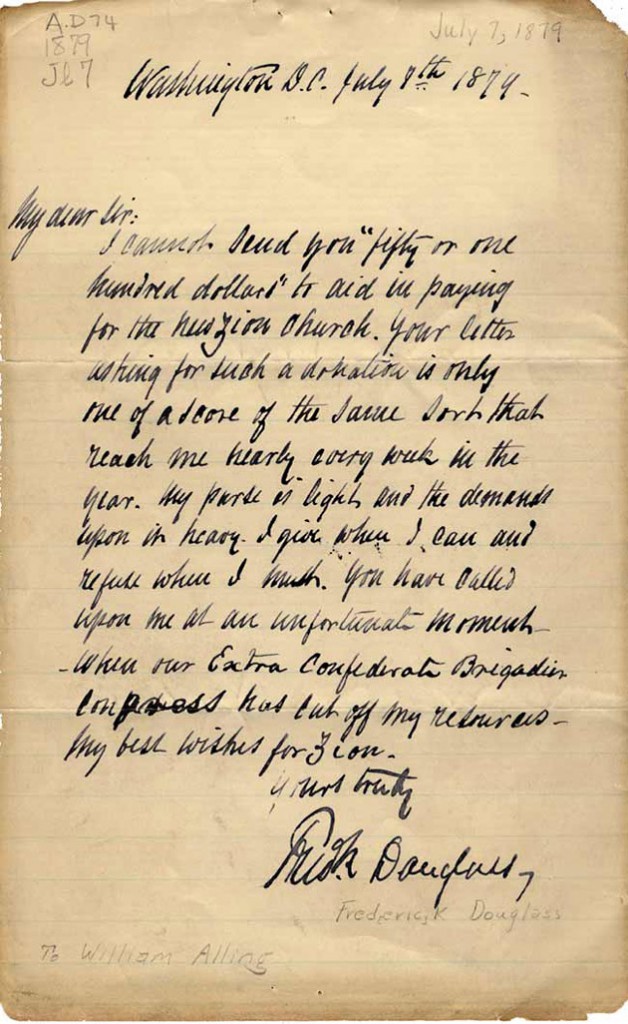


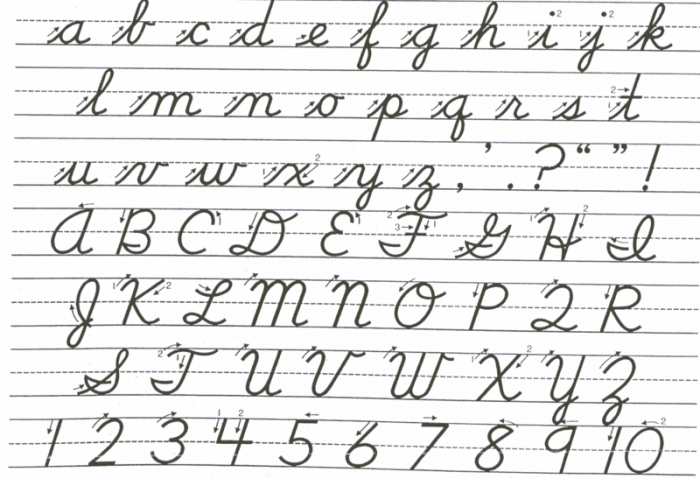
.jpg)
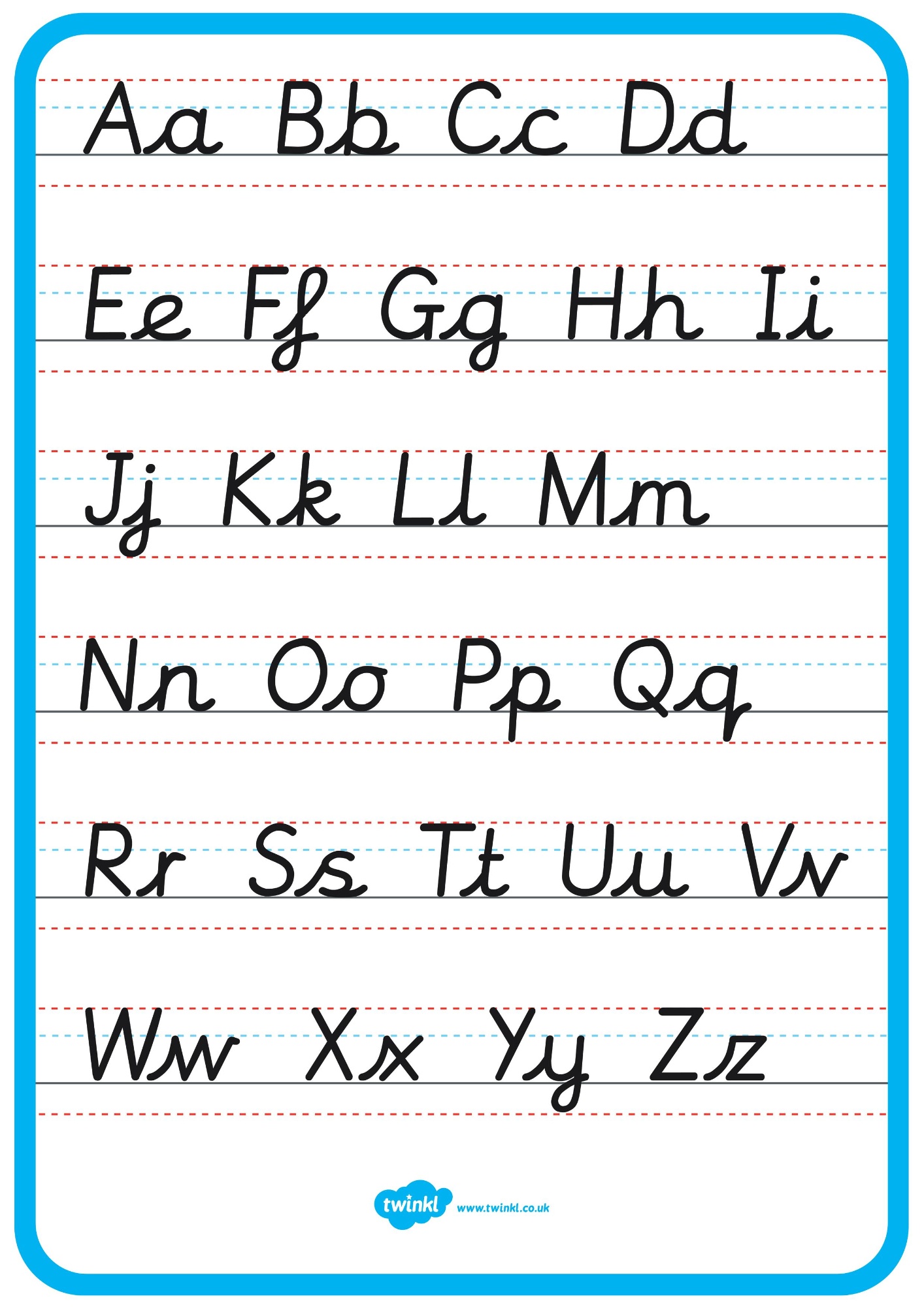

Asimov makes the case that rather than teaching old information, we should be forgetting more obsolete facts to make room for more modern and efficient material. We're never going back to a world where cursive is in widespread use. Nor will we need to. By the time the last generation of cursive readers has died out, people will likely have available a "Google Lens" type augmented-reality translation on the fly of great-great-grandma Edith's old love letters.