I think I'd amend the piece a bit. Personally I think we're playing a high price for mobile phones. Granted, much of the harm is being done by social, but really it's the addictive nature, the "always on-ness" of this that concerns me the most, in all the reading, research and life experience I'm doing.
My son, who is now 17, spends - I would imagine, he doesn't know because he's too frightened to switch on Screen Time - maybe 10-14 hours a day glued to his phone. He's now at an age where I have no agency over him - he's an adult in 6 months and he's got to figure out his own way - but it worries me.
In his specific case I'm actually less worried than with many of his friends. He's bright, and uses the internet to figure out and watch some pretty rad stuff. It isn't all shit, and although a fair proportion of his use is Insta, it's using it as an instant messaging tool rather than a pure "social media" tool. He rarely posts, and I suspect may be different to his (female) friends in that regard.
But here are the two points that are rarely talked about that are actually the most important ones to consider:
First, if anyone was doing anything for 12 hours a day, it's probably an issue. If my kids played football for 12 hours a day, or made Lego, or cooked, I'd be concerned. It's just not healthy to be that ensconced in a thing, let alone when that thing is as hugely, highly addictive as phone use / social media. Even if that thing was the healthiest thing in the world - say someone I knew went out running for 12 hours a day - man, I'd be concerned.
Secondly, it strikes me as "out there in the world" that this is the biggest issue. To me, as a 50 year old man, it's bloody weird anyone spending this much time online, but to be outdoors, or at a bar, or a restaurant with your partner, or looking after your kids, or looking at a sunset, or on the beach - and be constantly in your phone - this is insane.
Living a life, a real life, with real relationships and real sunsets and real beaches - is an enormous privilege. Many of us are wasting it. Life is short. Leave your phone at home, and truly live it.
> My son, who is now 17, spends - I would imagine, he doesn't know because he's too frightened to switch on Screen Time - maybe 10-14 hours a day glued to his phone. He's now at an age where I have no agency over him - he's an adult in 6 months and he's got to figure out his own way - but it worries me.
I have to ask, do you live in the suburbs? I was in a similar place as your son growing up, I had an extreme screen addiction (although some of it was productive). There was nothing to do or see within several miles of home and I was dependent on my parents for transportation, which added enough friction that I didn't really even know where to begin when it came to making friends or planning outings beyond school. It was just significantly easier to stay at home playing video games or surfing online all the time, and that habit spilled over into anything I did outside the house as well. That all changed when I moved somewhere walkable with good transit/bike infrastructure.
As a 50-something man who grew up in a pretty boring suburb, I rarely found myself lacking for things to do. I spent most of my time hanging out with friends, even if it was at the local arcade, strip mall or a friend's house. We'd ride our bicycles all over the city, explore the local creeks and hillsides, or play video games together (Atari, Intellivision, etc.). Eventually a few of us got home computers (Apple II or Commodore) and spent a huge amount of time playing games or programming, but there was always a desire to get together and do things outside. (The suburban experiences of the kids on E.T. reminds me a lot of my own childhood, minus the alien.)
Most of us had chores and/or jobs. I had a paper route from age 12 to age 14. When I was at home, my parents were always kicking me out of the house to go do things outside or with friends. Most kids in my neighborhood were what you would classify today as "free range". That seemed to be the norm in those days.
Today I look at kids with their heads buried in smart phones and feel a real sense of pity.
A few major things have changed in the intervening time that have worsened the problem.
First, the suburbs have expanded, greatly. This means they're farther out in the periphery on average, there are far more highways, roads, and parking structures needed to support them (with far more lanes and traffic), and it's consequently more difficult and dangerous to go places on your own, especially without a car, in any place that is in or connected to suburban developments. For reference, when I was going to elementary school in the late 2000s, my school was half a mile away on the other side of a five lane highway that had no sidewalk on the other side. It wasn't until later that a pedestrian/bike accessible trail was put in to allow access to getting downtown and even then it would still take 30-40 minutes walking or 10-15 minutes cycling and it sucked the whole time. And this was a less exurban development than many of the ones that have sprung up in the last decade.
Secondly, perhaps in part as a reasonable reaction to the first and in part as an unreasonable reaction to fearmongering, parents are unwilling to let their kids venture out on their own without supervision, and even police each other, by calling the actual police on parents who let their kids travel alone.
Thirdly, tech has just gotten better, in ways that make it higher quality and in ways that make it addictive. Browsing the internet and playing vidya is a better value proposition these days in many suburbs than going outside to navigate asphalt and private lawns as far as the eye can see.
I had similar experiences around a similar time frame.
I had no idea how lucky I was.
As an adult I moved to another city - what I found after moving is that there are no sidewalks, lots of hills, and virtually no where is safe to bike. (sadly this is still pretty much the case 20 years later around here, although they have added some 'bike lanes' and laws.. you couldn't pay me to bike around here.
Arcades have closed, no skateboarding and similar trespass rules are common now to deter hanging out at strip malls and such.
I keep recalling the news story some years back where a mom was arrested for allowing her kids to go to the park without a parent (maybe it was chicago or similar?)
Friend's houses have become a worry about all the stories you see in the news / social feeds about drugging / raping / guns / unfiltered porn / hidden cams etc..
I too have pity for today's youth with heads in phones - however seeing what some of the other hoodlums are doing with idle hands these days, on top of the rampant dangers outside the homes, I'm glad there are all these screen options today.
Those days don’t exist anymore. You shouldn’t feel pity for those kids, you should feel shame in being part of the generation that robbed all of those good experiences away. It’s no joke that a lot of these kids are depressed and have no skills or resources to find entertainment.
Before smart phones many of their parents watched TV for 4+ hours a day. What did you expect the kids to do?
I was just thinking the same. I live 10 minutes away from the coast and have just enjoyed a few hours sat by the beach where most people were sunbathing, paddle boarding, taking a dip, etc. I didn't notice anyone gazing at their smartphone.
As a kid I lived inland and a casual trip to the beach just wasn't an option. I look back and remember a lot of boring Sundays where the option of staring at a phone screen all day would have been a luxury.
I’ve literally just now got back from having a dip in the sea, and was laughing to myself at the guy standing in the surf looking at his phone. Beautiful evening, stunning weather, and his dog standing there looking bored waiting for him to throw his ball, and he’s on his phone…
My experience is very different to yours - I’d say as I walked across the beach yesterday when I was really paying attention, maybe 20-30% of the people I passed were looking at a screen.
By the sea, in a small town in Cornwall. Loads to do, and he does a lot of it - he surfs, rides his bike, climbs, hangs with his mates. He’s an excellent fellow, and I hope nothing I’ve said suggests otherwise. When he’s not on his phone, he’s an incredibly balanced chap. Even when he is on his phone, he’s brilliant - as I said, he looks at some seriously interesting stuff, much of it about space and rockets and physics, as this is the stuff that sparks him.
But my wider worry is still there - not just for him, but for all of us. A world seen through a 5” screen is just a poor facsimile. It’s not the world, full of the gnarly stuff - and the beautiful stuff - that goes on out here.
Boredom is another thing - actually (as we hopefully all know by now..), boredom and downtime is useful. It lets the brain make sense of the world, it’s where the ideas happen. If your “downtime” is a constant buzz of notifications, or dopamine hits, what happens to inspiration, or those “tada” moments?
I know things are different now but I grew up in the suburbs and yet went all kinds of places. Got my driver's license at 16. Parents let me borrow one car or another all the time. Even before that though, rode bikes all over.
This, even though I was a nerd making programs on home computers. We didn't have the internet or even BBSes though. We did have video games.
Don’t most parents of children live outside of cities?
Obviously there are many families that live in cities, but cities seem to mostly draw younger professionals that don’t (yet) have children, and often once these people start having families, they relocate outside of the city (if they’re able to).
Growing up in car-dependent suburbs is not conducive to a healthy, balanced, independent childhood. You’re right that many parents raise their kids in car-dependent suburbs, at least in North America, which just means that this is a very large problem affecting a lot of people.
No, not as opposed to them. The U.S. has a radically bimodal development pattern with very few developments that lie in between "dense cramped highrises" and "suburban wastelands of cars, asphalt, strip malls and large private homes with large lawns." This development pattern, which is exceedingly rare elsewhere in the world, excludes the kind of developments that are most needed, which are multifamily housing developments that offer decent private space to individuals while being dense and connected enough to offer public amenities and transit.
But there's a problem with multifunctional devices like computers and smartphones: it's highly unlikely he's doing the same thing for those 12 hours. Obviously I don't know exactly what your son is doing, but I think it's highly unlikely those 12 hours are filled with a single activity. And in that case, grouping all those activities as "spending time on phone" is less helpful than you think.
Taking my adult self as an example: on work days, I use the computer for more than 12 hours a day, easily. That time is divided between coding, research, monitoring existing systems, communicating with team members, having meetings, reading news sites (for various definitions of "news"), watching movies, and listening to music.
>> it's highly unlikely he's doing the same thing for those 12 hours
This may seem like a safe assumption but if we abstract to the core of "continually monitoring a loose network of 3+ degrees removed people for fear of missing out" I don't think they are doing anything diverse with their phones. Your own use of a computer is far different: kids and young adults are doing no coding; research (beyond asking Siri random, shallow questions); or monitoring, communicating, meeting, media consumption outside of these social networks. The homogeneous, consumption-focused all-consuming aspects are my real concerns. It's the Fentanyl of the 3-channel TV universe that I grew up with.
That nitpick is a bit like when people say BMI is invalid as an indicator for overweightness because bodybuilders are also categorized as obese by BMI. Except the confusion is impossible in case of a regular person.
Similarly, there can be good reasons for being 12 hours on screens, but it will be obvious and exceptional. Yes an 18 year old may be a successful entrepreneur, video maker podcast host influencer who is reading ebooks for research or sending out emails or editing videos or programming a website in those hours but we are clearly not talking about that, but FOMO social media scrolling.
There can be good reasons for hyperobsessing over a single issue in life, but you better have a damn good reason for it, like being a successful athlete or chess player or e-sport player or whatever. And it will still be a sacrifice that's only worth it if you are truly exceptional and there's a high chance you aren't.
The question is, are those hours bringing an improvement to your life, are they bringing you closer to achieving meaningful life goals or are they a distraction from focus and life organization, and a suppression of quality of life and achievement.
> Yes an 18 year old may be a successful entrepreneur, video maker podcast host influencer who is reading ebooks for research or sending out emails or editing videos or programming a website in those hours but we are clearly not talking about that
Aren't we? I heard the same comments from my parents when I was learning to program and even when I was going to school online.
I think a lot of older folks genuinely don't understand how many different activities are mediated by computers.
I struggle to take anyone seriously who says that "being on your phone" is some sort of enormous problem. "Being on your phone" isn't an activity - complaining about it is like saying that someone's going too many places. If they're driving around to different strip clubs all day, maybe a problem. If the places they're going are their kids' soccer games and doctors appointments and picking up groceries and having dinner with friends, that's perfectly fine.
My phone has basically the entire recorded history of human knowledge. It has the ability to communicate instantly with people all over the world. That's a lot!
I own an ecommerce business, and on a typical day I'll check in on sales via the Shopify app, correspond with customers via Gmail and maybe take some photos to post on my business' social media accounts. I also use my phone to call and text my parents, wife and friends. I probably spend at least an hour every day reading news on my phone. And yeah, sometimes I fritter away time on Reddit.
People love to criticize when they see others on their phones in public, but you know what? If I'm sitting somewhere for a few minutes with nothing to do, I can pull it out, fire off a few emails, and then have a few more minutes to pet my dogs when I get home. My dogs deserve those extra minutes. They're very good dogs.
A phone is a multi-functional tool that can be incredibly useful (or also a way to waste a ton of time), and criticizing people for using that tool without any idea of how or why they're using it is silly.
Agreed for the most part. In my case, I use an app on my phone to read books from a filed collection of dozens that I really want to finish at some point. Sure, it might not be great for my eyes, but if my phone is with me most of the time in random places and situations where waiting suddenly comes around here and there, I can plough through lots of literature.
Of course, to a passing observer, it wouldn't look like that. Because most people associate phones with social media scrolling, they automatically assume that's what you're doing with one. My phone thus has one major thing in its favor at least: it's let me read more full blown novels, literature and non fiction tomes than I ever did before having one, and I read a lot even then. Phones aren't an activity by themselves, what thing you use them for is the activity and its nature makes a difference.
It seems like there is enough studies and science backing that too much phone use can cause problems — especially doing a lot of multitasking.
I say “seems like” without saying definitively, since I’m not quoting sources. But I’ve seen enough articles/studies come through HN that seem to suggest there is likely a link between phone addiction and things like anxiety, depression, attention span, etc.
Yes, phones are useful for a lot of things, and are in some cases required for doing some functions for business and social connectivity.
But the speed of information being fed and consumed, and the constant context switching can’t be good for us.
E.g. when I view my Twitter feed, I can have 20-40 completely different thoughts go through my head in a matter of minutes. I can’t imagine how that could be beneficial.
> My phone has basically the entire recorded history of human knowledge.
I'd say you're overstating by a large amount the quantity of quality information on the web. Sure there's a lot, but also much is missing and in terms of percentage most of the online content is garbage.
Agree. I’d say it’s worse - those hours are sporadic, endless distraction. Every few minutes, a buzz, a ding, something taking you away from whatever else you were doing…
> 50 year old man, it's bloody weird anyone spending this much time online, but to be outdoors, or at a bar, or a restaurant with your partner, or looking after your kids, or looking at a sunset, or on the beach - and be constantly in your phone - this is insane.
You have a great point here.
Thinking about this. When I was young I spend an unnatural, lot of time in front of screens. Here is what I did: I learned BASIC, REXX, C, x86 assembler, Pascal, and Prolog. I learned to make software for a home comuputer, then for a real PC. It was productive, made money for me, and helped me develop a skillset that has resulted in six companies created, a couple hundred people having jobs, and a decent life for my family. I have exactly zero regrets for spending time with the computer.
What if the device was a phone? You can't even create software for a mobile phone with the phone. I guess I would have consumed a lot of content, and posted a lot of videos. Maybe I'd be able to build an audience, and make some cash from my gofundme or patreon. Maybe.
> Living a life, a real life, with real relationships and real sunsets and real beaches - is an enormous privilege. Many of us are wasting it. Life is short. Leave your phone at home, and truly live it.
This is really great advice. Or at least delete all the distraction as a service apps. The best feature on a phone is the camera and maps app. One is for capturing and sharing memories, and the other is for finding your way to friends and adventure to make those memories.
It's easy now in retrospect to say "those hours glued in front of the PC turned out good" and jump to "but that's not the case for todays kids" with a rose tinted glass.
It reminds me of something a friend told me about a youtuber called mister beast(or something); how in an interview he said he was practically raised with youtube as his sole life, spend all waking hours thinking "what would buzz on YouTube?" and not just him, he would talk about this with his fellow content creator, like they were obsessed.
Afaik the guy is doing really well. Now replace "YouTube" with whatever programming language you mentioned and you can see a similar story.
And the other side of your coin "glued in front of PC" is people like me who spent 16h a day of my Highschool year playing online games that lead to absolutely nothing except maybe a little bit better English knowledge.
When you're looking at kids glued to the phone, you're looking at how the generation above me/us looked at me,and not you. And I think I'm in the majority of people that was glued in front of the PC; Nothing "productive" really came out of it
> It reminds me of something a friend told me about a youtuber called mister beast(or something); how in an interview he said he was practically raised with youtube as his sole life, spend all waking hours thinking "what would buzz on YouTube?" and not just him, he would talk about this with his fellow content creator, like they were obsessed.. Afaik the guy is doing really well.
I understand what you're trying to say about this generational view of youngsters being into the latest fad tech not being viewed as productive by the older people in their lives. I think mr. beast is an awful example. You picked one of the most successful and well known youtubers. For every one of him, there are millions of unsuccessful individuals with youtube channels or other social media "jobs." Survivorship bias is real here. The income distribution is extremely top heavy and unfair.
> When you're looking at kids glued to the phone, you're looking at how the generation above me/us looked at me,and not you. And I think I'm in the majority of people that was glued in front of the PC; Nothing "productive" really came out of it.
You're right that for the most part nothing productive comes from consuming entertainment as such for the vast majority of consumers of social media, especially when young. I'm still unsure of where I stand on this issue, but I'm certainly more cognizant of the costs of social media and so forth than the benefits.
He has like 100M subscribers and 16.5 billion views and counting. So yep, doing "OK". It's very, VERY dangerous to look at the peak of a mountain and try to extrapolate ANYTHING from a single data point. Comparing the history & outcome of someone like this with your personal experience isn't likely to be very valuable, but nothing you've presented discredits that neither of these approaches are likely to lead to enjoyable, fulfilling lives.
>spending time at a PC can lead to a career in software engineering
>spending time on YouTube can lead to being an e-celebrity
Two differences are that of those is a casino, and it's probably not the healthiest or most sustainable path for most people.
>When you're looking at kids glued to the phone, you're looking at how the generation above me/us looked at me,and not you. And I think I'm in the majority of people that was glued in front of the PC; Nothing "productive" really came out of it
The argument here is that the PC offers an onramp for some percentage of people to something really good, while the phone intrinsically doesn't. Or, if it does, it's an onramp to being an influencer. Nuff said. :p
> It's easy now in retrospect to say "those hours glued in front of the PC turned out good" and jump to "but that's not the case for todays kids" with a rose tinted glass.
That isn't really the point... but it is easy to read that out of my comment. The point is the devices don't offer the possibilities that a PC did. The only thing you can really create efficiently on a phone are short messages, photos and videos.
> And the other side of your coin "glued in front of PC" is people like me who spent 16h a day of my Highschool year playing online games that lead to absolutely nothing except maybe a little bit better English knowledge.
I probably did that more than a little bit as well ;-) and I do not reget a minute of it.
As well as that, YouTube is more accessible for most people. Programming will never be for everyone. It requires a certain mindset.
Personally for me making YouTube videos is very hard, much harder than programming. I hate making them and I hate watching them just as much. But I'm an outlier and I realize that.
>> The best feature on a phone is the camera and maps app. One is for capturing and sharing memories, and the other is for finding your way to friends and adventure to make those memories.
I agree strongly with the rest of your post, but then you highlight the two biggest offending aspects of our current society: (1) Everyone is so busy capturing and sharing "memories" they're not actually experiencing them in the first place, (2) When we're trying to get somewhere we don't even look up to ask where are we right now IN RELATION to where we'd like to go before pulling out our device. The second is particularly odd to me, as my father (now in his 70's) did all sorts of adventure travelling as I was growing up with nothing more than paper maps and I now watch him routinely ask for gps directions to places he's been dozens of times. It makes me sad.
Agree on this one. I went to a concert this week. When the concert started, thousands of smartphones were raised in the air and many people spent an awful amount of time grabbing ugly videos with saturated sound. I was guilty of grabbing a 1min one.
Do we really enjoy the moment as well when grabbing everything. I doubt it.
Taking some pictures is great. Having some pics to look at a vacation years down the line is good for refreshing memories and emotions and to relive those moments. But that's achievable with a few pictures a day, whereas many people now take hundreds or more and never even look at them again. It's like hoarding behavior or bookmarking web pages or buying books you never end up opening.
My experience is that taking pictures is only worth it if you print them quickly and put them in an album with comments. I and my daughters will very often grab a photo album randomly in the living room and enjoy remembering those moments. The digital albums? They only serve as a backup thanksfully synched remotely in case my house burn.
Normal non pro photographs human beings have very little energy to organize/tag/process their pictures, they mostly lie forgotten until google photos remember them of those moments, more often than not showcasing the ugiest badly framed photos.
There are two types of hoarders though-- those who take 1000 pictures of things they find interesting, and those who take 1000 pictures of things they think everyone else will find interesting.
The former is a good way to relive any experience. It's literally training data for the photographer to reconstruct their own memories.
The latter group will never have reason to look at the pictures they took. There is a lack of connection.
When I think back to such experiences I tend to remember how annoying other people were rather than the event itself. As a consequence I rarely go to concerts, the theatre or the cinema any more.
Re: maps. Eh. Some people tend to romanticize the pre-GPS era with stories of serendipitous adventures, but that doesn’t match my experience at all. My recollection is that wandering around lost was time-wasting, frustrating, and sometimes downright scary. I’m not sure I can recall a single positive unexpected experience that resulted. I don’t miss it one bit. If the price is that I sometimes ask for directions to a place I’ve been before, I’ll take the trade.
I used to do a lot of solo hiking / scrambling in the (PNW) Cascades. I rarely looked at maps when actually hiking, except to identify some landmark in the distance. I spent time (hours) casually perusing an open topo map laying somewhere at home; sometimes I'd discover that overflight photos were available at one of the libraries. =)
When in the field I rarely looked at a map to see where I was going. I never carried a compass.
Today I can get satellite photos on the internet, (quality? meh. some of the overflight photos were stereo. I suppose I could pay) but "up and down are forever".
> Thinking about this. When I was young I spend an unnatural, lot of time in front of screens. Here is what I did: I learned BASIC, REXX, C, x86 assembler, Pascal, and Prolog. I learned to make software for a home comuputer, then for a real PC. It was productive, made money for me, and helped me develop a skillset that has resulted in six companies created, a couple hundred people having jobs, and a decent life for my family. I have exactly zero regrets for spending time with the computer.
Didn't you get pushback from that from your parents or family?
In the 80s spending so much time on the computer was much more 'weird' than spending as much time on a phone is now.
Remember people calling us nerds and saying we'd get square eyes? I don't hear anyone complaining about this in regards to mobiles now.
> Didn't you get pushback from that from your parents or family?
No, my parents were ok with it as long as I took care of the lawn (my Dad had MS and couldn't chase the mower) and didn't flunk out of high school. I also got a job programming at age 16 (writing medical diagnostic aids), and so they saw me making very good money for a 16 year old.
> In the 80s spending so much time on the computer was much more 'weird' than spending as much time on a phone is now.
I really don't have a good reference on what normal was. I spent a lot of time with the computer, put a lot of miles on training for cycling, and played soccer and went to school in between. I just did my thing, and didn't really worry about it.
> I really don't have a good reference on what normal was. I spent a lot of time with the computer, put a lot of miles on training for cycling, and played soccer and went to school in between. I just did my thing, and didn't really worry about it.
Well it was kinda normal for nerds. But nerds were not really 'normal' (though very common anyhow!). I think for people born later it's hard to understand since IT is now taken in much higher regard. I mean if I tell people I'm in IT/Cybersec at a meetup they're usually like "wow cool" which exactly the opposite of what would happen in the 80s :D You'd be viewed as a total dork wasting their time.
You don't sound like a typical nerd though. Most of my nerd friends (and certainly myself) would not do any kind of sports. Especially teamsports.
Yes, it's almost impossible to create software from smartphone. But it is possible to create some civil disorder, class action or at least a little shitstorm in Twitter.
Several years ago, there I was, on an incredibly beautiful beach in the bay of Thailand. The sun was warm, the water was mild and below the surface were a great number of vividly-colored creatures.
As I sat on the white sand, appreciating every moment I observed two beautiful French-speaking women rent snorkeling equipment and proceed to the water. They walked in, not much more than knee deep, and posed for some cellphone photography in the snorkeling gear. After getting the photos they wanted, they returned the gear and left.
I thought about how funny it was to be witnessing social media happening in real life. The veil is so real to those who don’t get to see behind it. When you do, it’s sad, and something to be pitied.
The dream those women were selling didn’t even exist for them. They didn’t enjoy the beach. They didn’t swim out to see the incredible ocean creatures. It existed for me. Average me was living their best life that day. I did the things they wanted people to believe they were doing, and they didn’t.
It’s really fascinating social behavior. My conclusion is essentially that social media creates a sort of fantasy that perfection is just barely out of reach… and feeding the addiction of continually moving onto the next thing, hoping to find it.
It’s probably the same reason people become serial online daters, and the reason for the success of those platforms. It causes people to become inflexible toward enjoyment or appreciation of reality… even in cases where reality is pretty damn near perfect.
> First, if anyone was doing anything for 12 hours a day, it's probably an issue.
A good yardstick, but it depends on the activity. 12 hours on SnapChat daily => probably excessive. There are days when I have hiked 12 hours a day (definitely excessive!). The difficulty with a phone is the myriad uses a phone has in our lives. GPS-mapping (not just for driving, cycling or walking, but for hiking too - e.g. alltrails.com), star-gazing/charting at night, creative writing, recording/listening to music, programming (yeah using ssh apps), photography, video, email, texting, audiobooks (as a traveling executive, I often drive 5+ hours using G-Maps, while I am listening to an audiobook, while I get interrupted with dozens of phone calls), health/fitness/workout monitoring, sleep apps, games, banking/finance/credit, monitoring my home/AirBnB's etc, boarding passes, Uber, shopping, way too many hours on HN, you get the idea.
As has been said, we are cybernetic organisms, and the mobile phone is an extension of us (soon one day inside us). Whether we use it to enrich the diversity of our lives or to dumb-down and become mono-active, I think that is the issue.
> Personally I think we're playing a high price for mobile phones.
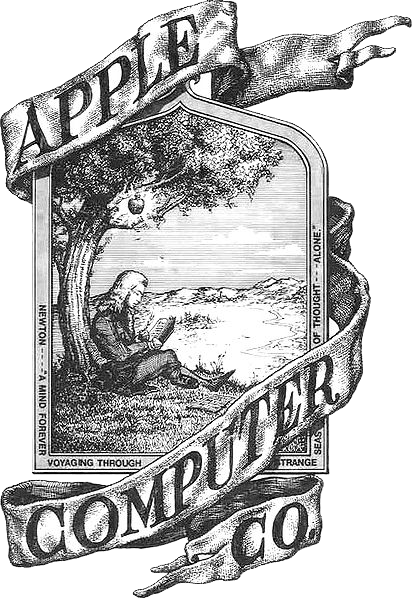
I do sometimes wonder if Steve Jobs was the antichrist or devil, or whatever. Introduced the revolutionary smart phone complete with an icon of forbidden fruit with a bite taken from it. And then disappeared from Earth shortly after.
According to Western European culture, sure. Apparently people started thinking of it as an apple because of a choice in translation.
Realistically, scholars believe the forbidden fruit referred to is a pomegranate- because geographically it makes more sense. Apples originally come from the region around Kazakhstan- much further East than where the garden of Eden was supposedly located.
Some people also think it was a fig. Ultimately the way it was originally written, it's impossible to know for sure but it's unlikely that it was an apple.
I don't know about the choice for logo and intent behind the symbol, but I find the geographic origins of plants interesting.
In terms of intent, the designer has spoken about this. One story is the forbidden fruit. Another is that Alan Turing killed himself by taking a bite from a cyanide laced apple. The original rainbow logo showing support for gay people.
But he says none of these are true. The logo was an apple because that’s the company name and a bite was taken out of it to make it clear it’s not a cherry. The rainbow colors were because they shipped color graphics with the Apple ][ which was rare for the time.
They also proposed a logo without a bite taken out and solid color and metallic versions of the logo that were used in certain marketing.
thanks for the interesting background info, and I really like the OP's (devilish in it's own sense) interpretation. My understanding is that the choice of an apple was nothing more than the prevalence of orchards in the area when they started. Of course if Jobs WAS the devil, the first requirement would be plausible deniability...
The price we pay is different according to viewpoint/scale.
Individual impacts are to eyesight, posture, mental health,
concentration, cardio-vascular fitness and so on.
Interpersonal relationships are affected in a different way,
dissolving the bonds of meaningful friendship and family ties.
At the societal level we experience unrest, radicalisition, corrosion
of democracy and shared values.
I've tried to document the evolution and psychology of this in Digital
Vegan [1]. Many supporting papers can be found here in the "ledger of
digital harms" [2]
Earlier generations grew up in the front of television (or PC) but even if you spend 3-6 hours per day watching television, once you are not in front of it, you are separated.
Now people are experiencing every moment in their life with a mobile phone.
Some people feel "walking naked" -type anxiety without a phone even for a short term. Just recently I saw a person forgetting to take the phone into a trip to a nearby shop (20-30 minute trip max). They turn around at 5 minute point instead of going trough the trip without a phone.
> Some people feel "walking naked" -type anxiety without a phone even for a short term.
I've started to take long walks deliberately without my smartphone, and it feels very liberating. I had always brought it along "just in case", but no case has ever actually arisen. I realized that it was just fear, and before smartphones were ubiquitous, I used to go around all the time without one and without fear. I enjoy having that feeling again.
For some people a smart watch with LTE connectivity can be a useful middle ground. The screen is too small to really use for anything interactive, but you can still call for help in an emergency.
There's a difference between living in fear versus taking prudent precautions. I've never had a fire in my house and I'm not particularly afraid of fires, but I keep fire extinguishers on hand. I do a lot of running and cycling, and I've had to use my cell phone to call emergency services several times to assist others.
My own reason is that phones have replaced keys and wallets in some cases.
I don't give a shit what people are saying online, but I'm going to be pissed if I'm out and about and a transaction is declined because the bank app is fraud-prompting me.
> Living a life, a real life, with real relationships and real sunsets and real beaches - is an enormous privilege. Many of us are wasting it. Leave your phone at home, and truly live
You seem to have found a mode of life that's been deeply satisfying, which is great to hear. However, you now seem to want to impose your 'how' on others. If your goal is to help others, they'll be much more receptive if you focus on the 'why' instead of 'how'.
If you inspect the reasons 'why' your life has been so satisfying, you'll arrive at a set of values that you can share with your son & his friends. Then, they can take these values and figure out 'how' to achieve them given the new world they're growing up in.
Using this approach, I think you may be surprised that there are a myriad of approaches to achieve your values in the 'digital' world as well as the 'real' world. And, as such, there are many ways of 'truly living' in addition to yours.
This comes off as judgemental and condescending. I'm not much younger and came of age just before PDAs and smartphones changed the world. My life was and is full of other activities, yet I now use the phone hours per day. And it is an enhancement in most every way: language translation (bilingual household), security (MFA and a deterant when out late alone), news, fact checking, broader social network (albeit some "only" virtual), communication with distant friends and family, learning home improvement, a safe escape when feeling overwhelmed by extroverts, etc.
Past generations were probably pearl clutching over people with their faces in a book or newspaper "constantly". "Get back to working in the factory!" 12h per day until you die. "Look up at this beautiful scenery on our hike!" Same as the past 3 hours of scenery. Of course the solution is to stigmatize these worthless book worms! /s
Cut the kids some slack, they are exploring both a physical and virtual world. The former of which they often have little control or freedom. (Depending on parents, peers, and local culture.)
My hope is smart glasses or contacts will become more capable and accepted. Then we can enjoy the benefits and the "real" world together more seamlessly. Isn't that what all tools are for, to enhance our lives?
I didn't feel it was judgemental or condescending at all. Can you quote exactly what about it felt that way to you?
As for the generational differences, I agree to some extent. But we can't stop thinking about it at that point... Just because older generations complain about newer generations, doesn't mean we stop thinking about non generational factors.
These technologies have taken over the world in the last few decades. Our brains have been the same for at least 100,000 years. We need to be more vigilant about the negative effects of disruptive and exponentially growing technologies.
It's good to wield the positive side of technology (translation, security, facts, communication). But that's not the problem. The problem is companies who are creating algorithms that can easily overpower our human brain. Their incentives are not aligned with the mental health and well-being of society.
Here's the difference though: you take exception and list a diverse set of uses where your phone helps. That doesn't reflect the relatity of how people use their phones though; it's a collection of apps around social media and an evolving selection of ad-supported, click-to-win games with short lifetimes. Your inclusion of "fact checking" is actually kind of funny, as the limited sources used by almost everyone could be termed more "opinion entrenching".
>> Cut the kids some slack, they are exploring both a physical and virtual world
If this was true I wouldn't have a lot of valid objections but coming out of 2 years of Covid distancing it's just not reality.
>> Isn't that what all tools are for, to enhance our lives?
That's what you want from them, but is that what social networks are delivering?
> First, if anyone was doing anything for 12 hours a day, it's probably an issue. If my kids played football for 12 hours a day, or made Lego, or cooked, I'd be concerned.
But in a way using your phone is not the same activity for 12 hours. You could be doing multiple different things from gaming to social media to educational videos. So I don’t think this is a fair comparison.
This is somewhat true but at least from an ergonomic standpoint it’s the same - which matters a lot for things like RSI or vision – and it’s often also the same from the perspective of chasing that “new stuff” stimulus. It’s not really healthy if you’re switching from the average phone game to IG/TikTok and back.
It's mobile phone manufacturers and OS developers that make devices that collect our data and grant access to that information to apps. The biggest point where data collection needs to be properly addressed is at this level. If there is no Lidar feature accessible in a phone, then TikTok can't get information on how many people are sitting in your living room with you.
The problem is that people are not educating themselves, paying attention to proper technology issues, and taking the right actions because they're so busy trying to make personal profit... The "giant social media monopoly" ship is sinking fast, everyone is trying to loot the gold stored in the ship's hull, not realizing that that's exactly the extra weight that will also sink their escape boat.
> Secondly, it strikes me as "out there in the world" that this is the biggest issue. To me, as a 50 year old man, it's bloody weird anyone spending this much time online, but to be outdoors, or at a bar, or a restaurant with your partner, or looking after your kids, or looking at a sunset, or on the beach - and be constantly in your phone - this is insane.
This is one of the few things I’m confident I’m doing well as a dad and husband. We don’t use our phones when out to dinner or doing family activities. I don’t set “rules” about it; we just have a shared understanding as a family that these times should be spent together, not off in the clouds.
I try to observe a computer/smartphone sabbath from friday evening to saturday evening. It is hard, because I keep thinking of things I could do on my computer. It has eaten that much of my life.
Rather than cut out social media entirely it’s worth taking a break from it and then rejoining the fray once you’re calm and have enjoyed the more simple things in life (Sunsets, swimming in lakes, playing with your dog etc). Just like any drug, social media has a law of diminishing returns. There’s even people doing ‘dopamine starving’ to address their addictions. Worth trying.
The people who are on their phones 24/7 will read this as a dig. They're not the largest group, but statistically, they are most likely to get the first votes in on your comment.
It's a very good comment. Those early downvotes, when they happen to me seem to be out of whack - they are too fast to have read the comment, and often the comment isn't controversial, inaccurate, or negative in any way.
social media is a supernormal stimulus, our brains didn't adapted to deal with it or the companies that are constantly iterating to make it more addictive
it isn't much different from some of the crazy increases in potency of actual drugs and the negative impacts on society are similar
>He's now at an age where I have no agency over him - he's an adult in 6 months and he's got to figure out his own way
I'm close to your kids age and I think this is a bad mindset, young adults still need guidance. You have an obligation to give advice even if it makes him mad. Unless he is completely financially independent you are owed some respect
I know a family with teenagers that helped this by only allowing each kid a phone without social media at first, when the kid was in eighth grade or so. And after a year they could use social media on the phone. Also, after a certain time every night they insisted everyone in the family put their phones at the charging station in the kitchen. So at least no late night social media. So they had phones they just couldn't use them for social media purposes nearly as much and not until a later age.
This would take discipline but it did seem like their kids were less phone dependent and social when I've talked to them.
The more articles I read about the effects of social media in mental health the more I agree with an approach like this.
I think social media can be very dangerous specially because of its pushy, 'not looking harmful at first' and ostracizing nature towards those who aren't on X or Y which is the perfect bait for younger demographics. Just like when you're trying to stop drinking but it's morally acceptable for friends to insist you go drinking.
I'm a late night doom scroller myself and I need to become more disciplined..
> after a certain time every night they insisted everyone in the family put their phones at the charging station
This is really great advice for anyone of any age. My sleep has improved a lot since I started leaving my phone downstairs while I sleep. (Bedroom is upstairs)
Instead of reading hacker news late at night, I might read a book or talk to my wife. Instead of waking up to my phone’s alarm, I wake up to an analog clock’s alarm. I have no notifications to review until I’m ready and go downstairs.
The kitchen thing is quite popular and seems to work wonders for peers as a well, knowing that a good chunk of the classroom will be offline after 9PM.
The experiment is over. It failed. Social media didn't bring us what we hoped it would bring us, and its cons outweigh its pros.
Perhaps we should organize a national poll against social media. It is time we admit that the Amish were right to a certain extent, and if it helps: believing that technology only brings value is in itself much like a religion.
I don’t know what we had hoped to get from social media, but for a brief period of time, 15 years ago, it was fun.
The stopped when ads once again was called upon to save a business that failed to make a sales pitch directly to its end-users.
It not the fault of the ads as such. It is a reasonable solution, if you can accept that it will never make you insanely wealthy. Sadly that not what happens. Companies keep pushing and pushing to make as much money as possible, forcing their platforms into attention hoarding machines.
Platforms, such as Facebook, Instagram or TikTok, no longer serve any purpose other than sell attention and killing other platforms that would stand in the way of them making a few extra dollars.
For a brief time in history social media provide us with a bit more fun. It allowed us to be a bit more social. Then corporate greed took it away, almost as fast.
I'm not really convinced that _anyone_ ever really had an up-front vision for what social media could bring to the table, either good or bad. To me, it always seemed more like a solution in search of a problem, which in turn just ended up creating more problems.
It's pretty simple to me. It started out as a way to remove the barrier to creating a personal website.
Why would someone want a personal website? So you don't have to explain everything about yourself to every new person you meet. They can see what your interests are, what kind of ideas or projects you promote, and learn more about your quirks. This helps filter out those who would clash with you, as well as giving potential friends or colleagues a much smoother on-ramp to future interactions.
That was in the MySpace days.
At some point, Facebook took over because it was a more standardized interface with more bells & whistles, and eliminated the issue of really ugly page designs made by amateurs with auto-playing audio of music you might hate. For a little while, FB was a superior product.
Then, they started messing with The Feed so it was more likely to do things that benefited the company. There was some uproar, but it was ignored and those voices turned out to be an inconsequential minority. Other platforms followed suit. This was the turning point which soured the whole experiment.
I still think it can be quite useful when you're hyper-focused on using it to enhance offline interactions and/or certain collaborative efforts. But if you're just idly bouncing around, The Feed will hijack your brain and start pushing you toward things the company thinks will make it more money.
The problem is that social media became an end unto itself, rather than a tool to facilitate other things. Apparently there were hundreds of millions of people with a bunch of idle time who didn't want to do anything challenging with that time other than occasionally be enticed to spend money in an attempt to make themselves feel better about their lives. Their eyeballs were ripe for the harvest. And now we have to reckon with all the unforseen ways this has changed our culture, including the whole 'influencer' plague.
It takes a lot of discipline to avoid the siren's call of FOMO, and most people are not sufficiently equipped to do it. It's inextricably intertwined with our failures to adequately address the mental health needs of the wider population as well. All those of us who are better off can do is lead by example.
Take Facebook, for a brief few years it did bring your closer to old friends and family, if you let it. In the quest for profit, that feature seemed to be the first to die off.
Ads make sense for social media, because the value is in the network, and putting a paywall would limit user access -> fewer members in the network.
Ultimately the problem with social media is no one wants to talk to everyone they've ever met or know of them all the time except for public figures, and then they want to share only watered down PR messages. I guess also people desperately convinced of some political point they want to convince others of. The early days were naive and fun because everyone was oversharing and we were taking on larger risks in terms of public perception in search of fun connections but we wised up, and now only young kids on tiktok still have that naivety.
Not just Facebook, all of the big platforms. Twitter and Reddit also stoke division, outrage, echo chambers for profit.
Example of bad faith from Twitter: allowing users to disable replies in order to prevent harassment by mobs, but still sneakily allowing mobs to use quote tweets to dunk. It's transparent. They just want to appear to be addressing the problem (maybe to placate a small contingent of outspoken employees by greenwashing) without actually addressing it.
Another example of bad faith: resorting to content moderation because the real fix (altering dynamics) will cost them engagement.
What's needed is regulation. I don't think the US will be able to do it, both because of ideology and political dysfunction, it'll have to be the EU.
Those features are all but inevitable to an ad-funded social media platform. If you want to increase ad revenue you need people to spend more time in your app, and that means you need a constant stream of new stuff in their feed. If facebook and instagram just showed us the stuff from the people we knew, we would scroll through it, be done, and move on. Instead they push us to follow lots of people we don’t know, so there is always more new stuff and a reason to be in the app and watch ads, but now the stuff from the people we do know gets buried, so they give us an algorithmic timeline that tries to make sure that no matter how often you go in or how long you keep scrolling, there is always a reason to keep scrolling and you’re always seeing the stuff you came to see. Commentaries on posts are the same thing, every reply is a notification ping and another reason to be in the app. Ideally the discussion / group functionality has enough drama to keep people energized and posting, not so much as to turn them off completely.
This is the market at work. If the current crop of social media platforms with these patterns hadn’t chosen this path, other platforms that did would have outcompeted them. The fact that people spend so much time in these platforms is proof they are really good at showing them what they want to see.
Wanting to build a “healthier” social media platform is sort of like trying to make a “healthier” alcoholic beverage. We make it healthier by consuming it less, not by changing its nature, because its nature is the point of why we consume it in the first place.
People don't want to be hooked on a website that makes them feel like shit. They keep coming back not because they enjoy it, but because these companies have figured out how to game our primitive dopamine system that has had no time to evolve a defense to this attack vector. So we need regulation to fix this market failure.
I'm a little nostalgic here, but social media was more fun and healthier when the timelines were simple streams of the stuff your friends posted.
That's when it was still good and went down the drain around 2014 or 2015 when the Facebook told me what I should see.
For Twitter I use third party apps that still present me the classic timeline instead of the things they do. And I only follow stuff I want to read, similar to an RSS feed reader.
And ad-funded social media platforms will eventually die when regulation roles in that says what needs to be done. No loss, as it causes more problems at the moment than it solves.
| We need no algorithmic timelines, no manipulation
That would require a totally different business model.
For years, I've been convinced that a social network that figured out how to painlessly charged people $0.50 a month for an ad-free, non-manipulated experience would be more profitable per-user than existing social networks.
Have you seen the social network behind the css gear submission [1]?
>nobody has gotten it quite right yet
>we think existing platforms have some good ideas, but no one’s managed to create one without profound flaws. we’re borrowing liberally from other sites, but we want to build cohost into something that works well and serves its users rather than just another clone.
There is a huge probability that we haven't figured it out yet. Instead of quitting, we should double down and try new things.
I hadn't heard of cohost, but there's something to be said about curation--which seems to be their proposed approach to discovery. This is a big part of the service newspapers and libraries (used to?) provide.
There's an argument to be made that curation equates to censorship, but I think it's wrong. Anyone can write anything on the internet, but that doesn't come with the right to have your message amplified just because it pisses off a lot of people.
It may be naive but I think all you need are accounts linked to human identities and a central repository of facts and sources.
When something is reported, OP can check his facts and alter his content or insist on his view. The reporter then can double down and a moderator looks at it.
Request a down payment for both content and reports, and moderation pays for itself when the losing party has to pay the process.
Don't allow people to post new content as long as a report is open.
The expensive part is the repository of facts. That has to be maintained with membership fees of the social network.
Who decides what are "facts"? During the COVID-19 pandemic, social media companies censored many posts as "misinformation" which later turned out to be accurate (or at least not provably false).
There are various options. Since facts should rely on proofs, it should be straight forward to establish the baseline.
For the grey area, I would allow people to choose their fact provider. The providers have to document the reasoning for their 'facts'. Since time establishes which 'facts' are facts, you can determine which providers are sincere and ask users to choose among them.
It's not straightforward at all. You're being dangerously naive. The fact checkers inevitably pick and choose "facts" to support their preferred narrative.
That's an investment in disinformation that has to be made.
As you write:
>During the COVID-19 pandemic, social media companies censored many posts as "misinformation" which later turned out to be accurate
The fact checkers who pick wrong facts stand out and can be excluded. But it takes some time.
However, that only affects people who don't care about their information sources. With a central repository, everybody could check the foundation of "facts" that are used for censorship and switch their fact checker if necessary.
And who pays for the central repository? Who decides which entities are allowed to be official "fact checkers"? Why should any of that be used for censorship, and who should enforce it?
Technically, the central repository can be an almost static wiki. The costs will be very low and can be paid for as a fraction of the moderation fee.
Users choose their fact checkers. Some have to be chosen, because that's what is required by law. As such, some state agency will enforce whatever has to be enforced.
This is not a complicated idea. Create a platform and a market for the problem, and let the market find the optimum. Right now, every social network has a monopoly on moderation of fake news. That will lead to market distortions.
Who pays the moderation fee? Who runs the servers? Who decides whether someone is allowed to act as a fact checker? None of that would be enforceable. It's just a stupid, impractical idea from start to finish.
I already wrote about who has to pay the fee. Everything else can be implemented one way or the other. The important part is the idea that moderation can become a market.
I think you're possibly right in that the cons of social media outweigh the pros at this point, but questioning the value of technology is altogether asking the wrong question and claiming "the Amish were right" is utter nonsense. It's like a workman trying to blame his tools for a job badly done. Social media is a use-case. There are plenty of other use-cases. Some of them bring value and some of them don't, but that is not the fault of the smartphone.
What if all the users, combined, could take Twitter off the market?
Imagine Twitter, but it only asks some money from subscriptions, let's say $1/year/user[1]. Now we take away all adverts. And voilà, a wonderful platform.
[1] If memory serves me, this was once upon a time the yearly price for using WhatsApp.
All well and good until they ask for my money to treat their self-caused metabolic syndrome and lung cancer, or when their self-induced depression causes them to vote for a populist authoritarian that takes my rights away. People's self-destructive personal choices ultimately impacts on others.
> It took time to demonstrate that cigarettes caused lung cancer. If social media causes depression and anxiety, it will take time to demonstrate that, too.
And let's not forget the decades it then took to overcome the lobbying of the tobacco industry.
Same thing with climate change, people have been writing about the perils of messing with the greenhouse effect for a good century, yet, here we are.
So, let's say that at some point there is conclusive evidence that social media have costly negative side effects on society and its people. What then would the multi-billion dollars company behind this do about it?
As much as cancer-free cigarettes or CO2-free combustion never really were an option, given the possibilities of the digital world, I still hope there are ways to use technology to have an overall positive influence.
Nonetheless, with the same kind of sad stories that never fail to repeat themselves, I feel like there's a fundamentally deeper issue at work and I genuinely wonder, how would you, could you, "hack the system", so to say, and use all its dirty mechanics so that the pursuit of private interests would, for once, have positive externalities?
My daughter attended a Waldorf school (in Europe I believe they are called Steiner schools, after the founder, Rudolph Steiner). There were good things about it and bad things, and I know the experience varies a lot with the particular school and the particular teacher you draw (the same cohort of kids and the same teacher travel grades 1-8 together). My daughter had an amazing teacher so overall I'm happy with the experience.
One of their policies, something we had to literally sign on to, was that our kids would not consume any mass media: no TVs, no movie theaters, no radio, no laptop, no cellphone. That policy long predates laptops and cell phones. The net effect is that Waldorf families can be friends only with other Waldorf families otherwise (a) people think your kid is weird, (b) you are a cruel parent, (c) your kid will want to spend all their time at Jane's house doing nothing but watching TV.
It is one of the aspects of their approach that I really appreciated and had a notable effect on the kids' behavior. Bored? Draw something. Go outside and lift up some rocks and see what is crawling underneath them. Build a fort out of found objects. See if you can stack rocks and make an arch. I've seen this happen on the playground: a kid grinds two limestone rocks together to make powder, collects it on a leaf, and pretends the powder is a magic potion; rather than being ridiculed, the other kids immediately take up the fiction and run with it.
8th grade is where they loosen the policy half way, then the next year they say there are no requirements but it is still good to try to keep it to a minimum. All of the kids were thirsty for phones by then and they get pretty sucked into it.
That was 10 years ago, and the net effect on me is that I have no desire to watch TV and rarely watch movies. Having an eight year break without it taught me I'm not missing much. I work from home so I don't experience any awkward moments being culturally out of the loop at the office water cooler. The only social media accounts I have are youtube (I'm there for the content, not the comments) and HN. I believe I'm happier for it.
IF you run a business that you need to promote, there is no real way around using social media to promote it in some capacity. If you are rich, you can probably just hire a marketing firm to handle the seedy underbelly of it all I guess.
The problem I notice frequently with the world now is that too many people are rooted in reality by their own perceptions and understanding, and they can't understand the experiences and struggles of others. It's so comfortable to project the attitude of "It's fine for me, therefore it's fine for everyone else" that it disrupts debate and resolution of meaningful problems our world faces. We're all so used to bonding with others that have our exact same composition and outlook, that wen end up being blind to others that don't fit into that.
We need to stop using individual tropes like this to dismiss and answer problems, they are really not applicable to the issue for so many others, and really not helpful in discussions.
For many people around the world, finding 5$ a day for dinner based on social media posting success would dramatically change their quality of life. Social media companies literally make Billions of dollars, and share VERY LITTLE of it with contributors... Opportunity in this world is shrinking along with all the other crises many struggling people face, the matter is much larger than turning off TVs and preventing kids from using devices in schools.
No offense intended, But to act as if you can simply "turn it all off" and enjoy life is not an option for many many people... Walk in the shoes of others here, look at discussions through different glasses than your own.
> Walk in the shoes of others here, look at discussions through different glasses than your own.
Reread my post. I was relating my experience, one that is atypical. I said what effect it had on me, and didn't tell anyone else what they should be doing. That seems to have offended you to the point that you are telling me how to behave, which is just rich. I'm very sorry my anecdote is disrupting debate and resolution of the meaningful problems our world faces.
Please don't take it personally, I don't know anything about you. It's mainly a reply addressing how yours is a common response on the matter, while social media encompasses a wide variety of perspectives by nature, that aren't well suited to individual tropes.
I assure you, no personal offense or attack was intended by my response, I am just posting based on the issues involved. It's a very large issue of concern for pretty much everyone on the Internet.
This. People blame it on social media. But it’s the people not the media they use.
I grew up way before the internet. Children on my Highschool were really mean. Many, many bullies were around. Pretty girls talking bad about less pretty girls. And much more.
The big difference: we now see it on a different scale and start talking more about it. But the people haven’t changed.
You’re right that any technology is just a tool. But I think the real argument is the asymmetry of the power of the tool compared to our ability to rationally use it.
Maybe a bad example is nuclear technology. It can be good or bad, but we recognize that the downside is just too big to allow unfettered access to it.
This echoes nature vs nurture in psychology and can be debated interminably because the truth is it's not just one or the other, it's both
We need to acknowledge the powerful ways our tools influence our behavior, just as we need to recognize and reclaim our own agency in using them. Both these perspectives must coexist if we are to form mature relationships with our technology
That's like blaming mass shootings on only the shooter instead of the tools and laws and social contagion etc that helped to cause and aggravate the situation.
Yes people have always been mean. Doesn't mean social media isn't a large amount of gasoline on what used to be a pretty small and localized fire.
It's very much a thing, and not at all in the open.
Used to be in the open (circa LiveJournal/Tumblr) but everything started moving to closed Instagram circles and the like, particularly messaging apps that allow senders to retract messages or alter any easily-discoverable paper trail. Kids are moving away from SMS and onto Snapchat/Whatsapp for spin control.
So bullies become "victims" when they provoke someone, receive a predictable response, then delete the provocative messages they sent (which is deleted on both ends!). The resulting conversation makes it look like the victim is attacking the bully.
The bully claims harassment by victim to parents and teachers. Neither subpoenas for records so they accept the bully's story and evidence and punish the real victim.
Not to mention magazines and radio. There were many more than three options.
Which raises the related question: how many do we need? For a while our assumption was "the more the better," but as it turns out there seems to be a limited number of good journalists in the world, and making them compete with an infinite number of bad ones has resulted in a race to the bottom.
It's bizarre because it never happened. In the time of those "three television networks", newspapers still had massive reach, so the networks didn't control as much as you seem to imply.
I'm questionning the 'control' nature of things. Things were slower, people were closer (due to living more locally, and more manual tasks). So 'information' didn't have the same meaning as it tries to have today.
> I usually feel disheartened and a little self-loathing after doomscrolling on Twitter in a way that I never feel after reading a book or a decent magazine.
Hey I'm only 30 and had a panic attack after doomscrolling on twitter during one of the heights of the pandemic and having COVID at the same time. 0/10 would not recommend. I have never experienced the same with reading a book.
A great read is the "the coddling of the american mind" which talks about the instagram and social media problem with teens. Some of the stats and studies there are ringing alarms that nobody is paying attention to.
I think this topic especially needs to be experienced first-hand or observed by a caring parental/teaching figure. I'm fairly young and was one of the earliest generations on social media. I've spent the last 5 years of my life on a quest to moderate my usage on the platforms that I've been addicted to since their inception. I'm even writing a book on the topic about how I've been managing it.
> The results in both cases were striking, with clear improvements in a variety of measures of happiness, wellbeing, anxiety and depression. It seems that a break from social media is good for your soul.
I would agree with this, but I would extend this to general technology usage and not just social media. As I get older and more senior in my career, the more and more I'd like to just go build a cabin by a pond like Thoreau(Walden). Re-connecting with nature in the meantime has done wonders for my happiness.
Perhaps a bit of self-reliance goes a long way in this world where we're constantly comparing ourselves to others on social media.
I quit Facebook September 2017. I felt myself being drawn into a permanent 'fight' mode, and didn't like it. I originally did it as a 'let us silence this for a month and see what gives. After the month, I did not want to come back.
I briefly tried to re-engage in 2020, but that lasted about a week as polarized toxicity on the platform seemed to have gotten a lot worse than even before.
I didn't delete my account as I still use Messenger.
If you feel even 10% bad about your FB habits, take a 1 month brake and see. Don't worry about missing something. I look at my 2017 posts and shares, after all I just need to scroll down through a few years of "happy birthday' wishes, and they're still no different than what I would have shared last week if I was still on there. Just give it a try.
I took a similar approach, but I need messenger and I often use marketplace.
So I unfollowed every human in my feed. I doubt I've got them all yet, a few months in, but some old friends the algorithm just never shows.
I replaced it with some groups about hobbies like fishing and motorcycling, but I'm finding even that is just all arguments, gear reviews, spam, and rule reminders.
So I'm gonna phase that out, too.
Anyway it definitely keeps me from scrolling. If there's any posts I want to see, I'll never know it and I expect I'll be the better for it.
Where is the crossover point from 'ignorance is bliss' to 'uninformed'? There's no doubt in my mind that women (and men) would be happier if they didn't know about the Roe verdict in America. But wouldn't that lead to less activism on an issue that really matters?
It is notoriously difficult to get young voters to turn out and asking them to turn off their phones for the mid-terms (like in the article) when they should be thinking through the issues feels counter-productive in a democracy.
1) It was a 4 week experiment. This may show that the participants had become too reliant on Facebook for news. It seems likely that people will adapt after qutting Facebook entirely.
2) How likely is activism to come from people who are only connected to the outside world via Facebook?
3) Reduced "factual news knowledge" is not the same as "didn't know about the Roe verdict". I was somehow aware of the verdict without being on Facebook. It's hard to tell from just the abstract, but we don't know how they define "factual news knowledge". In my opinion, most so-called "news" is just trivia and unimportant. Politician A said X, politician B said not-X, blah blah, ad nauseam. IMO it's actually better to take a step back from the daily trivia and look at the broad historical perspective. Better to read a book than a headline. A person can become "too informed" about things that don't matter, missing the forest for the trees.
There already is less activism of where it matters. Social media causes all activism ends up blacked holed into "spreading awareness" to a few issues. How many people who are demanding the SC justices to resign actually bother to vote for their state legislature who makes these abortion laws? The majority of Ohioans actually support abortions in most cases, but the only people who vote for smaller elections are Boomers, so that's how they ended up with a ridiculous 6 week abortion ban.
I started working on Haven[1] (FOSS, self-hosted alternative to FB) because of privacy concerns with centralized social media, but the more I explored the space, the more I felt it was important for the mental-health and societal stability purposes. The article references Jonathan Haidt[2], who has been a vocal participant in this space, but even Barack Obama sees it as an issue--it was the focus of his Keynote at Stanford in April[3]. If we could just get away from the engagement-optimized business model I think (hope?) we would already be in a much better space as a people.
Lets stop calling Facebook, Instagram and Twitter social media, it's like we can not say the Devil's name aloud. More productive approach would be find acceptable for-profit social media definition and fund it.


My son, who is now 17, spends - I would imagine, he doesn't know because he's too frightened to switch on Screen Time - maybe 10-14 hours a day glued to his phone. He's now at an age where I have no agency over him - he's an adult in 6 months and he's got to figure out his own way - but it worries me.
In his specific case I'm actually less worried than with many of his friends. He's bright, and uses the internet to figure out and watch some pretty rad stuff. It isn't all shit, and although a fair proportion of his use is Insta, it's using it as an instant messaging tool rather than a pure "social media" tool. He rarely posts, and I suspect may be different to his (female) friends in that regard.
But here are the two points that are rarely talked about that are actually the most important ones to consider:
First, if anyone was doing anything for 12 hours a day, it's probably an issue. If my kids played football for 12 hours a day, or made Lego, or cooked, I'd be concerned. It's just not healthy to be that ensconced in a thing, let alone when that thing is as hugely, highly addictive as phone use / social media. Even if that thing was the healthiest thing in the world - say someone I knew went out running for 12 hours a day - man, I'd be concerned.
Secondly, it strikes me as "out there in the world" that this is the biggest issue. To me, as a 50 year old man, it's bloody weird anyone spending this much time online, but to be outdoors, or at a bar, or a restaurant with your partner, or looking after your kids, or looking at a sunset, or on the beach - and be constantly in your phone - this is insane.
Living a life, a real life, with real relationships and real sunsets and real beaches - is an enormous privilege. Many of us are wasting it. Life is short. Leave your phone at home, and truly live it.