You know the movie "Yesterday" where everyone except a small handful of people forget The Beatles ever existed?
Well, I sometimes wonder... if everyone in the whole world forgot about artists like Picasso, could the masses still be convinced his art is good in modern times? I for one would be pretty unimpressed with most of his work ("is this some random grade schooler's work you are showing me?").
Meanwhile if the whole world forgot about Michelangelo, my mind would still be blown if I saw any number of his works for the first time. The first time I saw The David up close I was astonished at the level of detail carved into the marble. Like... you could see individual veins in the hands and forearms.
People are ragging on you for this question, but it is an important, and not an uncommon one at all. Thanks for being brave enough to ask it publicly.
I have wondered this myself. People think they recognize great art because of its inherent qualities, ignoring the hard to dispute fact that culture, fashion, and economics influences a lot of what we consider great in art. Tastes change over time, and the pantheon is always in flux, even though the art itself is still the same. So, of course people can look at something and "fail" to recognize its genius!
That's not to say that some things aren't better than other things, or that everything is relative. Only that the relationship between aesthetics and culture is complicated and woven together in a way we struggle to untangle in ourselves, let alone more broadly.
In the particular case of Picasso, I think I can look at paintings like Guernica and Man with a Guitar and say "well, shit, there's something going on here that deserves my attention". But there are other widely-hailed artists I don't respond to in this way. I think they're garbage, and people are crazy for paying millions of dollars for their work. Maybe I'm deluding myself.
The only thing I'd challenge you on is your confidence that you'd always recognize certain Michelangelo works as genius (with the implication that they are universally and timelessly good, not just that you would happen to personally like them). All I can say is that I'm not sure I am confident that I would pass that test.
> “could the masses still be convinced his art is good in modern times?“
Is your actual question directed towards the quality of the art, or towards the ability of the masses to recognize it? Maybe it’s because I used to paint a bit, but man, Picasso was amazing. If you actually know a random grade schooler who “comes up” with this, hook me up!
ART is not about about aesthetical appeal or about realism. Art is about art, and what makes an artist just that is the ability to translate his perception into something. Look at the way the style of the self-portraits changed… you can look into his soul.
No one, and I mean no one, is driven towards art because they want the masses to be pleased about their artwork (if anything, the opposite is the case, but it’s not about that). Expression needs no public appeal.
Will what Picasso expressed still be accessible to humans removed from our contemporary culture? Yes. For the masses? Not in the chaotic absence of culture that dominates our time.
That is a very modernist way of looking at it. I think art ceases to become art when it is self-referential. Art is truth, and great art can stand alone, divorced from context.
> is driven towards art because they want the masses to be pleased about their artwork
Agreed, artists are self-driven.
> Will what Picasso expressed still be accessible to humans removed from our contemporary culture? Yes. For the masses? Not in the chaotic absence of culture that dominates our time.
Artists like Picasso could only become so influential because the art buying elites were hellbent on rejecting the existing bourgeois order. This included a distaste for conformity, which turned into an obsession with originality. I genuinely doubt that humans removed from our contemporary culture will look in awe at art produced in such an incestuous context, rather, more they will pity the conditions in which such art thrived. Or just ignore it.
Wikipedia seems to be claiming they called her "petite Picasso," but I remember her being called "pocket Picasso." It was a while ago and possible my memory is bad. She went to middle school across the street from my high school and was friends with a freshman in my class when I was a senior, so I got to meet her and work with her a bit.
I guess it's an open question whether she would have been as popular and successful if not for the original Picasso already existing. There is always an element of luck in who gets discovered. It's not like she was the only uniquely talented person I ever met in all the years I dabbled in art. But people seem to consistently underestimate what this takes. It's not like you just wake up every day with no training or practice, inspiration strikes, and 20 minutes later you have a cubist masterpiece, and you can repeat that every day. This girl was legitimately special.
This reminds me of Salvador Dali's quip that "the first man to compare the cheeks of a young woman to a rose was obviously a poet; the first to repeat it was possibly an idiot."
It also reminds me of Marcel Duchamp, who (speaking of his tremendously famous and influential Nude Descending A Staircase[1]) said "This idea of changing, not repeating myself. I could have done ten nudes probably at that time if I wanted to. I decided not to go that."[2]
One way to appreciate a piece of art is to recognize the technical skill that was applied in creating it. The David's veins and or Jesus's musculature and Mary's flowing robes in the Pieta are virtuosic demonstrations of Michelangelo's skill in representing lifelike human scenes.
That said, skill in creating realistic representation is not the only measure of art's value. Consider Starry Night by Van Gogh. What is it that makes this such a striking and stirring vision of the night sky? It is certainly not a photo-realistic rendering of the stars and moon. Instead, I think it represents a radically different perspective and I find beauty in art that allows me to have a different vision of the world. A more extreme example of the same idea is Islamic art, which strictly forbids representations of life, but still strives to express a vision of god/allah. Consider the mosque ceilings in this twitter thread: https://twitter.com/BaytAlFann/status/1517074277312389121. There is absolutely no representation of any recognizable form, no people, no animals. Only geometry. Yet, they are undeniably beautiful. Why is that?
For Picasso, I would make a similar argument. No, his art doesn't immediately strike one through its technical skill. This is not the ceiling of the Sistine Chapel. However, what it provides is a completely different perspective. Faces are inverted and laid flat, arms are arranged in strange configurations. Try to look at a scene around you, right now, and imagine how Picasso would see it. Then, I think you'll see how extremely peculiar and valuable his art is.
But he moved on, because there's only so much you can do with representational figurative drawing. He was more interested in psychological and perceptual abstraction.
So his imagery is often grotesque, deliberately primitive, and visually distorted.
But powerful psychologically, often in uncomfortable ways.
And hard to do - never mind invent out of almost nothing.
I never really understood Picasso until I went to the Picasso Museum. I personally (as a non art expert) can't see how the individual paintings are the greatest when considered in isolation, what makes them great is his evolution, and the time in which he created them, and how he effected other painters.
Yes, if you just dumped a random pile of his paintings out now, I don't think they would be great (or at least, I wouldn't be able to understand why they were great myself).
What made Picasso partially "click" for me, is seeing some of his early work. He was extremely talented in the traditional, realistic style (it's unfortunately not too apparent from the article), and he got too bored of it and single handedly invented the style that is now famous (and often copied, and thus doesn't stand out as much anymore for our modern eyes).
Vincent van Gogh is such an artist. When he lived not a lot of people thought he was good. Only much later people noticed he was ahead of his time.
But I also think you sometimes need to learn how to look at art.
For example Piet Mondriaan is a like Picasso. They both slowly transformed into the abstract. In the end Mondriaan only created lines and colors. So it is easy to think that anyone could create such a painting. But a trained eye can see that there is balance in Mondriaan's work.
But in the end it's all about taste. Personally I don't like Van Gogh's work very much.
> But I also think you sometimes need to learn how to look at art.
This is a key point. Many people assume they can judge art because they have eyes. But it requires experience, knowledge, immersion and time to develop appreciation for it.
An analogy that just occurred to me: I have some really good organic dark chocolate right now, that is 90% cacao. I love it. The taste is intense but also balanced, with a silky mouth feel, and the berry notes really come through. My kids detest it and would much rather eat cheap milk chocolate from the corner store.
What is better? Well, let’s not be so contrarian that we insist that better is simply a matter of perspective. The fine chocolate is better. My kids just don’t have good taste (yet).
This doesn't do much for me as a criticism of Picasso (I'm not sure if that's what you intended or not). But it is an interesting question nonetheless.
As in any other form of art, I think there is a continuum in painting between art that is great because of its surface aesthetic qualities [1] and its display of technical skill, on the one hand, and works that are less accessible, and made great by their relation to other works and their broader historical situation. I certainly think that Picasso is much farther towards the second pole than Michelangelo. And there's nothing wrong with preferring Michelangelo on that basis.
The problem with this as a criticism of Picasso is that it pretends to but ultimately fails to identify any objective reason for preferring Michelangelo. I personally prefer Picasso because I think his work is interesting in the way it relates to other works of art and the ideas it communicates if you go looking for them. It's true that I would get much less of that if a Picasso work were torn from its historical context. But that's just a thought experiment. How does that relate to the value of a Picasso at it exists in the real world? (I hasten to add: to say that I prefer Picasso is not any sort of criticism of Michelangelo! I'd happily travel half way around the world to look at his work all day long as well.)
[1] This is, of course, just a first order approximation. I'm willfully ignoring the likely interplay here between so-called "aesthetic properties" (what colors look nice near each other, etc.)--and the broader cultural context.
could the masses still be convinced his art is good in modern times?
That's an interesting way to phrase this. There are hype beasts out there that camp out and spend tons money on a sneaker because it says SUPREME on it. I think people in this theoretical world can be convinced that Guernica is a masterpiece. I would go a step further and say most people wouldn't even need convincing.
You possibly miss quite the point of what art is about. Yes, technique is a part of it, and Michelangelo's works are great, no question, but don't diminish something just because you don't see the point.
See, you were "astonished" by Michelangelo's work, you felt something about it, the realism and the details of the carving aroused something in you, emotions.
People can also feel powerful emotions from other types of visual arts - there are more nuanced things, like colors, shapes, lines and things that you can't describe but only experience, partly subconsciously.
Go see a Rothko painting, for example. You can even naively tell me that it's just some colors and anybody could paint it, but no, stand there and try to experience what that raw visual data makes you feel, without trying to find some logic.
I disagree and I think it’s a legitimate question. Are you impressed by the artist or the art they produced? How much can a piece of art stand on its own without the context of the artist and their journey, perspective, evolution?
> Picasso mastered "typical" art before he engaged in the abstract forms, right? That's what makes him special.
So in a hypothetical future where memory of Picasso's 'typical art' mastery has been lost, that which makes Picasso special will also be lost?
> This is such a techbro opinion
Scoffing at Picasso and (particularly) Pollock seems very mainstream in the working classes (and has been for as long as that art has existed.) It's not a "tech" thing.
And? That would be like if Chris Lattner got bored of making compilers and languages so he started making bizarre ML-generated creations and everyone started worshiping it because "he previously mastered typical programming, so anything bizarre or abstract he churns out now is automatically special!"
IMO thinking Picasso is special is more "tech bro" than not. Specially crypto-bros. Every time I see someone defending art like this and its value, it reads exactly like people defending crypto.
>Well, I sometimes wonder... if everyone in the whole world forgot about artists like Picasso, could the masses still be convinced his art is good in modern times? I for one would be pretty unimpressed with most of his work
I mean... probably? "The masses" aren't the only judges of art, although broad appeal does count for some of it. Go see the documentary "The Art of the Steal" about the Barnes Foundation and its founder, who purchased a trove of post-Impressionist work in the early 20th century. (https://en.wikipedia.org/wiki/Barnes_Foundation#Notable_hold...) The Philadelphia high society art snobs of the time thought all that stuff was grotesque. Yet Barnes, a chemist of working-class background and sparse art education, assembled a collection that the "critics" would eventually recognize as masterpieces.
Art we would call "realist" (a term which begs the question) always impresses people. There's nothing wrong with that. But it's good that that is not the totality of human expression.
I used to hold a similar position to you until I actually saw these paintings close up at a Picasso exhibition. In real life there's a presence about them that one doesn't get from reproductions. That said, I've definite preferences - some paintings from his rose and cubist periods such as Demoiselles d'Avignon and Ma Jolie and his Weeping Woman that was painted a little after Guernica are some of my favorites. I have a much less favorable impression of many of his later works.
It's moot whether Picasso's paintings would stand up solidly in isolation as you suggest but on balance I reckon a significant percentage of them would.
How would I rate Picasso in the great order of things? In my opinion he ranks pretty high but I'd never rate him amongst the pinnacles of Western European Art such as Caravaggio, Rembrandt, Vermeer - and even Michelangelo. I think by any measure these artists would stand high in any era.
Whilst the masses mill around da Vinci's Mona Lisa you'd find me in another wing of the Louvre staring transfixed at wonderful paintings such as Caravaggio's The Fortune Teller. For me, works by these artists represent the epitome of art - but then that's just my opinion (but I know that I'm far from being alone in thinking this way).
I recall decades ago on my first visit to Amsterdam's Rijksmuseum and not knowing what to expect, I walked into an alcove in which only one painting had pride of place and that was a Rembrandt self portrait.
I was completely transfixed as this old man stared directly into my eyes from across four centuries past. There was a strange realism about the experience, it was as if he were actually standing there beside me. I was alone in the alcove and only several feet away from the painting (just being that close alone, I consider a remarkable privilege). This experience is one of the most memorable of my life. (Picasso's paintings have never impacted me to that degree.)
Around several corners and not far away were some Vermeers including The Milkmaid. Even now, my brain is overloaded just thinking about the experience.
It's hard to evaluate art without the context of its origins. Michelangelo's works were done in 15th and 16th century, so it's quite obvious that similar art, no matter how detailed or precise couldn't have been considered revolutionary at the beginning of 20th century, but it turned out that Picasso's "grade schooler's work" has been.
Another example of this is Andy Warhol's "Marilyn Monroe" that was just sold for $195M. Currently, you can write a neural network that will create better looking portraits, but it wouldn't convey any of the context in which Warhol first created his pop-art.
Art is about storytelling. People are drawn to the story of someone realizing something technically difficult; if the world forgot about Michelangelo, and I recreated The David using a 3d scanner and and some sort of CNC machine, would the level of detail impress as much?
The story of Picasso's paintings extend beyond an individual painting. If a painting on its own, without any context, doesn't impress, then so what? You need to read a whole book to appreciate its story, not just a page.
as someone who draws and creates art but isnt necessarily enamored with much of art history (though I'm well aware of much of it) I will say that the experience of creating art and looking at these portraits... there 100% is something that happens once you've gotten to the point of being able to put a realistic image onto a page where instead you start thinking of and reading into every movement, every color every bit of information and imbuing those with meaning.
this has happened in my 3d art and in my 2d art where once I got to a point I was happy with my technical skill, the emotive desire really starts opening up.
of course that doesnt mean I'm some sort of maestro of technical skill, it just means that I have accomplished enough of what I feel like doing technically that I feel perfectly comfortable leaving THAT path and exploring others.
Those “simple” artworks are surprisingly difficult to execute. For that matter, being able to achieve the naïve unrepressed expression of a random grade schooler is also difficult to achieve. Your comment reads like someone who has probably not drawn or painted anything since his last required art class.
And yours reads like someone who can hardly paint but has pride in their developed taste. The "naive unrepressed expression of a random grade schooler" is absolutely not difficult to achieve, especially compared to something like this from Ramon Alex Hurtado:
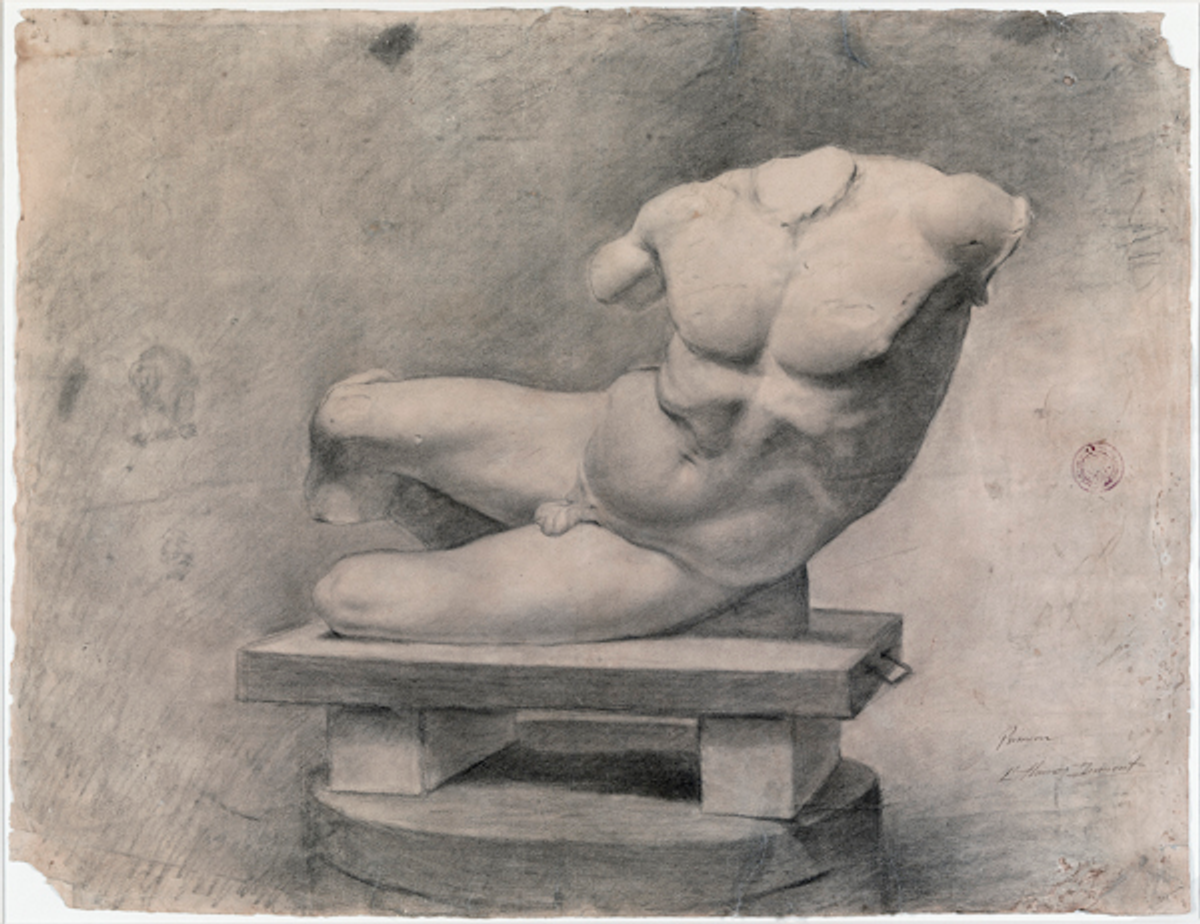
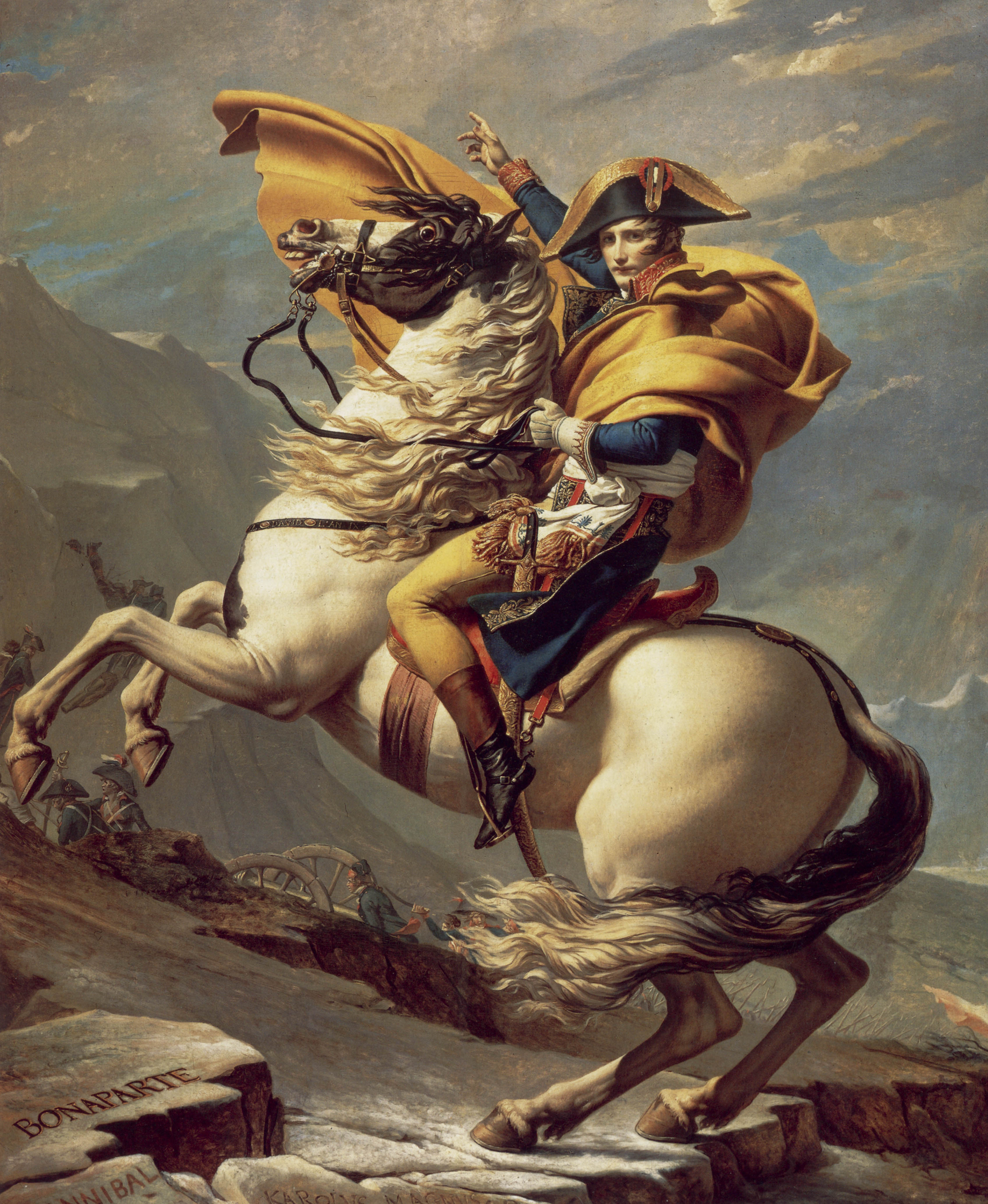
I think you can say this about a lot of 20th century artists. Most of them could paint like the masters if they wanted, but point has changed somewhat. Where a famous picture of Napoleon was painted to commemorate an like this
>Most of them could paint like the masters if they wanted...
This opinion is common and untrue. If you've ever seen Tim's Vermeer, David Hockney, a well-known and very successful 20th painter, claims that Vermeer absolutely could not have achieved a particular gradation without some sort of optical aid. Then, check out https://www.instagram.com/grandcentralatelier/. Buncha 19 year olds with proper instruction developing near-absolute control over the kind of gradation Hockney claims is impossible. Hockney just can't paint, like most 20th century painters.
I’ve heard people compare Picasso’s art to that of a grade schooler so many times and I think it’s a lazy opinion, sorry. Picasso was a virtuoso, to put it mildly. When I saw Woman in White[1], it practically jumped off the wall at me. Never saw grade school art that could do that.
I'm a painter, and your instinct is right. The art establishment has no clothes. Look into "The Twilight of Painting". It's expensive but worthwhile.
There are well-intentioned people here explaining to you why your natural instincts are wrong because they have learned how to carefully tamp theirs down. Picasso and other modernists were an important step forward, but the ideas were taken too far. Twombly is a hack, full-stop.





Well, I sometimes wonder... if everyone in the whole world forgot about artists like Picasso, could the masses still be convinced his art is good in modern times? I for one would be pretty unimpressed with most of his work ("is this some random grade schooler's work you are showing me?").
Meanwhile if the whole world forgot about Michelangelo, my mind would still be blown if I saw any number of his works for the first time. The first time I saw The David up close I was astonished at the level of detail carved into the marble. Like... you could see individual veins in the hands and forearms.