I think it restores some faith in humanity and our systems, to be reminded that people are still out there, investigating problems like this, coordinating recalls before other people get sick, and presumably following up on the root causes.
Maybe not humanity, but trust in institutions has been badly fractured recently. Relevant to this story, the CDC in particular is no longer trusted by roughly half the country.
Which half is that? The half that continued to wear masks after the CDC said it wasn't necessary? Or the half the refuses to wear masks when the CDC says it is necessary?
Neither side are actually listening to the CDC, both sides just do whatever they want, and attempt to justify it by pointing to the CDC.
The half that is oddly combative over basic attempts to reduce risk of transmission of a disease that has now killed nearly 5 million people worldwide, 750,000 of whom lived in the USA, a nation that for many decades, until quite recently, people worldwide looked to for leadership in the fight against global infectious diseases.
I’m really starting to question just how much of the rest of the world actually looks towards the United States for leadership. I think most countries leadership just does whatever they think is best for their own countries and it’s always been like that.
I think the whole “look towards America” thing is some comforting line Americans tell ourselves because we like to think we’re superior. And you can always invoke the actions of the administration you don’t like to claim we’ve lost that special status / respect.
Edit: I’m talking about the whole “Leader of the free world” schtick. Not so much industry standards and funding.
Having been a medical student in NZ attached to an infectious diseases team, the idea that NZ research (or even our ideas of best practice) are not heavily dependent on R&D and standards institutes from the USA isn't plausible. I find it likely that Australia is in a similar position.
We are lucky in that NZ and Australia have sufficient political will to create and maintain socialized healthcare systems independent of the approach the US has taken. The shortfall in global leadership during this pandemic is, in part, from philosophical differences over whether -and, to what extent- it is a duty of "the state" to respond to phenomena like pandemics that tend to kill a large amount of people without a state-level response.
I think you should travel abroad a bit more. There is a love/hate relationship in some countries, but we really do set the tone widely, and steer things. It’s a combination of official stick and carrot, and our enormous soft power apparatus.
> a nation that for many decades, until quite recently, people worldwide looked to for leadership in the fight against global infectious diseases.
We hear similar stories in the UK about "our leadership role in the world" but actually travel the world a bit (or perhaps listen to the news in a foreign language for a while) and you'll soon realise that it isn't the case. It's just a story to make people feel good, or shame, whichever is necessary for those telling it.
> The half that continued to wear masks after the CDC said it wasn't necessary?
If you posed the question I presume the CDC would say that it's not necessary to wear hats. I don't think it's a reasonable conclusion to then say that everyone wearing hats distrusts the CDC.
Even if we accept that wearing a mask is equivalent to wearing a hat - it's not at all - but still, even if we were to, if the CDC initially said you should wear a hat and later said that you shouldn't wear a hat, and if no member of the public was wearing hats prior to these pronouncements, what else would continued hat wearing imply?
This Atlantic article[1] seems to imply that it would be "an expression of political identity". These Pew Research results[2] titled Partisan Differences Over the Pandemic Response Are Growing would seem to back that up. It's not the only research they've done of this nature[3].
That's splitting hairs, no one was wearing masks before their guidance came in. For them to say you shouldn't wear masks or you don't need to has exactly the same meaning given their previous stance.
Maybe we should now quibble about my use of "no one"?
No it's not. The minute I start doing something, whether I continue to do it or not is a complex decision that comes down to many more factors other than why I started doing it.
The most common stated reason amongst my peers for not stopping mask usage during the short summer detente we had locally was a desire to get their moneys worth from all the masks they had already bought.
> The most common stated reason amongst my peers for not stopping mask usage during the short summer detente we had locally was a desire to get their moneys worth from all the masks they had already bought.
As that’s fallacious on its face, I’d have to assume that wasn’t the actual reason. Regardless, it’s still a quibble given we’re talking about actual guidance, if there’s a point to arguing about s hypothetical set of guidelines that will never be issued and would provide a distinction if they were , I might be interested. It wasn’t, won’t, and wouldn’t.
The CDC recommends masks. This is the scientific consensus. If you google back in the past you see consistency in their policies with respect to all communicable respiratory diseases. Measles, H1N1 etc.. It's all there in Google.
For the current pandemic, they did not initially recommend masking because they could not justify it for the general population over the medical community. They wanted to avoid a tragedy of the commons of PPE. The covid19 prevalence was low so the appropriate path was to protect those most likely to be exposed rather than enact a universal blanket. Any blanket has holes regardless of how fine the weave is and the doctors/nurses/hospitals are the choke points. And they are ultimately the carers who save lives.
So this nonsense of the CDC said this and that is just that: nonsense.
> For the current pandemic, they did not initially recommend masking because they could not justify it for the general population over the medical community. They wanted to avoid a tragedy of the commons of PPE.
Then here's what they should have said: "Masks work, but health care workers need to be prioritized. So we have asked the President to exercise the government's eminent domain power to ensure that adequate supplies of PPE are available to health care workers. That may impact availability of masks for the general public in the near term, until supply chains can respond to the large increase in demand."
What they actually said was: "Masks don't work so don't bother trying to buy them."
The problem though was the question, and the mismatch between how the scientific community and the layman communicate
When asked do masks stop the spread of covid, the answer is and has always been no. No mask 100% stops the spread. If you share that information with the common person, it quickly becomes a facebook post about how masks are totally useless.
No amount of ifs and buts will convince the common man if they don't want to be convinced. I've seen people even on hacker news adamantly treating Fauci's initial prediction that it would be no more dangerous than the flu as gospel, despite a 16 months of more up-to-date information
I see that common misunderstanding that Kary Ellis said that PCR tests can't detect viruses, when he actually said PCR tests can't me used to measure viral loads on every single damn post about PCR tests. It's been debunked so much but people do not want to listen
> When asked do masks stop the spread of covid, the answer is and has always been no.
No, the answer is to reject the question, and to redirect it instead to the proper scientific question, which is what fraction of incoming germs a mask will stop. That fraction is practically indistinguishable from 100% for an N95 mask properly sealed, is in the mid to high 90s for medical grade masks or masks of multiple layers of cloth properly sealed, and drops off sharply as the weave of the cloth loosens or the quality of the seal decreases.
The problem is that so-called "scientists" refuse to do this. They make authoritative pronouncements instead, which of course are often wrong. Saying "no" to the question "do masks stop the spread of COVID" is just as wrong as saying "yes". But so-called "scientists" are too lazy or too caught up in their own sense of authority to properly reframe the question. So if the public then distrusts them because they make false authoritative pronouncements, they have nobody to blame but themselves.
> No amount of ifs and buts will convince the common man if they don't want to be convinced.
Most people are not extremists or crackpots. They are quite capable of understanding a response such as I gave above. And they are also quite capable of seeing when a person is not being forthright with them because that person is more concerned with maintaining their position as an authority then with telling the truth and being honest about what we actually do and do not know. So even if some of the things so-called "scientists" say are actually true, the public is right to not believe them, because once someone has shown that they will prevaricate with you, you cannot afford to take anything they say at face value. And that is precisely the position that our current public health authorities, not to mention scientists in many other fields, have gotten themselves into. As I said above, they have nobody to blame but themselves.
Back in January 2020 they were saying n95 masks are primarily for health care workers. They didn't say they don't work. There are news articles from then that literally talk about the statements you are claiming they should have said.
"Most people don’t know how to use face masks correctly, and a rush to buy masks could prevent the people who need them most — health care providers — from getting them."
The Surgeon General under Trump did make a statment: " U.S. surgeon general recently urged the public to “STOP BUYING MASKS!” “They are NOT effective in preventing general public from catching #Coronavirus, but if healthcare providers can’t get them to care for sick patients, it puts them and our communities at risk!,” wrote Surgeon General Jerome Adams on Twitter"
So maybe you are confusing that statement? Regardless, the messaging was obviously not clear, but I can't find anything confirming the CDC said "masks don't work so don't bother trying to buy them."
> There are news articles from then that literally talk about the statements you are claiming they should have said.
"Most people don't know how to use face masks correctly" is not what I claimed they should have said. That's basically saying "masks don't work unless you're a health care worker who has been trained to wear them properly". Which is wrong since plenty of people who aren't health care workers do know how to wear masks properly. It's not rocket science; you just have to make sure there's a proper seal. Most N95 mask packages give explicit directions about how to do that.
> "a rush to buy masks could prevent the people who need them most — health care providers — from getting them."
Which, again, is not what I claimed they should have said. The proper response to this valid concern, as I said, would have been to use the government's eminent domain power to ensure that PPE was prioritized to health care workers (or, in the case of the CDC, NIH, etc. who don't have that authority themselves, to recommend to the President to do that). Not to prevaricate about people not knowing how to wear masks properly.
Dr. Fauci went on TV to tell people that there is no reason to wear a mask. He’s strictly NIAID but considering NIAID is in the CDC and that’s under HHS that leaves us with the CDC silent between two guys telling us not to wear masks.
There's arguments over whether the CDC was politicized under Trump [1]. It's possible this was career bureaucracy failures of course and the Biden administration is just trying to whitewash that failure by blaming the previous administration. For me however, the fact that right wing politicians appear to consistently exert pressure on scientific agencies [2] to toe the party line gives me a prior that scientific agencies under right wing governments are less trustworthy because they are subject to undue influence.
[2] This is based on my observations of Canada and the USA where "politically sensitive" topics like global warming, reproductive rights, & gun rights (in the USA) are decidedly marked by publication and public speaking bans on the parts of scientists. These kinds of actions generally do not appear to be present under left-leaning administrations which seem to tolerate dissenting opinions and politically inconvenient statements/papers better. This does not necessarily imply a similar action for something like the CDC/pandemic, but I worry there may be unofficial indirect signalling effects from scientists observing what happens if you cross the current political power base.
> It's possible this was career bureaucracy failures
The mindset of public health officials where they are willing to prevaricate with the public because of some claimed concern like "there won't be enough PPE for health care workers", instead of just recommending to the President to use the authority the government already has to address such concerns, goes back decades, so it cannot be blamed on any particular administration or political party. I think it's just part of a general tendency on the part of all governments to become less efficient and more protective of their power over time.
> left-leaning administrations which seem to tolerate dissenting opinions and politically inconvenient statements/papers better
I don't know where you're getting that from. Both parties in the US consistently politicize science. The only reason it seems to be more prevalent when Republicans are in office is that the US media reports on the two parties very differently, so there's a huge selection bias in what is made visible to the average person.
I don't think this is a "both sides" issue or biased media coverage (& note I specifically said Canada and USA because I am making observations about both countries and they have extremely different media profiles).
I'm not talking about general low-level politicization (although I still think the right generally wins here). I'm talking about expressly restricting the kinds of topics scientists are allowed to speak about with media, the conclusions of the research being altered by political appointees, etc. Please feel free to present counter examples.
The Canadian right wing was specifically trying to help the Albertan government which is heavily dependent on oil (but in general the right seems to hogtie themselves to the oil and gas industry generally).
That it absolved NASA leadership and the administration itself is questionable (kind of a "we investigated ourselves and found that we didn't do anything wrong" kind of thing). The oversight powers of IGs in the US are laughable so I generally trust their conclusions less (right or left). If you fill the public affairs office full of your lackeys and let them run amok, then you can claim ignorance and the investigator can't really conclude you directly directed any action.
> I'm talking about expressly restricting the kinds of topics scientists are allowed to speak about with media, the conclusions of the research being altered by political appointees, etc.
I don't think the right is any worse than the left in this respect either. Looking at a small number of examples is not a good approach. This has been going on for decades, as I said, and it affects pretty much everything that we all think we know outside of perhaps hard science like physics or astronomy and mathematics.
For one thing, every single one of the references you give is a partisan source; none of them are from neutral observers. Arguably there aren't any neutral observers, at least none that have a media channel through which to publish. So it's basically impossible to actually get an unbiased view from anyone. The only way to really form your own opinion would be to dig down to the original primary sources and evaluate the actions and decisions they describe on the merits, based on the information the actual people involved had at the time--which in many cases won't even be available to the public for decades, so it's useless as far as trying to decide about contemporary issues. But by doing such historical studies on the handling of past issues, one can at least uncover general patterns of how governments, media organizations, and other large bureaucracies and oligarchies handle such things, which can be useful in fueling a healthy skepticism about whatever they are saying about contemporary issues. Any such healthy skepticism will be equally directed at both left and right.
> There's arguments over whether the CDC was politicized under Trump
As far as I can tell, Trump had little if anything to do with public pronouncements by health officials about mask wearing. He did tend to discount mask effectiveness in his tweets and random public statements, but I think it's pretty well established that no government health officials gave any weight to his statements about that, or about anything else for that matter.
I would agree that the Federal government's failure to take obvious steps like using eminent domain power to ensure adequate supplies of PPE to health care workers was Trump's failure while he was President, since the President is the one who has the final say on the Federal government's eminent domain power.
Both Fauci and Birx have stated that they had to moderate their language while speaking under Trump because they didn't want to anger him or be banished from giving information to the public.
> For the current pandemic, they did not initially recommend masking because they could not justify it for the general population over the medical community. They wanted to avoid a tragedy of the commons of PPE. The covid19 prevalence was low...
I posted links in this thread which discuss how the CDC was negligent in studying the possibility of asymptomatic spread early in the pandemic, and knowingly released test kits that were faulty.
What this means is that the CDC didn't actually know what the prevalence of SARS-CoV-2 was in the US in the early days of the pandemic. It was flying totally blind and as we eventually learned, the virus was silently spreading and establishing a foothold throughout parts of the country while the CDC was assuring Americans it had everything under control and the threat was low.
My family and friends in the US were able to stock up on medical masks and N95s in January before they were pulled from the shelves because I was living in Taiwan, where it was abundantly clear in January that there was a very serious respiratory pathogen on the loose.
> Yet Reuters has found new evidence that the CDC’s response to the pandemic also was marred by actions - or inaction - by the agency’s career scientists and frontline staff.
> In addition to learning of the early warning, reviewers determined the Respiratory Viruses Diagnostic Laboratory, run by a highly regarded scientist named Stephen Lindstrom, was beset with problems, including "process failures, a lack of appropriate recognized laboratory quality standards, and organizational problems related to the support and management of a laboratory supporting an outbreak response," the review said.
I know it's in vogue in America to blame everything on the current administration (this happens on both/all sides of the aisle) but in reality, institutional rot is responsible for a lot more of the shortcomings in institutional failures. There is an obvious decline that has been taking place in many agencies for decades, across both Democratic and Republican administrations.
I would assume it's for outside, as the CDC has changed its guidance on outdoor use, as we can see from this earlier, archived, guidance page[1]; this later guidance[2] which is more relaxed; and in particular this order[3]:
> The Centers for Disease Control and Prevention (CDC) issued an Order pdf icon[PDF – 11 pages] on January 29, 2021 requiring the wearing of masks by people on public transportation conveyances or on the premises of transportation hubs to prevent spread of the virus that causes COVID-19. This Order was effective as of 11:59 p.m. February 1, 2021 and was published in the Federal Registerexternal icon on February 3, 2021. CDC will be amending this Order as soon as practicable, to not require that people wear masks while outdoors on conveyances or while outdoors on the premises of transportation hubs.
> Yet Reuters has found new evidence that the CDC’s response to the pandemic also was marred by actions - or inaction - by the agency’s career scientists and frontline staff.
> At a crucial moment in the pandemic when Americans were quarantined after possible exposure to the virus abroad, the agency declined or resisted potentially valuable opportunities to study whether the disease could be spread by those without symptoms, according to previously undisclosed internal emails, other documents and interviews with key players.
The headline says it all: CDC Report: Officials Knew Coronavirus Test Was Flawed But Released It Anyway
> In addition to learning of the early warning, reviewers determined the Respiratory Viruses Diagnostic Laboratory, run by a highly regarded scientist named Stephen Lindstrom, was beset with problems, including "process failures, a lack of appropriate recognized laboratory quality standards, and organizational problems related to the support and management of a laboratory supporting an outbreak response," the review said.
> The CDC declined to make Lindstrom or anyone else available for an interview and declined to discuss the unreleased internal review. A spokesman would only say that the agency had "acknowledged and corrected mistakes along the way."
Is it unreasonable for people to have lost faith and trust in the CDC based on its many pandemic failures?
The CDC is not perfect, no agency in any country is.
The thing is, we were hit by a pandemic that was practically impossible to stop. Some countries did better than others for a variety of reasons but it was bad times for everyone. And when times are bad, we look for people to blame. The virus is terrible, the agencies tasked with dealing with it did what they could, and that they couldn't solve an impossible problem in a superhuman way doesn't mean that they are unable to solve the easier problem of tracing back an infection.
Certainly, it was inevitable that the pandemic would hit the US. But after reading the articles I linked to, I think it's hard to argue reasonably that the CDC wasn't at a minimum incompetent if not negligent in its handling of the situation, especially early on.
The US literally imported the virus via evacuation flights, and then the CDC made the decision not to consider asymptomatic infection and spread. Not only would this have significantly reduced the risk of people from those evacuations potentially seeding the country with virus, it would have allowed the CDC to issue accurate preventative guidance to Americans.
Then the CDC pushed out test kits that it knew were faulty. I mean, come on! Is this the best America could have done?
Meanwhile, I was living in a country (Taiwan) that knew something was up in January. At the very beginning of the month, health officials started screening passengers with a travel history to Wuhan. There was a lot talk about what was happening, so people here started masking voluntarily and the government officially banned the export of surgical and N95 masks on January 24 to ensure adequate supply for the country. My family and friends in the US had medical masks and N95s because I told them to stock up in January.
Meanwhile in America, Fauci was telling Americans "there’s no reason to be walking around with a mask" and the Surgeon General was actually telling Americans masks might increase their risk of contracting the virus...in early March!
Yes, I'm aware that Taiwan is an outlier in its success against COVID due to a variety of factors, some intrinsic (like island geography). But the US response was an abject, embarrassing disaster and it wasn't just because of destiny or crazy politicians.
Don't forget the CCP lock down of local Wuhan travel with the exception of international flights. IIRC, early indicators of a possible outbreak existed long before the mass media picked up on the frenzy.
My parents who live in Taiwan were talking about it just as they were coming home from visiting me in the states around November 2019 and they were so concerned that they advanced me a box of medical grade masks by mid January, due to having lived through the hysteria with SARS-COV-1 in 2003.
No one took COVID19 seriously here while I commuted for work in NYC via MTA. At most, bottles of hand sanitizers did start appearing in the office late January but no one wore masks until the announcement for the "15 days to slow the spread" campaign.
In Alberta, nestled deep within the bowels of our provincial health care system, we had this guy whose job was to procure medical equipment in anticipation of any potential medical crisis. He saw the same news item I did about the Wuhan lockdown back in December 2019, and decided it would be a good time to procure extra PPE, just in case the then mysterious flu turned into a big deal.
What hero! In the early days Alberta was donating desperately needed PPE to the other provinces, because of that one guy and his unilateral decision. Every other professional with the agency to act blew it.
I was wandering around for months having accepted that a global pandemic was a forgone conclusion before our Government finally took action in Mid March of 2020.
The whole time I was wondering "Am I the crazy one?".
I was not the crazy one. Everybody else was the crazy one.
The thing is that the people at agencies like the CDC are literally paid to know.
The CDC has a Center for Preparedness and Response[1] dedicated to "advancing the nation’s preparedness and response for public health emergencies and threats", which receives over a billion dollars annually, hosts an Epidemic Intelligence Service conference every year, etc.
How can one reconcile the amount of money and resources allocated to the CDC programs that were supposed to help protect the US from pandemic threats with the embarrassingly inept response?
I flew from Taiwan to Singapore in late February 2020 and literally everyone on the plane (passengers and flight crew) were wearing masks even though IIRC masks were not required at the time. By then, it had been patently obvious to laypeople in Asia for weeks that this thing was spreading via the air. And yet you had America's top health officials telling people in early March they didn't need to worry about masking.
It can also be a culturally-adopted thing. From the 90's til now, wearing a mask was normalized to be necessary while navigating through cities like Taipei with dense smog and particulate matter. There's a reason why it's some times referred to as the moped capital of the world.
I guess when word got out that there was a potential spread of infection, Asians had no problem adapting mask wearing on other forms of mass transportation as well.
It really does have to be restored. This story sounds straight out of a CSI episode. But when you deal with the “real” police, you’re in for a world of disappointment.
I imagine almost no one remembers, but that show existed. After CSI exploded in 2000 everyone wanted to hit it big with forensics. That’s how we gif thinks like Bones and Crossing Jordan.
In 2004 we got me season three f Medical Investigation. It was about a team from the NIH that went around trying to solve disease outbreaks. It was a nice change from everything else being crime focused.
The blame falls squarely in Walmart’s lap. Their push to sell the cheapest possible product forces manufacturers to either cut corners or go out of business.
Walmart is on another level entirely. It's one of the reasons I refuse to trust their store brand merchandise. With other retailers, I can be fairly confident that certain items are going to come from single manufacturer sources. I've never been able to do that with Walmart, especially since they've gotten into the grocery business.
I recently bought some PuR water filters from Walmart. I had previously purchased the same product from Amazon. The ones from Walmart lack the rubber gaskets found on the ones I purchased from Amazon. I can only assume it's one of their famous cost cutting measures. Same retail price.
Which is why corporations need checks and balances - including safety and hygiene tests on ALL products sold.
Of course, corporations have a financial incentive to check their own products - there will be a huge lawsuit coming out of this and Walmart will end up paying millions in damages.
Based on that description was expecting it to be an online third party seller at walmart.com, went and read the article and was surprised to see it made it onto physical store shelves. The quackery sold with a smile in "reputable" stores is insane. (Waves at Whole Foods)
A local grocery store has a prominent display of CBD products with signage declaring that it's for the "human cannabinoid system". I really wish the FDA would exercise its power and live up to its mission to get these clowns away from the gullible public.
CBD has quite a lot of scientific support. And it works by interacting with the human cannabinoid system, which is a real scientific thing.
Even worse, the FDA has been flexing its muscles trying to prevent CBD products being sold[0][1][2], despite the products being restricted having no health concerns. You can sell all manner of dietary supplements and "superfoods", but according to the FDA, not a cup of tea with a few drops of CBD oil.
TIL that’s exactly what it is, apparently. A fundamental system of human physiology, influencing sleep, mood and pain among other neurological functions. Our bodies contain naturally occurring cannabinoids that regulate this system.
Actually humans have cannabinoid receptors. They are components of the hormone transmission in all animals, sans-(insects and Protozoa). Ironically, aspirin interacts with the human cannabinoid system to produce most of its medical benefits.
> “ Non-steroidal anti-inflammatory drugs are COX-2 inhibitors that work, in part, by reducing the enzymatic degradation of the endocannabinoid anandamide ”
The human endocannabinoid system has vast and far-reaching implications regarding pain, inflammatory system and metobolic regulation.
> “ Studies at the National Institute on Drug Abuse in Bethesda, Maryland cloned the G-coupled protein receptor (GPCR) in 1990, which is the target for endogenous cannabinoid ligands, and named it, “Cannabinoid Receptor 1 (CB1 or CBR1). This receptor belongs to the Class A rhodopsin-like family of GPCRs [3]. A few years later, the second GPCR: “Cannabinoid Receptor 2” (CB2 or CBR2) was cloned [4]. The CB1 and the CB2 receptors participate in numerous essential biological processes [5]. Some of these are: Neuronal plasticity [6], pain [7], anxiety [8], inflammation [9], neuro-inflammation [10], immune function [11], metabolic regulation [12], and bone growth [13].”
I get where you're coming from, but I think it's reasonable to realize frustration that the person you were originally responding to may have had with OP stating unequivocally that 'Cannabinoid system' is quackery without doing any research of their own.
To bring it to tech, it'd be like someone claiming that 'database system' was made up by Percona to market MySQL.
All fair points. I do want to point out that "Chamomile Essential Oil Infused Aromatherapy Room Spray with Gemstones" is how this all started. When the cannabinoid system was brought up, it was done in relation to that. I had no prior knowledge of it being a recognized system or it's effects on the body, and assumed it had as much merit as the comment it was in reply to. That was a mistake on my part.
If they're knowledgeable on the topic then I'm sure having someone dismiss it as pseudoscience can be frustrating. I get that, but just saying someone's wrong isn't enough to change opinions. It doesn't need to be a research paper with citations, just a link to Wikipedia showing that it exists on a conceptual Level, or even a "I work in pharmaceuticals, it's legit". I'm at fault for not doing my own research as well, but thank you for settling things, looks like a lot of people learned something new
I wonder how you'd explain to someone from the 19th Century why the public is perhaps even more gullible for snake oil and miracle cures now as it was then, despite having vastly greater literacy rates and access to information. I have a hard time putting my finger on a particular reason this should be the case, other than human nature being what it is, and it's one of the things that makes me feel like we got switched to the wrong timeline.
I believe that people themselves aren't as gullible, but rather that we now know how to manipulate people much better.
Huge companies like FAANGs only exist because of human manipulation, there's entire fields dedicated to manipulating us, the obvious being marketing, but data science is also used for this.
I love this answer. It implies that manipulation and reason/common sense are in a kind of arms race. If humans are actually getting better at spotting B.S., just not as quickly as orgs are finding new ways to manipulate them, then maybe what's programmed can be de-programmed.
I could see fewer being better. If everyone in the US was forced to vote on election day, I think Elvis would be president for life. (Or death. Or just forever.)
I wonder what would have to be done to turn it around. The B.S. detectors seem to be less effective during panic and stress, so marketing must be booming right now thanks to the pandemic.
We have better access to disinformation now, too, though. There have also been great strides in the fields of convincing someone to buy something they neither want nor need.
Even if there's only a sucker born every minute, the web makes it easier to find them than hoping they come to within earshot of you or read your pamphlet.
This is kind of what I mean. Let's say we could quantify "suckers" - some gullibility curve that goes from 0 to 1 over percentiles of the general population. Say that ads and propaganda techniques keep pushing that curve left, and education and broader advancement push it right. Has it moved? Or are you saying it just looks like it's moved because we have more Florida Man articles, i.e. more visibility into the far end of the gullibility spectrum?
Some theories have been posted and I agree with those, and think there's also a subset of people who assume if a product is being sold in a store or by some company that it is automatically safe and works because they assume the government or Walmart, or whomever wouldn't let them sell it otherwise.
Oddly though, at least anecdotally these are often the same people who harbor conspiracy theories about both governments and large corporations. A lot of these "holistic" products seem to capitalize on appeals to being an alternative to approved or widely accepted treatments. You could even say that the people who rely on crystals for medical purposes believe that everyone else is gullible and they're not. That's the sales pitch, even though the thing is sold at Walmart. So... hm. Hard to deprogram that, I guess.
My dad's mom, who I rarely visited other than for brief trips (his folks were avid dancers and would always show up at OUR house on Saturday evenings), watched my sisters and I so that my parents could go to a class reunion. Usually this would fall onto my mom's folks, but they were on some sort of vacation trip.
Anyway, my grandmother apparently really enjoyed reading tabloids. I had spent significant amounts of time at my other grandmothers' house reading Ripley's Believe It or Not books from cover to cover, and so I just started doing the same at my other grandmothers' house while eating Violets, a perfumed candy that was apparently popular amongst women at some point in time. Anyway, I thought that everything I was reading was true, including giant ants that were eating corrugated aluminum.
I spoke up to my grandfather, asking him whether he had protected his shed against these monstrous incursions, and he looked at me like I had 3 heads. It wasn't until my mom saw what I was reading when she returned that she understood what was happening.
Heheh. When I was a kid in the 80s standing in the checkout aisle I convinced my Mom to buy me a little booklet about "Ancient Aliens". (She usually would let me get a crossword booklet or something, so she didn't really notice what it was). I believed this stuff. Blew my mind. Only aliens could have built those pyramids. Some years later, I found myself listening to a guy named Alex Jones. Believed that the government was going to put us all in concentration camps. Went out and looked at some of the expected FEMA concentration camp sites, took pictures of the barbed wire, stuff like that. Um. I'm not proud of this, I'm just saying I bought into a lot of hooey in my life before I realized that the people selling it were completely full of shit. In fact, every time I did, I felt smarter than everyone else, because I thought I knew something they didn't know.
What woke me up to the scam? It wasn't some Dostoevsky mock-execution come-to-Jesus moment. It was a gradual realization that none of these claims made as much sense as other explanations. And a slow but building sense of anger at the assholes who had made all this bullshit up to line their own pockets.
despite having vastly greater literacy rates and access to information
The information available now is also vastly more watered-down, subjected to marketing-infused misinformation, and almost designed to keep people from gaining more information.
From that perspective, literacy is really just making it easier to convince people of lies.
People were incredibly gullible in the 19th century, so I’m not sure your premise is true. I think 99% of people are equally gullible and 1% of people are notably less gullible and so there is a small improvement between the 19th century and today.
Op fixed his text but now I don't understand his point. Why aren't CBD products for the "human cannabinoid system"? Is he saying they should have said "mammals" or "animals" instead?
It’s far worse: Homeopathic therapy is paid for by the German health insurance system. That’s how far this bullshit goes. Public money is spent on quackery. And you can’t vote with your wallet as health insurance is mandatory here.
I used to have a similar outlook, but I have moderated it in recent years. These things should be regulated, but not banned.
You should have hardcore warnings on them (like on aus cigarrettes for example) that state clearly that studies have shown these ingredients or procedures have been shown to be no different from placebo for whatever, or have low quality/few studies. I think you should even have QR codes that link to a page that summarizes the evidence for them and links to the primary source. vitamins etc should also be clearly separated from actual medicine in pharmacies. In the case of cigarretts in Australia, this strategy has been proven to be more effective than the comparable strategy of banning marijuana (more kids in aus have tried marijuana than cigarettes now)
Banning these things can have several negative effects that probably harm the project of getting society to move away from this type of quackery.
Firstly you cannot stop people from wanting these things by banning them, so you will create a black market for them which is less safe, and also opens up a funding stream for nefarious actors.
Secondly, we should not close our minds to the fact that at some time in the future, it is a virtual guarantee that there will be some useful compound in, for example, some chinese medicine herb. if we snuff out all these practices, we deny ourselves one avenue for finding out about these compounds that we might otherwise simply not come across.
Third, banning stuff gives ammo to conspiracy theorists: "they are banning it because they don't want you to have it because they know it works and doctors will be out of business"
Go ahead and ban stuff that endangers near extinct animals, or maybe something that genuinely causes serious acute harm to a user, but generally I think its better to inform and regulate, rather than ban. You think you would be helping people but they don't want your help and they think you're trying to hurt them. Give them the info to work it out instead. Also, if some small girl wants to play an imaginary witch game with crystals, but all they crystals are banned, thats pretty sad to me.
Chiropractors should not be able to call themselves Drs. though. should straight up be a crime.
I used to have the moderated outlook, but then I saw how traditional medicine is the #1 reason for rare animals being poached. I also saw how the related disinformation drove people towards quackery like Ivermectin and Chloroquine.
If you let crazy people gives themselves titles like Doctor and open a shopfront, all legit and everything, then people will just take that kind of thing on face value.
Freedom doesn't mean the freedom to defraud and wipe out entire species.
A lot of people here are voting me down and saying that I'm totalitarian. I'm just advocating for banning some quacks from practising fake medicine. The opposite is allowing our planet's wildlife to be permanently, irrevocably wiped out in the name of old people getting erections or whatever.
Honestly, which is the more extreme position in your mind: Specicide or Regulation?
They might be voting you down because it looks like you may not have read my entire reply. I specifically noted the caveat of endangered species and a Dr. Title being used by people who should not use it as situations that probably justify a ban.
I think we likely agree on these points, but perhaps not on the surrounding ones which don't have significant harm outside of parting foolish people from their money.
Several of my acquaintances have been recently defrauded out of thousands of dollars by phishing attacks. You know the type: you get an SMS about an $925 Amazon purchase that you made, just enter your credit card details here to cancel. That kind of thing.
Should we just let this stuff happen? Take the safety signs off and let Darwin sort them out? Why bother with those expensive tests and government approvals for medicine? Just let people figure what works and doesn't work on their own! I mean, sure, those foolish people will get themselves killed taking placebos for their cancer, but that's their own fault for getting tricked, right?
Maybe my position can be clarified a bit better: We both want to minimize this problem and stop it from happening. My argument is not that we should ignore the problem, my argument is that banning these things is not the most effective solution.
My view is that we are likely to have a greater impact on stopping this problem by using tactics other than banning them.
I'm sorry to hear about your aquantances phishing attacks. There are parallels to be sure, but Phishing attacks are a clear deception, and everyone upon being phished will agree that they have been done wrong by, so it is easy to make these illegal; you don't create a black market for people who want to go out and get phished anyway. Unfortunately the same is not true of people who purchase quack therapy. Most will continue to think that their money was well spent.
>> Freedom doesn't mean the freedom to defraud and wipe out entire species.
I appreciate this statement. But this statement is contrary to the modern Christian view. The modern evangelical Christian view is that God made Man to do whatever he wanted with the earth. That's the basic justification for wiping out species or strip-mining or polluting the air or the water. "Freedom" is a concept that was meant to imply freedom from imprisonment, torture, harm or oppression. Not the freedom to demolish anything in sight. Or the freedom to con other people. They use "freedom" like it's an end-run around morality.
I deny that you describe the modern Christian view. The Christian view is that God made the world, and that humans are sub-rulers of it, but not owners. They are taking care of the property of another. They are not free to trash it.
Agreed on all points (especially about chiropractors calling themselves doctors). One major driving force behind quackery seems to be the ability to assert that it's banned because it works so well it would put pharma out of business. But as we've seen from the dire warnings and non-banning of Ivermectin, these things can now burst into mass poisonings in a matter of days, much faster than any regulatory body let alone public messaging campaign can keep up.
yes this is true and a good point. It is hard to account for active disinformation campaigns. I think it is generally safe to assume they won't be as extreme as those for ivermectin in most cases.
One counterpoint is that not banning things could increase general public trust in the regulator which could make disinformation less effective.
But not taking action against something harmful could also make the regulator look like they're not doing their job.
I'm not in favor of banning anything (pot smoker, drinker, and big fan of the Darwin Awards here). I don't think bans accomplish much besides increasing demand and black market crime around the forbidden thing. But I still have no idea how you stop grandma from eating horse paste when she hears on facebook that it cures covid.
Agree with most of those, but I think herbal medicine may have some merits and should not be flat out banned. I mean tons of modern day medicine is plant derived...
At least two of those are not the quackery that you think they are, but rather should be a tool in the toolbox. Why should we throw out the historical knowledge behind natural medicine entirely?
You'll find that if you do a survey, other people will also say some of them are not bullshit, but they won't agree with you on which two those are. That's the problem.
"Not entirely bullshit" treatments are my favourite kind of treatments -- far superior to the "mostly proven" treatments those quack doctors keep trying to force onto an unsuspecting public.
Doctors can, and do, prescribe medications for off-label uses even if there is no proof that they work. Using acupuncture for an off-label use is the same thing.
While I know chiropractice is filled with quacks, some of it genuinely helps people. I’ve watched a series on youtube where people with very bad posture recover then are unrecognizablly much better after a few treatments and it’s quite authentic as well. I don’t think banning it would be a very productive endavor.
Homeopathy is kindof a quack but placebo isn’t so if people swear by it let them be, it doesn’t bother me in the slightest.
The only solution is education. Who gets something out of education can get better odds but at the end of the day people will do what the believe is best for them. Covid conspiracy theories and the reluctance to vaccinate is a very good example on how stubborn people are. Spending resources to fight against that is not the best use of resources imo.
> While I know chiropractice is filled with quacks, some of it genuinely helps people
That could be the Placebo effect, but my opinion is very much biased by my experience of quacks, it's sad to see older people fall for what quacks write.
> The only solution is education.
My friend's sister is a nurse, so I thought he'd be more educated about it. Turned out that he's terrified of it now from her stories about blood clots.
Sure but not old people fall for it. Some are skeptical of quackery because they are either better educated or experienced enough to have the intuition they’re being led on. Others don’t and their gullibility will make them victims in many other areas. Education is the only possible help they could get. Banning whatever quacky things will only make them more desirable.
People say the same kind of thing about all of the others. "Traditional herbal medicine does help some people." isn't a good argument if it doesn't help most people and is downright harmful in a significant fraction of the cases.
That last statement is also true for western medicine. Im not equating the two in no way btw but farmaceutucals have had their bad apples and caused lots of harm as well (definitely more good than harm, im not questioning that part). I wouldn’t personally reach out for chinese herb conctions but if some people swear by it let them have it.
Some of the techniques some chiropractors use are legitimate (whether or not the theories they believe about the techniques are), but the best thing to do is find a science-based physical therapist who also uses those techniques.
She started off x-raying my back to check if something was really bad (it wasn't), then did her little grappling knee chiropractor thing (which felt good), then proceeded to use an electric massage hammer to loosen up the muscles. After a couple of treatments, my back was back to normal.
I found a stomach exercise program, and the extra training combined with much better awareness of the symptoms, which I think I got out of the whole affair, has kept me well since.
I understand why you are saying what you are saying, I was there once too. But I think you're underestimating something. The chiropractor who treated me spent most of her time helping people with back pain. You could hear she had a pretty well-informed idea of what was wrong with my back, probably because she had seen hundreds of backs like mine before.
And if you actually study what doctors and physical therapists are doing, a lot of it is 100% in the quack domain. For instance, they see one symptom and then immediately jump to a conclusion about it. I don't blame them. When I see people developing software, I can't say most of them are being very scientific either.
Your therapist needs to have a good idea what's wrong with you, and effective means of getting to it. The actual theory they have in their mind is less important. I'm not religious or spiritual, but I believe my decision to go try the chiropractor was rational.
I'm sure there are plenty of ineffective doctors/therapists and plenty of effective chiropractors.
I believe a genuinely scientific doctor wouldn't merely use heuristics and would use actual science and personal examination to determine the best way to treat someone's problem. I believe some who may who title themselves "chiropractor" possibly may be good at accurately diagnosing and resolving people's back issues, but with a chiropractor you take on additional risks, like risk that your chiropractor happens to be one of the many who believe all diseases stem from spinal problems and can be treated through spinal manipulation, along with many other pseudoscientific, untrue beliefs.
It seems the best professional would be someone who titles themselves a doctor and attempts to be scientific and empirical, without believing anything about spinal issues causing all diseases, but who otherwise fits the description of the chiropractor you saw.
It's true that someone with a false, unscientific theory may end up more effectively treating particular patients than someone else with a true, scientific theory, but someone who's both effective and has a true, scientific theory will surely be superior to the alternatives. I see no reason why a scientific doctor can't specialize in back pain, use x-rays, use the devices you mention, etc. I believe many do.
Perhaps at that point it merely comes down to semantics of the title they use and the school they went to, but the pseudoscientific associations are so historically strong that it seems like it'd be a red flag that anyone would want to consider themselves a part of that profession in the first place. At the very least, you'd think they'd want to "fork" it and take the good parts and leave the bad parts.
If I couldn't seem to find a doctor who meets those criteria I describe above, I'd possibly consider trying to find a chiropractor who seems to use a science-based approach, but only if I had no other choice.
Well... chiropractors are fairly scientific when it comes to straightening out your spine. They have a lot of science (anatomy) and training, and at least the ones I've tried have done it pretty well.
It's semantics, but I hope that you mean that, in an ideal world, those things wouldn't exist. There's nothing ideal to me about living in a global totalitarian nanny state.
It's also not completely black and white. For example, the "science" behind homeopathy is absurd, and the medication is literally just water. That doesn't mean it can't be effective at treating someone's malady as a placebo, though. Little children with a sore throat may refuse to nap until they get "medicine".
Many adults also struggle with accepting inaction as the best course of action. If paying someone to stab them with little needles lowers their blood pressure during a stressful time, then perhaps it was worth it?
It's even worse at drug stores such as CVS, Rite Aid, Walgreen's, and similar. Go looking for some non-prescription relief for cold or allergy symptoms, for example, and their shelves will be full of homeopathic products side by side with the actual medicines.
The link is yet to be proven:
"Some testing remains to be completed. The positive reading from the aromatherapy bottle was done by polymerase chain reaction, or PCR, testing. <b> CDC labs are trying to extract genetic sequence data from the PCR finding to compare to the bacteria from the Georgia patient, as well as the other three. McQuiston is confident it will prove the link. But even if it didn’t </b> the discovery of Burkholderia pseudomallei-contaminated room freshener being sold at one of the country’s largest big box chain required urgent action."
A long, long time ago, I was a male nurse in intensive and trauma care.
Around the time, mid to end 90's, that aroma therapy mumbo jumbo began to spread among nurses.
We even had one that couldn't stand the smell of rotting flesh on some poor souls trapped in intensive care with heavily infected wounds.
I loved the smell of an infected thorax cavity after partial lung resection in the morning.
It smelled of hell.
Which really wasn't that pleasant I assure you.
That nurse even installed magic trees and lavender bags.
Which I associate till this day with decay.
Yes, it was around the time 'Seven' had its theatrical release, but she didn't knew the film.
I left the healthcare trenches around 2000, but I see, not much changed.
Still, enough room for nosocomial infection vectors:
I just feel like smells intended to cover up bad smells make you associate them with each other. I'm sure that bathroom sprays for example are its own category not used elsewhere, to avoid the association.
I'd prefer to smell bleach / chlorine when entering a bathroom over a shitty spray myself.
As a general note, room air freshener sprays do nothing to freshen the air in your room. For that, you must remove the pollutant source and introduce cleaner air.
When I was in university, I lived in a residence and there were two girls down the hall that smoked constantly and had a bunch of air fresheners going, with the overall effect being a disgustingly cloying mix of tobacco and synthetic berries or whatever. I've experienced the same thing with those bathroom fresheners where people think spraying them will cover up the smell they produced, and you end up with this revolting mix of poo and air freshener.
Overall, I'd almost always rather smell the actual thing being covered than the smell of it being mixed with air freshener, and I assume, bacteria contamination aside, it's a lot healthier not to breath in whatever the fresheners are giving off
i have a neighbor (or three) that smokes weed and another that burns incense. the combo sometimes infiltrates my apartment (through the closet, where i think there is a hole). combined with the old building smell that's embedded in the framing, it's an awful mix of air pollutants. one of my air purifiers does double duty between the closet and the kitchen to combat this very problem.
with that said, activated charcoal (which my purifiers include, though undersized) is more suited to smells (molecular size) than hepa filters (particulate matter, which is generally much larger) are. hepa in the bathroom would deal with airborne bacteria but not the poo smell, which would require activated charcoal (a lot of it, along with an uncomfortably powerful fan) to be really effective.
yes, i have an air quality meter and ventilate my apartment during day, but i keep the closet door closed to keep the cat out. the air purifier does a decent (but not perfect) enough job that it's tolerable for now.
It's not like it's impossible to remove odors with chemical means. A very concrete example: The way lingering smoke damage is treated after scrubbing off the soot is with ozone. The smoke smell is from volatile partially oxidized hydrocarbons, and ozone just loves getting rid of an oxygen molecule and becoming O^2.
It's at least conceivable that there would be less noxious options available than ozone. An old trick is to use vinegar, seems to work.
Ozone is extremely powerful, there are various "air purifiers" that emit small amounts of it and they do work --- as long as you don't use too much, since ozone also attacks plastics and other things you don't want destroyed along with the odourous chemicals.
> Relatively low amounts of ozone can cause chest pain, coughing, shortness of breath and, throat irritation. It may also worsen chronic respiratory diseases such as asthma as well as compromise the ability of the body to fight respiratory infections.
Just pick up a vivosun carbon filter on Amazon for $100, they're ugly as dirt and made for people growing weed - but turn it on for an hour or so and it'll remove most VOCs (smells, gasses, etc.) and particulate in your air. Problem solved.
The replacement filter (4in by 14in metal can filled wih activated carbon) is only $38. The up-front cost $100 is the price of the filter, plus a cloth filter which goes around it, and the duct fan.
From what I understand, activated carbon works really well for both particulate and VOCs but, unlike say HEPA filters (or non-HEPA cheap HVAC filters), it cleans the air after many cycles. So the amount of air passing through it, and how many times it passes through it, matters a lot.
I think HVAC activated carbon filters are likely to let more particulate get to your HVAC unit, which is not good for it, and will not clean as much due to HVAC not moving as much air as these portable units.
Ozone is toxic to humans. You don't want too much because you will literally die.
I am highly doubtful that ozone in safe concentrations will do anything. Even at unsafe but not immediately threatening concentrations it probably does nothing.
My parents had an ozone-producing air purifier when I was a child. I liked the smell, and I thought the ozone was healthy (nobody ever told me otherwise!), so I had the habit of turning the ozone knob all the way up, sticking my face in front of it, and taking deep breaths.
It didn't cause any health issues as far as I know, but in retrospect, I really wish regulators and/or my parents would have prevented that from happening.
I don't know about the US, but in the EU regulators DID step in and limited amount of ozone that can be produced by consumer devices to relatively safe levels. It will smell like thunderstorm but shouldn't be too toxic.
I don't think you can smell ozone - it's rather noxious. I think what you can smell as "thunderstorm" is the air cleaned a bit by ozone and the process of ionization (which traps some bigger particles).
It largely gets captured in the mucus barrier in the lungs, but people with COPD or asthma also tend to have poor barrier function (Both mucus and lung liner) so it leaks into the blood stream easier.
If you can smell it, you're using too much (unless you're actually doing a "fumigation" where you turn it on for a set time, leave the room and close the door.)
Is that always true? I know nothing about air freshener sprays (and do not use them), but I could imagine a spray which contains heavy particles that trap other lighter airborne particles and drag them to the ground. Or a spray which chemically neutralizes certain other foul-odor-causing chemicals.
>I could imagine a spray which contains heavy particles that trap other lighter airborne particles and drag them to the ground.
That's how febreze is supposed to work:
>As Febreze dries, more and more of the odor molecules bind to the cyclodextrin, lowering the concentration of the molecules in the air and eliminating the odor. If water is added once again, the odor molecules are released, allowing them to be washed away and truly removed.
That's how Febreze works, I've looked into it too in the past. But the problem is that most other air fresheners aren't like that. They're just cheap scented mixtures that try to mask the smell. And it's definitely debatable whether they are doing more harm than good.
It's definitely not always true. Car products like car bomb will kill the odor. You'll be breathing in the product for a couple weeks, but a couple weeks later it will be gone.
As someone who has worked in ED, the best remedy is to rub tiger balm or tea tree oil under your nose. Once your eyes are watering and your sense of smell obliterated, you’re ready for action.
As I understand, new car smell is actually all kinds of toxic volatile chemicals that are off gassing from the newly made plasticy parts of the interior. I have a very good sense of smell (and am generally a wimp / easily irritated by solvent or volatile organic chemical smells) and I've had some new cars I had to drive for weeks with the windows open to avoid a headache.
As a sidenote, while browsing I came across the disorder known as Multiple Chemical Sensitivity, but found out that it is not recognized or explained by mainstream medicine.
A car is a small volume space with a high proportion of VOC releasing surfaces due to the plastic and seat fabric off gassing. The rate of off gassing is limited because most of the time the car is sealed.
> Walmart revealed that the product was new to the chain and being sold as a test in a limited number of stores.
i wonder if this is simply testing how well it will sell or the accompanying marketing or if walmart actually does some kind of consumer product safety motivated canary style rollouts? pretty unlikely, but would be cool if they did.
It’s sales testing. I don’t think “we test our products for safety on unsuspecting canary consumers” would pitch better than “we sell anything that’s legal” even if the math would back up the former as being possibly better.
"despite the fact that everything we sell has been tested and approved for sale by both manufacturers and also all relevant regulatory bodies, we nevertheless look out for the well-being of our customers by staging roll-outs of new products in small test markets, to measure both customer reactions and to monitor for any consumer complaints or health/safety concerns."
I think you are conflating a couple of ideas in your comment making it a bit muddled in my mind.
Actual incidents of product contamination (originating in any country/manufacturer) shouldn't be characterized as "conspiracy theories", that is just inaccurate, IMHO.
Drawing general conclusions about a particular country or industry based on media reports should be done very cautiously (confirmation bias, non-random samples, media inaccuracy on details etc.) but even then the details of the assertion are going to be important in labeling something a "conspiracy theory". Could just be statistical illiteracy, sloppy reporting, click-bait stories, etc.
I think you were concerned about a single data point being extrapolated into a general assertion with no evidence -- that happens all the time in the media but I don't think that phenomena is best described as a "conspiracy theory".
The article notes: Burkholderia pseudomallei is classified in the U.S. as a Tier 1 select agent — a pathogen that has the potential to pose a severe threat to public health and safety — the CDC has brought the finding to federal law enforcement agents
My observation was pointing out what I figured was an inevitable side effect of finding yet another dangerous pathogen suddenly appearing.
Sorry my observation has been taken in an unintended context!
> 'It's sold in Wal-Mart, in America, it _must_ be safe'
Actually, this is a pretty reasonable heuristic. If this happened in India, say, then the story would have been very different. American regulatory institutions are relied upon by the whole world, and are de-facto global regulatory institutions. Examples include the FAA, the FCC, the FDA, the NHTSA, the CDC (which has lost a lot of credibility in this pandemic), and so on.
The idea is if something sold in America was in any way dangerous, the seller would be sued into oblivion. Not always the case in practice, but that's the heuristic.


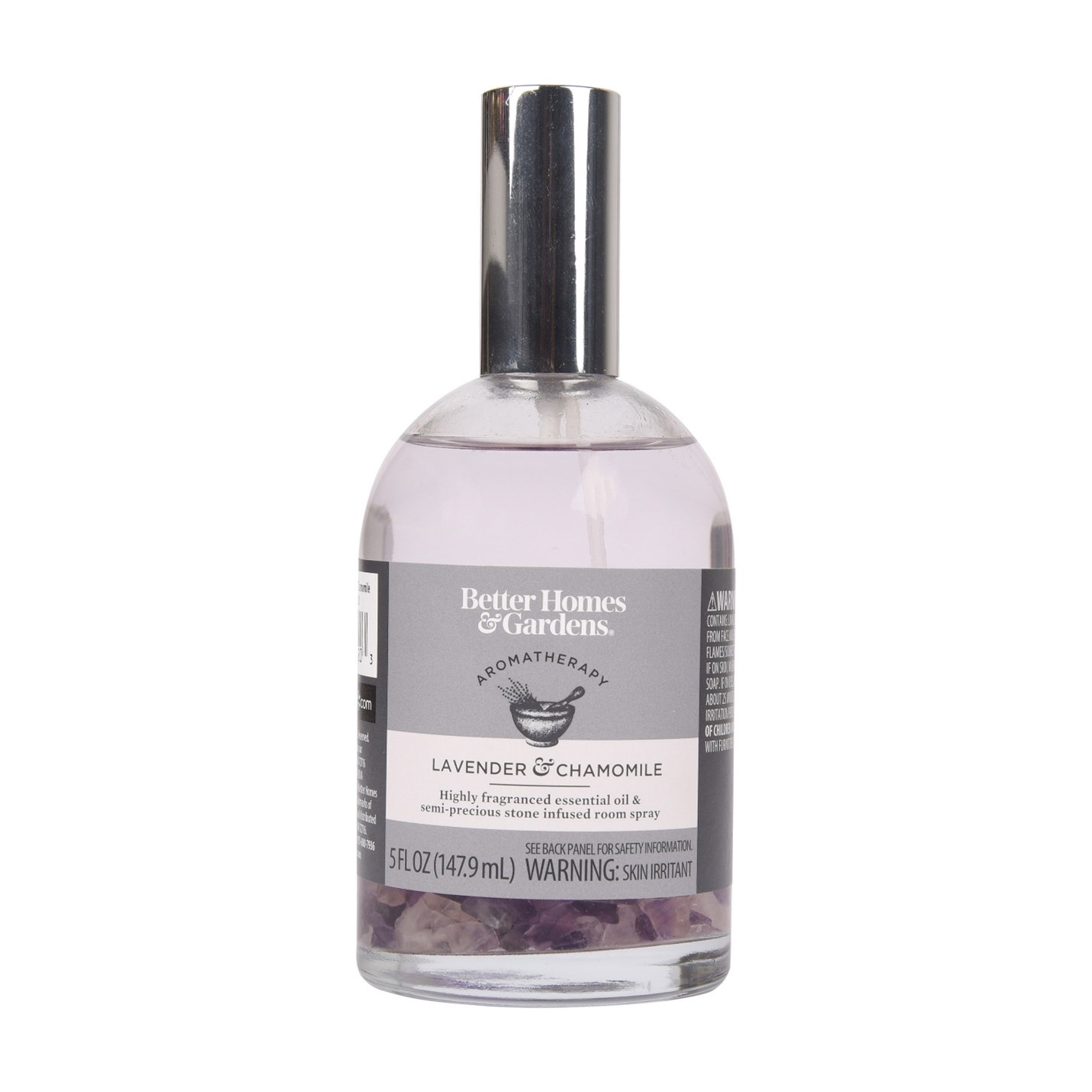

But great detective work.
I think it restores some faith in humanity and our systems, to be reminded that people are still out there, investigating problems like this, coordinating recalls before other people get sick, and presumably following up on the root causes.