The Cirrus Airframe Parachute System (CAPS) is a whole-plane ballistic parachute recovery system designed specifically for Cirrus Aircraft's line of general aviation light aircraft including the SR20, SR22 and SF50. The design became the first of its kind to become certified with the FAA, achieving certification in October 1998, and as of 2014 was the only aircraft ballistic parachute used as standard equipment by an aviation company.
The more generic system is called BRS, Ballistic Recovery Systems. They deliver this as an option for many small aircraft and it's popular for experimental / home built aircraft.
One downside of the systems is that they typically have a maximum lifespan of 10 years while airframes last 50+ years. So every 10 years there is a large maintenance cost to replace/renew the parachute system. Much less an issue for a $ 800k Cirrus SR22 (like the one in this incident) than for a $ 30k old Cessna.
There's the issue that in many cases people tried to save the airframe rather than activate the parachute, knowing the aircraft was likely to be written off, and died doing so. It the same when the pilot is equipped with a parachute.
Yes, and this happens also in many other arenas. I've only done a bit of flying, but in my experience in speed sports such as Downhill ski racing and auto racing, you must be mentally able to switch your goals in a fraction of a second, from [win the race] to [save the run] to [save your life], without hesitation.
Sometimes you succeed in [save your life] and are still on-track / on-piste pointing in the right direction and are back to [win the race] in the space of a few seconds. Other times, you are on the sidelines, and hopefully not on the way to the field clinic.
But the switch in perspective must fully committed and absolutely not include [save the equipment], which is replaceable, even custom one-off gear. Anything else is over-constraining the problem and inviting disaster.
Beyond that, sometimes the [save your life] mode should include [sacrifice the equipment to save your life].
I remember an incident from one of my auto racing instructors. In a race, coming into a downhill turn (Diving turn at Lime Rock) at triple-digit mph, he found that he had no brakes. So he very rapidly pushed in the clutch, redlined the engine, grabbed 2nd gear, and popped the clutch with some steering input. The result was that he spun the car with enough control to crash into the barriers with the back end first. It was the end of that Porsche, but it would have been anyway, and he walked away.
Or, another guy I knew who was at logging school, 150' up pruning in a pine tree, realized that it was getting way out of balance and was about to get violent. He cut to just the right point, then threw the multi-$1000 chainsaw as far as he could away from him, and hung on for life to his harness and tree strap as the tree whipped back and forth until the oscillations dampened. He got kind of beat up, but climbed down and walked away.
It's key to be ready to completely change your mindset in a flash.
At the point a pilot is considering declaring an emergency, they should do so. Once they have declared an emergency, the insurance company owns the airplane, and the pilot should be focused on preserving as many lives as possible. This is as true for a mechanical emergency like a gear up landing as it is for every other kind of emergency.
That's assuming you have in motion insurance on your aircraft. I don't on my 152, the plane is worth so little we'd cover the airframe cost in 7 years of insurance payments.
This is indeed the early experience with BRS, which has been substantially addressed via training which started with some complex scenario-based messaging and later evolved to a more simplified “pull early, pull often” which has resulted in a bias in a better direction for human safety.
I'm reminded of a 2011 airshow crash of a Red Arrows T1 jet which, at least according to this account, [0] may have involved the pilot heroically making the decision not to personally eject, but to crash the aircraft away from crowded areas, perishing as a result. Of course, the aircraft itself had no parachute, unlike a Cirrus. (Also, I'm uncertain if that account of the incident is consistent with later investigation. The relevant quote is not from any investigation, but from a politician.)
There’s a huge difference in the danger to those on the ground between an 15000 lb fighter jet going hundreds of mph and a small 3000 lb airplane descending at about 15 mph (plus the wind speed).
It’s possible that the Cirrus could hurt or kill someone but I don’t think it’s happened in the about 100 parachute activations so far.
Of course there is, that's the reason I emphasised it.
> I don’t think it’s happened in the about 100 parachute activations so far
That's good, although there could be a selection effect there: pilots might be more hesitant to deploy it if they think the falling aircraft could do harm.
yes, i think the way i’ve heard it pitched is that deploying the parachute will result in “a bad day for the insurance company, and a great day for the pilots and passengers”
> Cirrus originally thought that the airframe would be damaged beyond repair on ground-impact, but the first aircraft to deploy (N1223S) landed in mesquite and was not badly damaged. [1]
they're almost always totaled by the insurance company. Easier than risking that they missed a hairline fracture somewhere and have the plane go down again.
Not necessarily. Frames can be repaired. Frame repairs and overhauls are common. If the damage is too extensive and expensive then you use it for parts.
Yes. The parachute has a pyrotechnic deployment mechanism that is consumed; I never saw a BRS sold in separate components, so you need to replace the entire package. The 10 year shelf life is coming from the pyrotechnic charge and the parachute material, they both age.
The parachute system will need to be completely replaced after usage no matter what. Activating the parachute involves firing a small rocket motor to pull it out quickly.
Thank you, I was so confused. I was thinking the pilot a genius for bringing and activating a parachute. Now I see it was just great design.
> As of 1 May 2021, CAPS had been activated 122 times, 101 of which saw successful parachute deployment. In those successful deployments, there were 207 survivors and 1 fatality. No fatalities had occurred when the parachute was deployed within the certified speed and altitude parameters
21 of 122 failed? That’s a concerning statistic. I’d expect closer to 99% success, not 82%. How many fatalities when the parachute failed to deploy? 100%? If so, then you have almost a 1/5 chance of dying when you engage the parachute?
It's not 100%. In one of the flying mags you can read a story about how a VFR (not instrument rated) pilot got into the soup, lost attitude awareness, freaked out and pulled the chute lever. Nothing happens. While the pilot was yanking on the chute lever, taking hands off the stick let the aircraft's static stability take over and the plane flew out of the cloud by itself. The pilot then took over and landed in the usual manner.
That is not a correct interpretation of that statistic.
The parachute has never "failed" in any engineering sense. The stat is taking into account all deployments, including those well outside of the deployment envelope, such as not enough altitude or too much velocity. No one can expect any parachute to deploy if you're too close to the ground.
Within the envelope of deployment, the statistic says it has a 100% success rate.
If the pilot flies into terrible weather or gets into an uncontrolled spin, it's not reasonable to expect the chute to deploy correctly and save the situation.
They are some impressive numbers, but to really compare you need an expert looking at each situation and estimating the likely outcome had the CAPS system not been installed.
Pilots of planes with CAPS are (now) taught to pull the chute if anything goes wrong inside the profile (low enough speed, far enough above ground) where the chute is designed to work. The aeroplane is insured, you can buy a new one. Even if the pilot and all passengers are insured you can't buy new ones.
They changed this because it turns out that the same phenomenon that leads to private pilots taking undue risks in the rest of flight ("Get-there-itis") also makes them reluctant to pull the chute even when it's clearly their best option. Pilots who clearly couldn't reach a safe landing spot, yet had working CAPS would dig themselves (and their passengers) a grave rather than just pull the handle. So teaching them to start by assuming they'll pull the chute and only then considering whether there are other options reduces the fatality rate.
I’m not really sure how to ask what I want to ask, so apologies if this doesn’t make sense: Does the parachute only work if the plane is in a free fall? If the plane is gliding along and suddenly the engine goes out, for example, would pulling the chute work?
There is a maximum speed that the system can handle:
> Four CAPS deployments occurred successfully at higher speeds, 168, 171, 187 and 190 knots indicated airspeed, and one deployment failed at an airspeed estimated at over 300 knots airspeed.
Anything lower than that will forward-motion stop the aircraft. AFAICT, there is a need for 2000' (650m) of altitude above the ground for the system to deploy in time to be useful (slow descent).
Well you wouldn’t pull the chute. The plane has lift when it has forward motion at a non stalling angle of attack. It would become a glider until reaching stall speed
Yes you're gliding right now, but whilst that's better than just falling uncontrolled from the sky it's no guarantee you'll walk away.
Now if you're gliding... right towards a perfectly nice runway you were already lined up on then CAPS is likely the wrong call, not least because you may already be too low. But if you're just in the middle of nowhere then CAPS is much safer than hoping that's just a big empty grassy meadow you see ahead and doesn't have a thin, wheel-snagging ditch, or a barbed wire fence, or a dozen other obstacles that you wouldn't see until it's too late.
Even for a water landing, if you have never practised there are a lot of ways for putting a conventional plane down in the water to go badly, including flipping or breaking up the plane, whereas CAPS should just plonk you in the water, relatively gently, right side up, not great news, but very survivable.
Here's an analysis of the CAPS system's safety record: https://www.youtube.com/watch?v=zT58pzY41wA (contains some good footage of an SR22 parachuting into the ocean, and into the ground).
This is a good overview on the survivability of water landings: https://www.youtube.com/watch?v=0LwGYBBhTss. I haven't watched the video recently but I think even a 172 that cartwheels after landing has a pretty good survivability rate, something like 90%. Parachute is a nice to have, of course.
Paul Bertorelli is a lot of fun, I have seen those videos a while back. I enjoy his "cheap pilot bastard" attitude to things even if maybe I don't agree with it.
That particular phrasing and calculation, suggesting that every chute deployment without fatalities represents that number of people “saved” is quite controversial and IMO not supported by an analysis of the data.
I think it’s great that the system exists, it has undoubtedly saved lives, but unless Cirrus crashes are overwhelmingly fatal compared to other airplanes, it’s overstating “fatal accidents turned into non-fatal accidents” by likely a factor of ~3 and number of fatalities avoided by ~4.
This type of mishap is probably the best scenario for a chute, though. I have no illusions that following a mid-air that I am still a strong favorite to bring my non-chute airplane to earth without fatalities. (The stats say I’m about a 60:40 favorite to do so.)
CAPS saves lives. CAPS has not saved the lives of every person who survived a CAPS deployment, because most of those would have survived anyway. In most off-airport arrival scenarios, I’d be wishing to have a chute.
* - One of my instructors was in command for CAPS Event #46
I completely agree, but for a more complete analysis, we would have to consider the fatality rate for the sort of crashes in which CAPS is employed.
IIRC, Cirrus is now encouraging pilots to use CAPS in any engine failure with sufficient altitude for it to work, on account of the number of such accidents, in CAPS-equipped aircraft, where the pilot chose not to use it, and someone aboard was killed or seriously injured. This will presumably further muddy the used/saved ratio, while probably increasing the total number of saved.
In a collision situation, at least one as violent as this one, you can't be sure whether some vital control or structure has been damaged to the point where it is about to fail, so using a parachute of any sort, where feasible, seems to be the rational choice.
Quite by accident, I came across this pucker-inducing article a couple of days ago, where thre's little doubt that bailing out, if it were an option, would have been the right thing to do, even though this flight ended safely in this case.
Are there any fees associated with an emergency landing like that? I imagine La Guardia runways are in pretty high demand but pilots have a culture that prioritizes safety above all else so I’d be curious which takes precedence.
There are no emergency-specific fees. Whether Newark (I think it was EWR, not LGA) would assess a normal landing fee is probably not a consideration for the pilot, especially back then.
Landing fees are quite reasonable. Off peak, the landing fee would be $25 now. On peak, it would be $125.
Tangentially, one reason why Cirrus has been persuading pilots to use CAPS as soon as they get into difficulties is because it was suspected that pilots often chose not to do so (or delay until too late) because it was widely believed (and is true in most cases) that doing so totals the airplane - i.e. an economic disincentive to put safety first.
> . I have no illusions that following a mid-air that I am still a strong favorite to bring my non-chute airplane to earth without fatalities. (The stats say I’m about a 60:40 favorite to do so.)
Note this was a midair with a much larger, faster aircraft and at an unfavorable aspect. The empennage was sliced nearly entirely through by the other aircraft's propeller and the elevator/horizontal stabilizer is deflected into a position commanding a steep dive.
The SR-22 also cannot recover from a spin. I would assume most of those deployments are from out of control spins. I am not sure the parachute system can be credited for saving more lives than a similar plane not-equipped, because the Cirrus _needed_ that parachute system in order to be certified.
The SR-22 can recover from a spin, using conventional anti-spin control inputs. EASA testing showed that.
It is true that Cirrus secured an “equivalent level of safety” ruling during FAA certification and so did not demonstrate conforming spin recovery in flight testing here, but it can recover.
I remember when these were being tested. Some of the testing was done at the NASA Langley center, which still today specializes in airframes in addition to space... They have a whole-airframe catapult and drop system.
These parachutes have been an absolute game-changer for small aircraft pilot survival. It's unlikely this kind of collision would have been survivable for the small-plane pilot 25 years ago.
The sibling comments make some of the same arguments, but here’s an article which also addresses it:
"An aircraft is most vulnerable during take-off and landing because it is closer to the ground (its biggest obstacle), and is travelling at low speeds and therefore is harder to manoeuvre. According to statistics from Boeing, almost three-quarters of deaths from plane crashes between 2005 and 2014 occurred during these phases of flight. But this is the time when a detachable cabin would least likely be successful at saving lives. Being closer to the ground would give the pilot much less opportunity to jettison the cabin following an incident and if it were detached it could well land in a built-up area."
To add to another comment larger planes have much better redundancy (multiple engines, multiple control lines, multiple pilots, etc.) so the situations where a parachute would help are much much fewer. So weight is probably better spent on making the redundant systems even more redundant than anything else.
The drastically higher speeds involved (250-300 knots airspeed, as opposed to more like 50-90 knots for GA aircraft), combined with drastically higher weights (think about the chutes needed for something like Apollo, which is nowhere near the size of a large passenger aircraft, and realize you need way more) would both be major issues. There’s also the simple fact that larger passenger aircraft tend not to fail this way, making it less likely such a system would help even if it existed.
I would expect the problem to be "mass goes up with size cubed, while parachute drag only goes up with size squared". I.e. you need a disproportionately larger chute (or more of them) for large aircraft. Those are dead weight in normal operation, which really hurts the economics.
I'll add on to the good points other have made here - smaller planes tend to fly out of small airports in the suburbs or the countryside. Larger planes fly out of much more urban areas, where there are a lot more obstacles, making a safe landing less probable.
Wow, that's incredible. Goes to show that people do walk away from plane crashes with some regularity. My father was a pilot[0].
He sold his plane about 15 years ago (to a group of owners, one of which was a priest, I'm sure there's a joke in there). A few of winters later, he was called out to Romeo Airport; the pilot flying the plane that was formerly his had crashed the aircraft a few miles short of the runway in bad weather[1]. He was traveling with his daughter, a friend and, I think, his wife. He died, but his daughter was able to get free and make her way to a nearby farm to call for help. Looking at the plane, the fact that anyone survived at all let alone walked to a nearby house with minor injuries is pretty miraculous.
It's hard to impress upon folks who have never been in a small plane like that just how ... yeah ... how much it feels like you're hanging onto a kite. I have no idea the kinds of structural technologies are involved in the aircraft but I know his plane was made in the 70s and was light enough that he only had a pole which attached to the front landing gear to pull it out of the hangar. The weight is so critical that the 7-seat plane can realistically only seat 4-5 adults. I remember being shocked that they had to weigh the paint they applied when he had the plane re-painted.
[0] I'll spare the details as I have left many comments in the past about his experiences.
> The weight is so critical that the 7-seat plane can realistically only seat 4-5 adults. I remember being shocked that they had to weigh the paint they applied when he had the plane re-painted.
I used to work in general aviation. If my eyes could fly a loop in my skull they would have.
Were the occupants required to use the bathroom before flying? That's how much weight you're potentially saving by weighing the paint on a small aircraft.
They make you weigh the paint because they want you to spray on a certain thickness so they say "X oz paint, Y oz thinner/hardener" (or something like that) in order to get your mixture into the right ballpark so it will work with whatever procedure they want you to spray it on with and get the thickness/finish/hardness the OEM wants you to get.
In aviation there's a ton of treating simple systems as black boxes and "do X and exactly X" type maintenance that happens in order to smoothly transfer liability. You paint a cowl the way the OEM says not because you couldn't get an equivalently performing cowl a different way but because you don't want the NTSB coming after you trying to determine if you did it different but right or different but wrong.
The specifications to which general aviation stuff is done isn't really any more exacting than stuff in automotive or heavy industry. The service literature is just more verbose and the service procedures are more tightly defined.
>in order to get your mixture into the right ballpark
This makes perfect sense. I'm using a kitchen scale to measure the 2-part silicone mixture that I'm using for making toys, not because weight is critical but because it needs to be right for curing. I should do similar when mixing epoxy, but I always eyeball that for some reason. Maybe has to do with cost, it's $10-20 worth of silicone I'm mixing, and usually a quarter worth of epoxy, just due to quantities involved.
I'm building an experimental, and we tend to re-do weight and balance after painting. An elaborate paint job can add 30+ pounds and can shift your CG rearward. The regs don't require it, but many builders do it anyway.
Very interesting. I remember thinking it was positively "nuts", but then when you're in the aircraft being slapped around by the breeze, it starts to click.
>The specifications to which general aviation stuff is done isn't really any more exacting than stuff in automotive or heavy industry. The service literature is just more verbose and the service procedures are more tightly defined.
This reminds me of how often I quote weight limits on cars to people and their eyes go wide at how easy it is to exceed the OEM's recommended limits. I'm fairly sure I'm one of the few among my friend groups that has read through every owners manual for the cars/vans I've owned.
In the US, the FAA requires recalculation of the weight and balance unless the change is "negligible", which AC 43.13-1B defines as "any
change of one pound or less for aircraft whose
weight empty is less than 5,000 pounds".
I think the commenter was making the point that the weight of the paint is not a significant consideration, not that recalculating the weight and balance after a paint job should not be done.
Well... ok, but you usually still need to weigh and check the balance of the control surfaces after painting to ensure that they aren't going to flutter at less than Vmc (post-paint control surface balancing is often explicitly called out in the maintenance manual).
Painting a plane is one of those times that you often strip everything out anyway, so it's a convenient time to check the weight and balance against the logbook.
I once witnessed an airplane crash that everyone survived. I was a preteen hanging around outside the Scotts Valley roller rink with a friend in the early eighties. The roller rink is next to the now defunct airfield. The airfield was lower than the rink by an embankment. We had recently been watching Jaws on Betamax and my most persistent memory is seeing only the tail crossing the field. It reminded me of a shark fin moving through the water, as the embankment was high enough that I could not see the body of the plane. Then bam, the plane hit the embankment right in front of me, caught air then crashed nose down. I think the plane was a Piper but my knowledge of small craft is limited. It was definitely a wing under. My friend ran to get his father and we all ran over to the wreck. My friend's father opened the doors and everyone but the pilot was able to get out by themselves. The pilot had hit his head on something and his face was covered in blood but alive. I found out from press reports later that was the only time I "met" Steve Wozniak.
Edit: just looked it up. The plane was a Beechcraft Bonanza A36TC.
> The weight is so critical that the 7-seat plane can realistically only seat 4-5 adults.
I think you overlooked an important factor there. The plane was indeed designed to realistically seat 7 adults.
The issue is that in the 50 years since the plane was originally designed, the average weight of adults (in the US) increased by about 18% [0] and the average adult woman today weighs as much as the average adult man in the 1960s.
I find it very hard to agree that a PA-32 was "designed to realistically seat 7 adults". I don't think they even imagined 6 adults as a typical cabin load, but rather a max of 4 adults and 2 kids and a typical of 2 adults and 2-4 kids. It is one of the more roomy cabins among light singles, but every one of them that I see for listed for sale right now is configured with seating for only 6, which is great for 2 adults and a few kids.
The point of the person you're replying to is that people have gotten bigger, which is a fact. Pointing out the comfort of levels of people in airplanes today doesn't dispute that.
It used to be more common to have a flexible combination of seats/baggage/fuel. But pilots flip out (or crash) if they can't fill the tanks, every seat and the baggage compartment and come in under gross. So the same airplanes often don't have the "bonus seats" they used to.
Numbers from Wikipedia, from the 1972 PA-32 owners handbook:
3,400 lb gross - 1,788 empty - (4 hours * 15gph * 6 lbs) / 7 passengers = 178 lbs per passenger. The average adult in the 70s was about 160. So you're not going across the country, but you could safely do a day trip with a 90 minute flight each way.
Now the average adult is 180. And they're a little taller than they were in the 70s, but not much. So every passenger has an extra 20 pounds horizontally. So in 2021, you'd be just over gross except that the people can't actually fit in the airplane.
I can't read into the minds of the engineers who made the airplane. Maybe it's true "I don't think they even imagined 6 adults as a typical cabin load". But we can see that the marketing department at least tried to make people think it was.
The useful load of a PA-32 is about 1500 lbs, so yes, you can put 7 180-lb adults in it and still have a little margin. What you cannot do is carry 7 adults plus their bags plus full fuel. Even without bags, you could not go very far with a full plane.
Some planes have more margin: the Cessna 182 for example is a four-seater and can carry full fuel plus 800 lbs, so you really can load it up with four people plus bags and still go somewhere.
But all planes will be close to their operating limits when fully loaded. Even a jetliner will typically be very close to its operating limits on takeoff and pilots have to pay very close attention to this. If you think about it, this has to be the case. If it weren't, the plane would have been over-designed and much more expensive than it has to be, and so it would lose to the competition.
Yeah, its 7 seats in the same sense as the Tesla Model Y can be a 7 seater. Its technically true, but really only true if some of those people are small.
Even with FAA standard people it would be small for 7.
You're probably right -- I likely have the number wrong. In fact, I was able to find the craft in a database online (still reporting my Dad's corporation as the owner, so it's not perfect) and it indicated 6.
I recall him saying 7, but that was a few decades ago (the plane was destroyed by its new owners in 2006, and I hadn't flown in it since a few years prior to that). :)
Not so much overlooked as omitted ... I had originally written "average American adults" but I didn't want to distract into the territory of "how bad our diets are in this country".
My Dad almost always flew alone. So much so that when the plane was packed and we were making an approach into the Sandusky, OH airport, we had a sudden "dip" on the way down that everyone noticed (we were headed to Cedar Pointe, so it was preparation, I guess). My Dad explained that he wasn't used to landing with so much weight and hadn't adjusted the trim correctly[0].
[0] If it wasn't abundantly clear, all of my flying experience ended at about age 17, which was a while ago, and I was never a pilot, so to the extent that I get any of this wrong -- that's why :)
There's also the fact that an aircraft like that may be able to carry 7 adults in some conditions. If you're at sea level in cold dry weather[0], then you'll have a lot more performance available than if you're trying to take off from Denver airport on a hot summer day just after a load of rain. There have been (usually light) aircraft that have crashed on takeoff/landing because the pilot didn't take the hot day into account, the minimum flying speed was higher than they expected, and the engine performance was too low.
6 * 1.18 = 7.08 people, so that could explain 1 adult.
I think the "some adults, some kids" is more significant - similar to back seats in many small cars - you can put 3 passengers in there, but 3 adults won't be happy.
> It's hard to impress upon folks who have never been in a small plane like that just how ... yeah ... how much it feels like you're hanging onto a kite.
Years ago I was doing pilot training in a Cessna 152. A coworker of mine was a retired Navy captain and instructor at the TOPGUN program, with hundreds of carrier landings in an F-14. He looked at me like I was crazy. He said those little planes were deathtraps and he'd never go up in one again.
Not long after that I had a lesson that coincided with some turbulence from the nearby coast. The plane janked around by seemingly hundreds of feet in every direction. I was scared (almost literally) shitless, and that was my last lesson. I haven't been in a small plane since.
I'm glad my Dad's not flying any longer. He was doing very long (multiple stops for re-fueling, flying on some form of breathing tank[0]) trips. He can go on for hours (and we let him) about stories of how he almost didn't make it home due to X or Y[1].
And he joked that every gauge/gadget on the dashboard that didn't come with the plane was there because "if I had it when X happened, X wouldn't have happened" (...or I wouldn't have left the ground knowing the condition existed, or it would have warned me with well enough time to get to safety before I have to be met by emergency vehicles on the tarmac).
Funny enough, he would get a little uncomfortable flying commercial. I'm not sure if he was putting on a show for us kids or if he was serious but he'd say he "didn't like someone else in charge of the plane". My Dad flew GA (alone) a few times a week most weeks, so he was unusually experienced for a small plane pilot.
[0] He had a breathing apparatus that allowed him to fly at higher altitudes in the unpressurized cabin, IIRC, but I'm not a pilot.
[1] Except, when he tells it, he was never in any danger. Doesn't matter if he's hanging an arm out the window trying to manually spin the prop, "it was always under control.". Uh huh.
This sounds like my dad. He was a skillful pilot but enjoyed risk too much to be a “good” pilot. Died of lymphoma 30 years ago, so it never caught up with him. He flew a lot for a private pilot, over ten thousand hours,so had a few of those stories too.
I flew with him as a child enough to have experienced some of them myself. I remember:
- An inflight electrical fire, at night, over the Sierras.
- A very tense IFR final into Monterey, at night in fog, in a twin Comanche just ahead of a Learjet when the controller had a power outage and lost radio contact.
- A test flight in a STOL Maule Rocket that ended with stalling and bouncing in the rough just short of the 7600 hundred foot runway at Stead AFB. The gear collapsed during roll out and damaged the wing and prop, but there were no injuries. Sadly, Maule went out of business and the aircraft was never repaired.
> He was a skillful pilot but enjoyed risk too much to be a "good" pilot.
To the extent that anyone who is willing to fly GA enjoys too much risk, that's my Dad. But I'd say he became a uniquely skilled small plane pilot[0]. For a solid 15 years he was flying multi-leg trips weekly (regardless of weather). I've joked, in the past, that I've never actually seen my father play a game on a computer -- the only thing he's ever done that resembles a game is "Flight Simulator" which he used to train (he was IFR and weather rated if I've got those terms right).
One thing that kept me comfortable being a passenger with my Dad had little to do with his externally exhibited confidence (which was absolute, and usually reassuring to others). It was the fact that I knew how deadly seriously he took what he was doing. I watched him pull out the clip-board and perform every step on the check-list. We've been stranded overnight and missed vacations entirely because my dad decided the trip would not be safe enough.
The strangely reassuring thing, though, was my Dad's opinion of stunt pilots/air shows[1]. They make him visibly, and vocally angry. My Dad isn't one to create controversy or even one to lecture much so I was surprised when we went to a hydroplane race and they had a biplane pilot doing stunts how completely pissed off he was about it. It was years ago and I don't recall his exact reasoning, and it might have even been something specific to the aircraft involved but his opinion was that the pilot was being reckless/irresponsible, that pilot skill, alone, cannot guarantee the safety of the pilot, aircraft or spectators because they're not designed to be used that way. In anger, I remember him nearly spitting something like "I have no respect for a pilot who puts peoples lives at risk for entertainment." I was a snotty teenager at that time so I probably rolled by eyes at him. I also know that he'd never do anything like that with his plane -- he gets seriously motion sick spinning around in a circle more than once or twice. ;)
I think the biggest fear we had with my Dad, though, was him falling asleep in the air. He worked long hours and my mom often had to poke him awake on long drives. I remember discovering his cure for this was a 1,000 ct container of Atomic Fire Balls (cinnamon hard candy that "tastes like burning").
[0] The "good" being in quotes, I assume, isn't implying that he's an unskilled pilot, just willing to accept risks that can only be reduced by pilot skill, which he had plenty of, but one cannot practice/become skilled in some situations without being put into them.
[1] I'm not referring to The Blue Angels/Airforce related shows; I don't know his opinion on that because we never went as a kid -- I suspect they might be similar but he has enormous admiration for military members so I wouldn't be surprised if he drew an exception. :)
It's hard to impress upon folks who have never been in a small plane like that just how ... yeah ... how much it feels like you're hanging onto a kite
Went up in a four man single engine chopper once. It had all the reassuring solidity of a bicycle. Never again. I can’t even imagine what the truly tiny ones are like.
I did one of those chopper tours over a big city one time in a splurge. Yeah, I hear ya.
I was surprised at how similar the feel is. Your bicycle analogy made me laugh -- spot on. I used to love taking my macho friends up in my dad's plane. There's this moment after take-off where my Dad will comment on "how smooth the air is" ... it's either "perspective" or a pilot joke, I'm not sure, because said "smooth air" is about as bad as reasonable air-turbulence on a jet and the flight is usually marked occasionally by the kind of turbulence that would have the overhead bins tossing luggage onto passengers. I recall a humorous incident where my buddy Tim dropped an F-bomb over a hot mic on the headset when we got smacked sideways.
I had a lesson in an Ikarus C42, which although it looks like a "normal" light aircraft is made of kevlar over aluminium and is officially a microlight. It is a 2-seater but the weight is so low that if you are travelling with a passenger, there is a weight limit. I think I worked out that my 6'3" boss was too heavy to fly with an instructor.
It was actually pretty fun but, of course, the weather is everything. I can't imagine how bad it would be in any wind more than about 5 knots but on the day I had my lesson, it was calm and clear.
In aviation load and range are always a compromise, you can fly short distance with a higher load (all passengers) or a longer distance with less passengers. The combined passenger weight and full tanks weight is always more than the Maximum Take Off Weigth (MTOW). For example the small plane that I fly the most has enough fuel capacity to fly around 2000km, but if I will the tanks I need to fly alone, there is no reserve even for a backpack. When I took my brother for a flight around the airstrip I had 20 liters of fuel in the tanks 'cause he is heavy (for an European).
I have a couple of friends that each crash landed at least twice in the past 10-15 years; one was in the hospital once, for the rest of the incidents they simply walked. In two cases it was engine failure, in one a stuck landing gear and the hospital one had an external factor.
> how much it feels like you're hanging onto a kite
The two "small" planes I've ridden in were a Cessna and an L-39. The Cessna felt like a toy, and the L-39 was a serious piece of hardware. Landings were also very different; the Cessna just got tossed around a lot more.
The second link is the crash report. There were four occupants and only one fatality, so only he died.
Looks like he tried to land in bad weather, descended before he could see the runway, and clipped some trees. Weather is an alarmingly common cause of accidents in general aviation.
> Weather is an alarmingly common cause of accidents in general aviation.
Or—to rewind the causal chain just a little further—pilot hubris, impatience and/or ignorance, which leads to weather being a factor in the first place. The choice to wing it and hope bad weather in the area will not affect you is the pilot’s.
From my shallow study of fatal and non-fatal GA accidents, there is hardly ever such a combination of life-or-death urgency and absence of alternative transportation options besides flying that could justify risking one’s own life and lives of one’s passengers by wilfully or accidentally ignoring weather forecast, and yet too often that appears to be the case.
It’s not a pleasure to talk about incidents like that, but “all plane crashes are pilot error” strikes me as a decent framing of the situation to adopt as a pilot when considering a risky flight.
Without reviewing your profile, I'm just going to guess you're a pilot or you know pilots -- just from this:
> Or—to rewind the causal chain just a little further--pilot hubris, impatience and/or ignorance, which leads to weather being a factor in the first place. The choice to wing it and hope bad weather in the area will not affect you is the pilot’s.
My Dad says "it's always pilot error" and backs them up with statements like this. And he accepts that fault on himself. These are obvious things, too -- in the case of this crash, the pilot was VFR rated and as my Dad harshly put it "had no business being where he was in that weather".
But he really meant everything is the pilots fault. I heard him explaining to someone that there's ultimately no other valid excuse. When his engine failed over Lake Michigan, it was pilot error because he didn't have the necessary instruments to detect a common engine condition that would have prevented him from taking off had he known it was happening.
I think it's a little extreme, but frankly, I want the person flying my plane to have that attitude for themselves!
I think you would still feel guilty if passengers were hurt even if you were completely blameless. And part of your responsibility is to understand the risks. Risks that passengers may not fully understand. It is more like a risky sport like horse riding or skiing.
Completely agree. My thinking was simply: I know my Dad held himself to that standard. And the only way that I'd be willing to fly a plane is if I was willing to hold myself to that high of a standard, but as I'm not a pilot, I don't feel that I have enough knowledge to pass judgement on pilots (or others) who feel that there are circumstances to many crashes that should not be blamed on the pilot.
I think my Dad applied that to small plane/private pilots, rather than commercial, as well. While it might make someone with that absolutest thinking feel good to say "The pilot should have known someone's phone battery was nearing explosion before it blew a hole in the aircraft and required an emergency landing", I think my Dad would land somewhere in the territory of "If the pilot had a reasonable way of preventing the problem and didn't, it doesn't matter if it was negligence or lack of creative thinking". Me, I define that "reasonable way of preventing" as "it's in the checklist". I think my Dad would expect a whole lot more.
And even though I'd be more forgiving in my judgement of pilots, I can't fault him for his thinking. Every time something unexpected/dangerous happened in the air to him, he wouldn't get back up in the plane until he had figured out how to eliminate/greatly reduce the risk. When telling the story of what happened, he'd point out why it was his fault[1] and I don't doubt that he believed that when nobody was looking.
Over the years, he added a device to monitor the exhaust temp after the pipe blew threw the front of the aircraft and made the plane into a fireworks show of ignited exhaust. He added these strange (very inexpensive) rubber wire-like things to various parts of the wings after being struck by lightening which broke his radio, resulting in an interesting problem with getting clearance for landing[0]. He owned the plane with a partner who used it on the weekends, occasionally (they paid the company to use the plane), and they both had this same philosophy, so by the time he sold it, there were more gadgets attached to the dashboard than built into it. They had a weather radar gadget that was hypnotic to watch.
I can't think of a single incident my dad encountered in the air that would have fallen anywhere near the category of "skill-related/irresponsible failure". It was always a mechanical fault where the plane lacked any way of detecting/alerting the pilot and there was no other way for the pilot to confirm, before take-off, that the condition would not occur. And weather at Romeo airport can switch on a dime in the winter[1], which he managed with radar on his plane. Outside of the small explosion and an occasional hit from a bird, the plane was never damaged/crash landed or even had a non-runway emergency landing[2] despite losing the engine a few times and having many, many other problems.
Often these things just sat and monitored things that should never fail -- in the case of the exhaust heat, a separate fault caused the excess heat, which caused the (very small) explosion -- it should never have gotten that hot, but were it to get that hot, it didn't have to result in a fault or even an unscheduled landing. For the lightening, adding the $3 wires, apparently, eliminates the threat entirely. And despite all of the flying he did, I don't think he ever encountered the same kind of (or even related) problem more than once. That's about as perfect a score as you can get, in my opinion. :)
[0] I was told this as a kid and probably have most of it wrong, but he had these extremely bright flashlights as part of his emergency kit (strange, ABS plastic, four C-cells, not mag-lite, but these were damn bright); they were for Morse-code signalling (had both an on-off switch and a button that turned it on when depressed and off when released). He somehow had to notify the tower and receive a reply using the flashlight -- I imagined he flew the plane past the windows like in the movies, but it was probably less dramatic.
[1] He frequently ended up landing/having to get a ride from Oakland County International because of weather he wasn't willing to land in -- I don't know how the licensing works with that, but after he got his IFR but before he got the remaining (something related to a Loran-C and weather), he'd enter his flight plan and find out he wasn't allowed to fly due to weather. That stopped after he "leveled up his license a few times" over an expensive 3-year period.
[2] The closest he was to that would have been nearly having to do an emergency landing at Selfridge ANG. This was the early 90s, so who knows what this looks like today (and my recollection is lacking) -- IIRC, it would have been illegal for him to land there, but in an emergency, they'll accommodate. I remember him saying something about losing his license/having it suspended had he done it but I don't know the details.
I have a friend that is a commercial pilot for small jets, and until recently taught general aviation. He says that the overwhelming majority of GA accidents are poor planning: skipping items on the checklist, flying in inappropriate conditions, etc.
So the "details" are a little off. There wasn't rain, it was an outright winter storm. The pilot was VFR and should not have been flying in that weather.
I don't know what the characteristics are of that airport but I've been in the plane during a really touchy landing in bad snow, before. The occupants described that "everything seemed fine", they were coming out of the clouds and expecting to see the runway up ahead, but instead found tree-tops.
In the case of landing with my Dad in similar weather, the clouds were very low, he had no visual and was reaching the point where he'd have to put it down or abort the landing[0] when he suddenly flung the clipboard at my mom's lap and grabbed onto the yoke.
We were on the ground in a few tense seconds and I've never seen my Dad jump like that -- it seriously freaked me the hell out. His explanation was that he had already decided to abort the landing when the clouds broke and he realized he was in a good position to put it down. I get the impression that he was a little surprised about the position he was actually in -- and it was an uncharacteristically violent landing.
[0] I'm not sure what the technical details are or if I am getting that right...
Wow the Cirrus is looking pretty good for how much damage it did to the Metro. Flight surfaces are still there and it's only broken in half of the parachute landing. Guessing it might not have been controllable after the collision.
> The plane flying missing half the fuselage suggests to me that fuselage was excessively strong (and therefore heavy and expensive).
It's probably the opposite: that the fuselage was only strong enough to resist the air pressure differential, and that the real structural component was the cabin floor. And that, luckily, the control cables for the tail were routed through the cabin floor, instead of through the top of the cabin.
It's not the cabin floor. it's what the cabin floor is attached to. Most fuselages have all of their longitudinal strength in their stringers, which are usually run along the floor. If the Cirrus had ripped through the bottom of that plane and not the top then that jet would have torn apart.
Stringers in a plane seem akin to stringers in a car frame... Cars have moved away to unibody designs (where the shell of the car is also the structure) because it is stronger, lighter and cheaper. Unibody designs have been the norm for almost 100 years now.
The structure would be designed around an adequate fatigue life. I wouldn't be too surprised if fatigue considerations were such that in "normal operations", stresses could well be 10x lower than the ultimate material strength.
Private Pilot here - just thought I'd chime in quickly;
Many aviation enthusiasts / pilots first go to is to have a look at the flight data - usually available on FlightAware / FlightRadar24 and a few other websites, plus LiveATC usually can provide recordings of the flights communications to towers as well. We should refrain from using just those data points to draw conclusions to the cause; the NTSB (and other orgs) will perform an investigation and the report will be made public (both interim, and final ones), and changes are almost always made to processes / systems, and often to the virtual or physical items that led to this incident.
There are a few more photos and insights from various folks that were there at the time and captured a few moments on the reddit thread here:
Interesting - that's higher than I would have expected, but apparently explaind by most collisions being in the pattern or otherwise near an airport (makes sense now that I think about it.) At least in the pattern, for most of the time, everyone is going in approximately the same direction (even this case.)
My guess would be that only in the worst scenarios does a collision involve a full-impact. In most cases I would expect either or both pilots to be taking avoiding action so that you might get some more minor scrapes which allow you to limp home.
The pilot is speaking about failed engine after the collision, like it is nothing. Fascinating. I'd be shouting something obscene in such a situation. For half an hour at least, I think.
He might not have been aware of the full extent of the damage. He is on final; the plane is flying; he's lost an engine; he's going to land it. There is no time for anything else.
He might not have been aware of the full extent of the damage.
This is likely true. He was the only person onboard the plane, so he would not have been able to get up and look. Unlikely he could see the extent of damage from his seat. And as noted, on final approach, he doesn't have time for much to change plans. Even if he knew the extent of the damage, the choices are roughly the same - land as planned, or go around.
That said, he did exactly what he should. Aviate, navigate, communicate. He controlled the plane, made a decision, and communicated that to ATC. Well done.
Engine failure is the most important thing you are trained for when you transition from flying single-engine airplanes to multi-engine.
Most multi-engine airplanes can even take-off and climb with only a single engine functioning. You would never do it intentionally, but sometimes engines fail shortly after takeoff when you are 50 feet above the runway.
>> The pilot is speaking about failed engine after the collision, like it is nothing. Fascinating. I'd be shouting something obscene in such a situation. For half an hour at least, I think.
When you get your medical clearance, one of the things they look for is signs of psychological issues or instability. Not saying that's you, and I bet you'd do better than you think. Pilot training also IMHO makes you better at that stuff.
Exactly. You either panic and run around screaming and then you die or you could try and take control and you might live. It's no different than most of us driving a car. If a tyre blows out, most of us wouldn't scream and close our eyes, we would try and steer to safety.
> You either panic and run around screaming and then you die or you could try and take control and you might live.
It is not so black and white. One might (and normal person should) feel a stress reaction with rising levels adrenaline and suchlike in his bloodstream, and it is normal, it might even be beneficial, if one was trained to benefit from this mind state. I become more resolute from this, more concentrated than usual, sometimes even more concentrated than it is good for me because I might miss some important detail.
> If a tyre blows out, most of us wouldn't scream and close our eyes, we would try and steer to safety.
I never was in this situation with a blown tyre, but I was in some other situations when there was a danger to my life (or I believed that it was) I become extremely concentrated, almost silent (except for occasional curses), but when I needed to communicate, I did it loudly and with a good deal of swearing. I think that communication for me in these situations is like a distracting hindrance, so if I need to do it, I'll do it in a way that will make it unnecessary to repeat it.
The communication of the pilot have not a hint of his emotions. My mind was blown not because of his perfect actions (I expect perfect actions from a professional), not even because the lack of swearing. It is the tone of his voice, it is completely composed, almost relaxed. I can imagine myself in this situation restraining from shouting and from swearing, but my emotional tension would leak through my voice, I wouldn't even try to hide it.
I thought he sounded just a little rattled after he was on the ground. As calm as his demeanor was right after the collision, there had to have been some adrenaline going in landing that plane.
Bloody hell: the state of that Metroliner. Surprised it held together with that amount of damage, and huge kudos to the pilots for getting it on the ground safely.
For such a serious accident this seems about the best possible outcome for the crew of both aircraft. I'm not an expert so I'm not going to comment on root cause or blame here, but simply glad to read that at least everybody survived.
No deaths nor injuries involved, which I feel like this should be in the headline. I came in expecting to see at least a commercial flight was involved (how does it make to #1 on HN otherwise?) but was very relieved to see it was two small aircrafts with 1 and 2 pilots respectively and everyone survived safely.
The Metroliner isn't really a small (private) aircraft, it's more a commuter type aircraft, 19 seats. But in this case it was only carrying cargo so the place of impact didn't have any people in it.
Another lucky point is that it was at low altitude and at slow speed (preparing to land). Higher up it would have been much more likely to break up due to way higher speed and larger pressure difference between the cabin and outside.
Other inches-from-death aspects: there was no-one in the aft of the cabin; the collision missed the pilot; it missed the empennage; it missed the wings; it missed the control cables; and possibly (I'm speculating wildly here) it left the cabin floor intact, without which, I doubt the tail would have stayed on.
The Cirrus overshot the centerline of the runway it was supposed to land on. The common way for these situations is for the plane to be on an intercept angle towards the centerline. That's a max 30 degree angle for an instrument approach, but this was a visual approach so it could have been a sharper angle. All it takes to make this mistake in a Cirrus (and other G1000 avionics type small airplanes) is to forget 1 button on the autopilot mode. If it isn't set to capture the final approach track (either GPS or ILS) it will continue straight ahead which in this case means into the side of another airplane.
One thing that makes it more likely is that US air traffic control makes heavy use of visual approaches, and then it's allowed to point two aircraft at collision courses on the same altitude because they can see each other. The European way to do this is to have them intercept at different altitudes so if one overshoots they pass over/under. But it results in lower capacity per runway than the US system.
Something else I'd like to point out is that it might seem easy to 'blame the Cirrus' pilot or them call out for inattention, but doing so by itself isn't helpful. Aviation is so safe partly because it has managed to turn a culture of blame into a culture of continuous improvement and shared learning: I'd be very surprised if the airport's procedures came out of this unmodified, for example.
I’ve probably mentioned this book on HN a hundred times but “Black Box Thinking” discusses the aviation culture of avoiding blame and making sure a problem isn’t repeated and how other industries (like medicine) would benefit hugely from a similar approach. It’s really interesting.
I'm not sure how scalable this is in modern penny-pinching times. In the old days, airlines had to prove they were safe to attract business and this involved accepting that certain practices were harmful and they were therefore improved.
Once we got to the 1980s, we had so many airlines trying to survive that corners were cut, recommendations were not followed and various accidents were essentially negligent.
Now that lots of smaller airlines have been merged into larger ones, we now have Boeing type problems where the cost of manufacture, safety and development is so much higher than before, no-one wants to put a new plane through the whole approvals process, we just want to re-badge a 737 and get it into service.
Similar things happen on the railways in the UK where we have the RAIB to do a similar "no-blame" analysis of a crash/accident yet still time and time again, the same problems surface - lack of preparation, lack of training and lack of following procedures.
I agree and it’s somewhat addressed in the book - if you find the premise at all interesting you should definitely read it, even if you’re skeptical of the practicality of implementing the philosophy (for lack of a better word) it’s interesting and the examples are compelling.
Some of the examples are whole-cloth cultural changes of entire industries (usually commercial flight actually, IIRC), but some are small, simple, changes that can be implemented by one or two people and still have a dramatic impact. One of the smaller-scale examples from the book that really stuck out was the attitude & approach of a surgeon in an operating room. When surgeons approach mistakes from the perspective of “okay, this happened, let’s focus on how we fix it” mistakes are reported to the surgeon quickly, the surgeon gets accurate information quickly, and can respond appropriately. Result: more mistakes are reported but the surgeon has fewer complications and better outcomes.
When surgeons approach mistakes by getting angry or assigning blame to the nurse who did X or the resident who did Y those surgeons have fewer (reported) mistakes but worse outcomes. Why? People don’t fess up because they fear the consequences. And when a mistake is identified, people don’t give accurate and complete information because their primary concern is KYA rather than fixing the problem at hand.
>> I'd be very surprised if the airport's procedures came out of this unmodified, for example.
I'm curious. The airport is at about 5900ft and they were at 6400. If that's AGL for them that seems like a long and high approach. If not, then they were going to do a 3 mile straight in at 500 feet AGL? Either interpretation doesn't fit my (limited, student) experience.
KAPA is indeed 5900 MSL, and those heights are also all MSL.
Looking at the FAA's charts, https://aeronav.faa.gov/d-tpp/2104/05715R17L.PDF, this combination of heights and distances isn't totally crazy -- I state without proof (and wait to be corrected!) that the approach is modified because it is a relatively high altitude airport and there may be quite steeply changing terrain underneath. I've never flown there (not even on X-plane) and I'm a low-hours UK person.
I haven't done the trig and meterological lookup to work out what their AGL altitude was on that day, but at the very least it's not crazy-wrong from the published chart...
If the 1 button on autopilot mode is the red autopilot disconnect, “time to hand-fly” button, I agree with you.
This turn to final (with the unusual additional warning to “do not fly through final”) is a visual maneuver and I’d expect most every pilot to be hand-flying at that point. (My autopilot and navigator is capable to make that intercept, but it’s way more tedious and distracting to program it than to just fly it.)
In the airline world it would at the very least be encouraged and in many cases mandatory to have the underlying approach programmed for this anyway. Even more so if told not to fly through final you would have the localizer up and monitor it.
In a Cirrus with what is probably a GFC 700 with flight director capabilities I would expect any competent instrument rated pilot to have the FD on and approach mode armed (the 1 missing button I meant) exactly to avoid this mistake.
Great to hand fly, but in a capable airplane just plain stupid not to use all the tools. And even mandatory on the professional side of things in many cases.
NB: There is no instrument approach to 17R @ KAPA.
I agree I'd have an extended centerline up (it's up by default if I zoom the MFD in close enough in my lesser-equipped A36), but this is a fully visual maneuver.
Almost no one is going to define a user waypoint near the touchdown zone for 17R and pull an OBS line off that just so they can use the FD/AP to make an entirely routine turn to final.
That makes things a lot harder for the Cirrus pilot. Easy to get the lineup slightly wrong with for example some wind correction in from far away. Crazy that ATC had them do this at the same altitude as conflicting traffic with no underlying approach as a safety net. You can ask someone not to go through final, but that's very easy to miss judge from a couple of miles away.
Slightly harder? I'd agree with that. A lot harder? 20 hour student pilots make visual turns from base to final from 3 miles out every day. This is not Top Gun material.
I have an instructor rating, and in teaching GA I've seen this hundreds of times also from experienced pilots. It's all easy in theory until in practice there is some sun in your eyes, the nose is pointing away from the runway due to wind and something inside needs attention (even more likely in a Cirrus, lots of tools = lots of distractions). Takes all of 10 seconds to be completely through the centerline and if reallt unlucky into the path of another aircraft.
Can't really blame this on the Cirrus pilot alone. They probably made the mistake here, but they were not set up for succes (no navigation available as backup) and ATC had zero safety net (both at the same altitude). So my prediction is that the final report will include recommended changes and not just "pilot error shouldn't fly through final, any student pilot could do that"
If the sight picture is the usual one for the pilot, sure. I think if you throw a 20-hour pilot at an unfamiliar airport with a different pattern configuration than they're used to (right or left, direct to base, etc), your chances of overshooting can go up a lot. Throw in tight parallels and it's not great.
I train at an airport with parallels with a tight-enough runway separation gap to necessitate a 15-degree offset in both T/O & L on the GA runway. > 100-hour me overshot into the adjacent approach when being cleared direct to base for the "commercial runway" which I've probably only been given once before. Shameful, yes, and a learning experience, but I never overshoot on the adjacent (we also have different TPAs for the parallels, probably for this reason though).
My gut feeling is that a deconfliction policy will appear on the charts and in the airport's procedures. Just because something can be done correctly, if the momentary-cockup-consequence is potentially the death of a large number of people, it's a good idea to make sure that there's some sort of defence in depth.
Looking at the youtube video of the radar with the radio sound that someone posted below, the Cirrus is cleared to runway 17R but he turns to runway 17L.
There are 3 possibilities :
1- he mistakes one runway for the other visually,
2- he wrongly thinks he is cleared for the 17L runway
3- or he makes a too wide turn going for the 17R, intruding the 17L area.
The cirrus is the one that makes the mistake.
The 17 runways are quite close laterally (700’) , it may be either way a bad maneuver (overshooting) or chosing the wrong runway.
The metro was not expecting another traffic in approach for his runway (I understand that they were in different frequencies with different controllers).
During the approach the upper-right side relative angle position in the window of the metro, makes the cirrus hard to spot. I guess he didn’t see the cirrus at all or just barely before the crash.
The cirrus is looking at the runway to his right and the other traffic probably the whole time, the metro is in front of him, so he doesn’t see the Metro till he is on top of him.
Usually with parallel runways, traffics are kept at different altitudes till they are aligned with their runways. This way if they make a mistake, they are separated by 1000’ vertically with the airplane flying parallel.
In this case the cirrus was cleared to visual approach and informed of the cessna he had to follow first. Once he says he has the cessna in sight, he is cleared to visual approach following the cessna. In the same comunication he is informed of the metro flying to the other runway and he replies traffic in sight again.
My guess is that he either has the metro in sight at the beginning and then he forgets about it during the maneuver, or he gives traffic in sight two times.
Thinking that the second part of the message is for the same aircraft (the cessna) he doesn’t even recognize what the controller is telling him about the metro. This is possible if he is too busy flying the maneuver and not paying proper attention to the radio, he hears
“cleared for approach” and “traffic” but he mentally don’t really process the information the controller is giving him. A kind of sensory overload.
In airliners we have mandatory TCAS (traffic collision avoidance system) installed that shows you the near traffics in the screen and give you coordinated (between the traffics) automatic avoidance guidance and alarms( one traffic climbs and the other descends or keeps altitude).
In busy airports TCAS maneuver happen relatively often (a handfull of times a year) but nowadays is much harder to have a collision or a close call.
Also when two pilots are in the cockpit (like airliners) it’s easier that one is concentrated in flying and the other in the communications. It’s very common to correct and be corrected all the time during the flight.
It will be interesting to read the official report.
Edit: Kudos to the Metro pilot who was super calmed in the radio while declaring emergency and landing the plane. That is really difficult.
Edit 2: correcting the airport , KAPA (I talked about KDEN initially which has the same runways but with a bigger separation). This does make a difference regarding the mistake.
> I understand that they were in different frequencies with different controllers.
If that is so, then it seems from the recording that the Metroliner pilot was only informed about the Cessna ahead of him and on approach to 17R, not of the Cirrus.
The Cirrus pilot is told about the Metroliner in an exchange that goes thus:
TWR: "Cirrus 6DJ, traffic you're following just turned right base there ahead and to your right at 6600', Cessna."
6DJ: "I have traffic in sight, 6DJ."
TWR: "Cirrus 6DJ, follow them, runway 17R, cleared to land. Additional traffic north shore, it's a Metroliner for the parallel runway."
6DJ: "Traffic in sight, cleared to land 17R, 6DJ."
Now, does that second "traffic in sight" refer to both aircraft, or only to the Cessna he had just been cleared to follow? It would be unambiguous if he had replied "two in sight", but if, for whatever reason, the mention of the Metroliner (in the same call as the clearance was given) had not registered, the Cirrus pilot would not have been aware that more than one other aircraft needed his attention. And if the Metroliner communication was being conducted on a different frequency, neither pilot would have had any other opportunity to become aware of the other airplane, except by seeing it - and, in addition to the Metroliner pilot presumably being in the left seat, the Cirrus was banked right, turning final, and one might guess its pilot was probably looking at the runways and/or the Cessna ahead.
Putting this together, I suspect the Cirrus pilot never registered the presence of the Metroliner until the collision - and I doubt the Metroliner pilot saw the Cirrus even after the collision, given that he thought he had an engine failure (he might have seen it earlier, when it was heading north on downwind, and assumed it was behind him.)
This does not alter the fact that the Cirrus pilot overshot the 17R approach while turning onto final, and it is this which caused the collision. One other fact, pointed out by several commentators: the Cirrus was travelling at about 160 kts at the time, so any delay in turning final results in being out of position more quickly than in your average small, single-engined airplane.
160 kts (around 140 indicated) does not seem like a remotely appropriate airspeed to join a pattern full of Cessnas in closed traffic.
SR22 Vs0 is 59 knots (call it 60 to make the math easier). 1.3 x Vs0 is a reasonable "over the fence" speed, so 78 knots (call it 80) indicated would be good on short final, maybe 90 on base-to-final. (Instead, they were descending and thus accelerating slightly and hit 169 knots on the base leg.)
Bombing into the pattern over 50 knots faster than appropriate (70 knots faster than the traffic you're following and 40 knots faster than the much larger and on-profile Metro on the parallel) might be contributing, but certainly suggests to me that the Cirrus crew was behind the airplane.
“ Putting this together, I suspect the Cirrus pilot never registered the presence of the Metroliner until the collision - and I doubt the Metroliner pilot saw the Cirrus even after the collision, given that he thought he had an engine failure”
This is what I think aswell. The overshoot may be either way a miss identification of the runway, or just a poorly executed turn to final of the 17R. The investigation is going to be interesting.
> The 17 runways are quite separated laterally so it’s more probable that he was wrongly going for the 17L thinking he was aiming for the correct runway.
This is the diagram for a different airport (Denver International, KDEN). The accident happened at Centennial Airport (KAPA), where the two runways are only separated by about 700 feet.
17R is shorter and narrower than 17L. If the pilot mistook 17R for a taxiway, it would have been a mirror-image situation to the relatively recent one at SFO, were an airliner was making its approach to a taxiway.
Glad no one was injured or killed. Sounds like the Metroliner pilot did very well.
I really think that we should not have flying cars until we have true autopilot (hands off the wheel, meatbag!). The thought of the "Hey y'all! Lookit this!" knuckleheads that regularly open up, roaring past my house, in three dimensions, is chilling. They are bad enough with just two.
I'll bet that the advent of true driverless tech will also be the advent of illegal aftermarket "mod kits." I can see it now...the "Hold My Beer™" line of manual override modules...
Reality is that you won't have the type of idiots that roar past your house flying cars/planes or anything of that nature unless it is fully automated because most of them aren't smart enough to pass the tests required to be a pilot.
I remember seeing some Internet post a couple of decades ago where someone asserted that the goal of ATC was to prevent midair collisions and that U.S. ATC had met this goal perfectly, with no midair collisions between aircraft that were under the control of ATC at the time.
I think the claim was qualified in some way like "collision between civilian flights that were both flying an ATC-assigned clearance at the time". (So some kinds of flights and some kinds of airspace don't require ATC clearance, and if one of them were involved in a collision, it wouldn't be ATC's responsibility, in some sense.)
My question at the moment is: is this claim plausible if you qualify or restrict it enough? Do you have to tack on additional conditions?
Is there any useful sense in which this collision was a first for U.S. aviation history?
I was camping near Whistler a few years ago and heard a bang. Looked up and saw falling debris and bodies. A wing landed not far from our campsite. Turns out a glider (low-wing monoplane) was descending and the tow plane (high wing monoplane) was climbing. They were each in each other's blind spots :(
Glad to see no fatalities here; I'm an aerospace engineer in the field of airworthiness and technical risk management so my work sees a lot of accident reports and flight safety incidents. I can say with certainty these folks (esp. the metroliner crew) are very fortunate.
I'm sorry to hear that you witness a mid-air collision -- I hope it wasn't completely fatal. In the UK, all glider pilots wear parachutes and the overwhelming majority have standardised on a collision avoidance system known as FLARM that is "glider friendly" (unlike GNSS) and can differentiate thermalling from colliding.
It's just an internal 16 channel GPS receiver with an external antenna and an altimeter that predicts the flight path and then transmits it - including a unique identifier - as low-power digital burst signals at one-second intervals. Other aircraft also equipped with FLARM receive that, compare it with their own flight path prediction, and also check for collision information with known data on obstacles, including electric power lines, radio masts and cable cars, etc. If a proximity warning is generated to one or more aircraft or obstacles, it bleeps like anything and generates bright LEDs that point in the direction of the threat. The display also gives indication of the threat level, plus the horizontal and vertical bearing to the threat -- and there are three warnings (iirc ~30s, ~15s, ~6s) -- it warns by time and not distance.
I remember the thing going off a few times; it's quite helpful and draws your attention to a region of sky immediately, including behind, above and below you. It's also dirt cheap† and is a battery-powered self-contained box with (I suspect) a microcontroller and glorified smartphone innards inside.
Whenever there is a collision involving light aircraft the question of anti-collision systems comes up. Unfortunately the powers that be have completely failed to come up with a workable standard for such aircraft. The glider people eventually just gave up on waiting and now use a proprietary system called FLARM which has fairly good adoption. There is more than one system of that type available for light powered aircraft with not very good adoption. Each system is entirely incompatible with each other, including the standardized ones used in heavy commercial aviation.
I wonder how many mid air collisions we would expect to see if see-and-avoid where entirely ineffectual, or pilots would not look outside ever except to land. I have the impression the accident numbers would not be much worse than they are.
In other words, my hypothesis is that the fact that there are few mid-airs is owed to ATC, technology (TCAS, TAS) and “big sky”, rather than vigilant pilots.
Agreed. It can be hard to spot traffic even if you know where the other plane is! With this in mind ADS-B/TIS-B seems like such an essential tool for GA pilots.
I've spent a decent amount of time at Centennial; it's one of the busiest general aviation airports in the country. There's a great restaurant on site that you can watch the runways from. After this incident, the restaurant is probably as close as I'd get to a Cirrus. :)
I don't see how this incident would make or break your impression of the Cirrus.
From the picture, the plane at rest is pretty messed up, but all occupants are safe, and pending investigation, there doesn't seem to be a sign of mechanical error involved.
Flying in (or near) small planes has a lot of risk, but I don't see how this incident would change your impression of this one manufacturer's planes.
Oh no, my point was just that I’d be wary of getting in a small plane, and Cirrus was the craft mentioned in the article. I remember seeing a lot of them at this airport (though they’re probably outnumbered by Cesna’s, lots of small-time fliers there).
I'm sure the chances of a collision outside of the airport is absolutely basically zero, but these small planes fly really low over my house and the downtown area all the time. They get pretty low and close for touring over the big buildings for photos and stuff, see photos on reddit all the time..
I felt erilly familiar with the details of this accident after reading the details. I dug up my browsing history and realized I watched the ATC exchange of this very collision yesterday not realizing that this had happened the very same day the video was uploaded[0]. Also props to the Cirrus Airframe Parachute System (CAPS), hope this gets implemented in more smaller (or homemade) aircrafts.
Wow, the 'can opener' effect is intense. Insane that the plane held together, so much structural loss.
Reminds me of the Aloha Flight 243. My mom's cousin was the pilot and hearing his first hand account was pretty crazy. Fun fact, he got to be an extra in the made for TV movie of the event.
I find it slightly incredible that two planes ever hit each other given the size of planes compared to the volume of space they fly in. I understand that it's simple probability (small planes, big volume, but lots of flights) but it's still amazing that it happens at all.
The probability is much higher in terminal airspace because all planes are going to or coming from the airport so they are on converging paths by definition.
And better GNSS based navigation equipment is now making it more likely than 20 years ago. The historical accuracy was such that planes where often a bit offset left or right off the route giving extra separation. Now the accuracy is so good that planes going opposite direction on the same route are passing exactly bang in the middle on top/below each other.
The ability for planes to follow these highly accurate common flight paths was a contributing factor in the Gol flight 1907 mid-air collision in Brazil [0]. (That, plus ATC clearing the two planes at the same altitude _and_ both having TCAS (Traffic Collision Avoidance System) switched off). William Langewiesche published a great long-form article about the disaster called "The Devil at 37,0000ft" that's well worth reading if that's your sort of thing [1].
That vanity fair article was a good read but I felt it continually excused the American pilots ineptitude but happily pilloried the Brazilian air traffic controllers.
Yea, this is a really good point that isn't well known.
We've improved GNSS significantly, but the technology to avoid collisions hasn't been widely deployed, even though it's orders of magnitude less complicated than high accuracy GNSS on the whole
So... a random dilution of precision generator could... save lives? ha.
It's not uncommon in uncontrolled airspace to set a 1 or 2 Nm offset to the right in the FMS. Then it will follow the high accuracy path but not the same as opposite traffic that's 1000ft above or below.
1000ft separation isn't much when you have an issue, if you loose an engine at cruise altitude you typically cannot maintain that altitude for example.
Oceanic procedure, without radar control, is to turn 45 degrees off track while descending, but it takes a little bit of time to set all that in motion when things go wrong while you were just seconds before happily cruising straight ahead on autopilot (autopilot is mandatory above 29,000 ft in a lot of airspace)
>I find it slightly incredible that two planes ever hit each other given the size of planes compared to the volume of space they fly in.
The space can be constrained though. There are "airways" (jet routes) for flights, and not that much of a volume/size ratio when the volume concerns areas near airports -- where many planes approach, exit, are asked to circle in a holding pattern, etc.
>In aviation, the Big Sky Theory is that two randomly flying bodies are very unlikely to collide, as the three-dimensional space is so large relative to the bodies. Some aviation safety rules involving altimetry and navigation standards are based on this concept. It does not apply when aircraft are flying along specific narrow routes, such as an airport traffic pattern or jet airway.
>The Big Sky Theory has been mathematically modeled, using a gas law approach. This implies that collisions of aircraft in free flight should be extremely rare in en-route airspace, whereas operational errors such as violations of formal separation standards should be relatively common. Three critical parameters are the number of flying objects per unit volume, their speed, and their size. Larger, faster objects, flying in a traffic-rich environment are more collision-prone.
>It seems that there are a lot of pilots out there that believe in the "Big Sky Technique." They think the amount of airspace out there is so wide and vast, and that they are so small, that the chances of hitting another aircraft is too small to worry about. And yet history begs to differ.
    They look down
    At the ground
    Missing
    But I never go in now

    I'm looking at the big sky
    I'm looking at the big sky now
    I'm looking at the big sky
    You never understood me
    You never really tried
    Big sky, big sky holding up the sun
    Big sky, big sky holding up the moon
    Big sky holding down the sea
    But it can't hold us down anymore

    Big sky holding up the stars
    Big sky holding Venus and Mars
    Big sky catch you in a jar
    But it can't hold us down anymore

    Big sky, big enormous place
    Big wind blow all over the place
    Big storm wrecking havoc and waste
    But it can't hold us down anymore
The problem is that the theory mostly works. "See and avoid" ends up mostly depending on the good odds a lot of the time. Except when it doesn't as in this case.
In free flight, two aircraft can be anywhere in 3D space and collisions are rare.
Around takeoff and landing - there is effectively a 1D track for the approach and the climb-out. It's not quite that simple because different aircraft will have different descent profiles and different angles to the wind, but it's a much smaller 'search space' for collisions.
Metroliner, often jokingly called as "flying sewer pipe" is one hell of a sturdy plane it seems. Glad to see both parties okay, but this makes me think if BRS should be made standard by FAA on GA planes given the lives saved by the technology so far.
The ICAO airport code as used for navigation. They're different from the IATA 3 letter codes that most passengers know. US airports start with K, European with E (e.g. EF for Europe-France).
Often for large airports the code is very similar to the IATA code for passengers, e.g. KJFK for JFK and KSFO for San Francisco. But not always, as in EGLL for London Heathrow which is LHR in passenger codes.
EF is Finland actually. The first letter is region code, and Europe is divided into multiple regions. Northern Europe is E, Southern Europe is mostly L (so France is LF).
Wikipedia has a nice map showing the different boundarys on it's ICAO airport codes page.
> Often for large airports the code is very similar to the IATA code for passengers
This is mostly only the case in the United States, since it has a single-letter K prefix, so they can append the 3-letter IATA code to make a valid 4-letter ICAO code. In the rest of the world the second letter of the ICAO code is used to designate countries, so the 3-letter IATA code cannot be appended.
ICAO-registered U.S. airports in the contiguous 48 states start with a K. Alaskan and Hawaiian airports start with a P and other U.S. territories get other different initial letters depending on their region (e.g. TJ for Puerto Rico or NS for American Samoa).
KAPA is the code for Centennial Airport in Denver. It's likely many US pilots would either know what that is or be trivially able to look it up, non-pilots not so much.


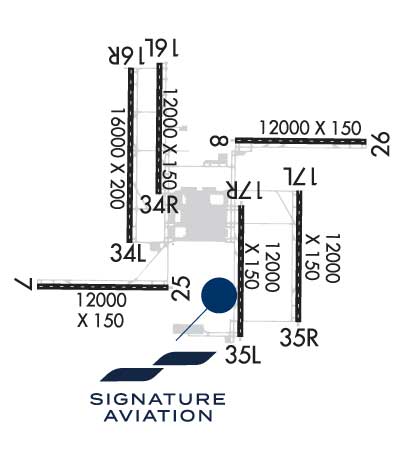

From:
https://en.m.wikipedia.org/wiki/Cirrus_Airframe_Parachute_Sy...
The Cirrus Airframe Parachute System (CAPS) is a whole-plane ballistic parachute recovery system designed specifically for Cirrus Aircraft's line of general aviation light aircraft including the SR20, SR22 and SF50. The design became the first of its kind to become certified with the FAA, achieving certification in October 1998, and as of 2014 was the only aircraft ballistic parachute used as standard equipment by an aviation company.