I'm gonna go on a slight tangent, about the Haxe language.
I had seen this before -- it's really cool! I never dug enough into the site to realize the creator was also on Dead Cells.
The most interesting part to me, is the use of Haxe (in Dead Cells!).
Haxe is to code what Esperanto was meant to be for spoken language.
> "Haxe can build cross-platform applications targeting JavaScript, C++, C#, Java, JVM, Python, Lua, PHP, Flash, and allows access to each platform's native capabilities. Haxe has its own VMs (HashLink and NekoVM) but can also run in interpreted mode."
Syntactically, there's "nothing new to see here" -- it may as well be Not-Quite-Typescript (with some other goodies; Pattern-Matching, GADT's, compile-time behavior, etc).
But it never "took off". Yet here I learn that very impressive software/stunning games have been written in it, by incredibly knowledgeable folks.
What happened with Haxe, where did it fail? I've never tried it myself, but I have a passion for pixelated 2D/isometric games and the tutorials on the authors' site are very sound, so I might give it a shot.
My 2 cents on this one :) The Haxe core team is made of great coders, but not so great marketing guys. On day one, a proper game engine with decent documentation should have been a thing, but yet, as of today, it's quite rough to get into Haxe. I've tried to do my share by posting some tutorials, guides & open source projects (like LEd or GameBase), but it's a long road :)
It never quite took off and exploded on a Unity/Unreal scale, but it's a solid sleeper hit in a bunch of places you don't expect, and steadily growing. It's in a much more mature place then when I started using it years ago.
Why would you think it failed? I'm a heavy Haxe user myself since I'm developing https://rpgplayground.com in it.
Since the years I see more and more people using Haxe, including recently Pokemon Sword and Shield (for scripting) and Spellbreak (on top of Unreal Engine)
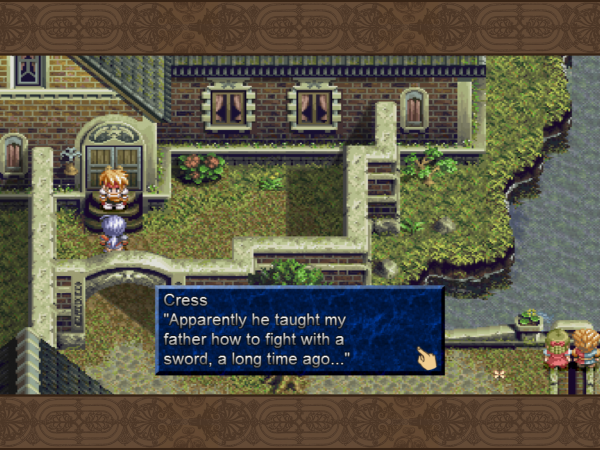
Wow, that is beautiful. The aesthetics remind me so closely of the original SNES Tales of Phantasia (absolutely stunning art, to this day) but with a warmer/lighter feel, like Chrono Trigger/Harvest Moon.
This is a really cool tool, but all the example images are using Rpg Maker assets, which is a bit of a turn off to a lot of folks I'm sure. Do you plan on building your own asset set? Kind of like the official RTP packages?
One of the reasons I could bootstrap this project was because there are so many freely available graphics out there. Although I put a lot of effort into making sure not to use anything from RTP.
Unfortunately this has the drawback of being a "rpg maker" clone. Getting traction on Twitter is therefore really hard.
When I ever do custom assets, they will be 3D.
Or give users to use custom graphics and share/sell them.
As I remember Haxe started as an alternative to ActionScript (language used by the Flash player) when Adobe refused to do anything about it's platform's coming demise around 2010, it's main feature was that you could compile it to ActionScript and JS.
I think it failed to become big because it was not backed by a tech giant - they developed their own language which they could fully control (MS - C#, Google - Dart,..) Also the small team behind it did not have the resources to make great tooling for it, thus Unity took over Flash in the small/medium game segment.
Damn I love haxe, I wonder how many ex Actionscripters are out there? Haxe, Flixel and Haxeflixel (thanks Adam Atomic) had a big influence on me as a young Dev. Even in the massively scaling SaaS work I do now I'm always inspired by 2d blitting stuff and what I learned about frame economising. Lovely.


I had seen this before -- it's really cool! I never dug enough into the site to realize the creator was also on Dead Cells.
The most interesting part to me, is the use of Haxe (in Dead Cells!).
Haxe is to code what Esperanto was meant to be for spoken language.
> "Haxe can build cross-platform applications targeting JavaScript, C++, C#, Java, JVM, Python, Lua, PHP, Flash, and allows access to each platform's native capabilities. Haxe has its own VMs (HashLink and NekoVM) but can also run in interpreted mode."
Syntactically, there's "nothing new to see here" -- it may as well be Not-Quite-Typescript (with some other goodies; Pattern-Matching, GADT's, compile-time behavior, etc).
But it never "took off". Yet here I learn that very impressive software/stunning games have been written in it, by incredibly knowledgeable folks.
What happened with Haxe, where did it fail? I've never tried it myself, but I have a passion for pixelated 2D/isometric games and the tutorials on the authors' site are very sound, so I might give it a shot.