I am living in SF now and this confirms a very clear pattern that I have seen emerging, particularly of tech workers. I would say that >50% of the people I know who were living in the city have left, or are in the process of leaving. Some examples (there are countless):
1) All three of the roommates that I had are choosing to leave either permanently or temporarily.
2) A friend who works for google who is going on a 6 month road trip in a camper van
3) A friend who is moving to Santa Cruz just to be closer to surf while we are remote
4) A friend who moved home to Australia because of how the US is handling the virus.
5) A friend who is going month to month in different cities, staying in Airbnbs, and still paying less for housing then his one bedroom in the bay area
6) A friend who moved to Austin to live with her sister
What I am seeing here is very clear also. The SIP order has removed many of the greatest parts of SF, the food, the bars, the culture, the density to be able to go anywhere and see your friends easily, and whats left are many of the problems that the city has, trash, homelessness, and exorbitant housing prices.
I've seen the same. The misconception is that people are leaving because the housing is too expensive and its not worth it anymore. Almost everybody I know that moved out had no problem affording housing (high earners / home owners / rent controlled). People are leaving because quality of life has fallen dramatically and the only thing keeping people in SF was their offices.
About half of the tech people I know have moved out. Of those about half have left permanently, the other half are on the fence depending on long term WFH ability / if the city is able to get the quality of life issues under control / plus a lot of complaints about taxes.
-In my 6 unit building in Nob Hill (5 of which are owner occupied). 3 units including myself have moved out permanently. 1x to Austin. 1x to Palm Springs. 1x to East Bay.
-5 of my 6 best friends in rent controlled units have moved out. Mostly to other cities in California. In 10 years living in SF I've never seen people willingly give up rent controlled units like this.
-Other friends that were looking to move to SF that have cancelled those plans. In particular employees at large companies that were impacted by layoffs (Uber).
> The misconception is that people are leaving because the housing is too expensive and its not worth it anymore. Almost everybody I know that moved out had no problem affording housing (high earners / home owners / rent controlled). People are leaving because quality of life has fallen dramatically and the only thing keeping people in SF was their offices.
Whether something is too expensive is not just a function of whether you can afford it. It’s a question of whether it’s worth it at the price being offered. You make make that same conflicting point.
The affluent would simply be first movers in this type of situation as many do not need to time their exits with their leases ending. The cash poor, yet high income tech workers will be the next mass exodus.
If you think SF is a shell of a city now, just wait till 6 months from now.
Only in the short to medium term... the characteristics which make SF an attractive place to live (just like NYC) are resilient and sticky.
If you consider a post-covid world 5 years from now, do you think that SF with it's museums, bars, restaurants, and proximity to nature will be an unattractive place to live?
Do you think that remote-first/remote-only companies where the majority of employees are outside of the bay area will be as competitive with startups which follow a more traditional model in silicon valley?
Both are things I wouldn't bet on. This is a blip. It could be a major blip, but it's a blip nonetheless and those who are betting in the complete other direction are likely to get burned.
Many of the bars, restaurants, and smaller cultural institutions will be gone.
The larger, well-funded museums and nature will stay of course.
But much of what is interesting about a city comes from the people who live there and shape its culture.
The San Francisco of today is very different from 10 or 20 years ago, and will be very different 10 years from now.
This is recoverable, sure, but its not guaranteed, and its absolutely a change of course for this city and others.
I live in Brooklyn and have seen 2-3 business close a week around me. At this point almost every other storefront is vacant (many of which have been since before the pandemic). My hope is that this will bring down commercial real estate prices down significantly and create an opportunity for a lot more small businesses in a year or so, most of which I assume will be restaurants and other "experience" based shops.
The outdoor dining has been a great addition and it looks like it might become permanent [1], which would be a big plus for the city.
There's also a lot more people biking now and I'm hopeful that it will help shape future legislation to make the city even more bike friendly. (I went to 4 different bike shops around me and they were all sold out).
> My hope is that this will bring down commercial real estate prices down significantly
I'm going to predict that this will not happen. More specifically, that it will be unusual in general for rents or prices anywhere to drop any more than 10%.
There's something odd going on and my best guess is that there are (a) accounting/tax practices that provide incentives for vacancy with certain nominal values and (b) real estate markets are now driven more by massive pools of capital trying to soak up opportunities than they are by demand on short-to-mid-term horizons.
But I don't know enough to say for certain and explain how, and I'm hoping that someone can tell me why/how I'm stupid.
The value of land rented is mostly based on the rent that can be charged. Loans which use the land as collateral need the value to stay high in order to roll over (refinance) the loan.
It's conceivably better for major real-estate holders to rent the land out at their preferred rate one or two months in a year, and leave it unoccupied otherwise, than accept reduced rates. The former gives a fig leaf for rental value, which props up the land value, which enables refinance. The latter admits that rental value has dropped, which would lower the land value, which would cause refinancing to fail.
That makes sense, but I'm confused how you make loan payments without tenants paying rent. Not to mention property taxes, maintenance, utilities and other overhead.
Kind of feels like the cliché "make it up in volume" when you're losing money on each transaction.
It's not sustainable indefinitely but most large landlords have significant capital reserves as well as revenue from a diverse portfolio of other properties. So they can afford to take losses on vacant properties for a few years while waiting for the market to recover.
You don't make loan payments; you make interest-only payments and are speculating on future appreciation on the value of the land, a proxy for the local economy.
It's not sustainable indefinitely, but it can go on for some time. And if the economy picks up, then all is right again.
You are speculating with other people’s money and at very high leverage. If the market keeps going up the amount of profit can be spectacular and the losses while also potentially spectacular may not be so bad if you don’t have any collateral in the first place.
Rent in SJC is down by at least 10% if not much more. I am in an apartment now that used to cost $3500/mo for only $2600/mo now. A month or so ago, I moved out of my dilapidated, old roach infested apartment I was paying $2750 for elsewhere in San Jose. Yeah lots of businesses have closed and people moved out, but the discount units are filling up and businesses are reopening.
I don’t think that this is always true. Land reform happens consistently in history when ownership gets out of wack. Also the value you assign to the land is going to change when the use changes, for example houses in currently popular tech hubs aren’t as important when people can work remotely. And the improvements to land like houses aren’t always going to necessarily hold their value. Labor is a huge influence on price, what happens when machines start building houses? Not saying you shouldn’t buy land or houses, I consider them part of my strategy but consider the downsides too.
Oh yeah, take a look at the Georgists and The One Tax where land is the only thing taxed since it’s the only finite resource. It’s not impossible that we end up in a situation where holding land just to hold your wealth isn’t going to exist anymore.
This has historically been true, but one major variable has changed: executives have been forced to see what their companies look like with remote workers. The land and housing markets look very different when a significant percentage of people aren’t paying for a shorter commute.
I think the massive pools of capital thing is somewhat true, but this investment strategy works because ultimately there's so much demand for property, which is what's driving the real estate prices.
A permanent drop in demand because more people are working from home could crash the market.
If everybody has access to the pool of fake money: you get inflation.
If only a handful of fools do, you will get economic devastation sooner or later, because you remove the feedbacks of capitalism and hand the reins to monkeys that just happen to have access to the money printer.
That's great four months a year, but what about the rest of the year? No one can eat outdoors in 20F, or bike to work in the snow and ice. SF does have the advantage of year round biking weather.
I would beg to differ. 3 season biking is easy as pie, and 4 season with just a little effort. there was only maybe a month out of the year I couldn't bike to work in Minneapolis or Chicago, all it takes is infrastructure and the right gear.
As easy as pie, all it takes to bike to work is all the tarmac and smooth roads of a car world, all the parking space of a small car world, all the maintenance of a small vehicle, and a car/bus/taxi/train system for when you can’t bike, and their infrastructure, parking and maintenance.
Do bikes have the largest amount of unmentioned externalities of any form of transport?
> all it takes to bike to work is all the tarmac and smooth roads of a car world, all the parking space of a small car world, all the maintenance of a small vehicle
You are just joking, right? You’re exaggerating by an order of magnitude, you can literally fit 10 bikes in the space of a small car, on the road and when parked. You think bike maintenance is the same effort as car maintenance? I’m baffled by this claim, and I maintain several bikes and several cars. Cars are much harder, much more expensive to maintain, and require far more resources. Bike maintenance is something most riders can do on their own, while car maintenance is something people take to a shop.
> Do bikes have the largest amount of unmentioned externalities of any form of transport?
What on earth are you referring to? Are you comparing a few sidewalks and bike lanes in select metro areas to the 3 million miles of paved roads in the US? Are you suggesting the 1-2 ounces of oil I use on my bike chain per year is somehow worse than the average 2 metric tons of gas and oil used by the average car in a year? Are you including pollution in your list of externalities? Are you including accidents and fatalities in your calculation? I’m confused, I really can’t think of a single unmentioned externality where bikes don’t compare favorably to cars by a very wide margin.
So, it seems like the answer is a really clear and obvious no, there are other forms of transport with externalities so much larger than bikes that it makes the mere suggestion seem pretty absurd. Examples include but aren’t limited to: cars, airplanes, and cargo boats.
> You are just joking, right? you can literally fit 10 bikes in the space of a small car, on the road
You are just joking, right? A Fiat 500 is 3.5 meters long and 1.6 meters wide. No way can you "literally" fit 10 bikes being ridden on the road in that space - or even 3. Parked, you might be able to fit 3 if they're staggered, but if you're going to tell me you can double-decker it, you won't also fit the stairs/ramp/elevator mechanism in that space as well.
> You think bike maintenance is the same effort as car maintenance?
You take it to a shop, drop it off, and leave it there, then get it back later? Yes, that sounds about the same effort. Except a car usually needs servicing and is still drivable, a bike is probably punctured or chain snapped and unusable, making it more hassle, and if you decide that means you have to do it yourself, more effort. Everyone remember how fun it is to take a bike wheel off and run it through the bathtub to identify the location of a puncture, yes? Never spent that much effort on taking my car to a garage.
> Bike maintenance is something most riders can do on their own, while car maintenance is something people take to a shop.
You've gone from "baffled by this claim" to "most people spend more effort on bike maintenance than car maintenance" in the space of a paragraph. No comment.
> What on earth are you referring to?
I'm referring to the things I said. If you didn't have paved roads made for cars, you would need to build them for bikes. You wouldn't need to build them for walking. Bikers never ever mention this, it's a kind of parasitism on the car infrastructure - a cost that bikers don't consider. If there were no cars, but we needed to upkeep hundreds of miles of tarmac roads, bikes would need to be taxed hugely. It's an externality in the sense that bikes need it, but aren't paying (directly) for it, and are offloading the cost onto car drivers (who currently need it more and do more damage to it).
> Are you including pollution in your list of externalities?
No I'm not including the cost of container shipping enough bikes for 500,000 people from China, or the cost of digging up the iron ore and making the steel and carbon fibre to build them, or the trash heaps where hundreds of thousands of bikes rot. Good point though, neither do bike enthusiasts.
> Are you including accidents and fatalities in your calculation?
The kind where a big heavy fast moving metal lump collides with a soft squidgy easily damaged slow-moving pedestrian? I'm not including those either, but I am against bikes being allowed anywhere pedestrians are, so let's add that in as well.
> I’m confused, I really can’t think of a single unmentioned externality where bikes don’t compare favorably to cars by a very wide margin.
Neither can I. That's a totally cherry-picked comparison because it's like saying "being stabbed compares favourably to being shot by a very wide margin". There's no unmentioned externality where walking doesn't compare favourably to bikes by a very wide margin - in a place which is designed and built for humans walking -- which all places should be because humans are more important than vehicles. Walking needs less tarmac, less machinery, less maintenance, less money, is more accessible to people of more abilities, takes less parking space, less infrastructure, causes fewer accidents, places fewer restrictions on clothing, has lower environmental cost, lower pollution, less waste, doesn't need helmets and high-visibility clothing and bike-locks, doesn't need insurance and breakdown recovery and loan-cars...
> So, it seems like the answer is a really clear and obvious no, there are other forms of transport with externalities so much larger than bikes that it makes the mere suggestion seem pretty absurd.
Cars pay for roads in terms of fuel taxes and vehicle taxes. Bikes don't pay for either. Cars often pay for car parks, bikes often use sidewalk, or car parks. Cars pay for accidents with mandatory insurance, bike riders are uninsured. That other things are worse was not my point, my point was that bikers gloss over needing roads and the cost of that, car drivers don't.
Look I don’t know what has you so triggered and angry about bikes, but your hyperbole and exaggeration is undermining your arguments, you’re making your points weaker by trying so hard to prove your point. A good example is framing fixing a bike flat to be more effort than taking your car to the mechanic. Fixing a flat takes roughly 5 minutes if you’re slow, which is less time than it takes to drive to the shop (by approx. 1 order of magnitude), and a lot less money (by approx. 2 orders of magnitude). I know it happens once in a while, but I’ve never snapped a chain in my life. On the other hand, I have had a car engine blow out, more than once.
It’s just us here; acting like a bike is soooo hard to deal with isn’t going to convince me, since I know how much effort bike maintenance takes and how much car maintenance takes. I know from experience that cars are the bigger drain on time and money by many multiples. Pretending otherwise is just ensuring I have more reasons to discount what you’re saying.
> A Fiat 500 is 3.5 meters long and 1.6 meters wide. No way can you “literally” fit 10 bikes being ridden on the road in that space - or even 3. Parked, you might be able to fit 3.
Standard bike rack spacing is 12-16 inches. Mine is 14 and fits mountain bikes side by side. I’ll give you a generous 15 inches, in which you can comfortably fit 8 bikes in 3.5 meters. 1.6 meters wide is a tad narrow, but many full size adult bikes come in at just over 1.7 meters long. You ungenerously picked one of the smallest cars ever made to attempt to prove your point, but I’m happy to concede that you were wrong by 8x rather than 10x. If you picked a Honda Fit, which is on the small side of small cars, then 10 bikes actually do fit in it’s 162 inch length.
Lanes aren’t 1.6 meters wide, they are wider, and bikes don’t need to be spaced out as much as cars. The throughput can be much higher than 10x due to slower speeds and the higher density in both directions, sideways and front to back.
It seems like you decided the outcome before you thought about this very carefully.
> No, I’m not including the cost of container shipping ...
There’s a lot of snark in your answer, but you fail to acknowledge that there’s no winning the comparison against cars, which is what I was talking about. Whatever the costs of shipping and materials, cars are 20-40x the mass of bikes.
Hey, I agree with you that walking is cheaper than bikes in all ways, and I surely advocate walking. I don’t get your rage over bikes though, they’re a huge improvement over cars, and they are not otherwise causing problems relative to walking.
> my point was that bikers gloss over needing roads and the cost of that, car drivers don't.
One tiny little nit you seem to have overlooked: walkers need and use sidewalks too, so for the one “externality” you’re considering (while selectively ignoring the larger and more important ones like pollution, oil & gas, and accidents) pavement is an externality for walking too. You could claim walkers don’t need sidewalks, but bikes don’t really need sidewalks either, plenty of bikes will ride on dirt paths comfortably.
That answers a bunch of the questions asked in this thread. Another relevant answer to why biking is useful is that it extends the range of accessible daily activities around 10x compared to walking. You can bike further than you can walk in a given period of time.
So one of those hidden externalities you like to account for @jodrellblank, of walking vs biking is that walkers require more food consumption to sustain a daily commute of a given distance compared to bikers commuting the same distance.
This is the kind of thing I'm talking about with unmentioned externalities.
Biking is the most energy-efficient form of transportation, if you ignore the fact that to get such a result you have to make bikes and make steamrollers and concrete mixers and tarmac and roads first.
> Another relevant answer to why biking is useful is that it extends the range of accessible daily activities around 10x compared to walking. You can bike further than you can walk in a given period of time.
But not 10x compared to walking + bus or walking + taxi or walking + train, and not without added inconvenience of biking; and also not if you've built your environment so plenty of daily activities people want are close enough to comfortably walk to.
> So one of those hidden externalities you like to account for @jodrellblank, of walking vs biking is that walkers require more food consumption to sustain a daily commute of a given distance compared to bikers commuting the same distance.
And walkers require paying more taxes for the infrastructure to subsidise bikers.
> You’re arguing that we should use motorized vehicles instead of bikes??
Are you going to bike 100 miles to the next city? Are you going to bike to work with a broken ankle? Are you going to bike furniture home from the furniture shop? Are you going to bike everyone's garbage to the dump? Are you going to bike building materials around?
Given that you're going to have motorized things, they should be for optional, occasional use as an assitance for walking people who then don't need a bike or a car.
Because otherwise, you're going to have motorized things, and walking people, and bikes on top, for no particular reason except a bike obsession.
> Bullshit. Nobody is paying walking taxes. You are enjoying the very same “externality”.
? Nobody is paying explicit sidewalk taxes in the same way nobody is paying explicit streetlamp taxes. People are still paying taxes for infrastructure in the environment they live in, and that covers paying for sidewalks.
> People are still paying taxes for infrastructure in the environment they live in, and that covers paying for sidewalks.
Yeah, I agree, that's right. The bikers are paying for sidewalks & roads, just like everyone else. You've nicely summed up exactly why bike infrastructure is not being somehow "subsidised" by drivers and walkers.
Despite your wish to call sidewalks your own and not share them, and despite the fact that I agree with you about separating pedestrians from cyclists, sidewalks are multi-use infrastructure that everyone pays for and everyone can use. It doesn't matter that you don't like it, the intent has always included bikes as well as pedestrians and wheelbarrows and dogs and children, among many other uses.
Thus settles the red herring non-issue of externalizing taxes to pay for pavement. It's not a real thing.
> Despite your wish to call sidewalks your own and not share them
I don't mind sharing them with things moving at walking pace. Dogs, wheelbarrows, ice cream carts, wheelchairs, maybe skateboards.
I no more want to share them with bikes doing 10-15mph than with mopeds doing 10-15mph or sprinting people.
> The bikers are paying for sidewalks & roads, just like everyone else.
Bikers are paying diesel and petrol tax and road vehicle tax? Not in the UK they're not. Pedestrians aren't either. If they're not, that isn't "just like everyone else".
Any argument which makes bikes better than cars, makes walking better than bikes; you keep ignoring that and diverting back to "bikes are better than cars". Yes bikes are better than cars. Walking is better than bikes.
> Fixing a flat takes roughly 5 minutes if you’re slow.
I googled "how long to fix a puncture" (it's a long time since I had to do that) and CyclistResource.com[1] says puncture repair glue takes 5-8 minutes to dry. My proverbial mother is not going to have her puncture fixed in the middle of a pedestrian street in 5 minutes, and when she ends frustrated and with chain oil on her tidy clothes and muddy wet hands with nowhere to wash them and I call her "slow" that will earn me a proverbial slap. Assuming she even knows what quick release is, and can find the tiny inconvenient weight-optimised tyre levers which she's sure are in her bag somewhere under all this stuff she actually cares about. It takes 5 minutes maybe true for a certain kind of bike enthusiast mechanically interested person, I doubt it's true for a majority of the population.
Going to a garage is less effort even if it takes more time. That's usually the trade off - longer, less effort. But even so that's you redirecting to cars away from walking. Nobody has to carry tyre levers and a Nike Air pump to fix even their fancy airwalk trainers, let alone their ordinary tidy going-out shoes.
I'll concede that you can pack more bikes into a parking space than I counted for, but even your estimate of approx 10 bikes per 4 meters means a city like Amsterdam of 800,000 people would need a row of bike parking 80km long just to cover a quarter of its population having a single place to park their bikes. No matter how multistorey that gets, by the time those people can park in many places (at home, work, green park, shopping, entertainment) it's a lot of city space for a benefit of a minority of people. And yes, before you say it, cars are much worse.
> It’s just us here; acting like a bike is soooo hard to deal with isn’t going to convince me, since I know how much effort bike maintenance takes and how much car maintenance takes
I also know how much effort bike maintenance takes, which is not a /lot/ but is more than I can be bothered with for the few situations they have value in. If a journey is short, walking is more convenient. If a journey is long, cars are more convenient. If there's something to carry, cars are more convenient. If there's a destination I need to go inside, walking is more convenient. If there's multiple people to go with, walking or driving are way more convenient. If there's a chance plans will change and I'll get a lift back or we'll meet up with other people, walking and cars are more convenient. Bikes only win out for people who want to ride a bike for the purpose of riding a bike (fun, exercise) or for people who have a short-car-journey distance to travel with little to carry, alone or with another biker, but don't want to use a car (for environmental, cost, or idealism reasons), or a blend of the two (a single digit mile commute they'd rather not drive).
> I don’t get your rage over bikes though, they’re a huge improvement over cars, and they are not otherwise causing problems relative to walking.
They are an improvement over cars. They aren't a huge improvement. Instead of a roof, you have to change your clothes and carry a change of clothes with you. Instead of a trunk you have to arrange your life around the limits of a bike to carry less stuff. Instead of an engine to go any distance comfortably you have to pay attention to distances and hills and how sweaty you are willing to get. Instead of freely wearing what you want, you have to wear clothes suitable for biking. Instead of having a lockable metal storage you have the inconvenience of not having that but still needing to carry bike things (helmet, lock, toolkit). Instead of being comfortbly on a sidewalk as a pedestrian or on a road in a car, you have to be annoyingly (maybe illegally) on a sidewalk or in danger on a road full of cars, or be lucky and go a diversion in the few places there happens to be a bike path.
They're a "huge" improvement over cars only if you take away all the conveniences of a car, and offload those things onto the person while pretending you aren't doing that.
> One tiny little nit you seem to have overlooked: walkers need and use sidewalks too
Walkers should get sidewalks without bikes. If I say you walk at 4mph and bike at 6mph you'll probably tell me you can average 20mph on your bike. If I say bikes don't mesh with people, and are an accident risk, you'll say bikes "use sidewalks too" and point to people sedately biking at 3mph among strolling pedestrians. If you're biking at a speed that's safe /and not annoying/ to pedestrians (i.e. not weaving between people, making them jump out of the way) then you're going slow enough that you're as well off walking. If you're going faster in a way that only a bike can, you shouldn't be on a sidewalk and need a dedicated concrete place to cycle fast.
All 800k people in imaginary Amsterdam pay taxes for sidewalks because all 800k people use them. All drivers pay fuel and road tax, all cars use roads. Bikers don't pay any special tax for roads or bike paths, which means the minority of bikers are subsidised by everyone else. It's not hyperbole, exaggeration, hatred or snark to point out this kind of thing.
> You could claim walkers don’t need sidewalks, but bikes don’t really need sidewalks either, plenty of bikes will ride on dirt paths comfortably.
Leaving a chewed up muddy plowed mess for everyone else to walk on. Walking on cobblestones is easy and comfortable, riding on them needs suspension and arms that don't mind juddering. But what I'm really claiming is that taxing 100% of the people to make sidewalks that 100% of the people use is fine. Taxing motorists for roads which their cars use is fine. Bikes get the benefit of lots of paved roadway, which they approximately need, without explicity paying in any way. If there were only sidewalks bikes would clash with people. If there weren't roadways, bikes would need them to be invented. If my mother needed a full suspension mountain bike to go to church on, she probably wouldn't. If cars vanished, bikes don't provide anything like the income for the upkeep of the roads left behind by cars if cars vanished. If instead you move to a model where bikes need hundreds of km of bike paths weaving through the city seperate from sidewalks, and then you move to a model where bikers are the people who pay for that, bikes will become a lot less desirable.
Even the limited convenience and usefulness bikes have (which is nonzero) is enhanced by leaning on a car-culture and would struggle hard to stand on its own merits.
Did something bad happen to you relating to cycling? You’re struggling so hard to paint bikes negatively, exaggerating so much about minor and insignificant problems, that I can’t help but assume a cyclist must have collided with you or there’s someone annoying in your life who really into cycling. Do you have a physical condition that prevents you from cycling? Do you lean libertarian and have a problem with taxes for things you don’t use?
I still don’t get your angle whatsoever. Every single thing you claim to want is advanced considerably, and we get closer to walking culture, every single time someone rides a bike instead of a car.
> Any argument which makes bikes better than cars, makes walking better than bikes; you keep ignoring that and diverting back to "bikes are better than cars". Yes bikes are better than cars. Walking is better than bikes
I responded to your comparison between bikes and cars. My argument is that bikes are better than cars. So we are in full agreement. I’m not arguing about walking, I said twice already I’m in favor of walking.
> Walking is better than bikes
That depends entirely on what you mean by “better”. Bikes have a larger range, shorter travel times, and are more efficient. Walking is IMO more pleasant and a slightly safer, but not as functional for traveling more than .5 miles or carrying any cargo with you, even as small as a laptop.
Personally, I think it does a disservice to both bikers and walkers, and to the causes of human designed cities and pollution reduction, to fabricate drama by pitting bikes against walkers as if they're somehow in complete opposition. Bikers and walkers are 99.9% on the same side. I love doing both walking and biking. As a biker, I see people advocating for walking spaces and even bike-free sidewalks as a good thing that helps me. As a walker, I see people asking for bike lanes downtown as a good thing that helps me. You say you don't want bikes on your sidewalk, yet complain about how bike paths are paid for... you do realize that dedicated bike paths get bikes off the sidewalk, right?
> Going to a garage is less effort even if it takes more time.
For someone who brought the concept of externality to this thread, you’re actively trying to externalize time to exaggerate your claims. Cars are more expensive, and money requires time. You can’t count only the travel time to the shop while ignoring the extra time it takes to earn the money to buy & repair your car.
> Walkers should get sidewalks without bikes.
Irrelevant to our discussion, but I happen to agree.
> [in Amsterdam] Bikers don’t pay any special tax for roads or bike paths
This isn’t true, you are making assumptions, making things up. Citizens fund Amsterdam’s bike infrastructure. Not walkers, not drivers. Citizens.
In the city I live in, bike paths are being added by referendum. They are voted on and the funds come from multiple tax sources. I’m paying for the bike infrastructure I enjoy, and the majority of my fellow citizens are asking for improved bike infrastructure.
You are harping up a storm on a complete and total non-issue. Who pays for bike paths is not a major problem anywhere. And if it was a problem, it would be a great problem to have, because it would mean people are biking instead of driving.
> Did something bad happen to you relating to cycling?
A haw haw haw an ad-hom.
> You’re struggling so hard to paint bikes negatively
I'm writing pages of stuff off the top of my head, my biggest "struggle" is how you can't see any of these things exist. I haven't mentioned bike theft (compared to, say, shoe theft), noise pollution of squeaking brakes, people I see around biking while staring at their phones, the fact that we live in a car-world which is to a rough approximation the best possible world for bikes (lots of tarmac, lots of spread out things, low costs) and even then the vast majority of people don't own or regularly use bikes, and almost any other world would make bikes less convenient and more costly, making that worse. Not to mention the way you can leave maps and notes and sunshades and medical kits in your car glove box, but you always need to carry everything away from your bike, not to mention the huge change that sets in if you happen to bike at night and need lights and batteries and reflective clothes for safety, not to mention the extra difficulty of calling someone up to ask for a lift if they have nowhere on their car to put a bike, or leaving your bike out to come back to a wet rained-on saddle, or how cold your hands get held out in front of you, or how wearing a helmet messes up your hair, or how people desire a 'dashcam' experience and have to have it affixed to their helmet.
> I still don’t get your angle whatsoever. Every single thing you claim to want is advanced considerably, and we get closer to walking culture, every single time someone rides a bike instead of a car.
No we don't.
Take the "ungenerously small car" comment and look at the Top Gear clip "Driving in Lucca" - https://www.youtube.com/watch?v=c_eLViH7_YI - the ultracompact cars are the Fiat 500, the Citroen DS3 (~4m long, 1.7m wide) and a Renault Clio also ~4m long 1.7m wide. And look how they barely fit in the streets of a city built for humans. Look as they drive around, how there's no long straight roadways for a bike to get up to speed and make strong use of the vaunted efficiency and ability to cover longer distances more quickly. And if you tried, a chance of a bike popping out of any junction at any time at 10mph would make everything awful for humans who weren't biking.
At 4:30 in the clip there are ~7 bikes visible. That's approximately everywhere you can leave a bike in that scene including in front of some windows on the left. That's 7 people can bike to that street out of a city of ~85k population + tourists. There's no room there for a "small car sized parking for 10 bikes" turned sidways because the "ungenerously small car" takes up the entire human-size space and there wouldn't be room to take the bikes out and barely room to walk past.
What you get from bikes is not "closer to walking", it's "things built around distances too far to walk with the idea that people will bike those distances". Building around walking means building things close enough that nobody needs or wants to bike. It's like saying you get closer to reading by watching a short film.
> My argument is that bikes are better than cars. So we are in full agreement
I'm saying that bikes are /bad/ and you're saying bikes are /good/. That's not full agreement. Even if we both agree that cars are bad, I say bikes are bad for the same reasons, on a smaller scale, and for their own reasons on top.
> As a walker, I see people asking for bike lanes downtown as a good thing that helps me. You say you don't want bikes on your sidewalk, yet complain about how bike paths are paid for... you do realize that dedicated bike paths get bikes off the sidewalk, right?
... you're going to terrorise walkers into paying for bike lanes for you to use, so you don't have to pay for them? You do realize that doesn't sound nice or friendly, or what someone on "the same side" would say, right?
> For someone who brought the concept of externality to this thread, you’re actively trying to externalize time to exaggerate your claims. Cars are more expensive, and money requires time. You can’t count only the travel time to the shop while ignoring the extra time it takes to earn the money to buy & repair your car.
Me: cars have costs. bikes have costs.
You all: Why can't you see that cars have higer costs?
Me: I can see that. Why can't you see bikes have costs at all?
You: I don't understand how you can ignore the costs of cars are so big?
Me: I'm agree the costs of cars are high. Look at the downsides of bikes.
You: But her car emails!
Me: Stop focusing on cars. Bike costs. Annoying. Inconvenient.
You: How can you ignore the cost of cars like this!?
Hello? I know cars have high costs! I'm not /denying that/. I'm not interested in that because /I'm not supporting everyone-has-a-car-world/. I'm supporting nobody-needs-a-bike-or-car world specifically against the alternative most-people-need-a-bike-world.
> This isn’t true, you are making assumptions, making things up. Citizens fund Amsterdam’s bike infrastructure. Not walkers, not drivers. Citizens.
If everyone payes the same tax, that's another way of saying bikers dont' pay any special tax. Which is what I said and you said is made up, then said the same thing. ???
> the majority of my fellow citizens are asking for improved bike infrastructure.
Because the majority (>50%) of them want to use it? Or because they are willing to suffer paying for it to get you off the roads and sidewalks because you're annoying both pedestrians and drivers? Cycling England says there are ~160,000 bikes crossing London every day, but Transport for London says there are 2,600,000 cars registered in London.
Cycling England says "n 2018, cycling accounted for 1.7% of all trips". That's 99.3% of citizen-trips on foot and in cars and public transport "funding" 1.7% of citizen trips.
"England: 42% of people aged 5+ own or have access to a bicycle" yet "80.9% cycle less than once per month or never".
A storm full of points you're completely glossing over in favour of ad-homs and diverting the talk about cars instead.
> Who pays for bike paths is not a major problem anywhere
Did I say it was a major problem? I said it was an example of something bike enthusiasts don't mention. In England 2% of journeys are by bike. That leaves "Citizens" paying for road and pavement usage for 98% of journeys and also paying bike path costs for some subset of 2% of journeys.
> And if it was a problem, it would be a great problem to have, because it would mean people are biking instead of driving.
That would be bad because you'd have a world built around distances too far to walk, far enough to want to drive, but unable to drive. What would get 80% of people to bike those distances in lieu of cars is most likely motorized bikes.
I wasn't attacking you with an ad-hominem, I'm sorry it seemed like that. I was honestly asking why you're so bothered about bikes. You have a lot of reasons, but I don't understand your overall thrust or point.
> and diverting the talk about cars instead.
You keep saying this over and over and over, yet I keep pointing out consistently that I'm primarily focused on bikes vs cars, and primarily responding to your comment here, which compared bikes to cars, and didn't even mention walking. https://news.ycombinator.com/item?id=24186001 You somehow don't even see you're the one moving the goal post.
Take a step back, I don't want bikes banned, or to stop you from riding your bike on the road or pavement tomorrow. We're imagining a future where we say that internal combustion engines emit too much air pollution and CO2 and should be replaced. One choice we have is to replace them with electric cars. Electric cars still have large resource costs around the planet because they're quite big, and have costs in their use in urban environments in parking spaces and charging cables and traffic lights and etc. (NB. another unmentioned thing - all the desire for self-driving cars isn't going to build self-driving bikes anytime soon).
There is an element of social unfairness where people need frequent use of tens of thousands of dollars of car to live a first-class citizen life, and doing without makes people second-class citizens in many ways. If we step away from cars (and for the moment, motorbikes and mopeds and so on), there are not many choices left, they boil down to:
1) Keep the world the same, solely switch cars for bikes.
2) Rebuild and rezone smaller and denser, but stop at bike distances.
3) Rebuild and rezone smaller and denser, to walking distances. Walking distances have to be very dense because people walk slowly.
The first is unworkable - 2% of journeys done on bikes today is not going to boost to 90%+ journeys done on bikes just by taking the cars away. The distances in the world today are built for cars.
The second has all the costs of cars but on a smaller scale. It has all the costs of rebuilding and rezoning. It has all the social unfairness of still needing a personal transportation device. And on top of that it has all the problems of bikes that I've been listing because they're not very good compared to cars.
The third, done well, has the massive advantages that you don't need a vehicle and get more money in your pocket. The cost of having to use walking effort instead of driving is offset by the fact that you don't have to walk far. The disadvantages of not having a vehicle are traded off with the advantages of not needing a vehicle. More people get a first-class experience of life.
The first is cheap but it won't work. People need cars now because everything is so far apart and it was built far apart because everyone else has cars. The second and third are not going to happen because rebuilding is expensive and people don't want to give up their cars. But if they did happen, the second is a chance to make hundreds of millions of people's lives simpler, cheaper, easier, less hassle, and lower global resource use, not done, stopped short of that, deliberately to make people have to use bikes just for the sake of people using bikes. It's a /tragedy/.
Even if the third happened perfectly, that wouldn't stop you from riding your bike to work. What it would mean is you wouldn't have to. Most people wouldn't have to, and wouldn't. If the second happened, it would mean most people couldn't avoid riding a bike to work because work was deliberately zoned too far to walk to prop up bike use.
> yet I keep pointing out consistently that I'm primarily focused on bikes vs cars
I'm primarily focused on humans vs vehicles. Bikes and cars both go on the vehicle side. I criticised biking to work, I have kept criticising biking in every reply, that's not moving goalposts unless you think I was cricitising bikes in favour of cars - I wasn't, I was just criticising bikes. Like the parent three posts to that one is "There's also a lot more people biking now and I'm hopeful that it will help shape future legislation to make the city even more bike friendly" - why? Why hope to make legislation to make the city more bike friendly instead of hoping to make the city rezone so people can live and work close enough that they don't need vehicles? "I want to see more bikes" why do you?
Have you been in a place where lots of people ride bikes?
A small car world would be 100% -> 60% resource reduction. At reasonable scale, bikes are at least a 100% -> 10% reduction in all mentioned 'externalities' or should we say resource use, or 10x capacity for same resources, except for road size at maybe 3x, but still more than 10x on cost.
Public transit would grow (no need to fit all cyclists), but that should actually be a net benefit.
To comprehend the difference in scale, view images here [1]. Half as many cars wouldn't fit, even if they covered every cm of the image.
> A small car world would be 100% -> 60% resource reduction.
You're missing the part I replied to which was about bikes being usable 11 months of the year. If you need all the car infrastructure for 1 month, plus the bike infrastructure, that makes it overall worse, not better.
But discard that, if biking is a 60% reduction, then a walking+train world would be way more.
Your link talks of a train station building a 12,500 bike-parking garage. For comparison the busiest train station in the UK (Waterloo) has 250,000 people using it every day. Note that the pictured bike parking in Amsterdam takes up the space of two of the large multistorey hotels next to it, just to store metal, but pushes actual walking humans two hotel distances further away from their destination just to walk past unused metal storage.
Bike parking, like car parking, is a non-place in the sense of https://newworldeconomics.com//place-and-non-place/ it's not somewhere anyone wants to go, or a place where anything happens. Scale that bike parking up to 100,000 people and it would be an enormous amount of physical city-center non-place. Now count that you have to park those bikes at both ends of every journey - bike parking at the supermarket, at the clothes shops, at the pubs, at the apartment buildings - and instead of a small, dense, walkable city center, you're now measuring the total area devoted to non-place metal storage in square kilometers, and inconveniencing everyone with kilometers more walking every week just to cross the distances taken up by mega bike park bloat.
This picture is Shinjuku in Tokyo, the world's most populated city, near the world's busiest train station: https://newworldeconomics.com/wp-content/uploads/2017/01/shi... - can you imagine that street being as pleasant with 2,000 bikes barelling down it at 2x walking speed and every one of those eateries having 5-20 bike parking outside?
And there's no chance those 12,500 bikes would fit on the trains, how many bikes fit on a passenger train, maybe 15 or so? Bike+train means most people can only bike on one side of any train journey.
> Public transit would grow (no need to fit all cyclists), but that should actually be a net benefit.
If public transit is growing, more people will be able to not-need bikes.
> To comprehend the difference in scale, view images here [1].
e.g. [1] "The typical U.S. solution is to surround the train station with acres and acres of free parking.[...] There are 157 acres of land in this photo. When you step off the train, you have immediate walking access to 157 acres of /nothing/"
and [2] "The better solution is to surround the station with all the highest-value property. All the best offices, stores and restaurants are as close to the train station as possible, so we can walk there from the station, and where there is the most pedestrian traffic. Plus, you also try to put as many apartment buildings there as you can, so you can easily walk to the station in less than ten minutes."
"if you want people to be able to live without automobiles, you have to make it easy to get from the train station to wherever you want to go on foot. This means you put all the good stuff right up against the train station — even build it into the train station itself if possible. When you step out of the train station, you want to land right in a wonderful pedestrian Traditional City environment, not a parking lot wasteland."
When you switch a "large" surround of car parking for a "large" surround of bike parking, that doesn't fix anything. I put "large" in quotes because the measure is not abstract meters, dollars, or kilos of concrete, the measure is human size and human footsteps - walking past 12,000 bikes is 90% of people walking further for no benefit, while the bike owners also walk further for a small benefit of part of a journey, and puts desirable city space to use by metal instead of humans.
To be clear, I don't want to displace public transit -> bicycles. I was talking about cars -> bicycles. Densest cities are best served on foot - the places nobody would dare convert to car transit.
As I emphasized, cars -> bikes is not 100 -> 60, but 100 -> 10. Meaning not 1.5x nor 2.5x but 10x density. A moderately priced double-decker staggered height bicycle parking comfortably fits 20+ bikes in the place of a single car.
The only places that require comparatively large bicycle parking areas are large transport hubs, and in the example, the added distance for pedestrians is less than going between platforms, if any at all.
In a typical not-overly-dense places, bike travel is technically faster than foot if you're going more than about 50m + about 120% of distance to parking (if not along the way).
> U.S. solution .. 157 acres of free parking
That is truly foolish, and would fit over a million bicycles even without racks.
> The only places that require comparatively large bicycle parking areas are large transport hubs, and in the example, the added distance for pedestrians is less than going between platforms, if any at all.
> I was talking about cars -> bicycles. Densest cities are best served on foot
Right, so if you're redesigning smaller and denser, why on earth would you build so everyone needs bikes, instead of building so everyone doesn't?
And if you're not redesigning smaller, and distances are still car-suburb distances, they're still too far for bikes for most people and most journeys. You might have to do a 20 mile round trip to get into Houston center and back, for example, that's 1.5-2hrs biking. Way outside what you could expect most people to want to do regularly compared to say a 15 minute walk.
> The only places that require comparatively large bicycle parking areas
All bicycle parking areas are comparatively large for the people who don't have bikes. "The space of a single car" is ~3 meters. You only need 30 of those to push your walking commute, trip to the shops, visit to your friends, out by +1km and +2km after a round trip. Building for the 10% of bikers compared to the 90% of non-bikers is insanity.
> That is truly foolish, and would fit over a million bicycles even without racks.
If it did, it would still be 157 acres of non-place nobody wants to go to, spend time in, and resent having to get to the other side of. The foolishness is having that much inhuman space dedicated to metal storage, not that it's dedicated to fossil fuelled vehicles instead of pedal powered vehicles.
That is, the desire for and apparent need for bicycles comes from having a city built large enough for cars, too large to walk, and then having the cars removed. Where you are miles from your destination and between you and your destination are acres of no-place, nothing nice to travel through, nothing interesting to do.
In a city built small enough to walk, bicycles are unwanted and unneeded extra hassle, and when you occasionally do have to walk a couple of extra miles it's through a vibrant, busy, maybe even beautiful, human space not concrete void.
"It should be obvious that it is better to not need a bike than to need one. [...] we should not think about bikes-instead-of-cars, but rather getting over this unhealthy fixation on My Personal Transportation Device"
"Accept a bad solution because otherwise I'll threaten your children with a worse one" might be a convincing argument, but it's not a good argument.
Designing things around bikes, and then everyone needs a bike, is a worse option than designing everything around humans (instead of some kind of vehicle).
Neither of those sentences is living in reality. Nobody's threatening children with a worse solution, we already have the worse solution, our children are already inhaling the pollution. You can choose to keep it or choose to lessen the pollution. As far as pollution goes, there's little difference between bikes and whatever alternative you're proposing (walking?). Walking doesn't pollute, bikes don't pollute, cars do pollute heavily. Bikes aren't a bad solution to pollution, they are a perfectly good solution. One of many.
> Designing things around bikes, and then everyone needs a bike, is a worse option than designing everything around humans (instead of some kind of vehicle).
I'd fully agree we should design things around humans, but where are people designing cities primarily around bikes? And what, exactly, are the problems we actually have with bikes? Not the fear-mongering made-up FUD, but real problems that exist already. Bike parking space is not an actual problem today. What is?
What does it mean - exactly - to design around humans? You could argue the problems we have are because we designed around human convenience already, and allowed our walking space to be paved and prioritized for cars.
Your arguments are vassellating between comparing to cars and then not comparing to cars. What's the goal post here? Are you demanding something perfect, or do you want to improve considerably over the crappy position we're in with cars? Is removing all vehicles entirely a realistic goal? Is redesigning all the largest cities on earth, and getting everyone to work within a mile of where they live realistic? Why are you trying so hard to lump non-motorized vehicles together with motorized vehicles? There is a large difference between having a gas-consuming engine and not having one, don't you agree?
The making of bikes, and the concrete for them to ride on, involves pollution and externalised costs. Bike tyre dust pollutes, abandoned rusting decomposing bikes pollute. Less than cars, no question. "they don't" - not true.
> And what, exactly, are the problems we actually have with bikes? Not the fear-mongering made-up FUD, but real problems that exist already.
They aren't good enough to replace cars. They aren't a good improvement over not needing to own transport. They aren't a good improvement over walking in most dimensions, and the ones they are are dimensions that would be better eliminated than papered over with bikes.
> What does it mean - exactly - to design around humans?
Design around what the human body can do (mostly) unaided. Glasses bring your eyesight back up to human norms, we don't design imformational screens so everyone needs magnifying lenses to be able to read them. Hearing aids bring your hearing back to human norms, we don't make important announcements quietly enough that everyone needs a hearing aid to be able to partake in society. Walking sticks aid balance for the disabled, we don't make waterbed rolling walkways so everyone needs an extra third point of stability to avoid falling over. If it's too far to comfortably walk every day, it's too far. If that can't be helped, mass transit. Personal transport should be a thing people don't need, but the 2% of people who ride bikes today can be the 2% who ride bikes tomorrow if they want.
> Is removing all vehicles entirely a realistic goal? Is redesigning all the largest cities on earth, and getting everyone to work within a mile of where they live realistic?
Is preventing catastrophic global climate change realistic? Is ignoring mass transit so you can strawman that everone needs to work within a mile of their home instead of everyone having work or train station within a mile of their home, reasonable?
> Why are you trying so hard to lump non-motorized vehicles together with motorized vehicles?
Because that's where they belong. The only way bikes are going to become as popular as they need to be to satisfy the pro-bike agenda is when they become motorized. They will approach "electric cars" closer and closer.
> where are people designing cities primarily around bikes?
Good question. If bikes are so great and the answer to pollution and the future, where are people designing cities primarily around bikes? Nowhere? It's old places designed around walking, and new places designed around driving, and occasional neighbourhoods redesigned around walking. Bikes are incidental in both approaches, like nobody is redesigning cities around skateboards, unicycles, Segways, hoverboards, Kangaroo boots, rollerskates, rollerblades, monowheels, pogo sticks, velocipedes, stilts, or spacewalkers. Bikes belong in the category of those things. Fine where they are, not a thing to promote for daily commuting and mass transit of world populations.
There's a reason why Finland or Canada or Alaska are sparsely populated: The weather.
Sure, those people who can be bothered with it might pick up the cycle during the winter. Those people who can't be bothered are going to pick up their stuff and leave.
I'm from one of those northern areas. Very few people leave because of the weather even if they don't like it. It's mostly because of studying and career opportunities.
North is sparsely populated because the crops were historically poor and prone to losses due to weather conditions, not because people don't like the weather.
What sort of gear do you need for conditions like that? During one cold snap, my chain literally froze on a long ride through some light rain/sleet. (No, I don't know how that happened, but it did.)
And that was in the Seattle area, where it rarely gets all that cold.
I was a Mormon missionary in Hokkaido in some of the snowiest places in the world and got around just fine using a cheap mountain bike. The only additional "equipment" needed was a lighter, to thaw out my bike lock when it would freeze shut.
I looked up Trondheim, NO weather. It's only Rhode Island cold not Minnesota cold. Plenty of people in Providence, RI bike in the Winter. Trondheim also doesn't have the range found in either RI or MN so you don't get ridiculous heat and humidity to bike in.
My midwestern city is out of bikes too, but it isn't because of a surge in demand. It's because all the bikes were made in China, and supply has slowed to a trickle.
Absolutely, I totally agree. It's going to be really sad when we're out in a year (or two or three) and all those places that we went to and remember are no longer there because of this pandemic and ensuing lockdown.
But I think about the places (bars, restaurants, clubs, galleries, small shops) I visited almost a decade ago now when I first moved to SF and a bunch of those disappeared in the good times! They were displaced by rising commercial rents or a change in their clientele because of the rapid gentrification of neighborhoods and replaced, oftentimes with more kitsch stuff but sometimes with amazing restaurants or shops, which might not survive this lockdown.
San Francisco was once destroyed by a fire and has bounced back over and over again and I don't think this time will be different. It'll be different but not in the way people are panicking about in this thread and post.
Currently in S.F, rent controlled. On the fence about leaving, but I don’t see This getting better. I’m seeing this country turn totalitarian; COVID19 running rampant, and one, of many to come,Retrovirus, which is extremely disruptive to our T-cells (immune response).
Where to? Santa Cruz, too quirky? Marin, beautiful but overdone? Santa Rosa, I like this. Now, in Silicon Valley, there’s a sense of being out there; Mountain View, Los Gatos; attractive smaller enclaves.
Inner neighborhoods like the Tenderloin, SoMa, Union Square, Nob Hill, Lower Nob Hill, the Russian Hill, etc. Will probably need a lot of infusion to keep the cartels from fighting over territory. With a deficit so big, its hard to see an easy way forward.
Naw bro, they should put all the homeless people on a bus to Texas and then get rid of all forms of taxes. Make it so you don't even need a license to open a business. It'll be the greatest city in the world! /s
A 8.5+ earthquake would be a city changing event. Entire neighborhoods with URMs would probably no longer exist afterwards (Chinatown, Tenderloin, Soma, etc).
I don't know about you, but I didn't move to the Bay Area for museums, bars, restaurants, or proximity to nature. I moved because that's where the jobs were (to paraphrase Willie Sutton). While I have grown to like it here, when my company tells us what the salary adjustments will be for moving to other parts of the country, I'm going to start seriously looking for a new home.
Granted, it may turn out that my new home will be the same as my old home, but, at least being forced to be remote is getting the wheels turning.
I have to imagine if we had software unions we would hear nothing of this "adjustment." My code is worth just as much to the company if I write it in Arizona or San Francisco.
> If you consider a post-covid world 5 years from now, do you think that SF with its museums, bars, restaurants, and proximity to nature will be an unattractive place to live?
As long as the city & county and state governments are as bad as they are, yes. San Francisco was easily the most disgusting American city I have ever been to. It somehow has managed to land in an anti-sweet spot of repressive laws aimed at the middle classes, while not enforcing any laws against the mentally ill who do things like defecate in public, urinate on the floors of even nice bars, accost one on the street and so forth.
San Francisco needs someone to do for it what Hercules did for the Augean stables.
The suburban area was much nicer, but still hellaciously expensive, way out of proportion to the quality of life. There's a reason why people are fleeing California in general, and San Francisco in particular.
There's almost no problem so severe that it is immune to hyperbole. I'm always in such a strange place responding to comments like this, because I generally agree. San Francisco govt is very restrictive toward business - it bans plastic straws and happy meals - but it seems helpless in the face of severe misbehavior from addicts and mentally ill. So severe that people might wonder if some in government are willfully enabling this behavior.
I've lived in SF my whole life, and I'm pushing 50. My parents live here, I'm raising my kids here. Every day I wonder if I made the right decision. There's still time to leave. It hurts, feeling this way, because in many ways I still really love the place where I grew up, and I feel like a lot of my life is woven in here.
I said all that to make it clear that I agree with you And yet, there's still room for disagreement about how severe it is.
I've been on long walks (something I like doing in urban areas) since COVID hit. Where I go often depends on something I need to do in an area, an errand I have to run. I walked a long distance through the outer sunset along the great highway (closed to cars right now). From Washington and Presidio out through Clement street, for a ways. I surf, too, and while the waves don't have the shape of a point or reef break (think Santa Cruz), I'd much rather spread out in the beach break and find the occasional open corner than crowd in with a bunch of surfers all competing for the take-off spot (I felt this way before COVID, let alone now).
Plenty of others (Carl Nolte wrote about a walk of his own in the Chronicle this sunday[1]), I don't need to list them all. I have glorious days here, still - there is some intrusion from urban blight even on those glorious walks, but in some cases it was a still pretty minor. I was not accosted, nor did I have to constantly dodge human feces. The city showed well, the houses and buildings were interesting looking, the views were glorious, the people around were friendly. There are comments who make it sound like every square block of SF is like escape from New York. It isn't, though it's getting worse, and I'm worried. Some of this, I think, is motivated by a desire to disparage left-wing government (I'm ok with holding progressive San Francisco accountable for what the city has become, though I do think we need to consider macro factors beyond what they can control - not to dismiss the considerable role of SF's policies, but as part of the discussion).
I've also been downtown in plenty of other US cities - most recently, Seattle and Milwaukee. In some ways, the remarkable thing about SF's downtown is that it was inhabitable recently. Many cities wrote off their version of market street long, long ago. I do agree that parts of SF are pretty disgusting, and SF does win the top prize in this regard, but I actually don't agree that it is uniquely disgusting.
Anyway, this is just a disagreement about degree, and some hyperbole is intended as a kind of satire or comic rant. Overall, I agree, we have a really serious problem in SF.
If I came from maybe Flagstaff Arizona I'd think SF has "museums, bars, restaurants, proximity to nature" but having lived in plenty of other places with more museums, bars, restaurants and proximity to nature SF was a let down.
San Francisco is a very small city, but it is a city nonetheless which puts it on the list of places in the US where you can live (and I mean truly live) without a car, even before the age of Uber/Lyft. (Unsurprisingly, the other places on that list are also cities.)
Due to tech money and location, it occupies a weird place in the various lists of world's cities. It is just tiny a small city compared to other cities in the world, and geography and politics aren't about to let that change any time soon.
>where you can live (and I mean truly live) without a car
Maybe. I do know a couple who live in SF who don't own a car but they sure use a lot of Ubers and do rentals.
More generally, and I'm probably just showing personal bias, but for me living in SF without the ability to just hop in a car and go to mountains etc. seems like it would be cutting myself off from much of what makes SF more interesting than comparably-sized cities.
I should have been more specific and said owning a car. It's more convenient to use a car in many situations and modern car rental places (Zipcar/Turo/Getaround), along with the traditional car rental companies, mean its easy to rent one for a few hours or a weekend. Depending on where in the city you live and how often to you go the mountains, the cost of car payment + parking + insurance may or may not be worth it compared to renting as needed.
It's not a personal bias when most Americans share the same bias. I've found Americans are only slightly weirder about their attachment to owning guns than owning a car, but far more Americans have this religious attachment to having a car.
That's certainly an option. Depends on your requirements and how much you use the vehicle. Renting does have some friction associated with it but, if you're only going to use a car a couple weekends a month, don't have dedicated parking, and don't need/want anything special, it may well make more sense to rent.
I agree. I live in SF and hate driving in the city. 95% of my in-city transportation is walking and biking.
But my quality of life went way up once I bit the bullet and got a car. Skiing, surfing, and hiking all became way easier. I was already occasionally renting cars to do those things, but the friction of picking up/returning the cars and the marginal cost of each trip were big drags. Now I don't think twice about a 1-2 week long backpacking trip, where previously I would have been dissuaded by that expensive rental car sitting unused in the parking lot.
#1 suggestion: Washington, DC. Museums (the Smithsonian museums), bars, restaurants (one of the Michelin cities), proximity to nature (there's a national park that cuts through the middle of the city, there's the National Arboretum, and you're about an hour drive from numerous state parks in Virginia and Maryland)
I will 100% grant that the weather in the Bay Area is generally better than all three of those places - but if you don't highly rank outdoor activities, does that matter as much?
> a national park that cuts through the middle of the city
Come now, you aren't suggesting that the National Mall counts as "proximity to nature" ;-)
I've spent some time in all three cities and live in one; none of them really offer the same ease of access to nature as does San Francisco, if you count nature as necessarily including some level of remoteness from the built-up environment.
By that criteria Denver/Boulder, Seattle, Portland, etc. are way superior. Any kind of nature activity (hiking, backpacking, skiing, paragliding, cycling) is better and closer, except surfing perhaps.
With density that I until recently used to consider as an unquestionable positive becoming at least temporarily moot with covid (and frankly becoming permanently soured by the out of control protests - I realized I prefer my density Singapore style, with CCTVs and harsh sentencing), I can see why people would move out. I'd probably be out of Seattle, at the very least to the burbs nearby with the same access to everything and few of the downsides, if it was just me making the decision. Same applies to SF (I've lived in SF and Mountain View before, I'd say it's even more acute in SF, quality of life is just terrible even for someone who loves dense cities - might was well move to peninsula or east bay for better access to nature in essentially the same place).
LOL they're referring to Rock Creek Park, not the National Mall. RCP is probably the single best "urban" park system outside of Forest Park in Portland. I can walk out my door and be in nature in just a few minutes... you can walk or run all day and never leave the forest, yet still be in the middle of the city.
There's plenty of walkable greenspace in the DC area, but unless you live near a Metro stop or work remote, you will need a car and you will probably hate the traffic.
Likely only by virtue of it sitting on Federal land (the District of Columbia). That is, if by the National Park designation you mean to imply a level of grandeur and majesty that the likes of Zion or Glacier National Parks bring.
To be fair, I've never been to Rock Creek Park, but photos of it make it look like any number of state- and municipal-level parks near me. :-)
I mean National Park in exactly the same way that everybody means National Park: Rock Creek Park was the third National Park, made so by an Act of Congress, just like any other big-N National big-P Park.
If you're willing to travel as much as it takes you to get to Big Sur from San Francisco, you can easily visit Shenandoah or the Blue Ridge, both bona-fide up-to-snuff pre-approved Real™ Beautiful™ National Parks from DC. There's also the Chesapeake, tons of magnificent beaches and state parks in the surrounding area---many beautiful sites on the east coast had already been state parks far before the notion of a national park was invented. That doesn't make them less beautiful or grandiose, however.
That's fair! I do acknowledge conceit in my comment, but you can attribute that to my jealously (as an eastern seaboarder) of the landscapes of the American West.
Access to nature from SF does require that you actually take advantage of it. There are probably a lot of young tech folk (among others) in SF who don't own a car and tend to mostly do urban stuff. In practice, if you need to rent transportation or depend on friends every time you want to go more than a few miles, you're probably not going to do it.
And at that point, you lose a lot of what makes SF appealing versus other cities.
As for weather, some people do value not having snow or typical summer heat/humidity (or both). But SF isn't the only place with a nice climate (and, for many, SF is gray and foggy relative to even other nearby California options).
For the purposes of the weather, I say that SF isn't in California. For better or worse. (During this current heatwave, I think better. Today's high is forecast to be 76/24.)
What are other options for similar mild weather? LA/San Diego gets too hot, Atlanta gets humid as well, Boston and NYC get too hot and humid in the summer, and are snowy in winter (though I don't mind that so much). Seattle's got too much rain.
I don't really disagree. Although a fair number of people are fine with the Southwest deserts, especially high desert.
But coastal California (which, as you say, is mostly somewhat different from SF specifically) is the only real Mediterranean climate in the US.
This particularly unpleasant spell of weather we had until a couple of days ago notwithstanding, New England generally isn't bad in the summer especially once you get out of the cities. You're rarely going to be too uncomfortable on the Maine coast in the summer even without AC. But, yes, it's cold and snowy in the winter.
Living in San Diego now and by the coast I don’t think it gets too hot (if you can the ocean, it’s likely not too hot). There is usually ocean breeze and most of the year it’s warm, not hot.
I do remember driving up the highway from Mountain View or San Jose many times and seeing this "cap" above SF. Literally going from short sleeves to jacket.
There are bars and restaurants and museums in hundreds of cities around the country. What makes the ones in SF so special? Or is it rather a tech gravity hole that was enabled by combination of chance and attractive climate?
SF has does high-end, expensive, Michelin star restaurants well. But affordable and mid-range restaurants, bars, and museums in SF are at best on par with what you'll find in other cities.
It's where the most tech jobs are, it's where the VC money is, and if you're in your early twenties and straight out of college, it beats living in a bedroom community on the peninsula.
The Bay Area has the highest concentration of Michelin stars in the country. The bars have great cocktails, decor and vibe. The SFMoma & DeYoung are first class museums as good as any city outside New York in the US.
The SFMoma & DeYoung are not first class museums. They have modern art. New York may beat San Francisco, but it is not particularly good.
The winning city, without any doubt, is Washington, D.C.
Also beating San Francisco:
  Houston, TX
  Huntsville, AL
  Pearlington, MS
  Kennedy Space Center, FL
  Dayton, OH
  Seattle, WA
  San Diego, CA
  Chantilly, VA
  Ashland, NE
Unless you actually go to the same museum again and again, your own city doesn't matter. To see different things, you have to travel to different cities. The best city is thus one with lots of cheap direct flights to the cities with museums. That would likely be Denver, Dallas, Chicago, or Atlanta.
I'd also include Los Angeles (Getty and LACMA), Chicago (Art Institute), and Boston (MFA, beating SF by default because it doesn't even really compete in this category).
Getty and LACMA are not good. Los Angeles does however have good museums: the Battleship USS Iowa Museum, Fort MacArthur Museum, Mission San Fernando Rey de España, La Brea Tar Pits, and the California Science Center.
Chicago's Art Institute is not good. Chicago does however have a couple good museums: Museum of Science and Industry, Field Museum of Natural History,
Boston's MFA is not good. Boston does however have Fort Warren and the USS Constitution.
> The SFMoma & DeYoung are not first class museums. They have modern art.
These two statements aren't even related, and while the first is subjective, the second is misleading in regards DeYoung, which is not focussed on modern art.
They really are related. Modern art museums are something you endure to complete assignments for unpleasant humanities courses that are required for your degree. Most of the content is disgusting or boring.
I'd much prefer to see a Saturn V, mummy, XB-70, stegosaurus fossil, Space Shuttle, enigma machine, US constitution, SR-71, or moon rock.
The best museum in San Francisco is probably the cable car museum.
The DeYoung is mostly special exhibits, right? I've been to a couple that were pretty good but, in general, SF is pretty weak in terms of museums. (And I admit I just don't personally care for much of what's in SFMoma.) Though that's generally true of the West Coast with a few notable exceptions like the Getty.
I guess the permanent collection at the DeYoung didn't make much of an impression the last time I was there for a special exhibit. Never been to the Legion of Honor.
A great museum is likely to have events, speakers, special exhibits, and other new features that keep it fresh for residents. The Smithsonian system is very attractive in that regard; I can't vouch for the others.
I see you put Chantilly, VA on your list. The main museum of Chantilly is Udvar-Hazy, also part of the Smithsonian. Like the Smithsonian, it's free, though there's a parking fee (and it's in the middle of nowhere, so you do need a car.) It has many of the large aircraft that don't fit in the downtown Air and Space Museum, including a Space Shuttle, a Concorde, and an SR-71. Highly recommended.
I'll give you the Michelin star restaurants, but cheap or mid-range restaurants are disappointing (understandable given the astronomical cost to open and maintain a restaurant here), the bars and nightlife are similar to what you'll find in other cities, and museums in DC, Chicago, and LA blow SF out of the water.
So if it's a 10 or 20 year "major" blip does that make it longer than "temporary"?
Locals tend to go to museums once or never, lots of places have good bars and restaurants and the idea of SF having a proximity to real nature is a joke. I guess time will tell if you, I or someone else is ultimately correct, but the pull of SF was the jobs above all else; if that's gone then I'd argue there are much better places to live for the amenities. NYC is in a similar boat - you move there for the people and what they bring when packing too many people in too small a physical space. This doesn't seem what most are looking for now or in the near/mid term.
Do you live in the Bay Area? Your take doesn’t match my experience at all...
* Most of my friends are members of one museum (or have season tickets to SHN/SFJazz/etc)
* Most of my friends go hiking in Marin or Big Basin or whenever at least once a month, and spend a weekend somewhere like Big Sur or Yosemite a couple times a year. Bay Area nature is unparalleled.
SF may be in a tough place for a while, but don’t underestimate why it’s special.
Finally a truthful comment. Everybody goes there to make money, that's it. There's nothing wrong with that, so why do people still try to pretend that isn't the reason when out of view of their employers?
> and spend a weekend somewhere like Big Sur or Yosemite a couple times a year. Bay Area nature is unparalleled.
If you've gotta drive 4 hours to get there, it isn't 'Bay Area nature'... There are very few places in this vast and beautiful country that aren't 3-4 hours away from jaw-dropping scenery - in fact I doubt you could find a single one.
Dallas, Texas fits (or nearly fits) this description. Unless I've missed some area of Jaw-Dropping scenery that's more than a single attraction, it's 10+ hours to the natural beauty found in Arkansas or Colorado, and 4+ hours to get to the closest thing to it in Texas.
On the other hand, Dallas is the hub of 2 airlines so well connected. With the rent money you save you could afford to take multiple mini vacations a year!
I have to assume that there's a place in Kansas/Nebraska somewhere in the Great Plains that you have to drive 4 hours to see anything other than fields.
Chrissy field beach was amazing on Friday, whole family got sunburned and didn’t want to leave. Ocean beach is massive and awesome, great for bonfires. Both those are 10 min drives for us. Or head to one of multiple nudist beach just south of Pacifica or north Baker beach near the GG. I totally relate to SF being associated with beaches and ive been here 15 years now. We used to have to drive in over 1hr of LA traffic to go to the beach, don’t miss that.
Sure there are plenty of beaches, but most of the time they're cold and windy. On a typical day I wouldn't want to lie around in a bathing suit or swim.
Friday's weather was an exception and I'm glad you were able to enjoy it!
> Do you think that remote-first/remote-only companies where the majority of employees are outside of the bay area will be as competitive with startups which follow a more traditional model in silicon valley?
Absolutely. Lower overhead, greater access to talent, and assertions that the Silicon Valley model is somehow better than a remote-first model are frequently worthy of a big ol' [citation needed].
I'll be honest, I've never cared about museums and having moved around the state I find the bar/restaurant scene pretty lacking compared to southern California. There's a good view to be had that I think will gurantee a certain minimum value in the city but I can get better culture and better food elsewhere.
Detroit is actually pretty great, we have some pretty awesome museums (the DIA has a really impressive collection), affordable orchestra, ballet, and opera, great parks (belle isle is magical), the food scene isn’t SF or NYC but it’s accessible and experimental, there are tons of pop ups, food trucks and the like. Besides that, It’s extremely affordable outside of a handful of neighborhoods. Obviously there are problems, but it’s actually a really easy and fun place to live
A vacated city doesn't wait around for your blip to pass, it fills up with all sorts of nastiness, making it even more unpleasant for anyone to return.
> People are leaving because quality of life has fallen dramatically and the only thing keeping people in SF was their offices.
Do you think those quality of life issues are temporary or permanent? I mean, many of the things that make SF great are temporarily closed down (its geography and architecture are notable exceptions). That said, I think SF also has more negatives than many other cities (aggressive homeless population, tons of property crime, very high taxes but with services that are comparable, or worse, to other cities). Will be interesting to see what happens in 6-12 months.
I think there's a sizeable group of people who found the quality of life poor prior to any shut downs or changes. SF is also not nearly as attractive to those starting a family compared to new grads and young single professionals. Combining these factors I see a significant permanent change if people can keep their high paying jobs and escape the physical proximity.
> SF is also not nearly as attractive to those starting a family compared to new grads and young single professionals.
But that's been true for a long, long time about most major cities. Wasn't a big plot point in the ending of Friends in the 90s that Monica and Chandler were starting a family thus they were moving out to the suburbs? I don't see any big permanent change here except for perhaps people willing to relocate to somewhere way more out there than just the 'burbs.
The misconception is that people are leaving because the housing is too expensive and its not worth it anymore... People are leaving because quality of life has fallen dramatically
Aren't these two sides of the same coin?
Very few people base their housing choices on cost alone. Other livability factors play a huge role. That's why real estate developers put amenities in their apartment buildings, and fight over location: Because people are willing to pay more in rent if the livability is higher than a cheaper alternative.
I think you're right and we may be saying the same thing. Certainly most people consider cost vs quality of life. In SF this is particularly true for the younger people that are leaving. They just move back in with their parents, stop paying rent, and maybe will come back if/when things reopen.
My point was about the other group that is leaving: more established professionals / homeowners / parents. For that group, saving on housing in the short terms isn't actually a major factor. Many are likely moving to other expensive places. The main thing keeping them in SF was their offices, professional network, or their children. In other words they were in SF despite the declining quality of life. With those constraints gone, they are leavings en mass as well.
Then again, a large contribution to pre-Covid/BC-era "declining quality of life" was due to the city bursting at the seams (the city's population grew far in excess of the number of new housing units being built), and the troubles that came with that.
Living in any place where everything is shut down is a pretty bad deal, but that's the situation we're in now. Sure, you get a lot more room to yourself at lower prices if you move out of the bay area or out into the woods, but it seems pretty short-sighted to uproot your life for something that will be temporary (even if "temporary" means another year).
But I guess some people are only here because they have to be for their job, and haven't cared to put down roots. I won't mourn their disappearance, frankly. Lower cost of living for those of us who actually want to be here would be delightful.
I’d rather live somewhere where petty theft, homelessness, public drug use, and dirtiness are less of an issue and where COL is much lower if they’re both equally as boring.
And good for you! I admittedly don’t have many roots. Most people I know who are leaving are those who were renting and didn’t have kids. I’ve seen rents dropping so I’m sure you can benefit from the exodus as well (if you’re renting). They still haven’t dropped enough for staying to be worth it to me though
HI! I'm the correspondent for AFP a global news agency, and I'm looking for to speak with people leaving San Francisco because of pandemic/remote work. Did you already moved? Do you know other person in the process? Can I talk to you?
- Homeless issues. Mentally ill people pissing and defecating on the sidewalks in every significant public space.
- Vehicle vandalism is extremely common and unchecked by police.
- Extremely high income taxes with no perceivable difference in government-provided services.
- Property tax law that advantages long-term owners over young people trying to buy at today's inflated prices.
COVID added some new ones:
- Extremely high pre-COVID rents meant many adults were living in roommate situations that seem a lot less acceptable when your health is tied to the willingness of everyone in your unit to behave responsibly.
- Bars and restaurants that made the city attractive for many are now closed
- Public transit in crisis and may no longer meet your needs
> Vehicle vandalism is extremely common and unchecked by police.
I believe the problem is more nuanced. I spoke with a retired police officer, and he said, "we can only give them a citation, and they [the vandals] know that, that they're gonna be out the same day."
In other words, the law is the problem, not the police.
"We can only give them a citation"? I think a big part of the issue is that the police almost never even do that much. They do zero. If you try to call this stuff in, they laugh at you.
I've called 3 times for 3 different broken windows on my car (a 2010 jeep - nothing special) and they literally just send you to an online form that automatically generates a generic police report. Insurance fraud here also has to be off the charts.
Because it would be a complete waste of time. The people have voted to decriminalize vehicle break-ins. Making the police to go through the motions when nothing's going to happen to the perpetrator would just be a waste of your own tax money.
Exactly. You can see loads of videos online of 5, 10 people, entering a regular Whole Foods or 7-Eleven and simply looting the place and leaving without pay. This kind of thing doesn't even happen in 3rd world countries like where I live, its's baffling to see what a huge american metropolis is allowing to happen in the name of political correctness.
This is actually really interesting. I don't think this is a problem with policing or political correctness. This is something I always think of when looting is mentioned: Most people reading this could walk into any grocery store (or Target, or auto parts store) and just purchase whatever they wanted without even thinking about the cost. For all practical purposes, in a software engineer's budget, expenses like that are a rounding error. My point is that the problems and solutions are usually a lot more complicated than they seem. The various social forces at work in SF are kinda crazy when you think about them.
It's not a matter of "affording" food/products or not. It's a political decision, to not prosecute people for crimes against property. And it's an extremely dangerous decision. The rule of law, and the freedom that societies that enforce it have, are inextricably linked. A government that does not protect the property of it's citizens has no right to exist. It's basically telling the ordinary citizen "you're on your own". What this type of goverment creates, either by stupidity or malice, is an anarchy fueled law of the jungle.
It works if you have a captive population and the people have no other choice. As this thread demonstrates, people are getting fed up and just leaving. If the city doesn't turn things around it will setup a downward spiral that's very hard to get out of. I think that's a real risk for a post-covid comeback, if it gets bad enough after all the people making the city great have left then it just won't come back.
Unfortunately many of the people who've left San Francisco have moved to Austin and are enacting exactly the same policies. It's already created a dramatic shift in the city, and I can easily see Austin strongly resembling San Francisco from a quality of life / lawfulness perspective in just 5-10 years.
Im a third generation Texan and welcome all the Californians and their politics.
Even in Austin, Texas is a backwards, overtly racist, pro-big business anti-small business state that hates “freedom” unless it has to do with guns or corporate protections.
By the way, we have so many homeless because other republican heavy cities ship them here. Google ‘Haruka Weiser’ for a pretty normal example of a cop from a small town picking up a mentally unstable transient and dropping them off in downtown Austin a couple of blocks near the university.
I think there are pros and cons to each policy position, but let's not kid ourselves, San Francisco is not the city to model yourself after. A lesson that unfortunately all the people fleeing SFO didn't learn when they landed in Austin.
I am glad to see that Austin has become more progressive in some ways, but being completely ineffectual in how we care for members of our community while enabling the worse consequences of untreated mental illness and homelessness isn't something to be happy about. The key factor here is "untreated". There are some cities in the US that are actually working in a positive direction to help the homeless communities in their area to improve their lives, rather than just giving them a free pass out of doors.
Homelessness is a major problem all across America, and it's also a very complex problem. There are no easy fixes, but there are some obvious things which make the conditions and problem worse. It'd be great if there were easy fixes, but the reality is that it's very difficult to help people unless they want to be helped, and there's very real human rights considerations to forcing people into mental health or addiction treatments. Our country tried that at one point too, and it also didn't end well.
"Our country tried that at one point too, and it also didn't end well."
In fact the mental health insttutions system of the 70's and earlier was very successful from what I've read about. It was the victim of a mass campaign of what we today would call "fake news" from activists. The result is the crisis you have today, where people that NEED help, even if they are incapable of understanding and consenting to it, can't get it and are left to fend for themselves on the streets.
Unfortunately, the horror stories about state mental hospitals in the US were true. Patients had no ability to leave of their own accord, even if they were reasonably of sound mind. Once committed, you were completely at the whim of the doctor(s). In many cases people had unnecessary and permanently damaging procedures done to them such as electro-convulsive therapy (ECT) or a frontal lobotomy. There are serious philosophical concerns around consent and patient rights when it comes to permanent involuntary commitment.
Absolutely. But it really feels like kicking the can down the road to try to deal with severe inequality just by decriminalizing theft. There has to be a better long-term solution.
People brazenly come into my Starbucks all the time and openly announce they are shoplifting, because they know that the police won't show up to take a report for at least an hour.
Once we do have the report, even if they do get caught, nothing happens. Many months of reports and multiple trips to the courthouse and we can MAYBE get a stay away order. Usually before that point, the store management has shuffled around enough that the person handling the legal legwork has moved on.
This economical view on Justice - ignore petty stuff because it is too expensive for the system to deal with it - destroys the goodwill on people and on State.
Public transit is a huge problem. Even if, say, my coworkers were willing to ride public transit, I'm not sure I'd be willing to be in the same room as them.
And to add to the roommate problem, I think a lot of people in sf led lives predicated on not spending that much time in their tiny housing. All of a sudden with everyone all home all the time... oof. You really need a separate office for each person so you're not spending 95% of your life in your bedroom. That's pretty unaffordable for most of the city.
My company bit the bullet and allowed permanent remote. Fifteen percent of our employees have already left sf. I suspect this will accelerate as leases expire.
Also, the stunning incompetence of sf government has led to property prices that are just stunning. A coworker bought a nice condo -- obviously elsewhere -- for less money than he was paying to have two roommates in sf. Getting out from under the ridiculous cost of living here leads to such a stark change in quality of life elsewhere.
The property prices are due to "stunning incompetence of SF government"? I'm not buying that. Public officials are not in charge of—nor do they have any real control over—property values. Your co-worker who bought property elsewhere wasn't able to do so because the mayor of that town was incredibly competent. That had absolutely nothing to do with it.
The board of supervisors routinely rejects housing projects, or puts them up for an absurd review process that involve things like banning buildings if they cast a sliver of shadow on a park (which would on the other hand be tremendously welcome these days). Several supervisors are landlords who are personally invested in keeping the supply low so that prices keep rising.
By contrast, Seattle has been building to keep up with demand and has been able to manage prices much more effectively. We could have had a Tokyo of the West. Instead, we're left with an emptying shell of a self-agrandizing suburb.
And who do you think effectively controls the BoS and planning commission? Voters. Landowning voters. Because by and large, they want to maintain the status quo.
(Full disclosure: I also own property in SF, but am in faor of all sorts of new housing, even that which will lower my home's value.)
Yes, especially in local elections, where participation is often ridiculously low, the electorate skews heavily toward long time, older residents, and more on the homeowner than the renter front. So the incentives are clear against new developments.
Edit: Thanks for supporting housing even against your financial interests. I’m on the same boat (across the bay). In my case I just want to live somewhere walkable without breaking the bank.
There is enough new housing here that apt buildings went down in monthly cost last summer. People keep moving here so house prices have been stubbornly resilient.
According to this, Seattle rents doubled from 2010 to 2016 and have been fairly flat since then. SF seems to follow basically the same curve: up 1.5x from 2010 to 2016 then flat-ish.
Maybe I was too much on the dropping side but the article says prices had been booming like you said for a decade and 10k units were filled and then prices stabilized.
The SF Board of Supervisors has a lot of control over the supply and has used it to make it very hard to build anything. High prices are a direct result of low supply.
I'm not sure I'd call it incompetence though, they are very motivated to keep existing landowners happy. Higher prices and fewer neighbors to deal with is an easy way to do that.
It's not incompetence, though thats what the BoS would like you believe of them. It's corruption, plain and simple, and it'll cost you a $50,000 bribe to start getting the permits. The latest expose is against Mohammed Nuru but look back across the decades and realize it's a recurring theme.
Example: Hillary Ronin is the supervisor for the mission. An area that was historically lower income minorities, now being displaced, in part due to a lack of housing units. She has fought for years to stop the construction of buildings that would add both affordable units and market rate units.
"Ronen fought to prevent the construction of a 75-unit building on the site of a laundromat. She argued that an environmental review of the building did not consider the impact of a shadow on a nearby schoolyard, even though an environmental review conducted by officials at the San Francisco Planning Department showed that the new construction, including its shadow, would not have an adverse impact on children at the schoolyard.]"
https://en.wikipedia.org/wiki/Hillary_Ronen
SF city “leadership” had failed the city miserably. What we’ve witnessed is that the city was actually really, really hard to destroy with A LOT going on for it. The pandemic just accelerated the demise - no other city even in CA has exodus quite like SF. This is all very sad as SF was such a beautiful city.
Why would anyone vote for the incumbents in SF’s next elections is beyond me.
If you are talking about the board of supervisors, I agree. They are to blame for many of the city’s problems, mostly because their most politically active constituents and donors are angry homeowners who block everything.
The current mayor London Breed has been doing good work, her handling of the covid-19 crisis in particular has been excellent. The problem is that most supervisors hate her and block her every step of the way.
Extremely high pre-COVID rents meant many adults were living in roommate situations that seem a lot less acceptable when your health is tied to the willingness of everyone in your unit to behave responsibly.
Unless you're practically retired, this is not a real issue given the COVID mortality profile. The sort of people who have flatmates tend to be younger, so the idea that COVID means nobody can or should have flatmates anymore isn't backed by any sort of medical reality.
But there does seem to be an issue here with the type of people who live in SF not seeming to perceive the risks around COVID correctly. Why is Google keeping their offices closed until 2021? All you have to do is look at the stats or the history of epidemics to realise that this doesn't make sense, especially for a workforce as famously young as Google's.
If you could establish an impregnable firewall between young healthy people and vulnerable people, and you ignore the rare deaths of healthy young people and side-effects of infection, the infection rate among young healthy people would be less important.
But establishing an impregnable firewall is impossible, and long as the boundary between groups is porous, a higher infection rate among the young and healthy will increase the infection rate among the vulnerable, and hence the death rate.
SF has an extreme homelessness problem, there are places where you can walk two blocks from posh shops to tent lined streets and open air drug markets. Working at a previous gig had me looking at the ground carefully to avoid stepping on needles, feces, and humans, all of which were nearly daily obstacles.
Because of the mild weather and culture, SF is somewhat of a destination for the homeless which is less of an issue, but it wasn’t clear that the city was doing nearly enough to address the filth and human tragedy plaguing the streets.
It is also so expensive that bars and restaurants (before covid) had a hard time hiring because working at an SF restaurant meant either living in squalor packed in somewhere or living extremely far away and commuting. Thus everything opened late and closed early. The food scene was overrated, most of the artists left for the east bay or LA, and the charming things about the city seemed like they were only still there because of fantasy or stubborn inertia.
Other cities have room and willingness to build or the courage to restrict business growth if not willing to expand residential growth. People and businesses are much more willing to leave other cities, and that supply/demand elasticity makes problems fix themselves, but other cities don’t have the romanticism/reality disconnect in nearly the same way.
That you have an affluent area on one block and a poor area on the next is not new at all. it was like that back in the 80s. And it's probably a good thing, in terms of making it easy to climb the ladder. If you live in a wasteland of poor people you'll never be able to sell any services at all, or make any money, or climb the ladder.
I agree, but it seems like "poor area" means something different in SF. Most cities don't have any areas where the sidewalks are littered with needles and human feces.
What are these quality of life issues, and how have other cities avoided them?
They haven't. But other cities have handled some quality of life issues differently, or better, or in some cases worse.
It's all cyclical. New York was a great place to be in the 60's, largely due to quality of life. New York in the 70's was a hellhole, largely due to quality of life. These things ebb and flow in every city. It's just SFO's turn to be on the fuzzy end of the lollipop. It'll come back.
Uhh, maybe US cities haven’t, but here in Tokyo I never smell feces, step on needles, nor are there hordes of homeless people in every major part of the neighborhood, in a city that has affordable housing, a truly phenomenal public transit network, streets that pretty much never have potholes, and endless cultural and culinary amenities, in a place with GDP per capita far lower than SF. And it similarly was the case for pretty much every city I’ve been to in East Asia, so it’s not even just a Tokyo thing.
I was active in SF housing politics when I lived there for 8 years, and my conclusion is that SF and most other US cities incompetent local governments (SF’s especially) are stuck in a mindset where they still repeatedly declare that they’re “great!” despite their blatantly subpar infrastructure and the rampant, systematic trampling of their own citizens human rights. Perhaps it is great for the elderly voters who never leave their homes in the burbs and see the “undesirables”.
They make excuses about how US culture makes tried and true solutions in other cities impossible to implement (So... are they saying US culture is just inferior?), and that things will get better just around the corner (when it costs 10x more and takes 10x longer to make any updates to the built infrastructure in US cities than anywhere else, and SF itself has built virtually nothing in the last 40 years).
Maybe it will, but I decided for myself that I’m not willing to wait around for it, and chose one of the countless
cities in the world that in fact does do better.
I don't think you are reading the parent poster. Tokyo was probably rubble in 1945 then it re-invented itself into a world-class city.
Hong Kong was (probably still is for now) a world class city for the rich and the free and now is on path to become a hell-hole for both.
Cities swing through a pendulum of up and down. SF might be going to ruins but it'll be back. It might have to reach rock-bottom first before re-inventing itself though.
That said, the city does not have visible homeless or crime problems of most large US cities, partly because you can legally get a coffin for $300/month.
Hong Kong has an imperfect but subsistence-level dole system (CSSA), coffin house style bad but cheap housing (notably absent in SF), less of a drug problem, and a more functional system for taking care of the mentally ill.
You kidding me? Physical infrastructure is absolutely central to the issue. Demand to live in SF skyrocketed but the city responded by resisting any expansion of its housing stock. To claim that doesn’t have an impact on the affordability in the city, which in turn affects whether or not people can afford to live in a home there, is madness.
> Tokyo could be the rare example of a once expensive city that successfully managed the difficult political process of removing planning restrictions in order to achieve affordable housing.
They didn't achieve affordable housing as a result of a clean slate. In fact housing in Tokyo was insanely expensive during the 80s. It wasn't until zoning restrictions were changed in the 90s that prices came back down. It's about the laws, not about having to contend with old buildings.
How did you make the move? Are you Japanese or Asian? I would love to move to Tokyo or similar but feel I would be discriminated against for being a dark skinned Indian male.
I’m half southeast Asian, which is different enough people can tell if they get close, but close enough that I can blend in in a crowd. It depends where in Japan you’re moving to as well - but being in Tokyo it’s definitely global and people are generally used to foreigners. Your mileage may vary being more visibly “different”, as well as you motivation to learn Japanese/local customs (I’m pretty conversational, which took a lot of work), and your sensitivity to being treated differently - though for me I mostly don’t take it personally.
Thanks for the response. I think I wouldn't be too sensitive regarding being treated different but I would feel more sensitive to how my wife and kids experience it. It's the same issue keeping me away from places in the US like Idaho and Montana.
Oh, I didn't answer the how - I had been to Japan a lot, so I already had friends here. When I made the move permanent, I had cofounded a company with a few friends, piloted doing remote work from here a couple times before actually moving to convince the team that it can work. Once we were all onboard with it, I crashed at my friend's apartment while going apartment hunting with my Japanese then-girlfriend (now-wife). When I first arrived permanently I was on a tourist visa waiver, but then switched to a student visa studying Japanese (since I was planning to anyway). It was 6 months of full time school + full time job which was exhausting, but after we got married then I switched to a spouse visa and life calmed down since.
I don't know what your profession or situation is, but if you can line up a job you can pretty easily get a work visa (it's much less binding than US work visas). Japanese corporations are known to have pretty brutal work culture so that's something you ought to be aware of when searching, if you seriously pursue it. Hope it's interesting food for thought :)
You should probably consider if your own fears are biased. There seems to be a tendency to assume that racism is more prevalent than reality in many areas of the country, fueled by the internet and the media. I live in a suburban, Midwestern area that is absolutely more diverse and welcoming than those on the coasts seem to think. Of the 6 households nearest to mine, 3 are white. The other 3 are Indian (first generation immigrant), Chinese (second generation), and Eastern European (first generation). I work at a smaller startup now, but at my previous job, my team was white-minority. Most people on my team were East or South Asian, including my boss.
I have no doubt there are racists here, especially in the rural areas. But I also have no doubt that the same holds true for places like California and Washington. You may be keeping yourself from experiencing areas of the country that you may love and would love you back.
I appreciate your comment. I grew up in the Bay Area in the late 70s and 80s and even then there was plenty of diversity. But I was definitely treated differently/bullied due to my background. I don't think this will happen to my kids in the Bay nowadays (or at least not to that extent). But I guess I am a bit biased in thinking other parts of the country are not so progressive.
I'll keep your perspective in mind and temper my assumptions. Thanks!
I hope US cities wake up, become humble, and actually try to fix the deep hole of social issues they’ve dug themselves into. Best I can say is be active and vocal in your local government, since that’s where these messed up policies come from and you have a lot more power to impact your city than you do the federal government.
What about the fact that, nation-wide, many Americans don't have access to good jobs? Especially people without college degrees, but not even limited to that. This is an economy-wide problem. The federal government could probably do something to better address that than a city government.
How about that we generally fail at mental health care, or health care in general? The former is clearly applicable to many homeless folks who are visibly suffering. The latter is a huge cost for many people, drives many personal bankruptcies, etc.
I do believe city governments play an enormous role in these issues; the most obvious is the ridiculous and convoluted process for housing approvals in SF that has made it impossible for the city to come even close to providing adequate housing supply for the people that wish to live there, driving housing costs through the roof; coupled with the incessant stonewalling of any housing and transportation construction by municipalities across the Bay. Plus the fact that people dedicated to perpetuating this atrocious system keep getting elected to the the SF Board of Supervisors, no thanks to young people who would benefit from competition failing to show up to the elections.
But I also place a lot of blame on state policies too - CA Prop 13 is a cancer on the whole state, incentivizing land owners to fight tooth and nail to prevent progress. I'm glad that Scott Wiener got elected, though, as he's been making solid progress at the state level to rectify these issues.
The roots of these problems are not broadly federal in my opinion and, while they certainly can help, there's a lot of work to do at the city and state level that are achievable with a small number of dedicated people - if only they cared.
Neither would I just blame the sorry state of US cities on inadequate mental health care - while healthcare broadly certainly should be better, I'm in Japan where mental health awareness is relatively speaking in the stone age compared to SF, and that hasn't resulted in the level of human tragedy you experience viscerally by existing for 5 minutes in any of the US's major metropolises. Part of the reason for that is I can get my own apartment without roommates 15 minutes from the center of Tokyo for $600/mo, largely because the local government here actually does things to make it livable (and it's not just here, it's practically everywhere besides US cities).
And that won’t go very far if they started to offer free mental health care and housing because they will start to get people shipped in from everywhere else.
I'm on team "build more housing", but providing housing (as in, the city pays for housing for the poor who can't afford to pay for their own housing) directly costs the city money, if the city is paying rent to the landlord; costs the city money if the city buys the building/pays for construction; and indirectly costs the city money in lost property tax for units that the city designates as BMR units.
Allowing construction will alleviate pressure on the system as a whole, but, perhaps due to a failure of my imagination, I'm not seeing ways in which it won't cost something. I think it's worth it, mind you, I'm just not seeing how to make it $0.
Yeah, I guess "providing" was a poor choice of words.
In 2020 SF, even the upper middle class struggle to pay for housing. If you, as a first step, allow the housing stock to double, twice as many people can afford to live in the city, and life in SF becomes much more accessible.
Sure, there will always be people out of luck needing some assistance. But it should dwindle down to a smaller core when there are places to live.
Personally, I don't believe in government run housing. It's better to help people with rent money etc. But of course, none of this will ever happen in SF, so my opinions don't matter.
With unemployment rising and poor benefits, civil unrest, and shitty containment policies; I’m thinking about riding the rest of this out back in Canada so we don’t get robbed/assaulted.
"While the border closure has had significant economic and personal repercussions for the millions of people that live along it or have loved ones on the other side, the vast majority of Canadians want it to stay shut."
>>When entering Newfoundland and Labrador, visitors will be required to produce two pieces of government issued identification to verify that they are a permanent resident in one of the Atlantic Provinces. One piece of identification must include a home address.
The Right of Return is an international law that allows citizens to return to their country of citizenship, and while some may have doubts about the willingness of the USA to follow the Geneva Convention, I'm pretty sure Canada still adheres to it.
Not as much as it was. De Blasio has been an unmitigated disaster, and NYC is rapidly approaching 90s-level (if not 70s-level) squalor. Only time will tell if the voters will throw him out and elect someone who can effectively manage the city government, or double down on failure.
At a guess: everything is shut down because of the pandemic.
That's true in other cities too. But if you can't take advantage of the facilities a city has to offer, why pay $4,000/month rent to live there during the pandemic when you could pay less than half of that somewhere else?
>Almost everybody I know that moved out had no problem affording housing (high earners / home owners / rent controlled).
How are we supposed to reconcile this is all the insanely wealthy people saying they will move out of California because of a wealth tax they can easily afford without even noticing it?
>-In my 6 unit building in Nob Hill (5 of which are owner occupied). 3 units including myself have moved out permanently. 1x to Austin. 1x to Palm Springs. 1x to East Bay.
Did they sell those units or are the owners just holding them empty? I think there is a lot of that going on. For those that bought a long time ago, there might be a comfortable equity cushion that can let them hold units like these empty for years.
I am going to go out on a limb and guess - are you in your early to mid twenties? Just guessing based on some of your examples. I'm not at all trying to dismiss the perspective of young people, but I think these behaviors are very strongly correlated with age and/or life stage.
I'm a bit older than that in my thirties, and I haven't really observed this effect yet among my peer group. A lot of people are leaving temporarily, one person moved to Marin (but that's where their family is and I think they may have done that anyway), another friend was already planning a cross-country move and just did it a little earlier due to covid. On the other hand, looking at a lot of my younger friends and coworkers over the past few years, it feels like maybe a third to half of them always ended up leaving the city after a few years, and this was before covid.
I saw someone tweet this about NY, and it's my best guess about the present situation too - that it's likely most of the people leaving permanently due to the pandemic were going to leave the city in the next 3-5 years anyway. People have been moving to New York and then leaving after a few years for decades if not centuries (and writing nostalgic essays about doing so so often it has become a whole genre). And now that SF is such a hub for tech opportunities, in the same way that NY has always been for many different industries, I think this is just as true here as well.
In my early 30s here. All my friends have left, and now we are doing so, too. You are right, IMO. Most of those friends are in tech and plan to move back eventually, but are hoping to score better deals on rent then. For now they live in the mountains and can do some fun solo activities for the next year.
For us, we have wanted to leave for several years, but the ability to WFH for my wife actually makes it possible now. More space, owning vs renting, and more local friends elsewhere all are big drivers.
It turns out that most of my friends from SF have all left for the same general area, so it became a pretty easy decision for us. Additionally, We are moving to a place where many of our college friends also live, so we are hoping that some of those friendships also rekindle.
> How are you able to make more local friends in a less dense location?
Not the GP, but the social changes that happen with population density may make starting friendships more difficult (e.g. people adapting by being more standoffish than welcoming due to the sheer number of people they have to interact with in a dense environment).
Alternate experience: I just moved into SF a week ago from elsewhere in the Bay.
I was able to get a large, modern, luxury 1BR in a decent location for under $3K + almost a 1 month concession and no deposit.
Being a single, young(ish) guy, it still makes sense to be in a city. I have more space than I need now, and I can afford the rent. Maybe things aren’t that nice right now, but I’m hoping they’ll get back to semi-normality in a few months. Plus, I’m still banking on there being more opportunity to level up in my career much more here.
Oh no... I barely tolerate driving through civic center, nevermind walking there. I avoid waking or biking through the filth in the civic center at all costs. I'm not being facetious, I wish you a good time with no ill events, that's definitely a good deal on the rent.
That's not really true. I've lived in the Inner Sunset for 2 years, and I've actually noticed an increase in the local homeless population over that time. Obviously not concentrated/encamped in the way they are in the neighborhoods you mention, but still, they're much more present than in equivalent quiet residential neighborhoods I've lived in in NYC or Chicago.
It varies. There were multiple encampments in the Richmond. 24th and Anza, 20th and Geary, and 16th and Geary for example. The city cleaned them up recently and posted signs about no lodging, but they were there for months before.
Don’t listen to everyone being so negative. I lived in Civic Center for several years. Fine place because it’s so central and easy to get anywhere. Probably not a good place to raise a family but otherwise fine. You got a great deal on rent.
You're probably at Argenta, Fox Plaza, NEMA or 100 Van Ness. It's a fine place very central to most cool spots. Keep your wits about you and it shouldn't be a problem. I find 4th to 8th St to be the worst of it.
And for reference, a Hayes Valley 1bd would still be right above $3k. Or right below with concessions.
Luxury studios are going to $2400 already though.
Expecting further drops.
Yes, there are many people in Central Valley who can now afford to live out their dream of being in "the city".
A change of scenery is a change of scenery. I've met suddenly unencumbered East Coasters that roadtripped across during Phase 1 Shelter in Place, and they are content with the new environment.
I don't see these as demand drivers, as the replacements are not the economic powerhouses that were here: subsidized college kids and tech workers. So its nice if the city gets a diverse culture again, but in the topic of rent and housing prices, I wouldn't expect a rebound so optimistically.
Luxury studios were about that much 10 years ago. I don’t expect drops to be much further. The exodus is already decelerating according to Zestimates I’ve been following closely. I expect prices to drop further for a little bit longer then start to creep back up. Anyone who wants to live in the best weather in the continental USA should lock in their price now.
I also think $2400 is a floor here, but I also think the spread between unit types will get much closer. Instead of a 1bd being $2900, maybe it will be $2490. I've seen this curve compress in a lot of different combinations over the last 3 months.
But the other factor, which I think everyone is still neglecting, is that the exodus was only voluntarily exits. Evictions and foreclosures aren't happening and there is a massive backlog when they do. So with only the current date, November - January is when the fireworks start.
Best weather in continental USA? You mean in Orange County? I lived in Irvine for 6 years and it was essentially an average of 72 all year and mostly sunny days and barely any rain at all. Versus SF which gets way more cloudy and rainy days and isn't as warm.
So that would be, cold and foggy to cold and foggy? San Francisco weather is not usually touted as "good" by most common measures. I'll grant you that it is consistent, but most people appreciate seeing the sun now and then.
For comparison I own a 2br apartment in Melbourne, Australia. It takes about 15 minutes to walk from here to the heart of the city. My mortgage repayments (including interest) are about $700usd/month.
> My mortgage repayments (including interest) are about $700usd/month.
Melbourne is not cheap, there must be more to this story. The average house price in Melbourne is $855,428. A $600k unit, 20% deposit, 25y mortgage, cheap 2% rate is $1.4k or USD 1k. + strata fees
Yeah, this person lives in a shoebox in the outer suburbs. We pay double that for a 1920s apartment (so very spacious, but cheap) in a suburb walking distance from the CBD, right next to a tram line.
No I don’t. I’m not in the sticks - it’s a ~20 minute walk to southern cross station from here. I’m not saying how much I paid but it was noticeably less than $600k. My apartment is small for a 2br (It would be uncomfortable with a family) but I live alone and it’s great. It’s bigger than any studio apartment you’d find in SF for $3k/month.
The numbers work out because I had a decent deposit when I bought - which I should have mentioned above since it certainly brings the repayments down. And (I think) let my mortgage broker negotiate for better rates.
Right, I think the parent was quoting an absurdly low rate to point out that even with unrealistically ideal financing, the monthly payment would still be higher than the grandparent's claim.
I'm calling BS on this. I lived in Melbourne for the past 5 years (left 8 month ago) and never saw any 2br apartment that would be that cheap with a standard P+I loan with 10% down.
I guess it's possible if you took out an interest-only loan for only a fraction of the purchase price, but then you've painted a highly misleading picture.
I live in SF and no excrement on the sidewalk where I live.
Problem with SF is some neighborhoods are being neglected. There’s no penalty for lawless vagrancy, not even a “shoo shoo”. I’ve seen portapotties set up next to tent camps. I guess that’s better than street shitting but it’s a major disappointment to see tent cities encouraged.
You're assuming that salaries are not also impacted by the immense amount of wealth being generated by the Silicon Valley economy, though. And you're also assuming that housing prices will radically change, which I don't think is guaranteed even in the medium-term.
That's not what this article and others are saying. That is, people are leaving and housing is falling. Also, much of the appeal comes from bars, restaurants, boutiques, and such. Those too are falling off the map.
You can rent-to-own a 6br house on a 6k+ sqft lot with a detached garage in NJ with a ~1hr commute to Manhattan for $3,500/month in NJ. $3k/month on an apartment gets you a luxury huge 2 to 3 bedroom with in unit w/d and bowling/swimming in the basement or something in Hoboken with a <25min commute to Manhattan.
Thinking 36k/year (more then the total comp of many workers in America) is cheap housing is a Bay-area distortion.
who wants that long of a commute? It's all relative and the salaries here more than make up for it. I'm sure someone in the texas exurb would think you're nuts for paying that much in hoboken.
As someone who grew up in NJ about an hour south of Manhattan, that sounds like a living situation that would make me very unhappy as an adult (don't get me wrong; I had a great childhood). But I have some dear friends who lived in San Jose for several years and then ended up moving back to rural South Jersey, so, clearly, to each their own.
Even the 25min commute from Hoboken would make me sad. I want to be able to walk or take local transit to where I want to hang out.
> Thinking 36k/year is cheap housing is a Bay-area distortion.
Ive lived in San Jose and I can assure you that besides jobs, San Jose kind of sucks as a place to live. It's mostly just strip malls and good weather, imho. Campbell was a little nicer and had some cute shops.
Mostly proximity to extended family, and in general just indifference toward many of the trade offs between city and rural living. Those trade offs matter a lot to me, but not to them.
I live in the area and I think this is a bit exaggerated. I dont think the commute is 1hr door to door either. It's almost 1hr d2d from Harrison and I know you arent talking about Jersey City / Newark / Harrison / Bayonne
Manhattan renter here. NYC's slowly coming back alive. Hoping the commercial rents on storefronts go down a bit and we see some more novel shops open and some of the chain banks and fast food joints disappear.
Also, you can... pretty much, walk around town with a "to go" beer now which is really nice. It reminds me of Europe and taking a nice long walk, and then grabbing a bevvy is a nice change of pace from sitting at a bar in the before times.
A lot of stuff is still really empty, bike traffic is booming, the subways are surprisingly enjoyable to ride on due to the decreased numbers, and the beach is fantastic.
I don't have too many worries about the recovery here. Especially since the populace seems pretty good about masks. Hoping my rent drops a bit though!
Other things that I hope remain post COVID are some of the streets being closed off to traffic with lots of tables in the roads.
At the community board meetings they're already discussing whether or not they'll take a lot of the office space around me and end up converting it to residential. I think it's a bit premature for that but the city seems ready to adapt and thrive.
If you want to safely live in a city, now more than ever. The nation watched in horror as the pandemic hit NYC, hard, early on, so while other parts of the country still can't get their act together and wear a mask, NYC's experienced the shock and horror first hand and is likely to open back up sooner, even without a vaccine, simply due to more people believing in the guidelines. Conversely with only 69 deaths in San Francisco county attributed to COVID-19, SF's simply tired of being inside.
> I was able to get a large, modern, luxury 1BR in a decent location for under $3K + almost a 1 month concession and no deposit.
After being in my 1br in the Tendernob for 10 years ($1675/mo), I upgraded to a larger (similar layout) apt for just over $2K in Nob Hill. I received two-months concession for a 15-month lease.
I'm long past wanting to blow $200+ a night on bars and restaurants every day and because I love being in SF, I'm really happy.
> won't the price skyrocket when things go back to normal?
California adopted statewide rent control as of 1 January 2020. [0] If not already under rent control, rental units older than 15 years are now under rent control.
who cares? live your dream for 1 or 2 years and move on, or cross your fingers that new opportunities present itself in the denser environment that let you keep up with the rent. If you don't make new friends that you want to be roommates with for lower individual rent, then you end up moving on anyway.
Almost all apartments in SF are rent controlled. The landlord can only raise the rent by some tiny nominal percentage mandated by the rent board every year.
This isn't really true... it only applies to units that were built before a certain year (1979). If you are in any kind of modern unit / luxury unit as noted by GP, then this won't hold.
However, most landlords in non-managed buildings are fairly reasonable about only raising rent 2-5% a year. Your mileage may vary.
Then great news, SF has built almost nothing since 1979, so you’re more likely than not to be covered!
Maybe I was being a cheapskate for keeping my rent under $2k per month when I lived there, but I never lived in an apartment that wasn’t rent controlled.
Last stat is read is 30% of units in SF aren’t under rent control. Don’t forget that condos (single unit) aren’t rent controlled even if older than 1979.
For better or worse, landlords have figured out they can renovate the unit (at considerable expense) in order to need get a new certificate of occupancy, which has the upside of considering it to be a 'new' unit for rent-control reasons.
I think rent control laws recently changed, in the last two years; in SF units older than 2005 now fall under standard rent control rules of ~2% per year or CPI increase, whichever is less. Values of properties built in 2005 recently dropped as a result. A couple years ago, rent controlled units were much older.
Rent is extremely low in SF compared to what it a year ago. 9-25% off. Yeah, wide range.
Luxury buildings are the primary ones offering more 1-2 month concessions, which really means rent has dropped another 18% than what is listed.
And this is without evictions on tenants, or foreclosures on homeowners. Both of which can't really get started until November or January due to local regulations and now backlog. This is with purely voluntary departures.
For comparison: When I was apartment shopping in late February and early march in northern Virginia (limited to walking distance to the office and nice restaurants) One place I looked at was a luxury 1BR at $2k + 1 month concession, I went with a cheaper "studio" in the same building though (the 1BR had carpet and the studio had hardwood floor and wasn't much smaller.)
I manage a team of 10 people in San Francisco and confirm a similar pattern. 8 of them have moved out of their SF apartments either to move somewhere else more spacious or in with their parents outside of the Bay Area.
Other people I know at my company have renegotiated rents. Most but not all are open to the idea of moving back depending on how things play out over the next 6-12 months.
I think their is still a big career advantage to being in the Bay Area due to the big tech companies having offices here and face time being important for career advancement.
I would expect somewhat of a swing back away from
remote work when we get a vaccine. That being said, I think the wild card is city/state taxes in the aftermath of all this.
> I would expect somewhat of a swing back away from remote work when we get a vaccine.
I think a lot of people will move back to where offices are located, but I'm wondering if we'll see an increase in people who fly in for a few days every few weeks for meetings then jet back home to a cheaper part of the country. Relationships are hugely important -- and deep relationships are almost always only built in-person -- but we're overselling how much facetime you get in a full week vs. a very impactful 2-3 day trip with time for lunch/drinks etc.
Yeah I could totally see that. It’s a conversation me and my wife have been having a lot lately. I’m thinking about moving out of SF myself. Probably Oregon or Washington but we haven’t made any decisions yet. We want to see how the world looks after the elections in November.
These newly remote companies have no idea how difficult it is to be fully distributed. The company I work for have been doing it for years and we’re still dealing with growing pains. You lose a lot when all you do is Zoom with coworkers.
I'm not sure why you're getting downvotes. That's basically what I do during normal times. I actually live near a big office but I mostly meet with people elsewhere.
3) A friend who is moving to Santa Cruz just to be closer to surf while we are remote
Yeah? I've lived in SF and Santa Cruz. The quality of surf in Santa Cruz is vastly better, but the crowds are intense and at times pretty angry. I found it was less about localism, more about the anger of a large number of often very talented surfers competing for a scarce resource. I got longer, better rides in SC than I typically did in SF (by a 20-1 margin), but I'd have to maneuver for an hour to get priority for a few rides. They were glorious waves, though. Up here in SF, I tend to spread out on the beach break and find an uncrowded corner. Every thing has to line up just right to get a long, open, peeling wave out of a sand bar at OB or nearby beaches - whereas SC beaches (steamer lane, the point) generate this stuff pretty routinely.
But that's why it gets so edgy in SC. Everyone's in there, you finally get into position, it's your moment, you get maybe two of these every hour, and... someone paddles through the peak. Someone drops in. Even worse, that a someone is you, and you'll get barked at, at best (and while maybe the guy's being a dick about it, you really did fuck up). It's just too edgy, just boils over too much for my tastes. I know people say "well, don't do those things", but you'd be surprised how difficult that is. How do you know if you're deepest on a wave that breaks both directions? Did you drop in, or did someone snake? If you sit too far out, you'll miss the wave, and if you make it, there will be a sea of people you have to dodge. If you sit too far in, you may be staring down the barrel of a dozen surfers all taking off on the peak - and they'll either run you over, buzz you, or kick out of the wave and be really pissed that you ruined the ride that they spent the last 30 minutes getting ready for. Or, if someone does that to you, you kick out (better that than run the guy over), and now you're now caught inside and pissing off the next guy.
I surf regularly, and I'd much rather be in SF or Pacifica than in Santa Cruz. It's a trade off, though. If you want consistently high quality waves, SC does have more to offer.
Unrelated but it cracked me up... I do a bunch of outdoor stuff but really couldn't get into surfing (and downhill skiing) because you have to wait/jostle with people/paddle forever/wait some more until you finally get 1 minute of enjoyment (or more like 10 seconds when you are starting out with surfing). I thought it was the beginner problem because the places where I can be are so few, and I suck at catching waves... so if I only practiced it would all be long rides with minimal downtime. I figured I'd never get around to actually do it, and it turns out I didn't make a mistake :)
The worst you have to deal with in climbing is getting up super early so you could be the first on some popular route :)
I suspect part of the problem (for surfing) is the absence of a clear line-up. It's not the wait that bugs me, it's the constant maneuvering (and physical dangers of collisions in the water with boards). If I could join a clear defined lineup, wait my turn, paddle into a wave that I knew was mine to take, get a nice long ride, and re-join the lineup, I'd be fine with it. That there is such a thing as a line up at breaks with very well defined take-off zones, but even that breaks down pretty quickly in a crowd. A small number of surfers can make it happen, but good breaks in an accessible place (certainly everywhere in Santa Cruz) will exceed this crowd size 98% of the time.
I'm not a climber at all, but I've done a little bit of climbing on an indoor wall, and a crowded day means you need to wait longer, which is a hassle, but I get the feeling there's a much clearer sense of how to wait for your turn, with less interference when it is your turn. No idea if this is the case for outdoor climbing, though, or at more advanced sites. I'd still prefer a less crowded day with shorter lines of course - but crowds on a surf break don't just make it take longer to get the experience of a ride, they can pretty well ruin it. That's a big part of why I only surf uncrowded beach break.
On multi-pitch outdoor routes, if you get on first you usually stay first until the end unless there's a much faster party and a bypass pitch they can use, or you let them climb thru or use the same anchor (if they are faster they are not going to be in your way anyway, so why not). So for good beginner climbs you just have to get there super early and it's yours.
Crowds can be a problem at good beginner-friendly single-pitch crags, but yeah lining up for a popular route is pretty straightforward if annoying.
with skiing at least, that problem goes away almost entirely once you can confidently get down blacks & double blacks. even short of that, congestion is only ever really a problem at the base of the mountain, everywhere else it is rare to even be within vision of ten people at any given time.
I am making that move, definitely surf motivated. But the sc crowds made me hesitate. im hoping the weekdays at weird hours will be better then weekend afternoons when i was there along with everyone else. i think living there gives you access to the other beaches no one talks about, up 1 and stuff. i also like to think i can out surf most people after 17 years lol. all through high school and college i never surfed weekends or holidays, i got my fill before work surfing the week. expecting to go back to that
in the end for me ob is to hit or miss and the season is really only fall. 8ft+ ob when the solid winter swell come in gets crazy. spring and summer just blown wind. pacifica has weird locals and crap waves. hmb barely breaks and traffic sucks. fall surf at ocean beach is about as good as it gets though, ill miss that for sure. post covid ill get my perfect wave fill in hawaii, indo, central america i guess, ive saved so much money the last few months
Once upon a time SF was expensive, but affordable enough for a bunch of non-tech folks right out of college to room together. Most of tech was down South so you had to want to be in the city. If the city reverts to a quirky countercultural moderately overpriced spot, minus some of the tech workers, it’s not the end of the world. And the rest of the US will benefit from more dispersed tech brainpower.
Similar observation, on my tiny stretch of street I've seen 7 moving trucks since SIP started, far more than I've ever seen. I get it, If you just moved or been here 1-2yr I'd leave too, the costs would make no sense.
I'm right on the fence. I've been at my current place ~6 years, prices have just started to get to about what I'm paying (rent controlled). I'm hoping it drops some more so I can negotiate a reduction.
...with permanent WFH I too want to leave, head to Europe (I'm a citizen). With travel restrictions in place, and my employer saying they'd adjust my pay to reflect local cost of living I'm not sure what would be best.
> and my employer saying they'd adjust my pay to reflect local cost of living I'm not sure what would be best.
This "local cost of living" and "regional market" argument is a farce. Remote workers are competing in a global market by definition. They might as well be honest and say, "we think we can get away with paying you less."
Yeah I get that, the further east you go the worse it is, and my experience working with Indian coworkers sounds like a nightmare for them.
I'm from Portugal so I was thinking of being there, 8am here is 4pm there, and 5pm here is 1am there. I kind of like the idea of having my morning to myself, and working in the evening. With lock down that's been my work schedule now. I do exercise, chores, and cooking in the morning, and actual work in the evening (the occasional meeting tends to occurs as I bake/boil/chop something).
And what does SF have for people who don't care about the "bars and culture?" Not much.
I spend a half the year in my Sunnyvale, CA home. I never go to SF to see shows, concerts, etc. Several times a year, when I'm in the U.S., I'll put together a trip to NY, LA, etc, to see several events over a long weekend. And/or go to Tanglewood, Monterey Jazz, Cabrillo music festivals.
People who visit me are shocked to learn that I live 40 miles from SF and never go there. (Especially because I'm a gay man.)
SF really needs to build more housing, and get the homelessness and crime problem under control. Pre-pandemic, SF had 2.5x the violent crime rate of NYC. (That may be different now that crime has spiked in NY.)
If you are into the outdoors and being an active person it is pretty amazing to live here. The cycling here is quite possibly the best in the world and can be accessed without a car within minutes.
About half of the young-ish employees at my company left SF (temporarily) to move back in with family. The company has also offered to make people permanently remote, but very few (less than 10 out of many hundreds) have taken up that offer so far.
IMO it is too early to judge the permanent impact of this to the city.
Accurate experience, I have some similar examples as well.
I am still considering if I should be like your friend #4 and go back to eastern Canada to wait out this disastrous response in the US. If only winter wasn't coming, I would have probably already left but my lease is only ending at the end of September.
FWIW, it seems similar in the Seattle area. Lots of people moving out of the big cities. I assume it's a combination of being able to work from home and people no longer being able to afford their incredibly expensive in-city homes due to furloughs and layoffs.
Mortgage interest rates at all-all-all time lows. It's a little ridiculous to say that given that mortgages are, say, a 50 year old product. All time not very long.
But debt and interest have been with us for thousands of years and it is likely that there has never been such low cost liquidity for durable assets (houses) as there is now.
When you think about why THAT is, it should make you worried to buy that house.
There's only one way for interest rates to go from here, and home prices vary inversely with those rates. For middle class folks still working, I'd say save your money and wait for the next housing collapse. Sure, interest rates may be higher but you'll have cash. Or I could be wrong...
I'd pull my emergency fund and short term savings accounts and put it in a safe in my home. The rest of my fiances would be either virtually unaffected or would benefit from negative interest rates.
Physical dollars are an important medium of global liquidity. Taking them out of circulation is not in anyone's interest. In fact, taking them out of circulation would be extremely bad. Hard to communicate how bad this would be. Pretty much a crossing the streams/total protonic reversal outcome.
Could bad outcomes be prevented? Stunts like what was done with Indian currency, or a move to all-digital currency? I don't see it.
Since hoarding of the polymer bills seems like a likely outcome of negative rates hitting consumers, and this would be bad, and in the absence of other preventative measures, I highly doubt we'll see negative rates at the consumer level.
Possibly but there’s still a long way down to go. I can’t fathom negative rates but I wouldn’t be shocked to see rates get below 2% and maybe stay like that a long time.
When the economy was roaring a couple years ago the Fed was starting to bump rates up it shook the markets bad. Started ratcheting down since.
If they can somehow get inflation higher then I could see rates moving up a bit. But it just hasn’t happened. So much of the rest of the world has lower rates (much lower) as well.
Unless you need a place to live now, especially during WFH craziness related to COVID...
Also, Trump or even his successor might juice the economy quantitative easing, meaning that cash you are saving in the bank becomes worth less anyways. This isn’t an easy decision to make.
To be blunt- the other side of the deal is REALLY INTERESTED in having a party committed to 30 years of payments on a valuation that, they realize, almost certainly has to drop.
Mortgage interest could be 0.5% and lenders would...probably still make the deal.
The property itself is collateral for the loan. If the value of the property tanks, and then the owner is also unable to pay their mortgage due to not having a job, then in many cases the bank ends up holding the bag. This happened quite a bit during the Great Recession.
Also, given the way that the Fed has been pushing interest rates to near zero, and with the chance that they could go negative (which I find pretty unlikely, but everything seems so wild right now so who knows) there is a chance that inflation could come into play and keep property values high.
The mechanics you describe are not so much factors any more. Lenders don't keep properties on their books, too much risk and plenty of opportunity to sell and diversify. In that model, flows matter, not values.
And inflation- in my read inflation is due to a scarcity of money- it is an output of money scarcity, not an input- and what we have now is an abundance. So it is exceptionally unlikely.
But at a macro level, values are still extremely important. If there is perception of deflation, flow drops. And there are more govt structures set up to maintain values. I just have less confidence in their ultimate efficacy, and more confidence that politics will change and immigration policies will change and building policies will change.
I'll admit I'm not an expert in this area, but it seems like whoever is buying these loans should be doing some due diligence on the property associated to these mortgages, right? It then follows that the lenders should have to do some due diligence up front so that they don't get stuck with something they can't later resell.
The vast majority of loans- basically every loan under $500,000 in most areas of the country, $750,000 in high cost areas, are bought by government-backed entities- Fannie Mae and Freddie Mac. They do the purchases at scale- hundreds of thousands of loans a month. See for instance the introduction to
What happens next is a very complex balancing act where some of the loans- mostly lower performing- are kept on Fannie's and Freddie's books, while others- mostly higher performing- are packaged into securities.
And again, what matters are the flows, not the values. The actual value of a property can be seen from auction/foreclosure sales, which are inevitably at a fraction of the prior sale price.
But Fannie/Freddie and holders of larger mortgages that are not performing manage the flow into foreclosure very carefully, in order to maintain prices and confidence.
This is a very, very complex machine. Maintaining values on one side and liquidity on the other is the purpose of this machine. I make no claims to deeply understanding it. I see the value of flows, of getting more commitments from people to feed their income into this machine, and see that reflected in the change in rates, and in the change in valuations. In terms of buying in- what is one buying into?
The other side of this argument is- what actually happens if someone is not able to make their payments? There seems also to be accumulating evidence that there is far more forgiveness for failing to pay a mortgage- even before COVID.
That all smells to me like a value bubble that pops when the end game for COVID is clear, with collateral damage for those who have commitments to flows for the long term but who may need to make changes in the short term.
Lenders make money on origination (closing a loan) not servicing (interest). So there is a strong motivation to originate more loans and sell them quickly. In a bad enough environment the pressure will be to make as much money before the shit hits the fan.
They’ve really been doing well selling refinancing for quite awhile now too. The interest rate is nearly immaterial to the closing costs, Selling points, PMI, etc.
What's becoming increasingly clear is that the submarkets of urban condos, urban SFH, suburban condos, and suburban SFH are dissociating and exhibiting their own dynamics.
The fact that people are now working from home in very large numbers can make multi tenancy buildings noisy since people are SIP but making the sort of noise they'd make at the office, endless socializing on Zoom, phone etc. This claustrophobia is not likely to change soon as corporate balance sheets are lightened by the removal of commercial rents, HVAC, cleaning etc costs and WFH becomes the defacto norm.
Ergo more living space and noise exclusion is suddenly at a premium even if just suburbia.
Seattle, I don't think as much, or even at all. Home and rent prices at least in Seattle seem stable or even increasing (for buying homes). Not clear why, maybe we're just behind the curve, or maybe it's because Seattle doesn't suffer from as serious of quality of life issues as SF area does.
I have been watching this and wondering the same thing. I think Seattle Washington's lack of city and state income tax is a huge plus and provides insulation. Contrast that with SF California of I think 1.50% + 7.25 - 12.3% taxes.
I wonder if a lot of Californians are coming to WA because of this
My friend lives in a nice apartment in Berkely and she decided to move to a different apartment in the building (to get a balcony and no neighbors above). The rent will be 25% cheaper than her current rent for essentially the same unit.
> What I am seeing here is very clear also. The SIP order has removed many of the greatest parts of SF, the food, the bars, the culture, the density to be able to go anywhere and see your friends easily, and whats left are many of the problems that the city has, trash, homelessness, and exorbitant housing prices.
For an introvert who hates these sorts of things, and wants to own a house, I'm hoping companies stay this way and people become more open to remote work.
I feel no benifit from living in NYC or SF but I need to be close to these places for work. I hope that if things continue o can buy a house in and just work from home. Never needing to worry about commuting again.
My family and I are in group 5. We had a neat, but very small, apartment in SF. It was great when I was going to the office daily and my kids were in school or at the parks / Cal Academy / etc. With all of us at home and me trying to work... not so much.
It was sad leaving, but my productivity is massively up. Right now we’re enjoying seeing other parts of the west coast, while playing the waiting game. I want to know how much of a pay cut I’d face if I moved permanently (company hasn’t said yet), and I’m also nervous about the winter coming up and how different regions will handle what I’m afraid will be an inevitable super-surge.
I have a school-aged child. I have an offer from another startup in a different city and am likely to take it. We love our school here - it's one of the better ones in the SFUSD system - but with everything being remote, as well as the district kneecapping just about anything our parents and support orgs want to fund to help kids, its becoming a wash in terms of quality.
Plus, with everything starting remotely, the fact that school starts tomorrow doesn't really matter. Even for a school with a strong sense of community, in which us as parents are deeply involved, it still feels fairly impersonal. My own child is pretty indifferent as to where they go to school at this point.
That said, sticking it out isn't the wrong call either. This is a great city, it's just that with everything related to COVID, its becoming less worth it.
we have a kid, and are moving, for what it's worth.
If you are in the bay just because of work, and you have a kid, that means your kid is not seeing family very much due to travel restrictions and the overall covid situation.
So rather than it being a blocker, it's really an extra incentive to move.
Oddly enough a traditional risk of moving with kids is the "lost year" due to the disruption of changing school districts. But this year is going to be lost anyway, and a 100% certainty is no longer a risk. And if school is going to be online anyway, then they could stay plugged into the old district until they get fully plugged into the new one.
Good question. The two considerations I would say here are
1) Rent vs own - everyone i know in the own category is staying for now, and actually exhibiting the opposite tendencies and digging in for the long haul
2) School is now officially going full remote. This was a unknown for many families and now we will see what they choose to do.
The only thing keeping me in the Bay Area right now is my mortgage. I envy you renters who can just leave at the end of your leases! With work from home and school from home, there is no reason to physically stay in the Bay Area. We might as well move to an RV in the Nevada desert. $200/acre and I get as much benefit (nothing) from zero income tax there as I do in CA at 10%.
people with kids either did not move to SF or left earlier. I have several friends (with kids) who moved out of SF before pandemic due to crime/safety concerns. Mostly in 2018/2019
>2) A friend who works for google who is going on a 6 month road trip in a camper van
similar on Peninsula - a neighbor couple, renters, he is at google, went back to their country for 6 month. Upon coming back they're planning to buy a house here.
HI! I'm the correspondent for AFP a global news agency, and I'm looking for to speak with people leaving San Francisco because of pandemic/remote work. Can i talk to you?
> 2) A friend who works for google who is going on a 6 month road trip in a camper van
I tried it for 6 months. It was easy because I had a sister who lived in NYC for a time and essentially I could wash up there and not have to pay outrageous campground prices for temporary stays to seek a shower when needed. I stayed on the street there for 6 weeks mostly around Flatbush area and in Brooklyn elsewhere but also on the street in the Lower East Side of Manhattan. This was the most fun part of the trip. It was really a trip (I wasnt on drugs by the way). I saw a rocker getting into a cab with a woman hanging on him and he had to like push her away "no baby - it's over" right in front of me as he got into the cab. She was hot. It was a deeply personal thing that I shouldn't be reporting on but synchronicity somehow drew me to that event. I was there seeing it go down and I wished I could haved helped her. I couldn't buy her food because I lived in a van, and that story would have to come out in the first 5 minutes or I'd be a sleezebag who didn't explain to women what his deal was yet the deal wasn't completely unworkable. She could have had her own place and have been interested in me intellectually for long enough for it to be fun, and maybe a relationship could have blossumed out of that. Instead I got back in my van and lived a normal life as a vandweller who was afraid to hit on her. She deserved something.
These kinds of antedotes came up throughout the van ride out west (to San Francisco) too and basically I had fun but was stuck too often in situations where I needed to fess up to being a van dweller around attractive women in a way that I couldn't cover myself for doing well back then due to societal norms not having van dwelling being real back then. In today's world it might be OK. I'd talk about tiny houses first and how Twitter helped make them become popular and how a van is almost the same thing underneigth. It's just better looking to be honest (once you have the inside paneled). You need a rising platform (in the back) up on stilts like made of wood with storage space underneath giving you just the right about of headroom with a futon installed above it. A real carpender helped me and it was easy relative to fancy stuff that people do with RVS. You need to really have a second battery with an alternator cut-off solenoid in it so that the second battery charges off of the first and automatically ensures it cannot drain the first if you forget about it. This enables you to run 4 or 5 fans in the back that are mounted above if you can and basically that's it. Enjoy your rig.
Civic places I hung out:
- Portland Oregon
- Downtown Oakland
- SF proper (Haight parking is possible)
- Colorado (hotel stay needed - it was too cold sometimes)
- Las Vegas (hotel stay needed - the other temperature extreme)
- Chicago
- and many other places along the way
i have an honest question here. i haven't lived in sf -just visited. i have however been to most states and about 40 countries for comparison.
food - most of what i saw was not good food. hipsterish overpriced food made by chefs trying to show off by putting a twist on dishes -not to be good, just to be different or weird. tiny portions, not tasting above average, on a huge plate. all presentation, not actual taste.
culture: there is no culture. culture was when i lived in versailles. sf is all snooty people with no content, trying to show off. culture is down to earth, with class.
bars -there are very few attractive girls at bars, or at offices, or even on the street, compared to just about anywhere in the world. and if that's not why you go to bars, i have to ask -you'd enjoy going to bars with mostly men? because that's cool too -once in a rare while.
density is poor in sf. in good cities, you can walk where you want in a few minutes. sf is uber heaven. i've lived in cities with amicable density - without a car, and maybe grabbing a cab once a month. sf ain't it.
the weather's not bad, a little windy. and the ocean is close by. housing prices are being kept artificially high by sf itself -not letting people build housing.
so i can't see anything about sf that'd make people want to live there other than higher salaries. and the first chance they have to earn that salary elsewhere or remote, they jump on it.
so i think that's what's happening now. nothing to do with covid directly -just people who would never live there in the 1st place if it wasn't for the job, leaving as soon as the job lets them.
i think all this analysis of what people are doing and why weirdly avoids the very simple explanation -everyone's just doing what work lets them do. it's entirely dictated by employers.
as someone who's lived in SF for years this is all very true.
Food is expensive and a lot of it's designed to be instagrammed. There are definitely some great spots but not that many and really not that diverse (lacks middle eastern, greek, british, American bbq, spanish)
Nightlife is horrible, bars pretty much close at 1am, hardly any live music, gender imbalance, and not much density so it often just feels "dead" in a lot of places
the weather is ok. there's usually a few hours per day where it's pristine but quickly gets too cold/windy. And it's too uncomfortable to eat outside for dinner.
Public transit is unpleasant and slow, so most people who can afford it resort to 100% rideshare. And having your own car here is also a pretty bad experience (though some people would say this is a feature not a bug)
Petty crime is high. My friends regularly have to deal with car break-ins. (yes the same person would have multiple break ins in a single year, and no they don't keep anything in their car)
It's hard for me to speak to the culture, most of my network is in tech, and most people I know intend to leave at some point. Living in a city that people don't plan on living in for very long does not create a very good community or culture.
I live here because this is where my job is and where my friends are, but I want to leave pretty badly. I just don't really have anywhere else to go, if not my home country
> Nightlife is horrible, bars pretty much close at 1am, hardly any live music, gender imbalance, and not much density so it often just feels "dead" in a lot of places
As a southern Californian, I can attest to this. It's pathetic that our bars have last call at 2am (effectively many close at 1:30a).
There's been push after push to get last-call to 4am like it is in NY but they never go anywhere in the state legislature.
Bars are loud. People smoking outside of bars late at night tend to be very loud and sometimes get in fights. If you're trying to go to sleep, it's annoying to have a crowd of drunk young men screaming at each other outside your window.
Politicians don't want to go against MADD, and business owners might not want to expand payroll to staff those hours where people are far more likely to get either violent or violently ill.
Because the best way to reduce drunk driving risk is to force everyone out of bars at more or less the same time. Back in my teens and twenties I found myself intervening, with varied levels of success, to prevent drunken trips to the store because "beer-o'clock" was nigh and it was the last chance to obtain more alcohol.
It's always seemed crazy to create a sudden spike in the number of impaired drivers.
What I'd like to see is a comparison of statistics from areas with early last call laws and other jurisdictions with later last call or no restrictions. It would be great to move past what feels good and use some actual data to make a our policies.
In the UK they pushed for pubs to close much earlier. The effect was that people would start drinking earlier and more (at home), and binging because stuff closes earlier. TL;DR it backfired.
I'm not sure what you're comparing it to, SF is known to have a world-class food scene. There are multiple examples all of the things you listed(except maybe british but who wants that?), as well as things that you don't find in may other cities: burmese, cambodian, laotian, peruvian.
Exactly. It is known to have a scene. It is a great place for people who like to go to restaurants. For people who like good food, not so much. I remember going to a tea tasting in SF's chinatown while at a conference there. My friend (a local) asked if we had such good tea in Vancouver. The shop owner who was serving us interrupted: "They do. My brother has a shop there. He sent me this tea."
Really not sure what your point is here. Name cities in North America that have 10+ legitimate Burmese restaurants. If you want to try good Burmese food, it really helps to have local Burmese restaurants. The last time I was at a Burmese restaurant in San Francisco, the waitress told me a lot of the staff was in Burma for the month finding new flavors and ideas for recipes. In most cities there is no chance that the wait staff at your local ethnic restaurant is actively going back to Burma every year to get new recipes and ingredients.
Since you mentioned Vancouver, I searched for Burmese food on Yelp. Only 7 restaurants total come back total.
2 are "Burmese / Thai / Malaysian" Asian fusion places Three of 3 are a generic Asian chain called Noodlebox that has one item called "Burmese naan"
1 is a Thai restaurant with one "Burmese curry" dish
1 is a Vietnamese restaurant that mentions its near one of the Burmese / Thai / Malaysian fusion restaurants
So Yelp has 7 total Burmese restaurants in Vancouver, not one of them is actually Burmese, and almost all of them don't even have Burmese dishes (where is the tea leaf salad? Burmese naan doesn't count)
So you can act like San Francisco is just known for having a food scene, but when you don't even have access to many of the same world cuisines in other cities it is hard for me to take you seriously when you say its not a place for people who like "good food."
You know the majority of American produce is grown in California? Do the vegetables get better when they're shipped for a few days to the east coast?
SF does have some very nice restaurants, but the vast majority are nothing special and quite over-priced for what you get IMO. And the very nice restaurants are so expensive they're not the thing you go to more than once a month unless you're very wealthy.
British people? I'd kill for a local place that regularly served Sunday roast with a Yorkshire pudding. There was one in my city for a while but sadly it was at the edge and they didn't sell enough to keep it up, as such roasts need to be prepared a long way in advance, so you had to pre-order.
Always love to grab myself one when I'm in the UK though.
Discovered the other day a restaurant that sells afternoon cream teas - perfect!
I would very much like an English style pub that serves full English in the mornings. In the UK the price point is also very attractive; a meal that lasts you for most of the day for often less than 5 pounds.
heh. food scene. i don't want a 'food scene.' i just want good food. i don't care if it's on 3 plates with sauce designs, i don't care if it looks like a beef-flower, or if it photographs well for my 'stream.'
btw the british school of cuisine is one of the most famous in the world. not scene-wise though, but good food is for eating, not instagram.
sf is definitely not known for tasty food. it's known for showing off food. good for bored tourists. not good to live there. and no, sf doesn't habe good greek food or middle-eastern food. i've been to greece and the middle east quite a bit, and they have better food at has stations.
sf is all show and hype. that's not what locals want.
It's mostly orthogonal to the trendy food scene, and if you follow the latter hoping to find the former you’ll likely be disappointed, but SF is known for excellent examples of both a wide variety of authentic ethnic cuisines and a wide variety of excellent unique creative/fusion offerings apart from the trendy scene.
the south is known for great bbq. chicago is the meat capitol, with deep dish and greektown. maryland for crab and maine for lobster, nyc has authentic jew-food that rivals what i ate in israel and jordan.
what is the food sf is known for? because if i literally ask anyone i know, the answer will be 'fusion.' or 'pizza' with ranch and lettuce in it.
you're known for california rolls. the big mac of sushi.
known doesn't mean known just to you.
you may have some good restaurants here and there that people can uber to. the rest is fusion of hipster and lsd microdoses.
in a city i want to live in, i walk outside and pick from 5 good places. you take an uber across town to those. people are leaving now that work doesn't require them there. to a cities with better food.
Yes, lots of places in California, especially Northern California, are inspired by,or share inspiration with, SF.
Can't think of any place I've known so many people (and not just of any one national background) who live well outside the immediate area go to regularly specifically because of the quality of some particular cuisine (often, people of non-US origin going for their own national cuisine) that is there, though.
And SF has a large populace of vegans like me, who have a choice of dozens of innovative restaurants with mind boggling vegan food, from Michelin quality and expensive to cheap and homely and everything in between, that I literally can’t find in any other city. It’s cool if you don’t like this kind of food but you did ask what kind of fare SF is known for, so it’s not clear what your point is.
I'm not exactly disagreeing, but just thought you might be interested - the last time I was in Warsaw, Poland, there was quite a variety of vegan places.
Guessing based on a huge pile of assumptions, from relatively few observations, I think it's more health motivated than animal welfare given the apparent demographics of the patrons, but I could very easily be wrong.
Where the hell did you get this "ranch and lettuce on a pizza" thing that you keep spouting off. THAT is definitely not what SF is known for. I've been here a decade and I'm not even sure if that's a real thing or if you just made that up, but it's definitely not indicative of anything except for your lack of qualifications to talk about San Francisco or food.
> Where the hell did you get this "ranch and lettuce on a pizza" thing that you keep spouting off.
Well, ranch perhaps not in the same context, but arugula on pizza is definitely a thing that fits SF quite well, and the unk pledges let seem to refer to arugula as (expensive, hipster-favored) “lettuce”, despite the fact that it's not at all lettuce.
> mais j'ai une question. si tu ne parle rien le francais, why do you use french words where there is an english one already
Oh come on, French / German / English use loan words from each other all the time for various reasons. Often in German the English word just sounds better. Also you have no idea if the OP speaks French or not you just made the assumption, the rest of your comment and all your comments in this thread just read like shitposts.
Everyone also has Chicago-style deep dish pizza and Southern barbecue. You asked what food SF is known for, and the Mission burrito is probably its most famous export, with the Bay Area having the most restaurants competing to make the best one.
>Nightlife is horrible, bars pretty much close at 1am
Serious question. Are there many night clubs and any day clubs? I was last out so late/early quite a few years ago but in most (possibly all?) Australian cities there are night clubs that were open through the night until 6am. I can recall one place in Melbourne that opened at, I think, midnight and didn't kick people out until 10am.
There were also a few day clubs in Sydney and Melbourne, which are like a night club but not opening until night clubs are just closing.
Personally, I've not been to San Francisco. I'm just staggered that given the cities fame the night life is so constrained.
> culture: there is no culture. culture was when i lived in versailles. sf is all snooty people with no content, trying to show off. culture is down to earth, with class.
So I'm in the South Bay and only visit SF once in a blue moon now that I've got a family, but when I was younger & single there were quirky events that I've never seen in any other city. Things like Bring Your Own Big Wheel, Bay to Breakers, a random pillow fight with thousands of attendees (I guess San Jose has this as well, but it only drew a few dozen), scavenger hunts that covered multiple city blocks, poetry readings in the unpermitted basement of an antique shop, a game fair where indie game developers tested out their street games on the public, Carnivale, the Folsom Street Fair, etc. Maybe it's gotten too expensive since and this all moved out, but at the time it was worth making the trek up from the South Bay just for the events that you couldn't get anywhere else.
If you think San Francisco has poor quality food, you clearly haven’t spent much time there (as you admit) or you don’t have very discerning taste. California grows the majority of the country’s produce and most everyone else is getting the same ingredients a few days later. Farm to table is the standard instead of something that starts at $25/plate like in most US cities
The city could be more dense in some areas but it’s far more walkable than almost any US city outside of NY. Maybe go to the Mission next time and show me how LA, Miami, etc. are more walkable after
I don't know about Miami but LA is known for its sprawl. Imo using possibly the worst possible example of a thing to compare it to only makes the other persons point for them.
It's like pointing at little people as an example to show that 5'6" is heaps tall.
Most cities are known for sprawl here. It’s not my fault.
Sure I could compare to Portland but it’s small and honestly not that different from SF in terms of the kind of farm to table food and wine that’s served
What are the numerous cities I am missing that have better food and are more walkable than SF and not counting NY? I honesty haven’t found them
> If you think San Francisco has poor quality food, you clearly haven’t spent much time there (as you admit) or you don’t have very discerning taste.
Or just are following shallow, presentation-focussed hipster-targetting marketing and being surprised that it leads you to presentation-focussed hipster-targetted food offerings.
or, follow me on this. i just walk out onto the street, type "restaurant" into google, and pick something with 4 star and up reviews. no marketing or presentations involved - just what people around there reviewed as good. and the food is average. this isn't bad, but average food with some gems you have to know about and take an uber to, is not a reason to live in a city - and it was presented as such in the comment to which i replied.
If you're seriously suggesting that a Google search for "restaurant" is going to get you a marketing-free, accurate picture of the world around you, I'm not sure what to do with that.
> or, follow me on this. i just walk out onto the street, type "restaurant" into google, and pick something with 4 star and up reviews. no marketing or presentations involved
Heh.
Reliance on numerical ratings in online reviews isn't particularly different than reliance on marketing with a specific demographic targeting and, yeah, surprisingly enough it does tend to lead you to the more instagram-ready establishments.
right.. when someone eats at a place and gives it a number of stars rating how good it was, it tells you the same about how good it is as instagram marketing. here's the point - you go to sf, get a place around you with good reviews, and the food is overpriced, overpresented, and average in taste.
The OP literally stated a reason to live in SF is the food. That's simply false. It's not poor quality, but it's no reason to live there. It's not better than in an average city.
> right.. when someone eats at a place and gives it a number of stars rating how good it was, it tells you the same about how good it is as instagram marketing.
There are distinct demographic trends in online reviews activity that are broadly similar to those involved in instagramming meals, which makes the biases in using aggregate ratings similar to those in favoring Instagram or marketing targeting the same demographic, yes.
(You can get better information from online reviews, but it takes more than blindly following aggregate ratings.)
i did not say poor quality food. i said very average food, overpresented artistically and overpriced. farm to table isn't good for meat -aged meat is better. aged about a month. sushi -yes. except very little sushi from what i saw in sf. a lot of weird rolls, which is not sushi to me. good sushi was in tokyo, where i have lived for several months.
fresh produce is shipped overnight anywhere nowadays. being near a farm no longer gets you fresher produce. and keep in mind, produce is grown in many, many places. heck, in chicago we got farmer's markets every few blocks.
miami is one little street that's walkable, and a run down city of trash. i never said it was better. la was the example i gave of a city that is not walkable, like sf is not walkable. so density is not sf's pro, which the comment i replied to claimed.
as far as discerning taste, i've lived in moscow, versailles, catalonia, and tokyo. i've had good food. sf wasn't it. it was regular food, presented in weird ways, just to be different. putting avocado on something or drinking sake cold doesn't make it good -it just makes it different.
San Francisco has functional public transit which escapes almost every American city and the cool neighborhoods are in fact quite dense, like the Mission. This is why people view it as one of the most walkable cities in America even though it may not be a compact area built around a train station like much of Europe, for example. I would like that, but that’s not how any of America is.
You went to a few sushi roll places and now you want to demean the quality compared to Tokyo? Give me a break. I’ve spent months in both and you’re not painting a very fair picture. Tokyo is the sushi capital of the world. No one would dispute that the Japanese have the widest variety of amazing sushi. But San Francisco is way up there and if anything the problem is there are too many unaffordable omakase menus with the best fish from Tsukiji market in Tokyo or from Monterey Bay. There are places that sell California rolls to tourists like everywhere, but San Francisco has so much actual Japanese food and so much omakase that I find it absurd that you characterize it that way. There is no way Chicago can go toe to toe on Japanese restaurants and you know it.
As for drinking sake cold, if you spent much time in Japan you’d know they typically serve crappy sake warm to disguise the impurities of not having polished the rice enough before making it. A good Junmai Ginjo will be served cold. You are welcome to have sake however you want, but don’t blame San Francisco for knowing how to drink sake properly. In fact, San Francisco has the only sake store in America (True Sake) because there are so many Japanese people and it’s so popular.
Actually, sake can be enjoyed cold, warm, or hot. Having the sake serve at a warm temperature doesn’t mean there is anything inherently wrong with the sake itself.
The purpose of changing the temperature, as you pointed out, is to change the flavor notes. Having a particular sake cold may bring out fruitier notes while warming it up gives it an extra layer of vanilla. This is just an example. All sake have different notes and it can be really subjective on what notes are being registered. The ability to change the flavor drastically just by temperature is what makes sake interesting. This legit use isn’t just limited to subpar sake, but to the entire quality spectrum sake as well. So it really depends on many factors like the intended temperature consumption by the brewery or the establishment you are consuming the sake at (they want particular notes to come up so it goes well with the pairing of a dish, for example), or the most important: consumers palate.
Playing with the temperature is akin to whisky drinking: neat vs on the rocks vs water dropper. Each preparation changes the flavor and aren’t necessary bad.
You are correct that warming up bad quality sake can mask the undesirable attributes.
"At the risk of overgeneralizing, many sake experts say that ginjo and daiginjo sakes are usually best not warmed (since being served chilled enhances their flavors and aromas), while many junmai and honjozo sakes do well either way (since warming these types of sakes tends to draw out their complex flavors and smooth them out a bit)."
Partially but it affirms my point that you disagreed with. My point from the beginning was that “nice” sake that was polished more and costs a lot (a Junmai Ginjo or Junmai Daiginjo for example) will be served cold. Many of the more alcoholic sake styles and cheaper sakes will be served hot or cold. The heat can help hide impurities but it can also play down (or change) the heavier alcohol flavors.
So yes I agree certain styles will be served warm and might have different and interesting taste profiles depending on temperature like your whisky example. But ultimately, warming the sake will tend to hide the subtle flavors that the sake maker did all the extra rice polishing to achieve, so it wouldn’t be recommended for a nice Junmai Daiginjo. The poster I replied to tried to falsely claim that hot sake would better pull out these subtle flavors, which I cannot find any reference for and does not agree with my experience drinking and reading about sake.
i did not go to mission, so my comment about density may not be correct. which is why i asked. that's one neighborhood though.
as far as sake.. i don't drink anymore, for a while now, but you're wrong. serving it warm brings out the taste, and makes any cheap nastiness worse. serving it cold is what hides it. having a store that only sells sake does not make it 'the store for sake.' there are many stores stateside that have a good sake selection. they also sell japanese beer and plum wine. and in the style of true sf culture, you just said japan has crappy sake, which is why they serve it warm, while sf is doing the traditional japanese wine correctly. this -people like you on every corner, is why i didn't like sf. it's the culture -or lack thereof.
Honestly, I can’t take anything you said seriously if during your 3 weeks here you didn’t step foot into one of the most unique/distinctive neighborhoods in the city and then proceed to berate the availability of tasty food. I read all of your comments here and was trying to decide whether you were uniquely knowledgeable or full of shit and this right here tells the whole story. I have also been all around the world and SF has a wide collection of high quality cuisines from all around the world — not just Japanese food in Tokyo and Russian food in Moscow.
Actually no one in this thread agreed with you on that. And if you'd bothered to visit the Mission or Divisadero or the other main centers of walking life then you wouldn't think people just go from restaurant to restaurant in Ubers
"At the risk of overgeneralizing, many sake experts say that ginjo and daiginjo sakes are usually best not warmed (since being served chilled enhances their flavors and aromas)"
It is bizarre you go on these rants about how people on Hacker News aren't cultured like you after all your time in foreign cities, but you didn't visit the main neighborhoods, chose a few bad restaurants on Yelp, and clearly don't know how the locals prefer to drink their sake even after bragging about all your experience. Since you don't even drink, maybe you should listen to the people who do and who have toured the sake factories.
Way to be totally obnoxious and ruin the normally polite discourse here. You're posting on a brand new account and already getting flagged for abusive posting. You're not even trying to have a productive conversation. Go argue with people on Reddit.
> sushi -yes. except very little sushi from what i saw in sf. a lot of weird rolls, which is not sushi to me. good sushi was in tokyo, where i have lived for several months.
Ok, you lost me there. I've lived in SF for 10 years and there's sushi all over the place. Actual, real sashimi, nigiri, whatever you want. A la carte, set meals, omakase, whatever. Some of it is pretty high end, and you'll pay more in SF for an equivalent meal in Tokyo.
Beyond that, it's a little weird to bring up Tokyo as an example... the sushi in Tokyo is better than the sushi in pretty much any place in the US, perhaps in pretty much any place outside Japan. Not really a fair comparison.
Regardless, I kinda just think that you were visiting the wrong places when you visited SF. I agree that there's an annoying amount of of mediocre food that seems to exist more to look nice than to taste amazing, but that's true of many cities. (But these places tend not to last that long.) There's lots of fantastic food in SF, and frankly it's not even that hard to find, so I'm baffled by your bad experience.
> "farm to table isn't good for meat -aged meat is better."
"farm to table" does not mean the meat is not aged. It just means the restaurant buys directly from the farm. No good restaurant would ever serve you an un-aged steak.
If you're going to call out people for "bullshit" when they post facts you could easily Google, then you could at least apologize after you were shown to be both wrong and rude.
Well you called bullshit and the number is 56.7% per the article the other user helpfully linked. This is why "California cuisine" has been farm to table for so long and why it is more affordable to eat fresh, tasty, in-season produce there.
Is this a shitpost? I honestly can't tell. You start off by saying you've only ever visited SF and then go on to make a load of generalisations as if you know SF like the back of your hand.
Also this:
> there are very few attractive girls at bars, or at offices, or even on the street, compared to just about anywhere in the world. and if that's not why you go to bars, i have to ask -you'd enjoy going to bars with mostly men? because that's cool too -once in a rare while
Is so awful that the only explanation is that the whole thing is a shitpost.
People go out to have sex. Either you haven't noticed somehow (maybe you aren't old enough?) or you're deluding yourself that it's about something else. We're a sexual species. You exist because your parents met and had sex. It's just the way it is.
And it turns out San Francisco has -- well, at least pre-pandemic -- bars that make really good drinks. Smuggler's Cove is hands down one of the best tiki bars in the world. Rickhouse is a great (if crowded) new-deal whiskey bar, right around the corner from another great (if crowded) new-deal tiki bar, Pagan Idol. Tadich Grill is like stepping back in time. Trick Dog is wildly inventive and kind of nuts. Bourbon & Branch is a dynamite speakeasy. Buena Vista has legendary Irish Coffees. Cliff House is kind of a tourist trap, but their Ramos Gin Fizz is on point and you can sip it while looking out plate glass windows overlooking the Pacific. And speaking of gin, there's Whitechapel, which is like someone opened a goddamn steampunk bar in an abandoned London subway station. Tequila? There's Tommy's, a dive Mexican restaurant whose tiny dingy bar happens to be run by a guy designated as a "tequila ambassador" by the Mexican government.
I'm sorry San Francisco bars didn't live up to your standards as pickup joints. But maybe when you come back here sometime you could, you know, get a drink. Cheers.
Hanging out with a group of guys with everyone drinking a ramos gin fizz while overlooking the Pacfic doesn't seem what the average guy would seek in a bar.
What does on point mean? Is this a drink you order everywhere and the quality at this place is comparable to others you've tried?
Is Gin a popular choice for a young person in sf?
"Ramos Gin Fizz is on point and you can sip it while looking out plate glass windows overlooking the Pacific."
Oh please. I'm gay, and this comment is ridiculous. You mean gay men enjoy being in bars where there are other people who they are sexually attracted to and who could be sexually attracted to them. Which is exactly the parent commenter's point. It's obvious the parent commenter is speaking about things from his own perspective, which doesn't make it some sort of "heteronormative" crime, it just means he's straight.
The comment he was replying to was clearly from the perspective of a straight man, as that previous comment was pushing back against the idea that a prime purpose of bars is to find sexually compatible mates.
It's OK if other people are having a conversation that isn't directly about you. Even better to reach out and see how it could apply to you if you think being in a bar with very few people you could be potentially attracted to would be less fun.
_Obviously_ he was writing from the perspective of a straight man.
I was pointing out that it was unfortunately that he structured his argument and tone in such a way that it was the reason he goes to bars, it was _the reason_.
It's not a big deal, but it's not helpful and worth thinking about.
> It's OK if other people are having a conversation that isn't directly about you.
(FWIW this does apply to me, I just think this stuff matters).
Um, I go to bars to hang out with my friends while someone else makes tasty cocktails I'm too lazy to make for myself. News flash: most people who go to bars aren't there just to look at or hit on women. Yes, there are some who do, but that's not what bars are for.
> food - most of what i saw was not good food. hipsterish overpriced food made by chefs trying to show off by putting a twist on dishes -not to be good, just to be different or weird. tiny portions, not tasting above average, on a huge plate. all presentation, not actual taste.
You probably selected places to eat by either marketing presentation or talking to novelty-seeking hipsters, and so found presentation-heavy novelty-focussed hipster food.
San Francisco has plenty of good food—and it's usually much cheaper than the food of the type you describe. Of course, if you live in a hipster bubble and don't communicate outside of it, and don't actively explore, you might have trouble finding the real gems.
> culture: there is no culture. culture was when i lived in versailles. sf is all snooty people with no content, trying to show off. culture is down to earth, with class.
There's plenty of culture in SF, but this also sounds like you spent your time in the same kind of hipster bubble your food impression reflects.
As someone who actually lived in Versailles, this made me laugh outloud. It’s a boring upper-class suburb which happens to have a big castle in it. Culturally it’s at the same level as the Hamptons, just with older buildings and more royalists.
Coming from the east coast US, I didn't find the people snooty. They seemed friendlier than where I am from, I made way more friends here than I did back home. Back home you would get arrested for drinking beer in public, in sf you can have a beer in one hand, a joint in the other while playing kickball in golden gate park.
I liked the food a lot. I got giant, tasty, burritos in the mission for like $8. Of course you have to go to a side street, not something right on mission.
Didn't really go to bars so not sure about that.
To me the city is absolutely beautiful. Seeing the city from twin peaks, walking to the beach through golden gate park, or cycling across the golden gate bridge are all incredible experiences.
I've lived in San Francisco for a couple of years now, and I'll tell you why I have no current plans to leave: the startup ecosystem.
When I moved to San Francisco, my goal was (and still is) to move into entrepreneurship. Some people working in tech might move away, but the startup community, venture community, and general notion of SF being a "startup capital" seems like it's going to be more or less unaffected by the pandemic.
so, you are agreeing with me that the only reason people are in sf is because of work. the implied question was: he gave a bunch of reasons which from my total of 3 weeks there, were not true. it may have instead been my experience which was not normal though. it was up to op to counter what i said.
> bars -there are very few attractive girls at bars, or at offices, or even on the street, compared to just about anywhere in the world. and if that's not why you go to bars, i have to ask -you'd enjoy going to bars with mostly men? because that's cool too -once in a rare while.
I don't think everyone goes to pubs or bars for the same reasons as you might.
the reason they go is to socialize. both men and women prefer to socialize in an environment that's not mostly men. bars were listed as a reason people live in sf. i say it's not, because a sausage fest that closes at 1am is not something people find as a reason to live in a city. the people who do are the people who sit at their weird guy-table in a normal bar full of girls, afraid to walk up and say hello.
I actually agree that SF has essentially no culture and a poor food culture compared to many other major american cities. The only things truly exceptional about the city are the weather, housing prices, and being the most city-like city in greater Silicon Valley. And with that third point being moot, it's no surprise people aren't staying if they don't have to. I'm also leaving in two weeks.
The only reason a lot of people live in SF is solely that it's a really good place for a career in the technology industry or to do a startup. That's why I was there.
Your friends are how representative of SF people?
1. Going on a road trip right now is a very bad idea
2. Most normal people don't have the ability (I guess if you're a high performer in tech?) to move to another high income English speaking country.
3. Moving to Santa Cruz is a joke if you're worried about cost of living.
4. Same with Austin.
>Your friends are how representative of SF people?
OP didn't say that. They said that their anecdotal experience matches the argument in the article. Somehow you decided not only to argue with OP on this point, but also to argue about the way OP's roommates and friends decided to handle remote work (from taking a road-trip to moving back home to Australia). What's your reasoning for that?
I can imagine the argument is that unless you're periodically getting tested to you have a likelihood of spreading if asymptomatic over a broader geographic area while traveling.
That said, I personally think now is a great time to get out into nature and travel more locally pending the regulations in your area(s).
My van had a back-end that was size approprate to fit a YETI brand cooler (Tundra 45) between the raised platform in the back of the van and the seat backs so I could get in and out of it easily while having it to write on or use my laptop computer on (it doubled as a desk when I felt like sitting indian style on the floor of my van). This was essential and I could rely on fresh fruit all the time kept in the back of my van along with well various other fresh produce.
All of those things reduce risk, they do not remove it. And given that you can be asymptomatic for two weeks there’s a very real danger of spreading the virus. And there isn’t really a good reason to be doing it right now other than “I want to” so it’s not difficult to see it as a selfish act.
(the friend travelling from city to city and staying in Airbnbs sounds considerably worse to me, though)
Probably not that bad since, with the advent of masks and social distancing, supposedly ~95% of cases are NOT from community spread. Most of the spread is from dense living situations and meeting with friends and family without masks when you shouldn't.
It’s no more selfish than those going to pickup takeout food from different restaurants multiple times a week. If you’re going to chide a van camper, chide every single person you see outside not having all of their groceries and supplies delivered to their doorstep.
It seems very tough to draw any conclusions on this just yet. The media has clearly latched onto a storyline of a mass exodus from American cities, but the reality is probably much more complex.
It seems plausible that SF already had such low inventory numbers that any change would look huge on a chart like this, though that doesn’t appear to be the case in the other highly competitive markets seen here. I’d love to see the actual monthly figures... maybe it’s true that there’s an exodus afoot, or maybe SF was that much worse off from an inventory perspective until now.
It also seems plausible that SF has a unique combination of factors that put it in a bad spot right now. It’s insanely expensive, quality of life has been on the decline for some time, and the types of companies that made real estate there so expensive in the first place are also likely to be the ones that adopt remote work quickly and wholeheartedly.
SF aside, my best guess at this point is that many American cities are and will continue to actually see some amount of people leaving for lower cost and more spacious markets, especially if remote work optionality sticks in the way it looks like it will. But cities have enduring appeal - proximity to people and culture and things to do is just as much a factor as proximity to work. I think any exodus we see in most markets will amount mostly to a pull-forward of people who would have left cities anyway because of life stage, but did it a year or two early if they could.
> It should be noted that San Francisco had an unusually low inventory relative to other large cities prior to the pandemic. Historically, the ratio of homes for sale relative to total housing has been a quarter of New York's.
But then they go on to assert that this is important regardless, but don't actually provide any information to back it up.
> Regardless, the 96% year on year change in inventory marks a significant moment.
I would assume if it was so self evident, it would be easy for them to include even a sentence that alludes as to why.
They say other nearby markets don't see the same shift but other nearby markets were never like SF anyway, so I'm not sure why they would indicate something in a market already known to be dissimilar.
Edit: I and the parent comment were referring to the SFGate article from another submission that got merged I to this one, as we were before the merge.
If you're a renter and you when lease renewal time comes up and you see twice as many open units in your apartment, wouldn't you also bargain more aggressively with your landlord?
Conversely, if you're a building manager and you an X% occupancy rate target, you're going to need to cut prices in order to maintain that rate if a bunch of tenants don't renew.
This is pretty much textbook microeconomics 101.
Going a bit further, occupancy rate is a signal that both sides of the market can (noisily) observe, so if the prior non-occupancy rate was very low, you'd expect a shock that doubles the rate (say, 5% -> 10%) to lead to perhaps a larger price change than in a less tight market (such as 10% -> 15%)
I agree with this in general. I'm not sure how it bolsters or refutes what I said.
The premise I was responding to is that noting change in inventory will show much larger swings if there's relatively few units on the market, and that may be a poor indicator of what's going on.
Simplified, it's the difference between a market of 100 units of this 10 are avaiable inventory, and seeing an increase of 3 units (30% raise in available inventory) and a a market of 100 units that has 1 unit available and sees an increase of 2 units (200% increase in available inventory). There was an increase in inventory, and it helps, but probably not as much as 200% would lead one to believe.
The article itself noted the latter was the case in SF as there was "unusually low inventory" compared to other cities beforehand. Of course the difference is going to look outsized, in that case.
> if the prior non-occupancy rate was very low, you'd expect a shock that doubles the rate (say, 5% -> 10%) to lead to perhaps a larger price change than in a less tight market (such as 10% -> 15%)
That depends on so many other factors that I think you can't easily generalize like that for housing. If the inventory is still very low, and now instead of being uber-rich you just need to be very-rich, you're still so constrained in your potential customers that the price range may not change significantly, or if you're still catering to a class of people that do or don't traditionally commute, or if the price is hovering near the break even for a lot of people for commuting vs living local, or whether the work in the area that many of the potential customers does can be done remotely (as these articles are about), etc. Housing is one of the most complicated markets, and there are numerous counterexamples of the exact opposite happening to what you describe
Simple supply and demand is a one-time game model. Property is a repeated, long term subgame component of the much larger repeated long term game that is the financial system. Dynamics are completely different.
One example, it makes more sense to give someone 3-6 months free at price $X than to get them in at .5 or .75 $X.
> wouldn't you also bargain more aggressively with your landlord?
It depends on the landlord. If they were reasonable, then yes, I'd bargain with them. If they were total pricks for most of the time I was there, then screw them. I can get my lower rent and hurt them in the process. I'll try that option! (At least, I bet that's the thinking of many people.)
In practice I've never known how many other units were occupied, and the land lords are incredibly incentivized to sit on empty units over reducing the value of the property by lowering rent ever. The numbers thus _only_ go one direction.
Rents dropped significantly at the start of the pandemic in my area (from $3400 around this time last year to $2500). It's partly because I'm right next to a big college.
In my area in LA the only drops that I've seen are management companies offering a month or so free, to keep up base rent at full price. Maybe smaller landlords are dropping prices, but it's hard to see much of a trend. I will say when I moved out of my complex into a more private place, my parking lot had like 50% capacity (it used to be full before the pandemic).
Re inventory numbers: this comment was originally posted to https://news.ycombinator.com/item?id=24176859, which points to an article that (misleadingly, as this and other comments are pointing out) referenced only a 96% increase in inventory numbers. We merged that thread into this one, which was posted earlier and points to a more substantive article. (I know it's WSJ, but there are paywall workarounds in the thread.)
At this point, it's hard to say if you're looking at blips or systemic trends. There are certainly reasons one could imagine that there's a more general exodus from San Francisco and the Silicon Valley sprawl more broadly. While I generally like SF as a visitor, the negative side of the ledger gets longer with each passing year and most of SV broadly doesn't have much going for it, especially for the CoL, except for its access to places that are actually nice. So if people don't want/need to live there for high-paid tech jobs I can certainly imagine many leaving, at least to the point where CoL somewhat adjusts to sustainable levels.
> But cities have enduring appeal - proximity to people and culture and things to do
I think this is key right here. For the foreseeable future, those things won't be any more available in an expensive city compared to an inexpensive rural area. So why buy a 1 bedroom for $2 million or rent one for $3500 a month if I can do the exact same amount of networking and see the exact same amount of museums while paying significantly less?
> One example for instance is the vast amount of unique natural beauty surrounding the Bay Area.
But that's not what you move to most cities for. SF may be exceptional in having that stuff as well, but for most cities, if you lock down the social/cultural aspects, then the natural beauty is elsewhere.
It might not be why you suspect people move to cities for; but I suspect people pay a premium to live in a city that also happens to be surrounded by beauty.
Those activities are also restricted and limited during COVID - either explicitly via state and local ordinances or via social pressures to not spread the virus.
Basically, the optimal solution right now is to not go anywhere or see anyone unless you absolutely have to. Which if all someone should be doing is sitting at home or getting groceries, they could do that for a lot less than SF prices.
Hiking/cycling/camping can be crazy socially distant and probably one of the best things you can do for your own mental and physical health right now. A ride up Tam isn’t going to be any more or less dangerous than it was before.
Outside of a few extremely popular spots it is not restricted in Washington, at least to my knowledge. If it is in the Bay/CA then it is news to me.
In any case, that stuff will still be there when the pandemic is over. It won’t be anywhere east of the Rockies.
Try a hiking loop in the Oakland hills parking at Redwood Bowl. The redwood canopy preserves a pleasant climate. It’s a popular spot but not bad like you’re describing. Yes you need to wear a mask much of the time, but you can get a comfortable mask that’s easy to flip on and off, it’s not a big deal.
This really doesn't reflect my experience. I live in the Bay Area and have gone hiking every weekend since quarantine started, both in local spots in and around the Bay and excursions to relatively-nearby Californian parks like Sequoia National Forest.
In my experience, you bring a mask with you when you hike, and occasionally put it on for maybe twenty seconds out of every five or ten minutes (or even rarer intervals when hiking in the more remote areas like the national parks) when you pass by someone on a trail and can't maintain distance. You hardly ever have to wear it.
And aside from this past weekend, it hasn't cracked 90 in the Bay Area pretty much all summer IIRC, and rarely even gets over 80.
On most maintained trails in Washington this is all the time, practically. The little trails nestled in canyons in my area are so packed I don’t go near them anymore.
There's 3 or 4 really big hikes that everyone does when they first get into hiking, or that people do multiple times per day when they're training for something bigger. Those are usually packed. And anything with mild elevation gain that leads to a lake before Snoqualmie Pass on I90 is packed. But once you get past Snoqualmie Pass the masses tend to thin out. And there are a lot of lesser-known peaks and destinations before the pass that a lot of people have never heard of and that I don't talk about.
What's strange about now is that the little neighborhood walks that lead down to beaches and other "hikes" like that are completely packed with people at all times, especially on weekends. It's actually to the point where people are parking multiple blocks away and then walking to the trailhead. It didn't used to be that way.
Only other people can apply pressure. If you're not near anyone, take the mask off. If someone is pressuring you to put on your mask, that person is probably close enough that you should have a mask on.
Er, there's plenty of natural beauty, hiking/cycling/camping, & peaks higher than Mt. Tam east of Rockies, and even east of the Mississippi.
Otherwise, your point about there still being plenty of healthy ways to get out of the home, both practically and in accordance with official guidelines, is well-made.
It's actually pretty tough to camp these days. Everyone is doing it, so the familiar spots are packed with people eager to not wear a mask and rip through 24 beers in 24 hours.
If nature's your priority though, you don't live in SF or SV proper. You live in the Santa Cruz mountains, Marin, or further north along the coast or in the mountains (or in the Sierras). Those aren't cheap either in many cases of course until you really get out of Bay Area commuting range.
I don't think this is generally true. You can bike right out of San Francisco over the Golden Gate Bridge and be away from the city in minutes. You can walk or bike out of the west side of silicon valley into a huge area of contiguous parkland. If you leave San Jose in the right direction you could hike for days without seeing anyone.
Certainly if you want both a city and nature, SF can be attractive in that regard. But the comment I was responding to was specifically about nature. If I don't care about easy access to the city and SV, I'd live elsewhere.
I don't live in California, though I've spent a lot of time there, and don't know much about Boise. But, having grown-up outside of Philadelphia, no there's nothing equivalent to Marin County a few miles away. Yes, there's a nice river and various parks but it's not the Bay Area.
Boise is converging with the coasts in terms of pricing and its infrastructure is depressingly inadequate.
The local paper ran a story saying that the median house price in the city proper went up $15K in one month[1] and wages are not budging. 84% of the city is zoned for single family homes. Downtown pre-lockdown had 80K cars fighting for 18K parking spots.
I live in a one bedroom penthouse Downtown for $2K a month. I don't have care. It's only the 7th floor though, and on a 5 lane highway that the city has asked the state to narrow (the state refused)[2]. It's very loud from the red state types driving through with big diesel trucks and obnoxious motorcycles.
Most of the metro treats Downtown Boise as a parking lot[3]. The largest private land owner downtown is the power company (for parking lots)[4]. And the nature outside the city requires driving hours in a place that desperately needs less traffic pollution and more transit.
I'm pretty set on decamping to Boston soon to be in real tower in a city with transit.
I don't know if this is true for many people who live here. There is a subgroup of my friends who live in the city and will drive almost every weekend for 30-60 minutes with their bikes and kayaks for recreation. If you avoid the popular trails and rec areas (e.g., Muir Woods), you can get somewhere very peaceful fairly quickly. I think the balance between city and access to nature works for a lot of people who live in the Bay Area.
Yes I tried to call that out in my post. Even towns like Bend, Bellingham, etc(even somewhat places in Idaho and Montana by now) are by no means cheap and on top of that they don’t have a robust job market to justify the cost.
I wonder if the pandemic is going to decimate the housing markets even more in those remote mountain towns. I have two coworkers who just moved to Bozeman, MT to be closer to skiing and fishing. I would think places like Kalispell, Coeur d'Alene, Jackson Hole, Taos and Bend are all going to see a large influx of remote workers who like outdoor lifestyles.
I would suspect yes the pressure will be greater in areas like that. It is one of the reasons I prefer bigger cities on the west coast though; more houses, more jobs, and just as much nature.
I have worked 100% remotely for almost two years now and love it but now I live somewhere with a crappy job market. Yes I save money but I live in constant fear of having to take a 50% pay cut if I can’t find more remote work.
I love working remotely and I think it’s a great idea but I don’t think people realize how much of a leash it is when you choose to work in SV but live in the middle of nowhere.
In my case, I live well outside of Boston with quite a bit of land and only a few houses around me. No, it's not a mountain town in the Rockies or Sierras but it means I can go into the city for an evening if I want to, have lots of potential employers within (somewhat) reasonable driving distance, and could even commute into Boston by train if I wanted to--though it wouldn't really be sustainable long-term on a daily basis.
It is actually harder to get to if you are in SF, getting in/out/through SF is the most difficult part of bay area travel. South SF/Marin if you want to be close to the coast, or east bay if you want to be closer to the Sierras.
> The media has clearly latched onto a storyline of a mass exodus from American cities, but the reality is probably much more complex.
<
But isn't the point of the article that San Francisco specifically is seeing an exceptional exodus? The story even mentions San Jose as a regional counter example to the observations being made of SF.
Something strange might be happening to do with a very local effect - maybe a couple of large employers permanently went remote first resulting in a temporary blip.
It is obvious from the charts that something unusual happened in SF. But that is different from it being sustained, not about to reverse or even important. The dust hasn't even finished rising from COVID-19 yet, let alone settled. And it isn't even clear this is COVID-19 related.
I was surprised that in SF of all places the impact of COVID on AirBNB rentals wasn't even mentioned. I'd expect some people doing that have decided to just rent it like normal housing and actually increase the housing stock.
But way too early to tell, I'm still never expecting to move back there.
I was wondering about that too. In Dublin, which has vaguely similar dynamics (inadequate housing supply, very large presence of tech and other industries which have gone all in on remote-for-now if not remote-forever) rental inventory is up by 60%. Which sounds like a lot, until you look at how tiny it is normally, and how much of what’s showing up to rent is very clearly hastily decommissioned Airbnb stock.
They may not for a while. Except for new-builds outside Dublin (or marginally in county Dublin but far from the city) they didn't drop much throughout 2008; sales just slowed down. 2009-2011 was where there was really a big drop.
Airbnb has been heavily regulated in SF for years (ironically), so there hasn’t been a lot of Airbnbs that were full units vs just a spare bedroom in someone’s actual residence.
I see that on LA craigslist. You can find plenty of apartments that come 'fully furnished' with that spartan airbnb black particleboard furniture, cheap tv, and futon. Some of them are only month to month, in anticipation of going back to airbnbing whenever that becomes profitable again, like a lightswitch.
Anecdotally, I've received a huge number of DM's, emails, and even, texts, somehow, about people wanting to know the details about how I moved out of the US. I've met some very interesting people, all but one moving from the bay area.
> It also seems plausible that SF has a unique combination of factors that put it in a bad spot right now. It’s insanely expensive, quality of life has been on the decline for some time, and the types of companies that made real estate there so expensive in the first place are also likely to be the ones that adopt remote work quickly and wholeheartedly.
I imagine people at the fringes in the city (and region really), born and raised, with local family ties making it harder to leave, might feel that this "bad spot" appeared some time ago.
What does the current distribution of population by age in the US look like? I would bet that younger people tend to flock to the cities more, and as they age they leave for the suburbs and the country. If that's the case, there may be demographic shifts which will combine with other factors to affect a prolonged shift away from the cities.
> But cities have enduring appeal - proximity to people and culture and things to do is just as much a factor as proximity to work.
Proximity to people may be something that loses appeal in the medium term.
This is a suspicion rather than anything that can be evidenced yet, we'll see how it plays out, but I think it might start counting as a negative, or less as a positive, for a while.
Firstly, I disagree, I think a lot of people structure their lives around the medium term - "I'm going to retire to X one day, but for the next few years I'm doing Y", "for now the city life is great, but I'm putting aside some cash for a house in the burbs in a few years" etc etc
But secondly, that's not really what I meant, I meant that for the next several years people's motivations and choices are likely to be impacted by the virus. This may result in a larger percentage of people moving away from cities or choosing not to move to them.
i.e. I'm not talking about an individual holding the thought in their head that "I don't want to be in a city, in the medium term, but may move back later", but a population which is less favourable to city life in the medium term, and holds a greater proportion of people who think "I don't want to live in the big smoke at all"
I may be wrong, of course, but I think we're already seeing it to a small extent.
You and others here questioning the full veracity of this article says to me the media is crap! All headlines and clickbait that too many people read only such headlines and believe it's the end of the world almost.
Maybe one day the media will be forced to change for the better of society!!! As of now too many people are sheep to it (all sides)... I find local media in my small town city to be much more digestible and better for society.
Have others noticed this kind of "revolt against cities" attitude lately too?
I do wonder if people consider the huge advantages city living can provide?
I'm reading constantly that current dream is buying a plot of land in the middle no where, signing up for StarLink and growing watermelons while trying to work a full time engineering job.
The thing is though, this is all just a temporary thing, even if this pandemic meanders on for another 3-5 years. It's nothing in the course of history.People will still go to cities because the best opportunities, education, entertainment and social scenes will exist there. People who live in cities will have advantages and children will want to move there from the country to be with other young people.
I'm not saying that there aren't advantages to the country lifestyle, I've spent time in rural areas too and had plenty of family who lived, I understand the romantic allure of it.
But cities were popular before this, and they'll be popular after this too.
Why would I want to live in a city and compete with the best of the best? I don't want my kids to go to a top school in an urban environment. I want them to do well in an above-average suburban school and have access to recreational activities outside the city. I want to live an affordable life that allows me to save and build wealth. I want a good work/life balance. I don't see the city providing me any of that. The city is for a special type of person. For people like me, it's just constant stress.
Who's competing? Stack rank firing went out in the 90's. Part of being the best I can be involves surrounding myself with the smartest people I can find. I don't want to be the smartest person in the room, and I find I learn more working alongside the best of the best, even (especially) if I'm the dumbest person there.
What isn't? Noise, traffic, expense, crowding, lack of green space, no sense of community, it's just an extremely hostile environment for human neurology.
Personally some folks are energized by the activity. I find it particularly draining. Little things like needing to time my laundry so my neighbor doesn’t pull mine out and move ahead of me in line cause me to spend my weekends stressing instead of relaxing.
I also don’t get a ton out of cultural experiences like art exhibits and high end dining. For me, I recharge by sitting in some dirt next to a campfire with friends I’ve had since grade school.
Like I said, everyone is different, but for me the city was all cost and no payoff.
If I knew I could work remote indefinitely, I’d find a nice house in a bikeable neighborhood with a good school district and have a lot of bbqs with the neighbors.
Better off in what sense? I think it depends on one's life goals and value system. I've seen people live amazingly fulfilling lives in flyover country while making average incomes, far better than an average income earner stuck in a big city.
Everyone has their own set of values - I don't judge your decisions at all in this case.
However, to give some perspective, I grew up in a rural/suburban "flyover" town. There are parts of my childhood that I would love my own children to have - running outdoors, opportunities to try things without committing to the (sure, I'll sign up for the baseball team and see what happens), etc
But what I realize that I missed was the knowledge of how big the world was. I thought going to the local state college was "making it." I didn't understand how the world worked or what was possible. I missed out on opportunities because I didn't realize that I should be looking for them.
A great book on the subject is Hillbilly Elegy. It tracks closely with my own experiences (though I can say that I am fortunate to not have some of the challenges that the author faced).
Based on my experiences, I have chosen to expose my children to the wide world of opportunities out there. Yes, I am terrified of the stress and anxiety that might accompany that, but I am also confident that it is what would set them up to be successful in this global society
I grew up in an exburb of what, at the time, was a 3rd rate city so I sort of understand what you went through. That said, it wasn't hard for my family to expose me to big cities via travel. I definitely missed out on college prep, but that was a failure of my family's culture and not something I would blame on my location. I was actually able to rise to the top(state electronics competition) thanks to being a big fish in a small pond. In most major cities I never would have gotten that far.
There's nothing about living in a smaller town that says you have to compromise the expectations you set for your kids. For some reason, native-born Americans often fall into that trap, while immigrant parents understand and push their children regardless. Moving outside of a major city isn't about completely giving up, its about choosing a different track for your life.
I think the impact that parents have is much larger than location. Period.
I didn't mean to imply that big city = success, small town = giving up. My apologies if it came across that way
My experience was that my parents didn't have the knowledge to know how to push (not their fault - their parents also didn't have that perspective). In small towns, unless you have parents showing you the world, it is hard to find it on your own
> I grew up in an exburb of what, at the time, was a 3rd rate city so I sort of understand what you went through. That said, it wasn't hard for my family to expose me to big cities via travel. I definitely missed out on college prep, but that was a failure of my family's culture and not something I would blame on my location. I was actually able to rise to the top(state electronics competition) thanks to being a big fish in a small pond. In most major cities I never would have gotten that far.
Your kids will be living a lonely lifestyle. People don't live in rural areas and still manage to do lots of travel, have a great education, and so forth. Your kids will be the exception... I grew up in smaller towns (4,000 7+ years, 5,000 6+ years, 20,000 3 years) that were 3+ hours from a major city. I had never even visited the city before I was 18 because my parents couldn't afford traveling. I don't think my experience was too uncommon.
And education? Eh - real bad. At least in a major city you have a choice between a few schools and you could theoretically find a nice private school too.
> But what I realize that I missed was the knowledge of how big the world was. I thought going to the local state college was "making it." I didn't understand how the world worked or what was possible. I missed out on opportunities because I didn't realize that I should be looking for them.
This hits it on the head. If you grow up in a region without opportunity, you just don't know that it exists elsewhere.
The biggest problem I had with living in rural areas was the lack of opportunity. I was always taking the most "advanced" classes - but at schools in cities - I found out I was barely keeping up. Even then, many classes weren't offered at my schools because there just wasn't the demand and/or sufficient funding (I went to an unusually poor school district - we only went to school 4 days a week because it was so poor). This translated to a very poor transition to entering a very competitive college and a very competitive city life. I grew up not having to work as hard to compete and then suddenly being wildly underprepared for the global market I was entering where most of the people I was working with were from wealthy families, grew up in major cities, and had a world class education at every stage of their life. It's not like all those people had horrible anxiety either... A lot of them were happy at all stages of their life. The ones with the anxiety I think were like me - ones who had never had this much competition and were feeling so far behind.
Now I'm trying to make it but without all the background built up that would help me succeed. It's a lonely path that I don't know any doing on their own. I know one person from a similar background as mine and in the bay area but if they weren't married to an incredible human being - I don't know if they'd be here. Even then, they struggle and they feel it comes back to their more rural roots.
I know living in a city contrary to living in the middle of nowhere really depends on how your kids will be. I would've preferred if I had been living in a city my whole life. Especially as a child to young adulthood. I did everything there is to do while not living in a city. The outdoors with being able to do whatever is nice but the social dynamic of a life in a city is hands down superior than anything imo. Something to consider as it can really be different per individual.
The average income earner could take savings and buy out the flyover people. The city benefits can be hard to quantify. Take quality of healthcare, which you can't be sure when you'll need. More often I see city people stay in the city, and instead just travel.
On the other hand, in the US, people had been net migrating out of many cities--including today's "elite" cities--until around the late 90s for about the previous 40-50 years. The current idea that young people all want to live in cities is relatively recent. When I graduated from grad school in the mid-80s, essentially no one from my class who went to work in the Boston area actually lived in the city.
I wonder when the country will realize that the rush hour traffic of the nation is a drag on the economy and should be addressed as serious as any emergency.
We need livable towns and cities with good schools where anybody can move anywhere.
For comparison, US commute times are close to the shortest among developed countries. I don’t know much about school quality, but most towns and cities in the country allow people to easily get where they want to be.
Until COVID-19, the media trend was a relentless attack on suburbs. However long the pandemic lasts, the mass experiment in remote work is likely going to have indelible impacts. Why would profitable companies want to pay big city prices for employee salaries when the evidence for many can be just as or almost as productive using remote workers with much lower cost of living?
> this is all just a temporary thing, even if this pandemic meanders on for another 3-5 years.
The last American urban exodus started in the 1950s and wasn't fully reversed until the early 2000s.
Many cities never recovered in the Mid-Atlantic and Midwest. Even the most expensive cities, like San Francisco, LA, and New York, had neighborhoods that were run down and dilapidated, ignored for decades, until very recently.
I'm not saying this will necessarily happen again, but it certainly could. Cities are incredibly expensive to maintain, and most American cities have already spent their "rainy day" funds in just a few months of lock-downs. All the while depolicing is gaining steam.
The whole thesis of the strongtowns.org website, with lots of data and references to back it up, is that medium dense city centers and town centers are the only parts of a city/town that are revenue positive. Commercial strip mall areas and suburbs do not generate enough sales tax and property tax revenue (and often require tax breaks) to pay for the infrastructure: miles of roads and streets, sewers, utilities, etc. Density, when you have lots of people and economic activity in a smaller area, can pay for its infrastructure, even if it might be more expensive than a country road.
Otherwise, I do agree, it is cyclical, cities were over-hyped for a while, with the tech boom in many east and west coast cities, but now remote work might reverse that. However, as Europe has shown, with a few precautions and some sacrifice such as concerts and night-clubs, a lot of city activities can go on, and with less rent pressure, we might be headed toward a good balance.
What has changed is near universal availability of high speed wireless. Followed by a national experiment in remote working. You don't have to live in the city to have a lucrative tech job.
How long does the “high paying” part stay true when companies who need technical talent can now pull candidates from the entire world? I wonder if the move towards remote work might wind up pushing down IT wages across the board.
edit: instead of downvoting, maybe help me understand why I might be looking at this wrong?
I did not downvote but timezones, culture, language, skills, etc. are all reasons that companies will not automatically gravitate to the lowest cost areas. Many large companies in tech have global presences that have not resulted in them offshoring all their jobs.
That said, I do expect you see a decrease in premiums being paid for high CoL areas to the degree that living there becomes an employee lifestyle choice and a rise for tech workers in low CoL areas who can work remotely. I expect you end up somewhere in the middle.
I'd respond that low-cost areas, when compared to San Francisco, includes something like 90%+ of America. Presuming all talent must come from the coasts is missing a pretty wide swath of very qualified candidates who speak your language natively, who went to top-flight schools, and who live/work in or near your time zone.
Yes and that's one reason why I would expect to see companies that go more heavily remote hiring preferentially from low cost areas of the US rather than China. (Along with IP laws, etc.) As I say, I'd expect more remote jobs to flatten out tech salaries a bit--especially within the US. Mostly not 100% but if I don't need you to live in the Bay Area, I'm probably not going to pay you extra to live there any more than I'd pay you extra because you want to live in Aspen.
Obviously the post-covid world may be completely different, but my personal anecdata is that my income went up when I went fully remote over a decade ago. Instead of the hand full of local large employers competing for my labor, the whole world is competing for it.
It's important to remember that these economic concepts flow both directions. Power dynamics fluctuate over time, but don't let anyone convince you that you're always on the short end of the stick. You're not.
Plenty of offices will just adopt western hours, like west coast offices do for east coast hours, and plenty of managers will be fine with the dirt cheap shippable code coming out of eastern Europe and Africa in the next few decades as worldwide internet access improves.
On the other hand, I have read about a growing interest in returning to the office. A growing number of people are feeling unproductive working from home. A company could position itself towards shareholders as more productive and innovative with more butts in the seat than it's competitors who outsource. It will be interesting to see how this shakes out.
A very significant element of comp is about relationships, not skills or productivity or labor markets or other fictions people believe.
In-person relationships are infinitely stronger, on balance, than remote.
Remote talent will be cheaper than in-person talent, on balance, AND, in-person talent will always be comped better than remote.
The way work is structured as tech continues to change will also reflect relationships, and low-relationship roles will continue to see their comp reduced.
So, yes, the range of roles that can be comped less and are remote will grow, creating a much lower median. But in person relationship leverage will only get stronger.
They've already had that option for many years. Mass outsourcing of U.S. high skill IT just never materialized. I suspect there's a much greater managerial gulf between Bangalore and New York than between Dubuque Iowa and New York.
Anyway, if any HN folks are planning road trips across America, you wouldn't regret passing through that part of the country. Dubuque is in the Driftless Area, a tiny sliver of North America that wasn't covered by glaciers during the last ice age and therefore wasn't scoured flat when they receded. There are lots of steep hills and deep ravines, exposed rock and springs that pop out of the ground for a while and then go back underground. Dubuque sits on a fairly picturesque part of the Mississippi River and has many hills and valleys in town. It even has a funicular!
Trump has a travel ban on India through the end of the year and he just ordered Wechat be sold, and He's also sending foreign students back home. You also have, what is very obviously, a puppet ideology infecting people's minds in western countries and the tolerance for that radicalization in many is heading towards zero. As one example, Idaho still has militia units running around keeping the peace.
I think the "good ol' days" of tech companies hiring the best and brightest from around the world to sell exploitive products is over with. If those people want to move here, become US citizens, bring over their immediate family, and rescind their foreign country citizenship great. On the backend of this pandemic, you're going to see a gargantuan backlash against exploitive companies period.
Put your effort into making sure whatever you are doing is efficient and don't get too invested in your current employer.
Unless something has changed in the past few years, you kind-of-sort-of-maybe need to do that. The US doesn't actually enforce anything like it, but all of my naturalized coworkers were required to surrender their previous passport when they took the oath of US citizenship. The US gives the passport back to the home country. Canada mails it back to you and says you are still Canadian too, while China does not and says you have to get a visa like any other tourist if you ever want to step foot in China again.
I was naturalized about a decade ago and nothing of the sort happened for me either, or for the other two people I know who were naturalized around that time.
The reason is that you are only required to renounce "allegiance" to other countries during the naturalization ceremony. This has nothing to do with citizenship.
> But cities were popular before this, and they'll be popular after this too.
So is country for different people at different times.
Besides I think 'revolt against cities' seems like reaction of this constant bombardment of news about how yuppies love cities and how desolate and terrible life must be for people not living in cities. In last decade I only had one job in city rest all were in burbs. I didn't much care about dining and culture options on my work days. I would think of just getting the hell of out workplace as early as possible and reach home on time. Also exploring city on weekend is always an option.
All things you listed great about city is true. Something I see missing from discussions is what percentage of population really love or afford to access them and with what frequency.
Now as you say cities may be the future for most of the people. Similarly ad economy and constant surveillance also seems to be the future. To me none of these looks to be good.
I guess we'll see how much of that was what you said and how much is "I need to be in the same room as these people to do my work", which won't, or soon won't be true like it was for the past 100+ years.
I'm now a senior engineer with over 10 years experience and I have to be honest, I wouldn't have been the engineer I am today without sitting next to others and learning things, nor would I have been able to mentor people without personal interaction and having them sit and look over my shoulder.
The things is, I work remotely now and have for a while, while I find a lot of pleasure in it, I can see the selfish side of it too.
One important change I've noticed in working for remotes is, we tend to hire experienced people, IMO for the following reason....
We, still don't know how to mentor juniors remotely. This is from an emotional and technical perspective.
I've also never received promotions as a remote person either. I feel there's a long way to go with fully remote workforce being the ideal situation for most people.
3-5 years is a long time relative to the span of a human life. I live in NYC; let's say that the reduction of city-life benefits in NYC is temporary, and it will be back to 2019 standards in 5 years (this is not an unbelievable assertion). Should I stick around for 5 years and wait it out? Why? 5 years is enough time for me to pay off an entire house in most parts of the country. I can always move back. I believe in the huge advantages cities provide; it's why I moved here in the first place. I don't feel any loyalty towards a geographic location though.
I'm interested in the romantic allure you mention.
I love cities, but I always wonder if the combination of a high speed internet, plenty of space and fresh air, solar electricity, and a good electric car to go to town in weekends, wouldn't be better.
Putting any valid criticism of this article aside, anecdotally, I know a bunch of people who have either left or are in the process of leaving California in the last few months. One of them just left SF. In other news, one of my cousins is seriously working towards moving out of NY. 3 of my team members have moved to smaller parts of the country.
Simply speaking, my gut tells me this isn't just about San Francisco. They don't have a monopoly on overexpensive housing, homelessness, drug problems, feces, violence, or taxes.
Again, anecdotal, but I think the exodus is real, and it's not hard to see why. We're going to soon hit a point where apologists for cities will no longer be able to defend them. I would love to live in a city if it didn't both punish success and fail to help those whom are truly in need.
>Simply speaking, my gut tells me this isn't just about San Francisco.
It's not. I live in the Northeast and it seems like every day on the local news there is a story about businesses and residents fleeing NYC. 5 months of WFH (and knowing a lot of people personally touched by Covid) is starting to reshape a lot of attitudes about what is really important in life. It's also opened a lot of eyes to the fact that company culture and organizational inertia were the main impediments to remote work, not technology. I don't think the genie can be put back in the bottle.
NYC being a large city, the story is slightly more nuanced than that. There has definitely been a large exodus from Manhattan and Brooklyn, but less so from Queens (where I live, and which was much less tech-centric even before the pandemic).
That being said, I do agree that the genie probably can't be put back in the bottle and there will be an at least semi-permanent shift of people away from cities.
And, as many other articles have noted, there is a danger of death spirals as in the past. Transit systems are having serious problems. City services in general are going to have very serious budget issues. And so forth. If you now have to buy a car to live in the city will you still stay?
This is a real and global trend. Same thing is happening in European capitals right now. People, especially singles and young couples, are wondering why they are paying a huge portion of their income in rent in order to be in the city, when they can't go out anyway. Almost all big companies are working remote. If you are not too tied down, it's obvious to make the move.
I don't think most people realize how similar the dynamics are in developed economies across the world, and, consequently, what a big impact this, along with everything else going on, could have on the global economy.
For sure, the immediate cause of the issue is the corona virus, but a large economic impact might not be easy to just roll back, even after that (hopefully) is resolved.
I live in such an European capital city (Bucharest) and in fact we can go out to meet our friends and the like, outdoor restaurants and coffee shops are open (they have been since the beginning of June), parks are open. Yes, concerts are still heavily restricted (some do happen, but only outdoors and with a limited number of spectators) and of course you cannot attend any sporting event just yet, but that's pretty manageable.
> I would love to live in a city if it didn't both punish success and fail to help those whom are truly in need.
I’ve never heard this put so succinctly, or I can relate to it more now.
I like dating “spiritual” women but I have seriously considered living in a shittier place in SF so they didn't feel uneasy or “misaligned” as they say. I have literally heard “makes me suspicious”
[0]. Working professionals love the place/decor/view though but they aren’t as fun.
There are self-proclaimed communists in SF and coastal east bay towns. Its a little jarring.
[0] One of my boys - who is twice my age - said “if you want to attract trust funded hippies, just say you are a drug dealer but that you only have thc edibles right now”. I have yet to do that but I could see that working well, from my own observations.
Maybe not the best environment if there are places that celebrate material success but also dont cost as much or have favelas literally at the ground level.
It’s odd they don’t mention the sky high taxes in California as a driving force for the exodus and the fact the Gavin Newsom wants to raise them even more to cover Covid shortages. There’s only so much you can squeeze out of people before they’ll pack up an go.
Wouldn't this then also be true of LA or San Jose, both mentioned in the article? It feels like you have a politcal axe to grind and came here to the comments before reading the article.
I am not sure I follow. It seems plausible that the sky-high taxes are a major motivator for people wanting to leave CA but a recent change in SF made it possible for people to move to a different state (e.g., Twitter and FB allowing permanent remote work and Google working remotely into 2021).
Poster was suggesting high state taxes were to blame, but if that was true, one would also expect that trend to extend to other cities in the same state. If it’s due to remote workers as you suggest, then it should also apply to cities with a high population of tech workers and headquarters like San Jose. According to the article, it doesn’t. This makes the state tax argument hard to defend.
San Fransisco has one of the highest, and in some cases - highest - housing and rental prices in the US.
If taxes are as high as you claim, it would be more rational to argue that the high prices are indirectly caused by that tax, rather than prices being held down by taxes.
Several causes seems more likely for a change in inventory, or pricing.
An extremely high cost of housing and the consequently smaller than average living spaces, which people are spending more time in due to covid has probably led some people to re-evaluate their priorities. It has in less heated markets.
Increased possibilities of remote work even in tech companies traditionally against it, and as tech drives SF, this is going to affect a majority of people living there.
Expectations of recession due to one of 1) covid 2) some of the giants getting pushback from an administration that is fickle at best 3) new competition from non US companies in driving markets, eg TikTok 4) ... and more.
There are plenty of somewhat plausible reasons to get out of the highest priced housing market in the US, especially if you can't handle a significant downturn in prices.
You could argue taxes too, if the market prices were average, or below average, but in the current situation any economic sensitivity is caused by an overheated housing market, nothing else can even touch the force of a market as hot as the SF one.
However, if a market with 1/4 the inventory of NY increase its inventory, even when it's with about 100%, one really can't tell anything. It's the hottest of the hot markets that's cooled down a little, and it doesn't really tell anything yet, except that the market has changed somehow.
If you make $250k in SF (sounds high, but about average for the people I know that are leaving SF), state income tax alone is $19,996. If you make that in Texas, state income tax is $0. That $20k/year is for many people a bigger deal than the cost of living. Most people I know leaving were home owners or rent controlled.
Property taxes in TX are generally higher but the lower average home price sort of negates that. Regardless, I'm looking forward to competing with even _more_ cash offers over listing price within 24 hours of a listing going up.
I assume you’re being sarcastic but I’ll give a datapoint anyways. Small home in Austin, ~1400 square feet, costs a little over $200/month in the summer and I keep it a nice cool 71 degrees 24/7. Low to mid $100s the rest of the year. I don’t have any notable shade coverage, either.
It's expensive being well off. If you make $250k a year, you take home $159k in SF. A big chunk of that goes to cost of living such that the $20k means one of your two kids can't go to the college they want because it's $50k per year, and you don't qualify for financial aid.
And others that aren't, that's the point. That kid can't go to his college of choice because it's expensive, not that he can't go to any college at all.
8% of income is significant for almost everyone. It could be easy for someone living on a lot less to assume that a marginal 20k doesn't matter to "rich people", but lifestyle inflation and regional cost of living differences should be considered.
The marginal rate in California for high earners is well over 50%. That 8% you're referring to is just the state income tax portion applied to the entire income.
Marginal rate for high earners includes: 37% federal. 13.3% state, plus FICA, social security, local taxes, etc. not to mention employer payroll tax and insurance premiums that are essentially passed on to employees but baked into tax in Europe).
Taxes are significantly higher in California than Europe for high earners (like the people leaving SF). There seems to be a major misconception about this even among Americans. Take France for example. Uses a simliar marginal rate system but caps out at 48%. https://taxsummaries.pwc.com/france/individual/taxes-on-pers...
"high earners" - this thread starts with someone asking why people earning $250k would care about $20k in taxes and the person you are replying to is talking about tax/income in Europe, not marginal tax rate
- 37% federal requires $510k income (after $12k personal exemption and probably $20k retirement savings)
- 13.3% state in California requires $1M income
- Social security is included in FICA and does not count towards the marginal rate for high earners (you pay no social security tax on income above $137k)
The rate is exceptionally high for earners making a fraction of that. Responses in caps.
- 37% federal requires $510k income (after $12k personal exemption and probably $20k retirement savings). YES BUT ITS 35% ABOVE $207k
- 13.3% state in California requires $1M income. YES BUT IT'S 9.3% ABOVE $57k, and 10.3% ABOVE $295k
- Social security is included in FICA and does not count towards the marginal rate for high earners (you pay no social security tax on income above $137k). THERE IS NO CAP ON THE EMPLOYEE PORTION MEDICARE TAX. PLUS NOT ALL OF THEM ARE IN FICA. THERE ARE BOTH FEDERAL (IN FICA) AND STATE INSURANCE TAXES IN CALIFORNIA FOR EXAMPLE.
- Local taxes? SF HAS A PAYROLL TAX OF 1.5% FOR EXAMPLE.
The 36% US rate doesn't include Payroll Tax, Social Security, or healthcare (premiums paid by both employer and employee, additional out of pocket by employee). The 48% France rate doesn't include Employer Social Security Contribution - which is significant but includes a pension etc. In essence a person making 211k Euro is getting paid a lot more than someone making $250k USD because of that pension alone (i.e. its more like someone making ~$280k USD, which would be a US combined rate of more like 40%, before payroll tax, etc etc)
401k is not tax free, it's tax deferred. You still pay tax, just when you cash out.
"Payroll Tax" isn't a tax, it's a mechanism for paying taxes by witholding tax from a paycheck. Which payroll taxes are you referring to when you claim that the CA effective tax rate for someone making 250k USD is higher than the equivalent in France?
Personally, by far my largest tax is income tax (which is far lower in CA than France for my level of income). Everything else is basically meaningless in comparison.
"Healthcare" also isn't a particularly strong case for the scenario you're proposing. If you're making $250k, you've probably got pretty good employer sponsored health insurance. Personally I pay nothing for a fairly good plan with low deductibles and copays. Health insurance in the US sucks for the unemployed and for low-income workers, but it's not at all bad for high earners.
401k taxation is also much more nuanced than you're making it out to be: it's taxed on withdrawal, at the rate you're withdrawing it. If you're retired — which is when you'd withdraw — your other income is probably zero, so your 401k is taxed in a very low bracket since it's your only income, and you're only withdrawing as much as you need to spend — as opposed to income earlier in life, where you're trying to make much more than you spend in order to build up savings. So while it's not exactly tax-free, it's extremely low tax generally. Presumably any other money you're relying on at that point you'd structure as long-term capital gains, which are also taxed at a low rate.
SF tax is paid by the employer. If we want to compare total employer costs for a given net salary, most of Europe is going to look much more expensive than California (see sibling comment).
Don't forget property tax that you're paying directly if you own or indirectly if you rent. If you rent, your property tax is likely a third of your rent in SF, to put it in perspective.
The average home price in The Bay is $1.3M. Because of prop 13, most owners aren't paying tax on that much, but most renters are paying pretty close (most units are relatively new stock). This comes out to $23,400 a year in taxes per house/condo. SF median salary is $96k.
Obviously the average person making $96k ($67k after income taxes) isn't paying $23k in property tax, but I think it helps give an idea at how big of an expense this is to most renters...
The difference is that in US you also pay federal income tax and then additionally state income tax if one exists. The authors point was just that the its lucrative to move to another state, and save on the state taxes.
The other difference is that as individual you almost get nothing for your taxes. Childcare, college education, health care, pensions, everything is private and something you or your employer has to pay.
In Europe paying taxes feels better since in many countries you actually lot of this stuff for free in an exchange from the taxes you pay.
tldr: my point is that people at high income levels still care about marginal income differences, not the morality of the tax.
"asked to contribute back to the society" is a generalization. how much should people be asked to give back? Similarly, even if a rate was fair, isn't it understandable that someone might prefer to pay less in taxes? We aren't talking about tax evasion, rather considering regional differences in taxation as part of the cost benefit analysis of moving. I imagine many in california share your beliefs and feel they are giving back a fair share of their labor. but it feels you are advocating for avoiding the conversation, or perhaps too quick to dismiss them as selfish, which seems to be less productive than understanding why others behave differently.
It would actually mean around 12.5% higher after-tax income. And after considering minimum fixed expenses, such as housing or food, these state tax savings become even more significant.
that's a very good point. in this case, the actual situation being considered is going from a squo of ~230k to 250k if the tax didn't exist/subject was no longer required to pay the tax.
As a college student, sometimes I don't buy cheese, or I buy $3 gouda, or $6 gouda. arguably any money spent on cheese is an extravagence, one that could wait for my career. But, I spend money on things that are enjoyable, and I spend more when I have more. "lifestyle inflation" isn't something that everyone richer than you does in order to buy more yachts or useless shit, it's something that literally everyone does. There are people poorer than you who "waste" their money on things they enjoy. perhaps they should also pay higher taxes because some third party has decided that their spending is frivolous? Tax rates should consider the well being of the citizens in that bracket, and a serious consideration of well being will require good faith- not condemning discretionary spending as unnecessary.
Don’t really see what the purpose of the money is. You could be spending 75% on hookers and blow and it doesn’t change things.
The point is that your basic needs are well being exceeded at even like 80k, at which point you’re already in the top 5-10%. It’s obnoxious and greedy to be concerned about such low amounts of money when you’re making $250k, in the top 1% and have so many more opportunities than other people.
It's also worth calling out that when people make claims about lowest in the nation, they're almost certainly calculating that based off average price paid across all homes in the state.
Thanks to Prop 13, many homeowners do pay quite tiny property taxes. But this turns out to be extremely nefarious because along with removing a fair tax base and liquidity from the market, it also means that the disproportionate burden for paying California property tax is placed on new home buyers, who are often younger people/young families.
New entrants are often paying incredible levels of property tax (as it's a percentage of the already highly inflated prices), and because they're disproportionately more likely to be working, they're also the ones paying state and federal tax, along with the miscellaneous municipal taxes which can also be quite high in cities like San Francisco.
Meanwhile, legacy owners make off like bandits. I looked up the property I rent in once, owned by a large real estate holder that's decades old, and it was assessed at a few hundred thousand — for a 5 unit building in central SF. I don't know what the actual value would be, but it'd be closer to a ballpark of $3 to $6M. A differential of ~20x, and this isn't uncommon.
It's this framework that gets you to "lowest in the nation". I tend to think about it as _both_ the highest and the lowest in the nation, largely determined based on when your family moved here.
Only if you've owned a house for decades. If you bought recently, then your property taxes can effectively be %1.5 with all the extras they add to bills.
And the income tax is by far the highest, currently at 13.3% compared to 2nd place Hawaii’s 11%. Sales tax averages to 8.5%, good for 9th highest in the country.
Your parent's comment is out of date, but what you said isn't a fair representation either.
The 1.5% tax they're talking was the 1.5% payroll tax that SF had in place until 2012 [1]. Payroll tax isn't quite the same as an income tax because the onus isn't on the employee to figure it out like state and federal, but it still did cost most businesses in SF an extra 1.5% on every employee's salary to be there.
Prop E shifted most of this to a gross receipts tax instead (although there's still a 0.38% payroll expense tax in place [2]). Again, the numbers your parent is talking about are out of date, but the spirit of it is right in that it does just fundamentally cost a company quite a bit more to have an employee in SF.
At $160k the marginal income tax rate in California is 33.3%, whereas the marginal income tax rate in Nevada or Washington is still 24%. As your income goes up, this ratio goes down. Focusing on the comparatively small state portions of income tax is a red herring, given that money going to the state at least has a better chance of paying for services you value.
Property tax is not an input to setting the market rate of rental housing, though. Changing the tax does not change the rent. Ask yourself if your rent would decrease if they decreased the taxes. Rent is a simple supply/demand system.
Totally false. Changing the tax rate will definitely change the rent. A property tax increase will increase the floor that tenants (edit: meant landlords) would be willing to rent their places out across the entire city as they look to protect their profit margins. You don't think that a landlord will see a property tax increase and think "oh well, I guess I'm going to make less money from now on". Rent is definitely not a simple supply/demand situation as there are many hands in on the equation (taxes, rent control, zoning).
Nope, you're wrong. Your argument rests on the idea that landlords (I assume you meant landlords where you said "tenants") have the ability to raise prices. If they did, they would have already raised them. Landlords who are not subject to rent controls charge whatever the market will bear, and no less. Therefore property tax has no bearing on rent.
I'm not being silly and it's easy to see why. The differences between taxation of otherwise-identical buildings are already much more than 50%, because of Proposition 13. There are similar buildings on my block where the tax bills differ by more than an order of magnitude. Does this have any effect on the rents? It does not. The house paying $2000/year commands as high a rent as does the house paying $20000/year.
Lets take this even further, then, to demonstrate a point.
Lets say that property taxes were 1 million dollars a year, per apartment.
What do you think would happen? What I think would happen is that property owners would abandon their property/destroy it/remove it from the market, because they don't want to pay that 1 million dollars a year.
This would effect support of housing, meaning that price would go up.
Yes, rents are effected by supply and demand. And property taxes can have an effect on supply. This is clear, in our extreme example of 1 million dollars a year, per apartment.
OK, but in this context how does reductio ad absurdum help us? Actual property taxes aren't flat fees, they are rates on the value, and the value is derived from the gross rent the property commands. You are talking about a tax that would be much greater than 100%, while actual San Francisco taxes are 1%. We can talk about the small-signal response of this system, how it behaves if you double or halve the tax, without having to think about whether our model holds at the extremes. It doesn't matter if the model can't predict what happens if the tax rate goes to infinity.
On the other hand we do know what happens if the tax rate goes to zero, because there are many rental properties in San Francisco which are essentially untaxed. These properties have the same rents as any other, following the market price up and down. We can say with good empirical basis that halving and doubling the property tax rate has no effect on rents.
> OK, but in this context how does reductio ad absurdum help us?
It helps us at least establish that property taxes effect supply.
If there is an additional cost for holding a certain supply, then this will discourage people from holding it.
For other examples, you can think about how it would discourage people from building new supply because that supply is less valuable, due to the additional costs of holding it.
> These properties have the same rents as any other
It is not about the effect on existing properties. Instead, this is about the effect that at tax has on the supply of housing.
Higher costs and higher taxes disincentives the ownership of, or creation of new supply.
> We can say with good empirical basis that halving and doubling the property tax rate has no effect on rents.
No. Because you are ignoring the effect that costs have on supply of housing. The higher that costs are, for both building housing, holding housing, or any other cost at all, means that owning that property is less valuable, and it means that less future housing is produced, due to higher costs.
I'm not ignoring it. It seems like you must be making this argument from some far-away place. There is no developer today who is waiting on the sidelines for lower property taxes. Property tax rate has no bearing whatsoever on supply of housing. What does control the supply of housing is that it is forbidden by statute to build housing in 90% of San Francisco and a large portion of the surrounding area, too. You could repeal the entire property tax regime and it would have no effect on rents.
Ah, ok, I got caught too much into the hypotheticals. If you are going to say that additional costs to holding housing, do not effect supply in San Francisco, because the bottleneck is actually a supply cap, which makes it illegal to build more, then I can agree with that.
But, in general, if there are not laws that put a maximum on housing supply in the area, THEN property taxes would effect supply, as the bottleneck to new housing is costs and profitability, and not laws.
You've used the seniority-based discontinuity in the tax basis among SF rental properties (ratcheted by Prop 13) to argue that property taxes don't matter for rental prices in general. Just because some landlords end up being privileged and pay negligible property tax, doesn't mean that the tax doesn't affect the system as a whole. New landlords who want to rent out their properties still factor it into their calculus and compare that against investing their money elsewhere, which affects supply.
Its not actually absurd. It happened in the 70s/80s in NYC where rent controls and inflation meant that property taxes were higher than rent. Houses sold for next to nothing and were often abandoned.
It seems to me that you're both talking in absolutes, where what's needed is a bit of context.
The situation jeffbee is talking about sounds like one where property taxes constitute a small enough percentage of annual rental revenue that, even in cases where they're very high, they're not high enough to create a genuine squeeze on the landlord. Thus, demand sets the price.
In a hypothetical situation where property taxes rose high enough that the landlord was no longer making a profit, then yes, they would probably have to raise their rents. In such a situation, it is likely, but not certain, that property taxes would be rising by similar amounts for that landlord's competitors, so rents would simply go up (even more) across the board. If they didn't, and that landlord was just very unlucky, then they'd end up having to make some other kind of structural change to their real estate business or exit the market.
That would depend on the tax regime. In "highest and best use" jurisdictions you'd already be taxed on the potential value of the building, whether you build it or you don't.
That doesn’t happen anywhere in the USA that I’m aware of. Your 3 story townhome is racked a lot less than the 33 story apartment story that could have been built on its land instead.
Private capital will chase the best money making opportunities regardless. They will just avoid buying property if they don’t think they can make enough money on it. Property tax rates definitely play a role in that.
It indirectly does though. Because property tax in california is always taxed at the amount you purchased your house at (as opposed to what your house is currently worth at), it incentivizes immobility.
If you bought your house a decade ago it's going to be worth WAY more now than it is now. In a healthy market you might then either try to roll that extra equity into another place by either upsizing to get something that more fits your needs, or downsizing if that makes sense.
However, because of the property tax mechanisms if you move from a $1m house to another $1m house your property taxes will go up substantially even if it is a side grade. That means that you are less likely to move (in fact you may not be able to afford even a side grade depending on your circumstances).
This keeps housing inventory low, which keeps prices rising.
If you're 55 and meet some other requirements your property tax assessment can be transferred to a new property once in your life. Prop 13 has been expanded for assessment transfers among family members. You can imagine what kind of extremes this will equate to in a few generations.
Taxes have always been high in California, didn't they? It's not like it changed dramatically in the last 5 months compared to the last 5 decades, compared to the rest of the nation. And still, California kept growing.
What changed is the last 5 months is that people have an option not to pay them (by moving and working remote).
I expect California to try some sort of remote worker tax soon to try and stop the bleeding. Best of luck to everyone out in search of greener pastures. Remember not to enact the same city policies that turned California into what it is today.
When going remote you don't get to avoid the California state taxes for the year, will never avoid it for current granted-but-unvested RSUs, and won't avoid them in the future unless you get your employer to actually change your employment to the new state (not exactly sure what the process is here, but I know my 'desk' is in CA so I have to pay taxes there). So this doesn't apply to the many people in the technology industry leaving CA to take advantage of temporary remote work
This is about to get interesting. Similar story to NYC in that they go after people that move to NJ or CN, work from home and choose to pay taxes to the state they live and work in. NY claims they are choosing convenience and because their office is in NYC they need to pay taxes there. So states like NJ miss out on a lot of revenue.
There are local politicians in NJ now talking about this. With so many commuters possibly not going back to an office there’s potentially a few billion in tax revenues at stake.
Most states have reciprocal deals with neighboring states so that you pay taxes where you live even if you work in the adjacent state. NY does not and for obvious reasons. California either and I’ve heard California will claim your owe taxes even if you move far away but the company only has an office in CA.
As reports of these states chasing down money that is arguably not theirs gets around it will be interesting to see if congress acts. Especially if CA’s wealth tax happens which they claim will tax any wealth over a threshold even after you’ve been out of state for years.
I doubt anyone that chose to live in SF will all the sudden care about the taxes in the income equation. The rental prices alone are high enough where if anyone was doing the math, Austin made a much better choice.
I’ve said it before, shame so many of you don’t appreciate SF. It’s not perfect but it’s so much better than where I grew up. To be able to go to Marin, Yosemite, Tahoe, Big Sur, etc. for a weekend is truly amazing. Granted I’m privileged I can go there and I’m not a night life person, it’s truly a dream for me. The city also has many pockets of nature that are huge (presidio, gg Park). I hope you find a place that makes you happy though.
Yeah, this article reminds me of the very worn out “is New York worth it anymore?” trope the New York Times publishes yearly. Or the ones they run profiling a young professional couple that has lived in the city for 5 years and is moving somewhere cheaper.
Of course the pandemic is changing things considerably everywhere and it’s definitely different this time, but the cities are still the cities. SF has access to amazing nature and is a beautiful city. New York is going to be New York. They’ll come back. I’m not mad at having a cheaper, weirder, grittier city though. It’s the reason I fell in love with the city as a kid in the first place.
Plenty of people that absolutely love SF and also have zero interest in living there. The nature and beauty isn’t worth the other downsides to many (and some of us already get there regularly for work, at least pre-covid)
Thank you for saying this. I grew up in a rundown suburb in the middle of the desert, so I feel very lucky to be able to live in SF now. It’s not perfect of course, but I’m proud to be able to call this place home.
Since this whole thread is based on anecdotal evidence. I will offer mine. I work for a large unicorn where most employees live in SF or Bay Area. Almost none have left SF permanently. Many people moved in with their parents or relatives to take advantage of this WFH situation. Almost all of them plan to be back when COVID is over. I have several friends in SF and the one trend that is clear is that they are planning to move from their condos to homes with backyards within SF. But there is massive demand for homes, and they are not able to find anything under $2mn. I think this SF take is wildly premature
I moved out of SF in March. Not because of the virus, I just had a long-planned move (to London) with interesting timing.
Unlike many of my tech peers, I love San Francisco and the Bay Area. It's a beautiful city and surrounded in all directions by even more beautiful places. The food, music, and art scenes are all amazing. Oh and it happens to have near-unlimited job options for my career of choice.
The only reason I wasn't thinking about buying and staying forever was because the economy there makes absolutely no sense. Housing prices are out of control and the stock is of pretty low quality. Food, drink, and entertainment prices are also super high with no low end at all. NYC might be just as expensive but you can still get a dollar slice of pizza if you want it. You know SF is bad when all I could think in my first month in central London was "wow it's so cheap here".
If things come down to earth a little bit, even if it's still a Top-3 most expensive city in the US, I think I'll go back to SF and stay there.
And I think the current exodus is a win-win. People who were only there because their jobs forced them to be there were the source of a lot of the natives-vs-techies clashes which made the environment seem hostile at times.
London cost of living is really lower than SF nowadays. It's pretty shocking but has been this way a while. Just avg eng salaries are lower but US expats can command a premium and live very well.
With all due respect to janitors, by your logic, janitors are the most essential workers at said company.
In earnest, whom did you actually envision to be "essential" then?
What will probably happen is the company will want to lower the workers salary based on the local market that the IC is operating in. If you aren't trying to wage arb, then you could keep your job, and potentially be happy.
Im not OP. How do you measure level of essential-ness? How soon someone complains about that work not being done? Janitor would be pretty high up there.
Does anyone have a counter to the idea that greater management confidence and expertise in remote work will unlock offshoring of IC tech roles, and therefore create a vastly bigger pool of low priced tech competition?
The primary problem I see is that offshoring tech work to India has been an option for a long time, but has largely failed for a variety of reasons - US companies seem to feel they get better value paying a much higher price for talent in tech hubs. It's not clear how the calculus would be different now.
It’s an attractive idea to anyone who hasn’t actually managed a team of Indian devs or worked with a typical Indian BPO company. IME they tend to require an obscene amount of oversight and micromanagement. I’m certain that’s not categorically true of all Indian labor, but it’s definitely been true of all my experiences.
Most people who are under mid 30's don't realize how cruel age bias is. With remote work there is a reasonable guarantee that it works against age bias and a huge blessing to developers who have crossed mid 30's. I lost about 1/3 of my hair due to genetics before i hit 30 and i look older than my age. I consider myself above average developer(passed FAANG interview after 10 years experience in the industry), yet I fear constantly of age bias.
My interpretation of "essential" with it comes it ICs is someone with a vast amount of domain knowledge which is critical for the continued operation of the company.
I've worked at many places where essential workers were in other countries, and I didn't know if they worked in an office, from home, or from a ski resort. But it didn't matter because they had the information I needed.
It's an unpopular opinion for a reason. Many people (too many at my current company) believe that effective collaboration requires in-person presence, but they only believe that because they never had to learn any other way. Once they open their minds to the idea of using remote collaboration methods to their fullest extent instead of just using VC as a direct replacement for ephemeral hallway conversations, both they and their companies are usually better off. A lot of remote collaboration involves writing instead of speaking, which can make conversations more inclusive and more searchable later. It can strengthen both focus and accountability. These are good things, but for various reasons some people still resist.
I think you have to realize this is San Francisco specifically. Not the entire Bay Area. A lot of people worked in places south of San Francisco and then commuted south because SF is basically the only city nearby that isn’t awful. But now that everything is closed down, all the good parts of SF are generally gone. Who wants to live in a cramped apartment with too many roommates and no yard? The trade was always that there were a lot of fun and interesting things to do and interesting people to meet. All of that side of the bargain is gone. With everything closed, most people would rather live in another part of the Bay Area where you can at least have a small yard and more space indoors.
I know this is only anecdotal evidence, but whenever I do have to go into SF for meetings, it's not a pleasant experience. I do feel for the suffering that is evident in the city. But having to literally step carefully over syringes and flecks of human feces everywhere makes my trips to SF a health hazard. Once I was about to sit down on BART when I noticed a syringe left jabbed into the seat cushion, with blood still visible inside the syringe's barrel. Had I sat down, I may have contracted a blood-borne disease.
I encounter abandoned syringes and feces in the street multiple times daily. I’ve seen syringes in public transport less frequently, once or twice in 5 years here.
> A lot of people worked in places south of San Francisco and then commuted south because SF is basically the only city nearby that isn’t awful.
I agree, but I have found it so interesting that so many people on the peninsula or south bay are completely fearful of San Francisco! Its the opposite view of what you wrote.
More of a classic "everything is scary except my suburb" misconception. I've seen it in other places before but I found it so surprising from so many people in San Mateo, Redwood City etc
I've had different experiences every time I've gone to the city. During my last visit, we steered clear of market and spent a nice day in Mission/Castro/Japantown. On one of my previous visits, I had a guy threaten me. The city is a mixed bag. The only other west coast city I can compare it to is Seattle. Outside of SF and Seattle, every west coast city I've been to has been almost 100% peaceful, safe and enjoyable.
The only time I've ever heard of a friend getting mugged was in SF.
A unique thing about SF is that its economic centers and tourist markets are where vagrancy and degeneracy are most tolerated and heaviest in density.
Its easy not to know that its not where to go.
Trendy transplants hang out on Valencia St in The Mission and towards Delores Park. Or on Union St in the Marina and towards the water. Or on the lawn in the Presidio. Or at Ocean beach. You will never see any strife, out of sight out of mind. These areas are still doing great for socializing and a brief escape. There are quite a few others places as well of course but I dont think I really want peninsula and south bay suburbanites coming to them lol.
Visitors are corralled into areas by Union Square, Embarcadero, Market St and the worst parts of SOMA. Its logical to want to go there but its a mistake. Commuters and sports fans are only familiar with that area, along with the parking garages being plentiful. But for a recreational visit, use this post as a guide.
I suppose it's also extremely reasonable to not want to live in close quarters with too many roommates you don't actually know all that well who may or may not be adhering to the same level of safety as you want to.
But if that was it, why isn't NYC seeing the same? Are apartments actually bigger there or more commonly single occupant or something?
NYC is absolutely seeing the same. Many people went to homes upstate and will not come back. Rents are falling even if some of it is masked with hidden rebates (no broker fee, free months).
It is going to be starkest probably in San Francisco though because 1. Rents were actually higher there to begin with (though they had begun to deteriorate) 2. The employers there are weighted more heavily toward companies able and willing to embrace remote work (that is, tech companies).
NYC is a ghost town compared to a year ago. There’s about 5% availability in Manhattan right now compared to about 1%-1.5% usually.
Real estate markets around the city (NJ, CN) are on fire right now. People that were maybe thinking about getting more space now have the choice made for them.
When you calculate the tax money you save it opens a world of possibilities. And it’s not like NJ or CN are low tax places! Lots of people moving to Texas and Florida as well I’ve read.
People are definitely moving away from the South Bay too. It’s not only San Fransisco. We recently renewed our lease (apartment) in Cupertino and the lease went down 19%. Plenty of complexes nearby went down similar in price and even offer one month free rent.
A large portion of jobs in the bay area are in Silicon Valley which is south of SF and comprised of cities like San Jose, Palo Alto, and Sunnyvale. For someone seeking the amenities of a global city like SF, none of the other cities in the bay area come remotely close. They're all generally quiet, clean, suburban locales except San Jose which is a sprawling mid-sized city but still nothing like SF for someone wanting a world class city.
It is not just SF, but the whole Bay Area. My power is out now for the 2nd time in 3 days. The first 2pm Friday until 3am Saturday and now since around 3am Sunday until ... well it’s 6pm and no end in sight. The infrastructure is crap here. I was on the edge before, but I am over now. 2 more years so the kid can finish school and we are leaving. While it has been hard managing a team without the ability to have a whiteboard session, we seem to be dealing with it. No reason to stay anymore. I just hope I can sell my stupidly over priced house for what I paid for it in 2 years.
Yeah the incoming smoke and rolling blackouts are just nails in the coffin confirming I'm making the right decision to move out. The whole bay area became so complacent riding the coattails of the technology industry, now there's a bit of a reckoning
I mean, they won't (because lost revenue). And if they do 10 other major companies will be starting in under a week who are willing to play ball with the gov
I mean, if there aren't competitors running their businesses at a loss, presumably some more expensive actually profitable competitors will be able to come in...?
I got a job offer from Capital One several years ago in Richmond, VA. I liked the location and the company but my current gig is paying over twice as much in San Jose, CA. I just don't see this panning out on a large scale once people realize that their paychecks will also drop significantly when they move away.
1. All the bay area companies
realize they can employ the best talent remotely from around the country (globe?) successfully. The SF pay premium drops.
2. Bay Area companies pay according to cost of living, many remotely. Some people move, some stay. SF pay premium holds.
3. Everyone realizes the pre pandemic normal was right all along and having a lot of talented people in the same building matters a lot for company success. SF pay premium holds.
The real reason is because talent can travel and would be more likely to go to higher paying areas.
Cut too much and it is "pay peanuts and get monkeys". This isn't implying any innate inferiority of foreign nationals but that at large if they could already get $200k/yr instead of $20k/yr of course they would heavily bias the talent towards it leaving the average far worse. Plus businesses around then already should have learned a painful lesson during previous failed cost cutting attempts that IT isn't factory drudge work.
It also avoids a lot of cultural/communication problems. Even when everyone speaks the same language, words have subtly different meanings in different cultures. This is true across NA as well, but SF vs Atlanta is much closer than Chicago vs India or Brazil. Not to mention that these are also big countries with their own regional language variations.
I’m reminded of communications between Sega of America and Sega of Japan noted in console wars, where SoA would make a suggestion, and SoJ world respond “Ok”. The former understood that to be agreement, the latter was stating it as acknowledgment. Even though they were speaking the same language, their understanding was different and getting in the way.
This doesn't make much sense either -- many companies will happily employ people from India or Brazil if they live in SF or Chicago. Why are the "cultural/communication problems" not present then?
People in the US from other countries have often assimilated at least some US culture. Or will be expected to assimilate important cultural issues more rapidly in an office in the US with mostly US cultured people than in an office elsewhere with few US cultured people.
Many of the communication problems are rapidly addressed with constant realtime communication that happens in a shared office but doesn't with teams working separate hours.
There's also a big difference between one or two people from other places on an American team, which will still behave like an American team, and a team of people entirely from country X, which will behave like a country X team.
I meant relatively. We outsource a lot more to India. But my main point was that South American countries aren't making a significant dent in New Yorkers' wages.
4. Everyone realizes effects are important but also that there is pent up demand for non-sf locations, second tier hubs get more traction, SF premium slowly erodes.
or: Companies realize that the SF Pay Premium is so large that it's okay to overpay in some areas. Ex: Paying $250k in South Carolina may sound outrageous but it's a steal if you find a really good dev there rather than a similar dev in Atlanta for $350k if they're both going to work remote. Or $500-600k for SF/Cali.
What probably makes the most sense for a business that has N offices plus remote workers who can live pretty much anywhere they want and still do their work is to have N+1 pay scales.
These would be one pay scale at each office for the workers in that office, and one pay scale for all remote workers.
The pay scales for each office would take into account the cost of living in the area of that office.
The pay scale for remote workers would not take into account the cost of living of any particular employee's location.
This is because as far as the company is concerned, "remote" is one location. All that they need to do is pay enough so that they can fill all their remote openings.
That's already how they do things within cities. Cost of living varies considerable from neighborhood to neighborhood in most big cites but do you often see companies having different pay scales on a per neighborhood basis? When I worked at a company in Santa Monica, for instance, I don't think anyone doing the same job with the same experience as me would have gotten very far saying the company needs to pay them more than me because they lived in Beverly Hills and I lived in Pasadena.
1 & 2 are actually the same thing, just at different points on the timeline.
2 comes first (and arguably already exists - many large employers already adjust pay by locality). If 2 is sustained long enough, there's an implied drop in demand within SF/SV (or Seattle or NYC) which leads to 1.
SF was a desirable place to live before all the techies (such as myself) crowded in, and it will continue to be after many leave. I'm sticking around; I love this city for reasons that can't be destroyed by a virus, despite all its problems.
And it's not like other cities are doing great; at least in the US, all cities are being damaged by covid-19 to varying degrees. Why would I move to NYC or Chicago or Boston or Seattle or wherever else? They all have similar covid-related problems, and they're unfamiliar places where I'd have no or a minimal support network. I'm not a suburb/rural guy (grew up that way, not going back), so I don't feel the pull to move out of a city entirely.
SF still has the same underlying problems it had before covid-19, and some of them have worsened in recent months. It's going to be a difficult few years getting out of this and figuring out what the next chapter will be, but this is home for me. For the people who are leaving (who are only here because they have to be for their job), that's fine; I'd rather be left with people who actually care about this place enough to stick with it.
Less dramatically, I'm planning to move to a more rural part of England, where I will be able to rent a 2 bed house with garden for almost half of what I'm paying now for a 1 bed flat.
But I'm fully aware this will be a temporary move, lest I give up most of my career prospects. Job opportunities, networking, contacts... all of them are way lower in the countryside compared to the big city. Also I do believe that remote workers are at a disadvantage in terms of career progression compared with collocated workers.
Unless company cultures change significantly and it is possible to have the same career success fully remote, I won't be moving away for long anytime soon.
Similar situation - still sharing in London and thinking how for the same amount I can have a whole flat to myself somewhere else in the UK. It's kind of difficult to plan things if I expect to move back to London in 6 months or so.
What I did occasionally as a long-term remote worker was live someplace lovely (and cheap), an then visit some meetups periodically to stay in contact with people.
These HN comments don't seem to grasp that there are two distinct groups of people here, and these trends can/will counteract eachother: the ones that are in the city for work, and the ones that are in the city because they love cities. COVID creates an exodus of one, but people in the latter category are also moving into cities as well as prices drop and they are no longer priced out.
HN folks love to complain about the lack of value of cities (SF in particular), but as someone in NYC, the pandemic has only affirmed that I want to be here and see value in it. Even in the limited state, so many things I have access to simply wouldn't be in other areas, and I know many people who moved away temporarily for economic reasons who are very much not doing as well mentally and are looking forward to being back in the city.
I don't see why we have to polarize or categorize this trend as it seems like a win/win if this continues: people who don't like cities move out, that lowers prices, and suddenly more people who do enjoy city living can afford them. This has the potential to solve diversity issues in cities, both in class/culture (potentially slowing or even reversing gentrification) and industry (less tech people in SF). This sounds like it could be a second wave of white flight, sans racism, and I'm here for it.
If you don't like cities, I am truly happy for you to move out, both for your own mental state and happiness and for freeing up space in the city for people who will be happier. How long this trend lasts as remote work lessens along with the eventual (macro) end of the pandemic, we will have to wait and see.
NYC is a legit megacity - New York has been described as the cultural, financial, and media capital of the world.
SF is small by comparison. Only a small portion of SF is walkable and even then the blocks are long. Transit is sparse and dirty and most people end up owning cars. Despite this housing is more expensive than NYC.
Unless you think it's reasonable to pay $4k a month for a one bedroom in Indianapolis it doesn't make sense to stay in SF.
Except San Francisco has nature (and even more nature close by) which makes all the difference to me. The few times I’ve been in NYC, I found the sheer amount of gray concrete and steel to be unnerving and dystopian; I’m legitimately amazed that humans can live in such an environment for so long without becoming depressed. That’s not to disparage the city or people who like it; there’s just many of us who need at least some amount of natural beauty (and I don’t mean Central Park).
Yes. It's really the combination of climate (usually) and relatively easy access to water, mountains, etc. that set San Francisco apart. IMO, anyone who lives in SF and basically never leaves the city except maybe to work is passing up the main compensation for its high housing prices and many problems. Take away its setting and it's pretty unremarkable.
[ADDED: OK. Not really fair but what make SF unique is very tied into its geography.]
SF doesn't have the size of NYC, you're very right there, but it is still quite large and has a good deal to offer. City sizing is not all or nothing, and Indianapolis is nothing like SF in terms of offerings. SF transit is less than ideal, but we can't entirely discount it. I'd of course love to see more, as would many, but SF has plenty of other problems to solve of course.
> "Only a small portion of SF is walkable"
This depends on the person :) I've found that on the peninsula, anything from the inner sunset to the water, bounded by the bottom of the mission, can be walked if someone wants and takes their time. Of course that's going to be mainly young able bodied people given the hills, but it does work for a subset of people. Let's also not discount downtown Oakland and the 45 minute walk zone around that either.
yup, san francisco, the city proper, is very walkable, although some neighborhoods have fewer businesses and services that cater to locals than others. between when i lived there and my return visits, i've probably walked or biked nearly the whole city by now.
there's no need to qualify its walkability either. for most destinations, you can avoid steep hills and don't particularly need to be either young nor fit.
Bro have you ever visited indianapolis? Yes the two cities are about the same size population but that’s about the only similarity. SF has a different climate, geography, cities, people, food, politics, etc.
I don't buy it that SF climate/nature is so amazing that everyone is moving for it. It's a good place for windsurfing/surfing but other nature activities require a 45min drive which honestly isn't that unique.
Food? Meh. Another thing that NYC and LA trounce SF on.
People, politics? SF is ground zero for nativism and wealth inequality. There's abject poverty around every corner and the long time residents have no trouble pushing policies to exacerbate it.
Yeah that's a pretty hilarious comparison. It just so happens I grew up in Indy and now live in SF. Been here for 15 years and would not move back. Not at all the same.
>there are two distinct groups of people here, and these trends can/will counteract eachother: the ones that are in the city for work, and the ones that are in the city because they love cities. COVID creates an exodus of one, but people in the latter category are also moving into cities as well as prices drop and they are no longer priced out.
I don't think it's as simple as one group replacing another so it's a wash. I don't know if the WSJ article dives into it but cities seem to care what type of workers they attract because higher-salaried employees (e.g. tech workers) provide a higher tax base. This was demonstrated by various cities falling over themselves trying to attract Amazon's HQ2 with the promise of high tech jobs. Cities aren't on a public campaign to attract more bohemian artists. It's the high tech workers that are currently more desirable.
If tech workers exodus of San Francisco is a real sustained phenomenon, are the replacement workers' taxable income higher/lower/same? Since you envisioned lower prices for housing, doesn't that mean it would be caused by lower income workers?
I don't think it's going to be a wash, or prices wouldn't fall. You're right that this will decrease tax bases, so I guess the real question is "by how much?". Only time will tell what that looks like, but I think that will lead more to rebudgeting/allocating than just objective negative losses.
Your specific examples are interesting though, as NYC's population explicitly rejected Amazon's HQ2 with public backlash. NYC has always been defined by being a city of many industries, both white collar and creative. The day that's not true is the day NYC is no longer NYC. I think SF is a great example of what that looks like if you even compare SF of 2000 to 2020. I was between the two cities when I graduated college, and the diversity of industries is one of the main reasons I chose NYC. I don't want to be socially surrounded by my day job.
NYC has gotten along just fine without having a large tech worker population (in terms of percentages), and there are also plenty of tech workers like me that are staying. While some of my coworkers have moved since pandemic, most have not and are still contributing to NYC taxes you're concerned with.
These are all open questions that we need to answer, but the reason I look at this as a good thing still is that as a lover of cities, I'd much rather have these new issues. The mass influx of tech and wealth that cities have struggled with in the past 5+ years were/are eroding many of the things that define the actual cores of said cities, and when that's complete, you end up with more unhappy people on all sides. SF is certainly the closest to that point, and this exodus, if real, just might give it a chance to be saved.
NYC's population did not reject HQ2— a very small, vocal group killed it, angering quite a few of the rest of us. Even then, the controversy was over 1) tax breaks to Amazon being an unnecessary handout (turns out they weren't), and 2) which neighborhood to be in.
I've yet to encounter someone in my NYC circle who isn't glad HQ2 was killed. Activists may be a small portion, but that doesn't represent the entirety of local support. None of the people I know were directly involved in said activism.
By this poll [1], 36% opposed it. While it may not be a majority, over a third of people is notable. I'm not looking to rehash this in gruesome detail, but I think your qualm is with much more nuance than "a very small, vocal group killed it".
It’s also worth noting that this has happened before in SF multiple times, to varying degrees, and the result has generally been an invigoration of culture in one way or another.
I was in the Bay Area for the 2001 and 2008 tech crashes. Cheap space made all kinds of things possible: performances, art projects, experimental living arrangements, bootstrapped startups, maker spaces, high-concept restaurants, ...
When people can start things without institutional funding, they can build interesting, speculative things. Some of those speculative things end up making lots of money, while most go bust, but either way it's an interesting environment to be part of.
SF has a gross receipts payroll tax, and an additional payroll tax on workers earning $320k+. Additionally higher earners spend more money on everything else that is taxed.
The bigger issue is that the media overestimates how much money SF gets from "tech". SF has a very diverse economy.
To add to your point: my friends in the suburbs aren’t weathering the pandemic any better than my city dwelling friends. Even my more rural friends are complaining because their communities are now overrun with people heading up to their cabin, with hunting/fishing/outdoor/firearms stuff all being hard to find and expensive due to increased demand. And they probably have reason to be scared because high quality medical care is scarcer and further away so their healthcare networks are at greater risk of being overrun
I love NYC and although work and life took me elsewhere I have lots of family and friends who live there and spend a fair amount of time there.
The city will survive, but the coming years will be tough. It’s not as diversified economy as it once was, and the financial underpinnings of NY state and city are very much tied to a pretty shockingly small number of people.
You might say “government? Whatevs”, but remember that things like Medicaid keep the wheels on the NYC bus so to speak, and the city and state fund half of that.
Be careful what you wish for. If the gentrified tech and finance bros pull out, the city is going to be well fucked.
Do you mind giving examples of what you have access to in NYC when so many things are shuttered right now?
As for "white flight" it's more of a "white collar flight" where people with money and resources and higher income remote jobs will leave as long as living conditions suck.
> Do you mind giving examples of what you have access to in NYC when so many things are shuttered right now?
Right now, I've basically reallocated my budget of city activities towards local restaurants, and I've been eating a ton of great delivery. As the cases have slowed, I'm cautiously considering outdoor dining. Either way, I'm eating great food right now.
I live in Brooklyn, so Prospect Park (central park of the borough) is always nice for walks or distanced picnics with friends. My local neighborhood is also just generally pleasant for walks. Many outdoor farmers markets are still in full swing.
There's an outdoor climbing gym in Dumbo that I can walk to from my apartment, and I go there now as well even. Full contact tracing, check-in/out, reservation system, the whole nine yards. Not many places have a large outdoor climbing gym.
All of this is also powered by people actually following mask laws and it being summer. I'm fully aware winter is going to be less fun, but I'm ready to weather that and order lots of good delivery.
> As for "white flight" it's more of a "white collar flight" where people with money and resources and higher income remote jobs will leave as long as living conditions suck.
Well put, and I think that will be a big positive for cities if it continues.
And I'm happy for you! I'm not saying everyone values the same things, I'm just sharing my perspective and noting that it's not an uncommon one within the context of what this means at an economic and cultural level. For someone who strongly values being directly in nature, I'd certainly point them in your direction before mine!
So uncharitable, and false. Unless you were already remote in Gold Country or Markleeville, your “back door” was a 3-5 hour drive each way, depending on traffic. Kinda kills your efficient carbon footprint for living in a city. Been there, done that, moved away from the Bay Area to avoid exactly that. And I would climb at Mission Cliffs after work to be ready for that weekend in the Sierra—-and wasn’t alone in doing so.
I love the Sierras and have spent a lot of nights in the backcountry, but good luck getting any permits now. Pre-pandemic it was already extremely difficult. Now you need to get up at 7am and grab a day use ticket to even enter Yosemite (or even drive through!).
Most of the Sierras don’t require any type of permit or ticket to access. I’ve noticed among techie friends with a new desire to go outdoors a belief that they need to make an appointment to enjoy nature, and since all the appointments are taken online, there is no nature to enjoy. Or to google for “best hike San Francisco”, go there, and find that the parking is full.
In fact the nature is much larger than the city, and it’s most entirely empty if you aren’t intentionally visiting the most popular spots.
I’m sure most of the Sierras don’t require day use reservations, but I’m pretty sure nearly all of it requires permits for car camping or backcountry camping, and those permits are difficult to get (apart from taking the risk of showing up for a walk-in permit).
And I understand the stereotype of the techie who thinks Yosemite Valley reservations is the only way to enjoy nature, but I don’t think that’s me. I’ve been on dozens of trips to the Sierras and I’m fairly experienced with the various permit systems. That said, I’m sure there are still less-travelled gems that I haven’t discovered. :)
As far as I know, the national forests (excluding the designated wilderness ares) don’t require permits for dispersed camping, which includes car camping.
Sure, I agree, certainly permits are required in some locations yes. But you can usually find something available. Even locations off the beaten path. There are a lot more options to climb along the hundreds of miles of mountain range when compared to a city.
With the exception of a specialized gym for climbing, none of what you've listed is anything unique to an urban environment. I've lived in various suburbs my whole life and have everything else you've listed. For much of that time, I also had a private backyard, which is something you generally don't get in urbia.
You can't beat the efficiency of an urban environment though.
I think you underestimate the density of restaurants and cuisines available. No suburb I have encountered gets close to matching this situation. Suburbs also typically require cars, something I don't own and never want to own. I don't want a backyard either as that just means another thing to maintain against entropy!
All of this to say, it depends on what you value :)
Yeah I’m not sure why people don’t get that walking past the climbing gym, a hundred varied restaurants, and a wide assortment of local shops on the way home is different than driving 20 minutes to go eat or go to the gym.
My complaint about all these articles is prices have barely changed in NY and SF but they all like to proclaim some huge shift. Every time I check to see if there really are major discounts and I’m disappointed.
> My complaint about all these articles is prices have barely changed in NY and SF but they all like to proclaim some huge shift. Every time I check to see if there really are major discounts and I’m disappointed.
From my searching in NYC prices, it seems like this is happening not in average prices but in the bottom of the market, and within specific neighborhoods. West Village prices aren't going to drop, but some places like say Astoria, Gowanus, Williamsburg, Greenpoint, and the like are going to have more decent places hit some record lows. I recently found a place 5 blocks from me that was 1.2K cheaper a month. Yes, it lacked some amenities and the location is worse, but that type of gap would have never existed pre-pandemic.
I know someone who explicitly moved into my neighborhood off of one of these deals, and without it they would have been in a much cheaper neighborhood. I suspect that type of movement is going to have ripple effects into outer borough pricing which could then make cheaper space.
I think we also are still not done seeing the shoe fall. These moves take time, even if already planned. The sublet market is going to shit in most cities on the seller side, which won't be reflected until those leases end. West Village prices might not fall in 2020, but they may in 2021. As time goes on with this pandemic, we also have to factor in that stagnation can also effectively be a drop.
Good points. And interesting you see it on the lower end, since I think the conventional wisdom is the high end might crash first.
I personally do think because of the eviction moratorium that we will see bigger decreases to come, but I also think it will rebound hard in main areas as you say because everyone always wants to be in the Village
I think people get it, but they also get that in lockdown these benefits disappear.
There was an interesting article in the guardian newspaper early in the UK lockdown that looked at the implicit social contract in city life - I may live in a small apartment, perhaps even sharing it with several others, but that is less important when the city is outside my door, it's just somewhere to sleep. If the city effectively ceases to be outside your door for weeks or months, you may decide that having a bigger place of your own with your own outdoor space is actually a pretty good prospect. And that thought may not go away even when things open up again.
> If the city effectively ceases to be outside your door for weeks or months
I think the key here is that even in the pandemic, while things have adapted and taken a different form, this isn't true. We lost some things, but solutions have popped up. Due to outdoor dining, in many ways the streets in my area have become more pedestrian friendly. Many blocks are actually now shut down to cars and are designated explicitly for pedestrians.
Early in the lockdown here in the UK, it certainly was the case - there was no dining anywhere for several weeks.
It's back, and pretty vibrant, in the small city I live in now. But that social contract in a small city is different anyway - even pretty near the centre I have a good sized house and some outdoor space of my own.
An $1,000 drop from $4,000/mo to $3,000/mo is a big change. The unfortunate reality, however, is $3,000 is just as unaffordable as $4,000 for many. It's still got a very long way to fall before we see $300/mo bedrooms.
My gym is 2 blocks away. Within 2 blocks I have about 10 restaurants. I also don't have to walk over syringes or navigate homeless camps. I think you're stereotyping non-urban environments.
> I also don't have to walk over syringes or navigate homeless camps.
That stereotyping goes both ways, as this is nothing like my walk to my gym.
> My gym is 2 blocks away. Within 2 blocks I have about 10 restaurants.
Does that density hold for the 30 minute walk radius from your dwelling in all directions? There's a big difference between living in the "main street" area of a suburban area and that type of environment.
Most suburbs don't have what you describe at all, I'm not sure why you're getting so defensive. I grew up in the suburbs myself, one with 250K people (arguably a small city), and it had nothing close to that density outside of the main street and waterfront area that accounted for maybe 10 blocks. Your claims just don't track.
I don't live in NYC, but I can advocate for the weird idea that the city actually has much more enjoyable COVID-friendly people-friendly spaces than the suburbs.
The retail businesses in the city are open, with precautions, just like in the suburbs. That isn't really a difference. The difference is that shops and restaurants in the city were more plentiful and better to begin with.
Now, try getting food (restaurant or grocery) delivery for a reasonable price in your typical suburb. Suburban folks didn't get stuff delivered before COVID, they hopped in their car. Many suburbs and exurbs don't really do delivery outside of your typical pizza places, and if they do they cost a lot for each delivery. I know a more rural friend who constantly has delivery apps cancel due to a lack of available drivers.
The city already had the delivery advantage in the first place, which is in turn a COVID advantage. I know people who get delivery for 100% of their goods and don't own a car at all, and these deliveries were far cheaper than the suburbs due to the density.
Not only that, when the only safe thing to do is go outside, I think the city wins, at least for me. City dwellers already walk and go outside more than people in the suburbs. In contrast, my relatives in the suburbs and exurbs can't really go on walks outside of their sub-development because the sidewalks disappear and it turns into a 55-mph zone.
This is a really great point. People are now more able to exercise location preferences separately from work preferences. This will allow people to leave who didn’t have that choice before and to enter the city (or re-enter) who did not have that choice before.
What’s interesting to me is who must remain in the city. Obviously you have hands-on essential workers who tend to be poorly paid. But I think long term you will also have some of the best paid people in the city required to remain - managers and executives and anyone else for whom communication is a voluminous and essential part of their job. There really is no substitute for face to face when it comes to quality and once the pandemic is history these people will be back at the office.
Paul Krugman had an interesting video he made shortly after the pandemic pointing out that companies had already begun moving certain workers out of the expensive cities long before this. They figured out they could move, say, the HR department from Manhattan to New Jersey. IT services going to suburbs or even offshore (except for some people on site to be hands on). With tech companies you tended to see this with functions that for better or worse they valued less (for example content moderators). This will continue.
Now we see mainline engineers (who are definitely valued) allowed to leave, because communication is less important for their job than for a manager (even one at same salary level like a PM). But a lot of people will remain or come to cities. And I think it’s worth noting that those folks are probably less likely to make any moves right now than the people moving out. Moving out reduces economic risk in the short term. Moving somewhere more expensive is something people will put off until there is more certainty. But rents will spike up at some point as people who like or need cities make their move (I am not saying they will return to prior levels though).
> and I know many people who moved away temporarily for economic reasons who are very much not doing as well mentally and are looking forward to being back in the city.
The same has happened in SF.
I've gotten many women to come back to the city because they were going crazy in whatever part of the frontier they ventured out into, or even worse: being an adult at their parent's house in Bumbawhat, USA.
Many people find the value systems and insensitivities in the rest of the country to be completely foreign and shocking. So they are looking for any excuse to be back here, even if just to visit someone.
> COVID creates an exodus of one, but people in the latter category are also moving into cities as well as prices drop and they are no longer priced out.
That doesn't offset housing/rental price drop. Not that you claimed it did, just pointing that out.
> “ Even in the limited state, so many things I have access to simply wouldn't be in other areas“
Such as? I genuinely don’t see any appeal in living in a city during a global pandemic when there are massive restrictions on what you can do. Yes pre-covid the appeal of a City was great. But post covid? I think you get a lot more bang for your buck outside of the city (I.e. living in Tahoe or even smaller cities like San Diego)
SF is also incredibly dysfunctional as a city. Walking down market street can be traumatic and disheartening. It truly boggles the mind that the local government does nothing to help the situation and often puts policies in place that exacerbate the situation.
> It truly boggles the mind that the local government does nothing to help the situation and often puts policies in place that exacerbate the situation.
Pardon my cynicism, but too many tax dollars are spent on just maintaining the status quo. And a lot of them go into the maintainers' management fee.
So delivery food and an outdoor rock climbing gym. None of these are exclusive to living in NYC/SF.
You can learn to cook (or hell even hire your own private chef with the money you save) while living near an actual mountain with much better rock climbing capabilities and ample access to rock climbing coaches.
I've said this there, but your solutions are highlighting that its a question of values. None of your suggestions actually sate what I value in those things. I'm not looking for a personal chef or climbing coach, I'm looking for the culture that surrounds both of these things. I want to work through climbing problems with other people. I want the people that created the food to be supported by the food I eat. I'm not someone who wants to live in nature, I actually do prefer a city with access to groomed nature. No, that's not everyone, and that's okay! But it's many people who enjoy and stay in major cities.
> the ones that are in the city for work, and the ones that are in the city because they love cities. COVID creates an exodus of one, but people in the latter category are also moving into cities as well as prices drop and they are no longer priced out.
I think it's short sighted to think that Covid won't impact on the numbers of the latter, who may re-evaluate whether they actually love big cities at all.
I also think that these categories are not fixed, I have been in both, and Covid may alter the dynamics of how many change between which groups and at what ages.
> who are very much not doing as well mentally and are looking forward to being back in the city.
Why do you think they're not doing as well mentally? Isolation? Lack of things to do?
I've noticed that the pandemic really emphasizes my relationships with my neighbors. We've never been so close, and now all of our world is smaller, so we're talking a lot more from our balconies, sharing recipes and planting tips. It's nice but certainly a throwback to older times where you knew all of your neighbors.
Your suggestions mostly hit it. When you're used to constantly meeting friends in the city, it's a drastic social life change. I think also many people who enjoy cities like high levels of stimulation, and the suburbs simply don't offer as much. I'm thinking museums and events and the like. So even in the city, people will still struggle on that end. So basically yeah, I suspect lack of things to do in those cases.
FWIW, I'm actually not interacting much with neighbors but I'm glad to hear you are and would not be surprised to find a macro increase in that right now. Interesting to see how people are adapting in different ways!
> the ones that are in the city for work, and the ones that are in the city because they love cities. COVID creates an exodus of one, but people in the latter category are also moving into cities as well as prices drop and they are no longer priced out.
The housing supply is essentially fixed in the short and medium term, so we will mostly see an equilibriation in prices to keep them mostly full. So it's trivially true that some people will move in as prices fall.
However, it's mistaken to think that all the people were in the city but now are leaving were there for jobs. There is a large population of folks who work south of SF, who moved there (and reverse commute) for the benefits of city living, but have now left because those benefits are largely absent with the pandemic.
>These HN comments don't seem to grasp that there are two distinct groups of people here, and these trends can/will counteract eachother: the ones that are in the city for work, and the ones that are in the city because they love cities. COVID creates an exodus of one, but people in the latter category are also moving into cities as well as prices drop and they are no longer priced out.
Exactly. And it seems well planned cities with outdoors/health/lifestyle perks are extremely attractive to these folks who love cities right now (as opposed to polluted concrete rat race).
Will be interesting when nightlife/irl events resume. FOMO to reconnect irl on the horizon?
I’m desperate at this point to move from my middle of nowhere socal “city” of <100k people to an actual city now that prices are falling and I can work remote. My goal is to get it all sorted by November.
My only activities right now are eating out and walking, so cities are actually still very appealing - lots of places to walk to and lots of restaurant options. And some day, maybe 8 or 9 months from now, I might even be able to go to a museum. I love museums and most cities seem to be full of them.
If you dig into the comments, it seems the anecdotal evidence isn't pointing that way, but more towards suburban living. That said, to address the main issue:
> There are plenty of cities to move to that are not SF or NYC
If you are a city lover of my ilk, in the US, there are actually quite few options that hold the same traits beyond these two. Seattle, Chicago, Boston, and LA would be maybe the other four. For reference, those values generally would be things like good public transit / lack of car need, high density of food and cultures, walkability, arts/culture scenes (many museums, local art scenes, local music scenes), etc.
That's not to say you can't find mini versions of these among a set of 10-20 smaller US cities, but for those who primarily value these things, options are actually quite limited and thats IMO one of the big reasons we see huge rising city prices as the group who has these values grow. It's a supply problem. My theory is that if smaller cities started invested in public transit projects, that alone could alleviate some of the crazy city pricing we see today.
In my current company, I have a long history of exceptional performance, but the job I'm currently in is turning out to be really stressful. A role has recently opened up in my company that I am an absolute perfect match for. The problem is that they are requiring me to relocate to the Bay area for it.
Relocating to the Bay area is completely out of the question for me, especially now that so many tech companies will let me work remote due to COVID-driven changes. The end result here is that my company is going to end up losing me to a competitor who can accommodate me working where I am.
Stories I'm hearing from people in the real estate industry in Vancouver is that the recreational property market is on fire right now, as tech workers realize that there is a very good chance that WFH options will be permanent and so accordingly they can buy some property on the Sunshine Coast, Tofino, or by some lake in the Interior and go work there for large parts of the year.
The additional upside is that Vancouver real estate is so expensive that even many relatively wealthy techies are locked out of buying, so this is an opportunity for people to buy something.
I'm seeing a lotta condo dwellers who love cities in Toronto/Montreal/Calgary looking to move to dt vancouver since covid. Better walkability, climate & access to nature.
When nightclubs, irl events & meetups etc. reopen, I think there'll be a rush back to healthy cities, as opposed to looking at remote spots. Humans tend to love irl connection.
A) The linked WSJ article claims "The median rent for a one-bedroom apartment in San Francisco in the month of July dropped by 11% compared with the same month a year prior, according to rental-listings platform Zumper, which analyzed nearly 11,000 listings in the city and several surrounding areas."
Rents have definitely gone down much more than "just a barely noticeable" amount. Yes, this is anecdotal, but I check studios and 1-bedrooms almost religiously on Craigslist and places in neighborhoods I check are at least 10% cheaper from what I've found compared to last year and there are far more concessions (e.g. free month of rent) than I've ever seen.
I also negotiated my own rent down in my studio after my lease was up. Only 5% but kept my month-to-month.
Landlords prefer to give concessions (1-2 months free of rent) rather than lowering the base price. This effectively allows them to increase rent in 12 months by 10+% without issues of rent control legislation.
For the people leaving the bay area - I'm curious what your living situation is.
I've been in SF or Palo Alto for 15 years since graduating. I'm single, most of my friends are here and the rest are in NYC. I love the idea of moving somewhere more spread out, maybe close to the beach or in the woods, but not at the expense of being isolated. Sure, I know a couple people who've moved away but the vast majority are staying in the city.
For now my gut will just consider this trend to be of slowing down in urbanization (of large metropolis) trend rather than a reversal or collapse of large (quasi-)city-states.
If anything, this will improve the live of those who can't move out of big cities. And cities will hopefully have some breathing room to make different kind of decisions now that some of the citizens have left.
>If anything, this will improve the live of those who can't move out of big cities.
Maybe. Will that still be true if transit systems and city services generally are in disarray and many of your nice restaurants, cafes, and bars shuttered?
1. While i can understand why certain levels of transit services required a certain baseline of usage I really don't think the scale of the exodus is sufficient to warrant mass disruption of existing transit lines (maybe disrupt the development of new ones is more likely?)
2. I always prefered large cities but I wouldn't say it was mostly due to restaurants, bars and cafes. These I can find anywhere and are cheap to setup. Large city facilities and institutions like museums, theatres, government offices, sports venues, these are just some of the impossible to replace and important things that large cities still and will always have.
>museums, theatres, government offices, sports venues
I don't know. If I want museums and theatres, I can always take a long weekend at one of the relative handful of cities that have world-class ones (that doesn't really include SF). Though, in normal times, I do have a local theatre that I attend a half-dozen times a year that's about an hour drive away. Don't care about sports. I hope to not have to go into government offices.
I do like visiting nice cities but I don't need to live in one full-time to take advantage of many of the amenities.
As for the transit, many cities are facing incredible budget crunches right now. There's a story in the NYT just today. And it's not just the exodus; people who don't have to aren't taking public transit. I've heard numbers like 75%+ decreases in ridership.
Most "affordable" food I'd rather just make at home. If I eat out, other than travel, it's because the restaurant makes something I can't easily make myself. (I do get a pizza or whatever now and then but that's pretty widely available.)
It would be a really interesting world if people could pick where they lived based on where they wanted to live rather than where their job is. For a long time: we've had this dual blight of people having to leave places they love for work AND pushing out others who want to stay in the place they're moving to.
Been a professional IT worker since 1999. Most of my sysadmin roles have always been on site with occasional remote work. Over the years, I've been able to swing working for a few weeks at a time while traveling abroad.
Currently based in Los Angeles and my organization is allowing us to work remote. Looking to just move abroad to Ukraine and lower my costs of living while immersing myself into a new culture and escaping the discord in my homeland. Might never come back if remote work is not longer taboo for DevOps and Infrastructure admins.
For those of you leaving the Metro areas, I encourage you to integrate in your new communities and be open minded. You will be welcomed if you leave your old ways behind and bring your talent and generosity to where you stay. Good luck!
(That WSJ Article comment section is hilarious btw, don't prove them right.)
Born and raised in California and I've been in the tech industry since 2007. I have been living abroad for almost 6 years and couldn't recommend it enough.
It requires some flexibility but it's been an amazing adventure.
I bounced between hostels and luxury hotels and airbnbs in central Europe last year, it was about $600 per month. With the luxury hotels being subsidized by reward points.
I pay over 10x more than that for pretty decadent living in SF. Not a complaint, I know what I'm doing. Just perspective.
I would highly recommend living abroad indefinitely.
Much appreciated. Looking into now. Need to use my Chase Sapphire rewards more or get an Amex travel card. Only Ukraine is open right now. Thinking about Odessa so that I can study the classical arts in between Sysadmin duties and life.
Croatia is open right now to Americans, which is decent and beautiful.
And from there you can get into Schengen if you aspire for that. Its not an Schengen wide policy so I wont say more. There are a lot of relationships in Europe.
Thanks for the advice. Will look into Schengen visa. What are the best portals for finding work? I'll be remote until end of year with my current gig. But the 10 hour timezone difference will catch up to me.
Yeah, I feel that. Not much keeping me here now and I miss the sensation of international exploration. So pissed that my favorite digital nomad spots are blocked due to passport restrictions. We'll see what the future holds.
For sure, but the language barrier and not being on the border will provide some dissonance. It's more a cultural thing for me at this point. Don't feel connected to America after falling in love with international life. Also want to escape the election cycle and local politics that everyone seems to obsess about.
Having moved back to Vancouver for a few weeks it's honestly so refreshing to, be back. Living in SF for a few years kind of makes you forget what being in a half functioning city is like. It's safer, it's cleaner, the people friendlier, the discourse less polarized/toxic, and the public transit isn't garbage.
Better weather this time of year too. Public transportation seems to work better in Canada due to a greater willingness to make use of buses. Lots of people in the US who are in favor of mass transit will only use rail based transit, making the last mile problem troublesome. Buses feeding into the SkyTrain helps solve much of this problem.
Yes, I already feel this despite not having moved out of the SFBA yet. I miss more dense cities with functional transit systems and fewer on-the-street issues. Still planning to stay here long term to save extra money. But as soon as I hit my number, I’m moving out of this disaster in urban planning; there’s just no future here.
Yeah. Turns out people don't just pack up their lives and leave without reason. ️
Transit/zoning/policing is only half the story though IMO. The other half is just how toxic a lot of the discourse here is. There seems to be an especially strong preference here for private reason over public reason that I think underpins much of the social issues here between rose tinted nostalgia for bygone area, strong nativism and exclusionary localism that IMO is quite MAGA-esque.
Has anyone ever looked at the curves for the cost of public services vs the cost of living in a city? What I'm getting at is that if the tech workers flee SF and are replaced by average income earners and lower property values, will SF be more or less able to provide the basic city services it is currently strugging with?
I suspect that the cost of providing basic services rises faster than CoL of an area, just by looking at CA as a whole. Setting aside the possibility of bad management, it seems that CA is incapable of providing basic services(reliable electricity, well maintained roads, water, sewer, housing, etc) despite being the 5th largest economy on the planet. Is CA a victim of its success?
Probably flux at first, and after some time an equilibrium. People get used to all kinds of things - change or die, for companies and careers alike. Worrying about this will be irrelevant after some time. Too much concern on this kind of suggests to me that a significant portion of people’s pay is based on the perception of productivity derived from interfacing with many people at work, but not necessarily producing a lot more for the company than saliva.
This is correct IMO. Most of the workforce at any office-y (including tech) company of significant size isn't a positive investment for their employer. We're all just spending our days trying to prove that there's good reason to hesitate in firing us.
It is absolutely a concern for us if something happens that makes it more difficult for us to keep up this charade, especially if it coincides with a dramatic recession that gives management a reason to sniff around for cost savings.
I don't agree with the dichotomy here. There's no "more than" about it; interfacing with people is one of the most important ways that white collar professionals produce value for a company.
Most people I know, me included, are willing to go much further out of our way to accommodate those we've met and interact with in person. That's a large part of why things like industry conferences exist, despite how obvious it is that they're an ineffective and tremendously expensive way to communicate information.
I’d be interesting in seeing a heat map where people are moving to (Permanently). Is it just to outside the Bay Area, outside (high cost) California, to other cities it to low cost suburbs.
In big cities like SF and NYC a majority of people are on the summer lease cycle. Every summer you either have to renew the same tired old place for a 2-5% increase, or you jump to a new landlord and spend promotion/bonus/raise in a modern new building.
The past 2 months the streets in my NYC neighborhood have been littered with moving vans and my floor has all but emptied out.
Yes, although among (former) urban people I know, the difference is that for those who were at least toying with the idea of moving out of the city the current situation was the trigger to do something this cycle. This has included everything from people renting an hour-plus out of the city or even moving to rural areas hours away.
I've been wrestling with the idea of moving. If I do, I know it will be extremely difficult to convince myself to ever move back. I haven't found this city a desirable place to live for several years now, I'm priced out of the peninsula, and life's too short to spend hours commuting every day from the East Bay.
I applaud this trend. I am in the 60% of people[1] who prefer to work from home, and spend more time with loved ones and less time rushing to get to the office.
I’m very skeptical that 60% of all people prefer to work from home. In my experience, it’s a small but vocal minority who don’t value the social component of an office. I think work from home should totally be optional, but why do work-from-homers assume that everyone else likes to work that way? I do not.
During the soft lockdown in Germany we had an internal questionnaire. The results are surely skewed because of the conditions (parents needing to act as teachers, because of closed schools; people having no real office equipment at home like a desk and stuff like that). None the less around 30% answered that they would prefer full time work from home for the future. About one third wanted to return to the office as fast as possible. And the rest stated that they would prefer some days in the office, some remote.
I think the factor you're missing is the large chunk of people who just... aren't particularly fulfilled by their job. A lot of the people in that 60% are perfectly fine with it if working from home means they're less productive or achieve less of a personal connection with their coworkers - I know more than a few people who'd be happier watching Youtube alone for 8 hours than working.
Ha! On my worst days, I'll admit I'm in the group who would binge watch youtube over filling out a spreadsheet. I've struggled keeping a good routine during wfh, there are some days where I'm not as productive as in the office.
I mean, I'd also prefer watching 8 hours of youtube without disruptions than having to commute for 2 hours each day and only getting to watch 6 hours at work with constant disruptions.
I loved it until it got really hot. No air conditioning sucks. It does drain my desire to do anything, including work lol. I feel like just sitting in front of a fan with my mind totally blank. Or maybe going to the beach or something.
Other than that? No fucking contest! At home, I have a more comfortable desk and chair, and everything is setup exactly how I want it. I can play my favorite music on my speakers, meaning I don't have to wear headphones, and I don't have to hear all the chatter from people who work on crap I don't give 2 fucks about.
I suppose that last part is relevant only if you work at a company that does a lot more than just produce software. I work in an office with ~300 people, and only about 20 of us are programmers. It's 2 giant rooms, and we don't have enough meeting rooms, so I'm constantly hearing about shipping things, billing things, stuff that other people in the other engineering departments are concerned about, and so on.
At home? None of that. Oh that's so nice.
Plus I can live wherever, I don't have to deal with commuting, and the office isn't really in a particularly alluring location anyway.
I suppose it'd be different if I was a <15 minute walk away from a quiet office in a building with a sweet view, where awesome cheap food places are a short walk away from that.
That'd be legit. As it is, when I take a phone call I have to walk outside and usually my call is interrupted by someone driving by with no exhaust on their civic or something. Grr.
I think that the average willingness to work from home decreases with increasing time scale. Almost anyone would love to get a chance to “work from home” a day here and a day there when logistics requires — many fewer people would be happy working from home for 30 years.
It might be something to do with the age of employees. I work at a company where the average age is probably early 30s, and maybe a handful of people would come into the office back when it was still optional, everyone else wanted to stay home to spend time with their families. For me at least, the only people I've talked to that prefer working from the office are young people who live alone and depend on work for socialization, and parents who use the office as a way to get a break from their young children for a few hours.
I disagree with the notion that the "rent seekers" add value to the economy. All I can see is their parasitic influence on not only cost of living but also wider social issues like homelessness, which the rest of the economy then has to put up with and pay for
The departure of people from the bay area was also discussed about seven months ago. At that time, I used the uhaul.com website to show the difference in renting a 26' truck from Mountain View to Dallas Texas, and the reverse. (U-Haul does dynamic pricing based on availability and demand). It was $4230 to leave California, vs. $846 to enter it.
Looking at U-Haul's website today, that price has remained the same. Maybe there's a upper limit on their rate calculator? Or maybe demand has stayed mostly the same.
My company went remote first for all product and support roles. The people I spoke to are not only leaving the Bay Area, but the state. People are now buying property in Colorado and other states that are less expensive thank California.
San Francisco and cities like it are not oil wells; they are collaborative social efforts that ideally involve participation from everyone involved. Paying taxes (ie paying someone else to do something for you) is great, but you always have the invitation to roll your sleeves up and participate in more ways.
Have you ever picked up trash? Or helped build a trail? Or gone to a city town hall meeting? Written to a local committee? Volunteered at the food bank?
If you’re like me and have the privilege of affording to live here, before and during COVID, this is still a lovely place to live an interesting, fulfilling and content life.
It's not just SF. Why am I paying $2,000 for a 1BR apartment in DC when I now work from home and there is nothing to do in the area? My lease is up in November and I am going to month-to-month while I decide.
I'm hoping to see something similar in London. I've already moved out of my flat share to live with parent. Hoping to move out of London all together. Thinking of moving to Bristol or Cornwall
Hello, I'm a correspondent in the bay area for AFP which is a global news agency(https://www.afp.com/en/news-hub) and I'm looking for to talk with people who are moving out from San Francisco because of the pandemic/remote work now accessible.
Please, let me know if you are interested or know someone who may be. Thanks, Virginie Goubier
My partner and I capitalized on dropping rents and just moved into a large 1br with amazing views and garage in SF, for a marginal increase in rent. I am hoping that with tech moving out and commercial real estate getting cheaper, the new generation of artists will come to the city, bringing with them the weird culture, the creatives, the experimental. Its not the first boom of this town and after every bust the city heals itself to something even better.
Crises like these tend to pop bubbles. The "everyone has to be in one of 5 or 6 cities to have a career" bubble is popping.
It's terrible for the inhabitants of these cities as it makes them unaffordable, and it's terrible for everyone else as it makes it impossible for them to accumulate wealth and drains the rest of the country of talent. The only beneficiaries are pre-existing property owners in these cities, and banks to some extent.
> There are signs the exodus is finally happening. Silicon Valley, America’s signature hub of innovation, may never be the same.
I wouldn’t lump all of Silicon Valley in with San Francisco. The suburbs outside the city still enjoy a high quality of life.
Not to mention companies like Apple, Facebook, Google spent billions on long term leases in Silicon Valley. They will have their workers come back to the office when it’s safe.
I’m in tech, but I like the Bay Area for what it is. I plan on working remote to be near family, but also intend to use the lower cost of living to save up and purchase a house in SF at some point later in life, hopefully to retire to. It’s a nice area and I think many people will be back after the pandemic (tech people or not); it just doesn’t make economic sense to be here now.
For tech workers, living in SF is affordable, but not worth it. If you move to a place and pay 1/4 of what you pay u can save for that house way faster. Question is after summer 2021 what will happen. In South Bay specifically in North San Jose you star seeing an alarming number of offices/buildings for lease... definitely a crash in that area is happening soon.
A few of my friends have been asked to take pay cuts and/or relocate out of SF so the company could avoid the city payroll tax. I imagine this will have ripple effects. I already see more office space for lease signs, for rent, and for sale signs than any other time I can remember. SF Bay Area is due for a massive fall in real estate prices.
As someone born and raised in the Bay Area, what I feel is the decline of SF (cultural venues, long time restaurants, neighborhoods changing character) some see as progress.
The exodus is interesting ... I don’t see a return of those displaced by tech. But I hope there is some return to balance.
These inventory levels are comparable to 2009 and below 2010, both years in which the population of San Francisco increased. They are also, as the article obliquely indicates, still half the proportional levels of New York.
I left SF. I could afford living and buying in SF, the deal was just not worth it anymore. It was getting there before the pandemic. It just made it much worst much faster.
I'm not selling my decision. Be adults, make your own.
And corporate America will use this trend to push back against highly skilled technology salaries. It really shouldn’t matter where we work or what the cost of living is where we reside.
I think this is no biggie. You move out, somebody else will move in. This will probably end up being for the best. The city may end up more vibrant with the new blood coming in.
While couples and families are making (probably overdue) decision to live the city I don't seen the magnet effect to die down for younger and single people anytime soon.
Maybe there is a glimmer of hope of getting the old awesome San Francisco back, or has all the wonderful weird stuff been too diluted to make a comeback?
I never lived in the Bay Area but as a tech worker of course this was something that I had to think about. But to me the only point of living there seems to be work. I cannot imagine a job that interesting to me to give up anything else in live for it. To me the city planners messed up big time because making sure low-cost living remaining possible is essential for a great city and different kinds of people coming together. I hope this will be a learning but maybe change will also now be driven differently
I've lived in San Francisco for 15 years, and I won't miss these tech workers that are leaving. They can flee to their plot of land in Minnesota and make everyone out there angry instead when rents rise and their carpetbagger ideas show up on the local ballot.
Anyone moving away isn't set on urban living and the type of community that's here. A city offers a mix of cultures, personalities, and ideas that don't form around people sitting at home taking meetings over zoom and hyping up the latest fad.
Those that stay and invest in the downturn caused by the pandemic are the ones that belong here anyway. They'll be the ones getting once in a generation housing discounts, leasing cheap retail store fronts and warehouses, and building enriched relationships.
It is a boom and bust town, and for the savviest entrepreneurs, a bust is worth more than a boom.
The recession from 2009 to 2011, as shown in this graph, is the "once in a generation" sort of thing. Unfortunately, we're on leading edge of seeing it happen again, arguably within the same generation.
San Francisco (and the general bay area) is one of the shittiest places in the US I have ever lived.
Not because there is trash everywhere, the infrastructure is crumbling, the goverment is dysfunctional, the housing mafia won't let high rises rise and provide public transportation for higher density - all these things are true, but mainly because it stays shitty in this feedback loop - more talent leads to more companies settling here which leads to more talent which leads to even more companies settling here.
This feedback loop is the only reason SF bay area is surviving. Since for decades things haven't improved, it is not surprising why people are leaving. Once the feedback loop exits, it is a downward spiral from now on.
Somehow completely ignoring the issue with how the homeless have made many areas of the city uninviting. The pandemic is being exploited by both business and politicians alike to mask underlying issues in hopes of getting a free pass. The old don't look behind the curtain. Protest violence isn't helping any city; and the lie about Federal agents causing it was silences with continued violence long after they left; and the long term change to where people want to live from the confluence of the pandemic, protest violence, and costs, is all coming to haunt our cities.
> how the homeless have made many areas of the city uninviting
That's a very ugly sentence.
Its is not "the homeless" who made the city uninviting. That is like saying "the sick made this hospital uninviting".
Homeless people need help. They are people in distress.
Those who made the city uninviting are self-centered voters, who apparently can't give two shits about the situation, and keep voting people into power who don't do anything to help those who need help.
All analogies break down fairly quickly, so I'll preface this with a clear vote of support for what you said. But in this case the purpose of a hospital is to provide for the sick. The purpose of a city is to do the opposite of homelessness - a city is a massive collection of homes.
The existence of a large homeless population is concerning for reasons you allude to, but because a more appropriate analogy might be "the piles of corpses made the hospital uninviting". The point of a city is to not have homeless people and so something fundamental went wrong if there is a big homeless population.
Perhaps true for society depending on your views, but the point of a city is simply somewhere many people want to live together. A sign of a healthy city is steady growth, this could be from the opportunities available or the attractiveness of the quality of life of the city. For Sf, the opportunity aspect is strong enough so people are willing to overlook the widespread homelessness.
You need to realize that saying "Homeless people make cities uninviting" does not mean people are against solving the problem of homelessness.
It is unquestionably, irrefutably, unarguably true that seeing homeless people everywhere in the city is indeed uninviting.
I agree, we should fix homelessness. But saying that "Homelessness should not be criticized" is unproductive. In fact, criticizing homelessness is how we can force the governments to improve the situation.
historically: no. Currently outside of progressive cities: no. Giant impoverished tent encampments in the middle of an extremely wealthy city is pretty unique to SF at this particular period of time. Also a society is an organization of people living under a set of agreed upon rules, we are currently dealing with how best to update these rules to deal with massive income inequality and poverty.
That depends on your society. America is made of people who have left their societies to start something on their own. At what point in history have those people turned into a society that cares for each other beyond personal relations?
Semantics, we all know what the poster meant. Whatever the cause, the homeless make large swaths of San Francisco unappealing, especially for people with young families. BTW, quite the irony that the most liberal city in the country has the biggest homeless problem. Whatever they're doing isn't working, maybe they should try something different?
If SF decided to show compassion and start spending the massive amounts of money needed to help the homeless via education or mental health facilities, every other municipality in the country will start shipping people in.
This isn’t a problem any city or state can address. It’s only solvable on a federal level, and that’s only because there is a military to enforce borders.
Would you please stop using HN for flamewar and posting unsubstantive comments? We ban accounts that do that and you've unfortunately done quite a bit already.
Emotional platitudes such as “helping people” are not useful. It is obvious that if I vote for my city to provide mental health and housing to anyone that needs it, my city will quickly go bankrupt. Same for my state. It’s the same situation with providing taxpayer funded healthcare.
I know that we need the full weight of the federal government to attack this problem, so I support and vote for candidates who I think can best help us get there federally.
Did you read the OPs argument? It’s not that “helping people leads to helping more people” is a problem. It’s how many people can a single city (particularly one as housing constrained as SF) afford to help.
Suppose you want to help people and decide that donating 20% of your after tax salary helping people is reasonable.
Instead, offer anyone who comes to your door in need $1000. How long will you be able to keep it up?
Only if you’re using the literal definition of “absolute.” I think most people would find per-capita a much better metric for the “worst homeless problem.”
Yes the homeless need to be in long term health facilities. Many of these people were essentially kicked out of these facilities due to budget issues. The federal government turns a blind eye, while individual cities take turns buying bus or plane fares to make them another city’s problem. This issue has its origins from a combination of the Reagan Administration and heavy lobbying by the Kennedy family.
> That is like saying "the sick made this hospital uninviting".
But the sick do make a hospital uninviting! Think of all those heart attack patients who opted not to visit their local emergency department. Heart attacks are still happening regardless of how many additional patients are at the hospital due to infection.
Helping the homeless is a huge chunk of the city’s budget. I could see an argument that it’s not being spent on the right things, but the idea that city voters don’t care about the situation really doesn’t make sense to me.
Ok, give the homeless homes and don't complain about homeless shelters in your upscale neighborhood. Reform police, there are major american cities with protests and minimal violence.
You complain about symptoms with no regard for the root cause.
Unfortunately, giving the homeless homes doesn't work. For the economically disadvantaged, of course providing free or low cost housing is helpful and welcome.
But for the majority, who have mental illness and/or substance abuse issues, a shelter or home often makes little difference.
Witness for example the experiment in Manhattan to provide some homeless men with hotel rooms. They literally go downstairs to poop in the street, harass or attack passersby, and trash the hotel. There's not a one-size-fits-all solution to homelessness.
What we really need is restoration of residential mental care facilities that were largely torn down in the 1970s in favor of mainstreaming the mentally ill.
We also need some kind of analog to the old rooming house districts where men down on their luck could get a bed and a hot meal for a dollar or so.
What we don't need is the status quo which is ripping apart the social fabric of our society.
> Unfortunately, giving the homeless homes doesn't work. For the economically disadvantaged, of course providing free or low cost housing is helpful and welcome.
> But for the majority, who have mental illness and/or substance abuse issues, a shelter or home often makes little difference.
I'd question your stats about mental illness and substance misuse disorder, but even if we accept that most homeless people are either mentally ill, or addicted, or both: how do you expect them to engage with treatment when they're living on the street?
We don't want to go back to that, but the replacement of that system with a choice between homelessness or incarceration hasn't exactly been a success. There has to be a better way.
You're absolutley wrong, various studies have been done that prove not only does no strings attached housing reduce homelesness, it is cheaper than having shelters and other economic costs. Finland is already doing this: https://english.best/toeic/exercise/finlands-radical-solutio...
Well, I wasn't trying to argue against "no strings attached housing". Actually, there used to be a lot of low-cost/no-cost options including the aforementioned dirt-cheap rooming houses, mental care residential facilities (including voluntary and involuntary incarceration), and shelters run by nuns and the like. Note that some of this still exists today but not the same scale as before.
I'm afraid also that Finland's socio-economic situation is rather different from that of the U.S. Up until quite recently, they have had a homogeneous culture, a much smaller population, and more social stability, versus the U.S. with its vast and highly diverse population and relative instability. I don't see how a Finnish solution would quite fit our situation, though we should of course study their methodology since they tend to have good ideas :)
Unfortunately, giving the homeless homes doesn't work.
It does though. Cities like Philadelphia and states like Utah solve it this way and both the homeless per capita + the return-to-homeless rate are nationally very low:
Together with our many nonprofit partners, the City provides 11,503 emergency, temporary and permanent “beds.” Last year we helped 970 families and individuals from-homeless-to-housed. Our permanent housing programs have an average 90% success rate in preventing a return to homelessness.
From my experience in Europe, providing housing only works together with very low tolerance to substance abuse and disorderly behavior. I can image conservative Utah having very similar attitude.
IMO, the SF public sees the right to disturb others as an extension of personal liberties, and hence this solution won't work very well.
It really depends on the underlying cause of the homelessness. I live in SF, and have spent a considerable amount of time getting a homeless friend lined up with two different housing options - the 16th Street Hotel (SRO), and the Washburn House. Both were fully paid for by SSDI, and in both cases he left voluntarily to live outside, due to mental health reasons.
There are 53 US metropolitan areas with > 1M people.
They all have something wrong with them, but only SF has it's unique set of problems.
So everyone has to figure out what tradeoff works for them.
To me the biggest flaw in SF is the institutionalized Nimby-ocracy and the resulting housing and homelessness crisis, which I think poisons most areas of society.
Texas seems like it has that side of society figured out. It has other serious problems, I know.
Specific to the Nimby-ocracy issues of Texas though, many homes have HOAs, so I'm not convinced that Nimby-ism isn't worse in Texas, there's just more land to spread out over.
I guess I’m not sure who you’re telling this to. Most people don’t have the time or energy to lead city reforms on their own. Their choices are to stay or leave, and it seems an increasing number of people are picking leave.
Well to do people who can afford to leave also complain about homeless shelters in their neighborhood. I wasn't suggesting leading a reform but attacking the root cause by changing your opinion and the opinions of others.
There’s a homeless shelter 2 blocks away from me, and I’m perfectly fine with it. The residents are great people as far as I can tell; I smile and wave when I see them, and I don’t begrudge the occasional panhandler or guy mumbling to himself.
I mention all that to be very clear about what I mean when I say, I wouldn’t agree to live near a San Francisco homeless shelter either. I just can’t tolerate people screaming at me all the time or scattering used needles on the sidewalk outside, and definitely couldn’t ask friends or family to tolerate it.
This needs to upvoted higher. My anecdotal experience living in SF near homeless shelters for years is that there is a stark contrast in the homeless population in SF compared to other major US cities. I don’t claim to know why, but my big take away is that there isn’t a one size fits all strategy to addressing homelessness as it varies from region to region.
I concur, for whatever reason, SF seems to have a larger density of people who are homeless who are also (sadly) suffering from mental illness or drug addiction, which has led to SF being the only city where I regularly expect (and do) see violent interactions between the homeless and others.
The root cause for a large part of homelessness is mental illness in combination with personal freedom. There is no solution. You can not force people into treatment.
San Francisco just happens to attract more homeless for various reasons.
See,people say that and I am sure some if it is mental illness but in my experience most are stuck. Too many catch 22's. You need a phone, a car, clean clothes, a shower,etc... Mental illness itself is exasperated by not having a home. No silver bullets, give them all a safe shelter while you work out other issues
> Somehow completely ignoring the issue with how the homeless have made many areas of the city uninviting.
Perhaps a more solution oriented statement:
Somehow completely ignoring the issue with how tech has made the homeless in many areas of the city uninvited.
These people would easily prefer to be in DevOps, can learn to run other people's software and call it a job, as we all do, except maybe for issues encountered along the way (housing, direct or indirect mental health crises, food insecurity). Our indifference to, or what we considered not to be priority is coming to the surface.
So I decided to take a road trip, just me and my dogs recently. Went from California to Southern Texas, up to New Mexico, over to Arizona, Nevada, back to California, up to Oregon, Washington, hit the upper border, came back down to southern California.
What I saw astounded me. It was like the scene from Grapes of Wrath, crossed with the Beverley Hillbillies, crossed with Tokyo Drift.
I saw people leaving in droves but nowhere was it as bad as in California. There is a mass exodus of the state and no one seems to notice it.
People/families are buying vans, even ford/chevy service vans to live in due to them looking commercial(less hassle from people /police), and having blacked out windows. They are also far cheaper than an rv.
Speaking of rvs some people are having to buy non running ones cheap and permapark somewhere. This includes families with pets, with no other recourse.
Every rest stop/flying j was people leaving or homeless people permacamped. I spoke to them regularly and the stories were truly heart wrenching.
I also saw more paper plates (license plates) than regular ones (this is hyperbole but not far off the truth I'm sure even people not traveling have noticed this). Many of these people seemed to not know or care how to drive. I can't begin to guess as to the reasons but people in cars with paper plates were 90 percent of the time a-holes on the road, and I saw many of them in accidents.
I'm sorry for the rant, I just am trying to say I've traveled the US extensively over my 40 years, but this one broke me. We have failed as a society, we do nothing for our most vulnerable, and its hurting us all.
I advise everyone to (when its safe) go to your local rest stops and flying j/pilot/whatever rest stop and talk to some of these people. Those homeless people I see so many complain about here (they're crazy, druggies, they stink!) <-all can be true, but they are still human deserving of your understanding and empathy, and I say this as someone who had a homeless guy threaten to eat my dogs. Obviously he had issues so I just left, but someone called the cops. Thankfully Santa Monica has mental health professionals the local police can rely on for such issues, so when I told them he did not threaten me or my life, he was left alone until mental health services could arrive. But I've seen far worse from the police in regards to homelessness in say, Bakersfield.
Also you will meet regular families, many now homeless, who have children with them or grandparents. Who worked their whole lives, some were even approved for unemployment months ago but never got a dime. Most families in the US can't weather missing a single paycheck and these folks were asked to wait indefinitely, and its already been what, 6 months?
Or just talk to the ones who are moving, but don't know where. Did you know that many property rental companies, at least in California, now demand 3 recent check stubs and proof of work, unemployment does not count. We literally have families who have money and still have to move out of state because by the time they got their money its been months since they last worked?
The moratorium on evictions was supposed to help people but guess what? Just like everything else it was perverted into something to hurt the people it was meant to help. Now no one wants a tenant that even may possibly be a risk in the future. We will see how long their properties are vacant before they begin begging for those families back.
Im sorry, I'm done, just all of this is so heartbreaking.
super late edit to add- the sheer volume of people I've met who were absolutely convinced coronavirus isnt real was mind blogging, especially since I lost several people close to me and know many others who were sick. These people came from all walks of life, all races and creeds. But all were positive it was all some big conspiracy. I didn't ever speak on it myself because how do you respond without anger when you've had people taken by it?
Edited for spelling and clarity and to add some stuff.
I too am appalled by the rapidly growing poverty, which has accelerated in the pandemic of course but was already incredibly visible to me when returning to California every six months while the economy was supposedly going great.
If many of these people are leaving California, where are they going, and why? Did any of them tell you?
It seems to me that if you're down and out you are probably better off actually staying in California, but not in a big city, because we have a pretty big tradition of tolerance and state aid. Are they hoping for better in Nevada or Arizona?
They think it's "not real" because the scale of the reaction to it isn't justified by the data and people can see that. If you really know several people who died of covid19 your very unusual. The vast majority of people will know none.
I’m not sure it’s reasonable to entirely ignore a statistic because it could be skewed by other factors. There’s no quick way to directly measure the net outflow, so if we want to anticipate the problem in advance potentially misleading data is all we’ve got.
It's all a storm in a tea cup. People leave the city -> rents go down -> new creative people are attracted by the cheap rents -> they create a new vibrancy -> people want to move back. Rinse and repeat.
I think this cycle will turn around much quicker. There is a lot of pent up energy by the lack of social interaction we're all experiencing and that will explode once we take our foot off the brakes. I'd say 3-7 years until cities like SF & NYC are hot again. They've got advantages and a brand Detroit doesn't.
One of my friends finally got unpacked after moving to Detroit and is working on his latest album, in his basement studio space that would be unaffordable after paying rent in Oakland.
One thing about real estate (and therefore rents) is that it can go up _and_ down _at the same time_ in different segments. That's what I learned when buying my house at the trough of the recession in 2009 or so. Higher end stuff tends to be pretty much unaffected, but for the lower end the bottom falls out. So I'd avoid drawing any broad generalizations.
Not sure why anyone would choose to live in SF except for geographic-specific opportunities. It's a dirty, overcrowded and high tax pit, and everyone living there that isn't in tech or finance hates you for your success.
It's still got pockets of extreme beauty where you can for the most part ignore the problems, there's also a strong contingent of "lifers" who would go down with the ship if a small comet was headed to destroy the city.
Also a lot of people hanging on to their property values as their entire nest egg.
Oh yea, I agree the natural beauty is astounding. It's the extreme left wing, near Bolshevik culture and attitude that has destroyed it for me. I say this as a lifelong democrat.
I'd hazard a guess to say that actual Bolsheviks would be appalled by American liberals, many of whom engage in conspicuous consumption and are vastly more interested in the appearance of affecting change than in the actual work required to make it happen.
There is a vast difference between American liberals and left-wing politics.
The Bolsheviks still had the complete case of "missing the goddamned point" and beligerence such that they put totaltiarians in power. I am afraid that "more interested in the appearance of change" applied to them as well. Hell they fit the exact same framework of "fanatical hatred for those with more minute policy distinctions". Their most damning flaw was that they were in the end more interested in killing anyone better off as a scapegoat and dogma policing than them than doing anything to make life better.
They aren't the same (thank god - the original Bolsheviks were psychotics!) but plenty of resemblences. There is still the absurd supply-and-demand denialism common to both the area and the self-proclaimed left-wing. Then there is the whole "fight new higher density housing as gentrification" making everyone worse off as the supply doesn't rise but rents do anyway.
I don’t know about SF specific policies, but I’ve met some people that consider parental leave, non compete bans, sick leave, environmental laws, and basically anything else to help the general public to be “extreme left”.
It's only Bolshevik to Americans who don't actually understand the meaning of that word, or any related concept for that matter because of the incessant propaganda they're subjected to
Of course not, and I've attended public protests. But a public protest of the core tenets of capitalism--not just its excesses--is as close to Bolshevism as you can get. Bolsheviks started as a fringe group like Antifa, but look where they ended up. Reasonable moderates need to stand up for a form of regulated capitalism, one that protects workers and the environment, and reasonable tax policies that redistribute some of the elites' wealth to form social safety nets, but we also need to be wary of and even fight against any potential rise of radical, wealth-destroying and authoritarian socialism.
I think it's less extreme left wingers in the Anarchist / Communist / Marxist sense and more committed libertarians. Particularly the fintech libertarian segment who were attracted to the industry/area through the original interpreted idea that bitcoin was.
It's less that the extremes are on two opposite ends, but just two flavors of the right of the economic ideology spectrum who share a goal of not wanting to be taxed and don't wish to fund/provide public services.
One bit of broader context to keep in mind is that "extreme" left-wingers in the US are merely 'the left' by, say, European standards, where the US as a whole is seen as a right-leaning country.
I think that used to be more true 30 years ago or so, but isn't anymore. As a person from a liberal western country living in the US now, Americans (and specifically certain regions like the Bay Area) now hold all the most extreme positions on the spectrum.
"Extreme" left used to be about worker rights, universal health care, sheltering the poor, or reducing global strife (say the anti-war movements of the 60s/70s).
Bay Area left is now about grievance politics, defunding the police, being anti-tech (represented as being anti-gentrification, or anti-billionaire, but the deeper issue is usually anti-tech, which is seen as what made living in SF/Oakland unaffordable, as opposed to say, obstructionism), etc. It's gotten a lot more extreme in recent years, and I hesitate to even call it "left" because it's more like they've branch off along a new dimension on the axis. You get some of that in Europe too, but it's nowhere near as radicalized.
This is often repeated but, as an American who lived in Europe for some years, it doesn't appear to be true.
There are right wings in Europe that carry very strong albeit slightly different conservative beliefs.
In any society, there will be conservative views and liberal ones. It just seems like there is a difference in how those beliefs are exercised. Extremism in one side just brings extremism to the other side.
We have actual Maoists in the bay area - they're a tiny faction and utterly irrelevant, but they're very good at getting attention and they like to poison the atmosphere for everyone. There are no Maoist governing parties in Europe that I'm aware of, and hardly any Marxists either.
Communist parties in America are nothing but there are communist parties with seats in national legislatures throughout Europe. They’re not specifically Maoist because that doesn’t make any sense for developed countries.
Now with remote work there's no need to be in such an environment!
My memories from each visit is the smell of urine and people who need help using bullhorns to scream their thoughts. I thought to myself this is the charm of San Francisco (circa 2008) I use to hear about in song?
For me, it is inertia mostly. That and the fact that the wife's work don't appear to embrace remote work long term.
If the above were to change, I would definitely move. Not sure where but my top considerations are:
- great school district
- lower taxes and cost of living
- Great outdoors / scenery around
The city is going off right now, especially with summer here. Ocean beach, golden gate park, etc are all packed. Many streets have put in park let’s and embracing outdoor dining. If bars serve food, you can get drinks outside. I would agree soma/downtown is a ghost town, but it’s easy to visit other areas. Most high end restaurants are doing pickup and delivery via tock, giving you access to high end food without the 3 hour meal.
Those Felicias are the majority of the tax base, and fund all of the initiatives that rebuild communities. Falling housing prices -> falling property taxes -> less funding for schools. Even the new revenue tax passed last year to fund homeless programs is based employees being in SF, when they leave, no more funding.
Not to mention all the money the Felicias pump into the local economy by ubering to brunch to buy their avocado toast and bottemless mimosas from local businesses.
I think your anger is misguided. Those web 2.0 arent happy about the exorbitant rent either, nor are they the primary beneficiaries. That would be the native SF'ers/homeowners that were here before the boom (and who are still paying $25 a month in property taxes while collecting $5k in rent due to Prop 13).
Please just keep the bad ideas there. There was complete control of the local, county, and state government with an unlimited budget fueled by reckless and out of control taxation. If the ideas pandered there couldn't work in that Utopia then it won't work anywhere else.
Whenever an article like this comes out, I can’t help but wonder if the reporters considered talking to people with more diverse backgrounds. Since the pandemic started, my partner and I have talked about moving to lower cost of living areas, but inevitably we have to ask ourselves: “what would it _really_ be like to live in <X small town> for people who look like us?” In an ideal world, decency and merit win out over appearance and race in terms of how people are treated, but unfortunately that’s not the reality for many folks in tech.


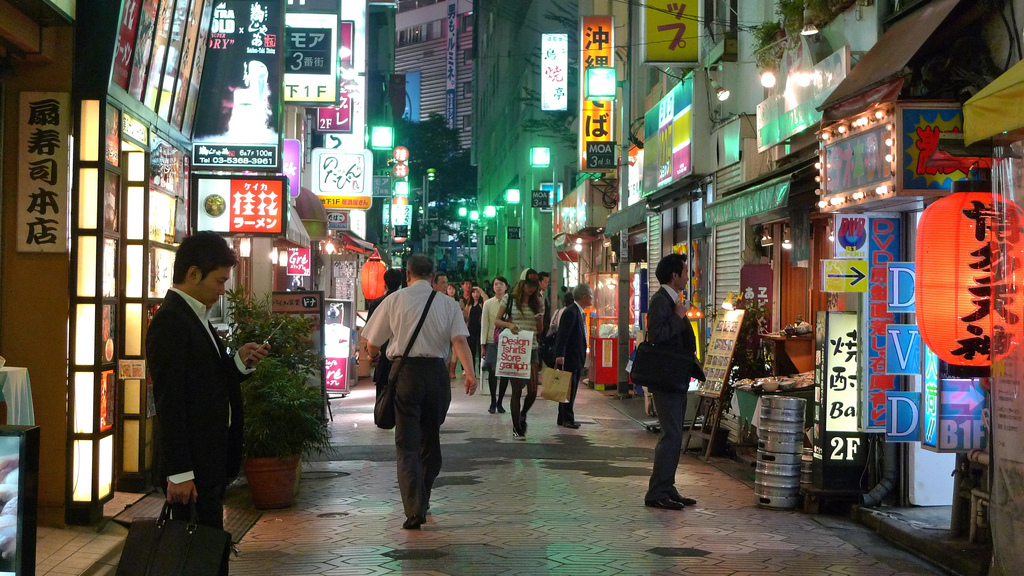
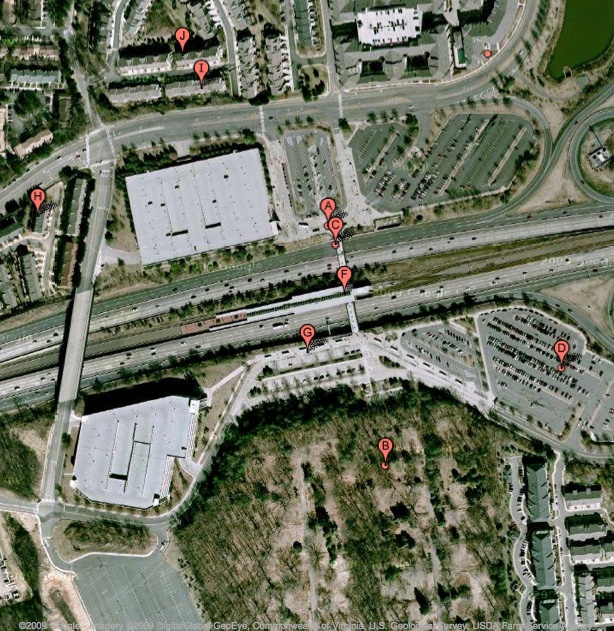


1) All three of the roommates that I had are choosing to leave either permanently or temporarily.
2) A friend who works for google who is going on a 6 month road trip in a camper van
3) A friend who is moving to Santa Cruz just to be closer to surf while we are remote
4) A friend who moved home to Australia because of how the US is handling the virus.
5) A friend who is going month to month in different cities, staying in Airbnbs, and still paying less for housing then his one bedroom in the bay area
6) A friend who moved to Austin to live with her sister
What I am seeing here is very clear also. The SIP order has removed many of the greatest parts of SF, the food, the bars, the culture, the density to be able to go anywhere and see your friends easily, and whats left are many of the problems that the city has, trash, homelessness, and exorbitant housing prices.