> It wasn’t a project without its obstacles. After stripping the backseat and the trunk of its many parts, the Model 3 refused to start. Ramirez explained that the car was reporting “all of its many faults” to Tesla headquarters via cell connection, or essentially “snitching” on the YouTubers who were trying to modify it.
I started the article expecting to see this. That said, I'm glad Tesla was good enough to "certify" their changes. I'm also curious what it took to get around the software lockdown; any links or pointers?
> That said, I'm glad Tesla was good enough to "certify" their changes.
So, when you buy a Tesla, do you actually own the car? Is there any legal precedence if they brick your car if they don't like what you're doing to/with it? Or do you sign this away by agreeing to Tesla's EULA?
You own the car (the hardware), and lease the software. The fact that the hardware is incapable of running witoutu the software (which is constantly phoning home to Tesla) is where you run into problems.
Tesla historically doesn't want bad press due to accidents caused by "bad physical changes", and so carefully control it. To get a Tesla back up and running once it's been "salvaged" has historically required a full inspection by a Tesla approved shop.
The thing that really grinds my gears is that they sell cars in certain specs which have the hardware for something, but you can't use it without paying extra. Like....you can buy one which physically does have heated seats, but you can't use them unless you pay for the option. I just wonder if wiring in a physical switch to turn on the heating is considered piracy?
Try buying an oscilloscope - the difference between a $3,000 scope and an $8,000 scope is often just a few software toggles.
It's annoying if your hardware has features that you can't access, but it's more annoying if you don't have hardware at all because you can't afford the entry-level model. Disabling features allows a manufacturer to offer a broad range of products at a broad range of prices without sacrificing economies of scale, especially when there are large NRE costs to recoup.
This strategy can lower costs for the manufacturer because there are fewer variants of the product to make. I support this in the hope that cost savings are passed on to consumers.
And I don't support this at all. These cars cost an absolute fortune(Model 3 is worth like 4 years of average salary where I'm from) and the thought that it could be delivered with some hardware that isn't functional purely because you haven't paid extra for the switch is mindboggling.
You could make the same argument about houses - imagine how much cheaper it would be if every house was built out of prefabricates, but you just had to pay extra to get the additional rooms! What arrives from the house factory has 2 bathrooms, but one is sealed shut unless you pay the fee! But that's all fine, as long as the customer can save some money?
We can already see what happens with this approach taken to the extreme - look at BMW and CarPlay. Instead of selling it as an add-on from factory for say $300, you can pay yearly to have it - about $50. And BMW says "this is great, it's saving the customers money! Average car owner has the car for 3-4 years, so they will pay less in the yearly subscription than they would have done in a one-off fee! Isn't that great for everyone?". That's nuts. Absolutely positively nuts. To extend that to heated seats - I can easily imagine some company making those things available as a pay-pass, where you pay say $0.99 to have the seats available for a day. Again, someone will say "that's fantastic! It's cheaper than paying for those seats as an option from factory, if you don't need them you don't actually pay anything!". It's absolute madness and we're encouraging this.
Although it's true that cars switch owners, cars usually stay on the road for 10-15 years so consumers with the annual fee will pay out more in the long run.
After working with Toyota in their multimedia and head unit design facility, I can see why car companies would switch from a set price of $300 to a yearly fee. It used to be that you just included a FM radio and a CD player and the driver was good to go. Now, these head units need updates every month. These updates mostly include compatibility with the latest IOS/Android, latest phone hardware, newer versions of Pandora/Spotify/iHeartRadio because people wanted to "thumbs up" their songs, newer versions of the HU OS because these new music app versions broke the old OS, newer maps and less embarrassingly-bad voice recognition. Behind these map updates, there's some tester with an H1B Visa getting paid a salary to drive around in a Sienna to take photos of discrepancies between the map and the actual road. Once you see this, it's easy to understand the switch to an annual fee. However, the largest cost comes from trying to connect to the latest phones to use their 3G/4G.
If Tesla wasn't hemorrhaging out money, I'd also wish Tesla had a cheaper car. But Tesla unsustainably lost $702 million last quarter and they need to make enough of a profit to pay back all of their debt and invest in building our future; otherwise they'll go bankrupt. The list of successful car company startups is short. As of 2016, the number of American car companies that haven't gone bankrupt is a grand total of two: Ford and Tesla. Starting a car company is idiotic and an electric car company is idiocy squared. Tesla's end goal is to make an affordable sports car, just as the Ford Model T was an affordable car for the masses that brought Ford from 9% market share to 61% market share. They just can't bring the costs down yet while they are hemorrhaging so much money.
On the surface I think it really pricks you but it would be like buying an iPhone and wondering why you have to pay for a song subscription when the phone has the hardware to play them.
IMHO this falls into two buckets for Tesla that both align with the vision:
a) You pay a one time software cost then benefit from cloud updates for the lifetime of the car. Those aren't free for Tesla to do, on any level. Would it be nice if you could opt out? Maybe but this isn't about _you_. It's about driving a technological change which you may benefit from. Buying a specially built car without those would likely be _more_ expensive than just offering one with the features switched off. So if it pleases you to pay 10k USD (made up number) _more_ for a car that you can never upgrade just so you aren't offended by software you can't use then....sure?
b) In terms of their mission in benefits them to operate in this way. It's a quiet spur to other manufactures who aside from Nissan don't seem to quite get. Tesla has shown that you can build a $35K USD car that competes with everything and cast a lower cost of ownership over 5 years than a Prius. I remember early discussions coming out of VW that convinced them to go all in. Quite simply that said, wait - if the base Model 3 has a theoretical cost of 35k and that some non-trivial percentage of that is autonomous hardware, redundant and constant cellular communication, an over top the drive train to handle a 3.5 second 0-60 launch, and a bunch of tech goodies then we can make a 20k car that's mechanically just as good with all the bells and whistles of a modern sedan...just wont't be a futuristic space car.
This is more common than you think. The CPU in your computer might have more good cores than you are allowed to use for example. You paid for 4 cores? You get 4 cores, but your chip might actually have 8 good cores, just locked because you didn't pay more.
My understanding is they test all the CPUs and differentiate them by the test results - you might have four of eight cores sitting there unused that are fine most of the time but have some weird edge case, so they disable the four for QC purposes and sell it as a lower end processor. It's not quite the same as locking them down just to sell them as a lower end unit, they'd rather it worked perfectly and sell it at the higher end.
Unless you're talking about Intel's "upgradeable" processors [1] which you could pay more to unlock performance (but that was unlocking more L1 cache, not cores AFAIK)
Sort of. They definitely perform this sort of binning, but the demand of the parts in the market and the success rates are things they have to estimate beforehand.
If they'd run out of the higher-end binned parts, they have sold out. But if they run out of the lower-end binned parts, they just relabel the higher-end parts and keep selling both lines.
Yield also isn't constant, so odds are the number of parts binned higher goes up over time as well.
I came across backup appliances recently that work on this principal. They literally have TBs of unused disk space in the box in my datacenter, but require an additional license to activate. It makes me very angry!
Why does it make you angry? The price of the appliance would likely be the same if that spare capacity was not pre-installed, and the cost of an upgrade would likely not change if hardware was delivered when the upgrade was purchased instead of being pre-installed.
They have calculated that enough customers will upgrade to pay for the hardware installed in the customer appliances that don't.
What's wrong with that? You don't have to wait for the hardware if you buy the upgrade.
It's a false scarcity that's annoying to the customer. Unlocking the extra capacity costs the vendor nothing. The consumer has paid enough money to have access to that storage without hurting the vendor, but the vendor refuses to grant access to that storage capacity.
If I had purchased such a product it would leave a sour taste in my mouth. The next time I needed such a piece of equipment I would try to find an alternative source.
Here's an analogy. If I'd purchased a box lunch of a juice box, sandwich and chips, but surprisingly they also included a cookie that is in a special package which will only unlock if I pay another $1 I would be upset. Of course, I could just throw the cookie away, package and all. I may not want the cookie anyway. But that's so wasteful! The vendor can afford to include the cookie at the price I already paid, but is solely using that cookie as a way to extract more money from me. It's wasteful.
>What if the alternative is to not offer the cheaper product at all.
The alternative that's been around for centuries is called "having a sale".
Say, you make 1000 units of something. Each unit costs X to make. You need to make Y profit per unit to sustain your business.
The bad news is, not everyone wants to pay X+Y. The good news: some are willing to pay more. The supply-demand curve thing.
So what you can do is: sell 500 units at X+2Y. Then have limited-time sales throughout <time period> at X+0.1Y.
This way, you never lose money on a sale, and you make the money you wanted to make. The customers that want your product here and now* pay for that premium. The customers that need your product will pay up as well, as sales aren't a guaranteed thing. And the rest will wait.
With smart hardware, someone had a genius idea: have the same breakdown in prices, but also cripple the products you sell at a lower price. Make your money faster by selling at both price points simultaneously.
Nothing* wrong with trying to do that (from the seller's side).
Nothing wrong with being disgusted with the wasteful practice it and calling it out (from the customer's side).
* aside from the waste aspect, repair aspect, customer hostility, artificially high margins probably being result of a monopoly/lock-in/supplier scarcity, and a plethora of other things.
The vendor is not only requiring you to pay for the physical goods you already have, but your payment is subsidizing the waste of the other consumers not purchasing the option. I pay for mine, and I pay for their unused resources. Most artificial tiering in unethical.
I think a more apt analogy would be those hand trucks that come on U-Hauls, where it's already physically on the truck, but just sealed up unless you pay a little extra.
So if you don't buy the option it's not destroyed forever, but can be utilized by future users once you move on. This allows them to provide customers with instant access to extra value by charging them enough to support putting a sealed hand truck on every U-Haul, or extra terabytes in every account.
It leaves a bad taste in my mouth that you can pay so much for an object and you essentially don't truly own it and can't do whatever you want with it without it phoning home and asking permission from its true owners who can capriciously brick your device for any reason they want.
Based off their actions in the past, Tesla will do as much as they legally can to avoid bad press due to accidents in a Tesla. And if you are in a publicly covered accident, you can be sure that data will be used against you in the court of public opinion (see "he took his hands off the wheel prior to the accident" comment from Tesla about the gore-impact fatality).
I'm glad for the sake of the future of electric vehicles that Tesla is retaining so much control, but as a customer/user I'd rather wait until more open options can come down the path Tesla's blazing.
Read about new farming equipment. In US there are hackers who are hacking farming equipment, so farmers can do their own repairs. This is basically where car manufacturers will eventually try to go and it is kinda what Tesla does.
Just going to hop in and give a bit more information regarding this situation. I assume you're referring to John Deere and their attempts to stop anyone accessing the software on their machinery.
The situation is complicated because John Deere leases out a lot of their equipment in a financial lease (they do operating leases too but they're not affected by this). In this sort of lease the ownership is technically with the lessee. So I can see the reason John Deere wants to stop people who legally own their tractor from tampering with software. It's still a lease and at the end of it John Deere might get back a working tractor (depending on the life of the lease), so they don't want it to have been used in any way that could damage it. It's a legal protection and I don't think it's as malicious as every journalist and commenter tries to say it is. If you look into their financials you'll see they have 10s of billions of dollars in machinery out that is leased out, they're just trying to protect it.
presumably they have to do some refurbishing and rehab when they get it back anyway. why not re-flash all the software then? or, somewhat more draconian, add in explicit penalties for people who tamper with leased vehicles, with a contract clause to that effect?
i mean, i don't doubt that the concern you mention might be part of it. but it sure is also a convenient way to lock people out of servicing their own stuff. and i doubt they're eager to give people the ability to service their own equipment without a strong public demand for that ability.
so the public should keep demanding that (as opposed to relying on the altruism of a large corporation).
Do you think you "own" the car you drive now? You don't. Not since cars came with any computers at all has anyone fully owned their vehicle.
I don't see a problem with this, in most cases, and I only sort of understand why people get upset about it. It's simple and easy (and fully legal in most states) to just design and build your own vehicle to your own specifications, provided you meet minimum requirements regarding road worthiness.
You certainly can truly own your own commercially available car if you're willing to hire a lawyer, negotiate, and pay for a license that includes whatever it is that crosses the threshold into whatever a given person considers true ownership. And I can tell you immediately that this license will cost you at least 50 times the list price of that vehicle, will not be a transferable license, and you will not be allowed to sublicense it.
It's not that you can't own your car, it's that no one is willing to pay for true ownership, because it is entirely impractical and unimportant to fully own a car in today's world.
You can replace the entire thing with a compatible and programmable module, if people care enough to develop one. There are now cars from the 80s that are modern enough to have computers, but old enough that the ECUs are starting to deteriorate, and still appreciated enough that people repair or replace them.
Example: (not an endorsement and I have no experience with this product)
You can swap out the entire thing if you want and do a reflash. It's not a beginner job but it's also not impossible, or illegal (if it still meets emissions, but that's on you)
another point of view is that freedom to tinker and repair shouldn't be limited to the super-rich, and that what you're describing isn't practical for the vast majority of the population.
i have exactly zero problems with society collectively pushing for the right to repair against greedy companies who'd rather not give it.
which is to say, we should legislate a strong right to repair, so that denying it is clearly illegal, so that we can take companies to task using something other than the invisible hand of the market.
I happen to own a car without any computer control, and for which the parts for the engine and drivetrain are cheap and readily available with a large aftermarket that's existed for many decades. It might not be the safest nor very environmentally friendly, but to me the ease of repair, simplicity, and freedom are what lead me to make that choice. If EVs were as "ownable" and came without the privacy-invading phone-home spyware as well as had a more sensible UI, I'd consider getting one for trips around town.
Another comment here compared Tesla to Apple, and I think that's a great comparison. I wonder if there's a strong correlation between users who love/hate Apple products and the same opinions of Tesla?
One thing missing from her story. Did she pay cash for the Model 3? Because if she's making bank payments on her new Tesla I'm not sure she legally can cut it up.
I'm not saying that what she's done isn't amazing. But if her bank learns what she's done they will not I would think be very happy.
Depends on the loan. In general, you can modify whatever you want with a car under loan but NOT under lease. However, modifications usually mean your car is worth less and you have a higher chance of being underwater, so could result in an additional financial liability in the case of a repo.
She makes anywhere between $18k - $30k per month from patreon alone, on top of her youtube revenue. I think she's well past being burdened by such issues.
I was as well, but everyone involved here seems to have a really good head on their shoulders and obviously have the skills to back it all up.
I'm watching the youtube video posted on her channel [1], and I noticed that she brought in a lot of people with unique skills to ensure this was done right.
Working with Simone is a guy who has experience salvaging and rebuilding teslas, a guy who has experience as a race mechanic and has built electric racing vehicles, and several others with similar experience in critical areas.
And all of those skills really show! The truck has reinforcements added where needed, it has a roll bar added, windows that look like they came from the factory, telemetry and safety systems in the car are disabled where necessary and preserved where they can.
It's actually impressive how much this isn't just a "cut up a tesla to make it look like a truck", this really looks like something usable!
I am worried that they did this to a unibody vehicle though. Most of the SUVs that people do this to are body-on-frame so the structural integrity comes from a frame that isn't being modified. In a unibody car, the structural integrity comes from the bodywork. Without pieces of the body, it loses the ability to stay intact. Like the article mentioned, they cut pieces out and the car started to buckle: every bit of body work they cut out was 100% required to maintain the structural integrity of the vehicle.
I hope this does not become a trend. I've seen Jeep Cherokees like this, also unibody vehicles, and I've seen them buckle when hitting bumps. Simone and her team knows to reinforce them. I'm not sure most people do.
Eh, this should be no big deal. The passenger cabin shouldn't be doing any crumpling so you're fairly free to throw metal at the problem. All the mods are in the rear and there's no airbags for rear impacts (most of the job of crumple zones is to buy time for the car to detect it's actually crashing and deploy airbags) so any difference is gonna be minimal. Maybe the roof structure is compromised but once again that should never crumple so you're free to throw metal at the problem. Obviously there's more details to it than that and there's more and less elegant ways to "throw metal at the problem" but that's more or less what real automotive engineers do when a cabin design needs beefing up. Sure the lack of complex simulation software for this build might have left it with some Achilles heel but plenty of cars leave the factory that way too.
Properly reinforced, it's not a problem. Improperly reinforced, even if passenger safety is not compromised, everyone on the road is in danger if an improperly modified unibody vehicle folds in half on the freeway.
You can mod the main board to allow service mode to deal with any faults. The main crypto tie is battery and inverter. Both have chips that need to match. As she was starting with a whole car that would not be a problem. She just had to chase down faults from missing components.
It does look cool. TBH, I've never thought much of these pickup truck/car hybrids (which have a fairly long history) from a practical perspective. You get a car without a lot of interior space and a pickup bed that is too small for a lot of purposes. But it's a nice aesthetic.
There are a lot of people who don't need backseats, don't need a full-size pickup for towing or very heavy items, but need to be able to carry 4x8 sheet goods, large furniture, or sports equipment like bikes, kayaks, etc.
IMO there are very few people who actually need a pickup truck for towing or very large/bulky items, but they're still very popular since there aren't great alternatives in the US due to the chicken tax.
I've packed a Saturn Vue full of hay. My wife is better than I am at it: I used to be able to fit 7 small square bales, she's been able to fit 9 more consistently.
However, the fact that it can be done doesn't mean it's the vehicle for the job. We have a pickup truck, but I'm not a big fan of them.
Same here with a Subaru Forester. Even though I have a giant diesel RAM pickup we typically use the Subie to haul stuff since it's easier to get stuff in and out.
The RAM is so tall it's unwieldy to get stuff in and out of the bed. I really need to sell that thing and get something practical.
>but need to be able to carry 4x8 sheet goods, large furniture, or sports equipment like bikes, kayaks, etc.
I'd argue you can do most of those things with an SUV or really any car with a roof-rack. I rarely need a back seat but I do appreciate having interior space to keep/transport camping gear etc. in my car. An open bed will tend to work better for some large awkward items but this isn't even that big a bed and you can always rent a truck or trailer for a day.
But really, I'm making a largely rationalist argument and a lot of people in the US just want a pickup.
I really wish someone would bring back truly small trucks like the old Rangers, or even something like an el Camino. Having a truck is really nice sometimes, but driving a tank around every day seems just silly.
I agree, but I'd be somewhat satisfied if trucks just weren't so damn tall now. It sucks to have to climb into or flop up onto the side of the bed just to reach your tools. Lots of older trucks weren't made this way.
Brats and Caminoes could make sense when having bucket seats in the truckbed was allowed (though obviously dangerous). But nowadays I guess it only makes sense for hauling white goods home from the home center and such.
Little pickups really shine when you say "hold my beer" and then make them do something that people in a higher tax bracket would use a bigger truck for. It's socially unacceptable for the kind of people who Teslas are typically owned by to be doing those kinds of things (don't get me started) a UTE like this is a perfectly fine replacement for the small pickup that most them would consider buying.
Yes, a Ranger EV is going to run circles around this from an "ability to do truck things" perspective but if the you're just doing homeowner things with it then the difference really doesn't matter.
There's a reason that basically every auto review comparing a Tesla to something is comparing it to a German "driving machine" in the same price bracket. They're not idiots, they do market research, they know what models people are comparing to each other.
Is HN really to immature to handle the fact that the Tesla demographic is substantially more upscale than the entire new car buying demographic (which itself is leaps and bounds ahead of the overall car-buying public)?
What are the economics of the YouTuber when it comes to this?
If the videos bring in $x thousand a week from adverts then is that how it all works?
Then get Rich from Rich Rebuilds in so subscribers get added to both channels?
If the car is paid for over a period of a loan then the revenue stream from the YouTube income pays, but, to the viewer, it looks like a $50K car has been hacked to pieces.
I do find it cool how Rich from Rich Rebuilds is now the expert. I am sure he feels impostor syndrome with that but he has put the work in and deserves his celebrity status.
If anyone has any guestimate numbers on how this works out as a business proposition then I would very much like to know. If it is lucrative then I just might have to do myself a 'Tesla campervan YouTube series'...
So after Patreon take off their 8% that is $250K per year.
Then the views from the videos. Becoming a millionaire from a video channel that is just about yourself is ridiculous.
Anyway, I won't be subscribing. I prefer stock English rather than spoken with 'upspeak'. Someone just talking about themselves with every sentence ending with 'upspeak' makes me find something better to do.
For people who don't run a business 250k per year sounds like a lot. But after paying employees and contractors, office space, workshop space, materials, equipment, insurance, airfare, taxes, ... I'm not sure that there's enough left to call them a millionaire.
Looks like those downvoting your comment do not understand the reference.
Simone's 'claim to fame' was originally on the r/ShittyRobots subreddit, where she posted examples of her robots that performed tasks in a humorous ("shitty") manner, but obviously required exceptional engineering and design skills to create. She is quite famous there.
Her video a couple weeks ago about her radiation therapy/making a lamp out of her radiation mask is easily the most powerful "maker" video I've ever watched.
Saw a similar looking Tesla modified into a truck being trailered in Windsor, CA last week. Tried to grab a photo but couldn't get a good one. Anyone else seen it?
Using oil does not mean approving of everything oil companies do. Especially when there are not alternatives for things like flying.
"Being an oil company" is not necessarily an inherently bad thing. Being one of the major oil companies in 2019 is -- but that will, hopefully, change.
I know people who have given up flying for this very reason. She could have chosen not to go and to conduct any business over the internet (I'm assuming she was flying for business and not for pleasure).
Looks nice, but I wonder how this will stand the humidity and time test respect to a unmodified tesla. Electric and water does not mix and this looks like a red carpet for rainwater. I hope they will be meticulous in this aspect and seal carefully.
She says towards the end of the video that this is just the start and the long-tail of work is still to come. She specifically calls out waterproofing.
Simone has a pretty stellar track record of creating high-quality and durable products. For some more of her work, check this video exposition: https://youtu.be/O61wJPNJgZQ
Is this a joke? Most of her inventions are purposefully designed to fail, and they do that extremely well (I believe she is very talented both as an entertainer and a builder). But as far as I know she has zero experience building long-lasting products that stand the test of time.
I'm not saying she can't do it or won't figure it out - but your comment honestly seems more like an argument to the contrary to me.
They built a solid looking roll-cage into the rear half of the vehicle (alongside and under the bed, as well as the roll-hoop behind the seats). One of the major contributors to the project has a background in building race cars, so presumably they've got the safety aspect covered.
This is a cool, fun and obviously impractical project. It makes for good content and showcases some interesting engineering and fabrication skills.
So could someone please explain to me what is to be gained by posting comments complaining about the use of the word "generation" or the exact definition of "truck"?
A lot of this is just the contrarian dynamic: https://news.ycombinator.com/item?id=20101711. The thread now has a bunch of curious, enthusiastic comments, just like most HN threads on cool projects eventually get.
The trouble with an indignant anti-crap objection is that it amplifies the crap it's objecting to. Usually it gets upvoted to the top, since people love defending the unfairly criticized and everyone loves indignation. But then it sits there, choking interesting discussion with meta fumes. (I've marked this one off topic now.) Crap subthreads usually get moderated by users, but that doesn't happen with their anti-crap counterparts.
Better ways to combat crap are to (a) downvote and flag, or (b) post something interesting and on-topic. Also, when you notice that a thread is still dominated by the negative wave, sending a heads-up to hn@ycombinator.com is helpful. We're likely to see it sooner that way.
Yes. Not only do they do that for men, but Elon specifically, and even calling him out on taking credit for work that an uncredited woman working for him did.
Yes? I saw some number of comments along these lines on Adam Savages' 3D printed titanium Iron Man suit. That "he just paid someone to do the hard/interesting part".
And I've seen comments along these lines on Colin Furze's builds. Among others, mostly men.
It seems explicitly sexist to leap to the defense of female creators in this way. Why not just assume they can handle the criticism, just as well as males can, and don't need anyone defending them?
Agreed HN can be fairly negative. Especially anything regarding taking a chance or tesla. All those big tech IPOs go back to their HN launch they all have negative comments.
I agree. I tend to see the "I'm smart enough to solve any problem, even if I know nothing about it" personality trait expressed much more in software developers than I see in other people.
It's one thing to have self confidence in your reasoning abilities - it's another to think that, where other very smart people have struggled with finding a certain solution, you can just drop in out of no where and cut the gordian knot.
Unless, you can drop in out of nowhere and cut the Gordian Knot. If we follow the analogy of the story about Alexander the Great, maybe the pattern involves a story about someone who comes in and decides to ignore conventions or "the way it's always been done" because they have some insight from direct experience or first principles?
>The term originated in the 1930s, where it was used to distinguish passenger-car based two-door vehicles with an integrated cargo tray from traditional pickup trucks
We're not focusing on the states no. I live 10km outside one of the largest Danish cities and work across town, that is not doable with public transport or biking (biking would add 10km to my commute). It becomes even less possible when my child starts daycare and I have to pick her up no later than 17:00.
It's not even that I can't take the bus, it just adds 1 hour and 45 minutes in the morning and at least 1 hour in the afternoon.
Due to Danish taxes on cars and the high starting prices on electric cars it's becomes a problem for most people.
You can't even take the train across the country in Denmark, it takes to long. If you have a meeting at 9 in Copenhagen, you have to leave Aalborg (400km away) the day before. You have to fly or drive, which will be significantly cheaper anyway.
This depends a lot on where the person making this claim is from. Most of my acquaintances from rural areas all drive cars, not out of choice but necessity.
However, everyone that I know who lives in the city don't drive and never owned a car. It makes a lot of sense for those people to wait until their late 20's to get a car since there are good alternatives to driving.
It makes sense for them to wait until they are able to afford a car that is electric.
Electric cars are more affordable than ever and the trend will continue. Kids who are 18 years old today will without a doubt be able to get an electric car in 10 year without breaking the bank.
Right, generation does not necessarily have to mean age group.
People talk about Git and Mercurial being a different generation of source control tools compared to Subversion and CVS. That refers to things rather than people, but the point is that the generation can refer to a set that is a distinct evolution of another set.
The e-waste on those early generation electric clunkers could end up being just as big of a problem as gas cars as far as I can see. I would love to be proven wrong, but until they start making the heavy metals and REE containing components much more recyclable (and actually recycling them) we are doing pretty environmentally irresponsible mining and manufacturing to make these disposable vehicles.
These cars' batteries aren't ending up in landfills, they're being recycled via reuse, which is even better than the recycling you were probably imagining. As soon as an old first-generation EV is totaled and shows up in a salvage yard, the battery modules get bought up by someone online. There's tons getting sold every day on eBay as well. People are making home storage batteries (for solar systems and the like) from them mostly, or electrifying other vehicles, or other hobby projects with them. There's also a few companies importing them to offer aftermarket battery upgrades, repairs and refurbishment for these cars in markets they're not officially sold/serviced in. The car makers also have their own recycling programs; Nissan recycles used LEAF batteries into home storage batteries called xStorage for example.
unless someone has a plan to burn and spew the old cells into the atmosphere, causing the earth to heat up, it will never be as big a problem as gas cars.
(that is the worst case, where auto makers just bury the cells in the ground. thankfully, that's not actually the case. they reuse battery packs and are scaling up techniques to recover the rare metals from them. you haven't heard much about this at scale because few packs have actually hit their end of life.)
For heaven's sake, not this again. Please read the site guidelines. They include:
"Eschew flamebait. Don't introduce flamewar topics unless you have something genuinely new to say. Avoid unrelated controversies and generic tangents."
Vandalizing a thread like this is something we ban accounts for, so please don't do it again.
I would guess that out of all those people, she is the one who, if they were not involved, the project would not have happened. The other people worked hard, but if they had not been interested, she could have hired someone who was.
Conception and putting money on tbe line deserves credit. There would be no endeavors if there was no incentive of credit. But yeah nice HN stereotype of silicon valley.
>Conception and putting money on tbe line deserves credit.
I suppose I can agree, but I wouldn't put conception of an idea in the same league as offering money towards it.
>There would be no endeavors if there was no incentive of credit.
You can call this an uncharitable interpretation, but are you arguing that people would never do anything if there weren't wealthy people with money offering it in exchange? That is absurd and provably false, with all of these hobbyist and otherwise unpaid works.
> There would be no endeavors if there was no incentive of credit
Speak for yourself, the vast majority of tasks in the world aren't really worth bragging about, and credit doesn't put food on the table.
That said in this particular case, the people who built this certainly deserve credit as they clearly have great skill and vision. But that's not what our society is built on.
Well, often the directory and maybe a few actors get big credits on movie posters, while the full credit sequence can list hundreds of other people: clearly those other people will have done most of the work just by their sheer numbers.
Doesn't mean that the directors prominent place is unearned though.
Do you have a link to the article explaining how little of the work she actually did on the project? It would be interesting to read that to counter-balance this one.
Other than converting the trunk and passenger area into a cargo area, this hardly classifies as a truck. It appears that little was done to improve the vehicles handling off-road. The wheels and tires look to be stock meaning no gains in traction. No mention of suspension or ground clearance which means it will still be limited to fairly well groomed and paved roads. But as I'm familiar with Simone's content so I'm aware this is pretty tongue in cheek.
Well as someone with a Mini Cooper with low-profile run-flat tires, I can tell you that SF potholes will destroy road cars. I’ve had two (expensive) tires ruined, and it started rattling like hell from all the shocks soon after we got it. Maybe full off-road with a lift kit is overkill, but sometimes I wonder.


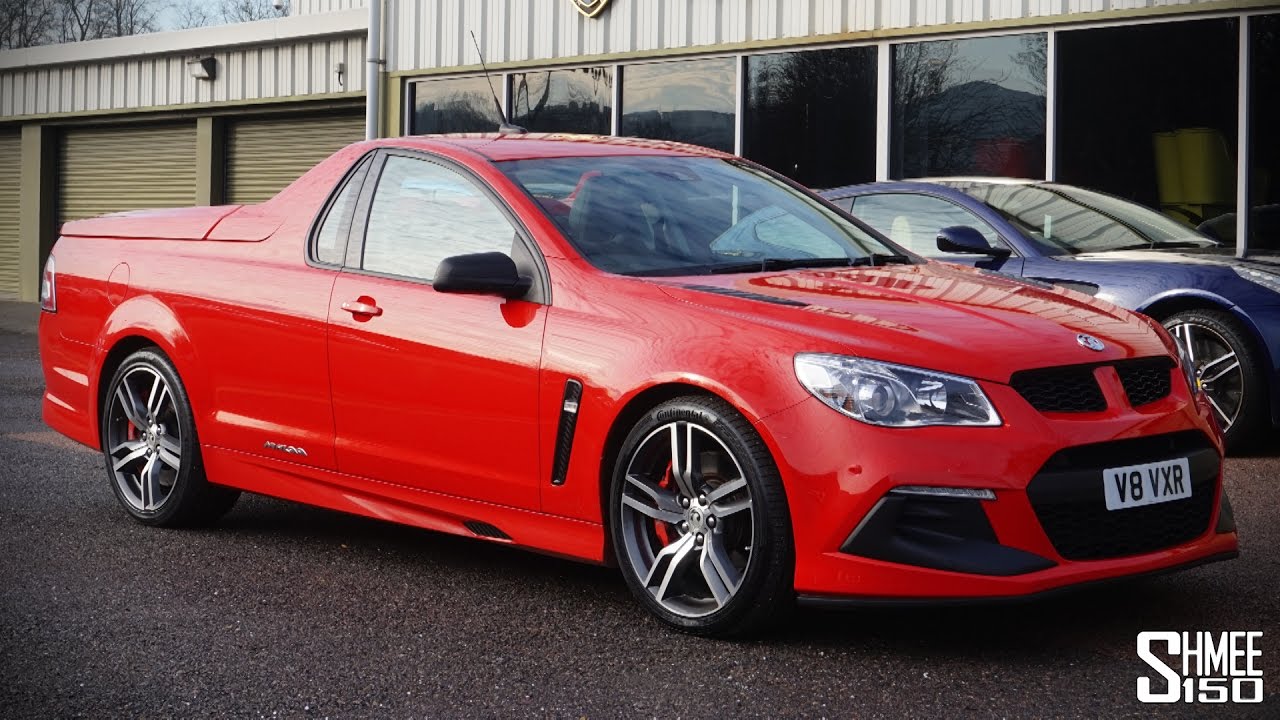
I started the article expecting to see this. That said, I'm glad Tesla was good enough to "certify" their changes. I'm also curious what it took to get around the software lockdown; any links or pointers?