It would be ironic if the lack of 737-MAX category for reports is why these reports never made it to the people who needed to see them, which caused the issue to go unnoticed.
1555013 is pretty damning in telling how the airlines treated the MAX as the same type as the 737-800:
"I had my first flight on the Max [to] ZZZ1. We found out we were scheduled to fly the aircraft on the way to the airport in the limo. We had a little time [to] review the essentials in the car. Otherwise we would have walked onto the plane cold.My post flight evaluation is that we lacked the knowledge to operate the aircraft in all weather and aircraft states safely.
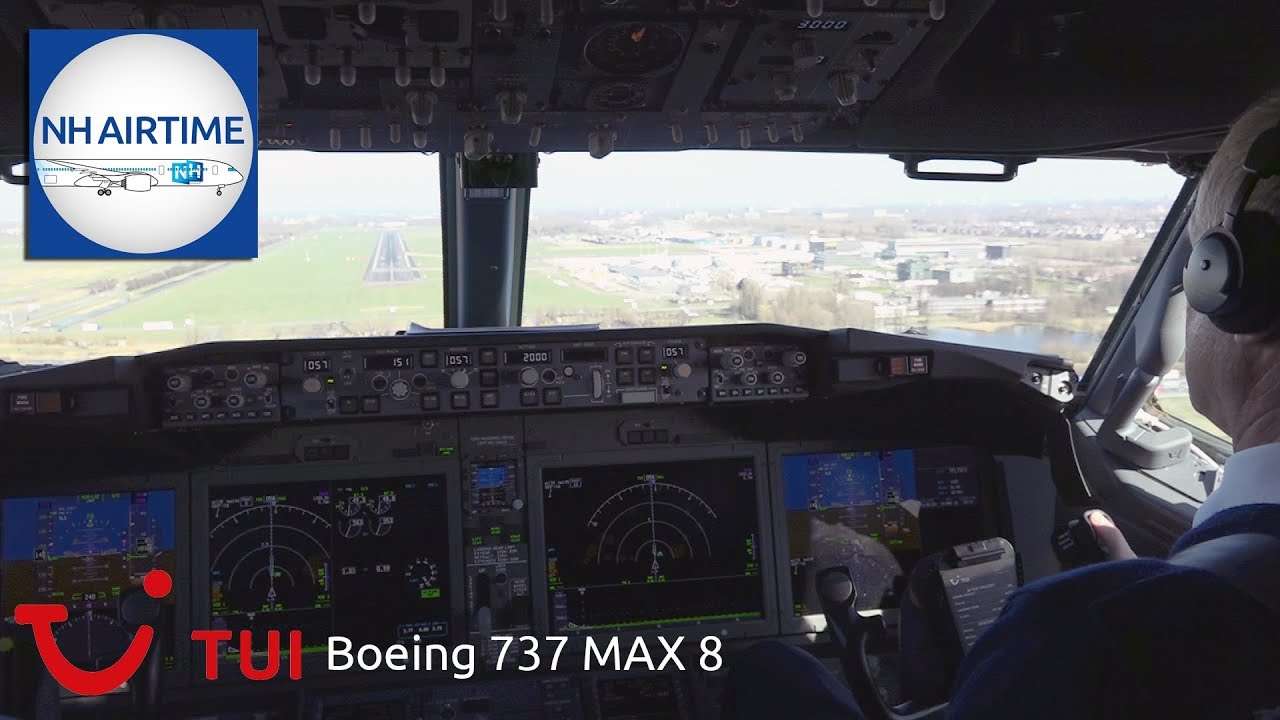
The instrumentation is completely different - My scan was degraded, slow and labored having had no experience w/ the new ND (Navigation Display) and ADI (Attitude Director Indicator) presentations/format or functions (manipulation between the screens and systems pages were not provided in training materials. If they were, I had no recollection of that material).
We were unable to navigate to systems pages and lacked the knowledge of what systems information was available to us in the different phases of flight. Our weather radar competency was inadequate to safely navigate significant weather on that dark and stormy night. These are just a few issues that were not addressed in our training.
I recommend the following to help crews w/ their introductory flight on the Max:Email notification the day before the flight (the email should include: Links - Training Video, PSOB and QRG and all relevant updates/FAQ's)SME (Subject Matter Expert) Observer - the role of the SME is to introduce systems navigation, display management, answer general questions and provide standardized best practices to the next generation aircraft.Additionally, the SME will collect de-identified data to provide to the training department for analysis and dissemination to the line pilots regarding FAQs and know systems differences as well best practices in fly the new model aircraft."
Wow. That's the same type of training material we would get when I worked at a coffee shop (large chain) and we came out with a new drink. Maybe even less - At the coffee shop we had to do a test with the manager for them to see that we could make the new drink successfully to standard.
Wow... I wonder how much of this could have been avoided if the 737-Max had just been given an entirely new model name like "738".
I'd assume that when the 777's came out even pilots with experience on the 767 and other Boeing planes were still given ample training beforehand. The minor difference in the Max's model name disguises the seemingly large difference in their operation.
Boeing fought extremely hard to avoid having this happen, since then any pilot wanting to fly the Max would have to first achieve a type rating certificate for the new type of plane, and the FAA would have to test and certify it instead of Boeing "self-certifying" that it was a type of 737.
The determination to shoehorn what aerodynamically kind of is a new type of plane into the 737's type rating seems likely to be the root cause of these deaths.
> seems likely to be the root cause of these deaths.
Given that investigation in both accidents is still ongoing and all we know is wild speculation your conclusion is premature even though it finally may turn out to be true.
You're quoting the phrase "seems likely". It's not a conclusion. It's my guess at what's most probable based on what we know today.
(Also, I don't agree that we only know "wild speculation" about the Lion Air crash. The investigators have told us much about the proximate cause of the crash, even though their final investigation is not yet complete.)
Maybe it’s my English. What probability do you assign to “seems likely”? Above 50% (the way I read it)? Or does it mean it’s a possible outcome among many others, all with very low probability?
I would read it the same way, but personally I would want to attach an additional qualifier: It's likely that this is one of the causes.
There may or may not be something inherently problematic about the way the MCAS works, but more thorough training would likely have lowered the chance of these accidents happening - having the same type rating was one of the root causes for the lacking training
Flip that around: would you expect that pilots flying a new aeroplane without any conversion training would be more likely to cause an accident.
It's a damning indictment of Boeing, and whichever authorities let them get away with it, that they pushed through an aircraft with a different pilot UI/UX knowing that pilots would then be under trained when using it: like someone said we train baristas better.
I've driven minibuses before and always ensure to get an hour of driving a new model before taking passengers.
At least in this particular instance... how is it Boeing and aviation authority's faults that pilots are given an hour's notification they'll be flying a new model of plane?
That would seem to fall directly on the operator / carrier.
Boeing takes responsibility if the training manuals were not comprehensive. Aviation authorities take responsibility if they under-mandated training. But ultimately neither know a given carrier's scheduling and pilot allocation.
Because their pilots had previously told them they didn't feel comfortable? (See report)
At some point this falls back on nannyism. Either you have a functional company, where your employees are empowered to communicate internally, and your company does something about it... or you don't.
Boeing's job is to engineer the billion things required to keep an airplane flying. The government's job is to validate Boeing performed due diligence and mandate what training is required to the carriers. The carriers have a job too.
I wouldn't be surprised if Boeing pushed hard to have it same type certified. Why wouldn't they? Ultimately, regulatory agencies agreed. Maybe that was correct, maybe not.
But absolving the pilots' direct parent company of responsibility is bullshit. Aerospace is a different industry, but it's not that different vis what a healthy, functioning company does.
Boeing was doing what the airlines wanted, which is provide a new more efficient airplane that requires minimal training for existing 737 pilots to fly, much like the A320neo. Airlines are the ones who schedule the pilots and their training, and from what we have heard, there _is_ training for pilots new to the Max that apparently some airlines have not administered.
Ultimately Boeing and the airlines share responsibility for ensuring the training is adequate, thats why many airlines have lots of training that goes above and beyond what Boeing supplies.
To be fair, this is extremely common, this isn't something Boeing invented yesterday. The whole series of Cessna business jets are on the same type rating. The A330/A340/A350 share a type rating. The 757/767 share a type rating. There are almost certainly more differences between a 757 and a 767 than a 737-800 and a Max.
Not that 90 minutes on a tablet constitutes a reasonable level of training though.
Initial eyewitness reports are of fire, smoke and debris trailing the aircraft before it went down. I would caution against the use of the word "likely" here.
The Ethiopian Airlines CEO has disclosed that the pilot experienced a control issue. So a fire, if one existed, was probably a consequence, not a cause.
It wouldn't even be surprising if the aerodymanic stress had caused a breakup, though that doesn't seem to have happened judging by the crater.
Correct me if I'm wrong, but I remember reading somewhere that this is one of the reasons Airbus aircraft are popular with airlines and pilots: their fky-by-wire common cockpit allows a pilot certified on say the A320 to safely fly an A330 since all instruments, displays, controls and what-nots are exactly the same, only a quick "refresher" certification is required, so pilots get a feel for the aerodynamics and response of the bigger/smaller model they are certifying for..
Why would boeings shuffle around such critical human+machine interfaces?
Even if Boeing didn't change anything in the UIs, different models have different features and pilots need to know these differences before the airline can say they can safely fly a given plane.
That's just awful practice! It's got a name, use it!
(Yes, that sorta stuff annoys me ;) e.g. people talking about v2.04 of $project, when they really mean v0.204 - sure, I get it, but at some point the searchability for issues on the internet is going to be screwed!)
> The instrumentation is completely different - My scan was degraded, slow and labored having had no experience w/ the new ND (Navigation Display) and ADI (Attitude Director Indicator) presentations/format or functions (manipulation between the screens and systems pages were not provided in training materials. If they were, I had no recollection of that material).
Are these changes not noticeable until you're in the air or should pilots have been refusing to take off in a plane they're not familiar with?
> Are these changes not noticeable until you're in the air or should pilots have been refusing to take off in a plane they're not familiar with?
I'm not familiar with the plane and I'm not a pilot, but from reading the report it sounds like they were able to do the checks OK – but that took time.
It also sounds like the instrumentation displays on the plane very helpfully have modes and some kind of menu system. The references to stages of flight make it sound like these modes become available dynamically. So it seems quite probable that it isn't possible to actually navigate the screens in the air in the same way as on the ground.
Compare the 737 MAX8 cockpit [0] with the 737-800 cockpit [1] and the 737-300 cockpit [2]. Then consider that all of these planes are under the same type rating [3] – so a pilot trained on one of them is good for all of them.
There's also a lot of commercial pressure on pilots to not refuse to take off in a plane – which could lead to bizarre consequences like the airline questioning their competence for their current type rating.
If you want an RCA of the last two crashes in 737 MAX's, please see the parent. Ridiculous gyrations to avoid new aircraft regulations creates dangerous scenarios for pilots and passengers.
This is I think what is very very close to the truth. Some pilots are trained on the MAX, but later, untrained pilots are arbitrarily assigned to these planes. I am not sure that even emails help - with the amount of newsletters, and ad mails we receive, this email might be missed, or even when read, its importance might be missed.
As a passenger I would feel safer knowing that last information and instructions are not send a day before the flight but a pilot gets actual training?
However, Boeing seems to have marketed this plane under the regulatory fiction that it was the same plane as the 737, and that therefore no retraining was needed.