Where were all the finger-based touch screen back then? Do you remember how many people said it wouldn't work, because either someone tried it or failed, because it didn't have a stylus that was "clearly better", or because it didn't have a hardware keyboard?
Look at the current market?
You want to bash Apple, feel free: there's hundred of reasons to. But at least give credit where credit is due. The Apple iPhone did revolutionise an industry, and a LOT of tech "experts" and geeks said it was going to fail and it was a toy. Now it's just "one of many".
Where's the Apple bashing in my reply? Where did I not give credit?
I was just trying to say that a "smartphone retrospective" ought to include some more information than merely: "Well, we had the Treo, and then 2007 happened."
--
Btw, do you notice that your "it didn't exist before, and people said it wouldn't work" line of argument applies equally well to the devices I mentioned...
1996 / Nokia: "Who wants a small laptop crammed inside a phone?"
2000 / Ericsson: "A phone needs real hardware keys. This touchscreen stuff won't work."
2003 / MyOrigo: "Sensors on a phone? That's useless."
True, point taken (and I upvoted you as an apology). However your post still came out as a bit of a "Geez, Apple wasn't that special", though admittedly then I went a step too far and just assumed you were posting some anti-Apple stuff. Sorry for my prejudice.
However a few things to say. The Nokia messenger was imho awesome, but it did not caught on, and eventually Nokia itself killed it (only to revive it many years later).
I thought the Ericsson P800 (correct?) was great, and I still do. However I also think it's representative of part of the problem too: Ericsson didn't feel like losing anything, they crammed it with everything imaginable. It had a touchscreen (for a stylus) but you could use it with a keyboard. Why? It didn't seem like they believed it that much. Sure, you may say the problem was that the OS at the time could not allow you to do everything with a stylus, but then the question is: why didn't Ericson worked on that? They had control of the whole system!
MyOrigo, I admit I never heard of it.
So yes, apologise and I never meant to say that Apple is some kind of genius of the tech world, and that nobody else innovate: there's a lot others too, and there are a lot of problems with Apple products too.
But I think Apple has a tendency to play harder, to really take a bet. For the iPhone (as before the iPod) they shopped around for just the right piece of tech, often discovering some small startup nobody had heard of until then. Maybe they would change the interface (like the clickwheel). They would get a whole software stack on top of it, just tuned for that specific product. They would spend ages polishing it, and most importantly if they think a technology is better, they would have no problem neglecting any alternative.
Think back at other companies. Why they don't do that? I would imagine if Ericsson found risky to add a touchscreen, the idea of spending many years perfecting such a phone, creating the right OS, using the right tech, removing some stuff... just maybe to release it 3 years later after spending a _lot_ of money, and finding they failed would be a huge loss.
Apple seems to take these bets (and to be honest sometimes they lose too). I think that's why the iPhone was really much more of a discontinuity than previous smartphones.
Don't two out of three of the devices he pictures as "high-end smartphones look like this" have slide out hardware keyboards? Which when extended look exactly like his "high-end smartphones used to look like this" images.


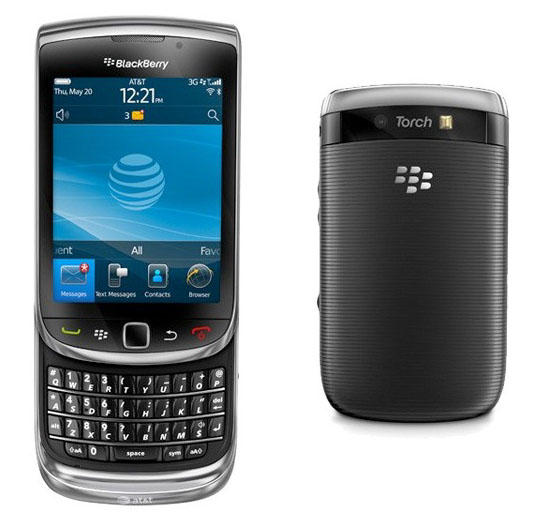
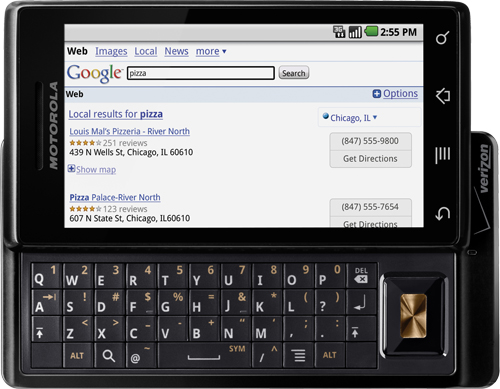
Look at the current market?
You want to bash Apple, feel free: there's hundred of reasons to. But at least give credit where credit is due. The Apple iPhone did revolutionise an industry, and a LOT of tech "experts" and geeks said it was going to fail and it was a toy. Now it's just "one of many".