I'm really conflicted about this. On the one hand, I think that gun control is an important issue and limiting gun ownership has a very direct impact on saving lives. I agree with the law that was being debated. (Aside: I'm British. I live in the UK. It doesn't directly affect me.)
But...
The point of a democratic government is to debate an issue, vote on it, and then to enact the result of the vote. Representatives should weigh the information available, the points raised in debates, and their own consciences, and come to a conclusion of their own. Direct action like a sit-down protest undermines and subverts the process of democracy by saying "Do what we want or we'll make life intolerably difficult for you." That is not how government should work. Government shouldn't be held to ransom.
In this case it's easy to agree with the protest, but what happens if, say, the Republicans lose a debate on reducing income tax for millionaires to zero and organise a sit-in to try to get their own way?
Not to mention the biggest issue here is that Democrats want to put anyone the executive suspects on a secret "terrorist watchlist," for which there's little to no redress and they won't even tell if you're off of it or not, so you could continue to be harassed by the government and you may not even know why that's happening.
Fix the terrorist/no-fly watchlist first, and then we'll talk. Other than that, I am in the camp of favoring much stronger gun control. But secret lists and a further weakening of due process in the U.S. is not the answer.
Hmm. If it passed, though, that creates the possibility of this lovely hack: You don't know if you're on the terrorist watch list. Want to find out? Try to buy a gun.
I realize this may sound like an ignorant question but I really don't know the rules in Congress.
Can you just refuse to discuss a topic at all ? I mean... is that legal ?
Like the original comment said, the purpose of a body like the congress is to "...debate an issue, vote on it, and then to enact the result of the vote..." At least, I thought that was how things worked. Is it the case that congress doesn't even consider debating certain issues ?
> Can you just refuse to discuss a topic at all ? I mean... is that legal ?
It is legal yes. Each house of Congress gets to decide their own rules (by law), in the House of Representatives that is done by and through the Rules Committee.
Initially it would just propose general rules at the start of the session then dissolve, but in the late 19th some realised it could propose bill-specific "special rules" (requiring a simple majority vote) giving it significantly more power and control over House proceeedings, and that's basically what it has been since.
As a result, by controlling the Rules Committee the majority can decide which bills get to the floor (and when) regardless of their order on the Calendar of the House, can decide whether the bills can or can not be amended and can decide how much debate time will be available and who gets to talk.
The issue is they wanted a vote. The Speaker will not give them one because it is pretty clear it would fail. The process of bringing something to a vote against the decision of the speaker is you have to get 218 member's signatures on a petition (in the case of getting a bill out of committee it is called a discharge petition.Not sure if that is what it is called in this case though).
Hardly an expert myself but as I understand it the Speaker (the leader of the majority party) schedules what comes up for a vote. See for example https://en.wikipedia.org/wiki/Hastert_Rule.
If the Republican party prevented that vote inside the constraints of laws, procedures and whatnot, there is nothing to protest about.
In fact I agree with OP : politicians should never have to protest for anything. There are procedures to follow, and in politics who is right is not supposed to be whoever whines the most spectacularly.
If for one reason or an other the Democrats think the Republicans have used unlawful methods to prevent this vote, then they should file a complaint and be done with it. Not make some kind of a circus.
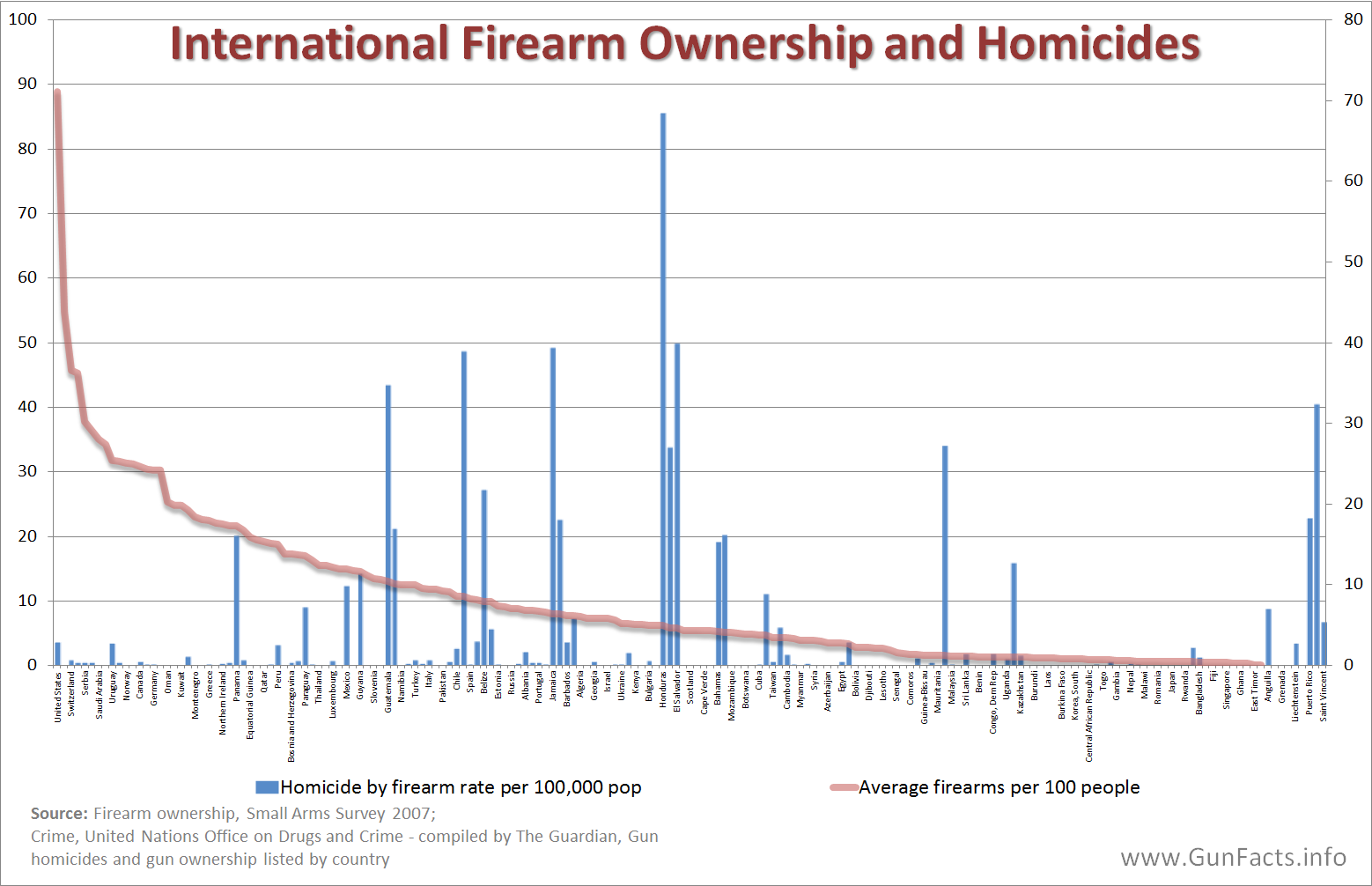
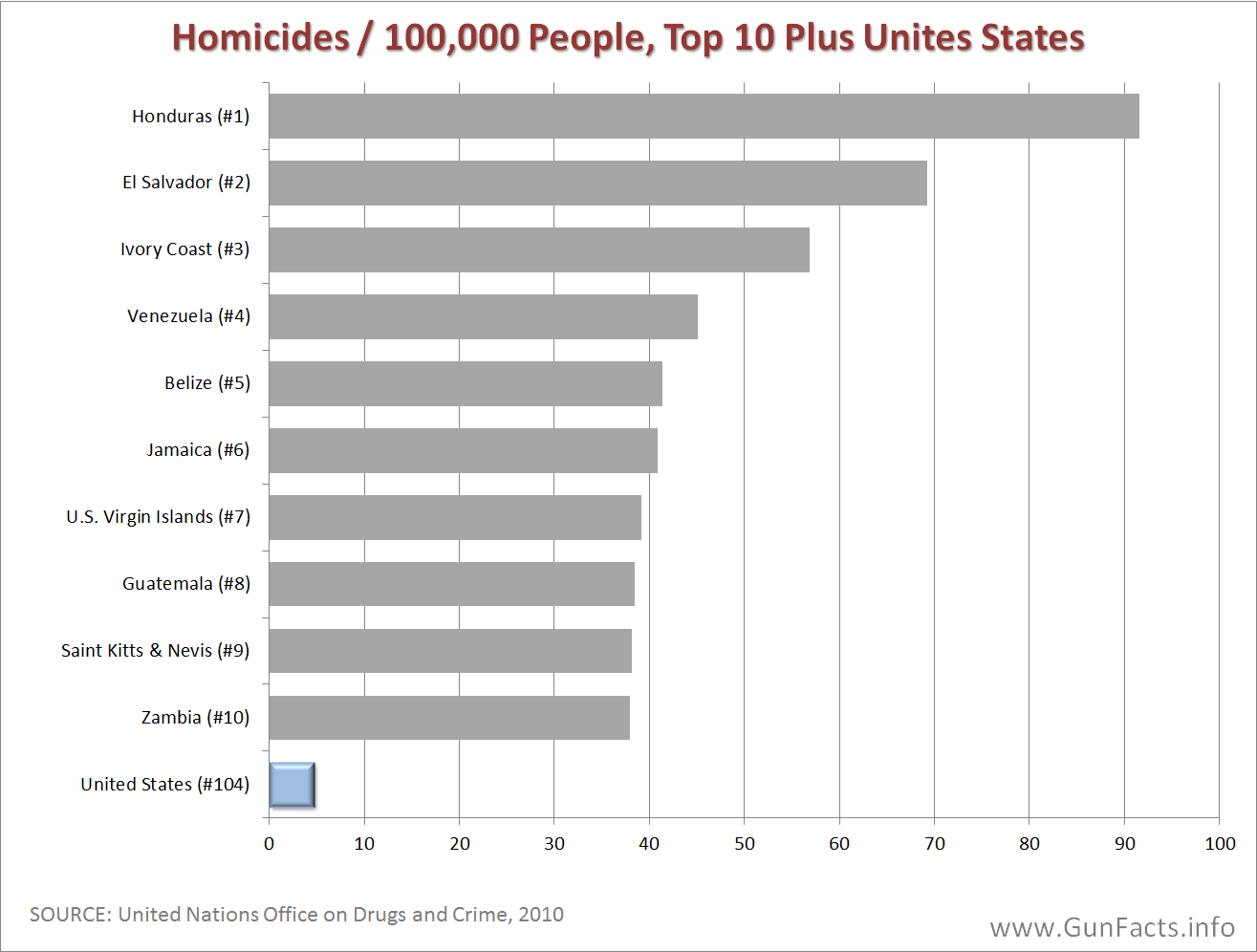
That's because the US homocide rate is at a 51 year low according to the FBI while gun ownership is dramatically higher.
We've had 2 terrorism incidents and we need to be addressing what could have prevented them. Every time an incident happens that gets on the news we see this song and dance about implementing gun control policies that wouldn't have stopped the incident being used to push them.
That means that Democrats aren't trying to solve a problem. They are simply waiting to use national tragedies to push an agenda.
Solving a problem looks like "here is how this happened and here is a policy that will make sure it doesn't again."
Democrats have not proposed anything along those lines in the last 8 years.
Agree with this 100%. No gun control law would have prevented this from happening in America solely because we have quite a few guns here. If not procured legally, he easily could buy a gun illegally. Constitution aside, if there was a way to magically disappear every gun in America and then enact complete gun bans I might be willing to entertain to the notion. Otherwise it's just a bunch of posturing to me.
the problem then would be that only the 'important' people would have guns. I don't see any politicians giving up their security details. I don't see Diane Feinstein or Chuck Schumer giving up their 'concealed carry' licenses. Its a classic "Do as I say, not as I do."
If they can carry in their overly restrictive states, why can't the electorate? don't they have the same rights? No? because political elitism.
Let's add to that the song and dance focused specifically around "assault rifles", which kill less people per year than knives, blunt objects, or bare hands. (The vast majority of gun deaths are by handgun, and are either suicides or gang violence.)
The Orlando shooting was not a terrorist attack in the commonly used sense, as I assume you're referring to that.
The fact that the homicide rate is lower than it was doesn't mean it's at an acceptable level. Now I don't know whether or not gun control is the solution, but the issue needs to be discussed and not dismissed because with "because history".
>The fact that the homicide rate is lower than it was doesn't mean it's at an acceptable level. Now I don't know whether or not gun control is the solution, but the issue needs to be discussed and not dismissed because with "because history".
Banning guns has had next-to-zero influence on the overall homicide rate of the U.K or Australia post-handgun bans/buybacks. [0] [1] [2] People continue to kill other people using other methods. Homicides with firearms goes down, homicides in general remains more or less the same, with the same downward trend that has been happening in all developed nations since the early 2000's/late 1990's.
IMO, America has a mental health problem. Nobody seeks help because help likely means loss of job/income which is disastrous for most everyone. I think there are other contributing factors (income inequality, mainstream/mass media fanning the flames for racial tensions, increasing distrust of the police) but none as large as mental health.
> Orlando Police Dispatcher: Emergency 911, this is being recorded.
> Omar Mateen: In the name of God the Merciful, the beneficent [said in Arabic]
> OD: What?
> OM: Praise be to God, and prayers as well as peace be upon the prophet of God [said in Arabic]. I wanna let you know, I’m in Orlando and I did the shootings.
> OD: What’s your name?
> OM: My name is I pledge of allegiance to Abu Bakr al-Baghdadi of the Islamic State.
How is the above "not a terrorist attack in the commonly used sense"? He's using violence against civilians as a means of demanding political action.
He pledged allegiance to Al Nusra, Hezbollah, and IS; these three groups have been in constant conflict for the past several years. Sounds to me like he was doing it for the attention. I also heard that IS never actually acknowledged that he was one of their recruits.
I know it's hard to swallow, but Muslims can commit heinous acts for completely personal reasons - a jealous closet gay in this case.
I assume he was using the word "terrorist" as it has been used by the media over the years, not in the correct sense. Going with the latter, yes it was clearly a terrorist attack.
Going by the former, it was not - the attack was basically homophobic in nature, perpetrated by a closet homosexual who frequented that same gay bar and had no contact whatsoever with the Muslim community.
I will say that the GOP blocking these proposals is one of the very few times I've felt like anyone in the legislature is actually representing my beliefs.
I didn't realise that. I thought that there had already been some discussion. My more general point about how government works, and what representatives should and should not be able to do to subvert it, still stands though.
You are asking exactly the right question. When something happens that's unusual where you agree with the cause, but question the actions, ask yourself: what if I didn't agree with the cause? (This is Kant's Categorical Imperative - Act only according to that maxim whereby you can, at the same time, will that it should become a universal law.)
Otherwise we're just out in the streets beating each other with clubs.
In this case, however, it's political theater during an election year. The right folks cheer, the right folks get angry, and the two-party system keeps humming along. The House has the ability to direct the Sergeant at Arms to bring order to the chamber. That's their job. Been done before.
So this goes on for a bit, the ruling party brings down the hammer, and everybody gets to be angry. I disagree with this cause, but even if I agreed I don't see much utility coming out of this aside from energizing the base in an election year where one party desperately needs an energized base. (The other party has gone off the playbook and is not appealing to its base at all. It'll be interesting what happens to their base.)
I thought the reason for the protest was that the republican speaker is refusing to bring the issue to a vote, even though they would clearly win the vote anyway.
> Direct action like a sit-down protest undermines and subverts the process of democracy by saying "Do what we want or we'll make life intolerably difficult for you." That is not how government should work. Government shouldn't be held to ransom.
This is pretty blatantly wrong in regards to how the US senate works and has worked for a long time. Filibustering is a normal thing for the senate and has an important, valuable role historically. Today, unfortunately, it's mostly a cosmetic thing senators will do for good press. What the House members are doing is essentially the House equivalent of filibustering, which doesn't exist in an official capacity. Regardless, it's not really interrupting much and it's definitely not doing anything other than generating press.
Also, it's funny see a British person asking for rational behavior from foreign lawmakers considering the wigs, heckling, and jeering of UK parliament.
The whole point as far as I understand it is they don't want to vote because they'd have to vote against such a measure and this may prove to be very un-popular and with the elections coming up it will cost them (potentially) a lot of votes.
I don't see how that's any worse than any other form of lobbying that happens.
Quite frankly I'm increasingly of the opinion that the whole political process is broken and only favours those with the deepest pockets and loudest voices rather than the needs of the majority.
I'd wish people would stop going off topic about the stupid gun control debate and be adults talked about the article on hand.
"Republicans adjourned the House early on Thursday to try to quash the sit-in, switching off the TV cameras."
"The transmissions via Periscope and Facebook Live were taken up by the C-Span network, which provides continual coverage of Congress."
It's a interesting world we live in.
The fact cameras in many of the world parliaments are turned off in situations (not about national security) seems like a hell of a censorship of democracy we put up with.
Technology seems in part stopping this censorship (There are other examples of rouge cameras in parliaments leaking things that the plebs are deemed not fit to see)
I'm looking at this with a foreign eye, so I apologise for any ignorance on my behalf, I just find it amazing that so many Americans feel that gun control wouldn't help with decreasing shootings (Kasey_Junk linked this poll [0]).
Can someone shed some light on the views of these people? Living in the UK, with rather nice gun control restrictions, means we can't just buy guns at the local supermarket but of all of the ~ 8 people I know who has wanted a gun, every single one got a license and went through little to no hassle to get it, simply filling out a few forms. Yet seemingly because of this, our firearm related death rate is 0.23 per 100,000, compared with the US' 10.54 (~45x as many deaths [1]).
I think you need to be clear on the nuance of that opinion. Lots of Americans don't think that gun control will decrease "mass shootings" which is an imprecise term but is generally thought of as "multiple people being shot indiscriminately".
Its not even clear how mass shootings inform the firearm death rate as some places that track it include shootings with no deaths and others don't. Generally speaking mass shootings are rare everywhere, they are just less rare in the US.
So it is relatively easy to believe for instance that banning pistols (which the UK did) would have a huge impact on the firearm death rate of the US but no obvious impact on the number of mass shootings.
> Can someone shed some light on the views of these people?
I'm one of them. I see firearms ownership and self-defense as base civil rights, on par or even more important than speech or religion.
It doesn't even matter if strict gun control would decrease shootings, although I don't believe it would in the US. Abandoning the Fourth Amendment and allowing warrantless searches of homes and persons would undoubtably reduce crime as well, but proposing to do that would be met with near-unanimous protest. In both cases, it's not a matter of justification, but of basic human rights.
Two points. One, these polls give one an idea of how people might feel about an idea in principle, but don't tell you how people feel about the implementation of the idea as a law. Many of the gun control bills that are proposed have flaws that disproportionately affect law-abiding gun owners, and given the general skepticism of the efficacy of gun control laws here, the bills fail to advance.
The second point is that it isn't informative to average across the US to make statistical inferences: it's too heterogenous. Most violent crime in the US (keeping in mind different countries define violent crime uniquely and report it with varying rates) is cultural and is highly focal in limited parts of cities. Even with firearms, many parts of the US are statistically similar to similar areas in Europe when considering violent crime.
The point isn't to prevent shootings. The point isn't to protect your home. The point isn't to be able to hunt.
The point of the Fourth Amendment is that the citizens should have sufficient arms to be able to form an effective military force. Anything else is a side effect.
Could we do it? Well, let's say that President Trump turns into a tyrant, declares martial law, and suspends all civil liberties. Some fraction of the military would back the president, some would want to sit it out, and some would oppose the president. Ditto for the police. But if the citizens decided that they weren't going to put up with it, they could sway the balance - if the military was divided. Against a united military, probably not - unless there was foreign intervention.
As an Australian, my general understanding of the US stance is that:
- There's a constitutional right to bear arms so restrictions can only go so far.
- If it's criminal to own a gun, only criminals will own guns.
- The sheer number of guns in the US is so enormous that it would be near impossible to remove them all.
Unfortunately even if they enacted the same gun control laws used in the UK or Australia, it wouldn't do much in the short term. Long term it'd be a good start but it could take decades to get the genie back in the bottle.
> If it's criminal to own a gun, only criminals will own guns.
Note the implication here - if it becomes criminal to own a gun, many people will become criminals rather than surrender them.
> The sheer number of guns in the US is so enormous that it would be near impossible to remove them all.
Reports say around 375,000,000, but most people in the firearms community seem to believe those estimates are quite low.
> Unfortunately even if they enacted the same gun control laws used in the UK or Australia, it wouldn't do much in the short term.
Sure it would - it would make criminals of millions of Americans, including me. I would strongly assume that the enactment of UK- or Australia-style gun bans in the US would immediately precipitate mass civil disobedience at a bare minimum, and would be very likely to start a large-scale insurrection.
Being one of "those people", sure. It's a statistical fact that the countries with the strictest gun control laws have the most murders per capita. America actually sits at the bottom of that list, with one of the lowest murder per capita rates despite having one of the highest gun ownership per capita.
Those statistics you linked are inaccurate. Up to 2/3s of those firearms deaths are suicides.
If you prefer a more emotional argument, scott adams provides a perfectly good one here[0]. tl;dl: we want firearms to protect our homes and families from the millions of violent muslims you're importing.
Something else important to consider: whether you agree with me or not, there are enough people who feel the way I do about the issue that if a gun control law was to actually pass there would be a civil war.
How big a massacre would it take before a gun control law would be carried by a majority in the US?
Or is it not a matter of sheer numbers, but who gets killed? (For instance: what if some moron decided to go after a convention of one of the two large parties?)
To many people in the US, gun ownership is an as equally essential right as freedom of speech.
Assuming you can just introduce "gun control laws" and solve "the gun problem" is a very European centric way of thinking. It will not translate well into actual US policy.
Look, a normal, mental healthy person can get a gun almost everywhere in the world. He/She is checked, screened and if the reasons are not outwordly, the lethal weapon can be owned.
But I don't get how can a FBI suspect, or with a histoy of mental issues, can just simply walk to a weapon store and buy an assault riffle?! Just like that!
USA scares the shit out of me.
EDIT: to make things clear: histoy of mental issues=medical records of mentall illness.
And regarding the idea that the laws are by men and I have to protect myself from the abuse of the law: have you heard of democracy? Next time you vote, choose the ones that can revert/improve that law. I much prefer to oblige the law , bad or good, than to be "protected" by random shooters.
What you said sounds perfectly reasonable, if you have a normal functioning government that executes the law in a normal and reasonable way. The US was founded, however, partly on the idea that laws are executed by humans, and humans are fallible, and if the laws of our country were ever abused, they couldn't unjustly damage or harm the lives of the citizens subject to those laws. With the current proposal regarding terror watch lists, Donald Trump wants to put all Muslims on a terror watch list just because of their religion. Does that sound fair to you? Should those Muslims have their right to self defense taken away because of their religion? This is what our Constitution was designed to protect.
Any legislation relating to mental illness does nothing but create a subclass with less rights. You can either be honest and argue for full restriction of firearms or nothing. I had problems with depression in my early 20s, am I too mentally ill? All a law like this would do is incentivize people to never get help, never see a doctor, and never get medication. The mentally ill don't commit most gun violence. Most mass shooters are not mentally ill, that is a comfortable lie repeated mindlessly by scared people. They're just murderers.
People who just want to take rights away from the sick because they demonize them are literally going to make things worse.
Mental health legislation is a mess. Decades of Freudians spreading misinformation doesn't help, but we also do a horrible job of educating children. We're worse at that than we are at educating children about sex, which if you think about it is no wonder why we have these bizarre nonsense national discussions about how we need to treat all mentally ill people as potential criminals.
Legislation relating to mental illness already creates a subclass with no rights. Apparently Americans are fine with that so long as it doesn't specifically target their right to buy guns (so stripping them of all freedom is a-OK).
A FBI suspect shouldn't have their rights infringed. If there is actual evidence, the FBI should make an arrest. Due process and all. Also, "assault rifle" is misleading anti-gun propaganda. A semi-automatic rifle that's called an "assault rifle" is only cosmetically different but generally functionally identical.
> To many people in the US, gun ownership is an as equally essential right as freedom of speech.
But that's a relatively recent phenomenon, though. The US has had a strong military history, but the 'citizens need guns to fend off our government' thing has only been frothy for the past little while.
It's not going to go away either, until the US kicks the societal idea that problems are best solved by men with guns. It's going to take a long time for that to ebb away, even if public opinion were going in that direction.
Gun control laws won't work even if they're brought in, because handguns will never be a part of them, and it's handguns that do three-quarters of the firearm murders in the US. So there'll be some pissweak restrictions eventually brought in about really fringe longarms, and they'll do nothing to solve the problem.
> But that's a relatively recent phenomenon, though. The US has had a strong military history, but the 'citizens need guns to fend off our government' thing has only been frothy for the past little while.
That idea seemed pretty popular as far back as April 17th, 1775...
Just as freedom of speech, there's no freedom of speech in Europe as it is in the US. You can get arrested in Europe for writing unpopular opinions on Twitter or Facebook ("hate speech").
I don't think anyone has been arrested for writing in 'unpopular opinion'. They've been arrested for writing highly racist content or directing abuse at others.
In some European countries, there are special laws for insulting the monarch. In others, there are laws for insulting foreign heads of state. These laws are sometimes enforced.
For example, two Spanish cartoonists were fined for depicting the Spanish king having sex with his wife captioned with the "unpopular opinion" that getting his wife pregnant was "the closest thing [the king has] done to work in [his] whole life": http://news.bbc.co.uk/2/hi/europe/7092866.stm
Interesting. I'm surprised that happened, thanks for pointing it out. I've been trying to find more information on the case (to see if the ruling was appealed) but I can't.
Thanks for spurring me into looking up more about it. As a correction, while the person depicted is in fact the present Spanish king (Felipe VI), following his father's abdication, he was at the time prince.
I'd be interested in seeing some sources on this. My guess is that it's not criticising government policy that's a problem but abusive behaviour towards immigrants or criticism backed up with hatred.
In the current Swedish political climate, all you need is not being positive enough towards mass immigration and you're counted as part of the "hate crowd". You really need to watch your mouth if you're in any sort of public position.
While legally not criminal, in practice you will find your right to free speech severely challenged.
I think all such "hate speech" laws are deliberately vague opinion policing and unrightfully limits freedom of speech. They all need to go.
The death of my entire family at the hands of a gunman, while incredibly tragic, would not make me any less pro-gun. As other commenters have stated, the right to own guns is fundamental to the identity of many Americans. If the government could take away our guns, what else could they do?
Perhaps you should look to other western democracies to see how they deal with it?
Seriously, the whole 'guns protect our rights from the government' argument is nonsense. There's been all sorts of assaults on the Bill of Rights in the past couple of decades, and there's been next to zero organised, armed resistance against the government. And those who do engage in armed resistance against the government get nowhere with it. You can keep government agents at bay for a short while with your weapon, but they're going to win.
Imagine if instead of "we need our guns to protect us from the government", there was as much passion in "we need to engage ourselves in our communities, to engage ourselves in politics". You'd have stronger community bonds, less fear, and more traction. The government would stop being seen as "those people over there", and start being seen as "that thing that we are part of".
Other western democracies did not struggled through what America struggled through to free itself from the British monarchy in order to establish democracy.
Because of that, these western democracies do not value the importance of arms the way Americans value it.
Arms of the American people is the basis for which democracy in America was built on.
Right. Most of those countries in Europe have never been threatened by invasion or fought off invaders. Oh. Wait. They have. This notion of an antagonistic relationship to the world around us is childish and has to end. The small-minded fears of a minority of this country are inflicting greater fear and damage on the rest of us.
They see things differently than Americans. Unlike Americans, Europeans countries do not see the value and importance of guns, even after they got conquered or have to fight off invaders.
>The small-minded fears of a minority of this country are inflicting greater fear and damage on the rest of us.
The same thing could be said about anti-gun people. These people fear guns, and because of that irrational fear, they're trying to infringe other people's fundemental right to self-defense.
You don't want a gun. Cool. But I want a gun. I am not forcing you to own a gun, so why are you forcing me to not own a gun?
How about we let each person decides what he wants to do instead? You don't buy a gun. And I buy a gun. It's call Freedom.
> Unlike Americans, Europeans countries do not see the value and importance of guns, even after they got conquered or have to fight off invaders.
Sure we do. We just have an actual system for managing this, making sure weapons that are actually useful for defense are quickly available to those actually trained to use them in resistance fighting.
Compared to the American system of wild-west-style anarchy, where people with little to no training in resistance tacticts buy a wide variety of weapons more or less suitable for resistance fighting and with a huge variety of mutually-incompatible ammo, who do you think is better prepared?
Here in Norway, for instance, people who serve a year in the National Guard get issued a service weapon (currently HK416, used to be AG3) and a decent amount of ammo when they are finished. In the olden days, these were stored at home, but today we have many decentralised storage facilities around the country which spring into action if the Russians come.
No where did I mention armed resistance. This discussion is framed the wrong way. It isn't about plastic/wooden/metal sticks that eject lead, it is about whether citizens should give up their rights.
It's one of fundamental rights of an American. It's one of the power granted to the people by the Constitution.
Asking the people to give up this power is as idiotic as asking Congress to give up its power.
Also of note, the Constitution specifically DENIED the government the power to outright ban guns. The government can regulate it, but the government can not outright ban it.
There's calls right here in this discussion to alter the constitution. It's not sacrosanct. So it's not impossible to regulate guns in a way that would not be allowed under today's constitution, just difficult.
edit: I see you've discussed this below. Interesting though that gun owners rising up to protect themselves from the government wouldn't be constitutional (it would be done under the authority of the gun, not under the authority of the Constitution).
I see where you're coming from, but I don't agree. The Constitution specifically protects the people's ability to maintain the force necessary to be a credible threat. If not to maintain the threat of armed rebellion, what purpose would it serve?
Obviously actually engaging in insurrection against a constitutional government would not be constitutional. Anyone taking arms against the government would presumably believe that that government was not operating within the confines the Constitution provides; the act of insurrection would be seen by them as a remedy to an unconstitutional government and therefore neither party would be subject to it.
Additionally, it seems to me like the gun control crowd advocate in the US is not going directly for the 2nd amendment, but instead trying to go for a route that will cause valid concern (5th and 6th amendment violation for the recent bill of "no gun if you're on no fly list", for example).
When I saw on Twitter today someone saying that (paraphrase mine) "it's acceptable for some people to lose their constitutional rights if we can prevent gun-related deaths", it's not hard to see how it might be a tough pill to swallow for the more right-leaning demographic, regardless of their stance on gun control.
This is entirely about who gets killed or who could be killed. It was legal to openly bear arms in in California until the Black Panthers exercised that right. Ronald Reagan quickly signed a bill into law making it illegal after protesters peacefully marched through the Capitol Building bearing arms [1]. There is currently a petition to allow open-carry at the GOP convention, which many Republicans have said will not be allowed no matter how many signatures it gets [2]. The CDC has been restricted from researching gun violence as a public health issue for 20 years [3]. Take a guess as to what party is enforcing this restriction.
> Or is it not a matter of sheer numbers, but who gets killed?
In the UK, it was the Dunblane incident that triggered this (you can google it). In the 1990s, some madman with gun just strode inside a high-school at Dunblane in Scotland and started indiscriminate firing. Many teachers and students were killed and after this event, the UK government just outlawed the guns in the hands of civilians.
Maybe, in USA such an extreme event hasn't happened yet, so they have not banned guns yet.
Yeah I remember almost exactly when it happened because it (and later Columbine) set off a lot of media hysteria about violence in video games. I think there might be consequences to playing violent games on some level (it's your
mission to shoot people) but the way they went about it was wrong-headed and sensational.
How big a massacre would it take before a gun control law would be carried by a majority in the US?
You know this is the same exact tactic the FBI is playing to advance their goal of warantless access to web history, right?
But it's different, one may say. One scenario uses the swelling of strong emotion after a news event to try and pass a law curbing constitutional rights. And the other scenario ___________________.
It's sometimes surprising how difficult it is for a death toll to force political action a sizable minority of the population strongly opposes.
How many people had to die from tobacco before even our currently very modest restrictions were put on its use and sale? Cigarettes can't be used as defense against wildlife, they can't be used for hunting, they can't be used in guerrilla defense during an invasion. But they're addictive and so even though they've played a part in killing millions and have been estimated to kill over 40,000 non-smokers a year, it's extremely difficult and time consuming to regulate them. And they aren't protected in the Bill of Rights, either.
We're probably going to see very slow change for gun control in the US, and with increasingly sharply divided opinions among voters.
> How big a massacre would it take before a gun control law would be carried by a majority in the US?
A majority already does but they don't really care, whereas the NRA has a relatively small numbers of highly motivated people to push against gun control bills (I believe John Oliver made that exact point recently).
The US have already got bigger massacres than the already mentioned Dunblane (18 deaths 15 injured, 1996), or Port Arthur (35 deaths 25 injured, 1996) which resulted in significant gun control increase in the UK[0] and Australia[1] respectively.
While I don't think it's just who gets killed, I think there are some groups which would trigger better response than others. Most likely groups:
Republican convention. NRA meeting. Gun shows.
Maybe even a different order... The argument that good people with guns stop bad people with guns would fall pretty quickly after the first real shooting at a gun show. (especially if it results in accidental deaths if someone reacts too quickly and there's loads of people with guns around)
We already have gun control laws, restricting guns and regulating them.
Do you mean gun banning laws? Because if you're talking about gun banning, that's never going to happen. The American citizens will not give them up without a bloody civil war. It is one of the fundamental rights of an American. It is at the core of American values, the root American identity.
What would it take? No murders. Just a carefully reasoned persuasive argument that the people are better off without the 2nd amendment, and a realistic path to getting rid of it in a way that won't trigger riots or another civil war.
1. A majority doesn't matter. We don't have a direct democracy, and for all the bad special interests do to corrupt democracy, sometimes there are special interest groups that understand narrow issues better than the average voter, and should have disproportionate influence on legislation.
2. What gun control law? [1]
3. Between the 2nd and 4th amendments, there's not much room for an enforceable gun control law that will prohibit would-be (but not-yet) jihadists and crazy people from obtaining guns.
The good news is that the majority of domestic gun violence (excepting suicides) is related to gangs and the drug war, so a lot could be done—if anyone wanted to do something about that rather than use gun crime rates as political ammunition—without bringing up gun control.
Good luck getting an amendment banning guns through Congress.
And even if it gets through Congress, there will be a bloody civil war afterward. Remember, the goal of banning guns is to prevent American deaths. If you ban guns, it will cause a bloody civil war that will result in the death of 50% of Americans. Congratuatlions, you have just failed in your original goal.
Passing a Constitutional amendment is a perfectly legal, valid process - the Second Amendment, like all amendments, is subject to debate and possible repeal.
That some segment of the US population is willing to commit murder over that shouldn't really be relevant to the debate - such people aren't acting in defense of the Constitution, they're just asking like thugs and vigilantes.
Congress still have to listen to the people. If Congress goes against the people, then that's exactly what the 2nd Amendment is there for (for when the government go against the people).
Presumably it would be difficult, if not impossible, to repeal the 2nd Amendment without popular support. If it were to happen then by definition, Congress was listening to the people. "The people" also includes people who support gun control.
If gun owners are a minority, it would be no problem because democracy is all about majority rules.
But gun owners are not a minority. And more importantly, they will never agree to give up their guns.
So banning guns is never going to happen. This issue of mass shootings will have to be tackle in other ways. You can call gun owners thugs all you want, but that doesn't solve the issue.
Where are you getting your numbers? Mine say ~26% of Americans own at least one gun. The trend in the US seems to be towards fewer gun owners, but more guns per owner, which would seem to put gun owners in a minority (albeit a heavily armed minority.)
Also, you seem to be implying that all gun owners would necessarily be willing to start a war to keep their guns, and that's not an assertion supported by evidence.
> You can call gun owners thugs all you want, but that doesn't solve the issue.
I'm not calling gun owners thugs, I'm calling gun owners willing to threaten violence over even legitimate political processes thugs. This is supposed to be a government "of the people, by the people, and for the people." Everything is theoretically negotiable given enough support, even the Second Amendment and the Constitution itself. That's meant to be a feature, not a bug.
Passing an amendment to ban guns is different from, for example, passing an amendment to give women the right to vote.
Giving women the right to vote is giving a group a new right. Banning guns is taking away a right from a group.
Arms is one of the power granted to the people by the Constitution.
Asking the people to give up this power is as idiotic as asking Congress to give up its power. Just because some people prefer not to exercise this right (arms) does not mean they can take it away from those who prefer to exercise it. Just like you can not take men's right to vote without a civil war. Just because some men does not want to vote does not mean you can take away other men's right to vote. All men must agree first, or there will be civil war, because you're infringing on another men's right.
Also of note, the Constitution specifically DENIED the government the power to outright ban guns. The government can regulate it, but the government can not outright ban it.
>A well regulated militia...
Meaning the government can regulate arms.
>...arms shall not be infringed.
Meaning the government can not outright ban arms.
So again, can guns be banned? Yea, but only if everyone 99% of the population agrees. Which is never going to happen, because we all know the gun owners will never agree. And if the gun owners disagree, then the government and those who agrees are infringing on gun owner's rights. At which point, they will exercise their 2nd Amendment right and there will be civil war.
Again, guns will never be banned because guns owner will never agree to give up their fundamental rights.
As a shooter in the UK, with a Shotgun Certificate, I don't really understand why people are so against having some gun control -- I mean the background check the police did on me before giving me a SGC was fine; quite frankly I felt safer afterward.
Now of course, there's a case for saying that once they start putting restrictions in, they will start to creep -- and it's true, in europe now there's bans on pretty much everything, including fully deactivated weapons used by the reenactors!
So here goes, two paragraphs and no solution from me!
> in europe now there's bans on pretty much everything
Czech republic is pretty liberal (conceal carry, attack rifles...) and we have lower crime rate than UK.
> I don't really understand why people are so against having some gun control
Problems:
1) not everyone lives in a big city, where police is on every corner. In remote rural areas it takes hours before cops even arrive. Some people simply need gun for living.
2) Regulations always get more strict over time. Eventually everything will be banned (knife, pepper spray...). In UK it is illegal to carry a screw driver on street.
3) People are motivated not to report crimes. There was a case when girl escaped a rape, but was charged for possession of illegal weapon, and for using a pepper spray on her attacker. With regulations, it would be best for her, not to even report that attack.
> 2) Regulations always get more strict over time. Eventually everything will be banned (knife, pepper spray...). In UK it is illegal to carry a screw driver on street.
Not completely true. It's not illegal to be carrying a screwdriver/fixed blade knife/other dangerous implement in public if you have a valid reason for it. We are not going to arrest an electrician walking down the street, but we will question the guy in a hooded tracksuit loitering outside the bookmakers with a screwdriver
...waiting for their girlfriend, and they just bought the screwdriver to fix her hair dryer. When 'rights' are relative that way, its just a blank check to hassle people based on profiling?
If that were true, what's the debate about? As far as I can see (Canadian, so not vested in the topic), whatever checks exist are not consistent and not comprehensive.
Comprehensiveness appears to be key. I remember Obama saying only 1 week before Orlando that there was someone that the FBI knew to be an ISIS sympathizer, and yet the law wouldn't let them put his name on a list to prevent guns from being sold to him. What's the use of a background check that doesn't turn up the necessary information?
If background checks exist, they do not appear to be consistent, nor do they appear to be given the teeth necessary to be effective.
It turns up information on 'prohibited persons,' which are convicted people. Felons, and anyone with a misdemeanor in domestic violence.
Is it a crime to be an ISIS sympathizer? Has he been convicted of a crime? Did the FBI have enough information to charge him and throw him in jail? Should they be able to say anybody is a potential ISIS sympathizer and now nobody can fly on a plane or own a gun without any sort of remediation process?
The background check network can only be used by professional dealers (to "make money" selling firearms you need to be a licensed dealer and any firearms you sell need to include a background check) -- this includes professional dealers at gun shows. What doesn't involve a background check in many states is buying from a friend, or another third party person -- think more of an impromptu swap meet.
On a side note, rather than editting my post I'll say here -- I realized what I said at the end was a little disengenuous to make it seem more righteous.
Buying a gun from a private person is more like buying a lawn mower from either your neighbor, girlfriend, or some random guy you meet on craigslist.
It's not exactly the same as buying a lawn mower from a neighbor. Even states that don't perform a background check still require the sale to be made through a licensed dealer, with a transfer of ownership recorded. Given you can't know what the person will do with the gun (or who they might transfer it to, or get it stolen by), you'd be stupid to not perform an official transfer of ownership on a personal sale.
Will requiring background checks on all gun sales actually reduce the number of guns sold to bad people? Most of these states that don't have background-check requirements for private sales do have laws that make it illegal to sell a gun to anyone who is not legally able to possess one. So these sales are already illegal. Is making them "extra special illegal" going to make a difference?
I'm not actually opposed to universal background checks. I'm just not sure it will have a big impact on overall violent crime. I'm definitely not convinced it will have any impact on mass shootings. Mass shootings are just an incredibly different beast than most other violent crime. I'd say it has more in common with rape than with murder or assault, because they both come from deeply narcissistic world-views. What are we doing about the growing narcissism problem in the world?
An anecdote tangential to the main topic: Its well known that not all states in the USA have the same gun control laws. For instance, in New York, a gun is banned in the hands of civilians.
Now suppose, you are traveling from city A to B with a flight change in New York, and suppose you are carrying arms (duly registered) and you checked out your luggage at New York to catch the next flight, then you are effectively breaking the NYC law for those few moments!
In fact, I've heard that a lot of NYC cops are just hovering around that luggage checkout counter to catch and harass as many innocent passengers as possible!
There are plenty of arbitrary laws, but technicality or not, they're breaking the law. The same would be true in your scenario if their flight between 2 US states went via the UK.
It would be funny if some states required you to carry a gun at all times. Some religions for example require you to carry a blade at all times. Of course we already have contradictory laws and people are breaking rules no matter what they do.
so asking a question is now a 'down-votable' offense on HN? WTF people? either don't answer or point them in the direction of some research. Don't down-vote, you arrogant fucks.



But...
The point of a democratic government is to debate an issue, vote on it, and then to enact the result of the vote. Representatives should weigh the information available, the points raised in debates, and their own consciences, and come to a conclusion of their own. Direct action like a sit-down protest undermines and subverts the process of democracy by saying "Do what we want or we'll make life intolerably difficult for you." That is not how government should work. Government shouldn't be held to ransom.
In this case it's easy to agree with the protest, but what happens if, say, the Republicans lose a debate on reducing income tax for millionaires to zero and organise a sit-in to try to get their own way?