I really want to like Snopes, but I'm not convinced that they weigh evidence correctly. For example, they debunked the myth that Marilyn Monroe had 6 toes. First, I don't believe that she did. Or even care, for that matter. But at the time, one of their "facts" was that if she'd had a toe removed, she'd basically have to learn to walk all over again because it would throw her balance completely off. (Note: the article no longer includes this fact. It did at one time, though.)
However, my wife's a podiatrist. Part of her job is amputating parts of feet when they're damaged or infected beyond repair. I asked her what it's like for an otherwise healthy adult to recover from a pinky toe amputation, and she said it's basically a matter of waiting for the wound site to heal and then they continue with life as normal. Contrary to popular belief, even a big toe amputation isn't that disruptive. A vestigial 6th toe hanging off to the side? You'd never notice it was gone.
I emailed Snopes and said hey, while I agree with your conclusion, this particular supporting fact is invalid according to an expert in the field. They replied basically that I was an idiot for believing she had 6 toes, and they left the article as-is.
That's not at all what I thought, and I actually agreed with their conclusion. I just didn't like that they were using incorrect facts to support it, and especially didn't like that they reacted poorly to a well-meant correction.
Since then, I've been skeptical of Snopes. Although I think they're probably right most of the time, that left a bad taste in my mouth. Are other people sending them corrections about their own fields of expertise and having them rejected? I have no way of knowing.
This reminds me of one I saw shortly after 9/11. The rumor was that bin Laden hated the US because an American woman had made fun of his penis. I believe this even less than the Marilyn Monroe toe story, but the Snopes "debunking" was that bin Laden had never been to America so it couldn't possibly be true - ignoring the fact that Americans leave the country sometimes. I was pretty unimpressed by the slapdash effort.
I don't see how hearsay evidence could ever be debunked. And even if a recording could be found of him saying that, he could always just say he was joking.
You could find a guy saying "yeah I totally made that up". Or at least trace the origin of the rumor, and note that it doesn't plausibly connect with Osama's life. Or interview a bunch of people close to him who say they've never heard anything like that, and note that it's therefore implausible that a bunch of Americans somehow know. Or find the real reasons that he hated America, and note they're vastly more plausible and documented. Etc, etc.
This is a classic "Russell's teapot". We should not give any epistemological weight to unfalsifiable things. To debunk them, it suffices to demonstrate that there was never any evidence to begin with.
> I don't see how hearsay evidence could ever be debunked.
Well, that's the thing, isn't it? Hearsay doesn't reach the necessary standard to be considered evidence in the first place in sensible forums, including most courts.
Yes. But the other thing is debunking rumors is the task they set for themselves. And in these cases, they went for the dopamine hit of writing "FALSE" over the eternally annoying "Unconfirmed".
It’s true. There’s no feasible way for me to prove it. Even if she were to record a statement saying that, indeed, she said that…she could be lying for some reason.
Most of what we experience in life every day isn’t provable. That doesn’t make it any less true. It’s just exposes a weakness in what a person is willing to consider as truth, which is that it depends entirely on your willingness to trust the source and very little to do with actual truth.
I mean, if you video of Osama bin Laden telling me the story, or one of his associates were on the record with it, I'd find it plausible. In this case we have absolutely nothing.
This is rather elementary stuff. If you accept your "more expansive" version of the truth then I have to entertain pretty much any fantastical claim because it is impossible to disprove anything definitively.
"False" is clearly shorthand for "there is no evidence that this is true."
If I wrote "brightball beats his wife" and then said you couldn't really say it was false because you couldn't prove it had never happened definitively it would be outrageous, right? Nobody would accept that as a reasonable argument.
Exactly. And it would be the same if you included the word “doesn’t” in that statement. It just means that it’s all hearsay and only the people involved know the real truth.
This is why gossip and rumors are such a powerful thing. We all want to think that what we know or what we heard is true, but very few people are willing to accept that what they heard might not be accurate. Especially once they have repeated it to someone else.
So the existence of fairies and unicorns is merely "unconfirmed"? I would consider that term to mean that there is one reasonably credible report that has not been corroborated.
Well, I think it'd be sufficient to say there is no proof it happened, the same standard we use to say that there aren't little gnomes who collect up all the water and turn it into water vapor, causing it to rain.
At one time, Snopes was part of the fact-checking team at Facebook. This comment goes to show that having an arbiter of truth is a bad idea considering it's hard to accurately know everything. Imagine Doctors trying to debunk the official fact-checker statements and being labeled as misinformation simply due to the fact that they disagree with the fact-checker!
> Imagine Doctors trying to debunk the official fact-checker statements and being labeled as misinformation simply due to the fact that they disagree with the fact-checker!
Though it's worth noting that MDs (and all other kinds of doctors) can be incompetent and/or batshit insane.
For instance, I had the pleasure of viewing a video where a psychiatrist leaned on his MD credential to "debunk" COVID and the efficacy and safety of the vaccine. Even ignoring his personal competency, I wouldn't be surprised if his specialty has the least qualification to speak on the topic of infectious disease of all medical specialties. Here's the video for anyone interested: https://off-guardian.org/2020/12/09/watch-ask-the-experts-co..., the guy I'm talking about is the first speaker (didn't bother with any of the others).
Edit: watching a bit more of that video, many of the other speakers emphasize being "medical doctors" and several use the odd phrase "medical pandemic." I wonder if they're reading from a script?
The whole COVID "skeptic" circus is full of quacks with irrelevant credentials, like urologists and orthodontists. As a prominent example, I give you Rand Paul. If you take advice on infectious diseases from an ophthalmologist, you're going to have a bad time.
On the other hand, anyone who's taken a college anatomy class is more "expert" than a large majority of others, including some loud voices. Unfortunately, expert doesn't always mean well informed. That's why we look for the collective expert opinion rather than an expert's opinion.
My ophthalmologist requires masks and social distancing in his office. He also recommended against wearing contacts for the duration of the pandemic (he says glasses offer more protection.)
Why am I going to have a bad time for following his rules and advice?
>> If you take advice on infectious diseases from an ophthalmologist, you're going to have a bad time.
> Why am I going to have a bad time for following his rules and advice?
You're not, you're just being over-literal. Most ophthalmologists are sensible people who will give guidance outside their fields that comports with the guidance from medical professionals in that field. That sounds like your ophthalmologist. However, if you find an ophthalmologist who blatantly contradicts the guidance from areas far outside his field, then that's when "you're going to have a bad time." The reason for that is you've likely found someone who doesn't respect the limits of his own knowledge and experience.
If your podiatrist says the earth is round, and you agree, you are not taking advice in cosmology from a podiatrist. But if your podiatrist tells you the earth is flat, and you believe that, then you are. See the difference?
I don't know about psychiatry in America, but psychiatry is a specialty within general medicine, so he is qualified to speak on the efficacy and safety of the vaccine.
The authority based medicine surrounding Covid is completely out of hand
> "debunk" COVID and the efficacy and safety of the vaccine
What evidence is there of the efficacy of the vaccine that isn’t provided directly from Pfizer/Moderna?
What evidence is there that it is safe, when there are 0 mid-to-long term studies on the effects of it? If it safe why are the pharma company’s immune from all liability?
Why is anyone that question the narrative on how safe and effective the vaccines immediately labeled a “quack”, “alt right”, or “anti-vax” (there are plenty of pro-vax people that are skeptical of THIS vax, not all vax).
I haven’t look for studies specifically, if you could link some that would be great.
I just hear anecdotal evidence like “hospitalizations have gone down”. Which may be 100% true, but is hardly evidence that the vaccines are effective. The placebo effect is well known. It’s not shocking that hospitalization has gone down when the media has been beating the fear drum on how terribly dangerous the virus is 24/7, causing people to panic (pre vaccine days) and go to the hospital out of caution. Along comes a vaccine that is touted as effective and the media pounds that drum 24/7 and hospitalization goes down. The vaccine could have been saline solution and you would have seen a drop in hospitalization.
There's a PDF in this article that links to dozens of independent studies. Or, just google "covid vaccine efficacy" and it pulls up a bunch of links for you.
It really only takes a minimum of effort to answer these hard-hitting questions you've posed. As another example, I googled "why are pharmaceutical companies immune from liability over covid vaccine" and found https://www.hsdl.org/?abstract&did=848329 .
It seems silly to worry about completely hypothetical and unknown long-term risks of vaccination when getting COVID-19 has very serious, well known short-term risks.
Doesn't seem silly at all to me : the known risks of covid are pretty tolerable. Death rate is extremely low for my demographic.
So lets say I have a 30% chance of getting covid without a vax and a .1% chance of serious long term illness or death from covid.
Now If I get the vaccine, I have a 1% chance of getting covid, and.01% chance of serioues injury or death + an unkown chance of unkown serious health complications from a vaccine.
Id take bet 1 any day, personally, since the odds and stakes of the vaccine are unkown.
Admittedly though, I think the chance of serious injury from vaccine is probably quite low or nonexistant but Im just trying to make the point that that perspective involves some reasonable value judgements.
Note : all oercentages listed are majorly hand wavy. This comment is in no way intended to be statistically accurate
>> It seems silly to worry about completely hypothetical and unknown long-term risks of vaccination when getting COVID-19 has very serious, well known short-term risks.
> Doesn't seem silly at all to me : the known risks of covid are pretty tolerable. Death rate is extremely low for my demographic [emphasis mine].
That perspective is why we can't have nice things.
Not really dude. If I was around other people even remotely often it would be a different story but I work from home, dont really hang out with people, and wear an n95 when I have to go to the store.
It doesn't make me a bad person to be unvaccinated. It would if I was cavalier about potentially getting others sick...
> Not really dude. If I was around other people even remotely often it would be a different story but I work from home, dont really hang out with people, and wear an n95 when I have to go to the store.
> It doesn't make me a bad person to be unvaccinated. It would if I was cavalier about potentially getting others sick...
You imply that the long term risks of covid-19 are known, so conflating the unknown/imaginary risks of both, that leaves getting the vaccine a better deal, because 'you have less change of getting sick'.
Yeah you make a good point. No idea what long term risks of covid are.
I guess I just feel more comfortable rolling the dice with a natural (maybe? Lmao) disease than a product made by the same companies that were public enemy #1 just months before they became our "saviours"
Fact-checking is a dead end, a poor substitute for development of critical thinking skills in the broader population. It may be more challenging, but that's what we need to start working towards.
> Fact-checking is a dead end, a poor substitute for development of critical thinking skills in the broader population. It may be more challenging, but that's what we need to start working towards.
Pretty sure that work was started thousands of years ago.
Don't let the perfect be the enemy of the good. IMHO, insisting the only solution is to increase "critical thinking" to unheard of levels is wishful thinking that mainly serves to shoot down necessary mitigations for the psychological and social failings of individuals and communities. Fact checking isn't a perfect institution, but nothing is.
Good points. It would absolutely be helpful if more people thought more critically. However, even if we achieved that goal, we still can't allow bad actors to unleash a constant firehose of disinformation on society.
The truth can't be so hard to discover in a functioning society/democracy, and it shouldn't require an entire population to be expert critical thinkers who devote significant time undergoing epistemological exercises to discover base reality.
Has there ever been a time in history when those in power desired critical thinking skills in the broader population? Those in power want a compliant population, not a questioning one.
I’m curious what you mean by this. Assuming you are American, do you think that Obama or Trump or Biden wish that the population was more compliant, and had weaker critical thinking? Why would that benefit them?
Most leaders think they are right, and I would think they would want enhanced critical thinking in the population so that the people would better appreciate the leaders rightness.
That's so far from the truth it is comical - populism is literally appealing to the base and stupid indistinct and creating an environment hostile to intellectual thinking... and it's been kind of a big thing the last 100 years...
Sure, the President of the United States holds an office with a lot of executive power, but there are plenty of other people with other forms of power that would have an interest in a compliant population.
I hate to beat the "evil-zillionaire" drum, but if you made your fortunes selling people juice-boxes they don't really need, you'd prefer it if they complicitly buy all the junk your ads tell them to buy instead of critically thinking "maybe I DON'T need another one"
Take also cult-leaders for example (or other con-men in power/leadership positions). If their followers possessed the critical thinking skills to see through their manipulations, they wouldn't have any followers. Complacency in this case is fundamental
Okay, sure, cult leaders and juice box company executives don’t want critical thinking in the populace. I guess those aren’t who I think of when I think of the powerful.
Yes the President of The United States of America is the ONLY person with ANY power. Not the companies who spend billions of dollars lobbying to pass laws only in their own interest. Not the media moguls or tv personalities who can manipulate public perception on any issue. Not the lawmakers, the community leaders, people who directly affect other people's lives.
No, I can't imagine anybody would like it if folks were dim and complacent and just generally easy to fuck over
But, even critical thinking ability relies on good inputs. There must be some baseline of facts to work with.
I do agree however that fact-checking is extremely challenging, but for different reasons. That is, in a society that is being programmed to choose the reality/truth they prefer, you'll end up with cult-like belief systems that no amount of fact-checking will break through.
You can do a lot with thought experiments that show logical inconsistencies in ideas without any actual knowledge of the facts.
Physics is a fairly clear example. It's hard to make all those equations work without creating paradoxes unless they actually model the real world correctly. If it was all fake but internally consistent, then even a small amount of observation could destroy the whole thing.
>You can do a lot with thought experiments that show logical inconsistencies in ideas without any actual knowledge of the facts
Yes, what you're getting at there is "a priori" knowledge in epistemological-speak and I agree that it forms the basis for much of what we consider true.
But, even the ability to accurately conduct and assess the results of those experiments relies on some set of facts. Your physics example speaks to exactly that: i.e. there's a foundation of "rules" that underpins the field, much of which have been developed through rigorous observation, experimentation, mathematical proof, etc. These rules form the "accepted truths" through which we are able to think critically about new ideas.
So, while we can debate degree, it should be clear that there has to be some accepted base reality to make sense of anything. And, of course, in this thread analogies to science are a bit of a digression. That is, the topic is fact-checking sites, which are largely about dispelling disinformation/misinformation of the social/political variety. So, for instance, whether x politician did or did not do something can be important to know when trying to critically assess their fitness.
I'm not talking about commonly accepted physics knowledge but people contradicting themselves - essentially saying "A and not A are both true" without realizing it. Well, unless the a priori knowledge you're talking about is logic, but then we're in over my head.
For a critical thinker, the baseline facts come from the person's own direct experience. They have to.
For example, I probably wouldn't 100% believe that hundreds of people can cross the sky in a metal tube (i.e., modern jet airplane) if I had only been told about it. But I've seen it myself.
Another example: I've learned enough about technology to think the moon landings were feasible, and I've learned enough about society to think that a successful conspiracy around the moon landings is implausible. So I believe the moon landings happened.
Won't relying on direct experience as a basis for critical thinking lead to all kinds of problems due to faulty perception and cognitive biases that we all share? Additionally, how are we to evaluate situations were are not likely to have any experience with? None of us have any experience with, say, the big bang or anything close to what the universe was like then, but can't we still come to many likely conclusions about it without any even indirect experience?
So doesn't critical thinking in fact have to have a baseline in something other than one's own direct experience? Rationality, possibly?
Rationality is a process, but it has to have data to work with. That data comes from perception of the world (sight, hearing, etc.). There is no such thing as "pure" rationality without sense data to work with.
Evidence for the big bang ultimately comes from sense data. You have to integrate a lot of sense data into scientific theories, which then are integrated with other scientific theories, and so on. Science has gotten so far - but it all started out with simple experiments, eventually microscopes and weak telescopes, etc. and built from there.
Critical thinking allows you to overcome cognitive biases. Faulty perception is pretty easy to detect. A stick in a glass of water will look bent, but it's easy to figure out that it actually isn't bent.
You should have multiple independent types of observation. If you only know about the metal tube idea from flying in one yourself, it might have been a simulation. You should have other facts that also support the same conclusion (eg. knowledge of aerodynamics, people quickly moving around the world, etc.) so that it would be hard for them all to be wrong in the same way. You don't have to witness it with your own eyes because, again, it would be hard for them all to create the same consistent lie from multiple perspectives even if they were conspiring.
> For example, I probably wouldn't 100% believe that hundreds of people can cross the sky in a metal tube (i.e., modern jet airplane) if I had only been told about it. But I've seen it myself.
By that reasoning, all the people who deny the moon landings happened are completely logical, no? And there should be a lot more of them, right? Hell, I've never even seen a rocket take off (outside of video broadcasts), let alone seen spacecraft in flight, so I shouldn't believe in the moon landings either, right?
My explanation was incomplete, to make for a good and clear example.
If I hadn't seen airplanes and flown in them, I'd still be open to believing they exist. My belief would depend on what other evidence there is (broadly speaking), as in my example of the moon landings.
It's easier to make a strong judgment about the existence of airplanes, than about the moon landings. I'd argue that most things in life are more like airplanes in that regard.
I have a lot of quibbles with "fact checking" as practiced as a distinct vertical in news sites, but in principle I don't find anything wrong with examining claims to determine whether they are true. To make it unnecessary you'd need not just critical thinking but also everyone constantly doing their own research, which would rather limit the number of things anyone could have an opinion about.
You can't critically think your way in to deciding what really happened at the Gulf of Tonkin[1], or whether the CIA organised fake vaccination drive to get Osama bin Laden's family DNA[2]
It's claims like these and dozens of others that are made every day that fact checkers need to verify, as few if any of us have the time or expertise to check all these claims ourselves.
They fact-check opinions they have re-framed in their own language as opposed to fact-checking the facts the opinion is based on. (Claim: the economy is way better: Truth: no, it's only 5%)
They often reframe the claims to add a detail the author never said. (Did John ate ice cream on Sunday? No, he ate it at Saturday 23:35).
The worst is when they rely on cherry-picked experts or anonymous sources: (we asked an ex-CIA analyst if the leaks are true, he said it's most likely not, trust us as we trust him)
Had you checked the article after this encounter? I guess they eventually realized you were right and made the change, but I wonder when that happened. Other comments here discuss how it's odd that they don't allow their site to be archived, and it's interesting to see a real example that illustrates why they may not want that.
I have no idea when or why they changed it. Every few years I'd get a bee in my bonnet to check, and this is the first time I remember not seeing the incorrect fact being there.
Perhaps others like yourself emailed them once in a while over the years, each getting ignored, but eventually they got that comment enough to check it with an actual authority on the matter, sheepishly realized they were the ones being idiots, and silently edited it without admitting their mistake.
A coworker of mine had his big toe amputated after it was crushed while moving a refrigerator. Afterwards he had no problems and remained very athletic.
I think Snopes has pretty clear political biases that detract from their ability to fact check. An example is their article on "Sweden is the rape Capitol of Europe"[1] which they rate false. Their article talks about Trump and immigration and Farrage and doesn't really get to what they are supposed to be debunking, which is the rape Capitol thing.
Sweden does have the highest rate of rape per capita in Europe. This is possibly due to how Sweden and other European countries collate rape statistics but also possibly due to Sweden having more rapists or some combination of the two things.
I think an article that tried to investigate how to compare rape rates between European countries and where we should fairly consider to Sweden to be in that ranking would be both challenging to write and interesting to read. Instead, Snopes just says Trump is a dumb racist and therefore the claim is false.
Here is a quote from the Foreword of that report -
"According to the statistics presented by the EU, Sweden has long had the highest number of reported rapes per capita in Europe"
Now, it's perfectly reasonable to say that rape is defined and reported differently in different countries and that's why rape appears more frequent in Sweden than in many other countries. In fact, I referenced that in my previous comment. It's not reasonable to say "Theoretically, if Sweden followed Germany's laws and reporting then Sweden would have an average number of rapes and therefore the true claim that Sweden has the highest rape rate in Europe is false."
It is actually true, and is repeatedly acknowledged in this report, that Sweden has, and has had, the highest rape rate in Europe. Maybe there is an argument for calling the "Rape Capitol" claim misleading or complicated, but it's clearly not just outright false.
I think it's pretty cut and dry, the question is pertaining to actual events not the rate of report for each event. Think of it this way: if Sweden counted population differently than other countries and came up with a population of 2 billion it'd still false that Sweden is the most populous country in the world, they would simply be the country which _reports_ the highest population in the world. While interesting in itself it wouldn't make the statement "Sweden is the most populous country in the world" any less false.
The report rates are probably worth mentioning in the explanation of why it's false but it doesn't change the falseyness of the claim. Unless the question is specifically geared towards the rate of report of course but few go looking for that, most want to know the actual rates.
You assume Sweden's high rape rate is based on their counting and reporting practices. Have you looked through the counting and reporting methods for all other countries in Europe and standardized them to reach this conclusion? To me, as someone who hasn't looked at the crime reporting and counting methods of all the countries of Europe, this sounds like a possible explanation, maybe even a likely one, but possible explanations aren't necessarily correct and nor should we assume they are.
Sweden really does report more rapes than the other countries of Europe. Maybe this is function of how they count and report rapes, maybe that's part or all of the excess rapes, but "Maybe" doesn't mean you can conclude the original true, even if complicated or misleading, fact is false.
If we see some odd phenomenon in the metrics for a country, and you can come up with a plausible sounding explanation for the phenomenon, that doesn't mean that your explanation is accurate and it doesn't mean that it is false to assert that the odd phenomenon does exist.
I didn't mean "You" in my previous comment to make it seem like this was your idea or interpretation. I'm aware it is a popular explanation of Sweden's rape rate and the one endorsed by their own National Council for Crime Prevention. I was just trying to refer to "You" in the sense of the argument you are putting forward.
The summary of the report makes the case that, if Sweden used Germany's system for counting and reporting rapes then Sweden would only have 1.5x Germany's rape rate as opposed to their current 6.3x Germany's rape rate. Further, the summary claims, Sweden would fall from "Rape Capitol" to "Somewhere in the middle" by which they apparently mean "Somewhere in the upper quartile."
Okay, so - obvious question here - Do all the other countries use Germany's methods for counting and reporting rapes? Maybe if you applied German methods to every country in Europe then Sweden would still be at the top of the list? Am I missing where in the report they cover this?
Intuitively, I'm pretty skeptical when an organization that has a big problem does some figuring and says "Actually - not that big a problem." Maybe the analysis is right and Sweden's high rate of rape is entirely/mainly a statistical consequence of expansive definitions and aggressive counting. But, from what I know of bureaucracies, I'd be pretty surprised if the Crime Prevention Council called in a guy to do a report on their high crime numbers and he came up with an answer of the form "Yeah, this is terrible."
Sweden surveys every single citizen, every single year, and asks them (amongst other things) whether or not they have been a victim of a sex crime.
They also have a very broad definition of what "rape" is, compared to other Western countries.
Calling them the "Rape Capitol" because they have the most progressive rape detection and classification system on Earth is stupid - that's why Snopes and other fact checkers debunk it as false.
Do they? Can you link to where they survey every citizen and ask this? The closest thing I can think of is the annual Swedish crime survey, but that goes to a representative sample of Swedes, not every single citizen. I also don't know what the point of surveying every citizen would be or how it is relevant to Sweden detecting more rapes than most people.
Calling Sweden the Rape Capitol of Europe may be misleading or naive, but it isn't simply false. An objective fact checking of this claim should consider it as too hard to evaluate for the reasons discussed or come up with a good way to evaluate the claim and do that. Instead, Snopes obfuscates the claim and rambles a bit about Trump and immigration then says the claim is false because they have a theory that might explain why Sweden has an elevated rape rate.
Rapes actually dropped. They debunked it in the article. Sweden doesn't have the highest rape rate. If you look at the graph that they mention from the article. https://www.snopes.com/tachyon/2017/03/sd-graph.jpg
"– The question posed on sexual crimes in NTU includes a wide range of crimes. It can range from minor events [like] flashing and groping, to very serious incidents of rape. Those who say they suffered must therefore answer questions about the severity of the crime. The responses show that in 29 percent of cases [have been] a more serious form of sexual crimes, says Emelie Hambrook, investigator at the National Council."
"While Brå noted that the broad category of “sexual crimes” had increased since 2012, the same was not true for rape. Another Brå graph shows that reported cases of rape (represented by the purple line below) did not spike suddenly after the influx of refugees in 2015 – instead, they dropped from 6,697 in 2014 to 5,918 in 2015 (about the same amount as in 2009). "
Nothing you wrote contradicts the claim of it being the rape capital. The rate can drop and still be the highest. Are you aware that you're not logically countering the parent comment but just saying something tangential to it?
That is basically how a fact check works if the claim is true but you want to debunk it anyway. Talk about something related that is directionally opposite to the claim, then give the ˋmisleadingˋ verdict.
True but the actual snopes article does directly make an argument that the rate of rape in sweden is not materially higher than in other european countries
More notable than how they use tangential evidence to debunk a claim (e.g. citing a drop in rape as evidence it's not the rape capital, and comparing the rate of rape in absolute terms, not per-capita), is which part of a claim they choose to debunk.
According to the Swedish state TV, 58% of all convicted rapists were foreign-born [1], despite being only 19% of the population [2]. They could cite that as supporting "accepting refugees from war-torn regions like Syria would make the United States less safe", and rate the whole statement as a mixture. Instead they meticulously dance around the core of the statement [3], using all sorts of indirect statistics.
You're obviously using HN primarily for ideological battle, and that's against the site guidelines (regardless of whatever it is that you're battling for), so I've banned this account.
I'm reminded of a paragraph in the Buzzfeed News investigation that brought this to light, indicating that Mikkelson in early days of Usenet was particularly known for trolling. That response to your inquiry seems particularly trollish.
They also did a faux-debunking of the Trudeau-Castro theory, that didn't even check Justin Trudeau's mother's Wikipedia page to find out her location on the date they calculated for the conception date.
Now that's an extraordinary claim. My story was meant to explain why I think they're fallible, but I also believe they have good intentions and are trying to do an accurate job of it. I don't see any reason to think they're getting paid to lie about stuff.
Herein lies the archetypical problem with the vanilla HN (or should I say "mainstream") crowd conformist mentality. As a human herd animal, we want to belong, but it's not okay to forgo our critical thinking to do so. Downvote away.
> Marchionni is reevaluating decisions Mikkelson made years earlier to not allow Snopes stories to be archived on the Wayback Machine and is empowered to make any changes necessary.
Not the most immediate important thing, but hiding content from the Wayback Machine that is purported to be factual record is very problematic, to say the least
Orwell never expected that Minitrue would come from private instead of government entities, but at this point I’m not even sure what is public and what is private anymore.
Honestly I can almost imagine a way to arrive at this conclusion without it being shifty (although no idea what the case actually is here).
If you're going to debunk an article about something like a lack of vaccine safety and need to retract a couple of sentences later, but the overall conclusion is the same, then the conspiracists will be right on you with a diff of the changes from the archive trying to piece together what it all means and who paid you off.
That is a good thing. I want to see those changes.
Preventing people from seeing the change log of a page because "conspiracy theorists might use it" is dangerous thinking. Saying that it's okay to forego transparency because it could be used to bolster people who disagree with you is backwards. That's precisely why transparency should be retained - when you're the person disagreeing, it benefits you.
Case in point: On Jan 6, NPR published an article with a 10AM headline and timestamp about the upcoming Trump rally.
Later in the day, they changed the headline to be something like "Insurgents invade Capital building", but did not change the 10AM timestamp up top. One had to read the article to find the update timestamp.
Newsmaxx, and thus many if its viewers looked at the headline and headline timestamp and trumpeted "how did they know?! It's a conspiracy!"
I had to look into the wayback machine to see the original headline to show to a relative who'd bought the Newsmaxx narrative. I'm not sure they totally believed or even understood what I was telling them, but I am certain it raised some doubt.
All of that would was unnecessary, if only NPR had done proper change management on its articles.
> Later in the day, they changed the headline to be something like "Insurgents invade Capital building", but did not change the 10AM timestamp up top. One had to read the article to find the update timestamp.
News websites really need to stop continuously rewriting their articles. It's a PITA if you want to cite them as a source, then all the sudden what you cited isn't there.
I've had NY Times articles get completely rewritten while I read them (admittedly with some long pauses between when I started and finished), and when I went back to quote something, it wasn't there anymore.
I don't think this is nefarious or anything, it's just them trying to adapt to expectations that they'll always be up to date with the latest stuff. You have the same article about some rapidly changing story hanging around their app/website all day (and "most popular articles" facets), and I suppose most people expect those things to be up to date.
Maybe Journalists need to be better at their jobs and just more honest in general? Major publications should have revision history links as articles are changed. If anything some of them are clearly going out of their way to cover their tracks as the narrative changes.
I understand mistakes happen, but you should be always very clear on your corrections and if you are a web publication, have revision history links.
Source: Journalism degree holder that is tired of the MSM. I advise all the people I know to stop reading/watching it. So tired of the outrage driven news cycle that is often highly misleading.
> If the news article was more like a Wiki (with revision history), would that be sufficient for you?
Not the person you were replying to, but I would love this, yeah. That changelog proposal being implemented would be more than enough to resolve most of the issues I have with publications that silently alter contents of their articles after they were originally published (without indicating that an alteration took place).
> Sure, but they need to be clear that they aren’t committed to it being an accurate story at the time of publish (expectation of a newspaper).
You're misreading the situation. The media doesn't have a crystal ball any more than you or I do. They can be "committed to it being an accurate story at the time of publish," but then new stuff happens after that time, or they have the time to go into more depth. The news isn't just about accuracy, it's also about timeliness.
>The media doesn't have a crystal ball any more than you or I do.
Sure, but the media is not writing encyclopedia entries. They make hyperbolic claims about how they break stories before anyone else, and how accurate they are.
But since they are human, sometimes mistakes are made, and I think it's pretty dishonest to quietly change an article after it's been published. Publishing a story should mean that you back its content 100%, and it's the best, most accurate story you could have written with all available information. If new information comes out later that changes things, write a new article that references the mistakes of the original. There were still decisions made to include the content that was later shown to be incorrect, and I would _much_ rather see a follow up explaining what they got wrong than "correcting" the article after publication.
> Sure, but the media is not writing encyclopedia entries. They make hyperbolic claims about how they break stories before anyone else, and how accurate they are.
Well, breaking news stories is their job an no one else's.
> If new information comes out later that changes things, write a new article that references the mistakes of the original. There were still decisions made to include the content that was later shown to be incorrect, and I would _much_ rather see a follow up explaining what they got wrong than "correcting" the article after publication.
I'm sure a front page of mea culpas and minutiae about the process of reporting itself would scratch some people's ideological itches, but it wouldn't actually be very useful as an information source about what the current state of things are, which is what people are actually going there to get.
Personally I'd prefer they just issue a new version of the story with a kind of version history (or at least leave the old version up somewhere), at least for major revisions, but I also kind of empathize with them not wanting to do that, because that would probably be a feature almost exclusively used by annoying pests trying to stir up BS outrage (e.g. like the kind of people who think that software should never have bugs).
This seems like it would be a mess. My local news has a weather page that they constantly update. Sometimes 10 times an hour. While some people, like you, care about the original accuracy, I think most people don’t care at all about the past forecasts. I think a bunch of links and references to a change of the 1pm temperature forecast from 86 to 87 degrees would be more annoying than useful.
This kind of thing also makes the internet less searchable.
I was trying to find some information on the previous activity of a cop who recently became infamous in my area for beating and choking a man who was pleading for his life, to see if he had ever been in the news before. So I used the time window feature on Google, only to get tons and tons of articles published that same day that were backdated years because of bad change management.
See for yourself on the link to a google search below, results are filtered between 2018 and January 2021, but every single article for the first five pages is about the incident that occurred two weeks ago, mistakenly backdated years.
> See for yourself on the link to a google search below, results are filtered between 2018 and January 2021, but every single article for the first five pages is about the incident that occurred two weeks ago, mistakenly backdated years.
Is that the news website's fault, or Google's fault?
The first two links are to what look like keyword/topic pages with many articles, and it wouldn't be surprising of Google pulled a different date than what you're looking for out of such a page. Some of the other hits appear to be old articles with a "new stories" bar (not sure exactly what you call it, here's an example: https://boingboing.net/2020/11/15/trump-admits-biden-won-ele...).
Personally, I don't consider Google date searching to be very reliable, IMHO. They're making a promise with it they can't really keep.
> It might work better if they searched on first-indexed date, rather than server modification timestamp headers or dates embedded within the page.
But that assumes they index things in a timely matter, which is likely not true a huge amount of the time.
And I don't think that would help in this case, because in many of the cases it appears they got the article date right, but the article page is dynamic and now includes snippets of stuff that post-dates the article.
This is the exact same because "conspiracy theorists might use it" reasoning just flowing in the opposite direction. Conspiracy theorists with conspiracy theorize regardless of the level of transparency provided by journalist organizations.
What!? NPR's website contains articles with false time stamps. Are you ok with this? Why does the conspiracy theorist angle matter at all?
Knowing when an article was written is a useful piece of information that is being destroyed by these always evolving articles. It might not be full on Orwell yet, but these always-mutating-articles are opening the door to an Orwellian future.
We need to be able to go back and look at the past unfiltered and unmodified.
>Why does the conspiracy theorist angle matter at all?
It doesn't. That was my point. I wasn't praising or criticizing NPR. I was saying that conspiracy theorists shouldn't be a reason either for or against transparency.
You can print a retraction if you need to. Nothing wrong with fessing up and saying “we made a mistake, here’s the correction”, and reputable newspapers/news sites do this as a matter of course. Conspiracy nuts are going to do their own thing no matter what you do or say and if they’re determined enough, will have their own record, so you can only act in good faith for people who are willing to look at you and receive what you say in good faith.
>Nothing wrong with fessing up and saying “we made a mistake, here’s the correction”
Sadly if you do retractions, you are not qualified for the name "fact checker". Because "facts" are not retractable.
And fact-checkers are just the tip of the iceberg, and if you care to look, there are many things that are peddled as being "fact" when there is not enough credible evidence to say so..
For example the statement "Vaccines don't cause autism". Any one with two brain cells will know that this NOT a fact, simply because it does not say "Which vaccines".
But that does not prevent people from saying that as a FACT.
You’ve touched on a basic problem with claiming to be a fact checker where it intersects with science, because “fact checking” is a journalistic tool decent for checking he said/she said BS, but science is an ongoing and continuous process that has its own form of review not assisted by the fact (fact check this!) that most science reporting is crap.
That said, fact checks are typically written by journalists or institutions claiming to serve a journalist function; and so are fully governable by common journalist practices such as retractions.
Retractions are nice because they acknowledge that there was a human error somewhere in the organization’s processes, memorialize the error but then correct the record with supplementary and reviewable matter. Doing this also provides a signal to readers that even though this particular institution filled with these imperfect humans made a mistake on the record, they sufficiently value their reputation to own the mistake and correct it on the record.
Putting the concern of those who may misinterpret the changes above the goal of the truth, is also known as deception.
Encyclopedias stand the test of time with addendums, to facilitate corrections. Removing the transparency merely allows for cyclical references in the news.
Then one can update to provide a prominent note of clarification, rather than rewriting history. This deprives conspiracists of the ability to go "See, they rewrite history" while providing the full story, warts and all.
The arbiters of truth get their legitimacy by never being wrong. Nobody is never wrong but you can give that illusion by removing any instances of you being wrong from history.
How is this not a better established position? I see Snopes as pure, unadulterated bias. Honestly, I see all those fact checking websites the same way.
Which is fine, though humorously this pairs nicely with another thread on HN this morning about HS critical thinking courses around journalism, quite well.
Susan Rosenberg has served as vice chair of the board of directors for Thousand Currents, an organization that provides fundraising and fiscal sponsorship for the Black Lives Matter Global Movement. She was an active member of revolutionary left-wing movements whose illegal activities included bombing U.S. government buildings and committing armed robberies.
What's Undetermined
In the absence of a single, universally-agreed definition of "terrorism," it is a matter of subjective determination as to whether the actions for which Rosenberg was convicted and imprisoned — possession of weapons and hundreds of pounds of explosives — should be described as acts of "domestic terrorism."
A video shows Biden fumbling his words and apparently blanking on Defense Secretary Lloyd Austin's name at one point in the speech, although he had mentioned Austin's name a few minutes earlier without issue.
What's Undetermined
It's unclear whether Biden literally "forgot" his defense secretary's name at that moment, or whether, for example, he got stuck doing an extended "folksy" ad lib after initially tripping over his words.
I see it stated all the time, but whenever I ask why, instead of a substantial argument, I get downvotes or "isn't it obvious?" or some thinly veiled "how dare they debunk something I wanted to be true.".
The plagiarism accusation is interesting and should be resolved, but isn't evidence of misinformation or evidence that they are less reliable than [no known alternative] suggested by critics.
Here's a story with a video in which Hunter Biden himself claims Russian drug dealers stole another one of his laptops for blackmail. And 'The Russians have videos of me doing crazy f**ing sex!
Huh, the article where they say "Trump did not explicitly tell people to 'storm' or 'breach' or 'break into' the Capitol" and instead “peacefully and patriotically” march does't fit the mold of "pure, unadulterated bias."
It was a subjective call on whether ____'s use of phrases "you have to show strength" and "demand that ____ do the right thing" were meant to condone violence and crimes among ____ extremists without explicitly encouraging it.
With:
___ said they should “stay in the street,” “fight for justice,” and “get more confrontational.” But there was more context to ___ remarks, and ___ didn’t call for violence, nor did ___ words incite violence.
---
The first is from the article on Trump you cited (rated "Mixed").
Second quote is from an article about comments by Maxine Waters on George Floyd protests & LA riots (of which she explicitly said, "I call it a rebellion") https://www.snopes.com/fact-check/maxine-waters-comments/ (rated "False")
The pattern seems to be: If there's a way a favored speaker can be taken positively, that will be explained. If there's a way a non-favored speaker can be taken badly, it will be called out.
If a source makes questionable claims to the left or right, it is biased. If it makes questionable claims to the left and right, it is not biased, it just lacks quality.
I love how ever single reply to the parent mentions Trump, as if anyone that thinks snopes is full of shit must be a Trump supporter. It's almost as if there's a group of people out there who all think exactly alike and knee jerk to defend these organizations out of some strange sense of loyalty.
>I love how ever single reply to the parent mentions Trump, as if anyone that thinks snopes is full of shit must be a Trump supporter.
Because there was no widespread vocal opposition to Snopes until Trump supporters started calling it "fake news" for debunking his claims about his inauguration turnout. Now they come out of the woodwork with every mention of the site to call it liberal propaganda and whatnot. No one else cares about the site that much - it's entertainment at best.
The thread they're replying to said nothing about liberal anything, although I would understand jumping to that conclusion if they had.
The widespread vocal opposition to Snopes is not simply from Trump calling it fake news, if anything his was a response just like the rest of us, a response to that organization plainly and blatantly lying to their readers repeatedly.
And yet if you ask people for a list of these blatant lies, most of the time they'll be items critical of Trump or of right-wing talking points.
I'm sure there are some people who don't like Snopes for whatever other reasons but it's obvious that much of the modern resentment against the site is driven by a political agenda.
Well sure, but those examples aren't the result of opposing bias. For the past 5 years any mainstream source or aggregator of information has been on a feverish rampage against Trump. Even if you don't like him it's plain as day. So of course a lot of the prominent examples are going to be that, because that's all they've been doing for 5 years.
And the reply in the other direction mentions Hunter Biden. I don't understand why! (We're still pretending we don't know that people are insinuating Snopes has a liberal bias right?)
If Trump makes a huge number of false statements during his tenure as the president he's going to get the attention of fact-checking sites...
I can tell you why, it's because it is a very prominent example of a blatant bald faced lie left as is to propagandize naive people who won't actually look into things themselves and delegate that role to Snopes.
If Trump makes a huge number of false statements it should attract the attention of everyone. People that delegate their own critical thinking to an entity claiming to be unbiased and informed in doing it for them are going to be misled one way or another.
Obviously publishing work that isn't your own is wrong, but "plagiarize then rewrite" is a very effective method of developing a creative skill. There is a question about when the transformation really becomes "yours".
An example: Radiohead - "Creep" was a tranformation for The Hollies "The Air that I Breathe", Radiohead later went to sue Lana Del Rey for "Get Free" which seemingly was built with one of the two as a starting point.
The moral question is... when is copying actually ok? How much do you have to transform something until you don't "owe" the result to someone else... or more fundamentally, to what extent should any of us be able to own intellectual property? There are some valid arguments towards "none at all".
I’ve heard from authors that typing someone else’s entire novel helped them to understand the craft (and then they went on to write their own books, not based on the novels they typed).
And of course musicians learn other songs before they write their own.
But, copy/pasting an article, and then tweaking a few words to make it more unique, doesn’t seem like a great process for learning the journalism craft. At least not on the same level as the two examples I brought up.
If the "groove", "feel", or chord progression of such a song is identical or substantially similar to the song you copied from, you could still be liable for copyright infringement per Williams v. Bridgeport Music (the "Blurred Lines" case).
Before you complain, note well that among black musicians the groove is the song, the melody being something of an afterthought -- the exact opposite of what prevails in the white concept of music and, in particular, historical understanding of copyright law. Black musicians have been trying to get acknowledgement of ownership of their grooves for decades.
In general, it's not a good idea to use someone else's song as a starting point. In most cases, the original composer is going to be able to establish some form of "substantial similarity" to make you liable for infringement; it will take radical transformation to avoid this.
I wanted to post their original article on the corona virus and masks in the replies here and went to the wayback machine to find it and just learned they excluded themselves from the service. So I can see why they'd block that.
Archive links are used to bypass paywalls and direct traffic away from the site. (The moderator of this site encourages it [1], and archive links for most paywalled articles are in the comments.)
This could be a legitimate reason they were doing it (nefarious ones are easily imagined as well).
Ad revenue? A traditional news org might put up a paywall, but that presumably goes against Snopes' mandate of debunking nonsense for the masses. We here at HN tend to paste paywalled article links into archive.is. Sure, an adblocker does the job of depriving beneficiaries of ad revenue just as well, but this way there's at least a chance.
One possible scenario that's not evil: If they get something wrong and correct it, people that don't believe the correction can pass around links to the archive.org version before the correction.
Not saying I agree with the decision or that's why they did it, just a possible reason.
Why is that a bad thing? It's clearly marked as an archive. I'm also not sure how that fixes the problem, considering that people could still pass around images, which are pretty much taken as seriously as the real site.
I didn't say it was. I was just guessing at a possible reason they might have done it. I've seen anti-vax folks pass around archive.org links as well as pictures of stuff that was taken down/corrected before.
The fact that we have had good version control for decades and the journalism industry has not adopted it tells you their motives. It's like a godsend to someone who views themselves as a journalist, the ability to always be able to demonstrate their integrity. It almost takes more effort to not adopt it.
All modern media companies today have been built by using these kinds of shady "growth hacks."
Doesn't anybody see the irony of Buzzfeed calling out a fellow media company for using such tactics?
Buzzfeed's entire growth strategy for years was copy-pasting content from trending reddit threads and turning them into "listicles" with clickbait headlines, then feeding them into Facebook.
As the r/mildlyinfuriating discussion points out, the Buzzfeed article is both prefaced with the origin — i.e. "This week, a Reddit thread asked users that very question..." — and a link to that source. And each item (i.e. Reddit comment) is attributed to the Reddit user (e.g. "Walking out of the store without buying anything."
—lassissal), and a link back to the user comment. Plagiarism is the act of claiming authorship for someone else's content. Buzzfeed's profit-by-curation may be distasteful, but it's not plagiarism.
In any case, I think the average person understands that Buzzfeed is an aggregator, with a mission to get clicks and to entertain. Stealing content is wrong no matter what, but it isn't a direct contradiction of Buzzfeed's purported core purpose. Snopes' purported core purpose is to "have the real facts", and that purpose is directly undermined by lying about others' work being your own.
So using your logic, I'm totally free to copy-paste the entirety of a New York Times article onto my website and sell ads on that content...as long as I credit the author?
I think the lawyers of the NYT may have a different opinion about that.
The fact is, Buzzfeed was able to get away with stealing content from reddit and selling ads on it because no reddit user was ever going to hire a lawyer to sue them over it.
Also, I've certainly seen Buzzfeed content that was taken from Reddit without attribution.
That would be copyright infringement, but as long as its 100% clear that you are quoting or paraphrasing the NYTimes its not plagiarism. It's also not journalism or really even writing.
I would even call it stealing content. But plagiarism is about passing someone else's work off as yours.
That's not what Buzzfeed is doing, though - they are taking individual quotes and snippets from the Reddit thread and weaving them into a narrative and description written in their own words. You could in fact do the same with a NYT article and it wouldn't be copyright infringement; there are many, many publications which create such articles based on mainstream news sources.
I believe the New York Times would threaten to sue you — if they noticed you and cared enough (which I assume they would if you were operating a large enough site).
But also, when you post content to Reddit, you've granted them a (non-exclusive) license to reproduce it as they please. If Reddit's okay with Buzzfeed's reprinting, then I don't think it would legally been seen as stealing either.
In any case, your objection seems to be that plagiarism and repurposing of content (legal or not) fulfills the same evil end: profit from the labor of others. Sure, I'm not necessarily arguing against that. But I'm pointing out there's an additional element to plagiarism, which is the implication of independent, original reporting. To use a screenshot from the investigative article, which shows the Reuters and the Snopes version of a Supreme Court ruling:
By restating Reuters' assertions without attribution, Snopes implicitly implies that it has done the independent reporting and research (e.g. calling up the attorneys, downloading and reading the court docket). And the apparent "fact" that this Kentucky court clerk is denying licenses based on her religious beliefs becomes significantly more established "fact" when two different journalism outlets have independently confirmed it.
Snopes ostensible speciality is gathering and summarizing established facts, which includes filtering through the noise of fakery and also, redundant information. Committing plagiarism is not just immoral, but a direct attack on Snopes' reason for existence, and that what makes this situation especially notable beyond "Doesn't everyone do growth hacks?"
Buzzfeed is a weird Jekyll & Hyde business. They have two businesses
i) the typical buzzfeed junk - Buzzfeed - This group follows no journalism practices, steals content from other sites, doesn't attribute, writes click bait articles, rebrands ads as articles, etc.
ii) the investigate journalism department - Buzzfeed News - this team has top notch investigative journalism. They actually do tons of original research, interview and cite sources, break big stories (many of the Uber scandals were found through their original research). Basically this group follows journalism standards and actually is at the top tier of investigative journalism.
The irony is that i) and ii) are run under the same brand and the only reason why Buzzfeed can fund investigate journalism ii) is due to the b.s. content they serve from i).
it's a weird scenario where the org is both the worst and best of journalism. Bu at least they have found a sustainable, albeit sleazy, way of funding investigative journalism.
Lots of other organizations who operate this way establish two separate brands so that the sleazy one doesn't sully the other. I'm kind of surprised that Buzzfeed News hasn't ditched the "Buzzfeed" name, even if it's still run by the parent company.
The exact opposite of plagiarism is original authorship.
Citing where you took the words from doesn't make you the author of those words.
I wouldn't even have a problem if Buzzfeed had just slightly rewrote the content from reddit. Because that would involve some effort. I wouldn't even care about attribution in that case.
But doing a full copy-paste, hitting publish and then collecting money for it is just disgusting.
There's a term for that in journalism: "matching" a story. This traditionally involves legwork, such as contacting the same sources quoted in the first article to verify that facts are true.
This legwork is usually done by traditionally respected publications (i.e. not just copying and pasting). Other outlets and blogs with different goals do blatantly copy and paste, which produces articles less valuable than those traditionally matched.
Matching—versus copying and pasting—is important because it avoids the spread of false reports. From "The Elements of Journalism" by Bill Kovach and Tom Rosenstiel: "Originality is a bulwark of better journalism, deeper understanding, and more accurate reporting. […] In the era before curation and aggregation, the tradition of “matching” stories was rooted in the same idea. Rather than publishing another news outlet’s scoop, journalists tended to require one of their reporters to call a source to confirm it first. This tradition of matching was a way for news organizations to avoid having to credit their rivals, which in this earlier era was considered an embarrassing admission of being scooped. Yet the tradition of matching had another more important and salutary effect. Stories that couldn’t be independently confirmed would not be repeated."
A norm in the journalism industry is to credit the first publication who reported an investigative scoop, naming the outlet (e.g. this New York Times article [0] cites information reported by less-read Punchbowl News).
There can be positive effects of matching a story, but it depends on the journalists and the publication. Let's say The Wall Street Journal publishes a major investigative scoop, but you only pay for a Washington Post subscription. The Washington Post then matches the story to give readers access to the information, maybe with additional information or a unique angle, and sends a push notification to readers with the app. The WaPo article cites, and likely links, the WSJ if readers want to read the original report, and its readers become aware of the news.
That is the high-quality, professional version of matching. The low-quality, unprofessional version is echoing a story for clicks, but you're less likely to run into this if you are a newspaper subscriber who reads reports from publication apps (or alternatively, a reader who curates high-quality sources of reporting without paywalls).
I only run into matching while trying to find more information on a topic only to conclude that all the sources I find are just matching the initial article. Its an unfortunate side effect of the top down view search engines allow us I guess. Unfortunate cause its very frustrating and can waste up to an hour or so of your day if there are a few dozen articles on a subject. I should add that I dont follow any news sites accept aggregators. I can imagine that I would have issues with a local newspaper which I trust not reporting to me that the minister president was shot even though they could not possible have the scoop.
Sure seems so. When I followed the entire stallman controversy everyone just copied the first article sometimes citing it as a source of the controversial information to deter potential liability's but never to the credit Ir good of said source. Similarly on any other niche enough or single sourced event you see this behavior as if repeating some joke said by another person.
Agreed. On a near daily basis I run across articles that are just summaries of things from other places. Sometimes it is a game of telephone where one site summarizes a second site that has summarized a third site.
But let's not kid ourselves that this is only online. It happens in all news media. One person breaks a story then all the other news outlets just repeat the original story sometimes with their own followup quotes.
FWIW, the Mikkelsons (couple originally behind the site) had a messy divorce and the lawsuits between their various entities continue to this day. The plagiarism here does seem pretty clear cut, but it's likely the funders of investigation have their own axe to grind.
Thanks for this, I had no idea why the site went downhill, and that dates it in my memory. Barbara Mikkelson was the only byline I actually remembered from Snopes, and was probably what I liked about it. I didn't know the other co-founder was an ex-usenet troll who started aggressively raising money right after she left, but it explains a lot.
also from the BF article (which also links to a wired story involving the divorce) which explains snopes direction:
>Mikkelson described his vision for the site’s future “as a platform for traffic-generating junk that people would complain about if it were on ‘classic’ snopes,” including articles copied from "viral item of the day" sites.
I initially thought Snopes was a great idea, and in the early days it seemed quite handy.
Now its only really minorly credible.
My personal experience was finding an article that talked about something I was directly involved in, and it was clearly wrong. I basically lost most trust in its ratings however it does seem to basically cover the issue in text. My main quibbles are with when the article covers something substantially and then says the rating only depends on less than 10% of the article.
Good on you for remembering their credibility, but most people suffer from Gell-Mann Amnesia:
> “Briefly stated, the Gell-Mann Amnesia effect is as follows. You open the newspaper to an article on some subject you know well. In Murray’s case, physics. In mine, show business. You read the article and see the journalist has absolutely no understanding of either the facts or the issues. Often, the article is so wrong it actually presents the story backward—reversing cause and effect. I call these the “wet streets cause rain” stories. Paper’s full of them.
> In any case, you read with exasperation or amusement the multiple errors in a story, and then turn the page to national or international affairs, and read as if the rest of the newspaper was somehow more accurate about Palestine than the baloney you just read. You turn the page, and forget what you know.”
I wasn't aware this effect had a name but it's what got me jaded on reading the news and how I always explain my feelings about it to people. Thanks for the link.
> My personal experience was finding an article that talked about something I was directly involved in, and it was clearly wrong.
Snopes can only go by what other sources have written, since they weren’t there. If you have direct personal experience, it’s certainly likely that your view will differ from the one reported by Snopes, for two reasons: Firstly, your view is by definition limited and personal, and is likely skewed one way or the other. But secondly, all journalists who write about something have similar incentives (i.e. to write an interesting ‘story’), and will therefore likely all choose a similar narrative based on a similar starting point.
I should note that Wikipedia has the exact same problem, since Wikipedia must limit itself to secondary sources.
> Snopes can only go by what other sources have written, since they weren’t there.
I have supplied information to correct articles. They were never updated. This information was easy to come by. One in particular involved timelines/history of bills in the US Congress which they were very wrong about. All you have to do is go to Congress's website and look up the history. The "fact checker" could not even bother to do this. They had a narrative to push and the were going to push it.
> Snopes can only go by what other sources have written
Or they could do basic journalism: directly contact sources or seek access to first hand material and do cross-refence. It used to be the standard back in the days to have at least three independent sources before publishing a story.
If they did that, they would have no references to back up their claims. This is why Wikipedia does what it does; they need to be able to reference every claim.
I hate to be the one to tell you, but just because you were 'directly involved' in something does not mean you know what was going on. Every day courts are filled with people who witness an event and present their own personal viewpoint upon the events; when the viewpoints differ it is not always because someone among them is being deceitful, sometimes two people can see the exact same set of events and walk away with completely different narratives.
While it's true that perspective is limited and memory is fallible, it's a pretty disturbing trend in society that some feel the need to tear down personal experience, and use sites like Snopes to do it.
Someone who lived through something probably won't know everything, but they'll certainly know more, especially about what they experienced, than someone who wasn't involved at all.
> Briefly stated, the Gell-Mann Amnesia effect is as follows. You open the newspaper to an article on some subject you know well. In Murray's case, physics. In mine, show business. You read the article and see the journalist has absolutely no understanding of either the facts or the issues. Often, the article is so wrong it actually presents the story backward—reversing cause and effect. I call these the "wet streets cause rain" stories. Paper's full of them.
> In any case, you read with exasperation or amusement the multiple errors in a story, and then turn the page to national or international affairs, and read as if the rest of the newspaper was somehow more accurate about Palestine than the baloney you just read. You turn the page, and forget what you know.
I was one of three people working on the project, the other two people on the project also agreed that Snopes was full of it. The one source they used was from a rehash of a blog post. They made no attempt to interview any of us.
Can someone explain what the difference between this and pulling stuff off the AP machine is? I see almost identical news articles all the time across major news outlets.
My partner used to work at a company and would write all their news, spotlights and press releases. They commonly would see paragraphs taken by major news outlets without attribution. She tells me that’s just how it was.
I’m not in the industry but I thought copying from press releases and AP/Reuters sources was fairly standard. I’m sure there is a lot more to it here but I’m asking what the distinction is. Certainly I feel like plagiarism in the news isn’t quite the same as it is elsewhere.
Media orgs will have a commercial deal with AP or Reuters that lets them more or less cut and paste whatever they want.
Here the guy got lazy and started copying filler from media without any agreement
I don’t see how it puts into question any fact checking though - the guy was just taking shortcuts to build articles, by plagiarising reliable journalists
Snopes is fundamentally trafficking in "trust". People refer to them with the question if something heard or seen should be trusted. Plagiarism is fundamentally a violation of trust: it represents work as original when it is not. If trust is violated in the production of the work, why would you believe that the facts presented are themselves trustworthy? Even if the plagiarist doesn't desire to mislead factually, they've already taken shady shortcuts to save some time... why wouldn't they also take shortcuts on diligence or verification? The problem is once trust is lost, you can't take for granted any measure of reliability given that trust verification is their product.
It doesn't disprove any fact-checking articles, but, as a hypothetical example, imagine if you learned a fact-checker was convicted of writing lots of bad checks. They might be perfectly honest in other areas of their life, but it creates a lot more skepticism, since you know they're willing to be dishonest in that one case.
Plagiarism isn't necessarily as dishonest as financial fraud, but it's still a form of dishonesty and likely also intellectual laziness. Dishonesty and intellectual laziness are the opposites of what you want in a credible debunker/verifier, no matter the relevance or severity.
it puts it into question because plagiarism like this is generally seen as unethical, and if you can prove someone did a significantly unethical thing, everything else they do can be put under scrutiny
Reprinting and attributing is allowed. Copying and not attributing it isn’t, because besides the whole theft aspect, it implies that you yourself observed or researched the given assertions.
I don't think attribution is as necessary as you make it sound like at least when it comes to AP/Reuters stories used by news orgs that are in partnership with them.
Generally you'll see that when an article is simply copied from AP or Reuters, it's credited that way; if it's used as a source or being rewritten, it'll be credited with a phrase something like "Wire stories from Reuters were used in this report".
News organizations that use wire services have contracts with those services that dictate how they use their articles. Often they contract the wire agencies for only certain type of content, and the price depends on how many categories and how in depth of content they want (e.g. full articles cost more than ticker lines). The details can vary, but usually articles ran verbatim are attributed to the agency, while articles that are merely based on articles from the agency are not attributed to the agency (in part to protect the agency in case the article turns out to be incorrect or etc.) but instead include a note at the end that they use content from the agency.
For articles run directly, it's part of the nature of those agencies and their contracts with their writers that the byline goes to the agency rather than the original writer (which is often multiple people anyway). This attribution is so common that back when newspapers were set in lead, and still sometimes today, a special ligature was used for AP, and sometimes for UPI and AFP as well.
Newspapers also sometimes run content directly from other newspapers, in which case the byline will list the author and original paper---and this is done under a contract with the other paper, either money changes hands or sometimes it's a mutual sharing agreement.
I take it these weren't press releases. They were articles published by other journalists under a byline. When you issue a press release, you have particular information you want other journalists to pick up and spread. Attribution doesn't matter to you. If you are a journalist, you want to be credited. This is your bread and butter. Whoever is plagiarizing you is stealing your work.
Back when we had small town journalism, you'd get AP or Reuters as a service to be your world/national news department. The service was that they would give you a whole news department and you could copy paste the article and have your tiny news room writing about the basketball win and the bake sale.
That was the deal, but it's a subscription service for one. Secondly, the AP or Reuters got the by line in your paper.
Third, you don't change the article in any way. You don't use a piece of it, and ad you own comments. you paste the article on the page with an appropriate byline
> Third, you don't change the article in any way. You don't use a piece of it, and ad you own comments. you paste the article on the page with an appropriate byline
This has never been how AP works. Where are you even getting this stuff?
AP traditionally provides stories in an "inverted pyramid" [0] structure, such that an outlet can use as much or as little of the story as they need to fill a given space on the page.
They're free to modify the text as much as they want to. Such an article will list the Associated Press and whatever journalists edited, contributed, or otherwise mangled the original article. My (least) favorite modern example of this is when the Fox News website takes an AP article that makes the Republican party look bad and adds or subtracts to it until it's less damaging. The people responsible for that mangling are listed as contributors to such an article, as is the AP.
His journalistic ethics are very much open to question. This is the guy that published a book containing the secret password to Assange's encrypted document dump. While he was supposedly cooperating with Assange on behalf of the Guardian.
I was only addressing press releases. I don't know about wire services. It's my understanding that publishing them as your own, or implicitly your own because of a lack of attribution, is just plagiarism.
If they pay the requisite fee it is licensed to them to do that, that is the wire services business model. It isn’t plagiarism if you pay for it and it’s done with the writers permission apparently.
I don't remember what our license agreement was exactly, but back when I was in school I did a weekly morning news slot on the school's FM station. I would take all my stories from the AP wire, and the rule was that I always had to start my segment with, "and now some of the top stories from the AP..." or similar.
Where are you seeing that he copied from press releases? The article says "material plagiarized from news outlets such as the Guardian and the LA Times." That is very different from press releases.
Snopes provides references and reasoning. It can be wrong, but the references can be checked by anyone interested in a subject. If Snopes were relying instead on because I said so then this might make sense, but it isn't. Maybe previous experience with fakery may have contributed to inspiration for a fact checking service?
I've found that they don't generally omit stuff, but the headlines and overall evaluations they give are suspect on more contentious items, almost to the point of a motte and bailey. So someone looking at the summaries will be mislead, but there's a more defensible opinion in the article proper.
Now, they do pull tricks like choosing which version of a claim to debunk and sometimes seemingly hunting for more obscure weak man versions of a claim than the more popular ones. Or they will "fact check" something that is clearly an opinion, like someone's read of someone else's motives.
The way I see it, though, they're hardly unique in this. Anyone skimming headlines is going to be badly mislead from nearly any source whatsoever.
Almost all these “fact checkers” exposed themselves on the lab leak theory which they had to redact after 1.5 years. Relying on any of them as a source of “truth” is asking for trouble. They are more of a narrative check.
What do you mean "your evidence"? I'm making no claims as to whether or not Snopes omits references. I'm merely pointing out that "My Grandma smokes and she's 100 years old" is not evidence that smoking doesn't kill.
Like your "they don't omit references ever" straw man?
"This one case" meaning one of the most significant and contested events of the US election? Surely their far-left agenda would prevent them from publishing this?
This isn't "Ted Cruz is the Zodiac Killer" level of insignificance.
They rate "Did AOC Exaggerate the Danger She Was in During Capitol Riot?" as FALSE.
They also included a puff piece editorialization in it:
> "AOC was targeted with another round of bad-faith smears after giving an emotional, firsthand account of her experiences during the Capitol riot."
"So the claim that they investigate is:
"Alexandria Ocasio-Cortez exaggerated the danger she was in during the Jan. 6, 2021, Capitol riot, in that she "wasn't even in the Capitol building" when the rioting occurred."
Instead of rating it mostly true, or a mixture, they rate it mostly false, and then state:
"What's True: Ocasio-Cortez wasn't in the main Capitol building where the House and Senate Chambers are located."
Included in their "fact check" are the following politically-biased statements (emphasis added):
"It took less than 48 hours for the right-wing disinformation machine to contrive a way to minimize what Ocasio-Cortez said she had experienced."
"In a circus of cyberbullying that began on Feb. 3, 2021, conservative news outlets and social media conspiracy trolls latched on to the misleading claim that Ocasio-Cortez “wasn’t in the Capitol building” and therefore was not in harm’s way, as she had described in the Instagram video."
To its credit, Snopes' main argument is that AOC never claimed she was in the Capitol building, which is an important point, but one example of "mostly-false right-wing disinformation" is a Red State headline, “AOC Wasn’t Even in the Capitol Building During Her ‘Near Death’ Experience.” Obviously, that headline is mostly true, arguably entirely true.
-----
Here is another example, coming from the beginning of the Trump Admin. Here is their page on a comparison of the Obama and Trump inauguration crowds which was a popular talking point of late night TV show hosts:
It includes this well-known blurry picture comparison (a meme, no less), and you can't even tell if it is a reliable comparison, as you can't even tell if either presidents are on stage yet:
It's very easy to tell that Snopes used pictures of the crowd from different times to sell their narrative.
Multiple people had contacted Snopes a few times to point out the problems with their fact check, including links to these pictures. They never replied nor updated their narrative, despite it being a hot topic in the press for quite a while.
Truth and facts are becoming harder to come by these days. When you have to fact check the fact checkers, things are pretty bad.
And social media companies will use "fact checks" like these to make censorship decisions, so they aren't simply "alternative viewpoints" on the internet; they have real-world First Amendment implications."
These are examples I easily found by using duckduckgo. Google will hide these.
Not replying further as this discussion has turned into a snarky flame war which is frowned upon.
You're still linking the retconned article. In the original it is as I said.
This new article is also extremely disingenuous. It argues "there's no evidence Wuhan isolated RaTG13". Well no shit, since the best evidence is that RaTG13 is completely made up, never existed in reality, and never existed on paper until early 2020. For snopes to take that evidence and turn it around and say it's evidence for the Wuhan Institute being totally reliable and trustworthy is perverse.
That is false, and I linked to a new, different article, not a "retconned" one. They didn't change their stance, they criticize those that do, and reference a medical journal article from 1.5 years ago as evidence.
As you said, you agree with the evidence they cite...
The problem with fact checkers is that they're being brought into a different problem domain than what their practice is designed to combat. Social media companies more or less deputized them to be sources of truth; which carries bigger implications (albeit not as bad as people make it out to be) than just giving your opinion about a particular bit of information.
When Snopes says "the lab leak theory isn't real", they're basing it off of scientific research carried out early in the pandemic which claimed that the virus didn't look engineered. That is, effectively, an expert opinion - something close to truth but still subject to change should new information come to light. It's entirely reasonable for a fact checker to rely on that information at that time, as well as change their opinion in response to new information.
The bigger problem is that it wan't even an expert opinion. It was actually a political opinion coming from the mouths of experts. Here's my proof:
Many of the scientists have now admitted that they refrained from publicly acknowledging the evidence that the virus may have been engineered in the Wuhan lab. Alina Chan was one of those experts who says this now:
"... it was scarier to be associated with Trump and to become a tool for racists, so people didn't want to publicly call for an investigation into lab origins."
It never occurred to these "scientists" that claiming the virus came from bats because they eat bats in China is the more "xenophobic" thing and not the possible lab leak caused due to poor handling by "scientists".
Good lord. I barely made a short 3 sentence long observational comment. What does it have to do with fox? You are basically doing an hominem attack.
And for what it's worth, no, I haven't followed corporate media (including cnn, msnbc, fox, nytimes, washington post etc). I pay for independent journalists on substack and locals instead.
Also the link which you provided is referring to RealClearPolitics being the real source, not fox. fox is doing an opinion piece on what RealClearPolitics reported. Exact same stuff which other left leaning sources do.
> You can just omit the references and reasoning that go against your narrative.
You can, but it will then be obvious to anyone familiar with the references or who has the power of reasoning that you have failed (innocently or not) to consider them, not that you have found something that debunks them.
But that doesn't matter, does it? Anyone familiar with the topic will already know what's up, and anyone interested enough to research the topic will be able to do so as well.
The point of declaring true/false is to have the final word for most readers. "No need to look further, Snopes said it's true". Sure, anyone can provide evidence to say you're wrong, but they're just some random blogger and nobody reads them. And on the off-chance that someone big picks them up, you apologize, adjust the verdict, and move on.
You don't need total control over the information of 100% of the population. Having a lot of control over the information diet of 70% of the population is great already.
> Anyone familiar with the topic will already know what’s up, and anyone interested enough to research the topic will be able to do so as well.
They will be able to do so…by reviewing and evaluating information from sources that provide the evidence and logic on which they rest conclusions. That a “fact checker” is such a source is…clearly something that matters.
> The point of declaring true/false is to have the final word for most readers.
And the point of providing support is to provide the ability for the readers that are willing to do more legwork to evaluate the claims, which is also how a fact checker gets (or loses, either because it fails to do this or because following back doesn’t support their claims) the reputation which allows them to be trusted by the users that don’t do the extra legwork. Same as any other source, because all a fact checker is is another research source that happens to be focussed on claims of current salience and controversy.
> “No need to look further, Snopes said it’s true”.
Which only holds up as a long as Snopes reputation holds up.
> Sure, anyone can provide evidence to say you’re wrong, but they’re just some random blogger and nobody reads them.
That would be a problem in a world where Snopes was the sole and universally accepted “fact checker” and every other source of information was regarded as “just a random blogger”. But there are lots of fact checkers (both standalone and as part of media organizations), and a lot of focus by interested parties with very influential platforms on the reliability of various entities that hold themselves out as fact checkers or other fact sources.
> The whole point of "fact checkers" is to be used by people who are not expert on the subject
A fact checker is a (usually tertiary, like an encyclopedia, providing references to primary and secondary sources) source that is distinguished by focussing on current, controversial claims. There is nothing more a "fact checker" can be. That's not a failing, that's an inherent limitation given the nature of facts.
It certainly isn't government sources, and it's not traditional news sources, and big technology isn't a good choice either.
Snopes used to be a pretty good place to link to dispute clearly bullshit stuff that idiots would forward around the internet as if it had any chance of being true, but at some point there was just too much of that. And they also seemed to expand their scope into things that were more nuanced and easier to get wrong.
Not to label things you haven't researched yourself as "facts." You can instead label them with their sources. Even better, you can not jump into it at all if you're just copying from a another secondary source, and allow that source to get the traffic.
If you are the secondary source, you should of course include your references. If you're the primary source (e.g. you're quoting anonymous administration officials), feel free to declare it a fact; people shouldn't just believe you, but putting your reputation on the line is actually a good signal to me (contingent on said reputation.)
Worth remembering that the term “fake news” did not exist in the mainstream until 6 years ago. It used to be called “liberal bias in the media” but fake news is a political slogan like Death Tax or Cancel Culture and like political slogans of previous generations I am optimistic we will not be stuck here forever.
"Fake news" was a phrase originating from the Clinton camp. Trump's political history has many examples of him taking Clinton's ideas that were getting a little traction and turning them on her. They were very close at one point.
The best defense against it is good journalism, honesty, clarity, and disclosure.
While on the topic, I remember reading articles during the 2016 election where journalists were doing legit work to track down the sources of those original "fake news" articles and the trail led to basically a business model that could be successful in poorer eastern european countries that just replied on clicks and they posted anything that'd garner a click. I even read an interview with one of them.
Then, when the narrative shifted to it being Russian intelligence, I never heard anything like my previous story again.
I'm really unclear what actually happened. Was that a progression of events, was it always Russian, was it never Russian?
“Fake news” emerged literally minutes after Trump won the election, in a seemingly coordinated way on most cable news. They were saying it in their most serious journalist voice, to imply that Trump voters were duped into voting for him. Then shortly after it was appropriated by Trump himself, and everyone wanted to disavow the phrase, which was deeply hilarious.
>Fake news” emerged literally minutes after Trump won the election, in a seemingly coordinated way on most cable news.
No, it didn't. the term became popular during his campaign to describe fake Facebook and other social media posts presenting themselves as legitimate news, but spreading false information. The term itself predates Trump's campaign entirely, though.
>They were saying it in their most serious journalist voice, to imply that Trump voters were duped into voting for him.
You expect to be taken seriously with juvenile caricatures like this?
>Then shortly after it was appropriated by Trump himself, and everyone wanted to disavow the phrase, which was deeply hilarious.
Trump used it all the time to describe any media coverage he didn't like, and later Trump claimed he invented the term (he didn't.) He probably wants royalties.
PayPal recently partnered with the ADL to ban accounts and prevent the wrong people from making transactions. Should be beyond concerning that not only they did that, but celebrated themselves for it. The ADL has ever widening definition of “problematic“ that extends to political topics far outside of their mission statement.
I would really have to think about who is less biased, the SPLC or the ADL.
The biggest problem with Snopes is their unwillingness to rate something as opinion rather than fact. As a result they assign truth ratings to things that are mostly opinion pieces and those truth ratings are often accusing the opinion piece of making something up. The opinions in said pieces may or may not be well supported by facts but they are still opinions and calling one false is misleading at best and dangerous at worse. Especially when you have become a source for social media censorship.
I’d rather focus on the broader claim that the right set of answers for fact checking is {True, False, Opinion} the get bogged down in the specifics of the exactly correct boundaries between these categories, which has some subjectivity and is likely to become the main topic of discussion if any example is provided.
I also think the right thing to do is pull out individual claims in articles and rate the claims rather than trying to rate the article as a whole. There are a few edge cases where entirely true facts are put together in misleading ways that might get assigned higher than ideal truth ratings in this construction but I think it does far better than trying to rate articles as a whole which confuses the matter entirely and introduces a lot more subjectivity.
Snopes is truly disappointing and slanted. It’s early days it was a good reference tool… sadly in our divided times Snopes has clearly a political slant.
> An example being SPLC labeling ex-muslims as hateful "islamophobes".
Why is that an example? Plenty of ex-whatever-religion (or even ex-particular-denomination) people turn right into the most extreme and hateful bigots against the group they departed.
It’s a frequently commented on phenomenon among religious people, often not focussing on betrayal by departing members (where the bias of attachment to their own identity group might make them prone to overperceive) but on the trend among converts to their own religion.
It would be weird if a group tracking hateful religious bigots systematically excluded former members of the targeted religious group from the label.
Perhaps the phobia suffix in this case is being used as a political tool?
Do you really think that ex-Muslims are irrationally fearful of Muslims? Or, perhaps is handwaving away as "phobia" a cop out to any criticism at all?
EDIT: Seems like it still works, just call someone a phobe or an ist and instantly shut down any criticism. There are no ex-Muslims with valid issues against Islam because they're just bigoted, obviously. Use whatever word games you need in order to shut down conversation. Pretty interesting coming from the same people that say they care about women, gay, and minority rights.
> Perhaps the phobia suffix in this case is being used as a political tool?
The use of “-phobe” as a suffix with the meaning “bigot against” (rooted originally in the belief that bigotry is tied to fear, but now operating largely independent of any assumption of the basis of the particular bigotry) is pretty well-established in English; the main case where its not used are for gender-based bigotry where the “mis—ist” circumfix is used around an existing Greek root.
Throwing out the baby with the bathwater, because the bathwater (after careful searching) was found to have some impurity, is itself a tactic for pushing an agenda, not a fair and rational response. You can't just say "added eplanit => all bad, no trust", you have to show a pattern and intent, neither of which you have even attempted to do.
They made a list of 'Anti-Muslim extremists' and included both a victim of extremism and a former islamic extremist on it. Because their views which are informed by first hand experience are different from those held by the SPLC. Their entry on Nawaz also seemed to imply he was not a true muslim because he went to a strip club as well.
In this article, Snopes attempts to disprove the claim that the wave of refugees arriving in Europe in 2016 were mostly young and male by:
1. Cherry picking stats showing that Syrian refugees worldwide had an even gender ratio. This gender ratio does not hold when you examine Syrian (and non-Syrian) refugees arriving specifically in Europe:
https://www.pewresearch.org/global/2016/08/02/4-asylum-seeke...
2. Picking one specific photo to "debunk".
This seems to be the general strawman technique used by Snopes on political topics, as most critics of the 2016 refugee wave were specifically talking about refugees arriving Europe, whereas Snopes broadened the scope to the entire world in order to "debunk" that claim.
The core of their argument for the first is in the following section, and it rings pretty true for the mixed label:
However, prosecutors dropped those charges in 1990 as part of a plea deal involving other suspects in the bombings. As a result, Rosenberg was never tried or convicted on any charges relating to the 1983-1985 bombing campaign. The claim, made in @asdomke’s tweet, that Rosenberg was “convicted of” several 1983 bombings, was therefore false. The claim in the headline of an article on Wayne Dupree’s website that Rosenberg “carried out” the bombings stands in contrast to the fact that she was never tried or convicted in relation to those incidents.
During her 16-year incarceration, Rosenberg renounced the use of political violence, though her political beliefs appear not to have changed significantly. In a radio interview shortly after her release in January 2001, she said she “rejects” the “potential for violence in my past actions,” saying her view of violence as a strategic tool had undergone an “enormous change,” but that she retained “a political view that is certainly progressive and radical in a certain sense.”
Both those articles seem.. pretty good to me? The claims being debunked are clear spin, and the Snopes treatment gives important and reasoned context to explain things without engaging in blanket denialism.
Certainly someone who reads only the original partisan sources and NOT Snopes is going to be less informed about the truth. You'd admit that much, right?
Yes, I remember a site listing the most evil people that ever existed and decided to place Marx at the top. It is not exactly the same thing (as it was not a fact-checking site) but it was similar enough.
Although, is it really that the question? We have known that "both sides" have been bullshitting their way for ages. It's not as if this is a secret.
The only reason that people care about Snopes having a political slant is because 1: it is popular and 2: it pretends that it is not (by being a fact checker). I am not aware of any similar popular and generally considered credible right wing site.
I think you misunderstood the point you were responding to. I don't think they were suggested there are right leaning sites with similar type of bias, I think they were suggesting Snopes may have articles with similar right-friendly bias.
I have seen some entries on snopes that seem to be trying very hard to be technically correct even though the story is substantially correct. I think the Rosenberg one is one example. I would say it was "mostly true" but I think they are trying to parse the meaning of words overly closely. Yes, technically she wasn't convicted of terrorism and the definition of terrorist is vague.
I would be interested if there are examples of conservative topics where they have either been as hair-splitting as in this example or if they were not as hair-splitting.
What do you think the errors are? The first one says "definition of 'convicted terrorist' is fuzzy, here are the specific convictions, which are different from what was claimed, which were dropped charges" which seems accurate for a "mixed" review - if the words you use are literally incorrect, how can you expect to have them reviewed as "true" even if you think it's a technicality. If they have a "mostly true" then there's a good argument that they should've used it; I don't know if they have that or not.
But the second one looks just plain correct. Here we are 5 months later and no Biden-mandated federal vaccine passports, after all.
Yes I just looked, they do have 'mostly true' and they didn't use it. Honestly, if that first one doesn't make you roll your eyes I don't know what to say.
Would a reasonable person consider a person who was a member of a terrorist group that bombed the senate and was subsequently convicted of being in possession of large amounts of explosives and firearms a domestic terrorist? I think it's an emphatic yes.
It's like arguing that a man caught by police attempting to have sex with a 16 year old girl from the internet shouldn't be considered a sexual predator because he didn't succeed and there is no single universally-agreed definition for the age of consent.
Fair argument around "mostly true." I would've probably chosen that myself. But again, "convicted" is a big, specific, technical word, and it's hard for me to get past that, especially around potential liability issues of making such a claim, especially when the shown tweet specifically says she was convicted of three specific bombings that she very much wasn't.
Flip it on its head: can you claim with a straight face that "She was convicted for the 1983 bombing of the United States Capitol Building, The US Naval War College and the New York Patrolmen's Benevolent Assoc" is not a blatant lie? It's a straightforward claim that would've been trivial to verify and correct before by the person who tweeted it, without even losing THAT much impact towards the argument they want to make, yet... they didn't.
So to establish bias... do we know of any right-wing terrorist-esque folks that Snopes is either less or more wishy-washy on? Seems like too specific a scenario to find anything direct on, the closes I can come up with is something like https://www.snopes.com/fact-check/kelly-loeffler-kkk-member-... . There's a somewhat-close comparison https://www.snopes.com/fact-check/biden-kkk-klan-wizard/ here but the part claimed false there is the exaggerated claim of "grand wizard."
(And are we agreeing that the Biden/vaccination one shows no bias at all?)
You're very much quibbling on the definition of terrorist. She was convicted of having hundred of pounds of explosives while being an active member of a group that did bomb government buildings is good enough for most people to colloquially agree that is she is a convicted terrorist.
I'd ask for a fact check on that, but I don't need one because buzzfeed is a reputable, trustworthy publication.
Kidding aside, this was widely known as far back as 2016 and discussed heavily online, but called a conspiracy theory and criticized by all the reputable rags that rely on fact checking to lie to you and convince you that you can't trust your own judgment. The fact that this is being reported now probably means someone became no longer useful, every last one of these fact checkers and reputable news publications are doing things like this daily and gaslighting their readers.
Walter Duranty has a Pulitzer as well, the New York Times that he worked for when he wrote what he is known for writing has many.
A brand is a brand and an organization is an organization. If they're truly that separate they wouldn't rely on the same brand. And besides, Buzzfeed is more reputable than Buzzfeed News, because the former is obvious nonsense and the latter pretends to be serious and honest.
Plagiarism is wrong. It also isn't the same thing as publishing false or misleading information about the topic of the article plagiarized. In other words, the articles plagiarized don't become false or misleading because of the plagiarism.
A lot of the responses here seem to be attempting to sow Fear, Uncertainty, and Doubt (FUD) on the fact-checking articles themselves (which were not in any way implicated by the revelations of this article). As if there is some kind of "essence" that permeates an orgainization which either wholly condemns it or wholly justifies it. I reject this assessment. Every article stands or falls on its own.
Sort of. In a vacuum it can certainly function that way, but people in reality don't necessarily have the time to distill pure water from poisoned wells, especially when there's a well that is reputably pure right next to it.
That being said, I think that buzzfeed news has actually earned a reputation of producing some good journalism despite it being an offshoot of Buzzfeed. Simply the irony is not lost on these people.
When we call some information source "reputable" we are saying that we are relying on their reputation of having integrity so as to not have to dig into every detail of everything ourselves. Every article linked on godlike productions stands on it's own as well by this logic. If we go by this logic there is no reputable or disreputable organization, there are only articles. Of course that defeats the whole purpose of branding your organization, so even in this case there is no reason to trust Snopes or any other fact checker, there's no reason for fact checking because you have to fact check the fact checks yourself as every article stands on it's own.
But of course that's not how it works. We rely on brands like Snopes because we trust them, because we view them as having a reputation of integrity. So it isn't fud to point out that there are shameless bald faced liars without an ounce of integrity at all running the organization.
> Many prominent news organizations, including the New York Times, the Washington Post, and BuzzFeed News, have acknowledged plagiarism in their own pages and publicly corrected the record, as Snopes is doing now.
How does a sentence like this end up in a supposedly serious article? Bad editing? Does Buzzfeed own a piece of Snopes?
It's not in the special section of their site marking it as satire or anything but it cites a nonexistent source ("Lisa Birgit Holst", anagram for "this is a big troll").
The weird thing is that … as far as I could tell the real origin of the "people eat eight spiders a year" thing was a 1992 campus humor column ( some notes at https://www.reddit.com/r/todayilearned/comments/80j3px/til_a... ). That would have been a perfectly fine story to write and I'm not sure why he just made something up instead, except as some kind of quiet prank.
I remember being freaked out as a kid in the 1970's at the "you eat spiders while you sleep" urban legend, so it predates that 1992 humor column by at least 15 years or so.
It really highlights questions we should be asking like, if we accept the status of "fact checker" for some media or other organization, how do we ensure we fact check these fallible, human organizations? We're not perfect, and our ideas around institutional legitimacy ("this one is a fact-checker, this one is fake news") need to be constantly challenged.
It's amazing how sleuths are able to uncover even subtle plagiarism from many years ago. If you take shortcuts , you will be found out eventually if someone is determined enough to find out. Eventually a few seemingly unrelated piece are arranged and shortly thereafter the full picture emerges.
I find it really grating to see David Mikkelson described as the "cofounder of Snopes", because snopes is Barbara Hamel (then Barbara Mikkelson), his ex-wife, the well-known poster to alt.folklore.urban. David Mikkelson is definitely not a founder of Barbara Hamel, just her ex-husband. The website is named after her because it was her site. But at this point she has been unrelated to the site for several years, similar to the case of Ernesto and Julio Gallo.
Fact checking all the facts is an extremely broad scope. A small mom and pop company is hardly able to support such a mission unless they happen to be multidisciplinary experts/geniuses. I always seemed a bit doubtful about some of the conclusions drawn from that site.
The only facts they could debunk would be the truly absurd (e.g. that this smoothie will extend your life by a decade!)
Or instances where insufficient evidence is used to draw an absolute conclusion.
I've seen them actually commit the latter where they fact check a politician's prediction based on an expert projection as if the expert is infallible.
I enjoy the irony of one internet news site, criticizing, accurately, one of the original "internet" news sites.
While both had a shaky past, how buzzfeed went from "take this quiz to discover which disney princess are you" to taking down an snopes expose is fantastic.
Given how much mudslinging has gone on with Snopes over the years, and how little I know about Buzzfeed News' journalistic integrity, I really wish there was a factchecking page about this on an established factchecking website...
Snopes is a great resource if you want truthful articles with an extreme political bias.
I don't believe they'll ever tell an outright lie, but they'll go to extreme lengths to say only negative things about one side of the political spectrum and only positive things about the other side. It's an incredible way to control the narrative.
The only problem I find with Snopes is that it plays strongly to people's biases. They'll come to think only from one side of the scale, universally to their detriment.
It's from BuzzFeed News, which has become a fairly reputable news organization. It even has a Pulitzer prize. It has an avowed left-wing bias, but it's not about listicles. They're doing serious reporting.
It's the same company as BuzzFeed, and the name certainly isn't doing it any favors. But this story isn't BuzzFeed-style junk. It's actually relevant, and most likely factual.
I don't know how long they have been doing this for, but the two Snopes articles that this article links to use the rating "Labeled Satire", which seems accurate.
Or perhaps they changed their minds once they realized the error? Just because something seems obvious to you doesn't mean it must seem obvious to anyone else. When friends of friends on my social media networks started posting links to their articles (without any context) I certainly got caught "refuting" more than a few of them in the comments until someone pointed this out to me.
> Or perhaps they changed their minds once they realized the error?
if you can't trust fact-checkers to check their facts, then what purpose do they serve? if some rando on twitter or whatever tries to "fact check" the Bee and doesn't see it as satire, then gets called out on it and modifies their statement, then who cares... but if the whole point of your business is to check facts, and is touted as such to the point where major social media sites and search engines directly cite your fact-checkings in a UI-integrated way, then, well...
They "realized the error" after the Babylon Bee put out a press release stating, "While we wish it wasn't necessary, we have retained a law firm to represent us in this matter".
Organizations have more credibility when they realize their errors before the lawyers get involved.
Lots of folks get confused about satire sites. It is a positive development if you can find another site on the internet that says "even if this is satire, this is why they are wrong".
It was likely a targeted campaign to cut off the Babylon Bee's traffic source. The Bee had been targeting the Snopes brand for a while with headlines like, "Snopes Issues Pre-Approval Of All Statements Made During Tonight's Democratic Debate."
Facebook contracted with Snopes to fact check the news. Snopes knew that if they kept labeling obvious satire as false, The Bee would be more difficult to share on Facebook and potentially banned.
This happened, but Facebook realized the error and no longer uses Snopes for fact-checking.
The notion of "fact checker" is semantic slight of hand meant to give such people an undeserved veneer of special credibility beyond the weak credibility of journalists. It lulls people into a false sense of security. "He's not a journalist. He's a FACT CHECKER. Oooo, trustworthy!" It's an arrogant title that arrogates the supposed authority to check facts and offer pronouncements on them.
All journalists, for example, are supposed to verify their claims (they don't, but that's a dereliction of duty). But here comes the "fact checker". "Stand aside, you unwashed masses. I have special access to the truth that you don't have! I have the means of verifying claims that go beyond the paltry powers of the journalist. I am...the FACT CHECKER MAN!"
The point is that the fact checker does not transcend the journalist. Investigative reporters are "fact checkers" but without the Ministry-of-Truth title of "fact checker" that's supposed to shut down conversation and ram through the "fact checker's" preferred narrative and accounting of the "facts".
Journalists are supposed to fact check, but "fact checkers" like Snopes got into the business for checking non-journalistic sources. Snopes was founded for debunking urban legends, which spread by word of mouth rather than media.
Since then the line between word-of-mouth and journalism has blurred. Journalists don't always fact check (or even explicitly slant their news to mislead), and word-of-mouth goes far beyond urban legends into current events. Snopes' focus isn't the news, per se, but the news as reported via social media. That is sometimes repetition of a supposedly-reliable news source being circulated, or it may require them to run down the original source.
There are now "fact checkers" who make the journalists themselves their primary target, which is both an unfortunate consequence of the way journalism has slipped standards and something that should have existed in the first place to prevent that. They're not supposed to be a Ministry of Truth, but just another source of journalism doing what journalists are supposed to do.
If a "fact checker" is themselves biased, all you can do is build up a web of trust for who is doing good work and who isn't. The good fact checkers have a history of doing it right. Which includes correcting themselves when they do it wrong.
Fact checkers reconcile memes/news media against primary sources/other news media while adding context, references, and journalistic integrity. Yes, they're human and inevitably bring their own biases, but do you really think we shouldn't have some folks doing that job?
I think you're trying to draw too fine a line. Fact-checking is definitionally part of the editorial process. In publications that don't have separate fact-checking departments, it would literally be part of the editor's job description.
> ...do you really think we shouldn't have some folks doing that job?
Yes. 100% it should be nobody's job to do this for you. Everyone should be doing that job for themselves. A society devolves to madness when people delegate verification of their world view to people chosen specifically for this purpose.
I think the main take-away from this is that these "factcheckers" are just copying from a single line. In the desperate attempt to scoop up more cash, Snopes did the rewriting after posting rather than before, but as long as what you posted was identical to the NYT/WaPo line, it wouldn't be subject to any sort of examination or critique.
Anyway, aren't Snopes pages just links that Democrats post without reading as a comment under a reactionary or socialist relative's post on Facebook? Nobody is reading them, so the only thing that matters is the headline and the graphic.
It's well known that Snopes has a dark side. The couple that run it also run a network of spam servers that start many of those forwarded stories in the first place, ensuring they'll always have business.
(I didn't come up with that claim, but the source of it isn't very popular on this site, so I'll just give its number instead of a URL: 250).
I have no love for these "fact checkers" which are nothing but mercenaries of the left but how does this revelation diminish the trust people should put on Snopes?
HN is becoming less and less a place where issues are rarely discussed.
The most irrelevant comments always rise to the top and more and more people join in and waffle about nothing.
The interesting point in the article is this one:
"Snopes VP of Editorial and Managing Editor Doreen Marchionni suspended Mikkelson from editorial duties pending “a comprehensive internal investigation.” He remains an officer and a 50% shareholder of the company."
How can the whatever whatever suspend her boss from editorial duties pending a comprehensive internal investigation? Did she clear that with her boss first?
What Covid has proved is that the whole media has become a pack of shills, which is false because they have always been pack of shills, only they were more subtle about it?
> How can the whatever whatever suspend her boss from editorial duties pending a comprehensive internal investigation? Did she clear that with her boss first?
From David Mikkelson’s statement (scroll to the bottom):
> I have given full authority to our managing editor, Doreen Marchionni, to take any measures needed to address these issues.


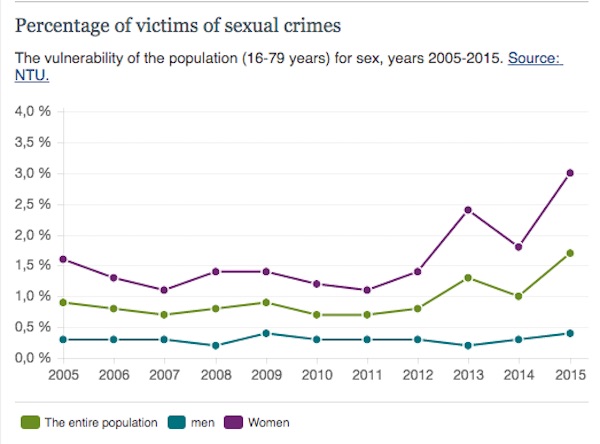
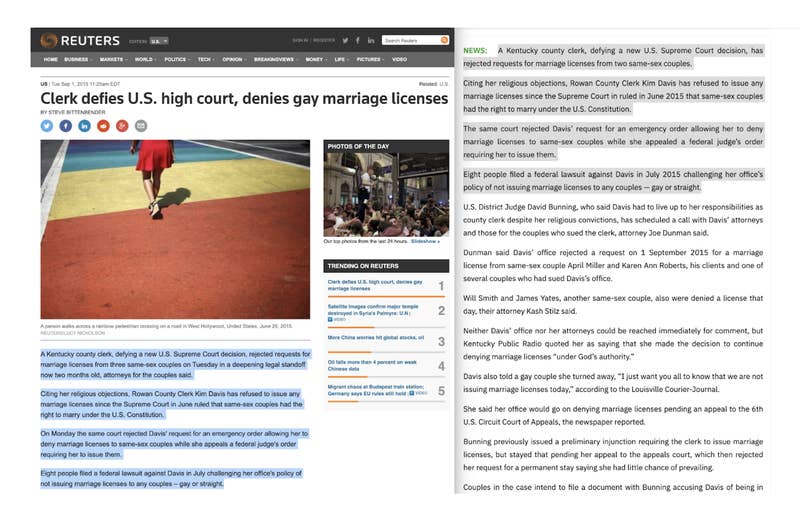
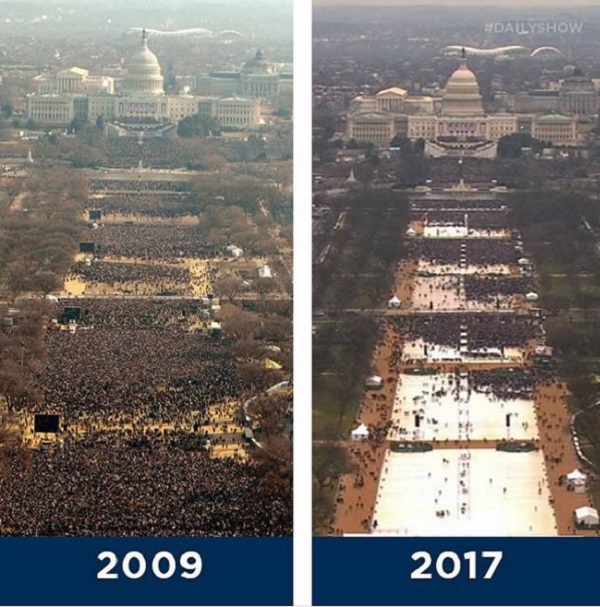
However, my wife's a podiatrist. Part of her job is amputating parts of feet when they're damaged or infected beyond repair. I asked her what it's like for an otherwise healthy adult to recover from a pinky toe amputation, and she said it's basically a matter of waiting for the wound site to heal and then they continue with life as normal. Contrary to popular belief, even a big toe amputation isn't that disruptive. A vestigial 6th toe hanging off to the side? You'd never notice it was gone.
I emailed Snopes and said hey, while I agree with your conclusion, this particular supporting fact is invalid according to an expert in the field. They replied basically that I was an idiot for believing she had 6 toes, and they left the article as-is.
That's not at all what I thought, and I actually agreed with their conclusion. I just didn't like that they were using incorrect facts to support it, and especially didn't like that they reacted poorly to a well-meant correction.
Since then, I've been skeptical of Snopes. Although I think they're probably right most of the time, that left a bad taste in my mouth. Are other people sending them corrections about their own fields of expertise and having them rejected? I have no way of knowing.