Has the NSA ever offered evidence for these allegations? The WSJ article linked says "this action originated from servers operated by a Russian company". That's rather weak evidence to offer up.
Further, why is there no backlash against the DNC or the government themselves for failing to secure their systems.
This entire election cycle just seems like everyone has been acting irrationally.
The articles establish that the attacks came from Russia. But, I'm also under the impression that Russia is a hot bed for hacks in general, so the assertion that the attacks originated from Russia isn't saying much.
I found the SecureWorks article had excellent detail but even they only had 'moderate confidence' that the attacks were sponsored by the Russian Government.
Regardless, I find it interesting that the rhetoric is that a 'nation state was influencing the election', rather than our own security practices are so weak that our political organizations were infiltrated repeatedly.
Yes, I confess that I am prejudiced and believe that black hat hackers per capita is greater in Russia than US. I believe that because of their looser laws around hacking than the US. Though, if you have evidence otherwise I'm open to it. Either way, I don't really care, no country has a monopoly on hackers.
> a Russian propaganda effort and not an independent actor
Let's unpack that statement.
Yes, this was clearly propaganda, hack originated in Russia, so sure Russian propaganda. Not an independent actor, ok, so a hacking group then, or a hacker plus wikileaks? I'm not seeing where they connected the dots to the Russian government.
Look, the US created Stuxnet and destroyed industrial equipment. Meanwhile internal emails are published using phishing attacks and we suddenly call this meddling and are incensed that someone would dare do this to us?
A concerted attack by a nation state actor is very hard to fend off, even by the likes of Google and the NSA (indeed, there was a hack of the NSA by Russia a couple months ago). That can't be blamed on bad security practices.
If we hear someone claiming that there was a zero-day exploit, then I will agree with the assertion that it can't be blamed on bad security practices.
If not, which mean either bad passwords, bad support practice or known vulnerable software, then the nation state angle is just an incentive issue that describe who has an incentive to spread the hacked data.
Just a few months ago, a large mmorpg gaming company had a developer account hacked through spear fishing. The attacker went in, danced around a bit, and gave out free items. Not really the behavior of a nation-state actor. The company, contrary to most other, admitted the fault and that security practices (and basic sense to not ask in the office why the "developer" needed to reset the password) had not been followed in this case, and that human error resulted in the breach. They did not claim that the attack was some complex hacking trick for which can't be defended and thus they be faulted for. It raised my respect for them, and it is something I hope more victims of social engineering would do.
Isn't it trivial to guard against once you've setup 2FA?
After the US conducted its own cyberattacks, they've been beating the drum on cyber security (I've personally seen one presentation from a high level official on beefing up security). Is it not reasonable to expect that the government and two official political parties have a minimum security requirement to protect against common attacks?
I suppose I'm just surprised that the rhetoric is 'boo Russia they interfered with our election' as opposed to 'wake up America, our cyber security is weak'.
The Chinese government famously infiltrated Google and other tech companies in 2009? without using a zero-day exploit. Your argument expects the DNC to have a better chance at defending themselves than Google, which apparently uses "bad security practices". It's wrong.
What evidence would you accept? Short of an admission of guilt signed using the SVR's public key, everything will be circumstantial. And if the NSA has any assets that can give a more direct confirmation, do you really want the NSA to give them up just so that the people who disbelieve the NSA can say "well they're lying anyway"?
As it stands, the public evidence I've seen is
1) The attacks originating from servers owned by Russian companies
2) Pseudo-admission/gloating by low-level officials
3) Wikileaks and Assange's increasingly close relationship with Russia
4) The behavior of the Trump campaign, taking an exceptionally pro-Russian tack. Indeed, the only change they demanded be made to the Republican platform was to take out some anti-Russian commitments.
True, this is all circumstantial. The NSA certainly has more. If the NSA released it, the people who disbelieve the NSA would rightly point out that any really hard evidence could have been planted by the NSA anyway, so it can't be taken as certain that the NSA didn't plant it.
So why should the NSA sacrifice any assets to satisfy them?
The "evidence" you mention is circumstantial and shallow. I have no firsthand knowledge but tend to disbelieve most of the conspiracy theories for the following reasons:
1) if you wanted to launch an attack, how better than to buy a few VPSes in Russia. This is like saying that an attack that originated in AWS US-EAST was undertaken by the US Government. Truly bizarre.
2) The person who did that is apparently more of a pundit than an official.
3) Not sure what evidence you'd point to for this. Assange did an interview for hire than was run on RT, but surely he would happily do interviews with American TV networks if they offered.
4) Trump made a PR stunt remark about respecting Putin and the next thing we all know he's a Russian stooge. Not sure how old you are but during the cold war it was a big relief when Reagan and Gorbachev sat down for talks and everyone calmed down. In light of the frantic anti-Russian rhetoric coming from HRC's political campaign, I view any sort of moderation as a breath of fresh air and sign of maturity.
I think the disturbing issue is that we don't have enough transparency into the DOJ, the FBI or the NSA to have any clue what might be going on. There was pretty much zero reaction/reform after the Snowden revelations. I would not have thought this possible.
I agree with all points. But, when the mistakes of Iraq (remember Powell's evidence for WMD?) are so recent, I have to ask haven't we learned anything?
The solution is for the NSA to share their evidence to a third party and the third party to come forward saying, "yup, I've seen the evidence and it is clear and irrefutable". I believe congress/senate are usually that third party, but for something technical like this I think they would benefit from inviting someone like Bruce Schneier to those sessions.
Will it happen. No. But, should it happen? Yes. Especially if there are to be escalations.
These are excellent points. I think everyone has forgotten that the cold war was a big deal and the world took a breath of fresh air when it ended. The largely unsubstantiated anti-Russian rhetoric is (regardless of whether it is true or false) provocative and dangerous, and I think quite irresponsible.
Perhaps its evidence that the NSA needs to shift resources from its data collections apparatus to securing our nation's own resources. But, no instead its used as evidence to beat the war drum.
My most likely scenario for war is Putin thinking he has more control over Trump than he does, launching an aggressive attack against Russia's neighbors, and then Trump feeling embarrassed and responding in kind.
But I agree wholeheartedly: the first and foremost purpose of the NSA should be securing the USA's IT infrastructure.
>1) The attacks originating from servers owned by Russian companies
This doesn't even hint that there might be Russian involvement. It's utterly irrelevant. Anyone doing something like this will most likely be hosting either in Russia or the Netherlands.
>2) Pseudo-admission/gloating by low-level officials
Low-level officials probably aren't in positions to confirm intelligence operations such as these, and even if they were, such behaviour would hardly be unexpected from an entirely unrelated party.
>3) Wikileaks and Assange's increasingly close relationship with Russia
Would you like to back that up somehow? Not all of us share your security clearance so we can't read the emails between Assange and Putin.
>4) The behavior of the Trump campaign, taking an exceptionally pro-Russian tack. Indeed, the only change they demanded be made to the Republican platform was to take out some anti-Russian commitments.
The pro-Russian tack only stands out if you ignore the rest of their politics... In which case literally anything would stand out, no?
>True, this is all circumstantial
This is all bullshit. There exists significantly better technical evidence of Russian involvement available to the public.
To play devil's advocate, we could use the same line of thinking to incriminate the Clinton's. In fact, a lot of people have done so. And they get labeled conspiracy theorists or idiots for not having "facts" to back up their claims.
I'm not bringing this point up to start a side tangent argument, but just pointing out that in this election cycle, a lot of people held pre-existing beliefs and would justify them in any way they could (i.e. cognitive dissonance).
> Has the NSA ever offered evidence for these allegations?
I'm not sure why it would matter. The perception of the world and a relative place in it, affects voting. That's inherent. China warned against electing Trump, early on, iirc. That's not an issue because it was anti-trump. Transparent political attacks against an ideology, is not news.
You know, when the integrity of the office of the President of the United States is at stake one would think burning a HUMINT or other asset might be worth it.
If the DNC & the Clinton campaign weren't so dirty, the leaks wouldn't have made a difference. Sure, the messenger had an agenda, but they're still just a messenger.
I certainly agree with you to a certain extent, but if we're honest there were just as many things to leak about Trump if they had wanted to do so. If you smear one side to put the other side in power and undermine American democracy on the world stage, then you are influencing the election for the benefit of other countries.
No, there is no evidence of that. What is clear is that 'someone' provided illegally obtained materials to Wikileaks, and all indications are that it was Russia. Russia chose to provide information that was damaging to Hillary Clinton, and not Donald Trump.
If you worked during normal Russian business hours and used a few proxies and a final exit IP in Russia paid for with a stolen Russian credit card, the assumption would be that you're Russian. It wouldn't prove it, though. AFAIK the attacker just guessed Podesta's GMail password, so it could have been a kid in Tennessee[1] for all we know.
It's certainly possible that multiple US intel and law enforcement agencies were incorrect in their analysis. The US intelligence community has a high degree of confidence on this one, but you never really know unless you can see the evidence first hand.
That's what makes this sort of espionage so effective and dangerous. You can significantly damage an adversary by meddling in their elections, with little risk to yourself. Yeah it might raise tensions, but the US is not going to retaliate with sanctions or military action.
I can only imagine in the future that this sort of thing will become a lot more common. No other nation can challenge the US militarily, but anyone can wage war in cyberspace.
> It's certainly possible that multiple US intel and law enforcement agencies were incorrect in their analysis
I receive phishing emails like the one Podesta clicked on from time to time. They typically end up in my spam folder on gmail and get ignored. They can ensnare technically illiterate people, but are not very sophisticated attacks.
The spokesperson said that the phisher was targeting government officials in a number of countries. It's difficult to see why this makes the attacker "state sponsored". Is the idea that only a state would desire to dig into the emails of other states? I'd say that many corporate interests would also benefit from it, as would those doing speculative investment, etc. The list is long.
The other thing is that there was no damage to the US election. Arguably the release of the Podesta emails helped American voters learn more about candidates than would have been possible without alternative news orgs like Wikileaks.
If on the other hand there was a Stuxnet style attack on electronic voting machines, or on traffic lights near polling places, then sure, it's likely state sponsored.
Any teenager with pentesting tools and a VPS could have done all the hacking relevant to this election. Sure he/she could have been on the state payroll, but it counts more as mischief than cyber warfare. That our government and one of our candidates came out strongly beating war drums over it says more than any of the leaks or official statements.
One could argue that news papers already did a good enough job of leaking things about trump, like the audio tape.
I recall that first day of the DNC leaks. The top article on HN was how several US news paper had gone and removed articles about the DNC leaks, with comments that linked to screenshots with before and after shot. The question that I would bring up is if that explains why the DNC leak was first published on wikileaks, while the trump tapes wasn't.
> If the DNC & the Clinton campaign weren't so dirty ...
I don't think they were dirty, and the fact that even their private emails didn't reveal anything serious is a strong indicator. I think Trump is much dirtier, for example.
Also, we assume the emails were authentic, as if Russian intelligence wouldn't conduct a sophisticated disinformation campaign.
- Clinton fed multiple debate questions ahead of time
- Clinton's private speeches contradicting her publicly-espoused positions
- The DNC blatantly rigging the primaries in Clinton's favor
- Bill Clinton using staff paid by the Clinton Foundation for his own personal engagements
- Donors to the Clinton Foundation subsequently receiving favorable treatment from the State Dept.
- Clinton campaign paying protestors to incite violence at Trump events
- The deputy director of the FBI in charge of the Clinton email investigation is a close friend of Clinton's campaign manager and asked for a role in the campaign.
All of that information is only available due to emails made public via Wikileaks and would otherwise have been considered the stuff of loony conspiracy theorists.
Many (all?) of the emails can be directly validated as authentic using DKIM, and no one including the senders/recipients have disputed their validity. Safe to say they are legit.
I think most of those are unsubstantiated and/or exaggerated. A common tactic of the right's demonization machine is to make a flood of false allegations; with the endless negative news, people assume some must be true if the list is long enough.
> Many (all?) of the emails can be directly validated as authentic using DKIM
Even if true, I think DKIM validates only the sending server, not the sender, recipient, or content of the email.
> no one including the senders/recipients have disputed their validity. Safe to say they are legit.
Part of the goal of a disinformation campaign is a sort of DoS attack, overwhelming your target with disinformation so they spend all their time and resources fighting it, and attracting more attention and coverage to it. The Clinton campaign is smart enough not to play that role.
I don't understand this critique. Though "influence election" sounds ominous, in this case it really refers to "influencing" voters by revealing true things, does it not?
One can argue that the means of obtaining the information (hacking) is relevant, but I'm not sure if that's something I'd accept without examination.
Something can be true and be misrepresented at the same time.
For example, the DNC email leaks showed that the DNC was working with Clinton. However, when those emails were sent, it was mathematically impossible for Sanders to overtake Clinton when only counting primary/caucus-assigned delegates (not counting super-delegates at all). The emails were in response to Sanders (mostly his supporters) pushing super-delegates to change their pledged vote.
The emails were accurate, in that they showed the DNC supporting Clinton directly. But they were from a time where Clinton had just become the presumptive nominee, and it is reasonable to expect the party to offer support to the presumptive nominee in preparation for the general election. They were misrepresented as showing the DNC supporting Clinton while Sanders was still a viable candidate with a reasonable chance of winning the nomination.
I say all of this as a disappointed Sanders supporter who knew that he was running a tough race in a party he had just joined without much support from the party's rank-and-file members.
Of course people can draw incorrect conclusions from true facts. But since neither you nor I know the exact truth, we'll never know for sure which party is the one drawing the incorrect conclusions.
In this case it sounds like the NSA has several assumptions:
A. That Trump winning was worse than Clinton
B. That what Russian state-actors do is somehow more "bad" than what American state-actors do
C. That the people of America should be prevented from knowing certain things that "us smarter people in power" can handle, so that they vote for the person "We know is best."
C is pretty scary when you think about it. And I for one, certainly don't trust the militaristically-minded never-tried-marijuana lets-do-polygraph tap-everything-and-ask-questions-later people at our acronym agencies to be more objective judges of long-term good than the average citizen.
Let's (humans) work on stopping asteroids and climate change rather than fight over lines on maps.
If this is the case, why not pull a Comey and release this information before the election?
> B. That what Russian state-actors do is somehow more "bad" than what American state-actors do
Since the NSA is an American agency, it follows that they think themselves less "bad" than the equivalent Russian agency. If they thought themselves worse, why not help Russia?
> C. That the people of America should be prevented from knowing certain things that "us smarter people in power" can handle, so that they vote for the person "We know is best."
Again, if they thought Clinton was the better option (your stated assumption from point A), why wouldn't they release information that appears to show that Russia is sympathetic to Trump before the election?
Let me try to make this simple, because I think you want to, and can, understand what I'm saying.
I'm saying this article quotes the NSA using language condemning what Russia allegedly did.
I'm saying, if we want to condemn this type of behavior we should:
A) Define why it is bad in a general sense (not in the context of a controversial president)
B) Ensure that if we agree it's an morally unacceptable or malicious process, that our acronym agencies do not do this same behavior to other countries (otherwise we are hypocrites and they will quite rightly feel they have justification to retaliate in kind)
And my last paragraph suggests that those in positions of authority are too-close-to-see-it, and that perhaps these distinctions on what is "cyber warfare" and what is "revealing the truth" should be made by congress in unambiguous and neutral fashion.
The irony is that NSA's mandate stems from the same problem of revealing true things by unorthodox methods: it often takes a dirty and ugly tool to perform the tasks necessary to obtain information of interest to national security.
Speaking of dirty tools, it's disheartening that the NSA was adept at gathering data from randos, but not at following Putin's plans.
It is in the interest of every state to discredit Wikileaks, hence Russia "letting slip," they were behind the DNC leaks right after the election.
The intelligence community doesn't get an opinion. Arguably, any comment from them about domestic elections only reduces the legitimacy of their mandate.
For those that downvoted the parent, the NSA denied doing many of the activities that Snowden exposed. The US misled the public building their case to invade Iraq. Just two recent examples of where the government lied for their own interests. So, I think the OP makes a fair point.
Further, the gov. hasn't exactly offered substantial evidence to show that it was Russian government as opposed to hackers working alone. Maybe they don't need to provide the general public with all the details, but showing the evidence to a third party would go a long way to building trust.
It's interesting to note that the hack that likely got access to Podesta emails and subsequently handed those emails over to Wikileaks is recorded in the leaked emails themselves.
It was a typical phishing email scheme easy to recognize and ignore by anyone who's used a internet connected computer for more than a year, but for some reason not by their own IT guy who tells Podesta to click on the link! EDIT: Actually he does send the correct password reset link as well, but still identifies the original email as authentic. The link in that original email is a bitly one - clearly an email from Google themselves lol
Or widespread and obvious collusion and corruption? Don't be thick, these emails revealed just how sleazy and inept the DNC is. The establishment left needs a serious overhaul if they want to do anything of substance in the next four years
How can anyone in this day and age assume when someone speaks poorly of a massive, corrupt oganisation that they think highly of another massive, corrupt organisation?
Shouldn't we assume that everyone outside of those massive, corrupt organisations are tired of the status quo?
"How can anyone in this day and age assume when someone speaks poorly of a massive, corrupt oganisation that they think highly of another massive, corrupt organisation?"
I'd so love for this to be the case. Unfortunately that doesn't appear to be empirically true. There's a lot of political discussion just on HN that shows it's hard for people to grant the other side (whatever other happens to be) that benefit of the doubt. It does take work, though.
I am not trying to get into a who was right/wrong Trump/Clinton/FBI debate. I would like to know why you jokingly assert there was no serious, damaging substance in the leak contents?
Although partisan, this site [0] reveals some very concerning actions.
What evidence exists to suggest that this was a deliberate attempt by Russia to influence the results of the US election in a way that would benefit them?
I'm not asking only how Trump would benefit Russia, but what evidence exists to suggest that this entire ordeal was some elaborate scheme concocted by the Russian government?
EDIT: If this claim was such a stark truth, surely there must exist a smoking gun somewhere? So, where is the evidence?
I don't know if you've ever heard of the NSA before, but they deal in secrets. They don't publish their methods and they don't reveal sources. Remember that whole Edward Snowden thing?
> while Clinton would have maintained the status quo.
Much more likely to increase tensions between US and Russia (perhaps even to dangerous levels). Not saying Russia wasn't "looking for it", but Hillary's anti-Russia rhetoric to help her own campaign wasn't helping.
It was clearly intended to weaken Clinton's public standing whether or not she was elected; it's also arguable that it wasn't really designed to be hard to trace, so it may well have been designed to do the same thing to Trump.
The timeline suggests that Wikileaks was about to try to dump something damaging to Russia and/or Putin (is there a difference at this point?) and then was threatened, backed off, and now may have been folded into Russian intelligence as some kind of asset.
I wouldn't be surprised. It's naive to believe that a small volunteer outfit can take on an entire world of pro intelligence agencies. The USA is not the only country that does these things, and many countries such as Russia do so with a much more "gloves off" approach than we do... especially when dealing with civilians.
In any case I now see stuff about Trump and Putin communicating prior to Trump taking office, etc., and Putin's politics certainly aligns to some extent with elements of the 'alt-right.' Of course the Bushes have their Saudi "investors" and the Clintons have their Chinese pals, so overseas enmeshment with nations of questionable allegiance to the US is not out of the ordinary in US politics. One of the consequences of empire is that an empire's national politics become everyone else's business too. DC is a world capital, and our elections are world elections.
"We have [compromising materials] about Russia, about your government and businessmen," Mr. Assange told the pro-government daily Izvestia. "But not as much as we'd like... We will publish these materials soon."
He then dropped a hint that's likely to be nervously parsed in Russia's corridors of power: "We are helped by the Americans, who pass on a lot of material about Russia," to WikiLeaks, he said.
Really? Is it likely that Americans would pass dirt on Russian government to Assange and let him disclose the source? If they wanted to be so open they could as well announce it themselves, I think.
who could discount such pressing corroboration as "There are Phillip Agee vibes from Assange/Wikileaks/Snowden"? maybe make extremely serious and specific allegations when there's actual evidence for it
And by far, the biggest source of that division has been internal.
If some "nation state" (the catchphrase of the month, apparently) found a crack and applied a bit of leverage -- well, look to yourselves for blame -- and for the solution.
Democrats as well as Republicans. The high side of both parties outsourced, and basically told the dispossessed to "get over it".
>since we have (I may say) all the naval Stores of the Nation in our hands, it will be easy to obtain the mastery of the seas, and then the united force of all Europe, will not be able to subdue us. The only way to keep us from setting up for ourselves, is to disunite Us. Divide et impera. Keep us in distinct Colonies, and then, some great men, in each Colony, desiring the Monarchy of the Whole, they will destroy each others influence and keep the Country in Equilibrio.
No kidding; this was obvious from way back. I'd be very interested to learn the back alley reasons why this was treated as significantly less important a drum to bang in the bulk of the media than the Clinton emails.
It also needs to be brought out in painful clarity: disinformation campaigns are real; they are not always lies; sometimes they are carefully pruning the truth to ensure the chosen outcome comes out to play.
It also needs to be brought out: the cypherpunk model (anonymous hackers sourcing anonymous data) has exploded messily under the presence of coordinated group of actors come out to subvert the hackers.
Makes me wonder how to get involved with public policy, to be honest.
> I'd be very interested to learn the back alley reasons why this was treated as significantly less important a drum to bang in the bulk of the media than the Clinton emails.
IMHO, a large segment of the media is not really journalism, but ideological promotion. This includes Fox properties (Fox News, the WSJ - at least their editorial page, NY Post, various UK publications, etc.), Rush Limbaugh and most talk radio, right-wing blogs, and many others. Therefore a large segment of the news media doesn't cover scandals on the right, while everyone covers them on the left:
* An unsubstantiated hint of scandal on the left gets blanket coverage from the ideological sources. Consider the fake Planned Parenthood emails, or the fake investigation of the Clinton Foundation.
* A substantiated scandal on the left is covered by everyone, the ideological right as well as the real journalists. For example, the NY Times broke the Clinton email server story and covered the Russian/Wikileaks emails extensively. Of course, Fox et al. covered and promoted these stories to maximum extent.
* A substantiated scandal on the right is covered only by real journalists, and ignored (or used as fodder for spin and attacks against accusers) by the ideological right.
* An unsubstantiated scandal on the right is ignored by everyone.
Not to disagree with one half of your assertion (that media leaning right is corrupt and broken), but you appear completely blind to the media that leans left being equally corrupt and broken. Many scandals about the left were covered up and hidden away. You just didn't look for them.
I struggle to find any mass media that hasn't been rendered completely useless during this election cycle. To contrast your Fox/WSJ/WaPo list of egregious terrible media, consider BBC, CNN, TYT, HuffPo, Slate (I'll stop there, but I could list 50 more).
Honestly, the best coverage I could find in this last election cycle came from dreary underground groups. All major media had clearly picked a side and was uninterested in providing useful, factual information.
> To contrast your Fox/WSJ/WaPo list of egregious terrible media, consider BBC, CNN, TYT, HuffPo, Slate (I'll stop there, but I could list 50 more).
I agree that much is bad in that it's sensationalism, which provided Trump with free media and made them useful idiots (the technical term, not a pejorative) for his campaign.
But I don't agree:
1) That it's the same as ideological news; CNN has some real journalistic standards and tries not to lie.
2) That the NY Times in particular, or the BBC, belong in that category. They were neither sensational nor ideological, IMO. (I wouldn't have listed Slate, but I don't know them well enough.)
Certainly the serious journalism outlets are flawed, being human institutions, but I think they do a pretty good job. It's too easy to say, 'it's all bad' - it saves us having to carefully discern and accept imperfection.
That's factually a a half false equivalency, and will badly mislead you into conspiracy theory.
- Fox, WSJ, and WaPo are news organizations. HuffPo is definitely not up to their standard, being, AFAICT, a collection of blogs; Slate is primarily essays- not news.
- CNN and BBC are actual news orgs.
Leaving the BBC out of it, as they are British. Please demonstrate where CNN covered a left scandal up.
IMO, Fox News is clearly the leading source of ideology, and the WSJ's editorial page, if not their news (though it's owned by the same people as Fox News), is the same ideology repackaged for the 'elite'.
In my experience, that's clear to people from everywhere on the spectrum. There's a reason the ideologues on the right only listen to Fox.
> IMHO, a large segment of the media is not really journalism, but ideological promotion. This includes Fox properties (Fox News, the WSJ - at least their editorial page, NY Post, various UK publications, etc.), Rush Limbaugh and most talk radio, right-wing blogs, and many others. Therefore a large segment of the news media doesn't cover scandals on the right, while everyone covers them on the left:
Quite so. I don't wonder about those. I wonder about Time, Newsweek, CNN, MSNBC, CBS, etc. The Clinton emails on her private server were an error in judgement; minor compared to most of the muck that came out about Trump.
That a nation-state was attempting to influence the elections should have been a five-alarm fire in all the media, but particularly anything that isn't bought and paid for by the Murdoch crew.
> I do agree that the print-oriented news groups seemed to have their head more screwed on than the cable-oriented ones.
Interestingly, I've had the (very broad, over-generalized) hypothesis that the longer the period between publication dates, the better the quality tends to be. Cable news, with it's minute by minute updates, is the worst. Daily newspapers are better; weeklies better yet (The Economist); monthlies and journals are the best periodicals; and then books are best.
Of course, daily newspapers now update 24/7, weeklies are disappearing, and no theory holds universally.
> A lot of blather has gone on about Real Journalism
I haven't heard it - I wish there was more. But I think it's dangerous and false to say it's all equivalent and no source is better and significantly more accurate than others.
> I haven't heard it - I wish there was more. But I think it's dangerous and false to say it's all equivalent and no source is better and significantly more accurate than others.
Quite so. But there's been a cycle of "bob's a real journalist, not like the others; sally's a real journalist, not like the others" a LOT this year.... regrettably it related to whatever dirt they released. Very No True Scotsman-esque.
It's been super clear that certain news orgs: NYT, WaPo, and a few others, have been on the ball, focusing on real issues, real dirt, real ethics. Other orgs (Breitbart, HuffPo) are largely organs of ideologies. Vox is somewhere in the middle: real news (more so than HuffPo), but with an avowed Left play.
Right now I happen to be a subscriber to the NYT and the New Yorker. WaPo might also get my $$$ in the next few months or so.
I have [potentially unfounded] assumptions that groups within the NSA/CIA had a hand in the leaks. I'm sure the corruption of selling government positions and influence of foreign money/bribes happens in both establishment parties. Bringing this kind of corruption to the public's eye rings of the 'patriotic' motives of Snowden, etc.
Is there any practicality to claiming the hack originated from a "nation-state"?
Any time news worthy hacks are ambiguously attributed to massive geographical regions (i.e. CN, RU) which can easily be proxied through from anywhere in the world, how is it any different from saying "we're certain the hack originated from somewhere on this planet, trust us."?
I believe that a nation state did use wikileaks to influence the election. I just think it was the U.S. Also, Assange hasn't been seen publicly in ~42 days. You can see the timeline on assange.net (not Julians personal site). It doesn't speculate, just provides facts. Very concerning.
Um... he's just completed a two day interview over rape allegations and issued statements about it. I doubt that the Ecuadorean embassy, Swedish prosecutors, Assange's legal team and the @Wikileaks Twitter account are working together on this one...
no. his last confirmed public appearance was early october. The checksums of the evidence files don't match post his internet going down. The questions were relayed to him and his lawyer was not present. Do your own research, don't take my word for it, however the "wikileakstaskforce" account was made in October. There is significant skepticism he is alive and the embassy has a bay window which his cat was seen at yesterday. He could simply pull back the curtain or sign a document with the private key to quell skeptics who have become increasingly vocal since his internet was severed over a month ago.
edit: it is nearly 7pm local time in London. Do you not find it odd wikileaks has been rather silent that it's founder has likely completed giving a full days deposition to exonerate him of the crime he is seeking asylum for...in that vbery embassy. A half-decade or greater ordeal. They posted an infographic yesterday, an NEA Bill Clinton leak, and appeal for pardoing Chelsea Manning. No mention that this is day 2 of a major fight for Assange.
edit 2: In fact, according to google[0] there has been NO news about it. There are ~5 stories and none of them relating to todays depo.
He could simply pull back the curtain or sign a document with the private key to quell skeptics who have become increasingly vocal since his internet was severed over a month ago. But that assumes that calming paranoid people down is high on Assange's list of priorities, and that assumption alone is pretty heroic.
If your conspiracy theory involves Swedish prosecutors, Ecuadorean embassy staff and Assange's legal team all conspiring not to notice that he's not around to take their interviews or phone calls and doesn't involve public statements released in Assange's name looking any different to his usual output, it's not a very good one
I am simply stating that there is no proof he is alive, and hasn't been for ~40 days. The checksums don't match-- which is a bit odd as they have consistently matched pre-comitments until now. That said, I would assume that if Assange is alive (and hasn't escaped the embassy somehow) that he would want people to know he was alive. If very powerful people were trying to kill you, you would likely not want to make it a habit to disappear for >1 month to elicit shock value. In the event someone actually does kidnap/threaten/kill you no one would think it odd for 40 days.
Again, I am not really speculating. There is no proof he is alive. Many have asked for it. The twitter poll vote was for a video, the pilger interview was a pre-recorded video and his spokesperson said he was "very ill and his condition had deteriorated" and the prosecutor relayed the info to him via 3rd party and barred his lawyer Samuelson from being present. So IDK what is going on, but something feels very strange about this.
> I am simply stating that there is no proof he is alive
rolls eyes
Apart from the fact that his hosts, his own legal team, and Swedish prosecutors have all publicly vouched for having interacted with him in the past couple of days and even Pamela bloody Anderson has met him since his last "proof of life", none whatsoever.
Also, there is not cryptographically sound proof that I am alive, so it is not really speculating to suggest that you are interacting with a ghost.
This particular ghost finds it pretty hilarious that anybody could consider it plausible that powerful people wanting to kill Assange would form the largest and unlikeliest group of conspirators ever and then drip feed as much information drawing as much attention to his situation as possible to the press after doing the deed, and consider it unlikely that Assange might do something to elicit shock value.
> Apart from the fact that his hosts, his own legal team, and Swedish prosecutors have all publicly vouched for having interacted with him in the past couple of days and even Pamela bloody Anderson has met him since his last "proof of life", none whatsoever.
Links? PA met him over a month ago. I have not seen the prosecutor state she has met with him.
> there is not cryptographically sound proof that I am alive
Well, to my knowledge you aren't being hunted by state government. You also didn't publicly state, build, and confirm a contingency plan and take pains to cryptographically verify most of your disclosures.
I am again not speculating further. I am stating that despite his extremely precarious situation and his quarters being in a major city literally surrounded by reporters and with a balcony and windows he has not made an appearance despite tripping of his deadmans switch. Further, he is a pretty arrogant guy so I would be surprised he wouldn't be not only commenting on his successful influence of the election, his potential to exfiltrate himself from this legal mess or just generally make some statements, it is seeming as if he is no longer able to do so.
When your dead man switch goes off, and you have encouraged people to verify your identity in this scenario, it is pretty fucking weird there has not been cryptographic proof. Believe what you want, but clearly something is amiss.
Pamela Anderson met him twice since October 4th, most recently this week. As did a Swedish prosecutor, who just might have had something to say and not gone back the following day if she'd been interviewing a mannequin. His legal team issued a statement over the interview saying that he was "very happy" and had "prepared himself very carefully". His website issued a statement in his name about the elections on November 8th. Another press release in his name issued November 14th complained that only his Ecuadorean counsel and not his Swedish counsel were there but said he was cooperating with prosecutors anyway.
But yeah, I'm sure none of these people really interacted with him in any way because he hasn't reactivated his dead mans switch since October 4th. Your evidential standards and blind faith in Assange's desire to quell rumours about conspiracies against him are totally reasonable here.
The "Democrats" didn't "steal" the nomination from Bernie Sanders. Bernie Sanders got crushed in the Democratic primaries, by a margin almost ten times that of what Obama achieved over Hillary Clinton in 2008. Even if leaked emails had shown material support for Clinton over Sanders, let alone before the nomination had become a foregone conclusion, there's nothing the DNC could do to explain the extent to which Sanders lost. He lost decisively, both by the same pledged delegate count margin Obama achieved and for which his team was praised as delegate counting geniuses, and by a massive gulf in the popular vote.
Uh, I would count that media companies shown to be colluding with Hillary ran delegate counts with superdelegates included to be a massive propaganda campaign to influence voters for Hillary by making them feel there's no viable alternative.
It's hard to estimate the impact of that, and I dont recall it happening as much in 2008.
No, I think virtually all of the vote tallies, across virtually all media showing superdelegates included with pledged delegrelevant, by prsenting Bernie as having to make up over a thousand votes instead of dozens, early in the race.
That said, you bring up relevant points and I think we should agree to disagree. (Not much to be said, just correcting your summary of my position.)
If anything, the media bias is in exactly the opposite direction: a horse race between Sanders and Clinton sells advertising. It's literally the reason we have the term "horse race" --- because the media has been selling us this story for generations.
This includes >700 superdelegates which are not tied to primary contests. Hillary won almost all of these. If this was 100% up to voters (which admittedly is not how this contest works) it would be closer. That said, she certainly influenced those SD to vote for her well in advance.
You're misreading FiveThirtyEight. Quite how you're misreading it I don't know, considering since "Because superdelegates can change their preferences before the convention, we are not including them in our delegate targets" isn't particularly unclear even without the emphasis I've added.
As it shows, she was nearly 400 ahead in pledged delegates based purely on primaries even before considering that expected most of the additional 700 superdelegates not tied to primary results were expected to vote for her as well.
Of course she influenced the superdelegates deciding to vote for her before all the other votes were counted. Influencing people to decide to vote for you and publicly endorse you is what people running for office are supposed to do...
Not only does that count not include the superdelegates, but the page you linked to, in the only mention of superdelegates, below a count labeled "pledged delegates" (who are not superdelegates), specifically says they aren't. Further, by the logic you just used, had the count included "superdelegates" that Hillary Clinton won entirely, you would be suggesting that Bernie Sanders would have won the Democratic Primary without them (he would not have).
Bernie Sanders lost decisively. But because Wikileaks strategically leaked the right hacked emails, his supporters believe instead in a false alternative history. It's Wikileaks you should be angry at.
Point ceded, Clinton did win without super delegates. I misread that. That said, I believe sanders would have beaten Trump. I also believe the wikileaks emails and do not believe it was a fair contest (primary or general election). Again, I agree you are correct Hillary won, however I do not believe this was "fair". I believe the emails to be genuine as they were not disputed, and some were released by the government itself. I won't try to convince you how to interpret the content, but much of it certainly seems clear to me that between the non-agression pact, references to keeping in check due to their "leverage" over him, and the entire internal DNC scandal with DWS, ect. that this was anything but a typical primary.
Sanders would have gotten his ass kicked against Trump. I can't make that argument as conclusively as I can the argument that the DNC didn't steal the primary from him, but I personally believe it just as firmly:
* Turnout was lower for both the D's and the R's this cycle. R turnout would not have been lower if the D's had run an avowed socialist. Suburban/exurban voters --- a natural R cohort Clinton actually outperformed with in this cycle --- would have turned out in force for the GOP.
* Sanders policy proposals and the language he uses to talk about it aren't in sync with the white working class (really, any part of the working class); it's "let them eat college tuitions". Unemployed tool & die engineers aren't looking for college subsidies, and they already survive on handouts ("long term disability"). That's why they're angry.
* Sanders did terribly at engaging the African American vote, so much so that insider stories got written about how messed up their African American outreach was. The narrative of this election is that Clinton lost in part because she failed to mobilize Obama's coalition. But Clinton crushed Sanders in the primary with exactly that coalition, so the evidence suggests Sanders would have done even worse with the hand Clinton was dealt.
* Sanders was terribly vulnerable. His supporters like to believe that HRC gave it to him with both barrels during the primary. But she did not: she was a complacent candidate who believed (correctly) in the inevitability of her nomination and (incorrectly) in the inevitability of her election. It is simply a fact that Sanders did not receive a serious vetting during the primary, and to see that, you only have to see what stories didn't come up during the primary:
--- Sanders chaired Senate VA during the Veterans Health Scandal and was on VA during the Walter Reed scandal. Unlike Benghazi, these were real failures of oversight that harmed large numbers of American veterans. Not only that, but Sanders has in part built a Senate career on support for veterans benefits, so the attack ads write themselves. How culpable was Sanders for any of this? Fuck if I know. That's not the point.
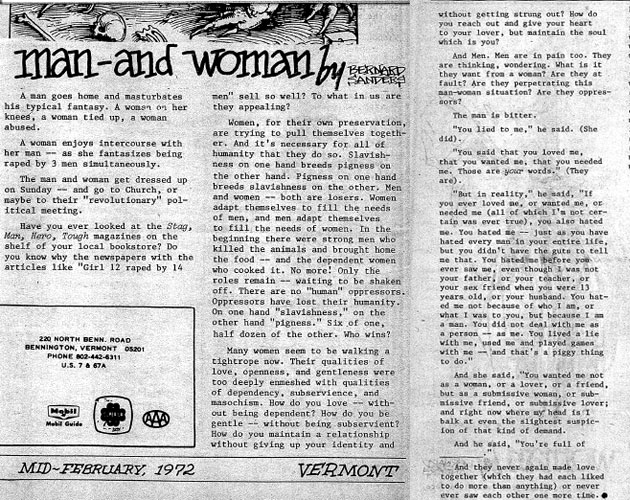
--- Sanders wrote an essay that stated women fantasize about being raped by three men simultaneously. Does that really matter? Almost certainly not. That's not the point.
--- While Trump was starting his real estate "empire" with help from his father, not only was Bernie Sanders not winning victories for the working class, he was collecting employment (in his mid-30s) and stealing electricity from his neighbors. Does that matter? Not to me; to me that makes him more relatable. But that's not the point.
--- Sanders is not only a supporter of, but personally profits from, a scheme to transport toxic waste from Vermont and dump it in Latino communities in Texas. Does that make Sanders an "environmental racist"? Well, in fact, yes it does.
Are all of these things dispositive? No. But they give the lie to the idea that Sanders would have crushed Trump because Clinton had too much baggage to run with.
These are all fascinating facts and new to me. I actually didn't know any of these things. On balance, I think he is a leagues better person than Hillary or Trump but this definitely underscores hat all politicians make some terrible compromises/must do bad things.
We will never know if Trump would've beat Sanders but had he been on the ticket, I likely would've voted for him instead of writing in "no confidence". Interesting.
Could this not be because Clinton was wildly unpopular? Even more unpopular than she was during the primaries?
>Sanders wrote an essay that stated women fantasize about being raped by three men simultaneously.
This was in 1972, and he apologized for it. But I think the context is important. He was writing about shifting gender roles and unity between genders:
He starts the essay off with 2 ultra-stereotypical examples of an extremely dominant man and an extremely submissive woman, then goes on to mock the ideas of dominant men and submissive women. Crude, yes, but he elaborates the point via allegory if you read the whole essay. It's a pretty bad essay by any measure, but it's not sexually charged or sexist at all, in my opinion.
>Sanders is not only a supporter of, but personally profits from, a scheme to transport toxic waste from Vermont and dump it in Latino communities in Texas.
I'd also suggest that there is absolutely 0 evidence that this was racially motivated in any way. I significantly doubt that Sanders, a lifelong proponent of civil rights for all minorities, picked the town because it was 2/3rds Latino or that that had any factor.
I agree the media perhaps should have covered these issues more, but compared to Trump's and Clinton's scandals, I think they're basically nothing.
All that said, I agree Clinton beat Sanders fairly. I think the DNC did unethically collude to help Clinton and marginalize Sanders, and I think the superdelegate system should be removed, but she would have won either way.
I think it's very unclear if he would've fared better against Trump than Clinton did. I don't really think any of us could make such claims one way or the other. That said, if he's still around to run in 2020, I think he'd have a serious shot.
no idea why this is downvoted. The emails provide this evidence. It can be searched literally right now on wikileaks. If the emails are real, these FACTS are included in emails:
- Campaign used influence to influence RNC via Pied Piper technique of promoting the weakest candidates...it worked.
- Campaign planned to oust DWS. They influenced the DNC to promote HRC over Sanders.
- Coordinated with DOJ.
- Coordinated with reporters both in feeding questions to RNC candidates and getting leaked questions in debates HRC was participating in.
- Stage protests at DJT rallies.
TO BE CLEAR, whether you believe the emails are genuine or not they DO contain this content and that is nearly indisputable.
Can you draw up a set of guidelines for what facts we are and are not allowed to discuss here in the US for fear that we might be encouraging a war with Russia?
First of all, I didn't say anything about what we are "allowed" to discuss here.
I just think we should be honest with ourselves about what we're doing (by "we" I mean America, not HN). I remember what it was like when we were leading up to war with Iraq and all the intimations about Russia of late feel the same way to me. Lots of big accusations that are baseless but sound truthy.
As far as this particular piece of news, I would push back by suggesting that the Democrats blew the election by running a crappy campaign with a charisma-less DC insider that Americans mostly dislike.
Do I then get to accuse the DNC and everyone who pushed for Clinton against her primary opponents of colluding with Russia? I expect not.
The NSA kept a real, meaningful scandal--and not a blowjob scandal, but one material to how the President will govern and look out for American interests--buried until after the election. While the FBI released a pseudo-update on a scandal of IT incompetence the week before the election after dragging it out for months.
It's hard not to be bitter about how politicized both these agencies are. I can see arguments either way about how and when things should be released, but there should be consistency. The fact that they're inconsistent and always happen to come up anti-Democrat is pretty telling.
ETA: As misja111 points out below, the NSA and CIA did announce this before the election. So, my ding against the NSA's political integrity was uncalled for. Leaving this comment here so no one is confused by all the replies.
Bill Clinton was not impeached for a blow job. Bill Clinton was impeached for committing perjury in a sexual harassment lawsuit brought against him by a former employee, and trying to convince other witnesses to commit perjury as well, obstructing justice. In addition to the House of Representatives impeaching him, he was found in contempt of court by the judge presiding over the lawsuit and had his license to practice law suspended for violating ethics rules.
That's all well and good, but the scandal part of it that captured the public's interest was certainly because of the blowjob/where'd the cigar go aspect of it. And I wasn't even referencing Clinton in particular--I'd put things like Anthony Weiner's sexts and Larry Craig's foot tapping in the same category. In the sense, they're on the trivial side of things and mostly get the public attention because of prurience, not salience for good governance.
The public was so interested in the "blowjob/cigar" aspect of the story that the Republican party suffered a historic defeat in the midterms that were seen as a rebuke to the GOP's attempt to make hay out of the story, and ended Newt Gingrich's career.
That ended his job, not his career. He's been relatively politically active since then, being one of the top contenders for the presidential nomination from the exact same party despite other scandals of a sexual and moral nature. Definitely not a career-ender, apparently.
At no point has Gingrich ever been a contender in any Presidential race. Getting on TV doesn't make you a contender. Even Herman Cain managed to do that.
Okay, then, the almost $500k/yr he was making a year in speeches and his active involvement and relative success in politically oriented consultancies. Take your pick. He's still being pretty damn successful in political spaces.
edit: ha - misspoke, it was actually almost $5M / year
My point is that, his hypocrisy notwithstanding, it has maybe one millionth the importance of the fact that a foreign strategic competitor has significantly influenced American democratic processes in order to extract more favorable policies from the USA.
Republicans use state powers, law enforcement and the judiciary, to criminalize and oppress their opposition and to promote their own interests. I don't see Democrats doing the equivalent of any of the following. I'm not saying that to be partisan, but to point out a very serious situation that has become normalized - I would say the same if the Democrats were doing it. I don't think it's an exaggeration to say it is semi-authoritarian.
* Bill Clinton was impeached. As you point out, he did commit perjury. However, the legal standard for impeachment is high crimes and misdemeanors; it was one of only two impeachments in 240 years (EDIT: Plus a third, Nixon, who IIRC would have been impeached if he hadn't resigned). Those are very high standards; obviously if Bill Clinton's wrongdoing was the standard far more would have been impeached. In fact, perjury is very rarely prosecuted for anyone. For example, GW Bush ran an illegal surveillance program - a far more serious crime - and there were no consequences.
* The 2000 Presidential election was decided by Republicans on the Supreme Court. Arguably it may also be a legally legitimate decision, but it was apparently a political one, as the vote was party-line.
* Democratic voters are accused of criminal fraud, with no evidence, and the GOP uses the government to suppress their voting.
* Organizations that register Democrats to vote are criminalized and shut down. Acorn is one prominent example of many.
* Organizations that promote Democrat-favored causes are criminalized. Planned Parenthood is one.
* The GOP used state powers to investigate Hillary Clinton endlessly, on Benghazi and her email server (note that nothing was found for either). Trump is still leaving open the possibility of continuing to investigate her. It cost her the election. Compare that to Trump, for whom there are no known investigations despite brazen sexual harassment, sexual harassment of minors, tax fraud, and much more.
* The FBI openly took actions, contrary to its rules and traditions, that undermined Clinton and probably cost her the election.
The list goes on and I think the pattern is clear.
> it was one of only two impeachments in 240 years
Technically true, but there was that other time when the President resigned rather than face impeachment, which should be counted. If anything, both times that the President was impeached shouldn't count since both were politically motivated. In our country's history, only Nixon--the one you didn't mention--committed crimes that warranted impeachment.
I absolutely agree. It should be anathema; people of all parties should unite to vote out anyone who tries.
However, the article talks about Democrats scheduling local elections (e.g., school board) at times when fewer people vote (e.g., odd years). If true (FiveThirtyEight is credible and the article seems well-reseached), I oppose the practice but I don't think it is at all equivalent to widespread programs intended to actually stop people from registering or voting.
Is there evidence of Democrats doing something more substantial?
The article talks about Democrats deliberately scheduling local elections at times when it's harder for people to make it to the polls: a weekday that's a separate day from a national election when people might be taking time off work to vote anyway. I would call that fairly substantial; that sort of "make it hard for people to get to the polls" thing is _exactly_ what lots of people rightly complain about Republicans doing. And it is in fact quite widespread; as the article notes it's going on in 44 out of our 50 states.
Update: For the rest, if you're looking for exact counterparts to your list of talking points, I don't have the time to look up references right now.
If you just want a general example of malfeasance, look no further than the systematic way the Democrat-dominated Illinois legislature discriminates against third-party candidates by requiring different numbers of petition signatures for different parties to get on the ballot at all. I have no doubt whatsoever that they'd do this for the Republican party too if there were just slightly fewer Republican voters in the state.
This sort of thing varies by location, of course; my experience in Massachusetts has been that there is a lot less of that sort of thing going on than in Illinois. We do have the election-scheduling thing in Massachusetts, though...
I agree the Democrats do things I don't like, and they should be addressed. Again, I don't think it's at all comparable to what I posted above and I think false equivalencies, often in the name of non-partisan 'fairness' (I don't know if that applies to you), are dangerous.
A good point and I'd forgotten about that allegation; thanks. My thoughts:
My memory is that the IRS was legitimately investigating illegal campaign finance, which happened to be among some Republican groups. GOP members of Congress used their power to shut down a legitimate law-enforcement investigation. (Note that the GOP has a history of this: They also have effectively disabled the Federal Election Commission by appointing members who veto almost every enforcement action against Republicans.) If my memory is accurate, it's further abuse of state power for the party's interests.
As a result, the U.S. has no campaign finance enforcement AFAIK. The IRS won't get near it, fearing Congressional Republicans, and the FEC has been hobbled.
Finally, even if my memory is false, it doesn't match up to the GOP pattern of behavior.
... but later the whole line of inquiry and interview of him was ruled in court to be immaterial to the case. So there's some disagreement with the perspective you're outlining.
If correct (and I'm inclined to believe them here as it's a key component of their process), then they would have no knowledge one way or another as to who the true submitter really was. I think Assange is bending the truth by denying the source of the submission—if his staff's statement is true then he would have no way of knowing.
Under Occam's Razor I'd conclude that they got played in the exact way that was intended.
It seems very likely to me that the NSA has means to determine the origin of the source that Assange does not have. He's as easy to fool as any other single person who sits in an embassy with a laptop.
So yeah, I would give more credibility to the NSA than to Assange in this case, without any need to accuse him of lying.
If true, but embarrassing leaked emails had been obtained by a non-state actor, news outlets would do what news outlets do, and they would publish it. There would by cries to investigate and prosecute from the embarrassed party but typically at the end of the day little would come of it.
The fact that it was a state actor is a red herring. Would it had made any difference if it were an unknown US hacker?
Further, Hillary Clinton truly has no one to blame but herself for her FBI problems. Four years of dissembling and foot dragging caused this. Additionally, what the Wikileaks hack shows is that her carelessness almost certainly meant that top secret emails were hacked by an adversarial state actor as well.
> Four years of dissembling and foot dragging caused this.
This is an interesting reminder what this whole scandal is actually about - Benghazi.
The whole dragnet search through emails was actually impelled by a frantic search for some way to claim that Clinton caused the death of American ambassadorial staff by malice, or at least gross negligence. This is a concept that has been thoroughly investigated and debunked at this point. In fact we've probably spent more Congressional time on this than Watergate at this point, and they haven't found a single misdeed. It's the biggest McGuffin since Citizen Kane.
But that's how you do it when you're determined to manufacture a scandal - if you can't find dirt then you can go digging and find some point of non-compliance with the investigation, just like how an investigation of Bill Clinton's blowjob was turned into an investigation of (gasp) perjury. With enough months in front of a Congressional panel, everyone will slip up sooner or later. After all, as the lawyers say - "everyone commits three felonies a day", and it's probably more than that for a government official given all the regulations they need to comply with. They will eventually find something.
By the way, back in the day Watergate was actually a big scandal and news outlets certainly would not have knowingly published private communications that were illegally wiretapped. I think that really goes to show how far American values have fallen since the 70s. Our media has abandoned their journalistic values, and is little more than an outlet for tabloid gossip and clickbait.
Not only do they not show that, but emails using the official State Department mail servers were in fact hacked by Russia during the same time period. Her mails were very possibly safer on her own server.
Further, Wikileaks didn't leak her State Department emails. The State Department emails we saw were published by the US Government. Wikileaks published hacked emails from the DNC and from John Podesta.
> The fact that it was a state actor is a red herring. Would it had made any difference if it were an unknown US hacker?
I think it makes a huge difference. The specific parties involved and their intent matters.
Suppose this were a shooting instead of hack. If an unknown US citizen shoots up a mall, it's a headline. If a member of a Foreign military shoots up a US mall, it's an international incident.
Inaccurate analogy. There are several analogies one can come up with to emphasize the "who" over the "what" and there are several analogies that can do the opposite. In this case, even if the "who" matters in some other context, it shouldn't matter with regards to the "what" which is the same regardless. So while the who does matter, that's a different question and a different discussion and arguably shifts the discussion away from the what.
The analogy is the least important part of my statement.
I'm not entirely clear on what you're saying. Just to be clarify, suppose that the hack was done either by a script kiddy, or a nation state. Are you saying it doesn't make a difference?
To the original question of "Would it had made any difference if it were an unknown US hacker?", I believe it would not have made any difference in the election which is what I believe is implied by the question. As to whether it makes a difference at all, sure it does in other contexts (e.g. foreign diplomacy), but the email writers and the contents are what helped make the difference in the election. Blaming the releasers is like blaming SMTP or computers, it shifts responsibility.
Isn't it illegal for Federal employees to attempt in any way to influence an election? Couldn't such a thing be considered "attempting to influence" and expose them to losing their jobs or worse?
That and much of what the NSA and CIA does is classified, so they may not be able to release much of what they know without first declassifying it. From what I hear it's easy to stamp secret or top secret on something but bureaucratic hell to undo classification, giving classification kind of a roach motel effect.
> Isn't it illegal for Federal employees to attempt in any way to influence an election?
It is, but law enforcement and Congress only investigate Democrats at high levels, not Republicans. Trump did many things that may be illegal, but there were no FBI investigations. See this post for more:
> Couldn't such a thing be considered "attempting to influence" and expose them to losing their jobs or worse?
The maximum penalty under the Hatch Act is removal from office, so no "or worse" here.
In hindsight that's rather a major fault with the Hatch Act, since it means there's little downside to influencing the election for someone who doesn't care about losing their job, or who expects to lose it anyway if the opposition party wins.
When would it have been alright for the FBI to release the update? If they waited until after the election, the other side would accuse them of covering it up—appropriately so.
My direct response to your question is: the same as when the NSA released theirs. Like I said in the very post you're responding to, there are arguments both ways, but to pick and choose which argument you're using in a way that always happens to disadvantage one candidate is a scandal itself, and likely a criminal violation of the Hatch act.
And as an aside, it was an update to the effect of "we don't actually know anything new, but we found something that might hold something new." And, as we know now, didn't actually contain anything new. There's a reason they call it the October surprise.
When they found new evidence relevant to the Clinton case.
As it stands, the situation was "we found some emails of the husband of the aide of a person we investigated". That's not directly relevant to the investigation in any way, and it's not evidence of wrongdoing. They drastically jumped the gun by publically linking it as they did.
At an absolute minimum they should have waited until they knew there was some data both relevant to the investigation and not previously known to the FBI. They should probably also have made sure the evidence implied wrongdoing, out of concern of influencing the election.
This is exactly what Comey was told by the Justice Department, his subordinates, and pretty much everyone else.
> When would it have been alright for the FBI to release the update? If they waited until after the election, the other side would accuse them of covering it up—appropriately so.
The FBI's and Justice Department's long-standing rules on the issue are: 1) Never discuss ongoing investigations; and 2) take great care to never say anything that will at all affect an election.
So while your question is an interesting one, the FBI has two clear, long-standing answers and rules, and they violated them.
You only know that in hindsight. The FBI didn't know if anything was there before they had a chance to investigate, and they also didn't know how soon the investigation could be completed. So, yes, they did risk a possible scenario of coverup accusations if they decided to not notify congress the moment they started investigating again.
The right certainly would've complained about a coverup if Comey hadn't said anything about the additional emails before the election. It was still a gross breach in protocol and wholly inappropriate.
As a rule the FBI simply does not announce they're investigating someone because it can damage the investigation, and because it could unfairly tarnish someone who has done nothing wrong.
The encroachment of political calculus into the Justice Department is not a good thing. Let Democrats or Republicans howl about whatever, the DoJ and other law enforcement and intelligence agencies need to do their job the right way, regardless of partisan complaining.
There are various interpretations, but the most generous version of it has that Russia and Trump had a coincidence of interest in seeing Clinton defeated, and played off each other to maximize the chances of Trump's victory.
The least generous is the Trump is controlled by the Kremlin, and Putin has installed a toadie he has under his thumb to the US Presidency.
(Just for the sake of argument, assuming Russia is involved exactly as stated...)
I don't think Russia had any particular leverage over Trump.
Rather, Russia is desperate to avert war between 2 nuclear armed powers.
Most US citizens have no idea how tense relations have gotten between Russia and the US in the last year. Hillary's stated policy of implementing a no fly zone over Syria would have almost certainly led to armed conflict between the US and Russia.
As for Trump, it remains to be seen what happens, but he has said he wants to work with Russia to take down ISIS, which is a mutual problem both countries face, and to me that cooperation sounds better than WW3.
Also, there is evidence of Russian government collaboration with Trump's organization, and the Russian ambassador said his government had talks with Trump's people during the election.
The government needs to shrink so it can't be bought. It's ridiculous that the party which should be anti government hasn't reduced the federal agencies.
No need to buy them off at that point because they won't be in the way. The only reason to lobby government officials is to dismantle laws that protect others at your company's expense or to put in place laws that protect your company at others' expense.
Because people seem to misunderstand this: a government that isn't all-powerful may be easier to buy off but not really. There would be no point in buying off a government that couldn't do any favors, so even if someone does buy it, it won't do them any good. Government growth has created the monster we have today. The US government used to only be worth a few terrifs and some influence on who it fought. Today, buying into government not only influences the wrong type of people to be politicians, it also gives huge amounts of power to the investors. To be a big business and succeed in today's world, you pretty much have to either have some people invested in your company in the government or you have to do some bribes. This isn't a view that the government should have no power, rather power that companies don't care about. The US monopoly policy, tax policies, hiring requirements, and other government-imposed burdens on companies are comparatively easier to buy around instead of following if the company is large enough. Why is wanting a small government bad?


Further, why is there no backlash against the DNC or the government themselves for failing to secure their systems.
This entire election cycle just seems like everyone has been acting irrationally.